-
-
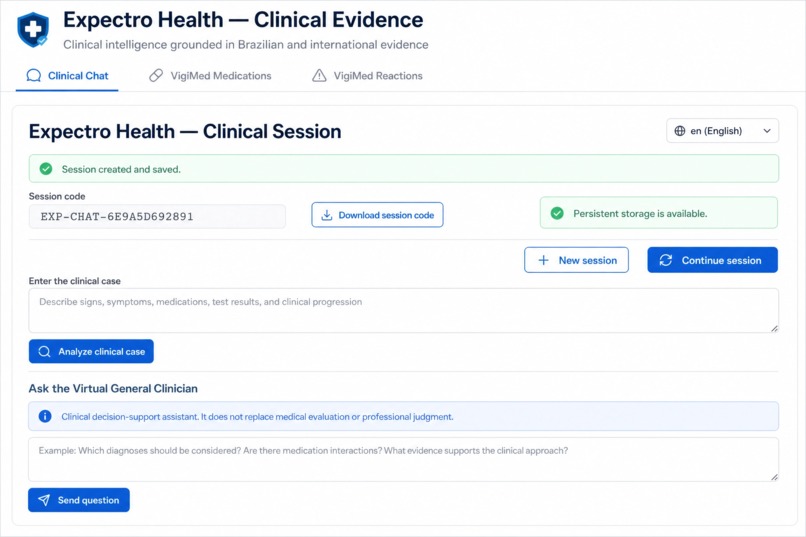
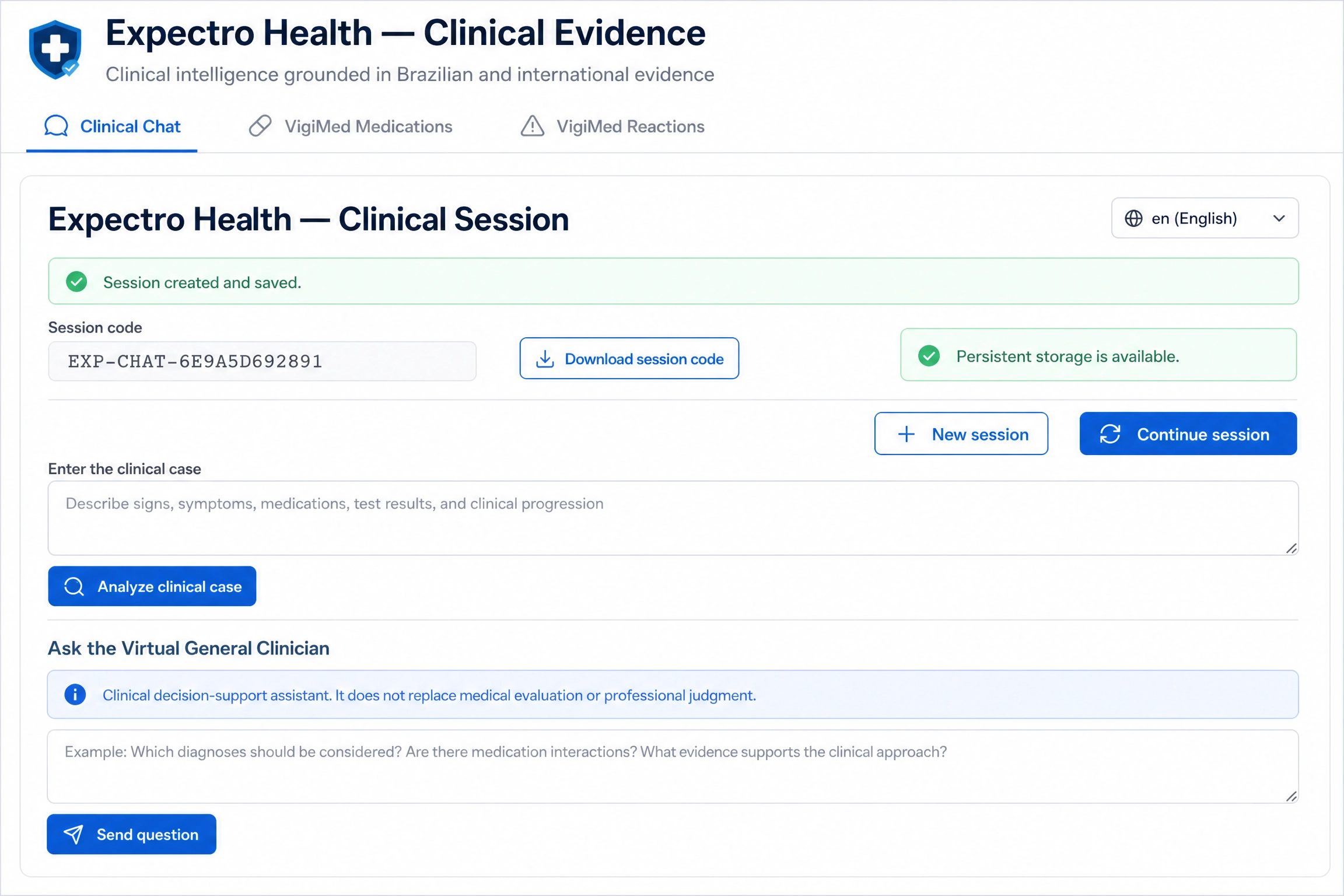
Clinical session creation with unique session code and persistent storage.
-
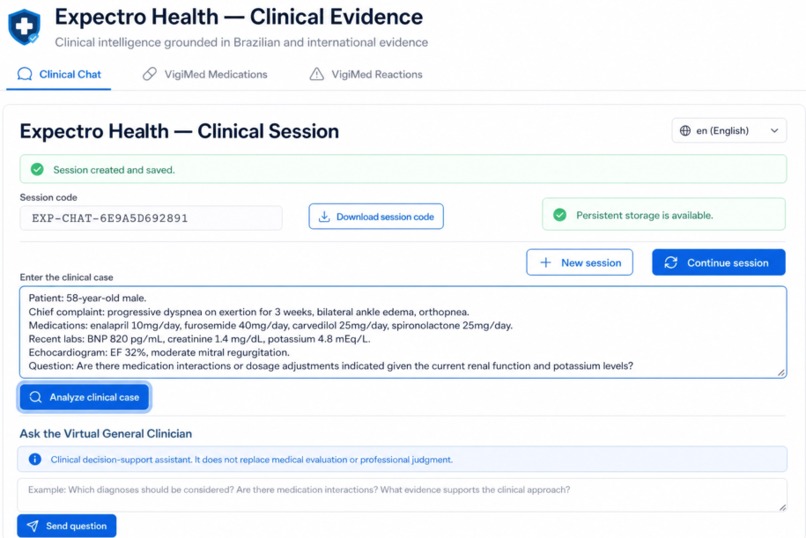
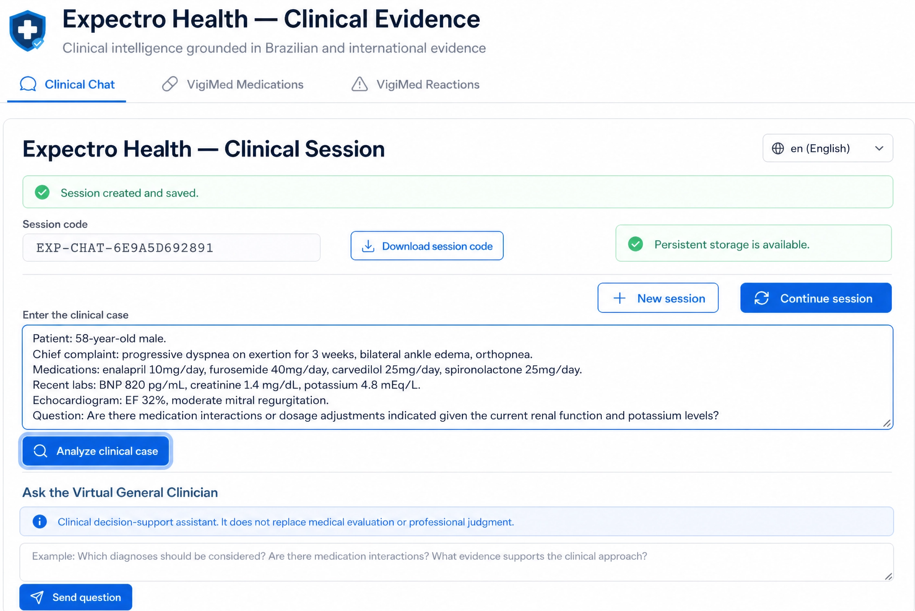
Clinician enters a real clinical case: signs, symptoms, medications, labs, and echocardiogram findings.
-
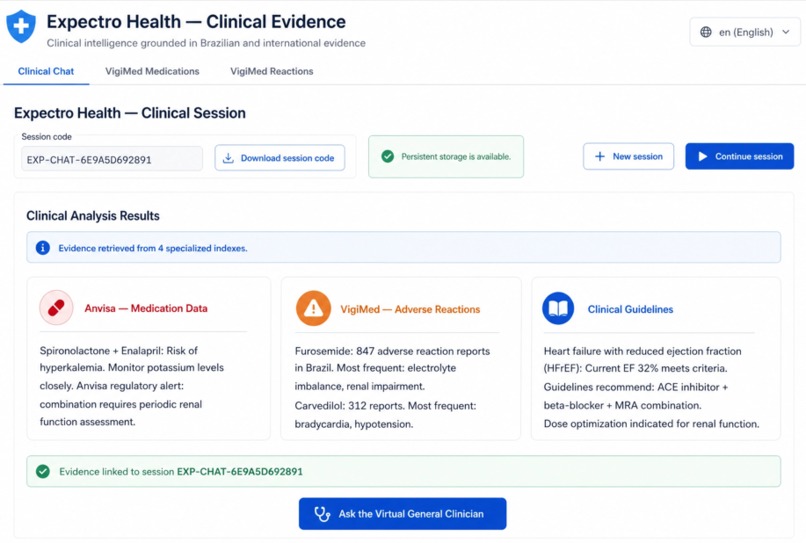
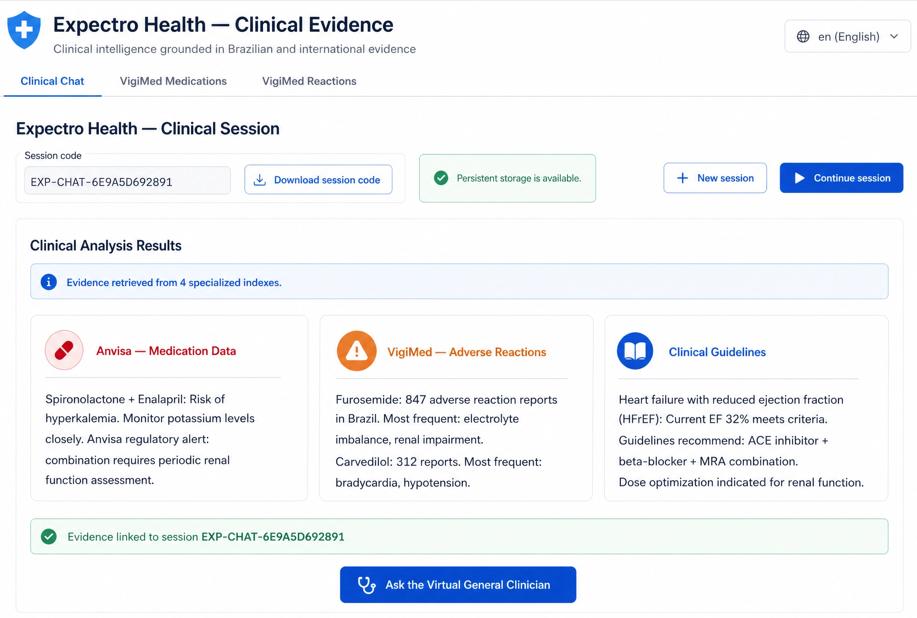
Anvisa medication data, VigiMed adverse reactions, and clinical guidelines retrieved and linked to the session.
-
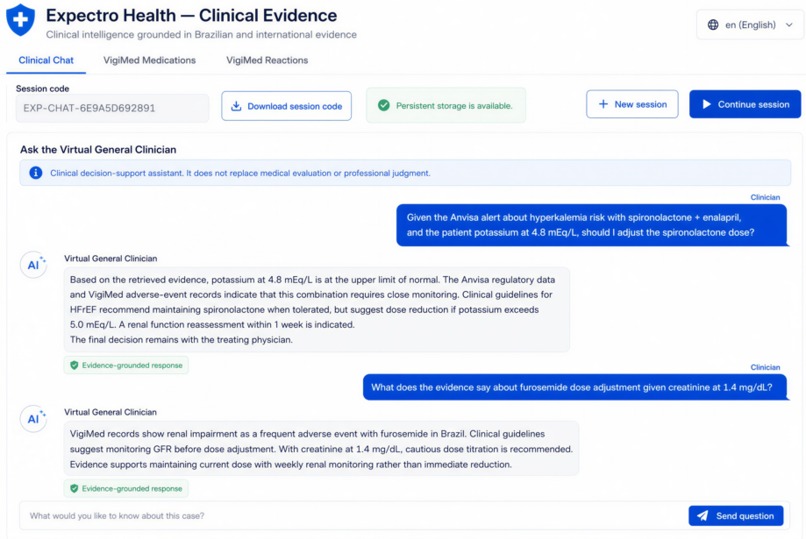
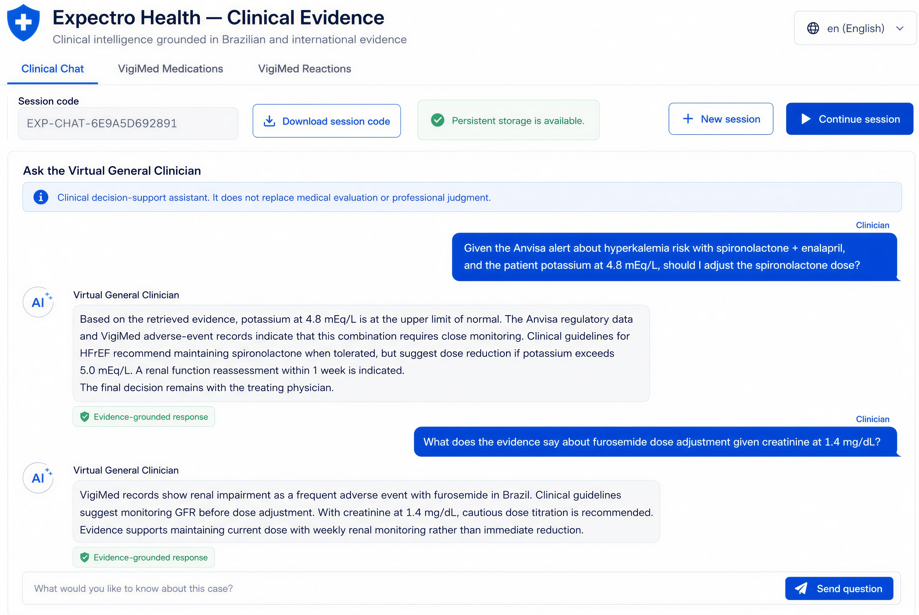
Clinician debates Anvisa and VigiMed evidence with the GPT-powered Virtual General Clinician.
Inspiration
Our inspiration stems from the possibility of combining OpenAI's conversational intelligence with a specialized infrastructure of Brazilian clinical evidence.
Physicians in Brazil need more than just general health information. Relevant evidence is fragmented across scientific literature, data collected and regulated by Anvisa, pharmacovigilance reports from VigiMed, patient safety records from Notivisa notifications, drug databases, and clinical guidelines.
We created Expectro Health — Clinical Evidence around a simple idea:
The physician describes a real-life case, and our platform retrieves specialized evidence and configures GPT-4o to help explain this evidence through a persistent and traceable conversation.
Our goal is not to replace physicians. The goal is to help them access, analyze, organize, and understand relevant evidence, while maintaining the physician as the ultimate decision-maker.
What it does
Expetro Health is a bilingual clinical decision support platform, powered by OpenAI functionalities and a specialized evidence retrieval layer.
A physician can:
1 - Initiate a persistent clinical session.
2 - Receive a unique session code.
3 - Retrieve the same session later.
4 - Describe signs, symptoms, medications, test results, and clinical progression.
5 - Retrieve relevant scientific, pharmacovigilance, and regulatory evidence.
6 - Ask follow-up questions to a Virtual General Practitioner using GPT technology.
7 - Preserve the conversation and linked evidence for traceability.
The current infrastructure contains 13 specialized evidence indexes, including PubMed, NCBI Bookshelf, clinical guidelines, Anvisa drug data, VigiMed adverse reactions, drugs and notifications, Notivisa, technovigilance, hemovigilance, drug restrictions, pricing, and toxicological data.
How we built it
OpenAI is fundamental to both the engineering process and the clinical experience.
Codex
We use Codex as an engineering agent to:
audit existing repositories;
understand the architecture;
implement persistent sessions;
create backups and rollback manifests;
build the bilingual interface;
connect the evidence adapter;
implement the OpenAI Responses API layer;
create automated tests;
identify regressions;
and verify that protected components remain unchanged.
We work in small, controlled phases:
Codex implements and tests. The user decides. The project memory records.
GPT and the OpenAI Responses API
GPT feeds the conversational layer through the OpenAI Responses API.
The workflow is: Clinical case
- Retrieval of specialized evidence
- Evidence linked to the session GPT explanation Follow-up conversation Physician's decision


Log in or sign up for Devpost to join the conversation.