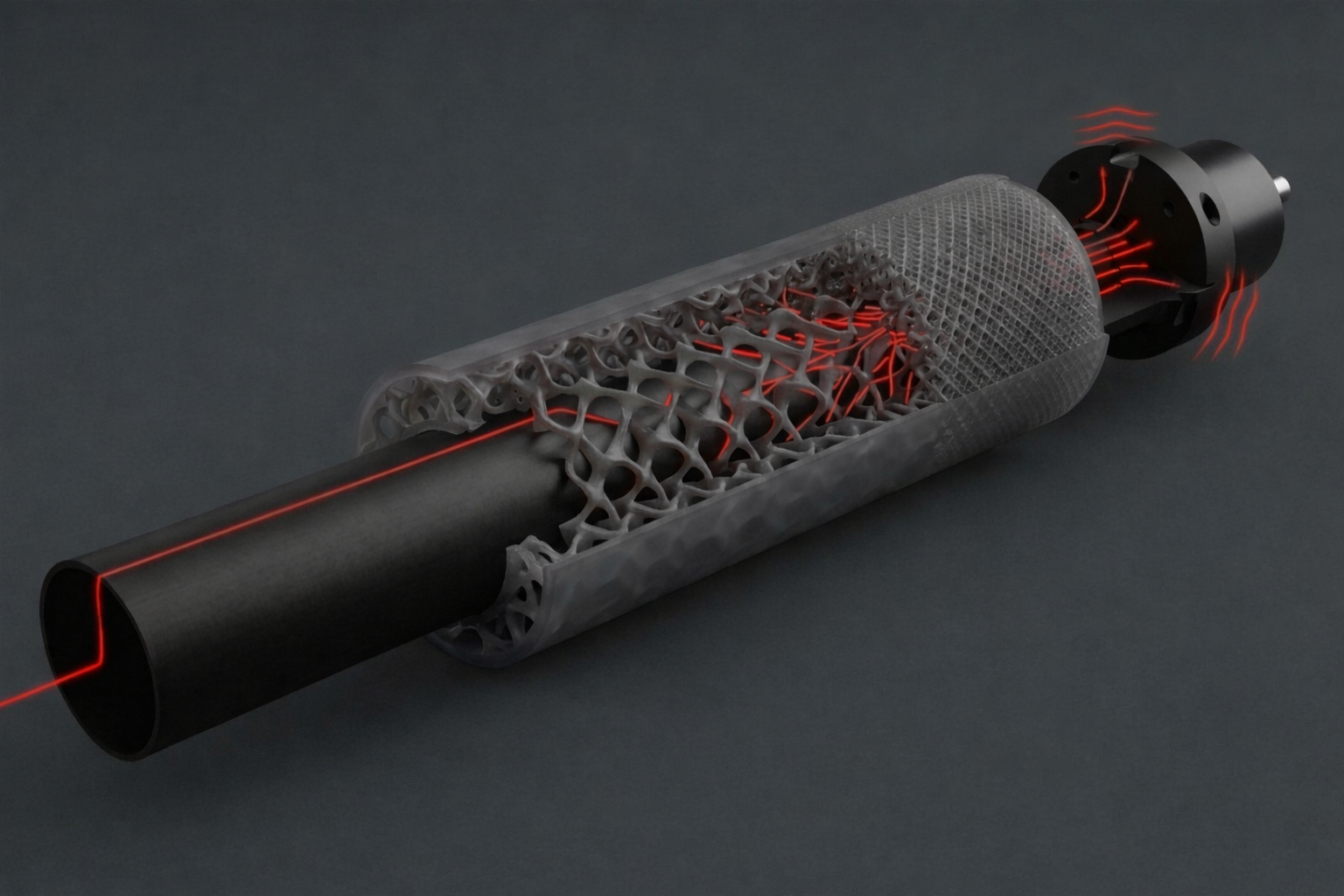
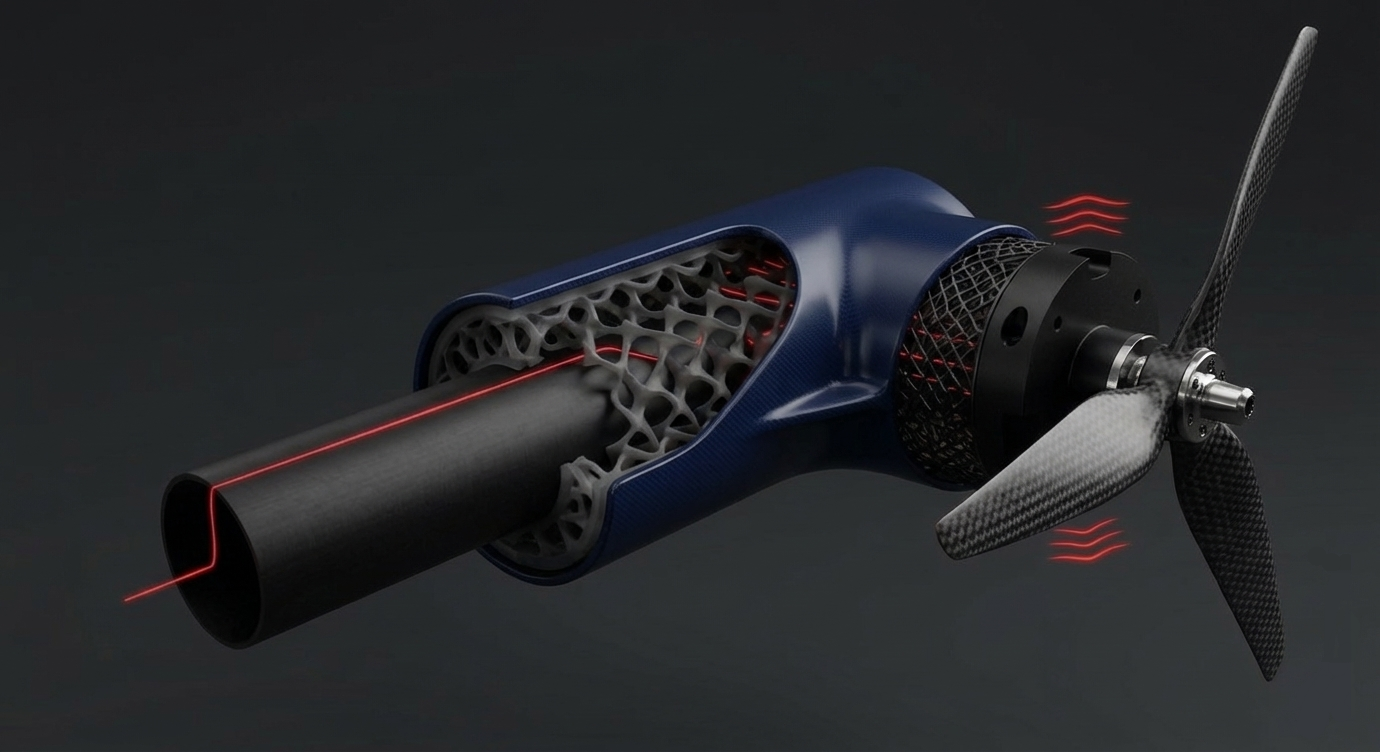
Project Story: Project EXOVEX ## Inspiration The inspiration for Project EXOVEX stems from a critical vulnerability observed in modern theater: the "Glass Cannon" nature of current Group 1 and 2 UAS. During his tenure as an MQ-9 Reaper Crew Chief (Level 7), advisor Levi Rotherham identified that while high-end military drones possess immense capability, the small-form-factor drones filling the "attrition-gap" are fundamentally fragile. One hard landing or minor collision results in a total platform loss. We asked: “How do we build a drone that survives the environment as well as it survives the enemy?” The answer was found by looking at nature—specifically high-impact organisms that protect a rigid spine with a sacrificial exterior. We decided to stop building drones as unibody shells and start building them as modular, repairable organisms. ## What it does Project EXOVEX is a modular UAS architecture that decouples flight-load bearing from impact protection. The Core: A rigid, 3K twill carbon fiber "spine" that handles the high-stress loads of flight. The Exoskeleton: A 3D-printed, sacrificial sheath that protects the core. It is designed to fracture and dissipate kinetic energy upon impact, much like a car’s "crumple zone." Vibration Isolation: The hybrid material interface acts as a mechanical low-pass filter, neutralizing motor vibrations to provide "stabilized-by-design" data for AI edge-computing. Passive Cooling: A "ram-air" avionics housing geometry that uses flight velocity to cool high-output processors without the weight of active fans. ## How we built it The development relied on the True Blue Super PC—a high-density workstation built with a Ryzen 9 9950X3D and RTX 5070 Ti—to run complex Computational Fluid Dynamics (CFD) and FEA (Finite Element Analysis) on the exoskeleton lattice structures. Prototyping: We utilized ACE TRIDENT (Mobile Forge) protocols, using Markforged Onyx FR for structural nodes and Nexa3D-equivalent resins for the sacrificial skins. The Patent: We filed Patent App. 19/452,264, specifically claiming the "energy-absorbing internal lattice structure" and the "mechanical impedance mismatch" that provides intrinsic vibration damping. ## Challenges we faced The primary challenge was balancing the strength-to-weight ratio. Adding a sheath naturally adds mass. We overcame this by making the sheath functional—integrating the aerodynamic fairing, the motor mounts, and the vibration dampers into a single 3D-printed component. We moved away from "adding protection" to "integrating protection." Furthermore, maintaining NDAA Title 10 Section 4872 compliance required rigorous supply-chain vetting, ensuring every piece of the EXOVEX "DNA" is sourced from US/NATO allies. ## What we learned We validated that "repairable" is more valuable than "unbreakable" in contested environments. By making the parts that break the cheapest to replace (3D-printed plastic), we effectively lowered the Total Cost of Ownership (TCO) for the end-user while maintaining a mission-ready "Reaper Standard." ## What's next for Project EXOVEX We are scaling toward Mass-Density 7-3-1 Forge Configurations. Our goal is to deploy EXOVEX within the ACE TRIDENT mobile units, allowing forward-deployed units to "print the mission"—swapping out sacrificial sheaths for ISR, Kinetic, or EW (Electronic Warfare) variants in under 15 minutes.
Currently hold an utility patent pending for prject exovex, request for white paper submittal from MCWL director, interest from Markforged, Stratasys, and Hawkridge systems.
Built With
- android
- anthropic
- claude
- prusa-xl
- vertex
