-
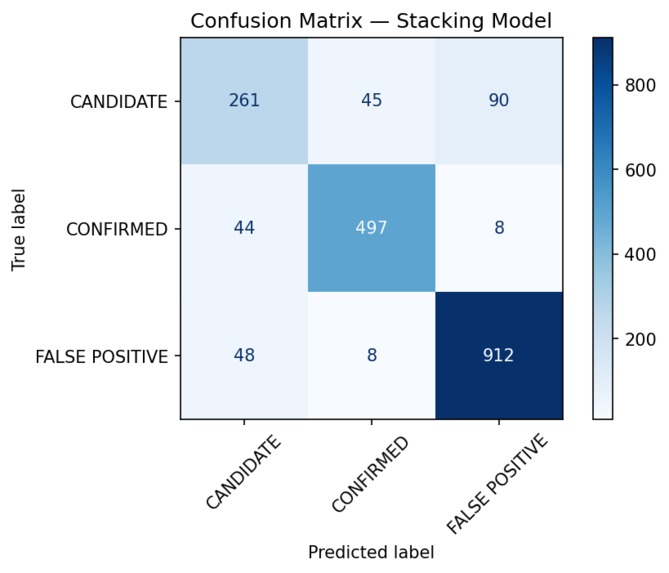
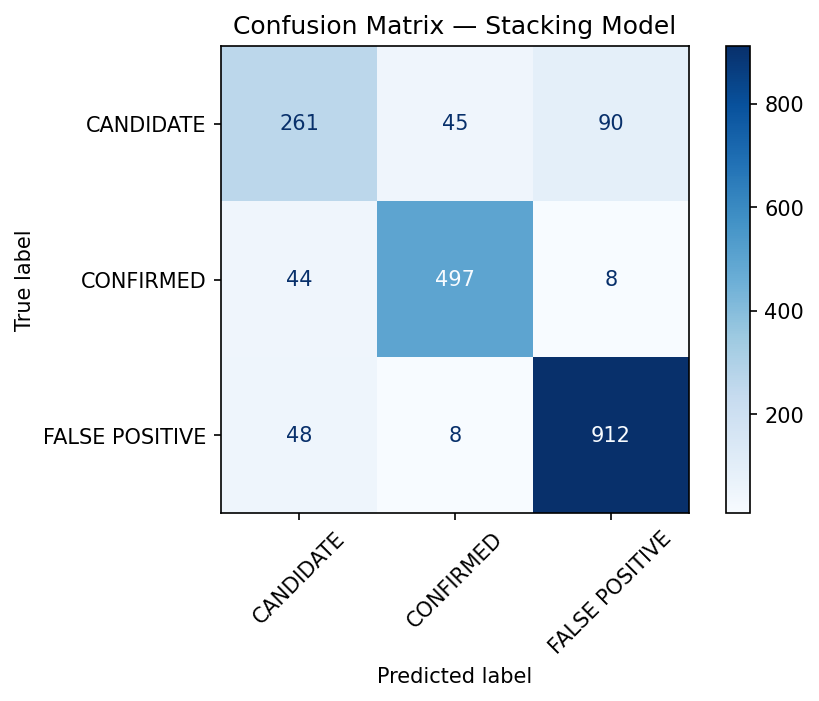
Confusion matrix
-
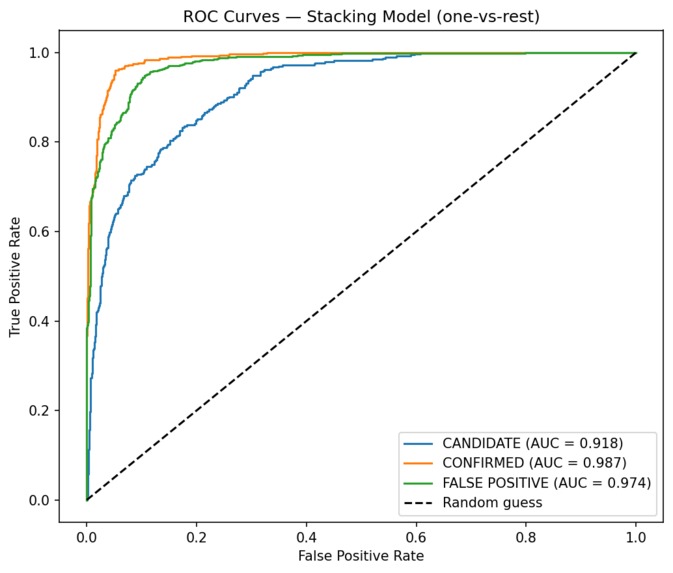
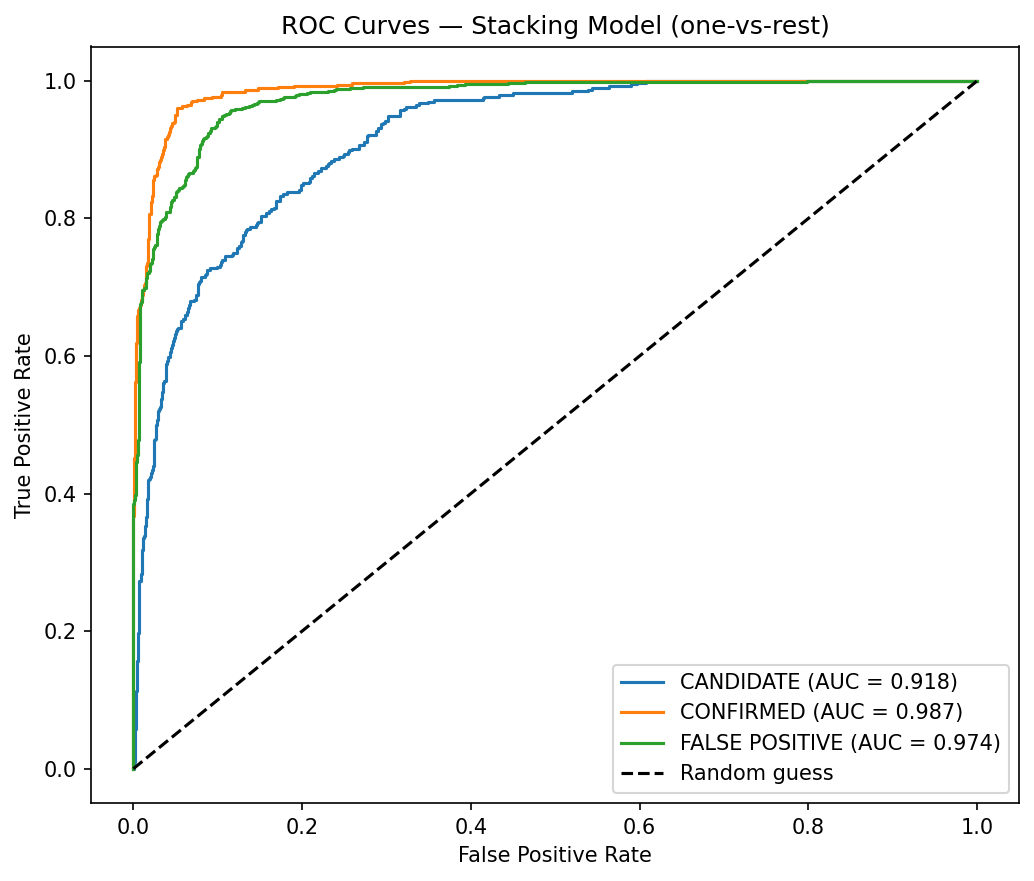
ROC
-
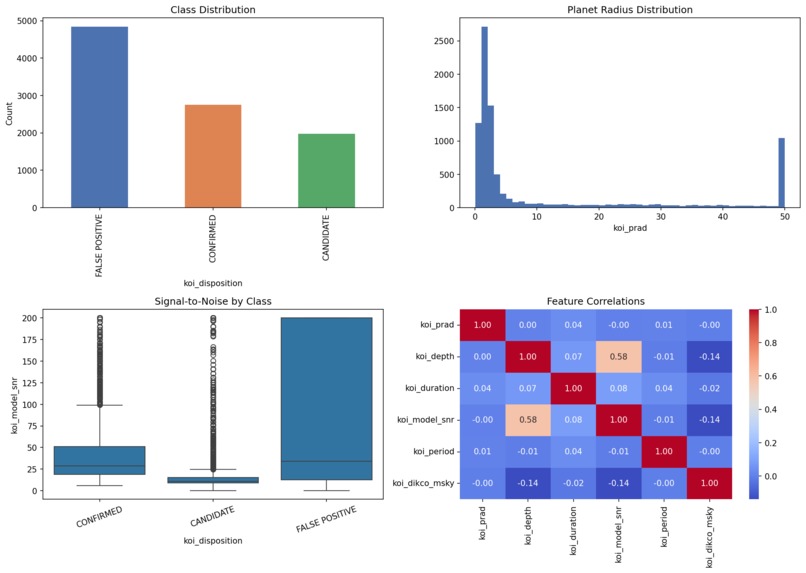
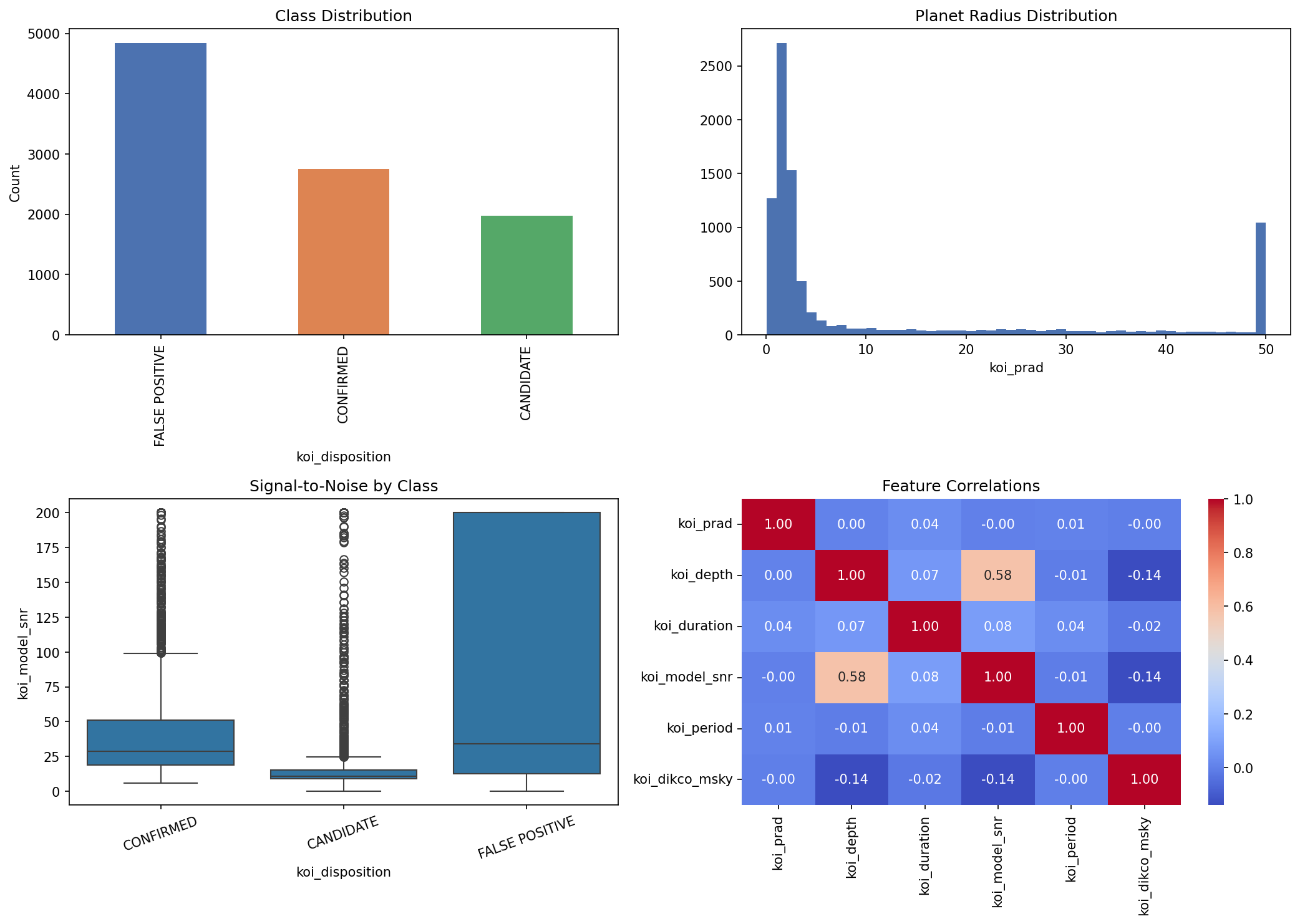
EDA
-
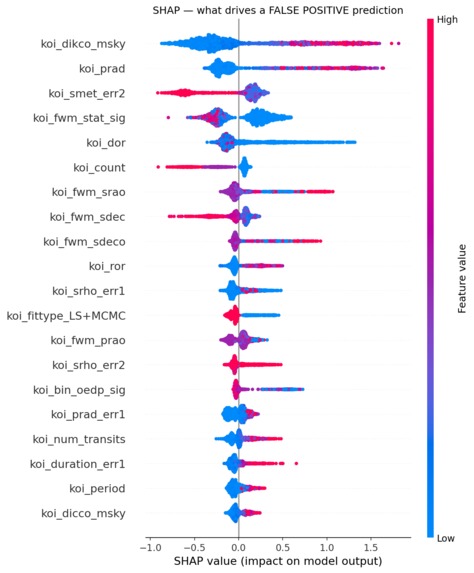
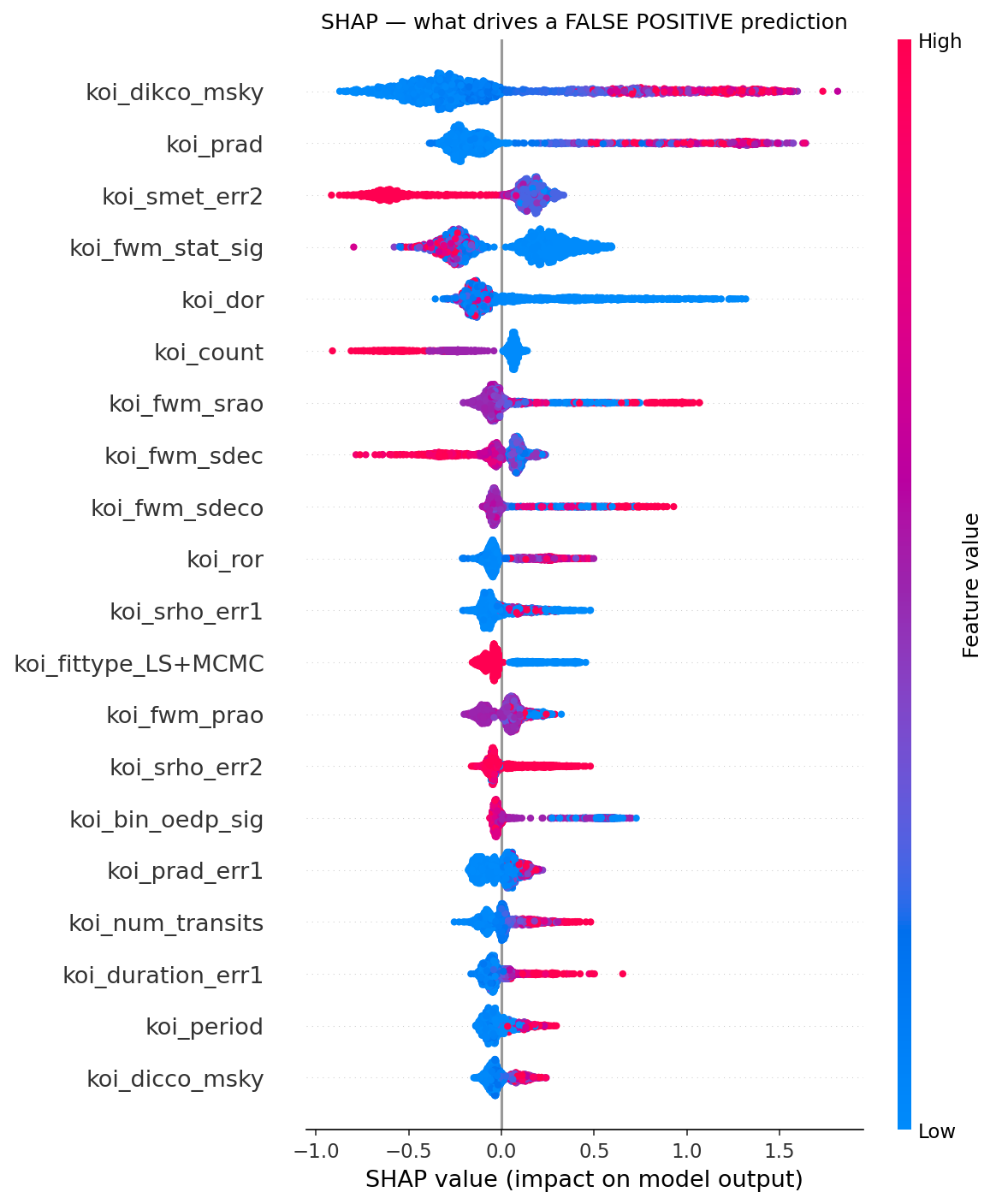
SHAP
Inspiration
When a planet crosses its star, it casts a faint shadow — a tiny dip in starlight. But most of these dips aren't planets at all; they're eclipsing binary stars, instrument noise, or unresolved signals. NASA's Kepler mission flagged thousands of them, far too many to check by hand. I wanted to build a model that could automate this vetting — but more importantly, one that does it honestly and can explain itself.
What it does
ExoVet classifies each Kepler signal as CONFIRMED (a real exoplanet), FALSE POSITIVE (not a planet), or CANDIDATE (unresolved). It reaches 87% accuracy and a 0.84 Macro F1 score (cross-validated 0.83) — and, crucially, it earns that score without cheating.
How I built it
Using ~9,564 real signals from the NASA Exoplanet Archive, I explored the data, then made the single most important decision of the project: removing "leaky" columns. Several columns (like koi_pdisposition, kepler_name, and the false-positive flags) secretly reveal the answer. Keeping them would inflate the score while teaching the model nothing real — like studying with the answer key. Removing them makes the model honest.
I then engineered 3 domain features (signal-per-transit, transit shape, planet-star size ratio) and built up through a Decision Tree (0.73) → Random Forest (0.82) → XGBoost (0.84) → a final stacking ensemble that combines Random Forest and XGBoost. I evaluated with Macro F1 (not accuracy, because the classes are imbalanced), cross-validation, a confusion matrix, ROC curves, and SHAP.
I also built an interactive explainer website so anyone — even non-technical visitors — can understand how the model thinks, in plain English.
Challenges I ran into
The hardest class is CANDIDATE — those signals are genuinely ambiguous, unresolved even in the original scientific pipeline. No model can cleanly separate data that's inherently uncertain. Learning to report this honestly, rather than chase a fake-perfect number, was a challenge in itself.
Accomplishments that I'm proud of
- A model that's honest (no data leakage) — its 0.84 is real, not inflated.
- SHAP explanations showing the model relies on the same clues astronomers use: centroid offset (did the light come from this star or a neighbor?), planet size, and signal strength.
- An interactive website that makes the whole thing understandable to anyone.
What I learned
How to spot and prevent data leakage, why F1 beats accuracy on imbalanced data, how ensembles and cross-validation work, and how to turn a "black box" into an explainable story.
What's next
More careful feature selection, further tuning of the stacking model, and validation against additional data.

Log in or sign up for Devpost to join the conversation.