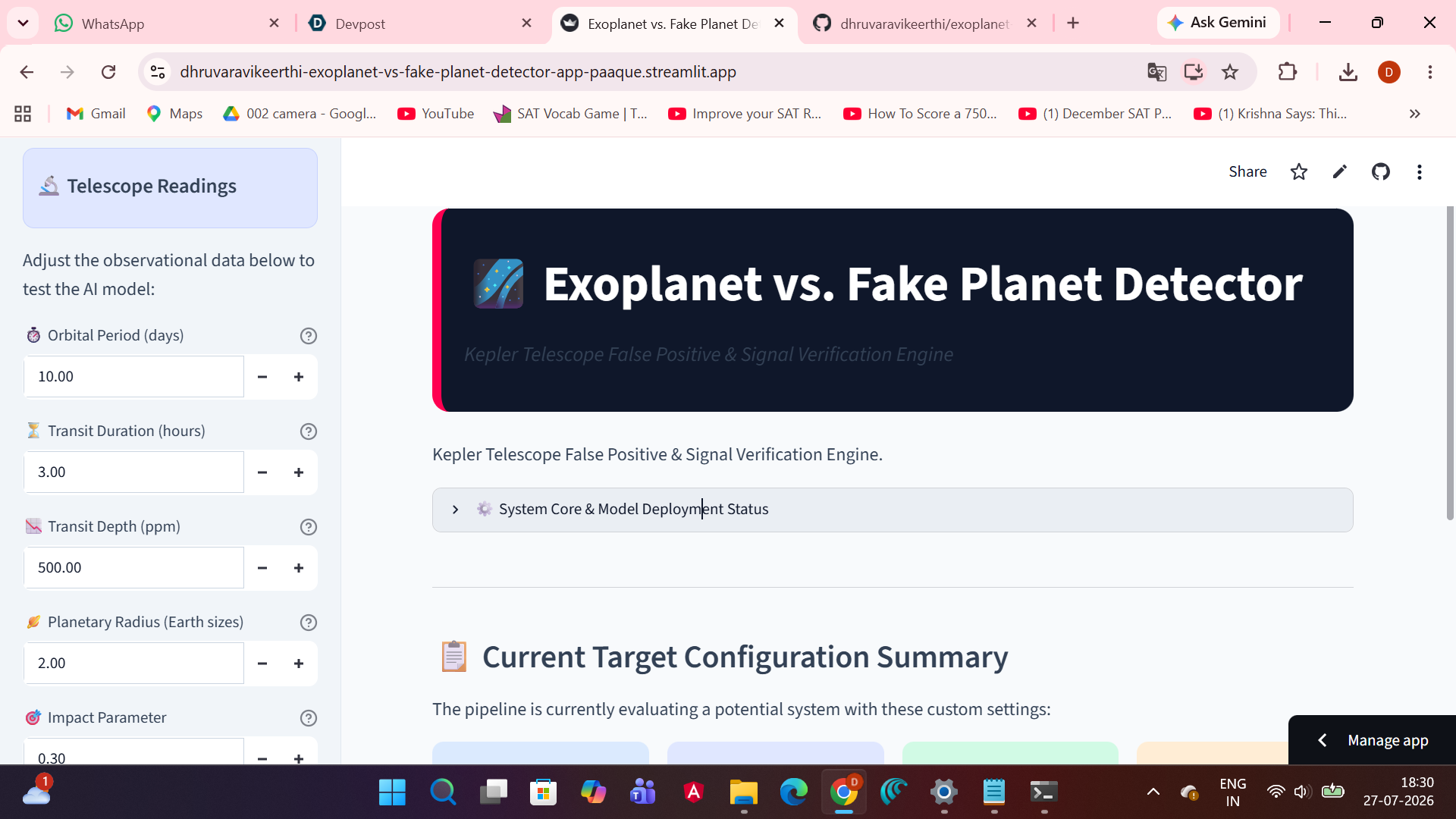
When looking at transit data from space telescopes like Kepler, astronomers have to go through thousands of signals. A big part of these turn out to be alarms—like systems where two stars pass in front of each other or noise from the stars themselves—that look like planets passing in front. Checking each one by hand takes a lot of time. I made the Exoplanet vs Fake Planet Detector to make this process easier by using machine learning to check the signals while also explaining the science behind each decision.
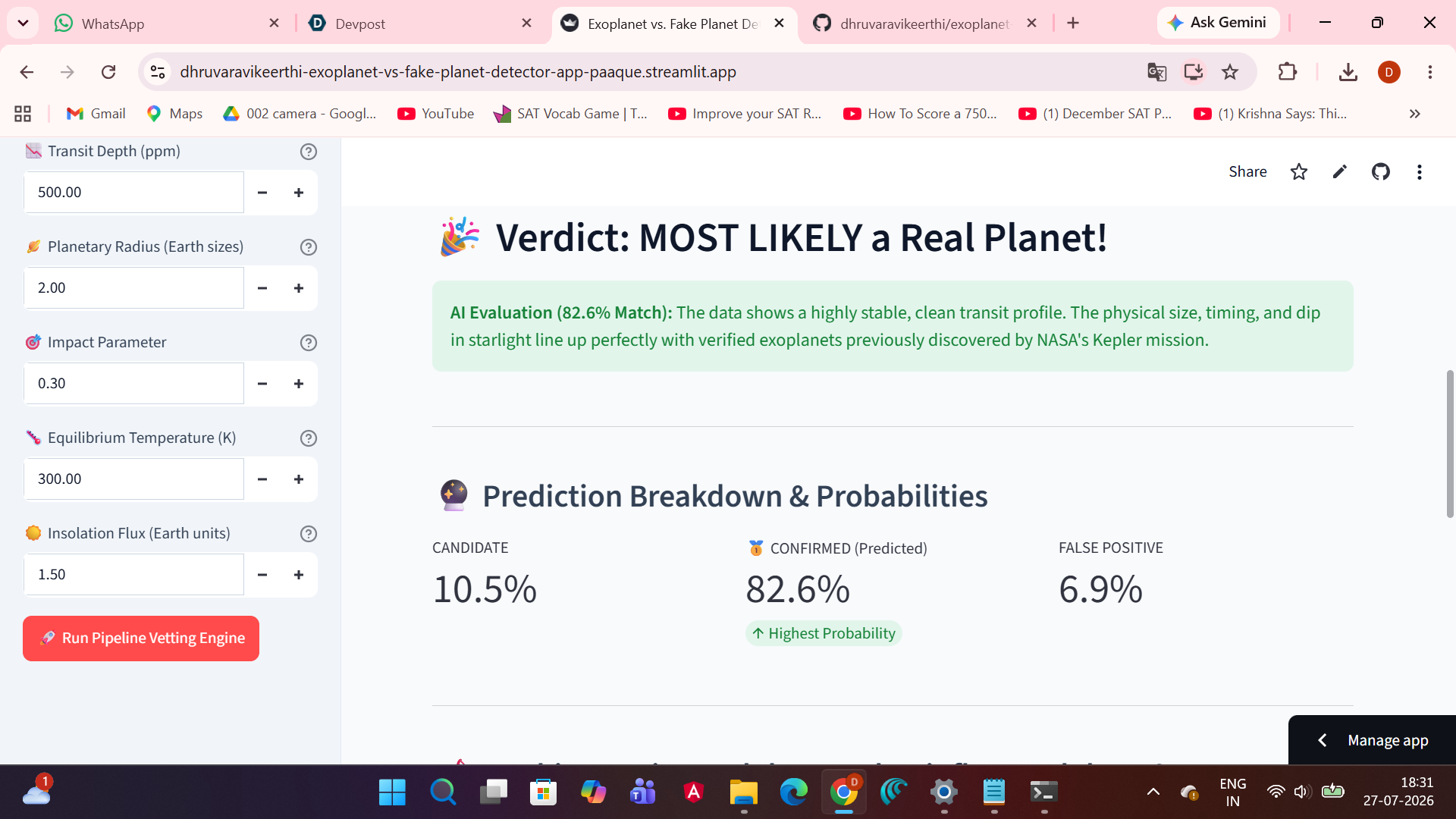
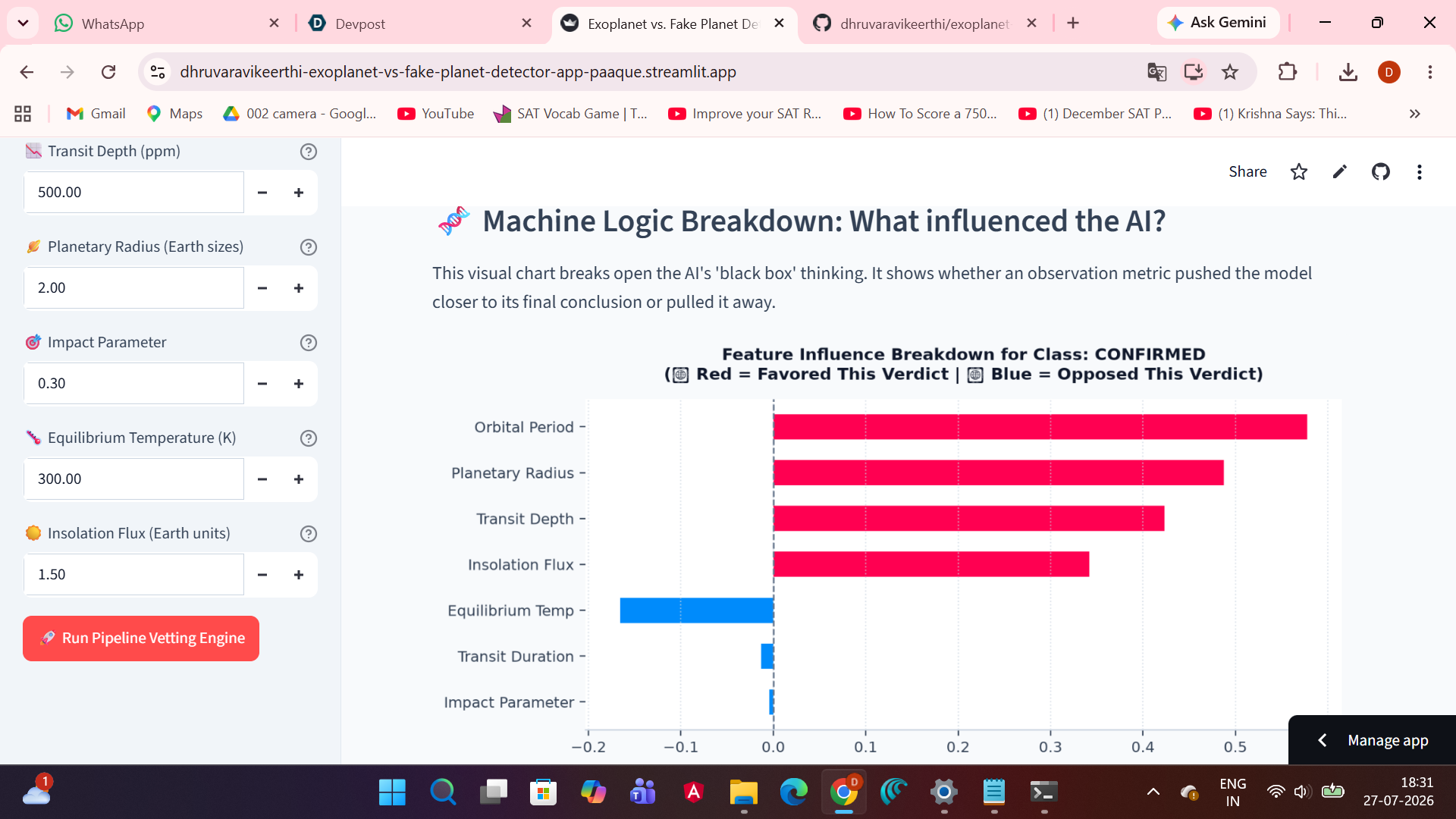
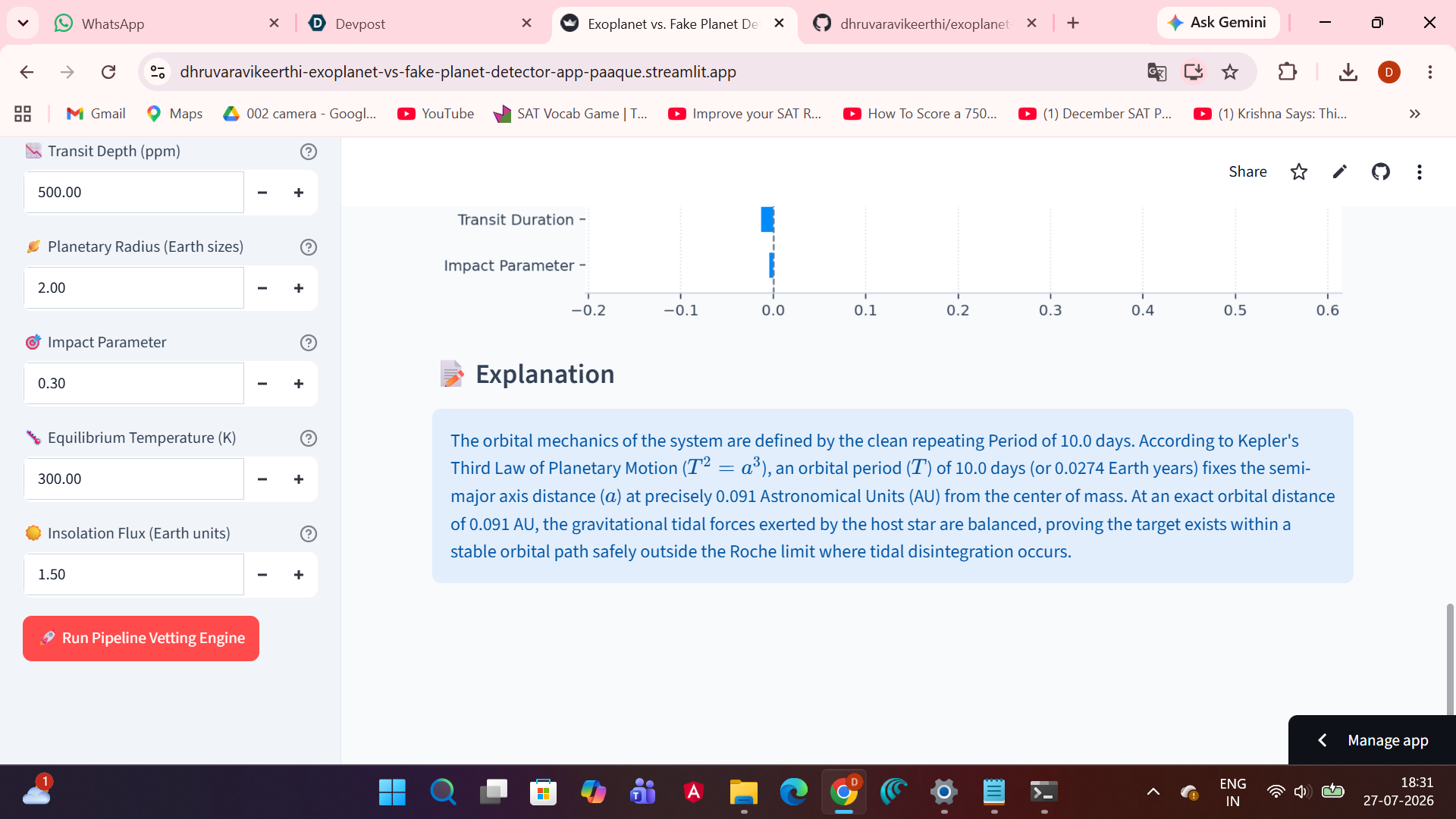
The app is a website that people can use interactively. It was made using Streamlit. It asks for details about the transit, like the size of the planet, how the stars' light drops, how long the transit takes and how often it happens. Then it sends this information to an XGBoost model. This model decides if the signal is an exoplanet, a possible one or a fake. The app doesn't just give an answer. It uses SHAP to show which numbers made the model decide in a way. It also checks the numbers against science rules like the size limits of planets and how much light drops when a planet passes.
To make this, I worked with data from Kepler's curves. I trained an XGBoost classifier using Scikit-learn. I made sure the model could tell planets apart from systems with two stars. I added SHAP to show how each number helped the model make a decision. I also made a Streamlit page where people can change the numbers and see the results. One of the parts was dealing with data that was not balanced. There were a lot more fake signals than real ones. I also had to make sure the SHAP pictures showed up quickly so the user didn't wait long.
This project taught me how to use tools that make machine learning easier to understand. I also learned how to put a machine learning project together using Git and Streamlit. In the future I want to make the system work with data from NASA's TESS mission. I also want to add a place where people can see the light curve data right in the app.
Built With
- git
- matplotlib
- numpy
- pandas
- python
- scikit-learn
- shap
- streamlit
- xgboost


Log in or sign up for Devpost to join the conversation.