Inspiration
One of the most intriguing NASA's missions to explore the universe and its formation is the Kepler mission. Kepler collects various data from planets it sees so NASA scientists can keep track and explore these planets and identify Exoplanets: An exoplanet is any planet beyond our solar system. Most orbit other stars, but free-floating exoplanets, called rogue planets, orbit the galactic center and are untethered to any star. (https://exoplanets.nasa.gov/what-is-an-exoplanet/overview/)
What it does
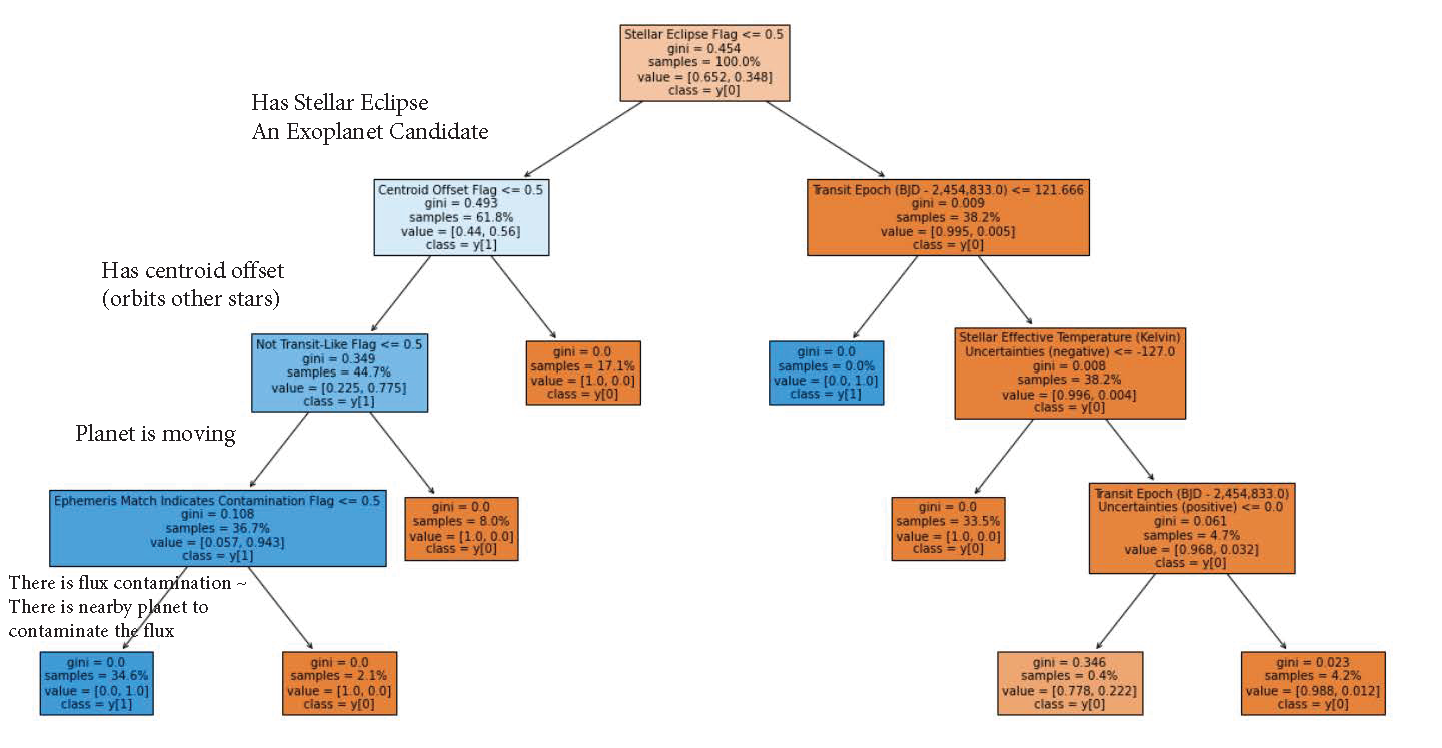
The program uses classification analysis to identify characteristics of Kepler's data about planets and identify how many planets are Exoplanets.
How we built it
We use Jupiter Notebook, python, data found on Kaggle.
Challenges we ran into
Understanding technical variables on in the data set
What's next for Exoplanet Classification
Improve the models and categorize the 4 types of Exoplanets: Gas giant, Neptunian, super-Earth and terrestrial
Built With
- jupyternotebook
- kaggle
- python


Log in or sign up for Devpost to join the conversation.