-
-
exoplanet-ai
-
exoplanet-ai
-
exoplanet-ai
-
exoplanet-ai
Inspiration
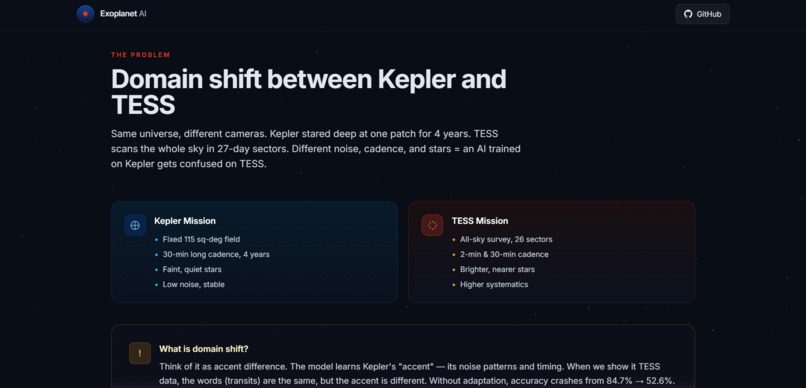
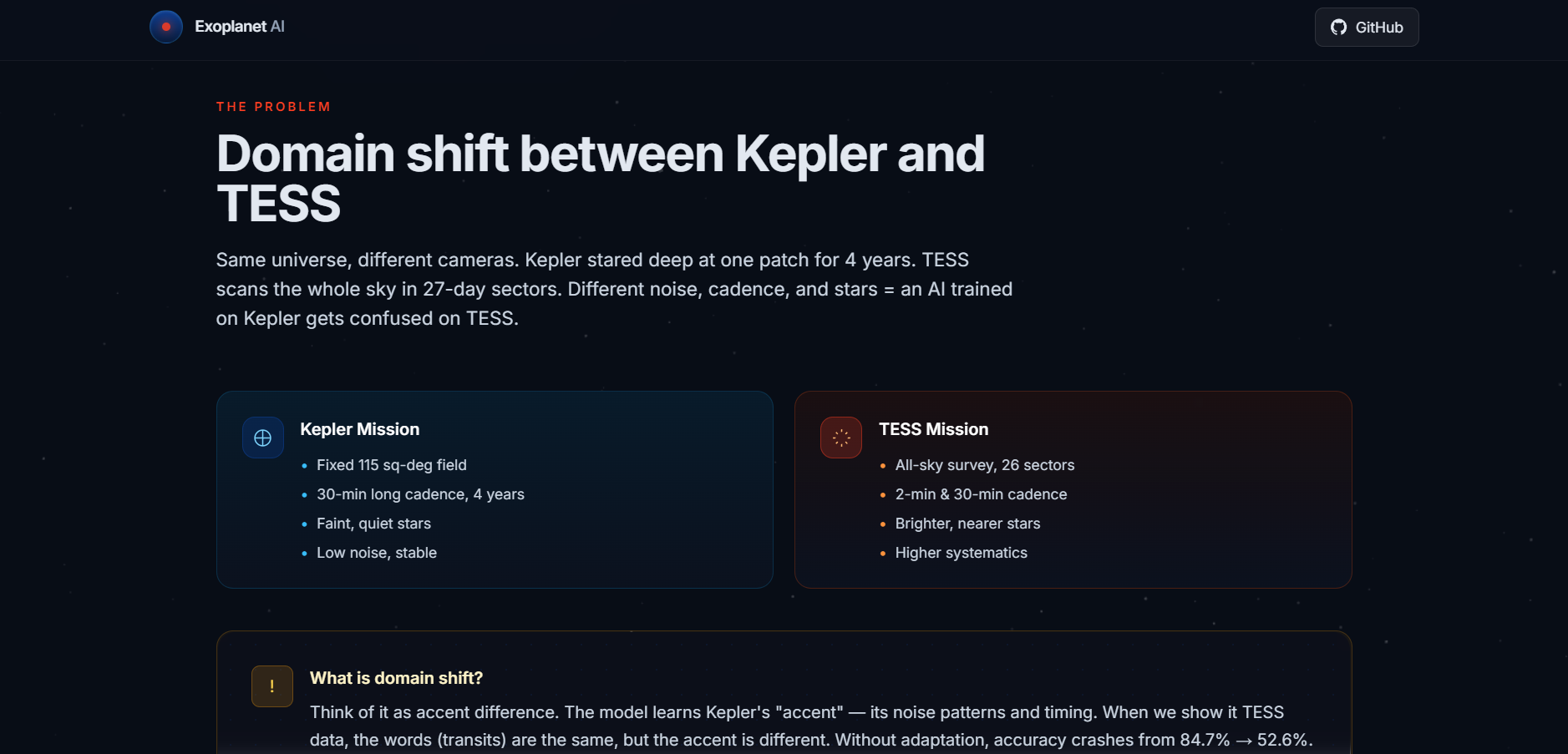
NASA's Kepler and TESS telescopes collect data differently. I wondered: can an AI model trained on Kepler work on TESS without changes? This is the exact cross-mission problem NASA faces. From Pandhurna, Madhya Pradesh, I decided to build a planet hunter to test it.
What it does
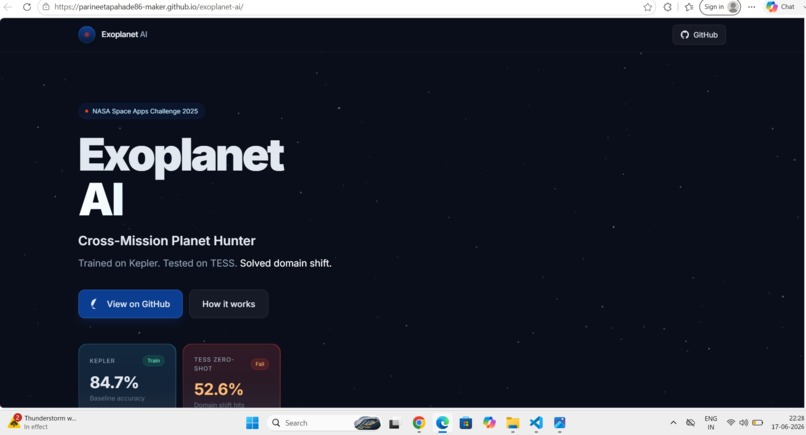
- Trains on Kepler data (84.7% accuracy)
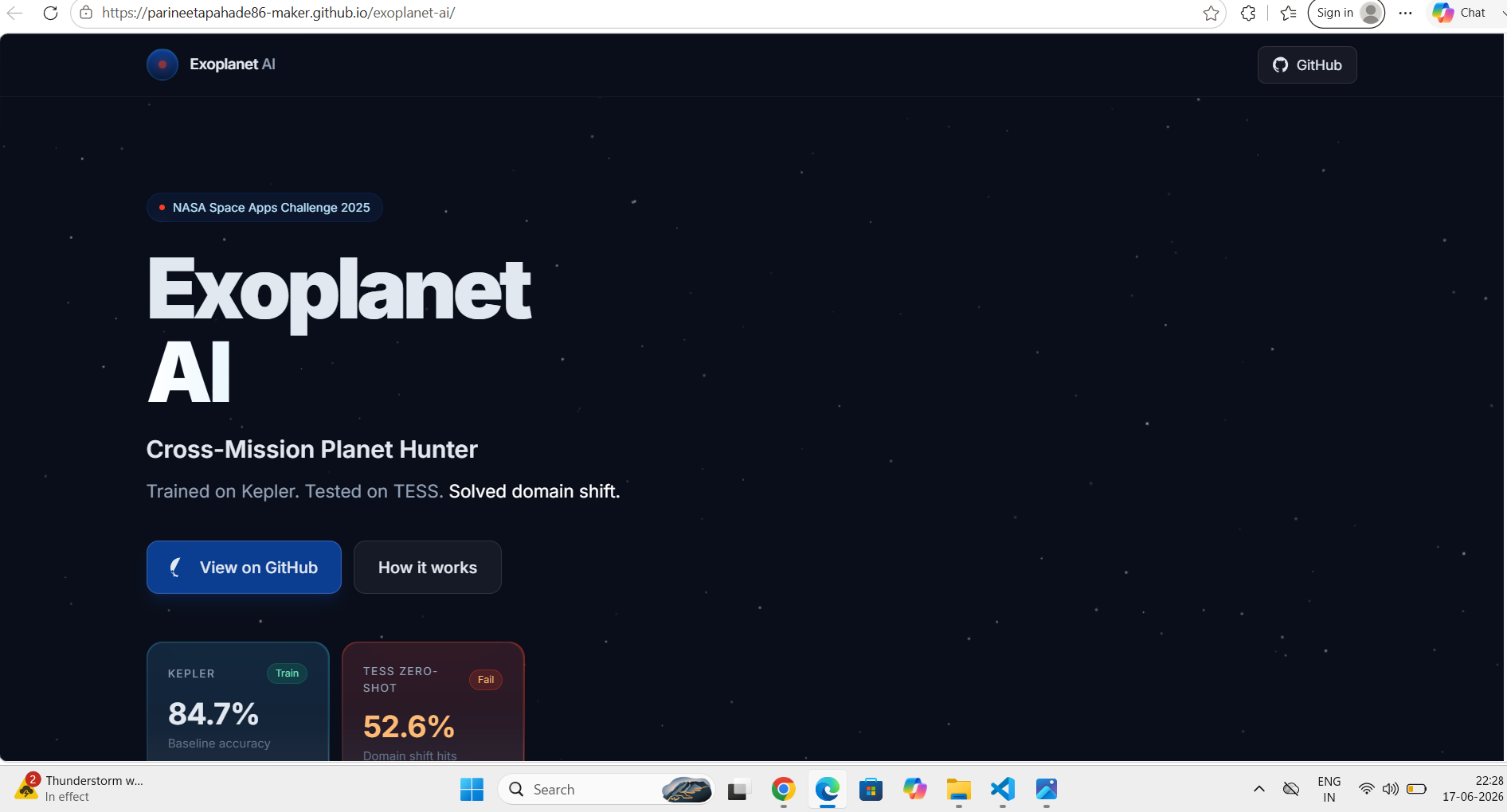
- Tests on TESS without adaptation: drops to 52.6% — proving domain shift
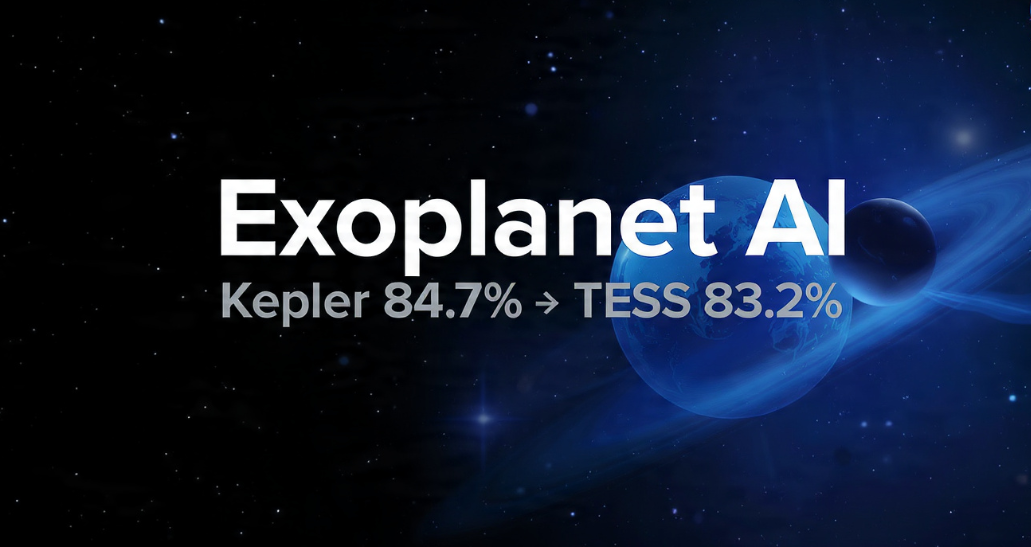
- After StandardScaler + retraining: achieves 83.2% on TESS
- Live demo: https://parineetapahade86-maker.github.io/exoplanet-ai
How we built it
Tech stack: Python, scikit-learn, pandas, Jupyter Notebook, GitHub Pages
Model: RandomForestClassifier (n_estimators=200)
Pipeline:
- Cleaned Kepler CSV
- Train/test split
- Baseline → 84.7%
- Direct TESS test → 52.6% (the failure taught us the most)
- Scaling + retrain → 83.2%
Challenges we ran into
The biggest shock: the model was excellent on Kepler but failed on TESS. I learned that telescope data distributions differ significantly. Fixed it with feature scaling and mission-specific retraining. Deploying the first GitHub Pages demo was also new for me.
Accomplishments that we're proud of
- Demonstrated a real NASA cross-mission AI challenge
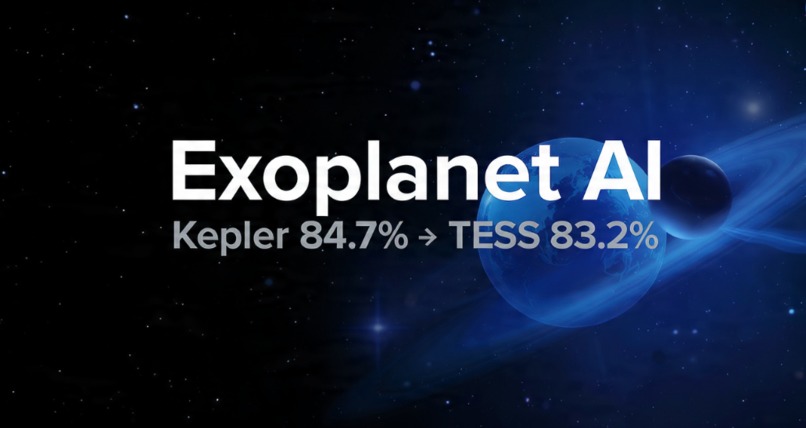
- Documented the full journey: 84.7% → 52.6% → 83.2%
- Open-sourced everything: code, notebook, confusion matrices
- Representing Pandhurna, MP, India in a global space AI challenge
What we learned
Domain adaptation matters more than raw accuracy in space AI. Understanding why a model fails across missions is the key insight.
What's next for Exoplanet AI
- Try CNNs on raw light curves
- Add NASA K2 mission data
- Build a real-time prediction API
Built with ❤️ from Pandhurna, Madhya Pradesh, India
Built With
- github
- jupyter-notebook
- numpy
- pandas
- python
- scikit-learn

Log in or sign up for Devpost to join the conversation.