-

Welcome Page
-
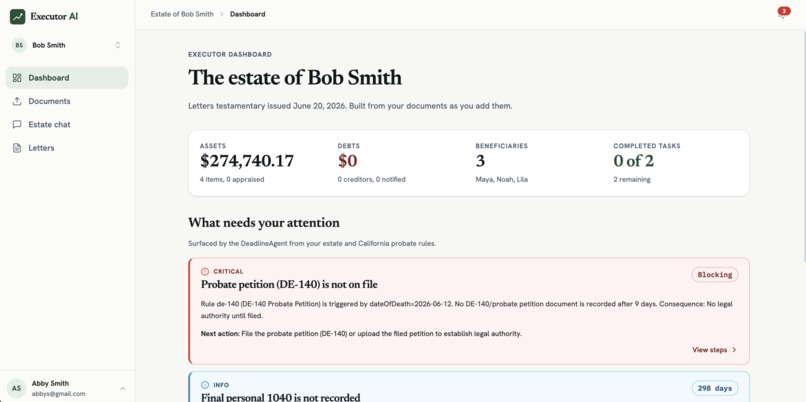
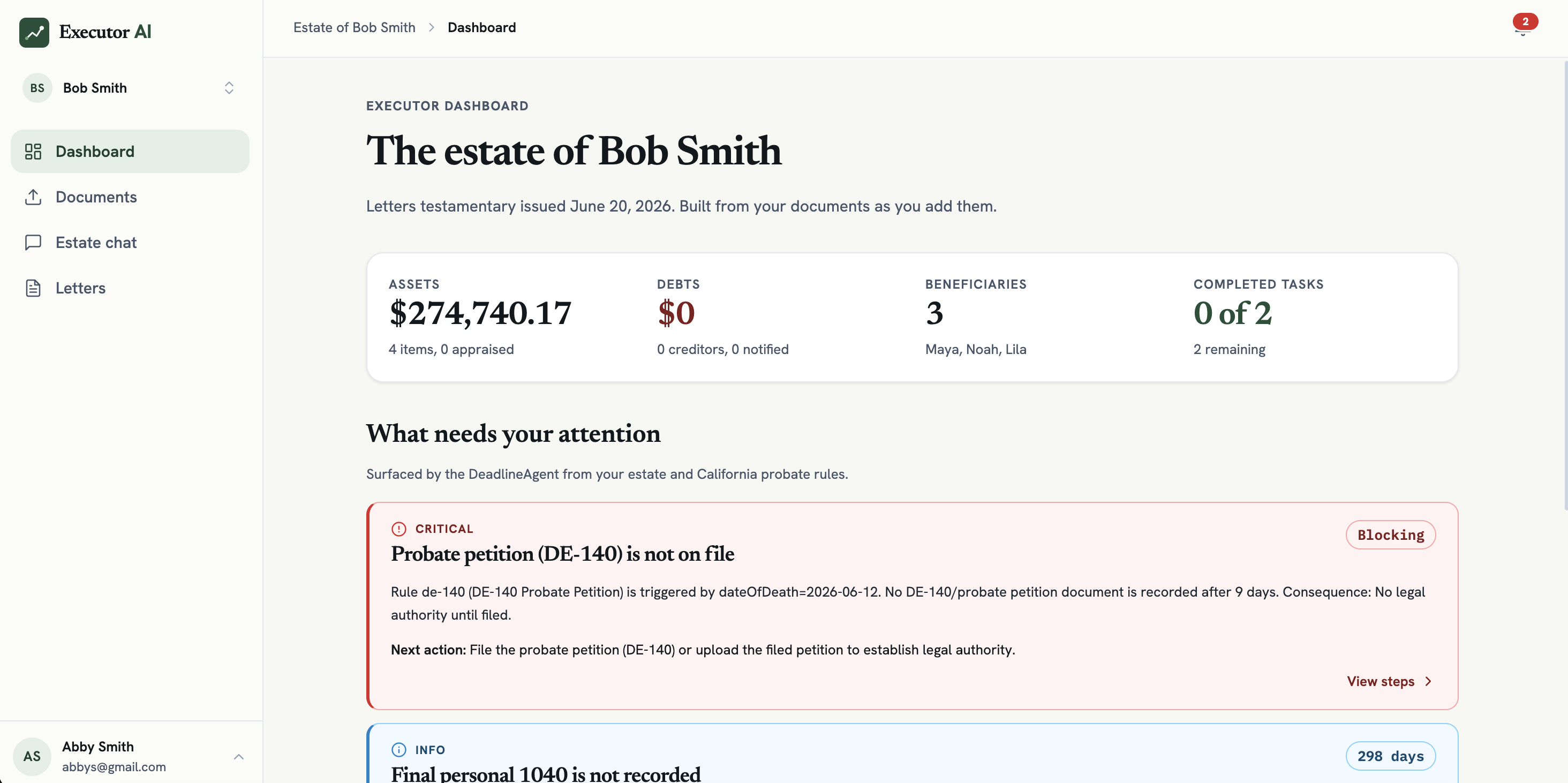
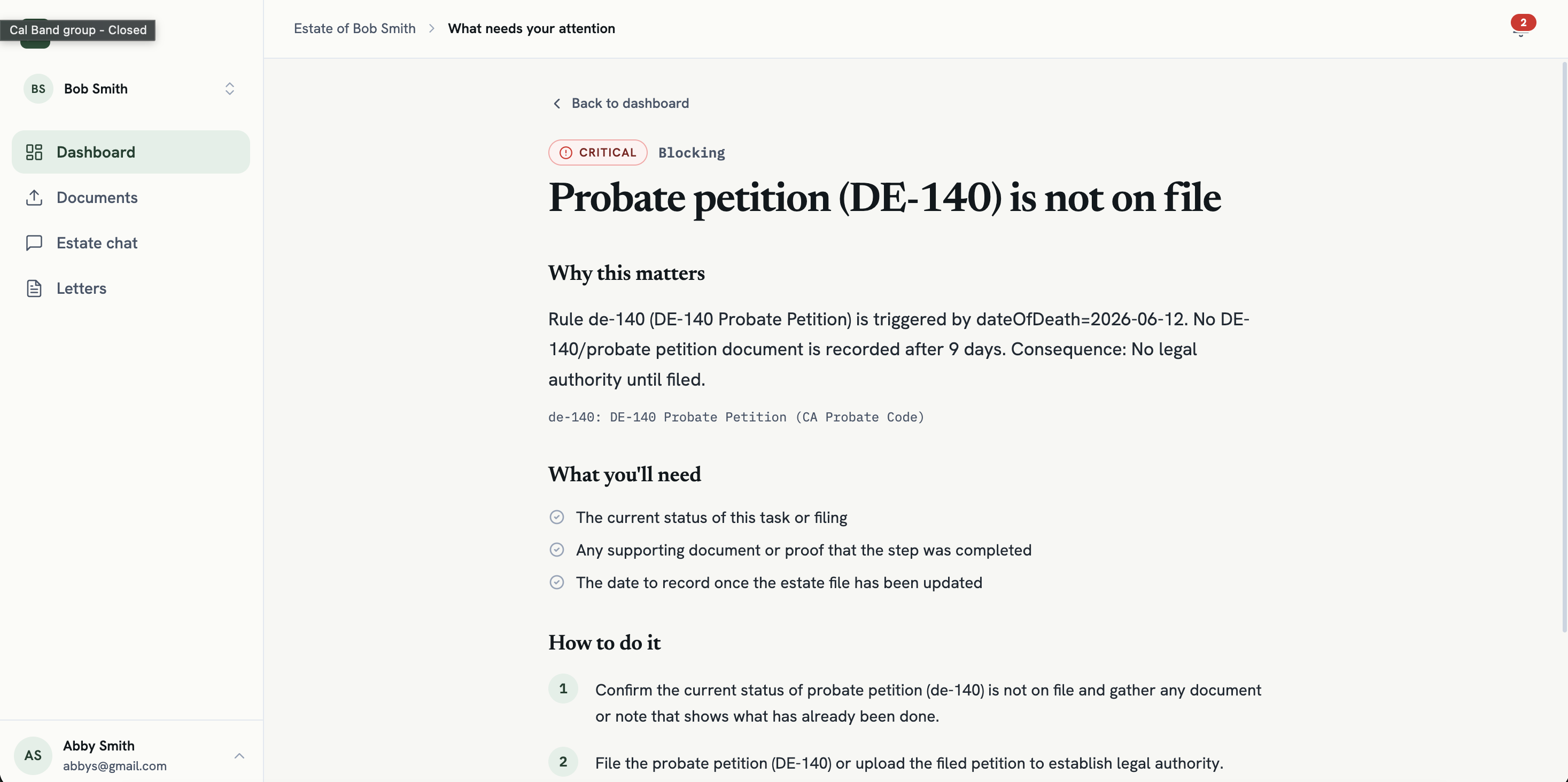
Dashboard
-
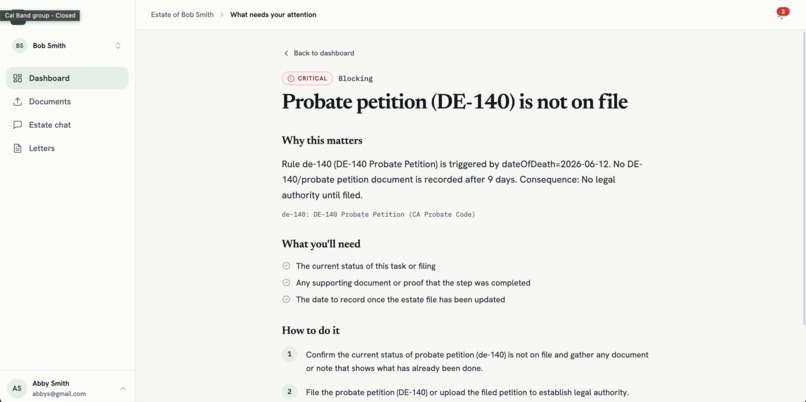
In Depth Instructions
-
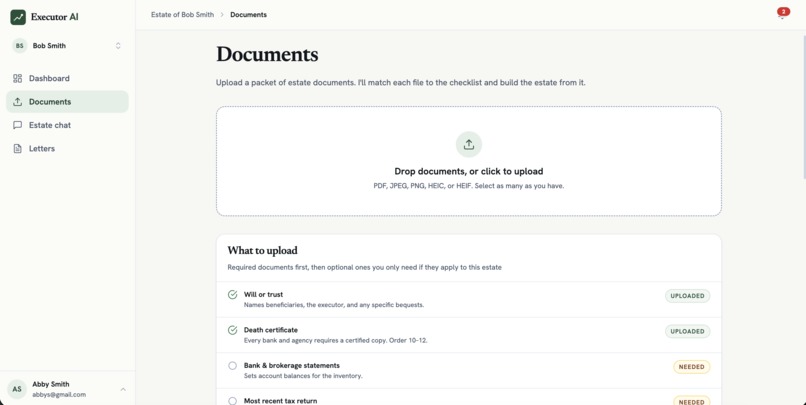
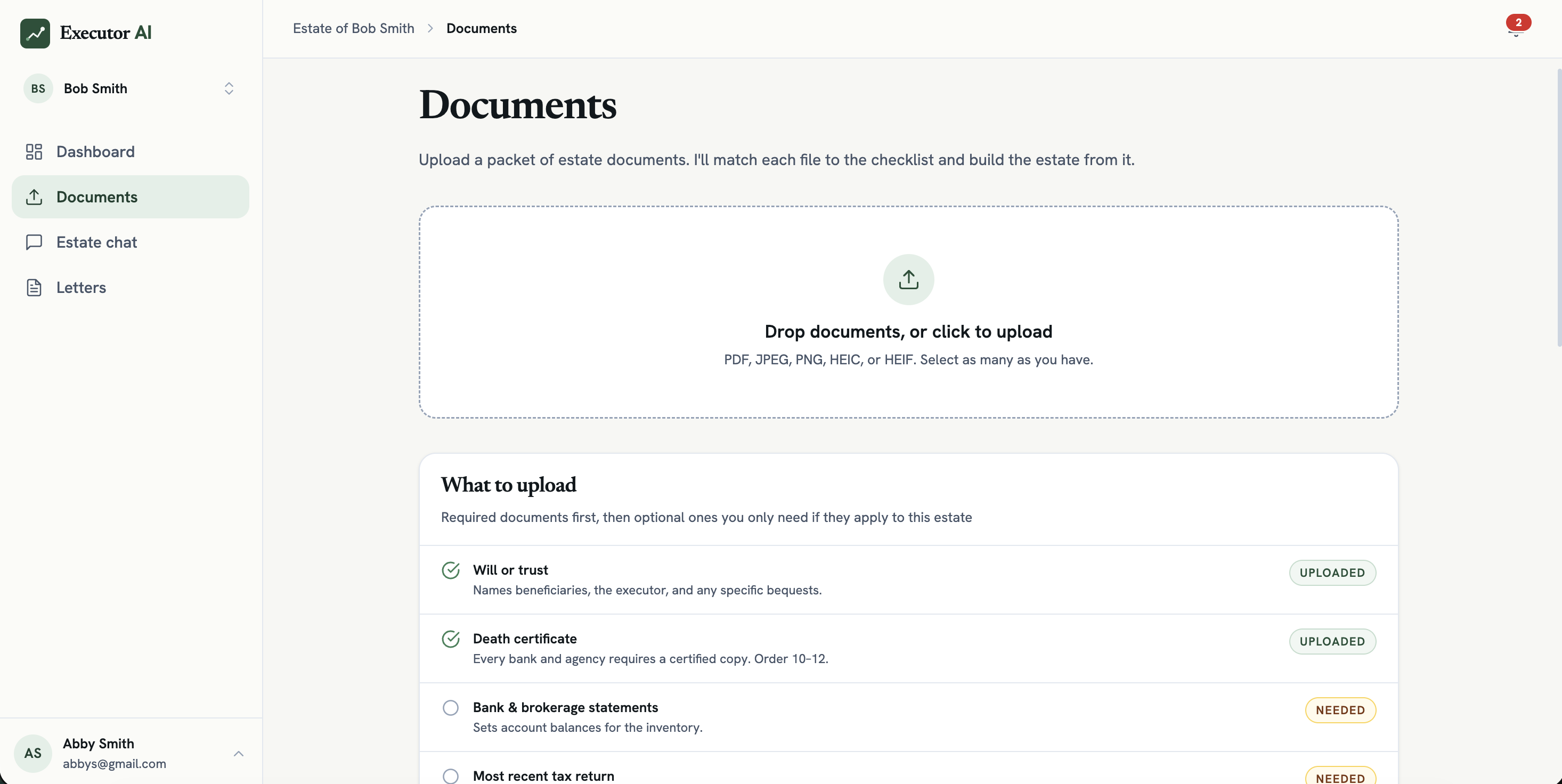
Document Upload
-
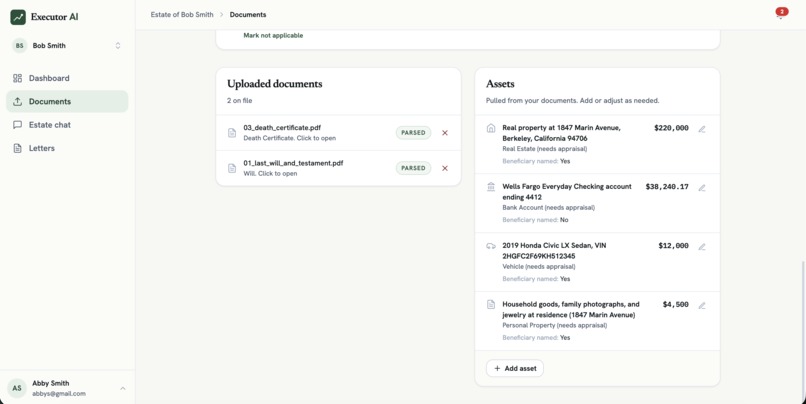
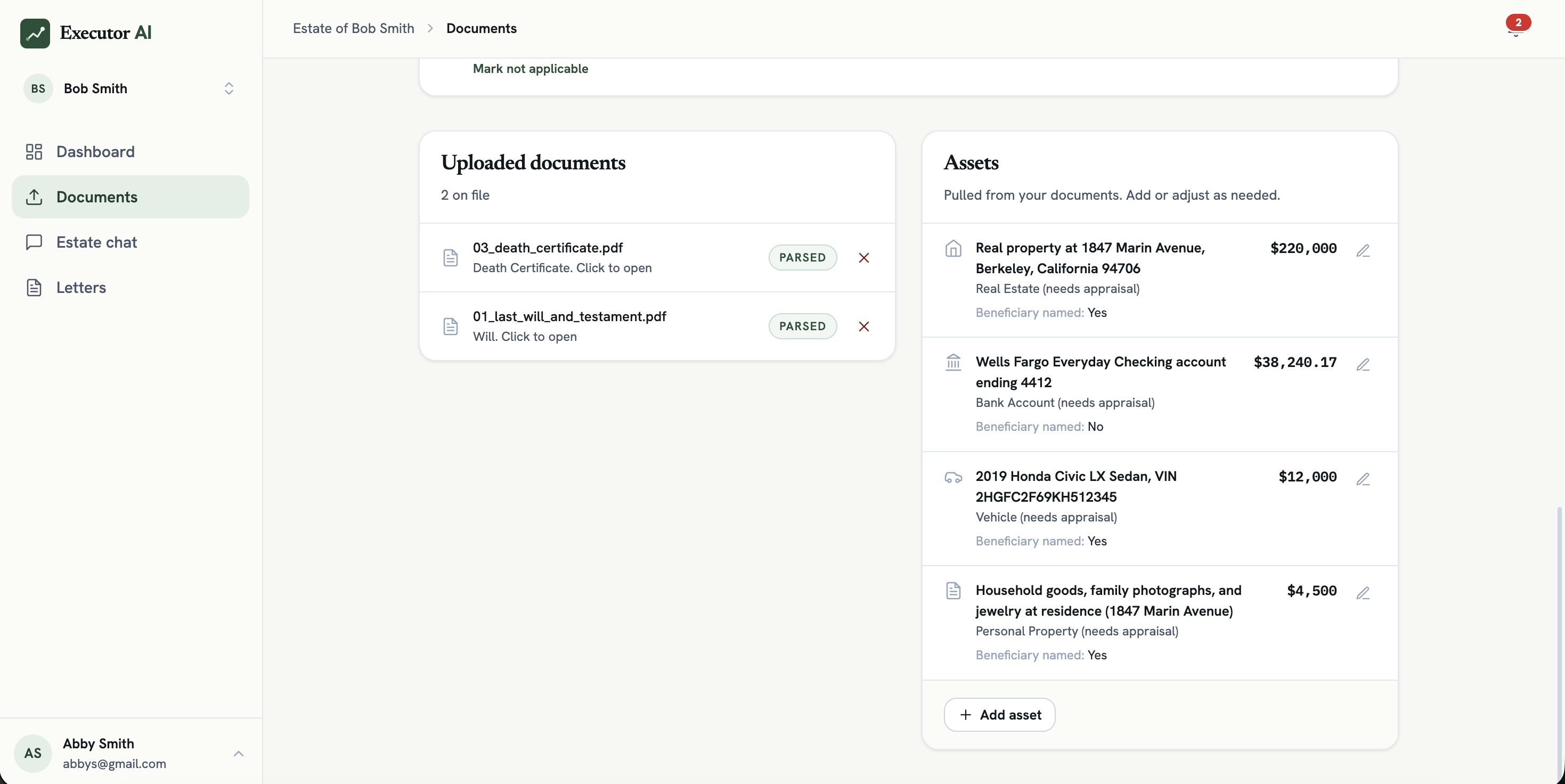
Document Parsing
-
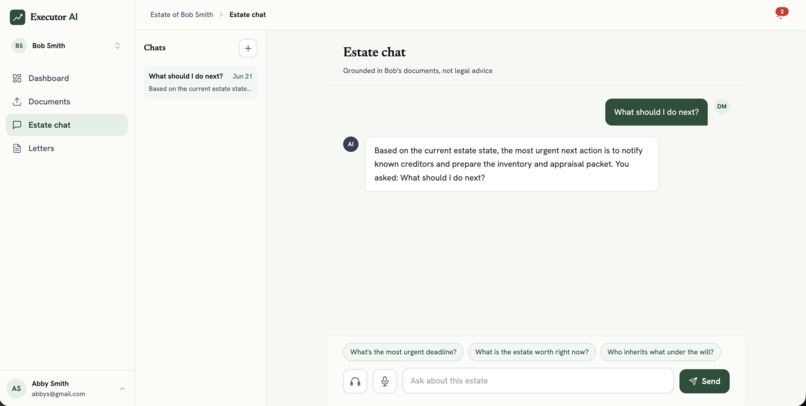
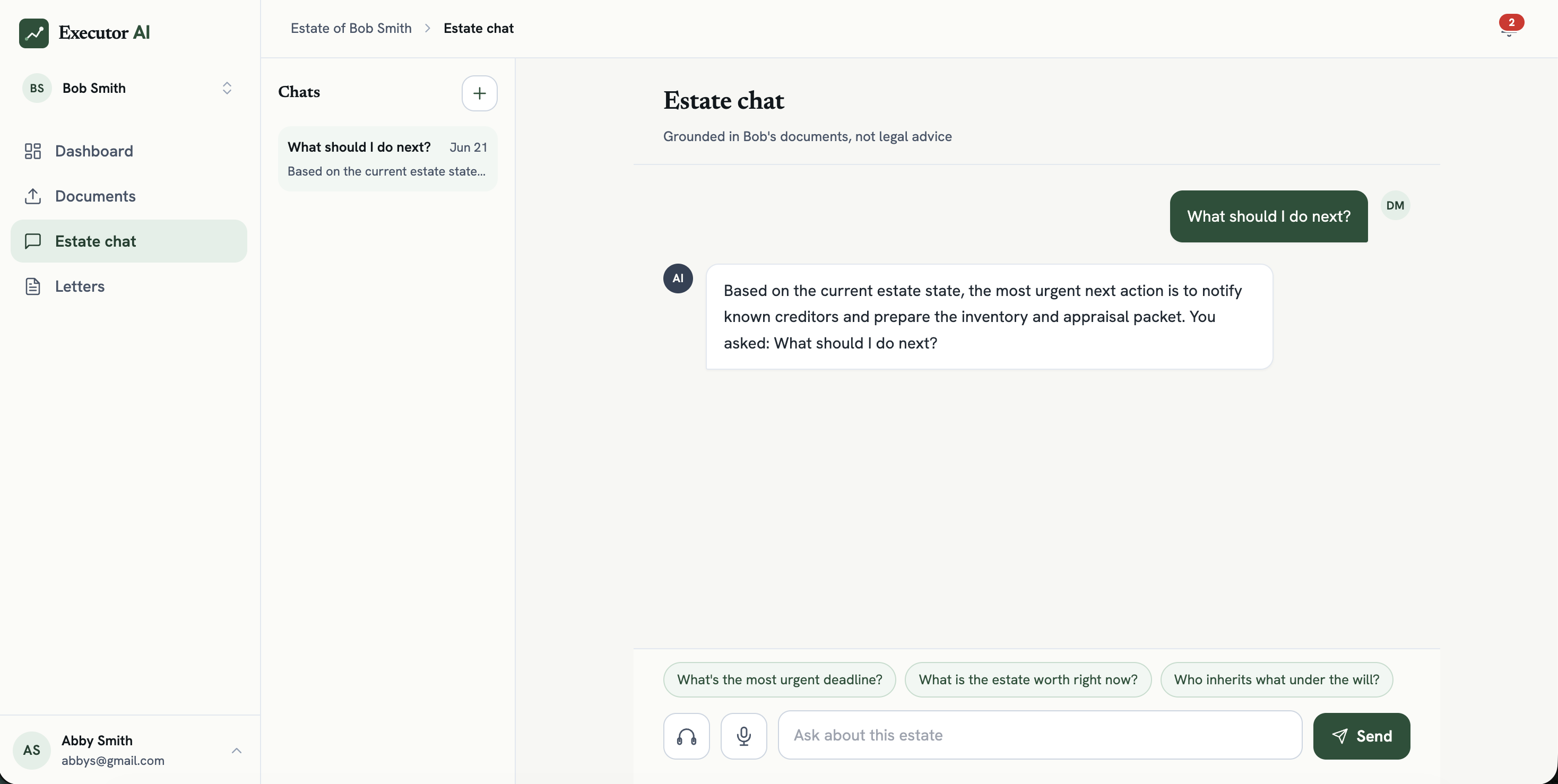
Chat
-
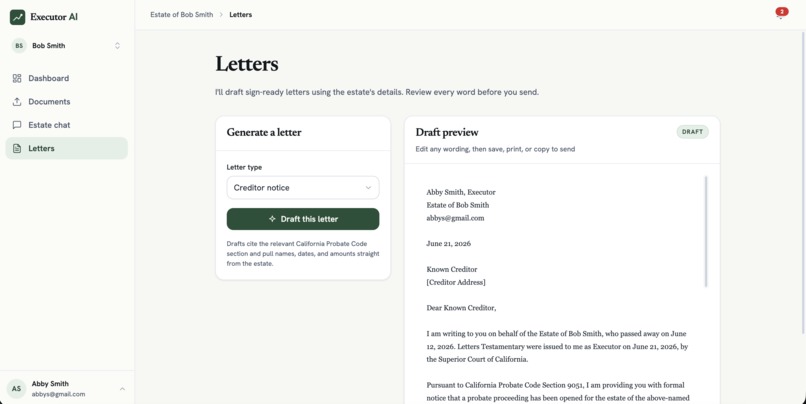
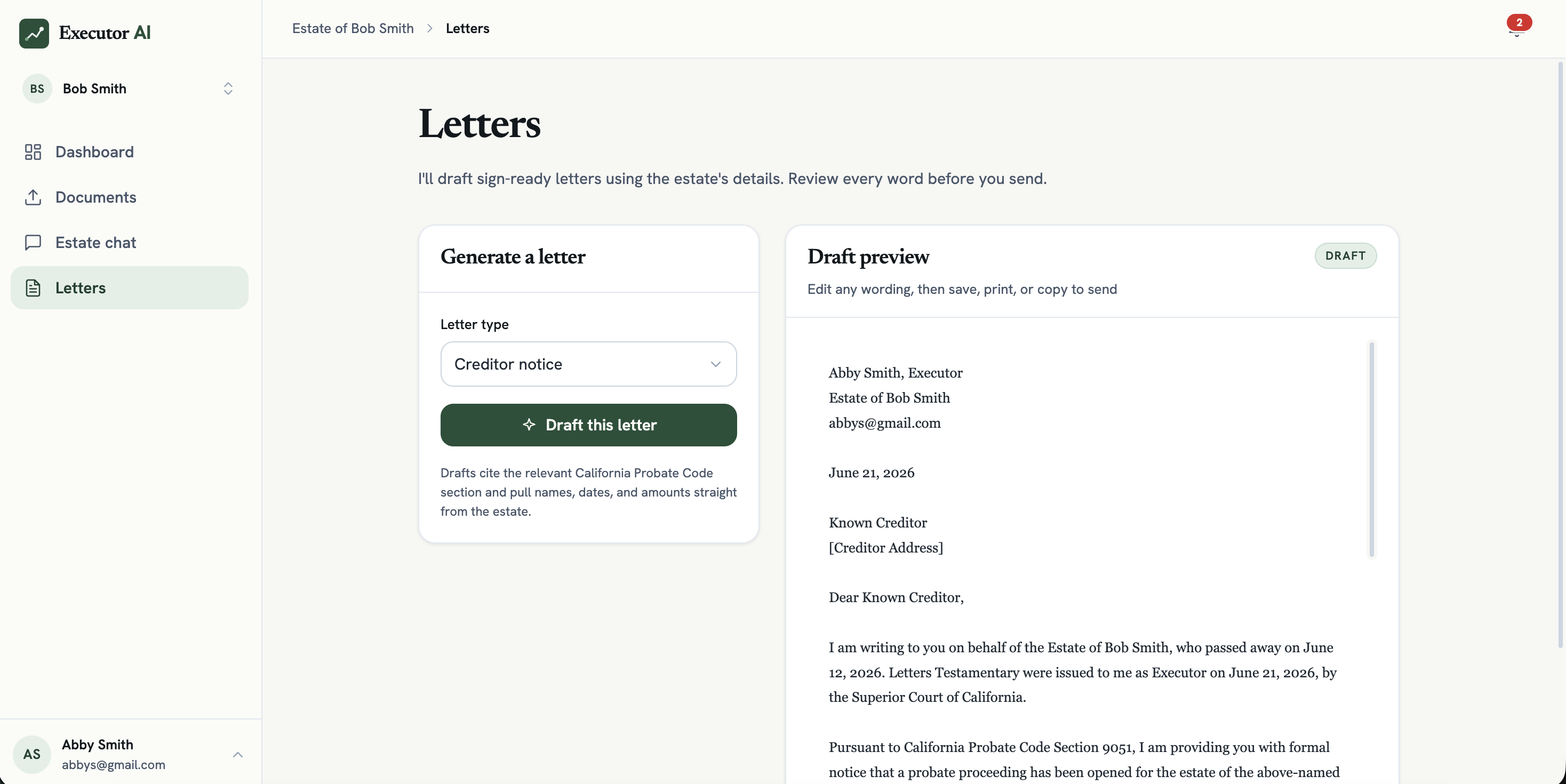
Letters Generation
-
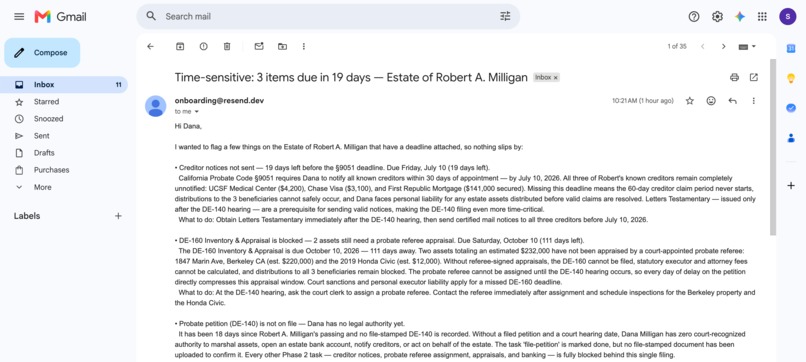
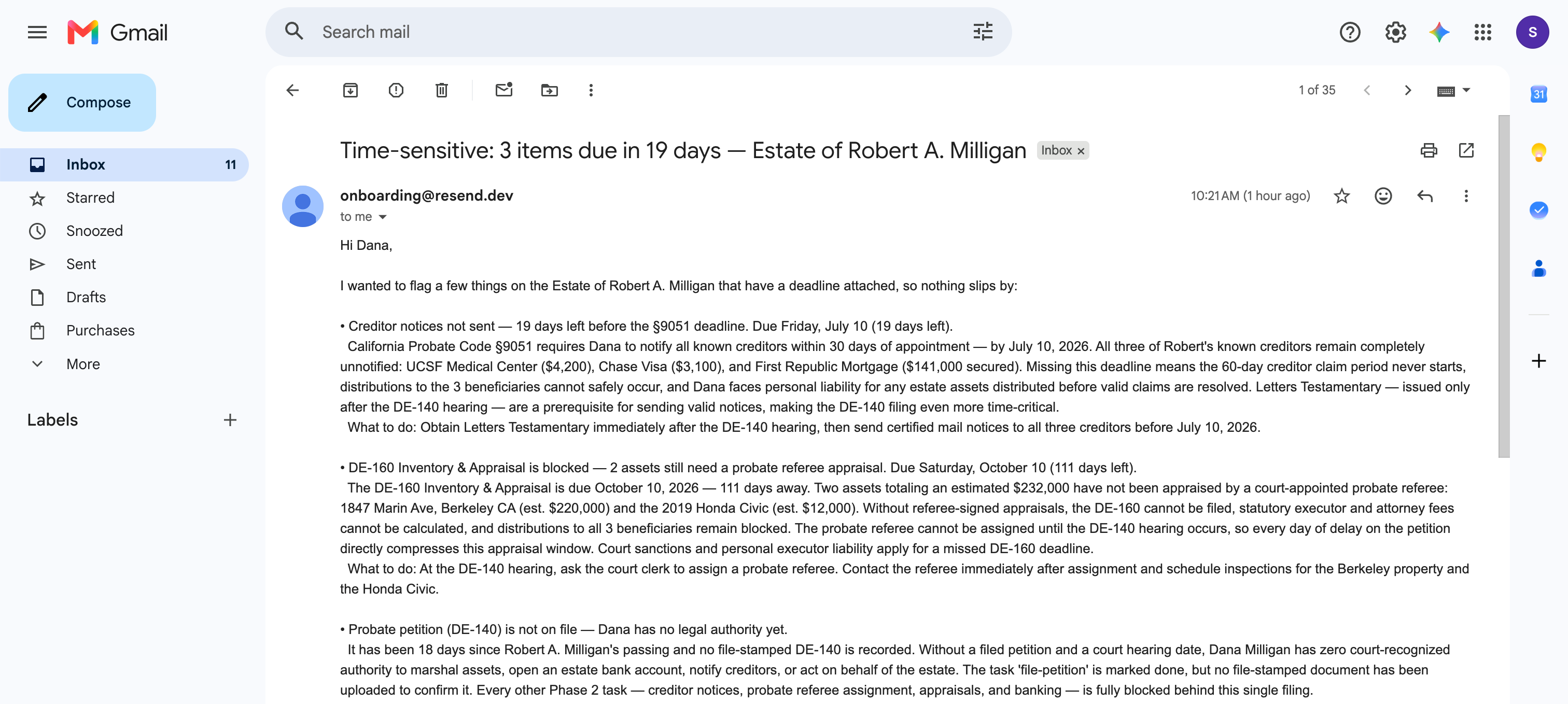
Email Notifications

Executor AI
Inspiration
We built Executor AI to help grieving families and busy executors navigate probate deadlines and reduce liability. Inspiration came from seeing how paperwork, missed notices, and tight time windows cause stress and legal risk for non-professional executors.
What it does
Executor AI ingests estate documents (wills, deeds, bank statements), extracts structured estate state, runs a DeadlineAgent that surfaces urgent probate deadlines and liability risks, supports RAG-powered Q&A for executor questions, and drafts required letters and notices (creditor notices, appraisal requests, court filings).
How we built it
- Backend agent: Python FastAPI (agent/) that runs our agents, document parsers, and embedding flows.
- Frontend: Next.js + TypeScript (web/) for uploader, dashboard, and SSE streaming chat.
- Vector store & state: Redis (KV + vector sets) for estate state, document vectors, and retrieval.
- LLMs: Claude for reasoning and parsing; OpenAI embeddings for vectors.
- Observability: Phoenix/OpenInference spans around LLM/embedding calls.
- CI/dev scripts: Makefile to install, run, seed, and test the demo.
Challenges we ran into
- Reliable extraction from varied document formats (scanned PDFs, different templates).
- Encoding legal deadlines and rules (CA probate) precisely and defensibly.
- Balancing helpful automation with "never give legal advice" constraints — we surface actions but encourage attorney review where required.
- Streaming UX for long-form LLM outputs while validating structured responses (Pydantic/Zod).
Accomplishments that we're proud of
- DeadlineAgent that codifies CA probate timing and proactively alerts before critical windows.
- End-to-end demo: upload documents → parsed state → RAG chat → drafted letters.
- Strong tracing around every LLM/embedding call for auditability and debugging.
- Voice-enabled chat via Deepgram — executors can speak questions and hear responses
- Research Agent that monitors for probate law changes weekly using Google News RSS, zero API keys required
What we learned
- Good prompts + structured validation (Pydantic + Zod) dramatically reduce hallucinations for extraction tasks.
- A small, well-modeled state graph (estate object + assets + tasks + alerts) makes reasoning and RAG far more reliable than ad-hoc documents.
- Observability (traces + spans) is essential when multiple LLMs and embedding calls interact; it speeds root-cause analysis.
- UX matters: clear action items and downloadable letters increase user confidence more than raw answers.
What's next for Executor AI
- Expand jurisdictional rules beyond California and add a policy layer for jurisdiction selection.
- Add richer document OCR/vision fallback for low-quality scans.
- Add role-based workflows (attorneys, co-executors) and audit logs for compliance.
- Tighten evaluation: automated Phoenix/Arize evals to track extraction precision and deadline recall.
About the project
Executor AI turns estate documents into an actionable estate state and gives executors a reliable assist: deadlines, risk alerts, Q&A, and letter drafts. We aimed to reduce missed deadlines and liability by combining robust extraction, a rules-driven DeadlineAgent, a ResearchAgent for latest news updates, and RAG.
Ethical Considerations in Development
Privacy & Data Protection Estate documents contain deeply sensitive financial, health, and family information. We architected the system to minimize data retention: documents are parsed once, embedded, and stored only as vectors in Redis. User estate state never leaves their Redis instance. We recommend client-side encryption for production deployments and access logs for audit compliance.
Avoiding Legal Advice & Liability Risks The system deliberately stops short of recommending specific actions. Instead, it surfaces deadlines and flags rule violations, then directs executors to their attorney for decisions. The UI enforces this boundary by using phrases like "This requires your attorney's input" when an action involves legal judgment. We ensured Claude to refuse to give specific legal advice even when asked directly.
Social Impact & Equity Probate is time-sensitive and expensive. By automating deadline tracking and letter generation, we lower the barrier for non-wealthy families to comply without hiring a probate attorney. However, the system requires internet access and assumes literacy in English and digital interfaces—future work should localize and explore accessibility for elderly executors.
Built With
- arize
- claude
- deepgram
- fastapi
- python
- rag
- redis
- sentry
- typescript


Log in or sign up for Devpost to join the conversation.