-
-
-
-
-
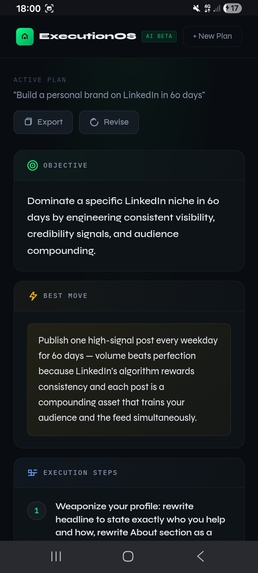
Output
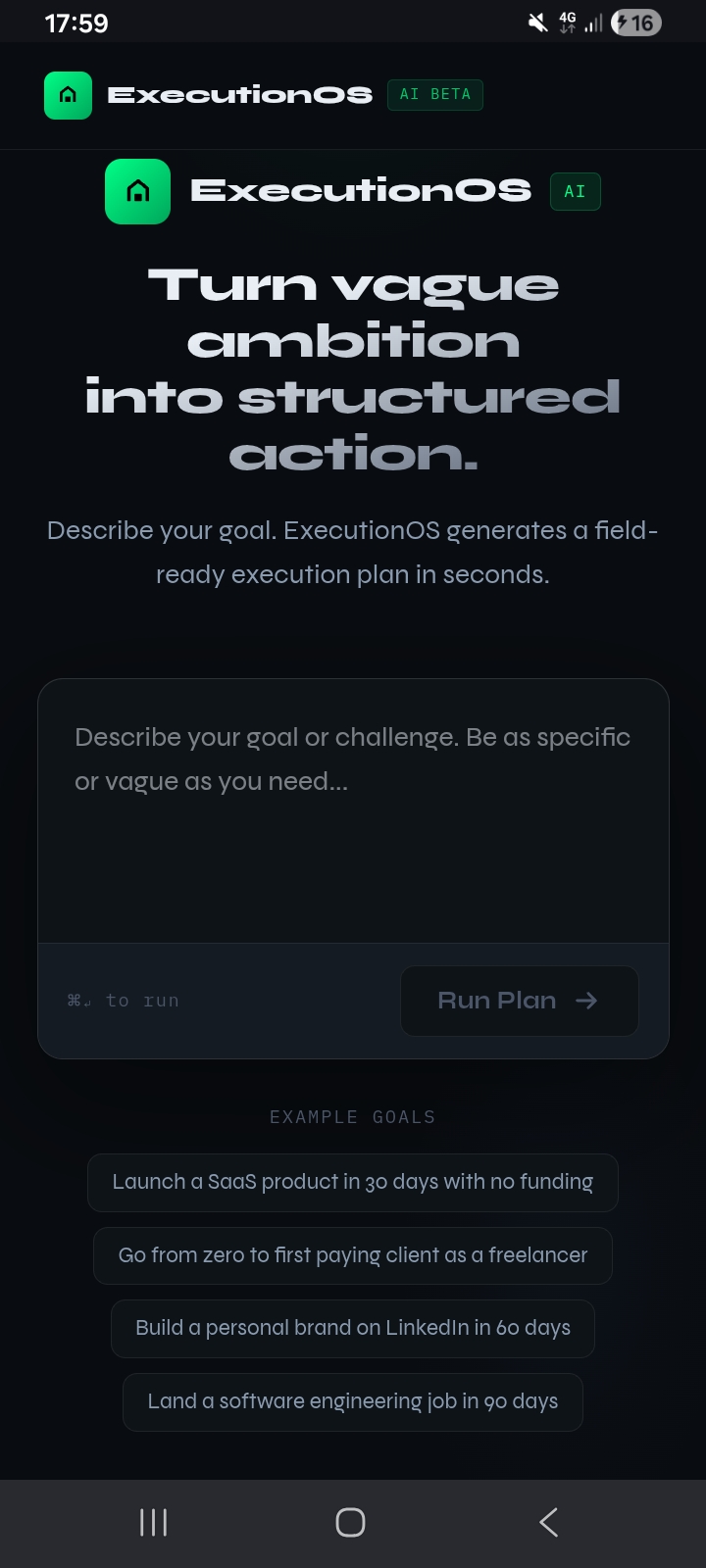
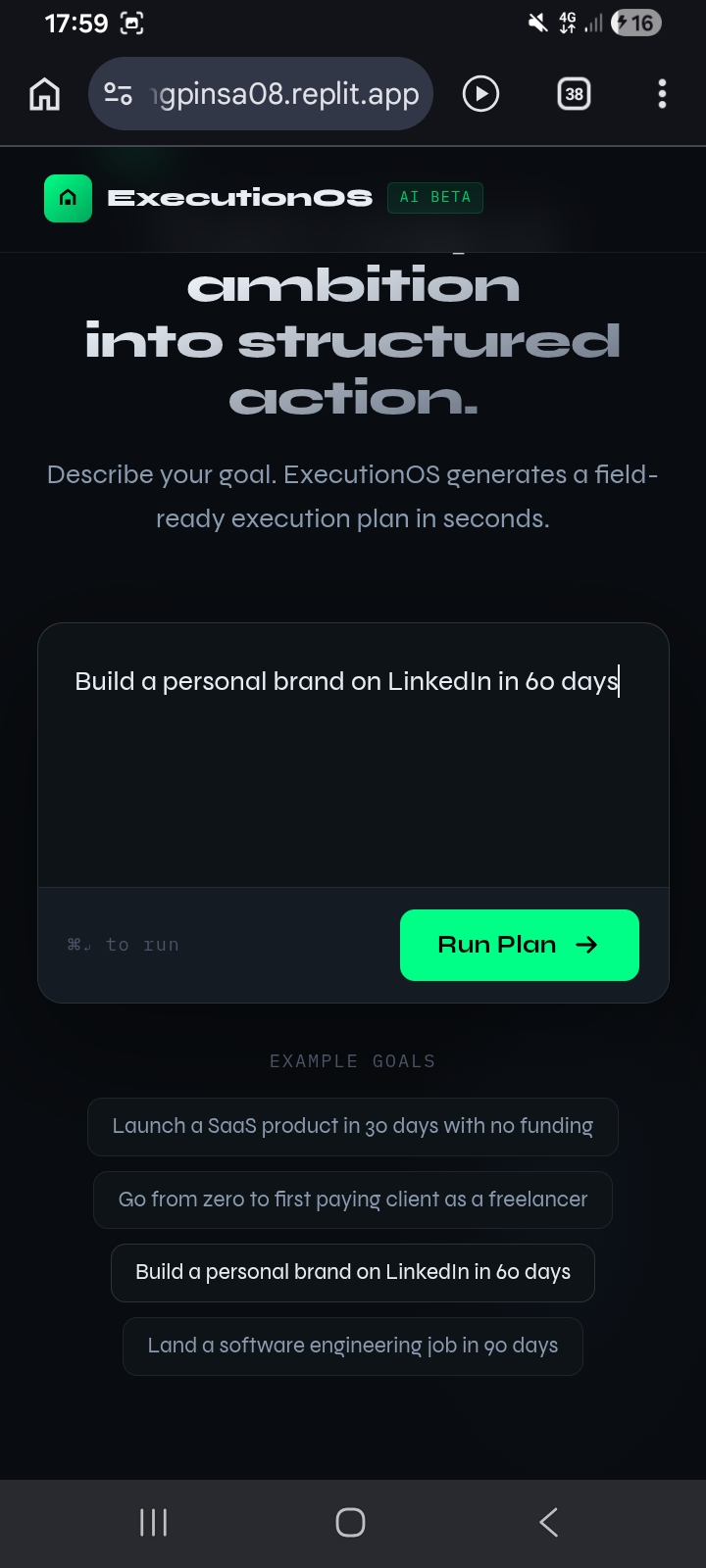
ExecutionOS was inspired by a simple but persistent problem: most ambitious people don’t fail because they lack ideas — they fail because they lack clear execution structure. Goals stay abstract, decision-making becomes overwhelming, and momentum collapses before action begins.
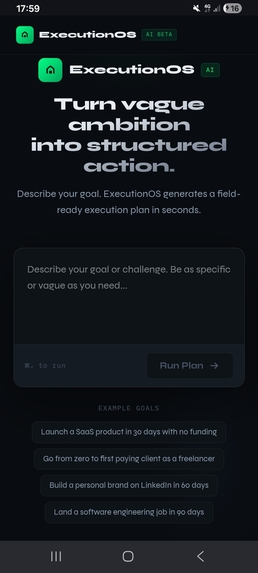
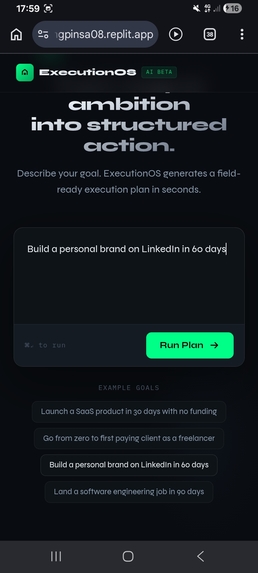
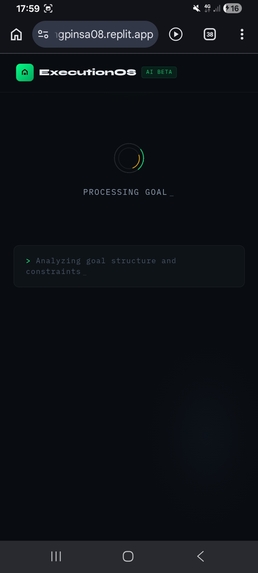
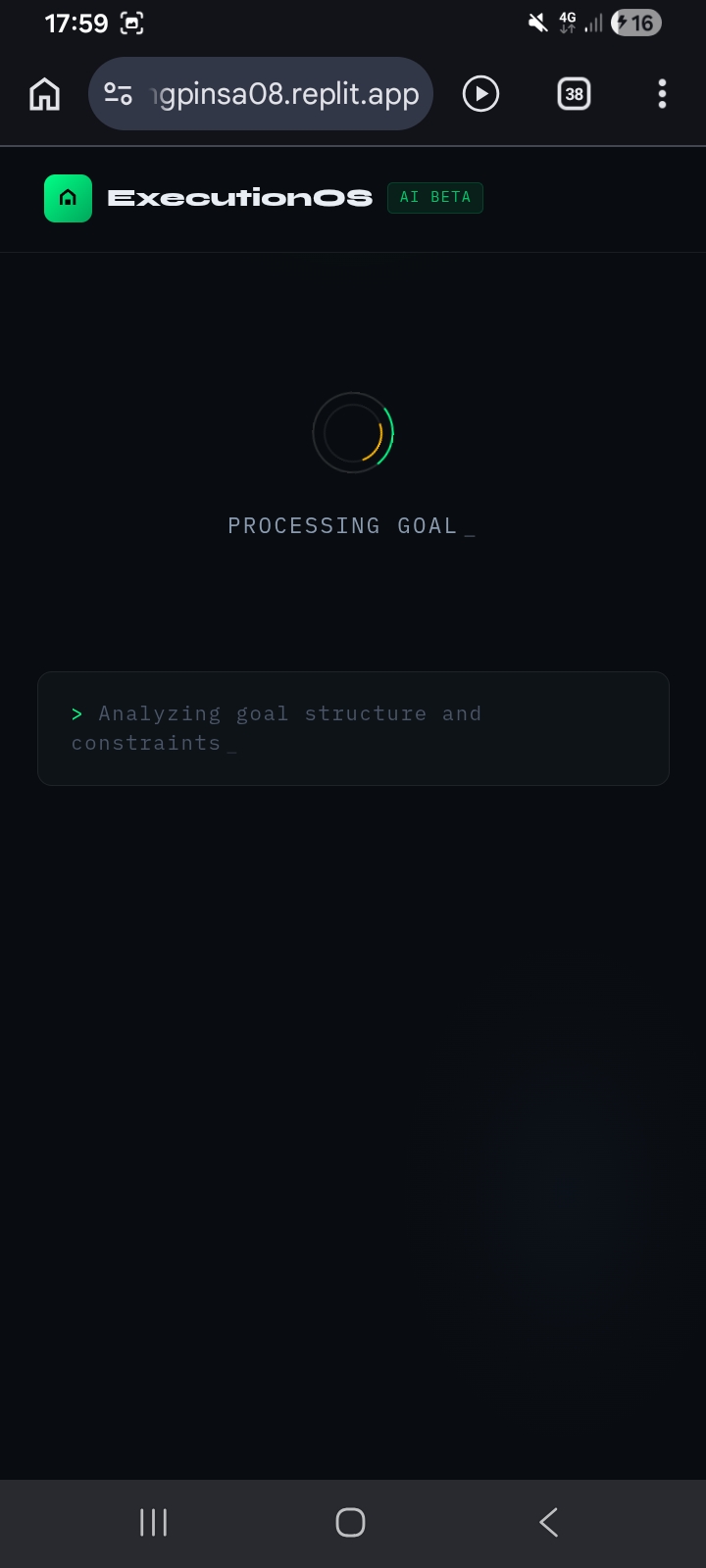
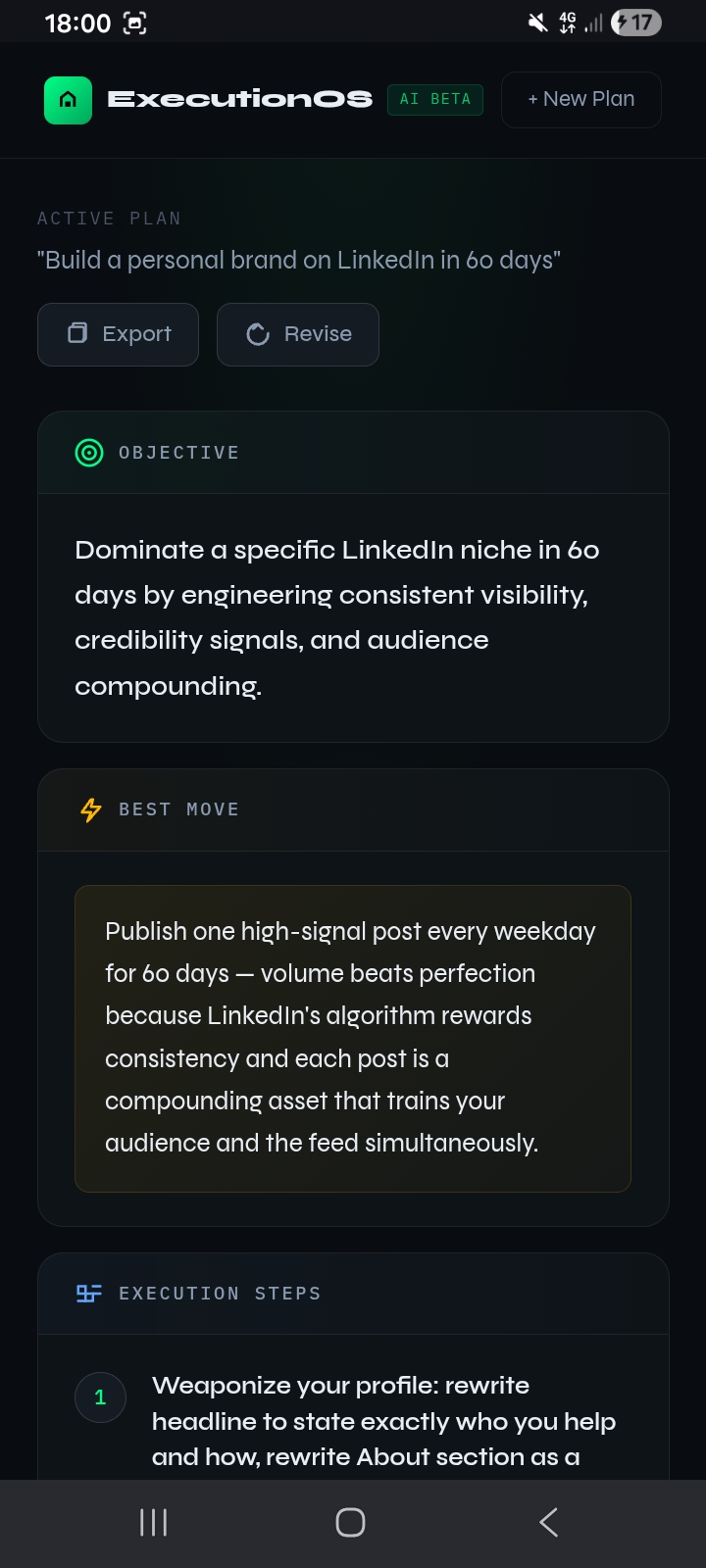
I wanted to build a system that converts intent into immediate, structured execution. Instead of acting like a conversational assistant, ExecutionOS behaves like a strategic operating system: it takes a goal and returns a ranked, deterministic execution plan with objective framing, highest-leverage action, step-by-step breakdown, risks, and a 24-hour action target. Through building this project, I learned how powerful structured AI outputs can be compared to free-form chat. The key breakthrough was designing a strict JSON schema and enforcing it through prompt engineering so that every response becomes directly renderable UI. I also learned how important UX clarity is in AI systems — small design decisions (loading states, segmentation of information, hierarchy of actions) significantly change perceived intelligence and trust.
The system was built as a single-page React application integrated with the Claude API. The frontend handles state transitions (goal input → processing → optional clarification → execution plan output), while the AI layer is constrained by a system prompt that forces structured, deterministic outputs. No backend or database was used to keep the system fast, lightweight, and demo-ready.
The biggest challenges were ensuring API reliability, preventing malformed JSON responses, and designing a prompt that consistently produces actionable, non-generic execution steps. Another challenge was balancing simplicity with depth — making the system feel powerful without overwhelming the user.
Overall, ExecutionOS demonstrates how AI can move beyond conversation and become a practical execution layer for real-world decision-making.
Built With
- claude
- css
- hooks
- javascript
- react
- replit


Log in or sign up for Devpost to join the conversation.