-
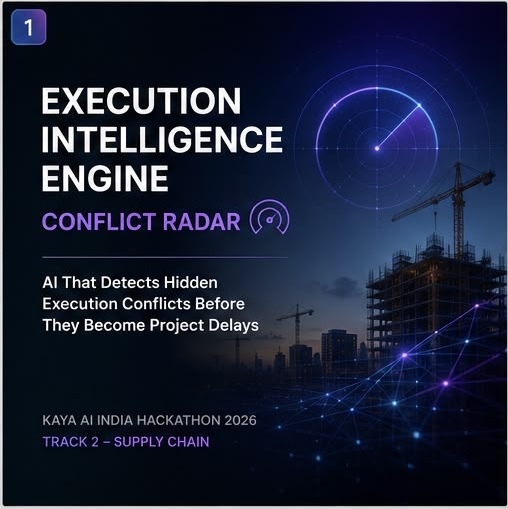
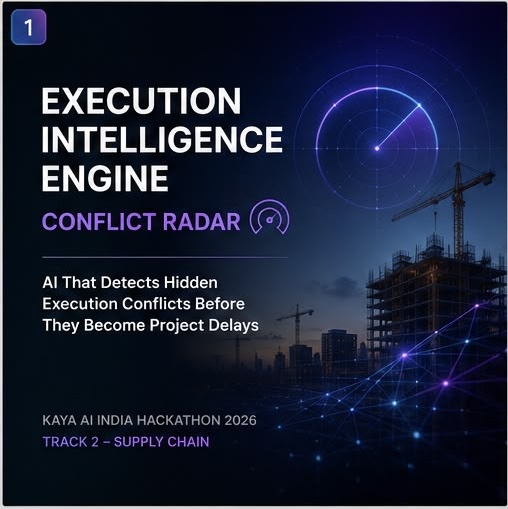
Image 1 – Cover Execution Intelligence Engine: AI that detects hidden execution conflicts before they become costly construction delays.
-
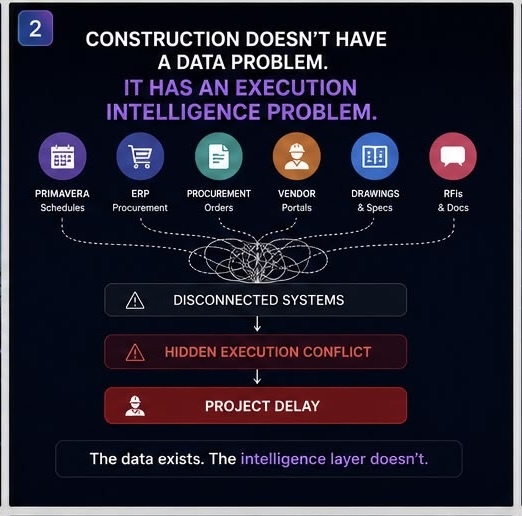
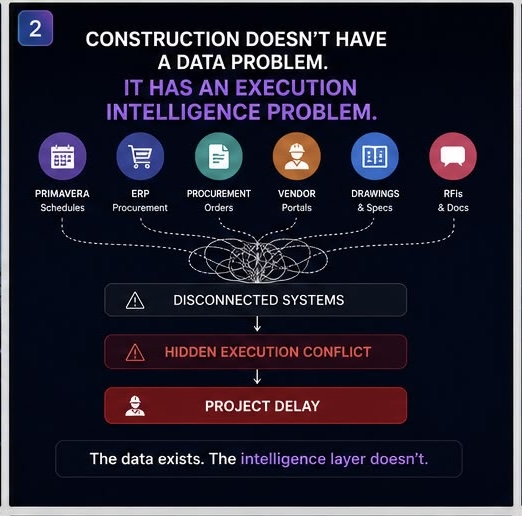
Image 2 – Problem Disconnected construction systems create hidden conflicts that cascade into costly delays, rework, and budget overruns.
-
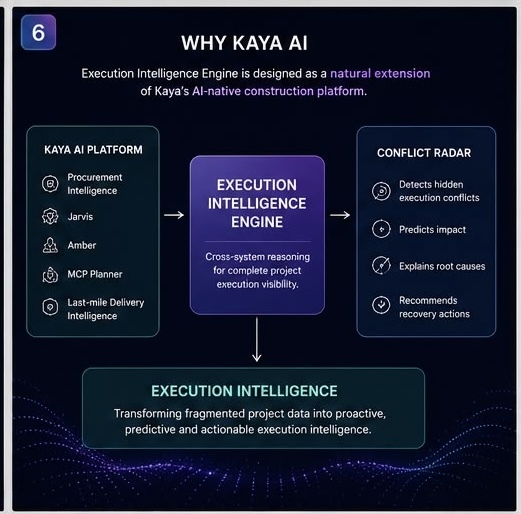
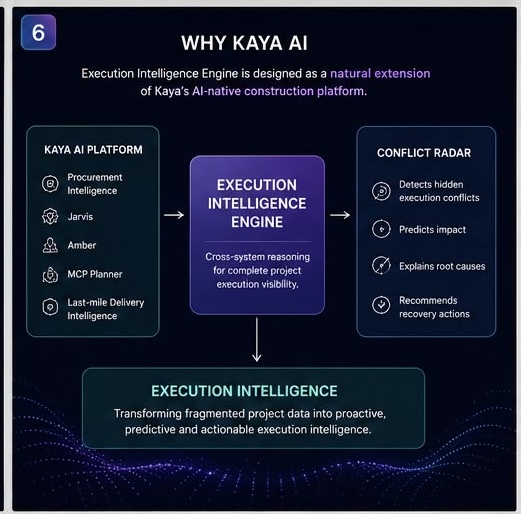
Image 6 – Why Kaya Built as Kaya AI's next intelligence layer, extending procurement into predictive execution intelligence.
-
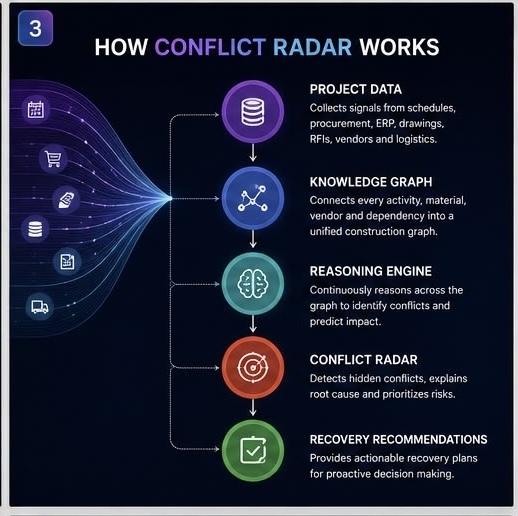
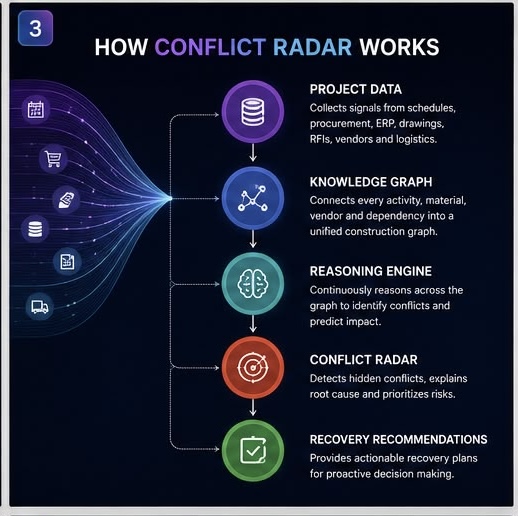
Image 3 – How It Works Knowledge Graph + AI reasoning continuously detects conflicts, predicts impact, and recommends recovery actions.
-
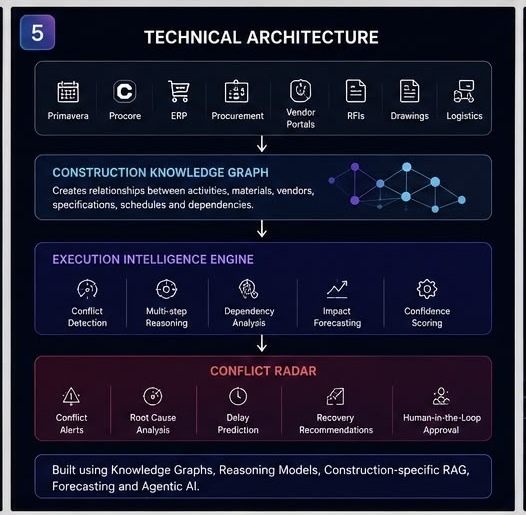
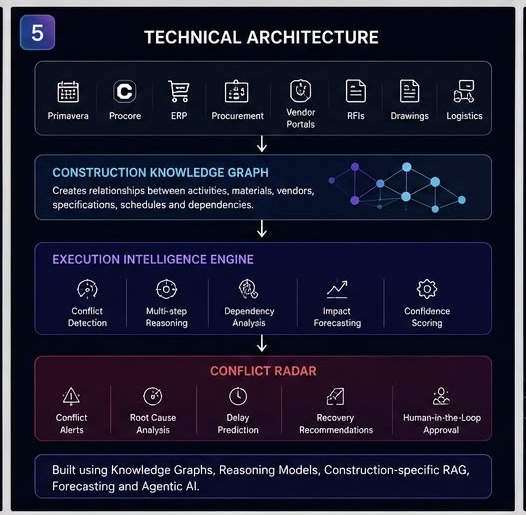
Image 5 – Technical Architecture Enterprise architecture transforming fragmented construction data into proactive execution intelligence.
-
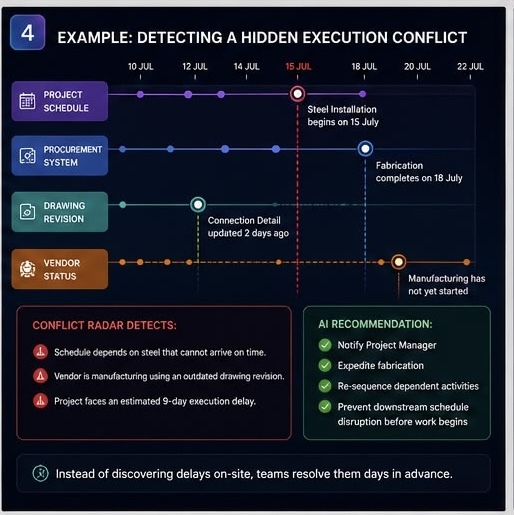
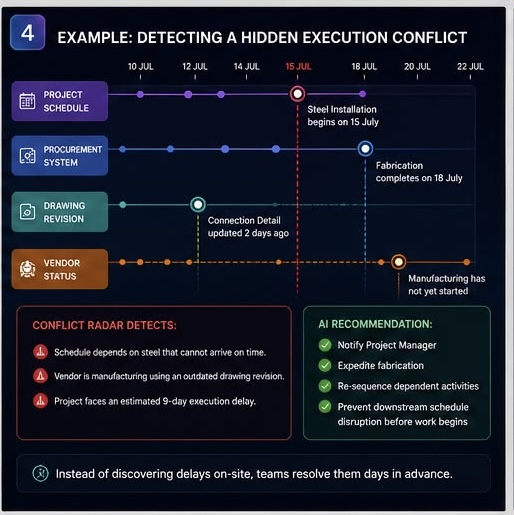
Image 4- Conflict Radar detects hidden conflicts early, preventing costly execution delays.
Execution Intelligence Engine (Conflict Radar)
Inspiration
Construction projects generate enormous amounts of data across ERP systems, procurement platforms, schedules, drawings, RFIs, logistics, and vendor portals. However, every system only knows a small part of the project. Project managers still spend hours manually connecting information to understand what is actually happening.
We realized that construction does not have a data problem—it has an execution intelligence problem.
Instead of building another dashboard or chatbot, we envisioned an AI reasoning layer that continuously understands relationships across project systems and detects hidden execution conflicts before they become costly delays.
What it does
Execution Intelligence Engine (EIE) is an AI-native reasoning platform for construction.
Its flagship capability, Conflict Radar, continuously reasons across fragmented project data to identify hidden execution conflicts.
For example:
- A drawing revision changes a structural connection.
- Procurement is still manufacturing the old design.
- The schedule assumes installation begins next week.
Today, this conflict is usually discovered only after work stops.
Conflict Radar detects the contradiction immediately, explains why it happened, predicts downstream project impact, and recommends recovery actions before delays occur.
How we built it
Our proposed architecture combines:
- Construction Knowledge Graph
- Large Language Models
- Graph-based reasoning
- Forecasting models
- Agentic AI workflows
- Construction-specific Retrieval-Augmented Generation (RAG)
Project information from schedules, procurement systems, drawings, vendor updates, RFIs, and ERP platforms is transformed into a unified execution graph.
The reasoning engine continuously analyzes dependencies, detects conflicts, predicts downstream risks, and generates explainable recovery recommendations while keeping humans in control.
Challenges we ran into
The biggest challenge was designing a solution that goes beyond document intelligence.
Construction data is fragmented, incomplete, and distributed across multiple enterprise systems. Creating a reasoning layer capable of understanding relationships instead of simply retrieving information required rethinking the problem from a systems perspective.
Another challenge was balancing ambitious AI capabilities with a realistic enterprise workflow that integrates into existing construction platforms rather than replacing them.
Accomplishments that we're proud of
- Identified a real enterprise-scale problem in construction execution.
- Designed an AI reasoning architecture instead of another dashboard or chatbot.
- Built a solution that naturally extends Kaya AI's vision of becoming the intelligence layer for construction.
- Created a scalable architecture that can evolve into multiple execution intelligence capabilities beyond conflict detection.
What we learned
This project reinforced that the future of enterprise AI is not simply generating answers—it is reasoning across fragmented systems to support operational decision-making.
We also learned how knowledge graphs, reasoning models, and agentic AI can work together to solve complex construction workflows rather than isolated document tasks.
What's next for Execution Intelligence Engine
Our immediate roadmap includes:
- Live integrations with ERP and scheduling platforms
- Real-time execution knowledge graph
- Multi-agent reasoning workflows
- Predictive delay forecasting
- Automated recovery planning
- Resource orchestration
- Cross-project learning for continuously improving execution intelligence
Conflict Radar is only the first capability. Our long-term vision is to build an AI operating layer that continuously understands how construction projects are actually progressing and proactively guides teams toward successful execution.
Built With
- agentic
- ai
- api
- artificial
- cloud
- construction
- data
- docker
- enterprise
- fastapi
- forecasting
- graph
- intelligence
- knowledge
- machine
- models
- neo4j
- node.js
- openai
- postgresql
- python
- rag
- react
- supply
- typescript

Log in or sign up for Devpost to join the conversation.