-
-
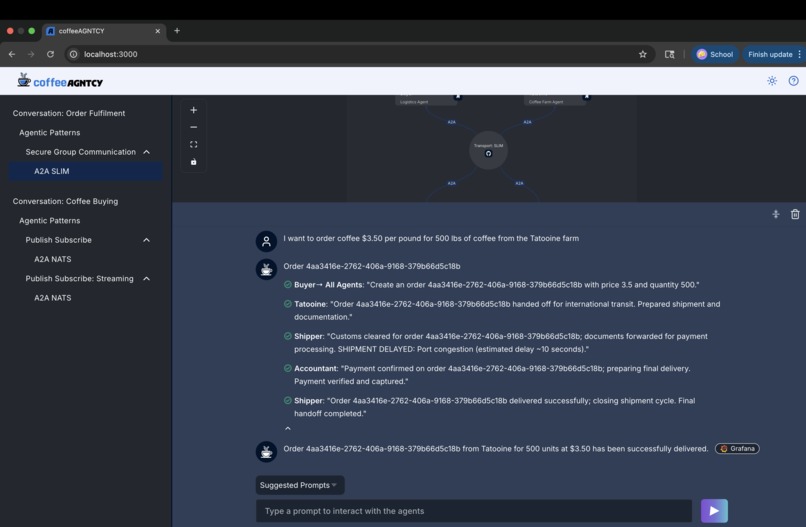
aptly shows how the code deals with delays in processing
Inspiration
After working with the Lungo demo, I decided to incorporate additional real-world constraints. While the original demo demonstrated functionality, I wanted the model to better reflect real-world behavior.
What it does
My project adds an additional layer of functionality to the group chat variation of the Lungo version. Inside this, the shipper has more constraints added to it to better reflect how shipping works in real life. In this case, we have added maximum shipments, port custom delays as the two constraints to test while shipment is being processed. The model dealt with these delays by sending the user an appropriate message and by adding a time delay to the working.
How we built it
My project adds an additional layer of functionality to the group chat variation of the Lungo version. Inside this, the shipper has more constraints added to it to better reflect how shipping works in real life. In this case, we have added maximum shipments, port custom delays as the two constraints to test while shipment is being processed. The model dealt with these delays by sending the user an appropriate message and by adding a time delay to the working.
Challenges we ran into
The application had 3 errors. The first error was installing the dependencies and running Lungo on our local computer. This process took a lot of time as we had to understand how each folder worked and contributed to the larger project. After we got it running, however, it worked most of the time, except occasionally the server would crash and give us an error. Another problem that we faced was rate limiting on our LLMs. Because I was using the free versions for Groq LLM, occasionally it would give me a rate limit because the application was making multiple LLM calls. The last problem was the hardest to solve. As I said before, if there's a customs or a shipment delay, the program would try and repeat the shipment process again. However, the application did not allow for this as the lamb chain only allows for a single shipment call with the shipment agent, and hence it gave us an internal server error. So to solve this, we simply added a 10-second delay, which was simulated, and then it would change the state to shipped automatically. This ensures that if there is an error in shipment, the agent would simulate the 10-second delay and then continue with processes as normal.
Accomplishments that we're proud of
I am most proud of the fact that I was able to understand the multi-agent system in Lungo and then make changes to it in a span of 24 hours. I have never worked with multi-agent systems before this, which is why I decided to go ahead with the beginner track. Understanding how the system works using LangChain and then adding my own changes to it was extremely fulfilling. 90% of today's hackathon was learning and only 10% of it was coding. However, I am still extremely satisfied with how everything went.
What we learned
Langchain implementation Multi Agent systems Group chat conversation between agents Adding functionality to existing agent (shipper)
What's next for Execution-Aware Shipping Agent for CoffeeAGNTCY
I want to add a negotiator agent as well. This will negotiate prices with the user and come at a consensus. I was initially planning to do this, but this was beyond my technical scope I will try over the coming week.
Built With
- async
- fastapi
- langchain
- mcp


Log in or sign up for Devpost to join the conversation.