Inspiration
As second-year students planning to go on exchange, we quickly realized how confusing, fragmented, and inaccessible the process is — especially when it comes to course equivalencies. Important information is spread across multiple systems, and figuring out which courses will actually count toward your degree takes far more time and effort than it should. We wanted to build something that makes exchange planning simpler and less stressful for students like us.
What it does
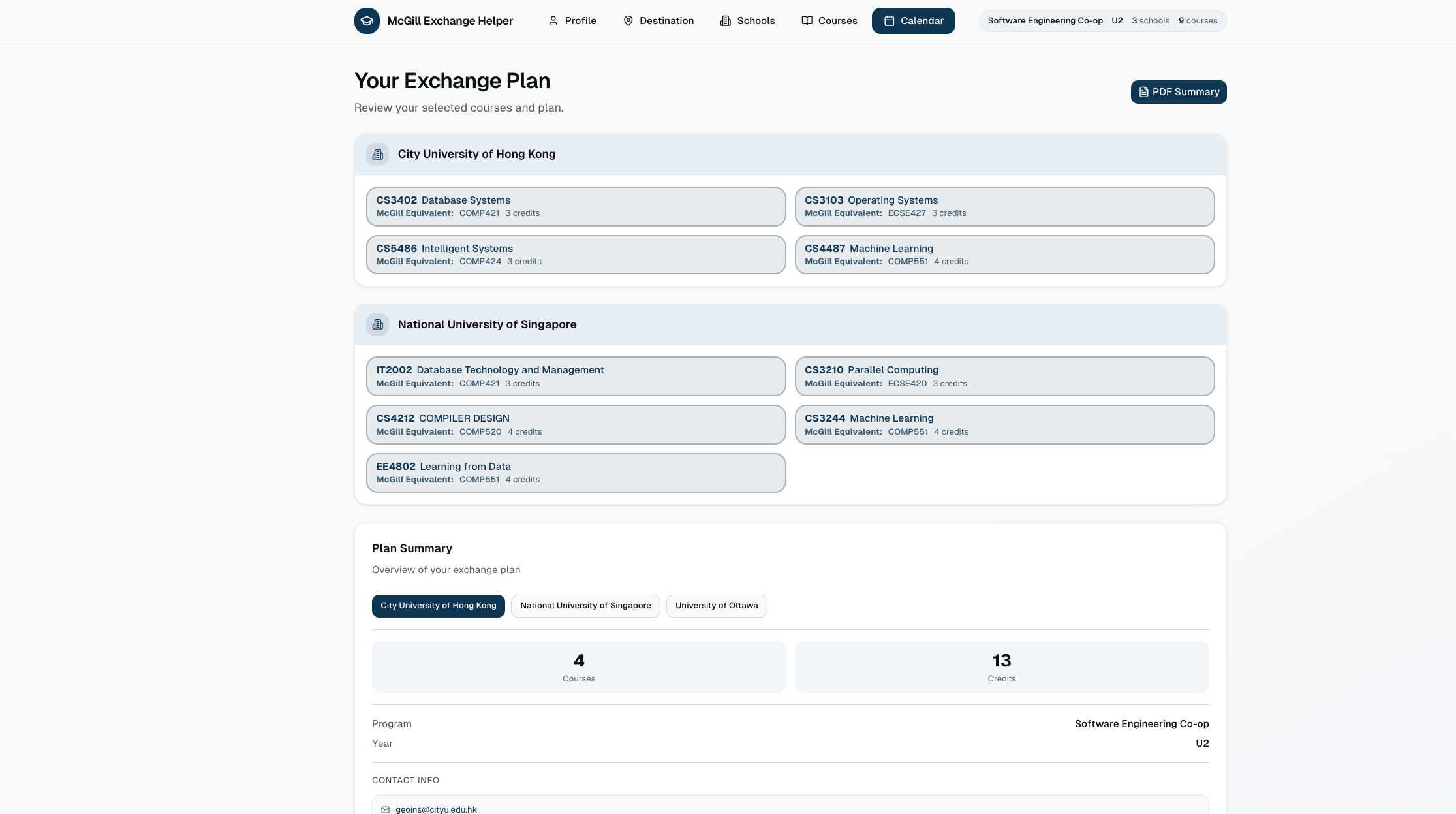
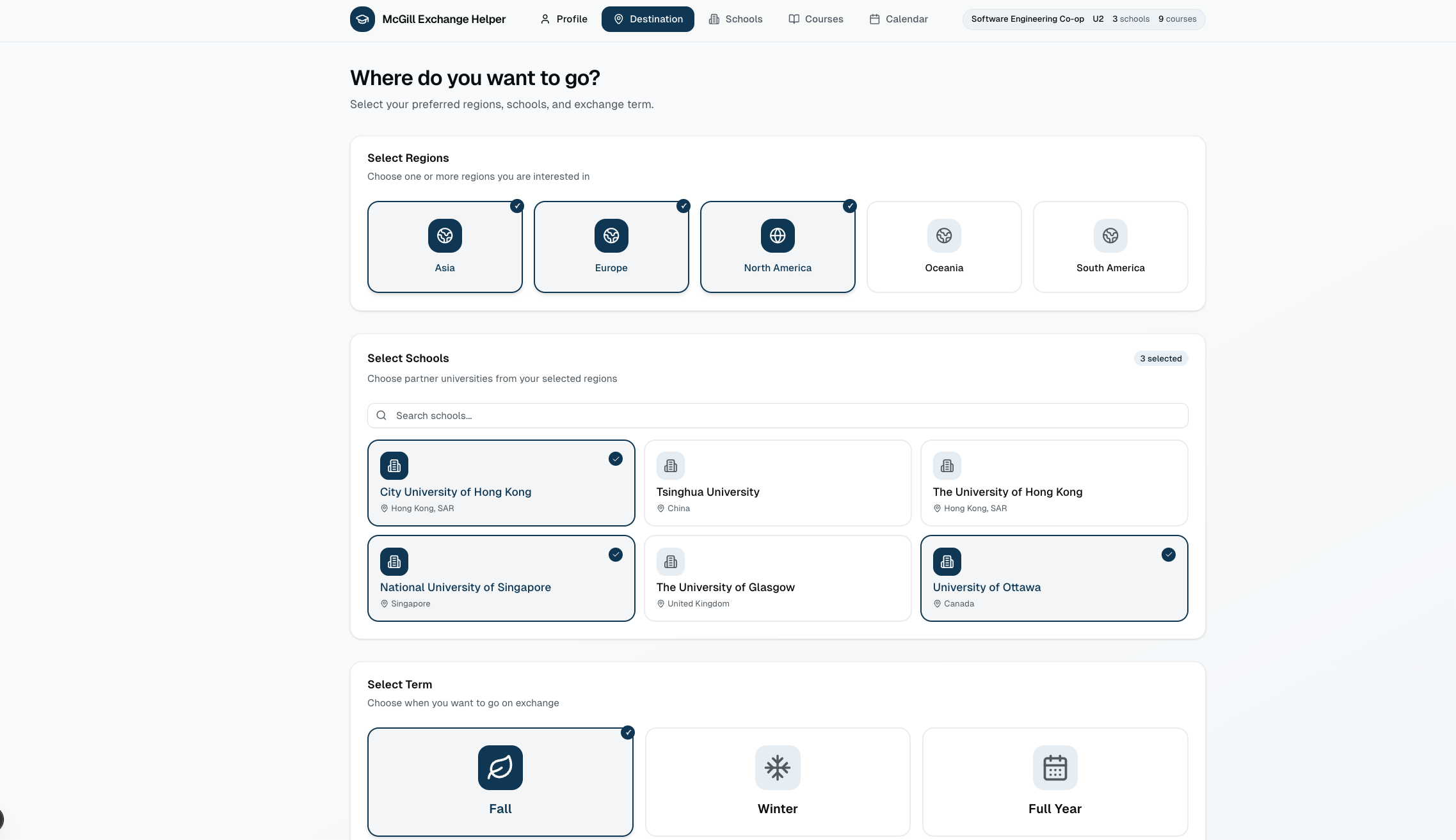
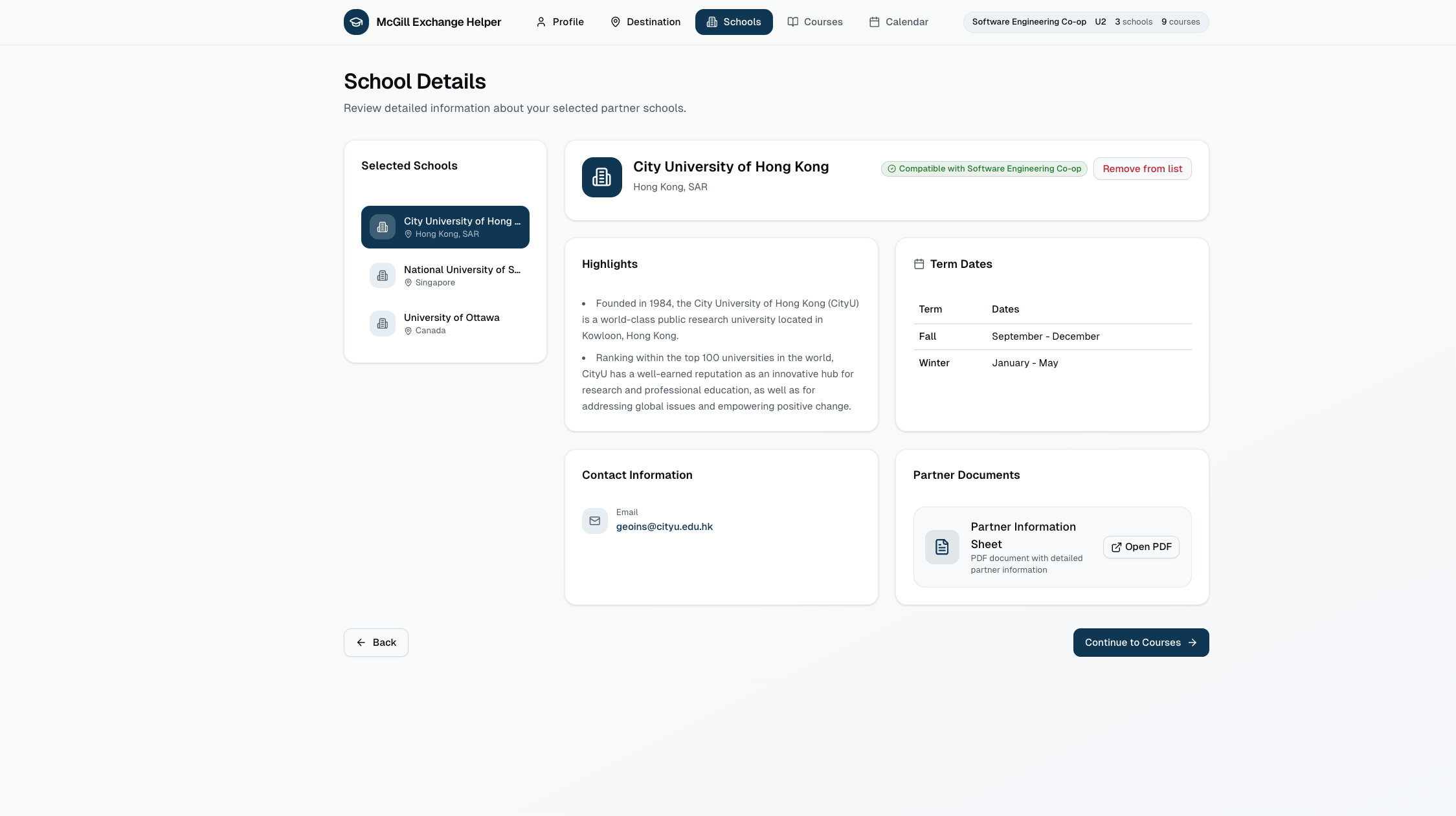
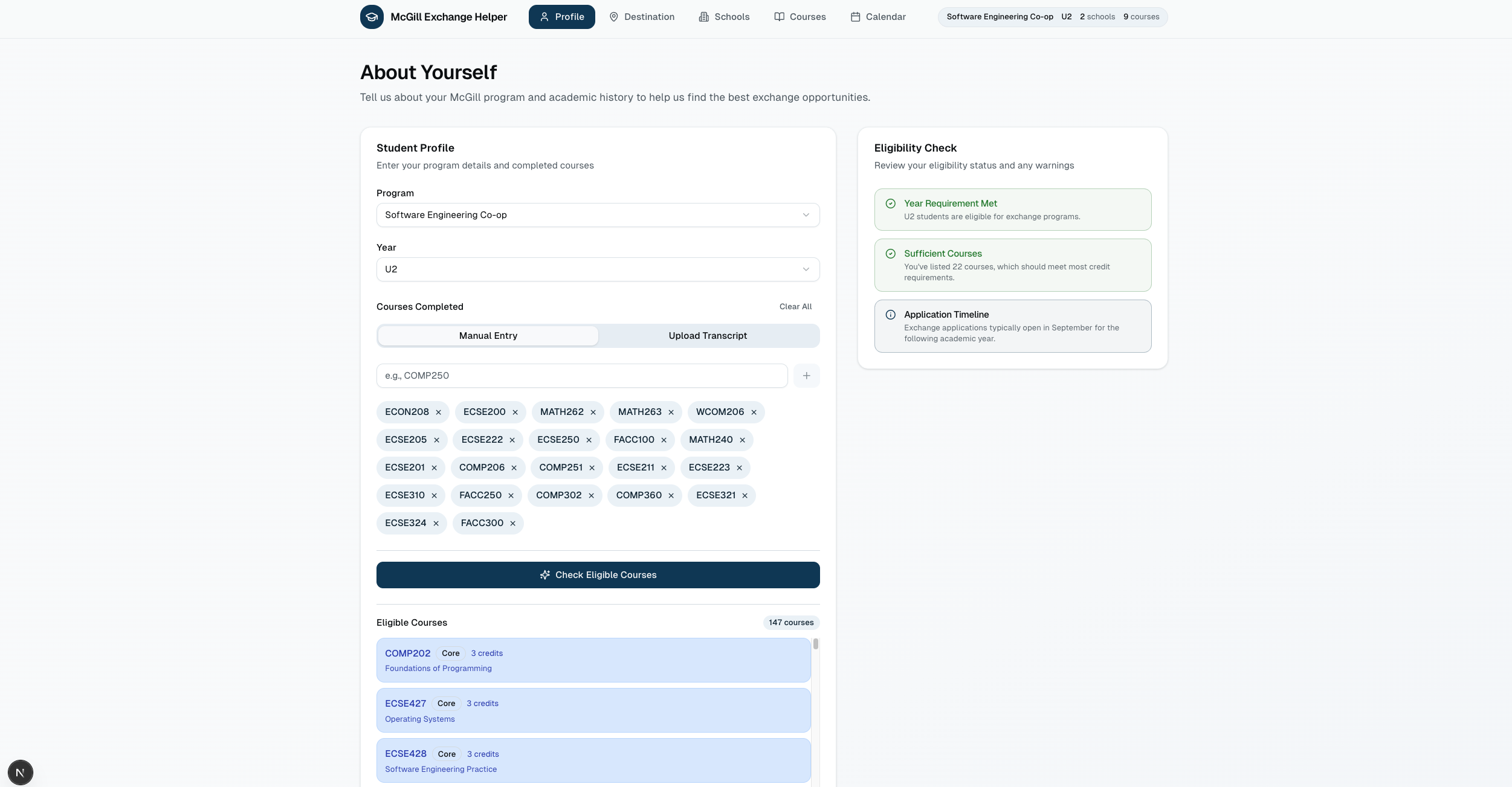
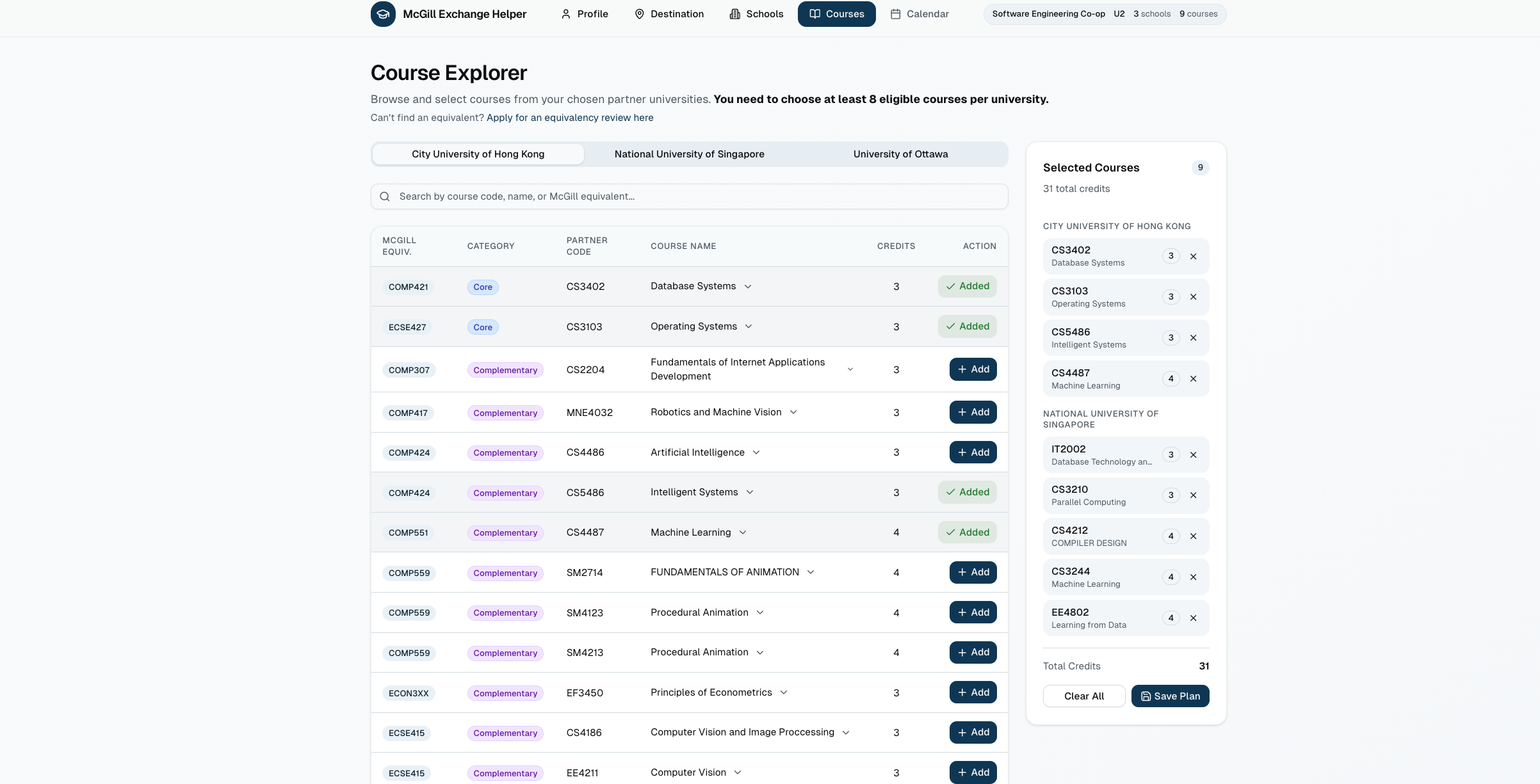
Our app helps students plan their exchange semester by easily finding equivalent courses at selected host universities that align with their McGill program requirements. Instead of manually searching through different databases and PDFs, students can explore courses and understand how they fit into their degree in one place.
How we built it
We built a full-stack web application that combines multiple data sources:
- Scraped course catalogs and course equivalency data
- Integrated prerequisite information
- Collected data on partner institutions
- Used transcript extraction and curriculum digitization techniques to structure program requirements for analysis and matching
This allowed us to connect host-university courses with McGill requirements in a more usable and scalable way.
Challenges we ran into
Scraping was one of our biggest challenges. There were no open or consistent APIs for much of the data we needed, and many sites relied heavily on JavaScript. We eventually used Selenium, which proved to be reliable for handling dynamic content. We also supplemented our data using open-source prerequisite data provided by the @mcgill.courses team.
Accomplishments that we're proud of
We’re proud that we were able to build a fully functional full-stack application in a short amount of time. More importantly, this is a tool we would genuinely use ourselves, and we believe it can help many other McGill students navigate exchange planning more confidently.
What we learned
- Web scraping can be difficult, but also surprisingly fun
- Working with messy, real-world data is very different from textbook examples
- Rapid prototyping and vibe-coding can be extremely effective under hackathon constraints
What’s next for Exchange
- Expand support to all McGill programs and curricula
- Add more partner universities and institutions
- Improve course matching logic and recommendations
- Integrate live equivalency updates and degree-planning visualizations


Log in or sign up for Devpost to join the conversation.