-
-
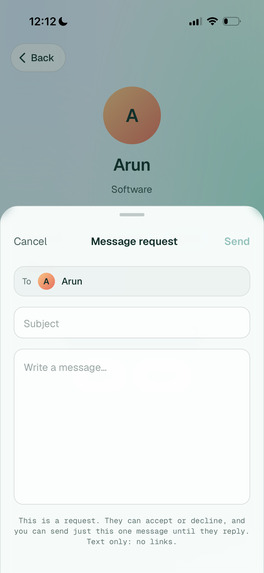
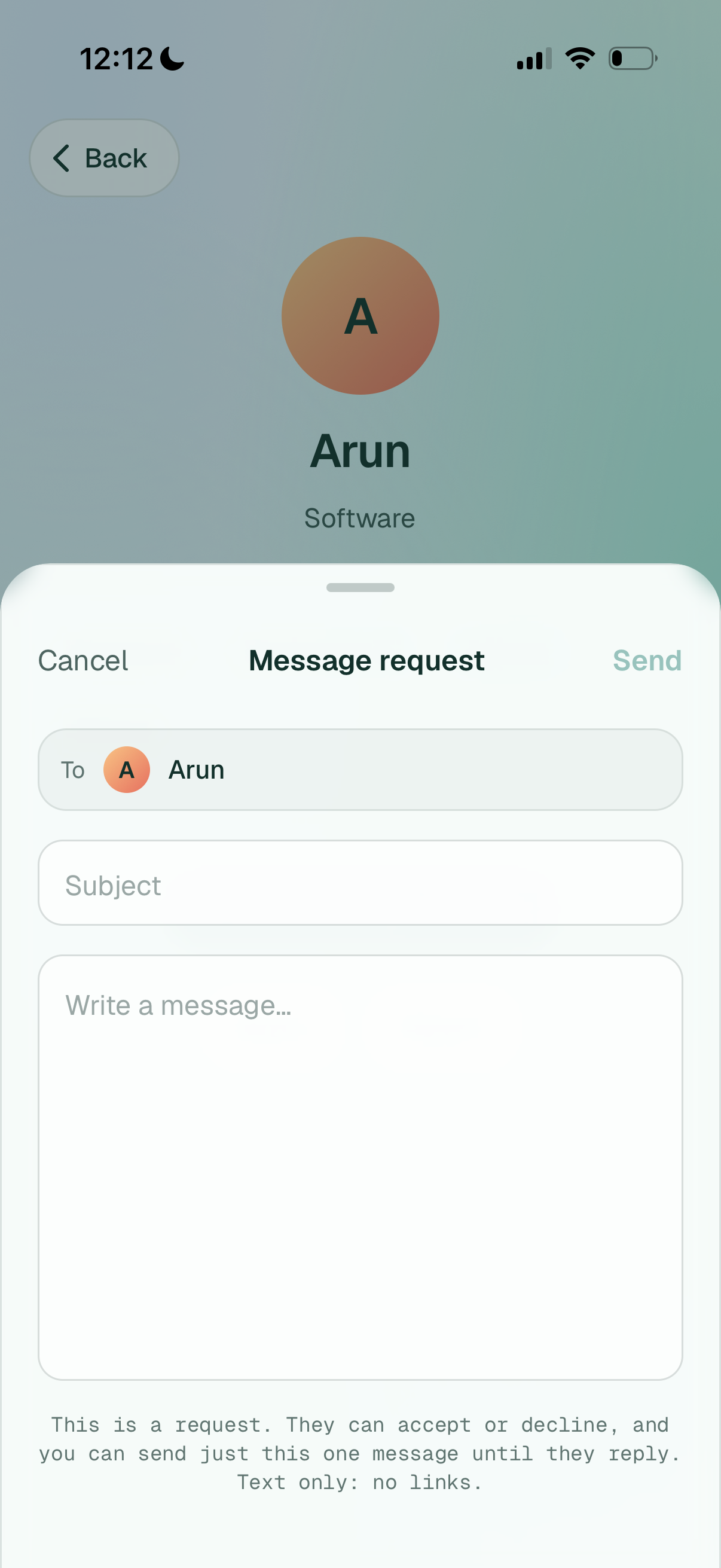
Messaging Interface
-
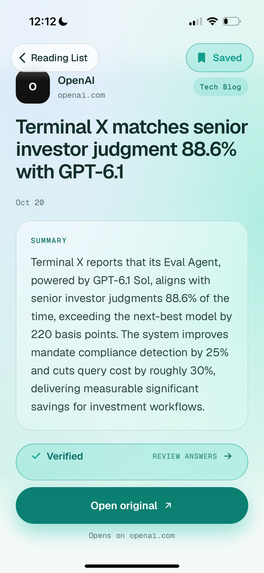
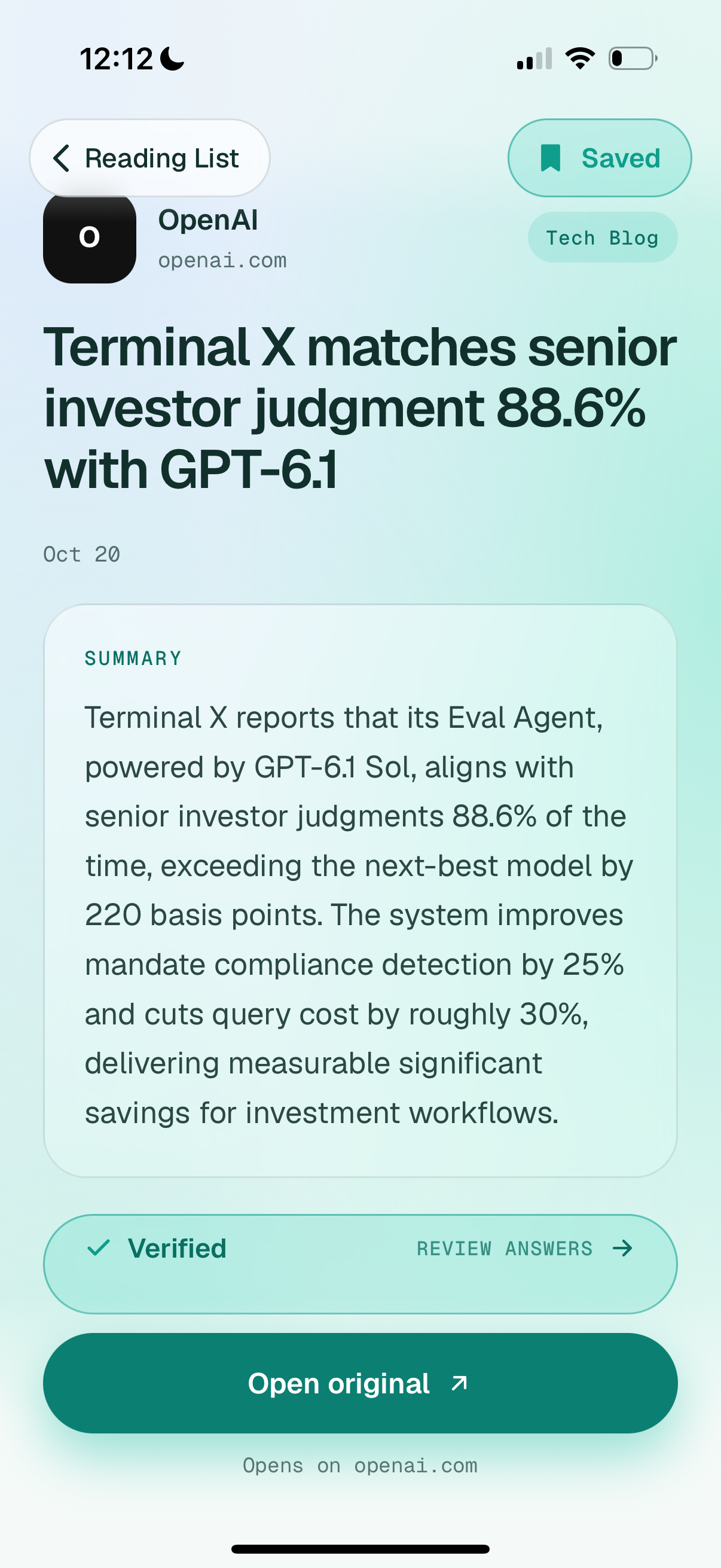
Verified Tags on Quiz
-
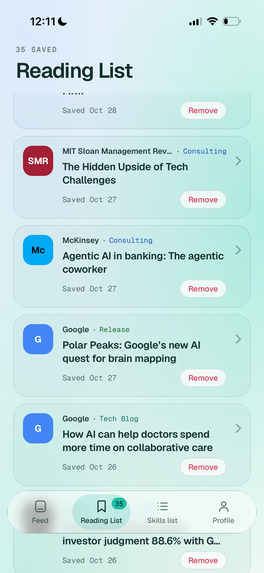
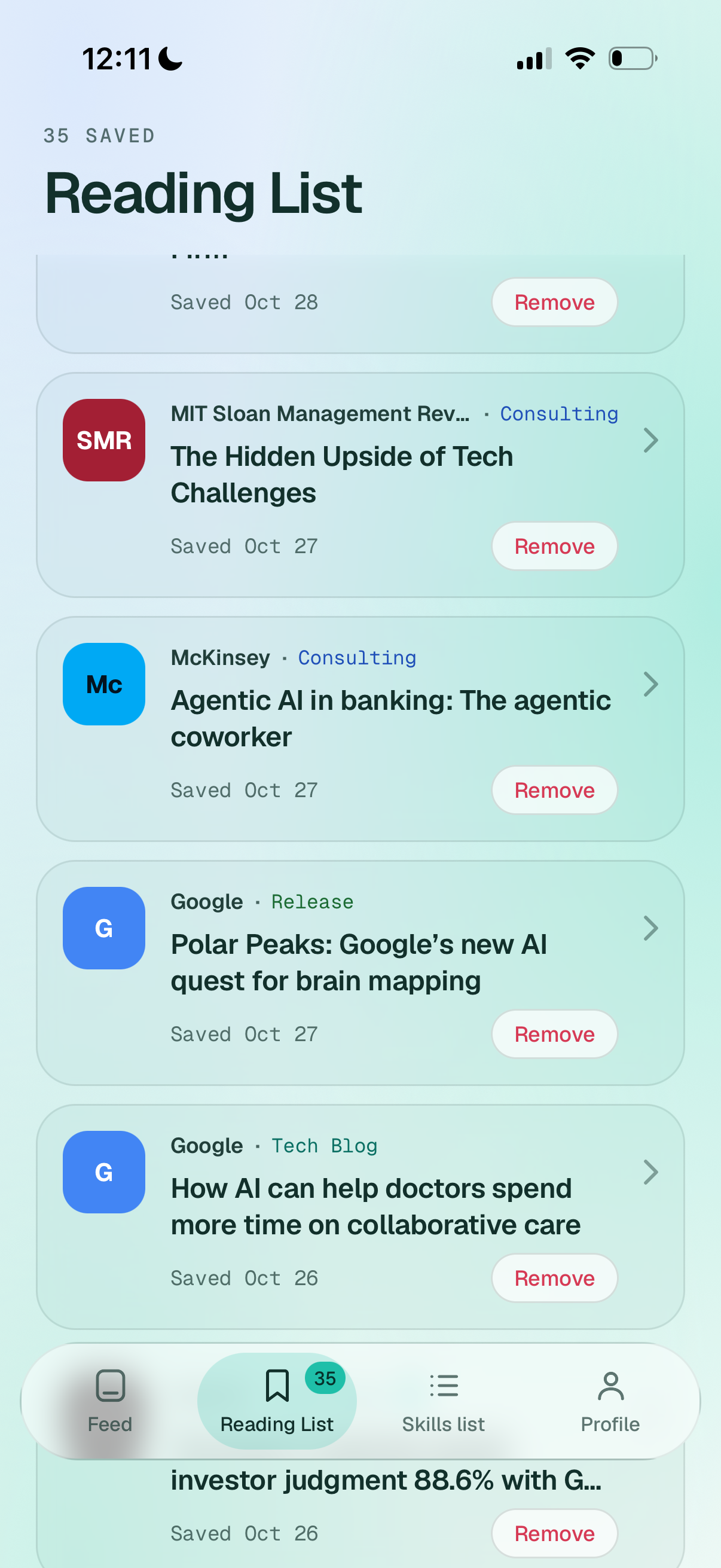
User reading list
-
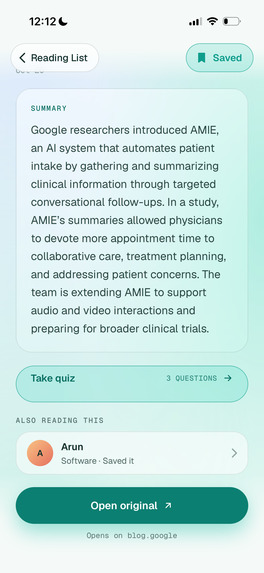
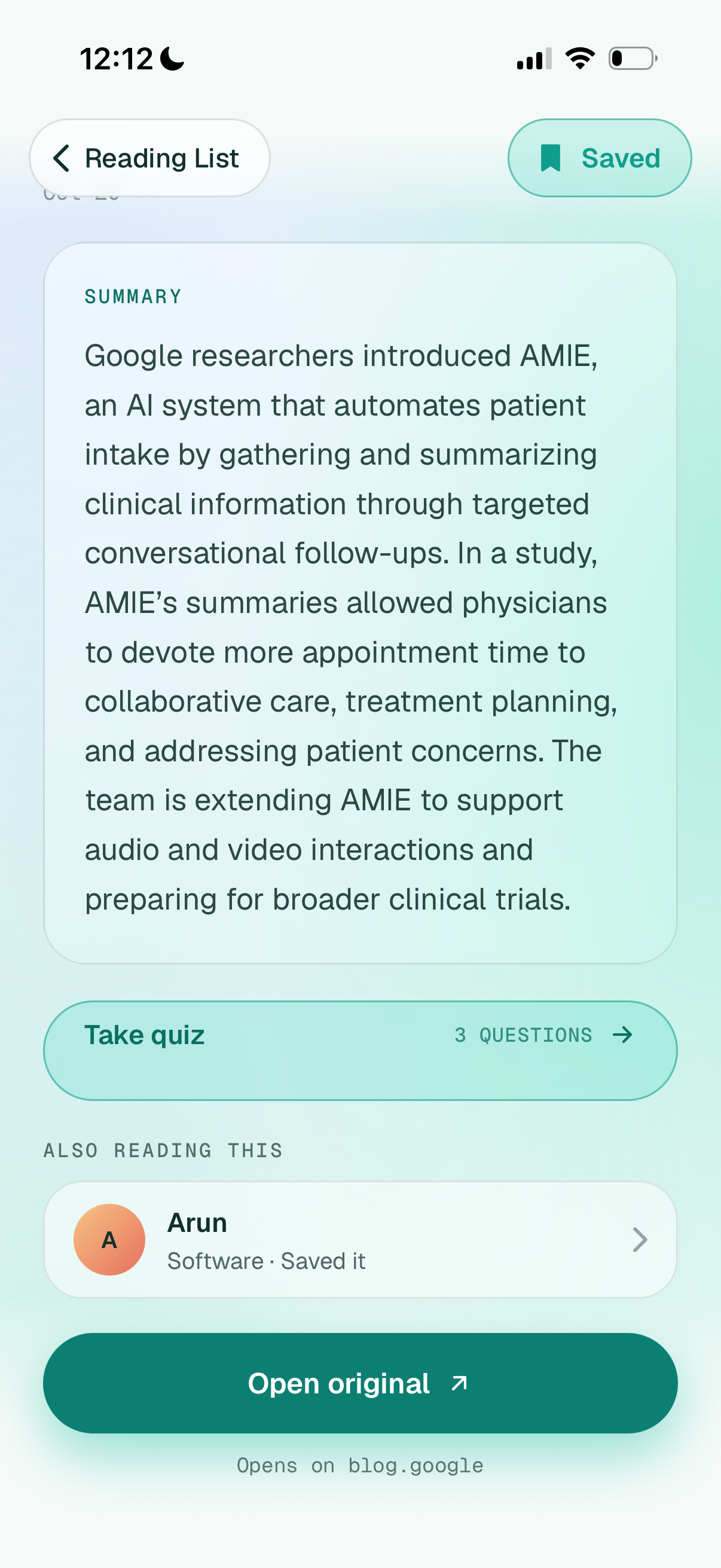
Interface for each Article
-
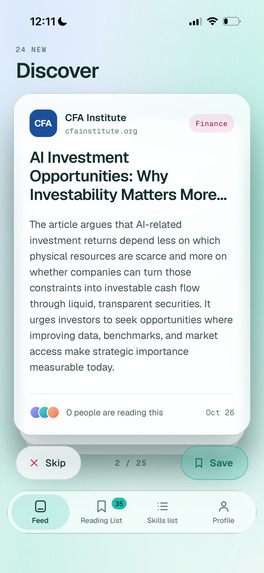
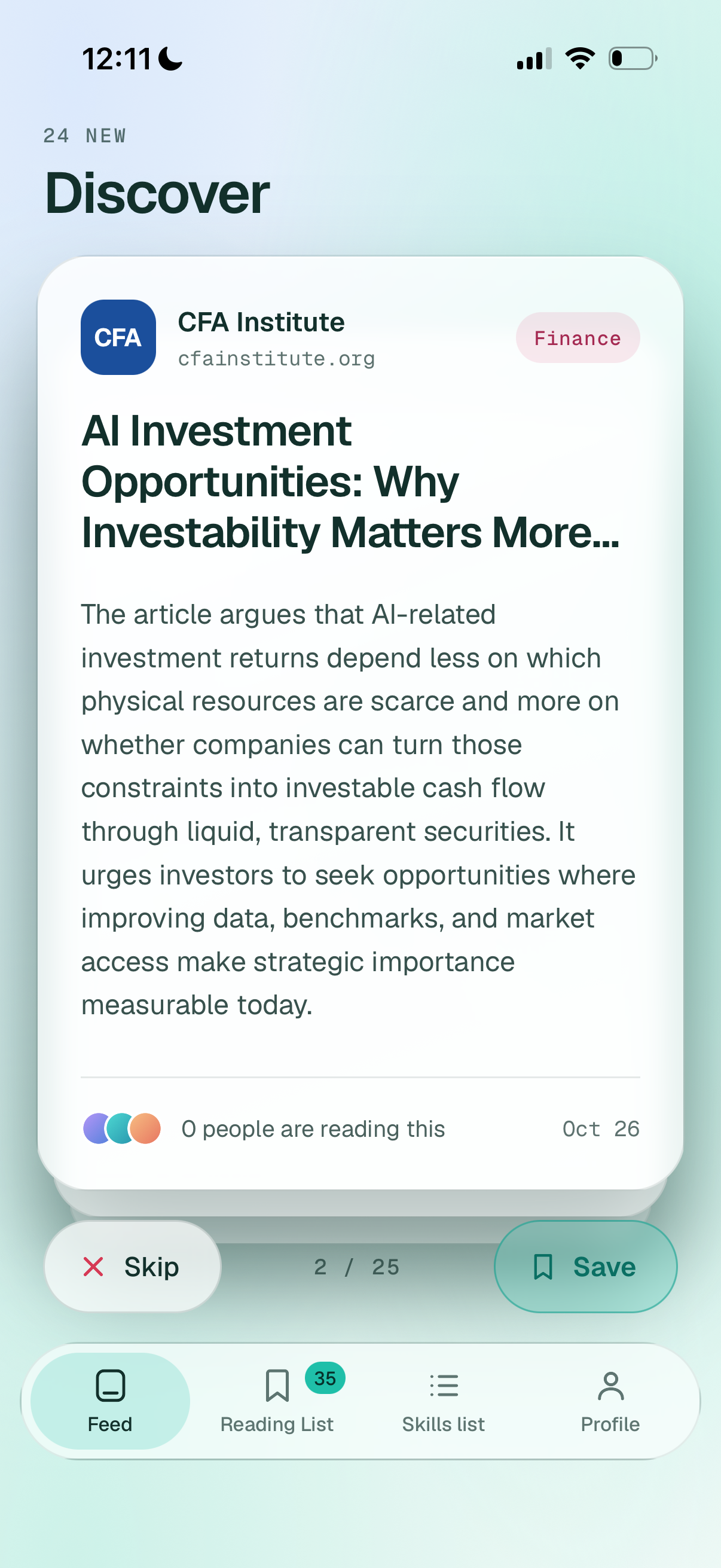
Feed Interface
-
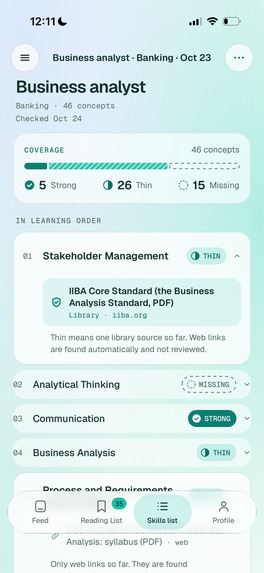
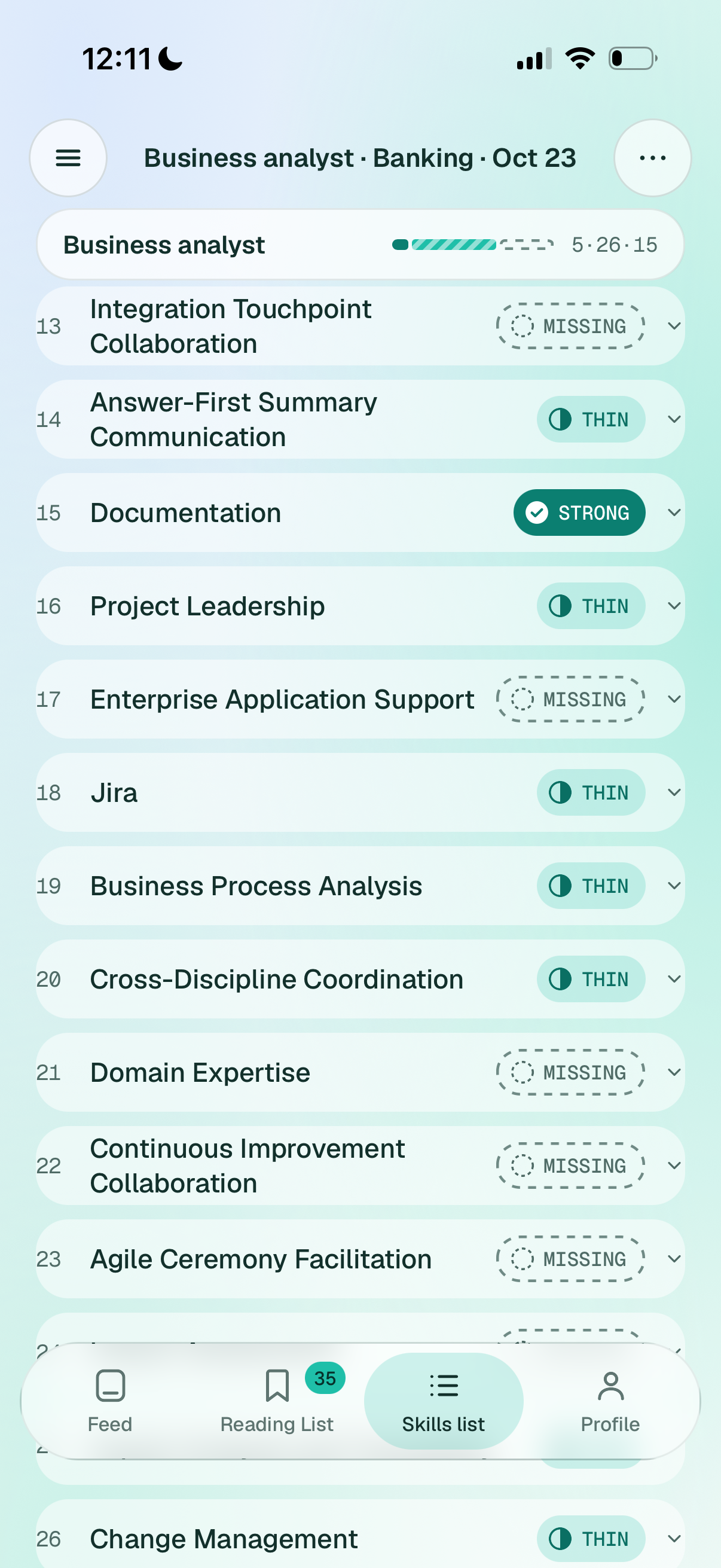
Content presentation for each skill in the list
-
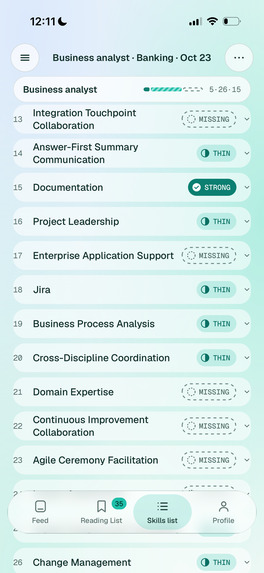
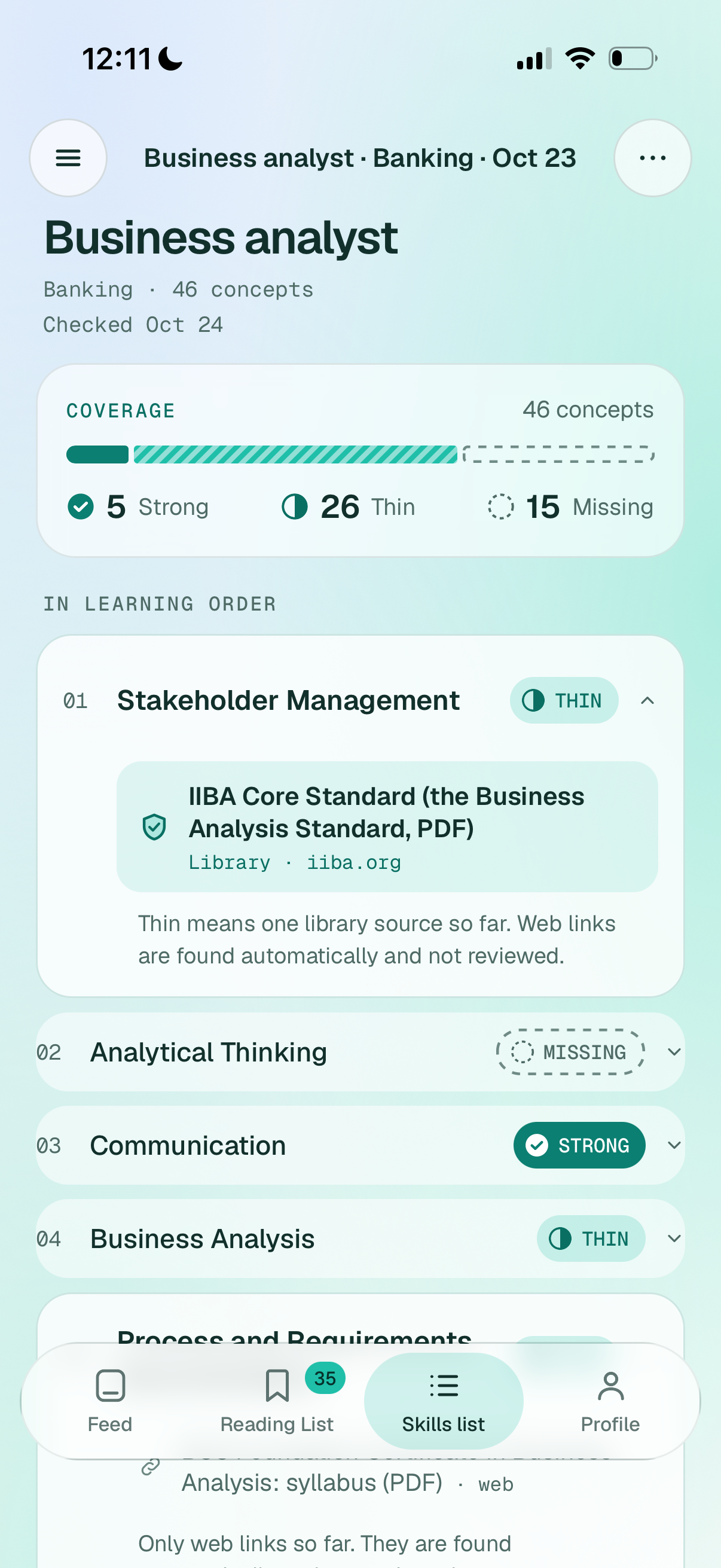
Skill list based on Job description
-
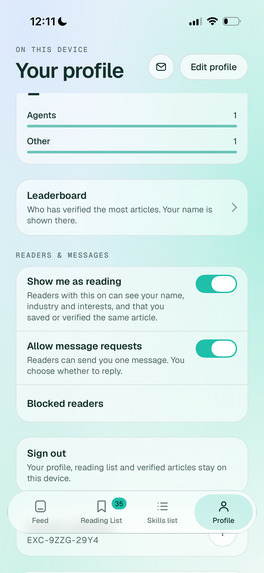
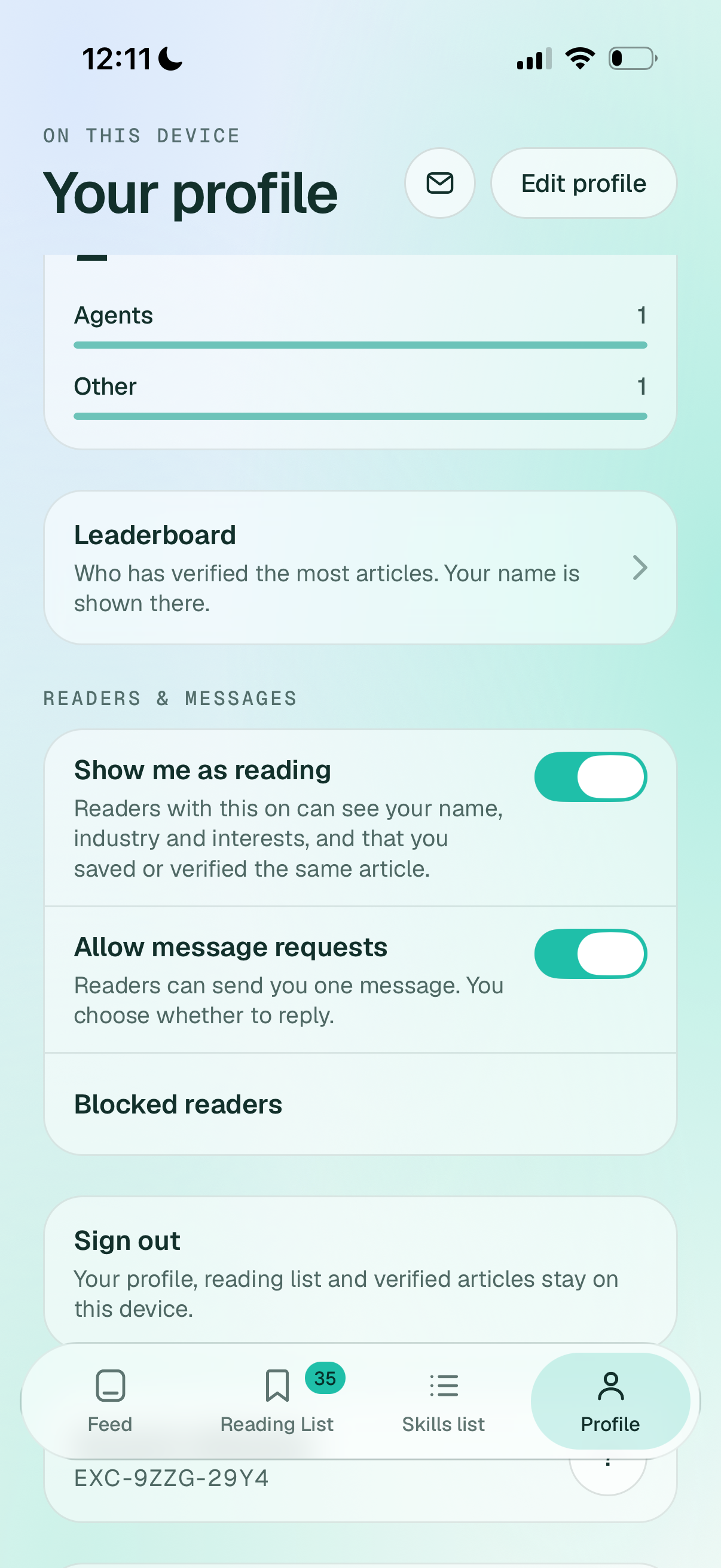
Profile settings
-
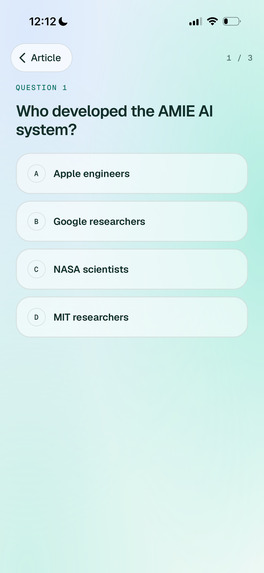
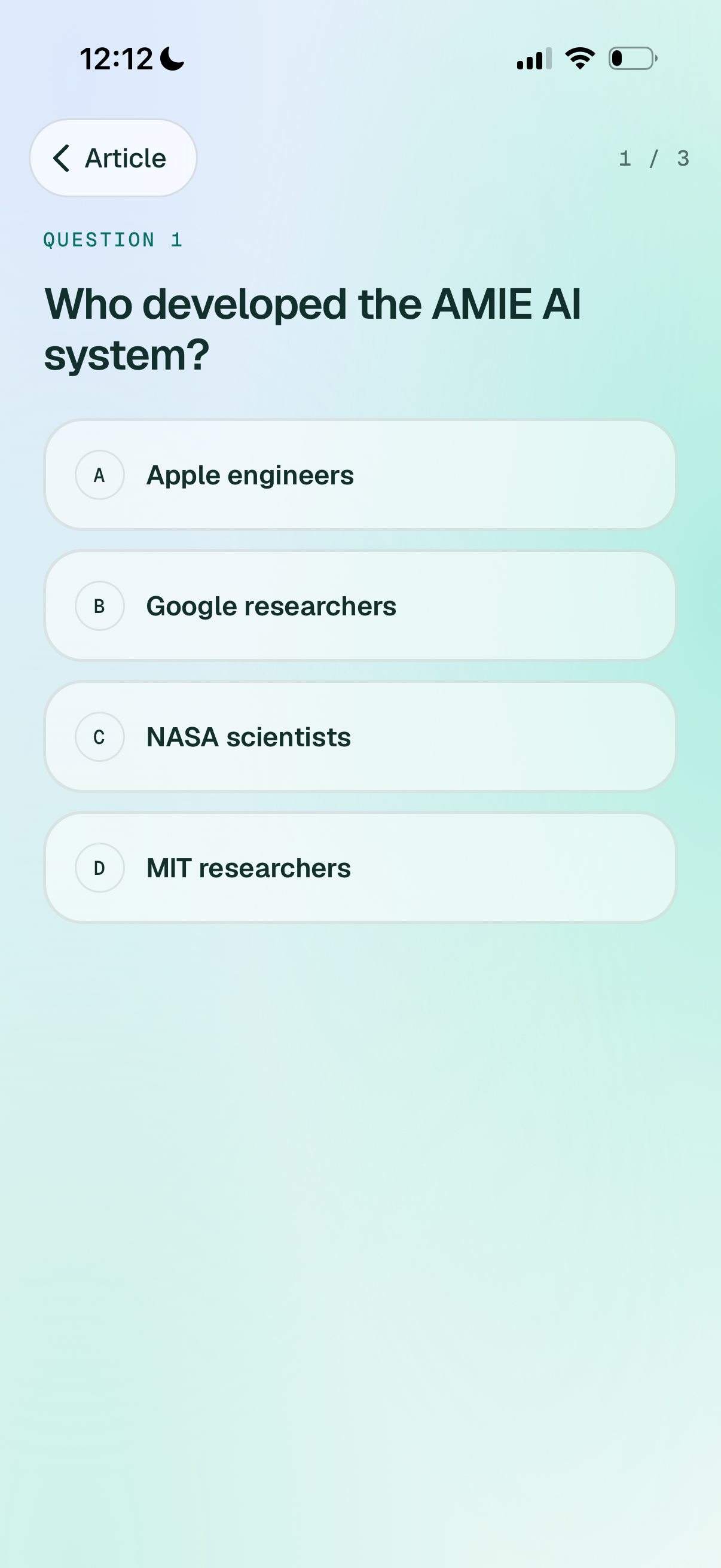
Quiz MCQ interface
Inspiration
We are Prateek and Chandrima, two immigrants from India working hard every day to build our American dream. Like so many people in tech, we are always studying: reading, practicing and sharpening our skills so we can keep growing in our careers.
But technology, and AI above all, now moves faster than anyone can read. New models, tools and research land every week, and just keeping up started to feel like a second job. Then came a second challenge: preparing for interviews. Which skills does this role really want, and where are my gaps? Feeds and newsletters could not tell us.
So we built the companion we wished we had. Excerp helps you stay current in 10 minutes a day, see exactly what to learn next for the job you want, and meet people who read what you read. It began as a tool for ourselves, and we are sharing it with everyone who is working hard for a better future.
What it does
Excerp is for ambitious techies, students and career-switchers with limited time and big goals.
1. Swipe to stay current. Articles, blogs and research papers from the companies and labs shaping tech become short, swipeable cards. Swipe right to save, left to skip. A quick three-question quiz earns a Verified badge, so you prove you learned something, not just scrolled, and a leaderboard keeps it fun.
2. Skills list: know what to learn next. Paste a job posting and Excerp builds a personal skills list: the skills the role asks for, each rated strong, thin or missing by how well trusted learning resources cover it, with the links attached. Our sample list for a business analyst role finished in about 7-15 minutes. We show the gaps openly instead of hiding them.
3. Grow with others. See who else read the same article and send them a message request, so shared reading turns into conversation and collaboration. Readers choose whether they are visible and whether they accept requests, and report and block are built in.
How we built it
- App: React Native with Expo and Expo Router, in TypeScript, on iOS through TestFlight. A calm mint look with glass-style cards, and short intro cards that teach the app in seconds.
- Server: Node and TypeScript with Postgres, in Docker Compose on a Nebius virtual machine, behind HTTPS.
- NVIDIA Nemotron on Nebius Token Factory:
nemotron-3-super-120b-a12bdoes the language work. It summarizes articles into cards, writes the quiz questions, reads job postings and pulls out the skills they imply. - Tavily: finds fresh articles from our sources on a schedule, and finds learning resources for each skill. Every list records the search credits it spends, so cost stays visible.
- A staged pipeline: a list is built in stages (understand the posting, find sources, match them to a curated library of free, no-login learning resources). By design, nothing paywalled is recommended, and a build can be cancelled safely mid-way without publishing a half-finished list.
- Spec first: every feature started with a short intent, a spec with Given/When/Then acceptance criteria and a plan before any code, built with Claude Code. The result is over 3,000 automated tests across the app and server, plus Maestro end-to-end flows.
- Trust and safety: Google and Sign in with Apple, in-app account deletion, a plain-language AI notice, and private lists you can delete any time.
Challenges we ran into
- Cost. Every list means dozens of searches. Counting credits per list, building in stages and leaning on a curated library keep it affordable.
- Honest coverage. Some skills simply have no good free resource. Our first real business analyst list came back with 5 strong, 26 thin and 15 missing skills. We kept the strict evidence rule rather than pad it with weak links, and we are growing the library.
- Duplicate requests. On a real phone, the approve request was sent twice for one list. We fixed it in both the app and the server, so a list only builds once.
- Safe stopping. Cancelling a build mid-pipeline had to leave nothing half-finished. We tested it on production, and it stops cleanly.
- Real-device polish. Keyboards overlapping sheets and floating bars hiding content only show up on a real phone. We caught them testing on one, and fixed the Reply sheet this week.
Accomplishments that we're proud of
- A working iOS app, from first sketch to TestFlight and an App Store submission in about three weeks.
- A skills list that goes from a pasted posting to a rated, linked plan in about seven minutes.
- A product that is honest by design: "missing" means missing, and every link is free to open.
- Safety and privacy done properly: account deletion, report and block, private lists.
- Engineering we can trust: spec-first features, more than 3,000 tests, and a cancel flow proven on production.
What we learned
A staged pipeline that saves its work is cheaper, easier to cancel and easier to trust than one giant model call.
- Showing gaps honestly makes a skills list more useful, not less.
- One strong open model, used carefully, can carry a whole product.
- Writing the spec first makes building with an AI coding agent faster and safer.
- Many real bugs only appear on a physical device.
What's next for Excerp
- A bigger library of free, trusted sources, so fewer skills come back thin or missing.
- Raising the job posting limit from 4,000 to 10,000 characters.
- A public App Store launch, then Android.
- Smoother message threads on very large text sizes and in long conversations.
- More languages. Excerp is English-only today.
- Reduce the missing skills content to less than 10% is one of the next major goal, and apply these learnings to start and scale Product manager and Forward Deployed Engineer category
Every day, people like us sit down after a long day to learn one more different thing. Excerp is for them: less noise, a clear next step, and good company along the way.
Built With
- caddy
- claude-code
- cloudflare
- docker
- expo-router
- expo.io
- google-sign-in
- maestro
- nebius
- nebius-token-factory
- node.js
- nvidia-nemotron
- postgresql
- react-native
- sign-in-with-apple
- tavily
- testflight
- typescript


Log in or sign up for Devpost to join the conversation.