-
-
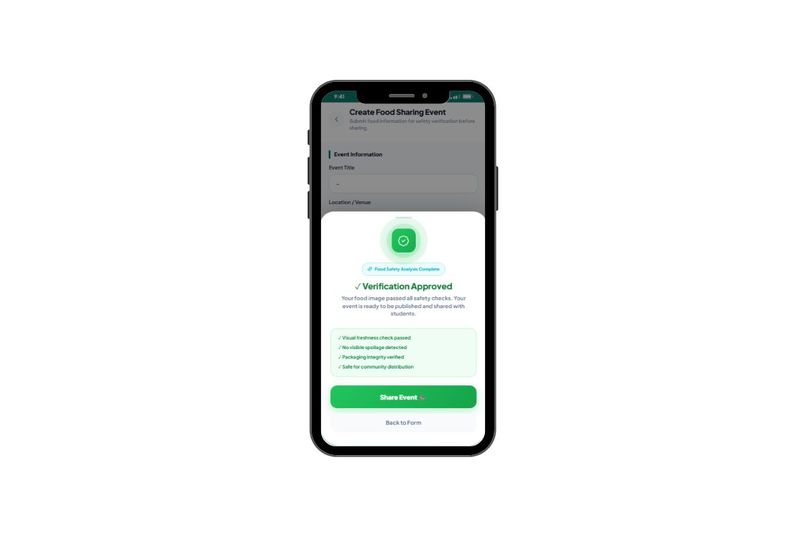
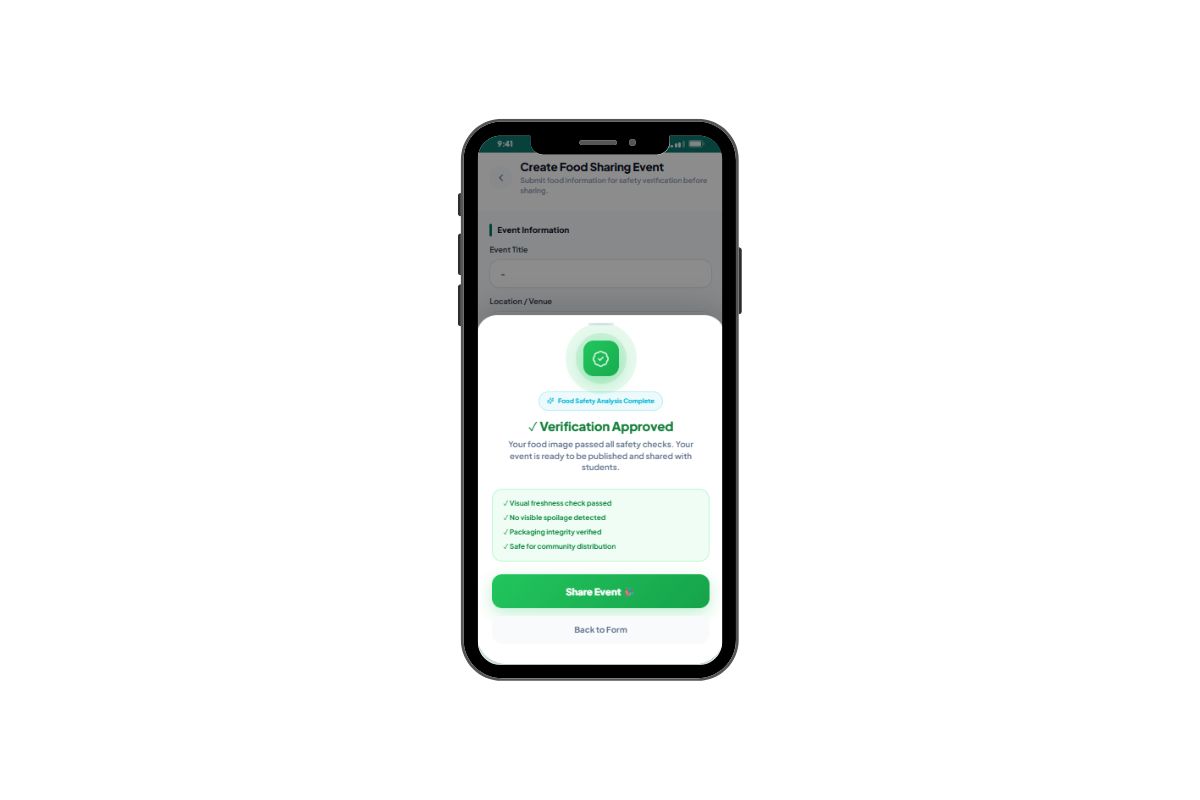
Success Event Review
-
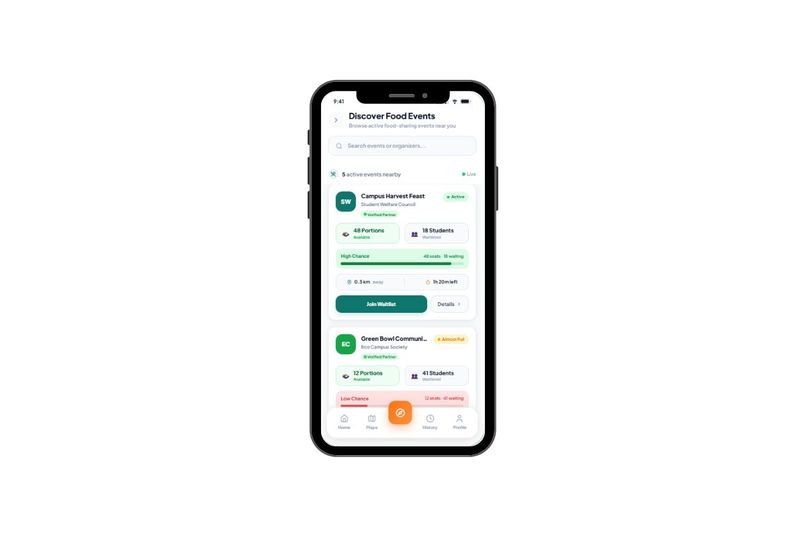
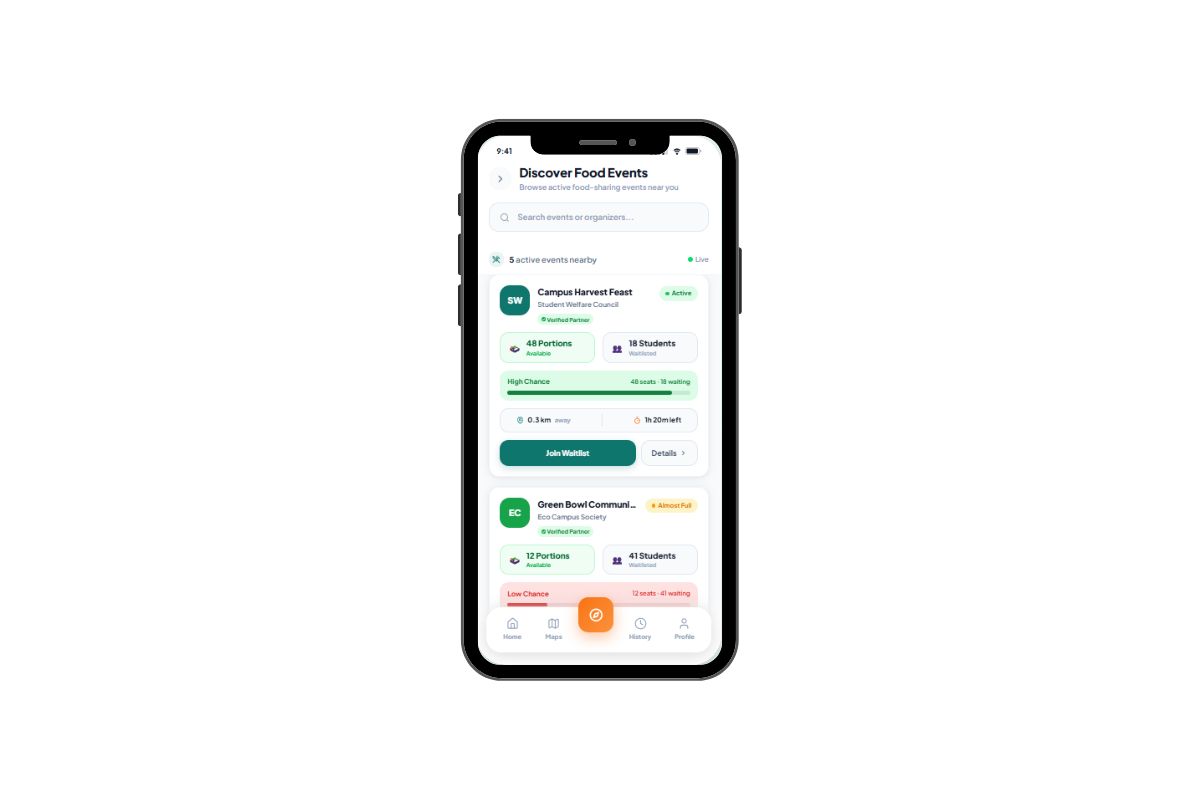
Discover Event
-
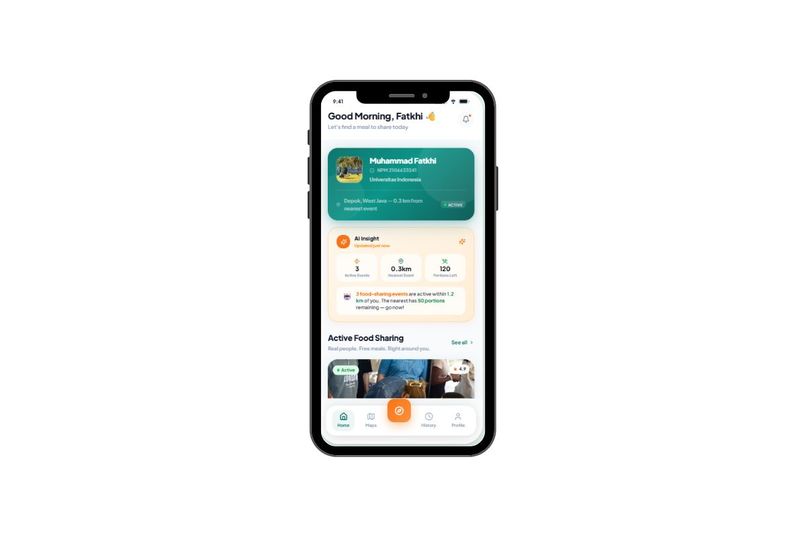
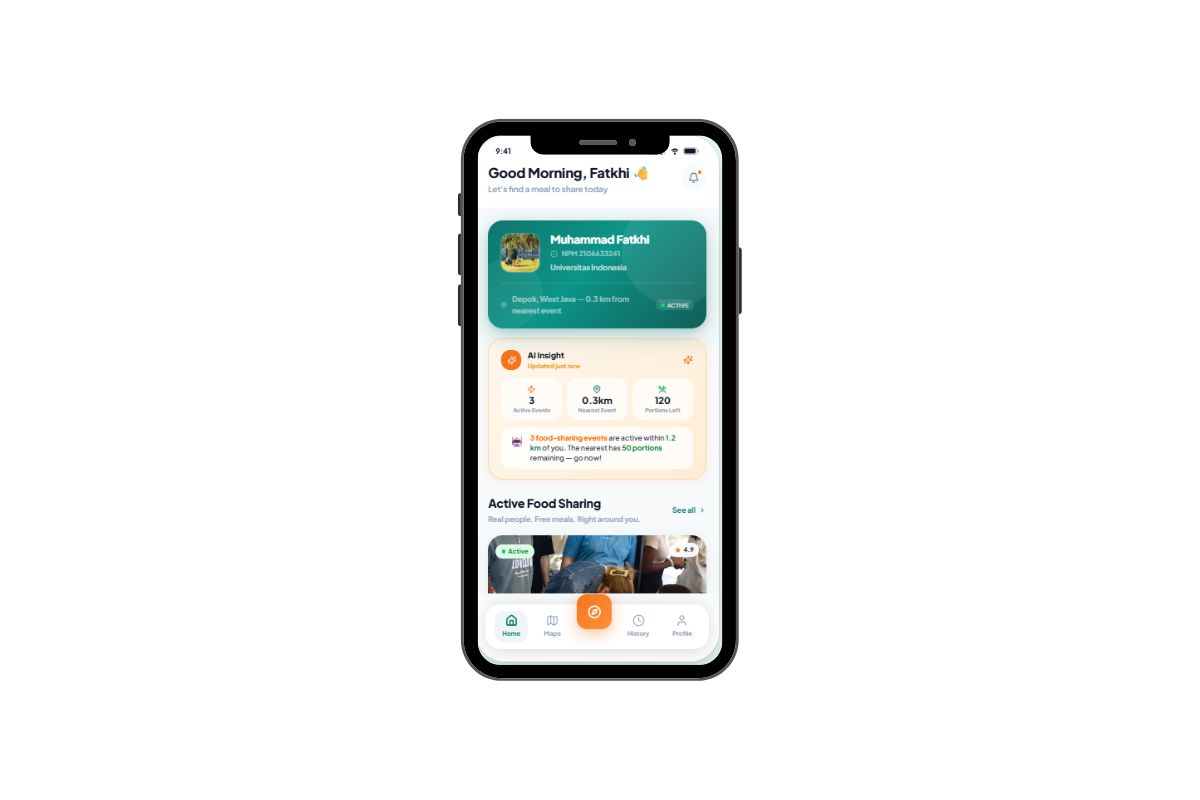
Home Student View
-
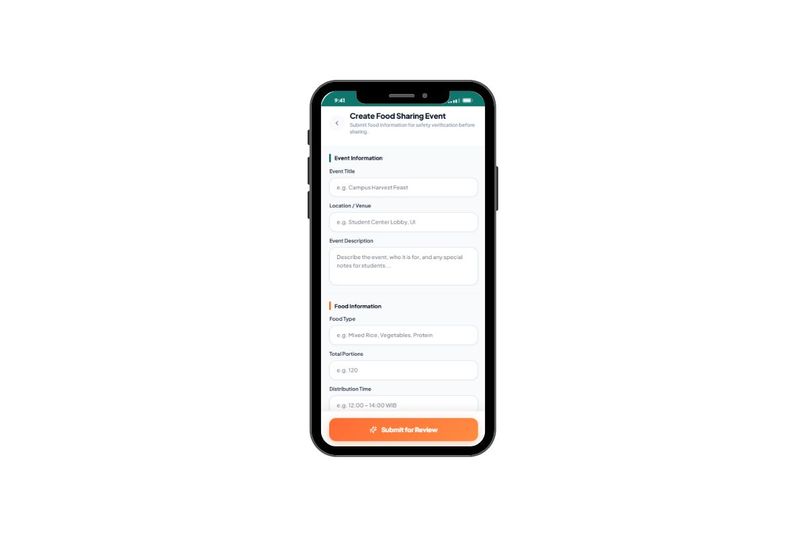
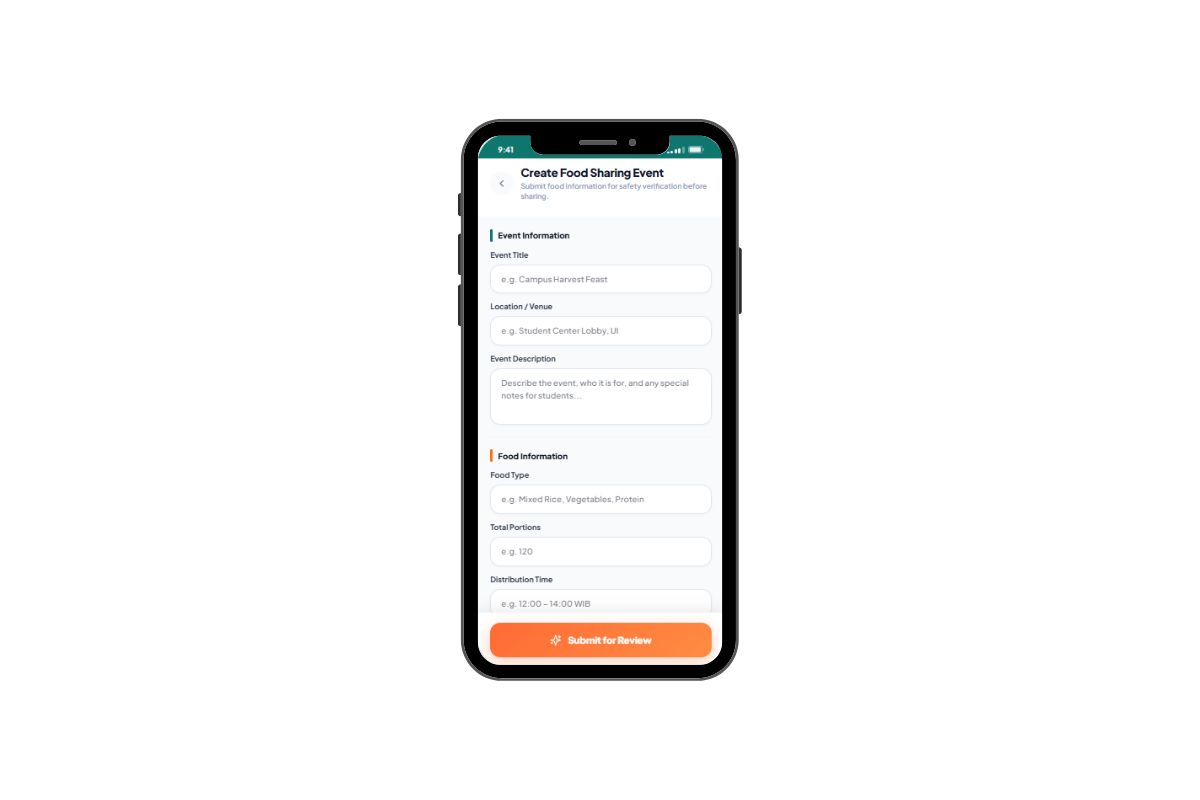
Form Create Event
Inspiration
The paradox of food loss and waste (FLW) coexisting with severe nutritional deficits is staggering. In Indonesia alone, we generate up to 48 million tons of food waste annually. At the exact same time, 67.5% of our university students experience food insecurity —many of whom are financially isolated migrants ("anak kos").
Through our research, we identified two critical bottlenecks:
Provider Hesitation: Donors fear the legal liability of distributing spoiled food. Without objective safety verification, surplus remains waste.
The Information Gap: Existing distributions rely on chaotic "first-come-first-serve" models that ignore actual student urgency and geospatial proximity.
This inspired us to build EXCEED: an ecosystem that treats food rescue not just as a logistics problem, but as a data, safety, and game-theory problem.
Data source: The Relationship between Food Security Status and Sleep Disturbance among Adults: A Cross-Sectional Study in an Indonesian Population - PMC, accessed June 8, 2026, https://pmc.ncbi.nlm.nih.gov/articles/PMC7694601/
What it does
EXCEED connects food providers with university students through a mathematically fair cloud ecosystem. It solves the bottlenecks through two core innovations:
AI Food Safety Inspector Before any surplus meal is published to the network, the provider uploads a photo. Our system utilizes the Gemini API (Multimodal Vision) as a zero-tolerance gatekeeper to analyze visual decay markers (texture, discoloration, moisture) and extract expiry metadata. This objective risk assessment mitigates provider liability.
Nash Social Welfare Engine Instead of giving food to whoever clicks fastest, our backend executes a fair allocation algorithm. We optimize for the entire student collective using the Nash Bargaining Solution. The engine dynamically calculates the geometric mean of a student's Distance Spatiality, Cold-Start Penalty, and Hunger Urgency:
\(NSW(x) = \left( \prod_{i=1}^{n} u_i(x_i) \right)^{\frac{1}{n}}\)
The system instantly mathematically verifies eligibility and issues a secure QR Pass to the winning student for pickup.
How we built it
We architected a modern, distributed cloud-native stack:
- Client Layer: A Next.js Web App tailored for both the Partner Dashboard and the Student Waitlist, integrating the Google Maps API for a real-time Geospatial Food Radar.
- Backend Engine: A FastAPI Server that handles high-concurrency waitlists and executes the complex Nash Social Welfare mathematics in real-time.
- AI & Validation Layer: We natively integrated the Gemini API (Multimodal Vision).
- Data Layer: PostgreSQL combined with PostGIS to securely store our user ledger, event metadata, and process rapid spatial queries.
Challenges we ran into
Translating abstract economic game theory into an efficient, real-time Python algorithm within FastAPI required heavy mathematical optimization. On the frontend, enforcing strict TypeScript safety for our data visualizations, and wrestling with strict CORS and HTTP Referrer security policies for the Google Maps API in a live production environment pushed us to our limits during the final hours of deployment.
Accomplishments that we're proud of
Bridging the gap between theoretical economics (Nash Welfare) and deep-domain AI (Gemini Multimodal Vision) into a fully functional MVP is our biggest victory. We successfully deployed a production-ready application that goes beyond a concept—it is live, secure, and ready to prevent real-world waste. We are also proud of our strict "Human-in-the-Loop" design philosophy, ensuring AI assesses the risk, but humans make the final connection.
What we learned
We gained deep insights into leveraging LLMs natively for multimodal tasks—using Gemini not just as a conversational agent, but as a strict, zero-tolerance "reasoning engine" for risk mitigation. We also mastered the integration of complex geospatial data (PostGIS) with real-time reactive frontends (Next.js).
What's next for EXCEED
We are ready to scale our impact.
- Q3 2026: Launch our University Campus Pilot Program at UNSIKA.
- Q4 2026: Integrate academic schedules for predictive supply mapping.
- Q1 2027: Expand out of campus to local community food banks.
- Q2 2027: Establish a regional food waste mitigation network.
Built With
- fastapi
- gemini-api
- google-colab
- google-maps
- next.js
- postgis
- postgresql
- python
- tailwind-css
- typescript


Log in or sign up for Devpost to join the conversation.