-
-
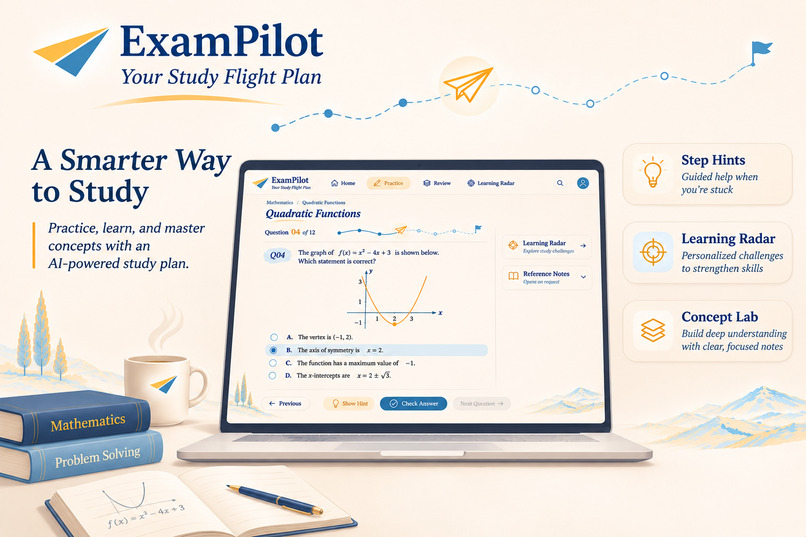
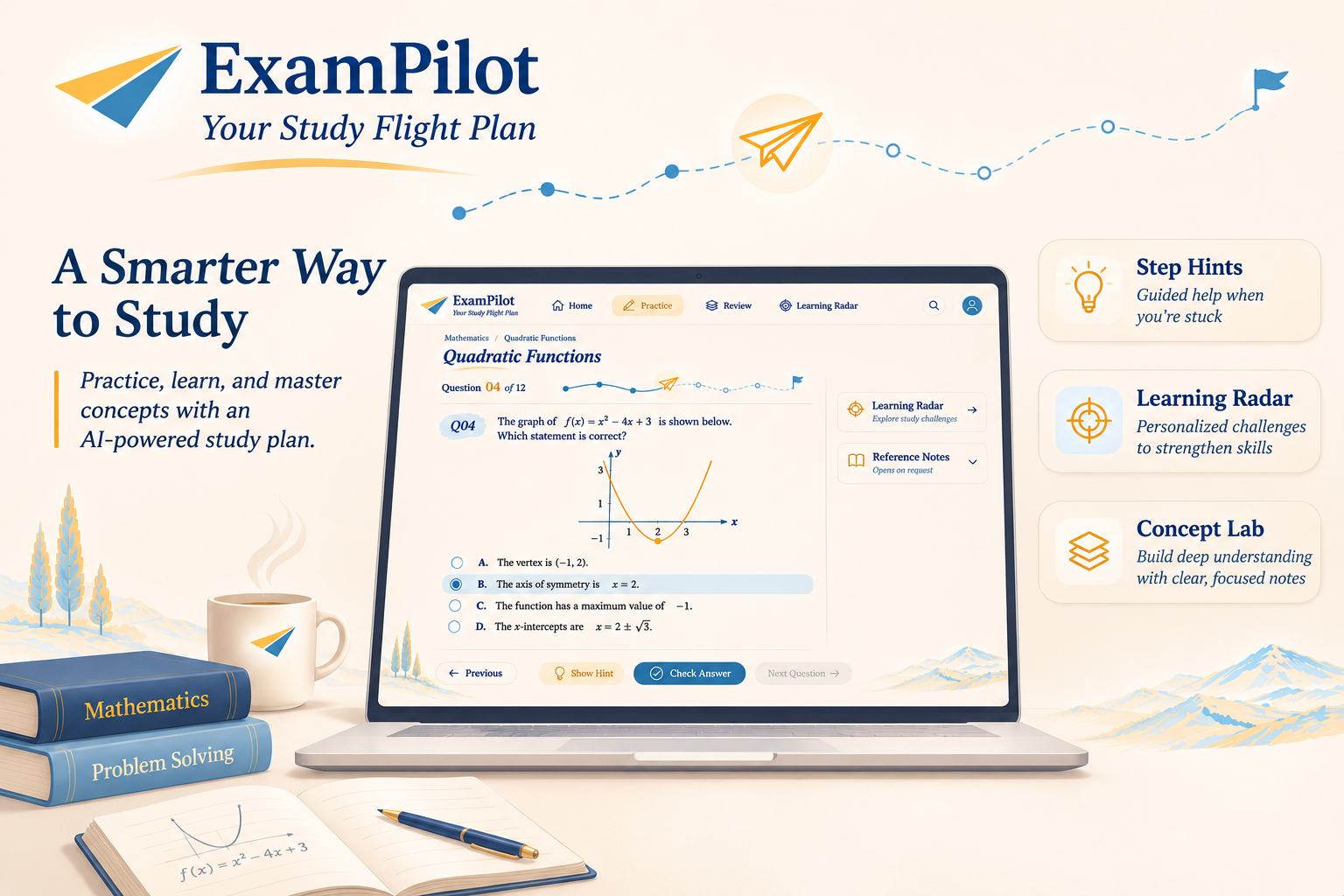
1. Project Cover ExamPilot — a guided study journey combining personalized practice, step-by-step hints, Learning Radar, and Concept Lab.
-
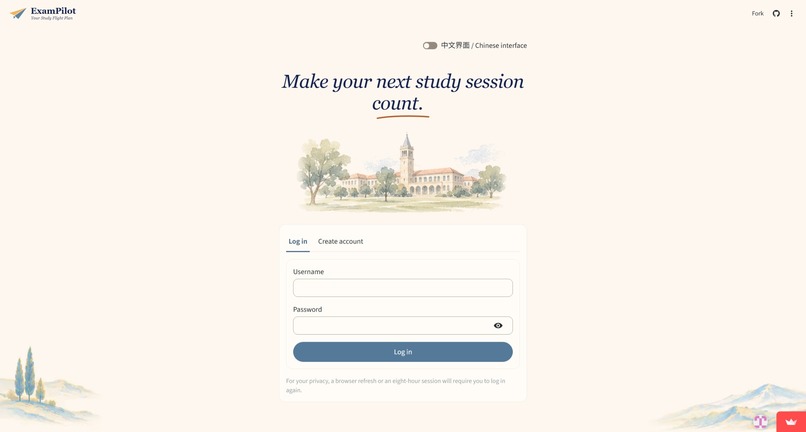
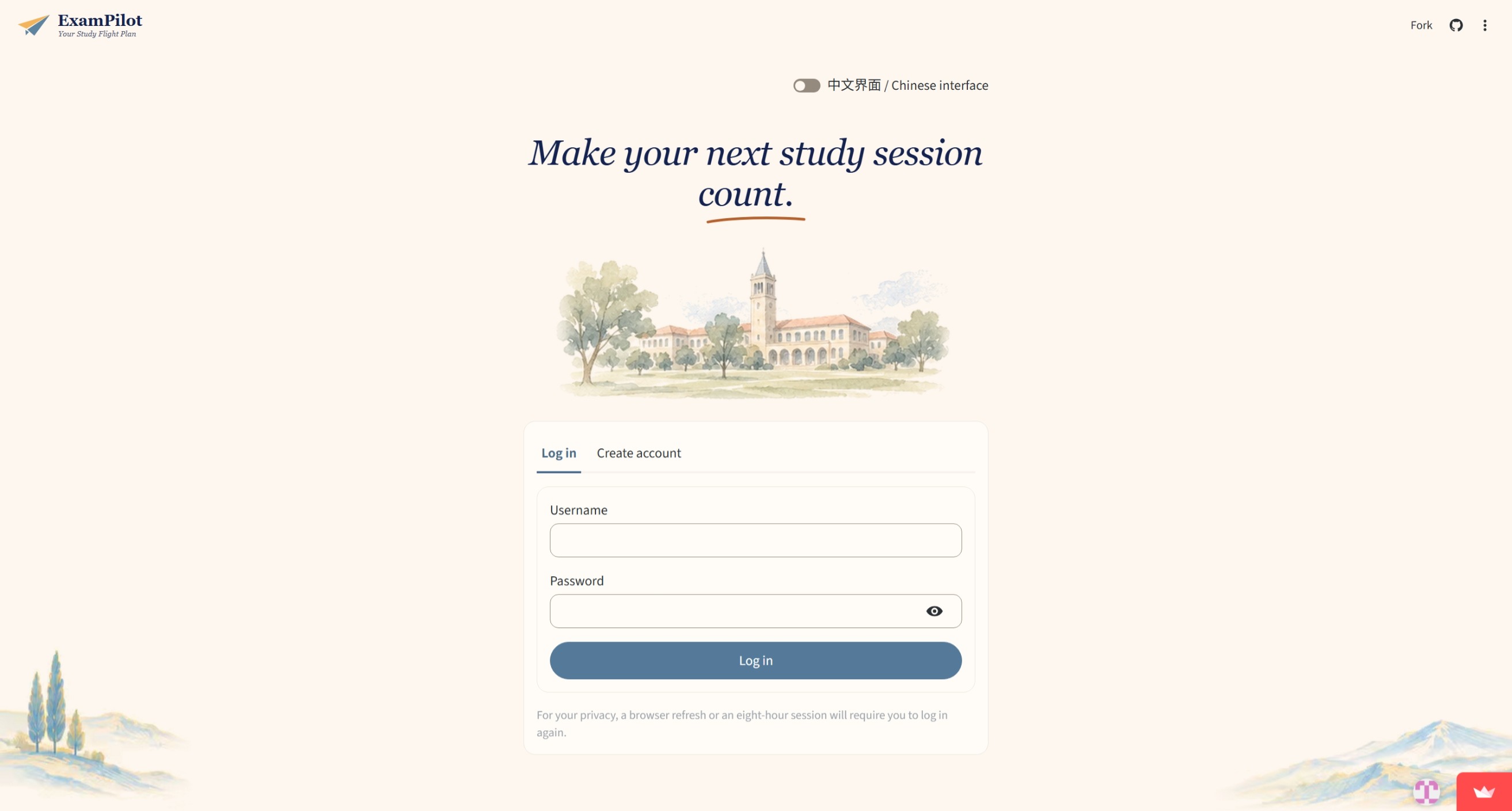
2. Login Page A welcoming, bilingual entry point designed to make studying feel calm, accessible, and approachable.
-
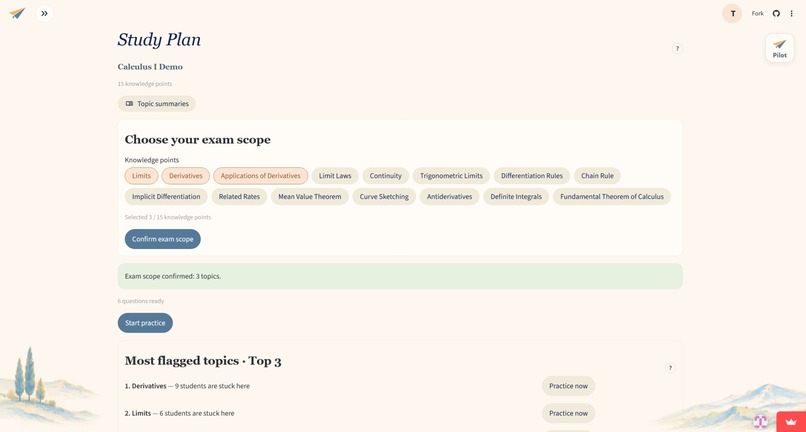
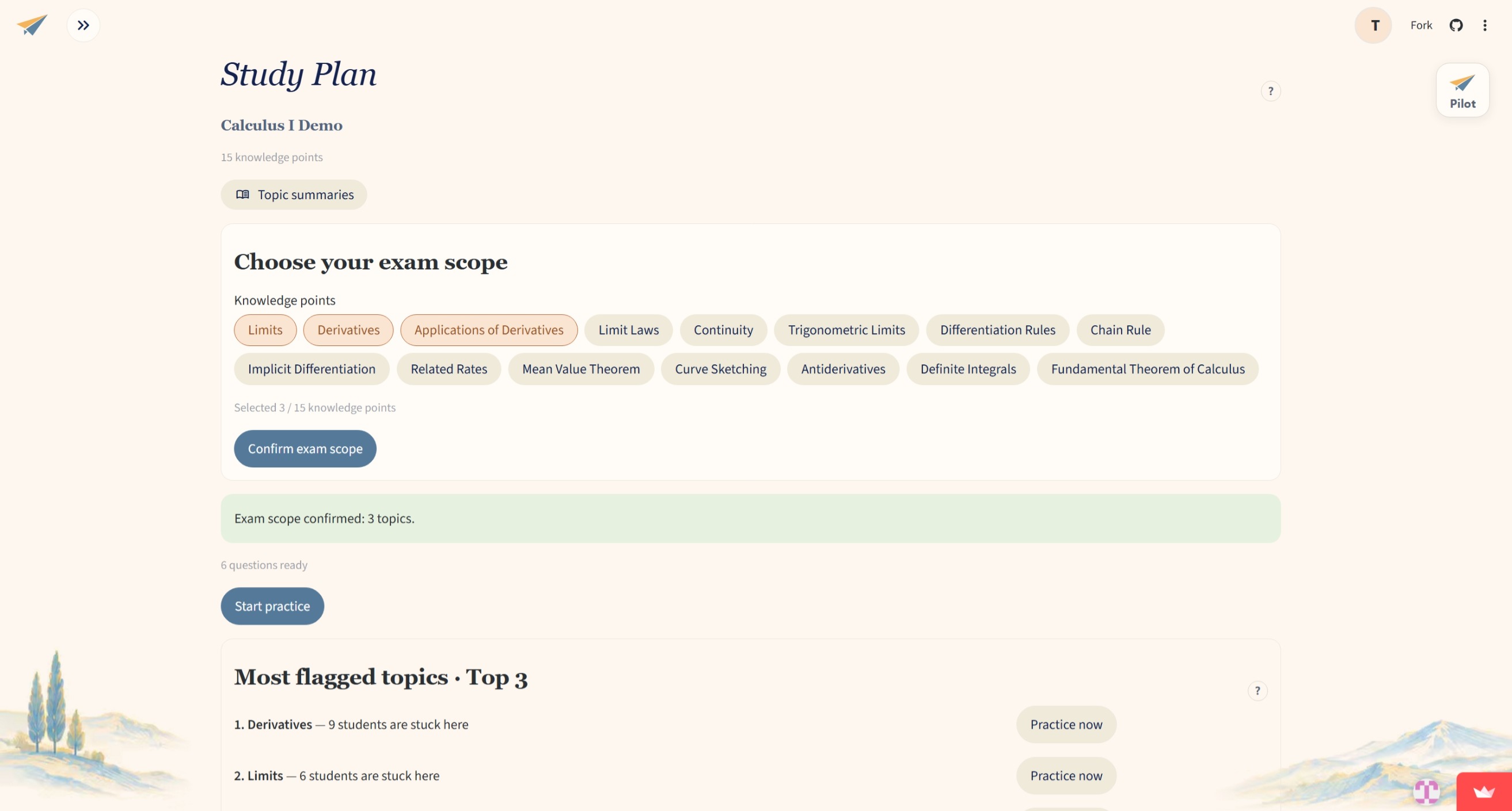
4. Study Plan Select exam topics, confirm your study scope, and begin targeted practice based on your learning goals.
-
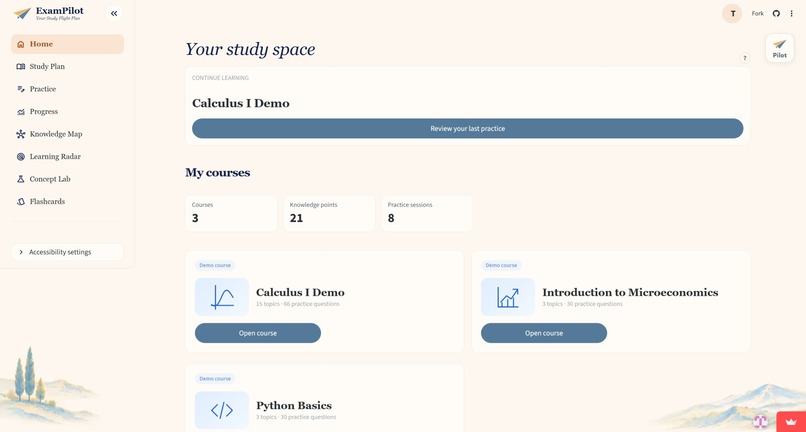
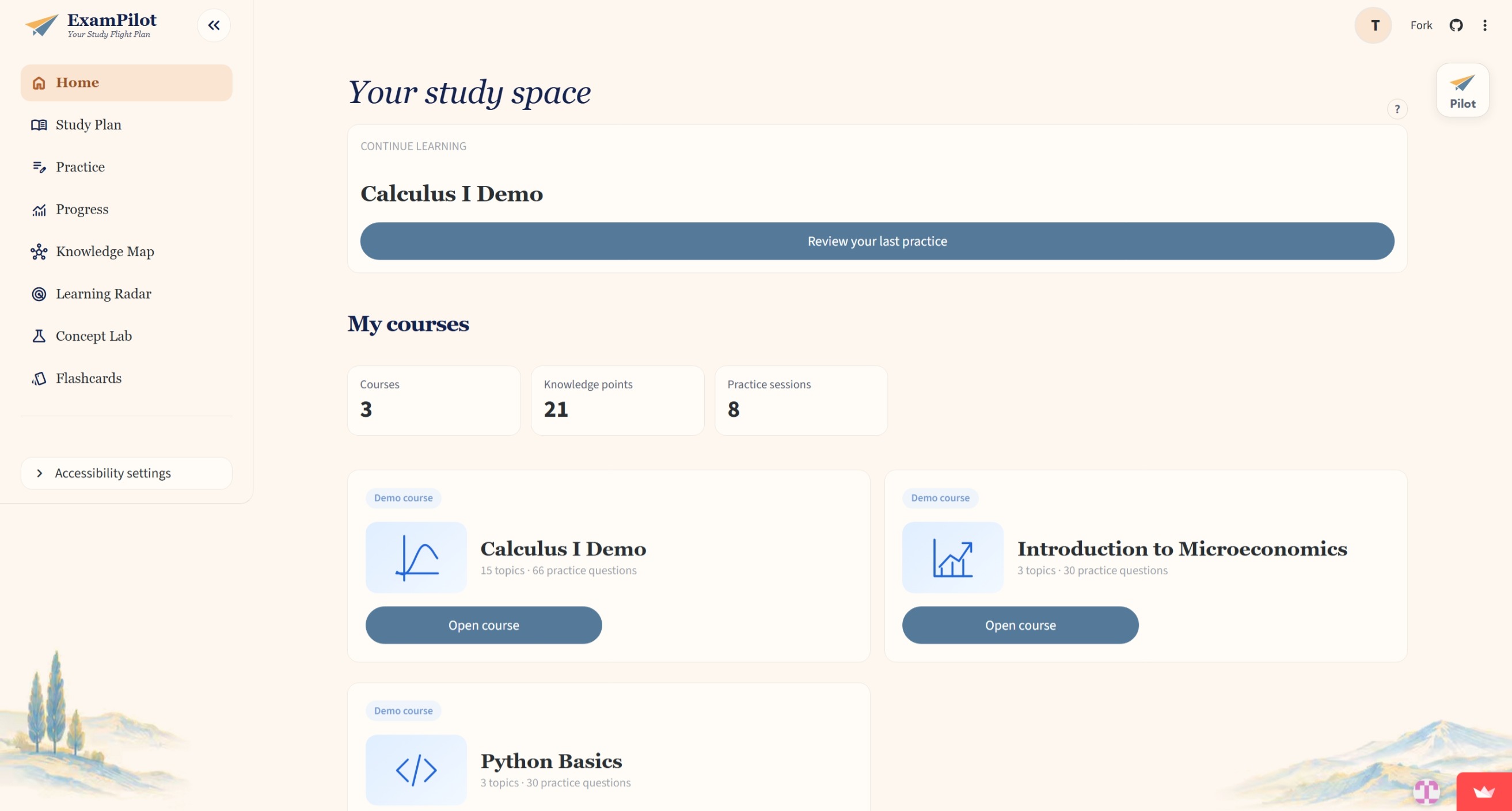
3. Home Dashboard Manage courses, resume learning, and explore built-in demos for Calculus, Microeconomics, and Python.
-
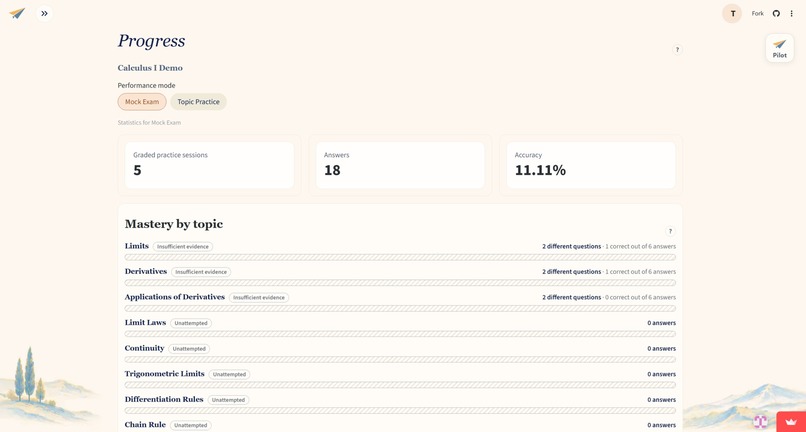
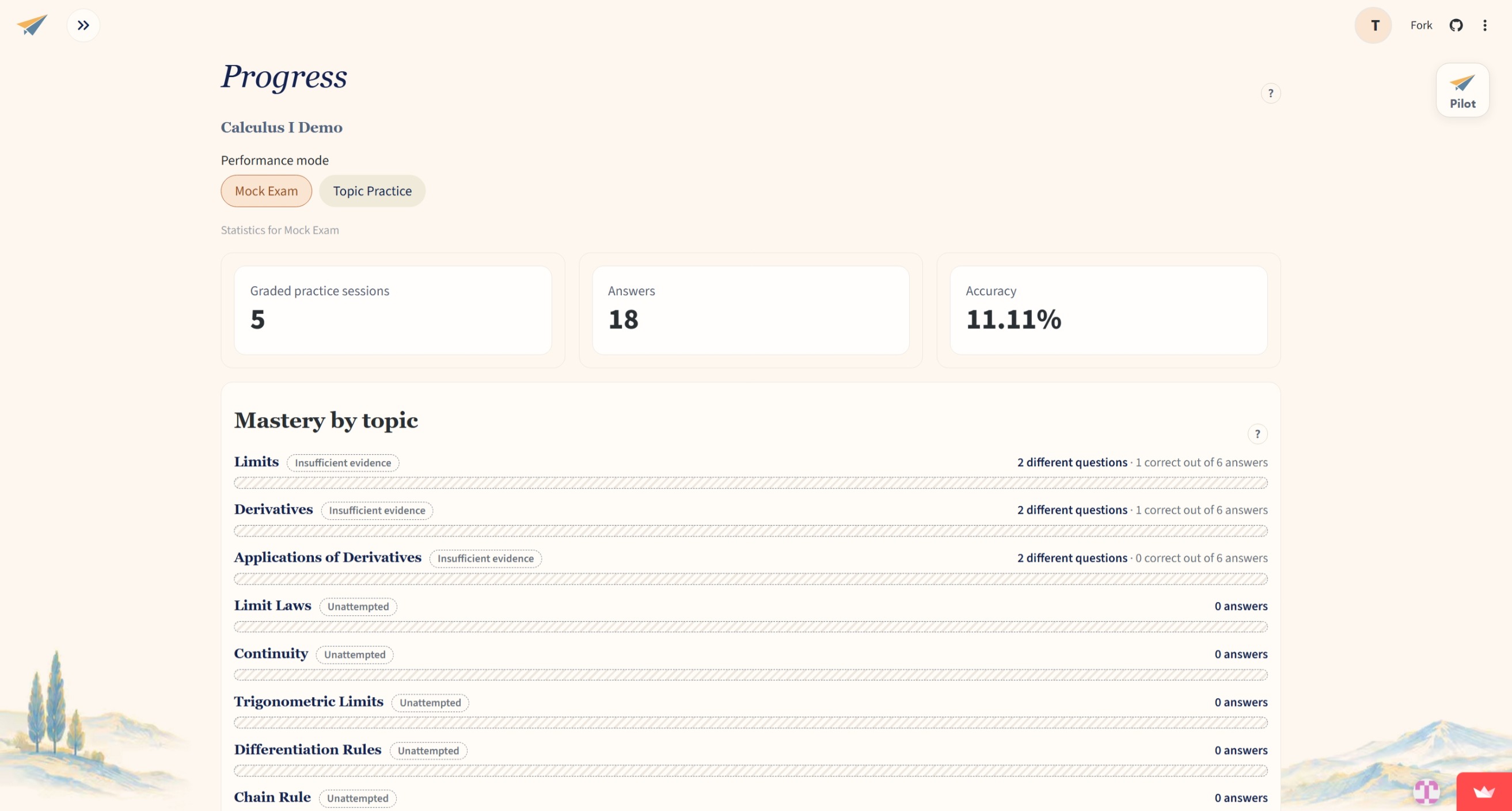
6. Progress Tracking Track practice accuracy and topic-level learning evidence, with clear indicators when data is insufficient.
-
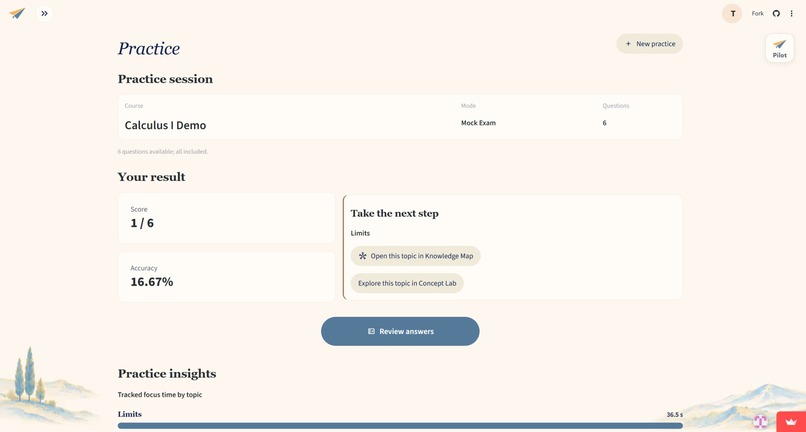
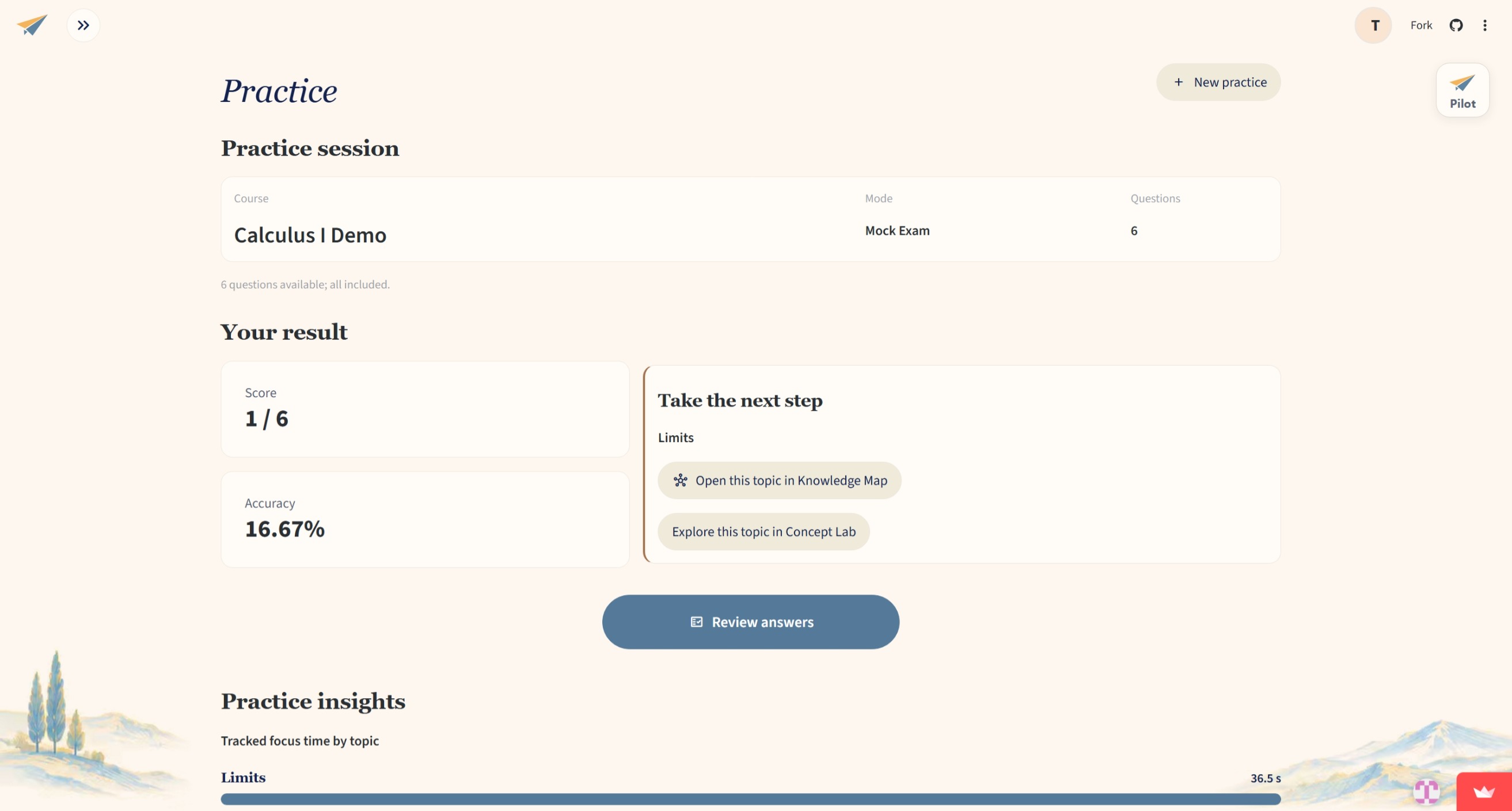
5. Practice Results Review your performance and move directly from missed questions to relevant learning resources.
-
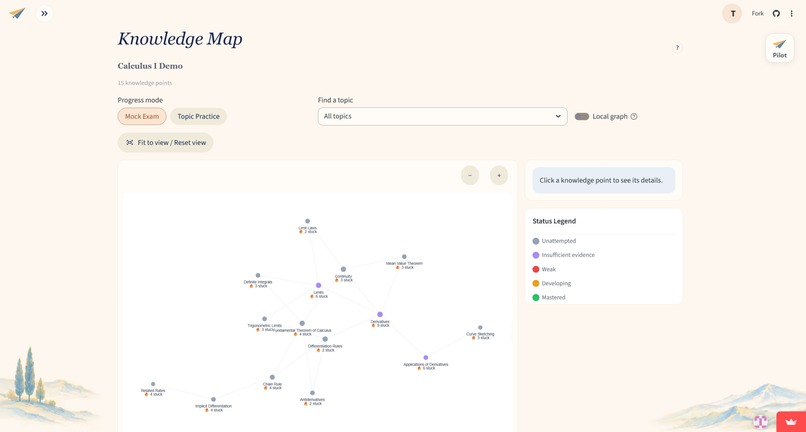
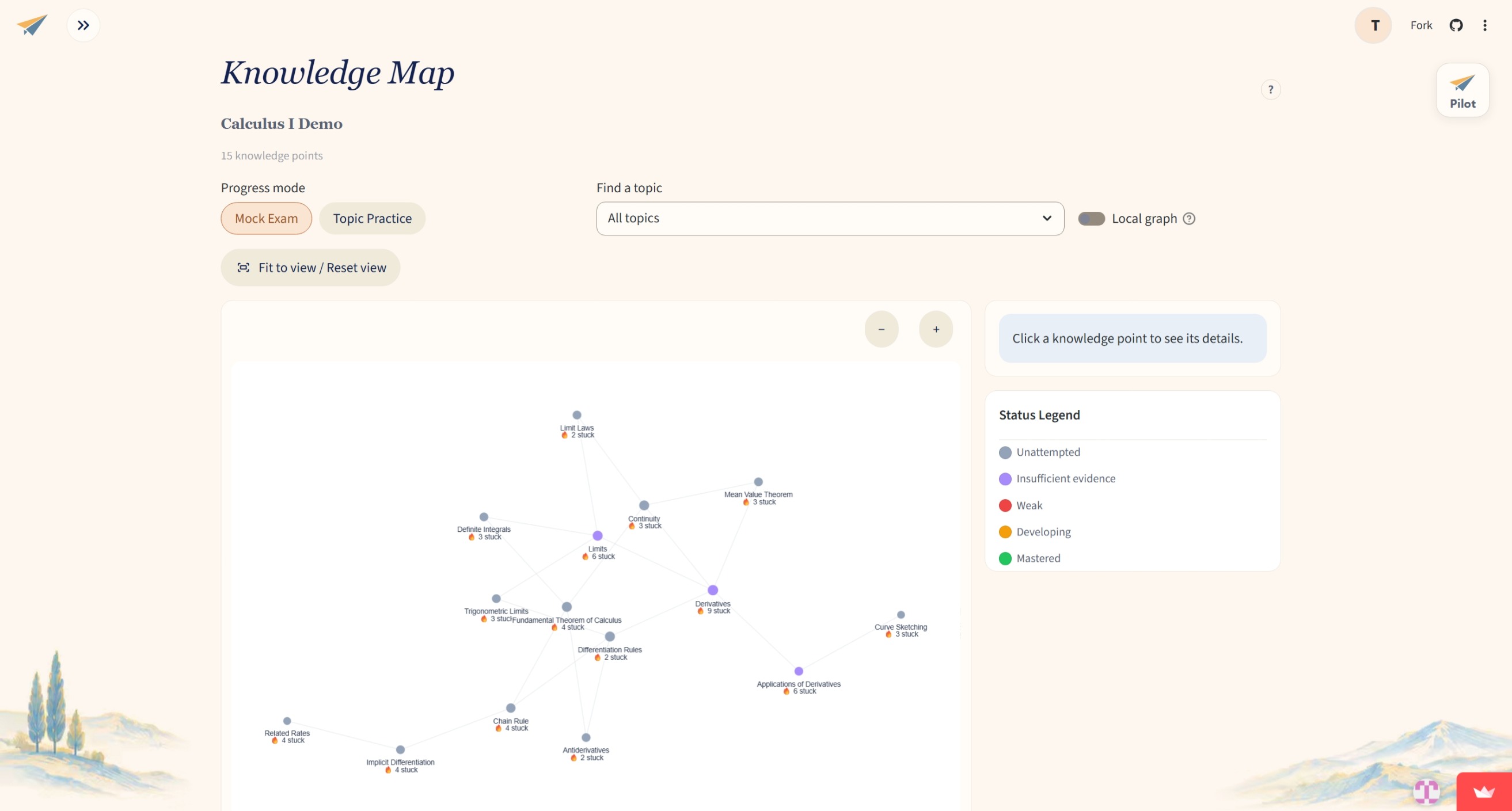
7. Knowledge Map Explore relationships between concepts, visualize learning progress, and identify topics that need attention.
-
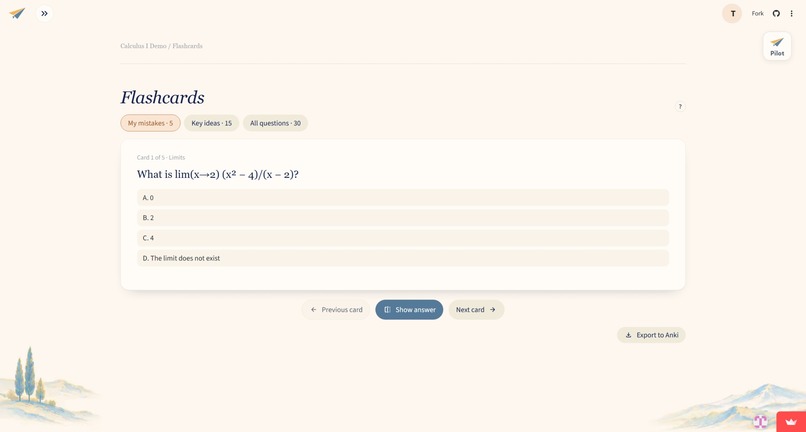
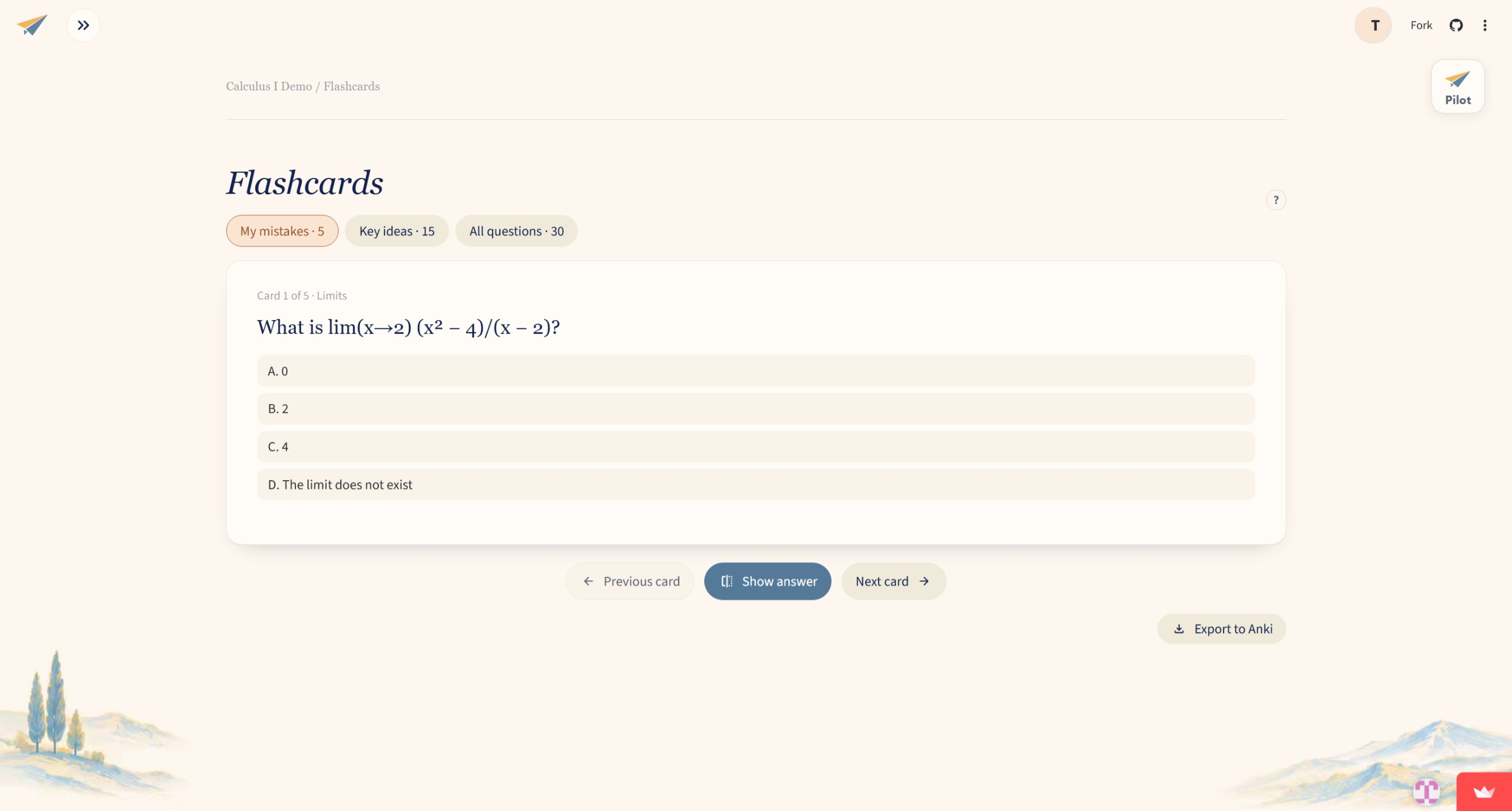
10. Flashcards Review mistakes and key concepts with interactive flashcards, and export questions for Anki.
-
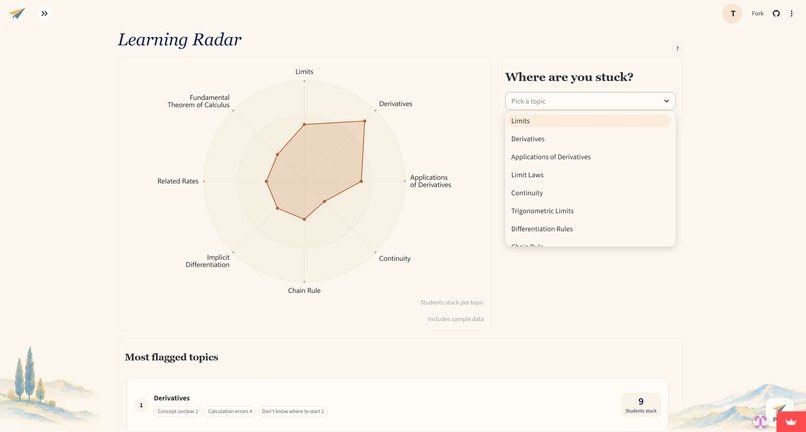
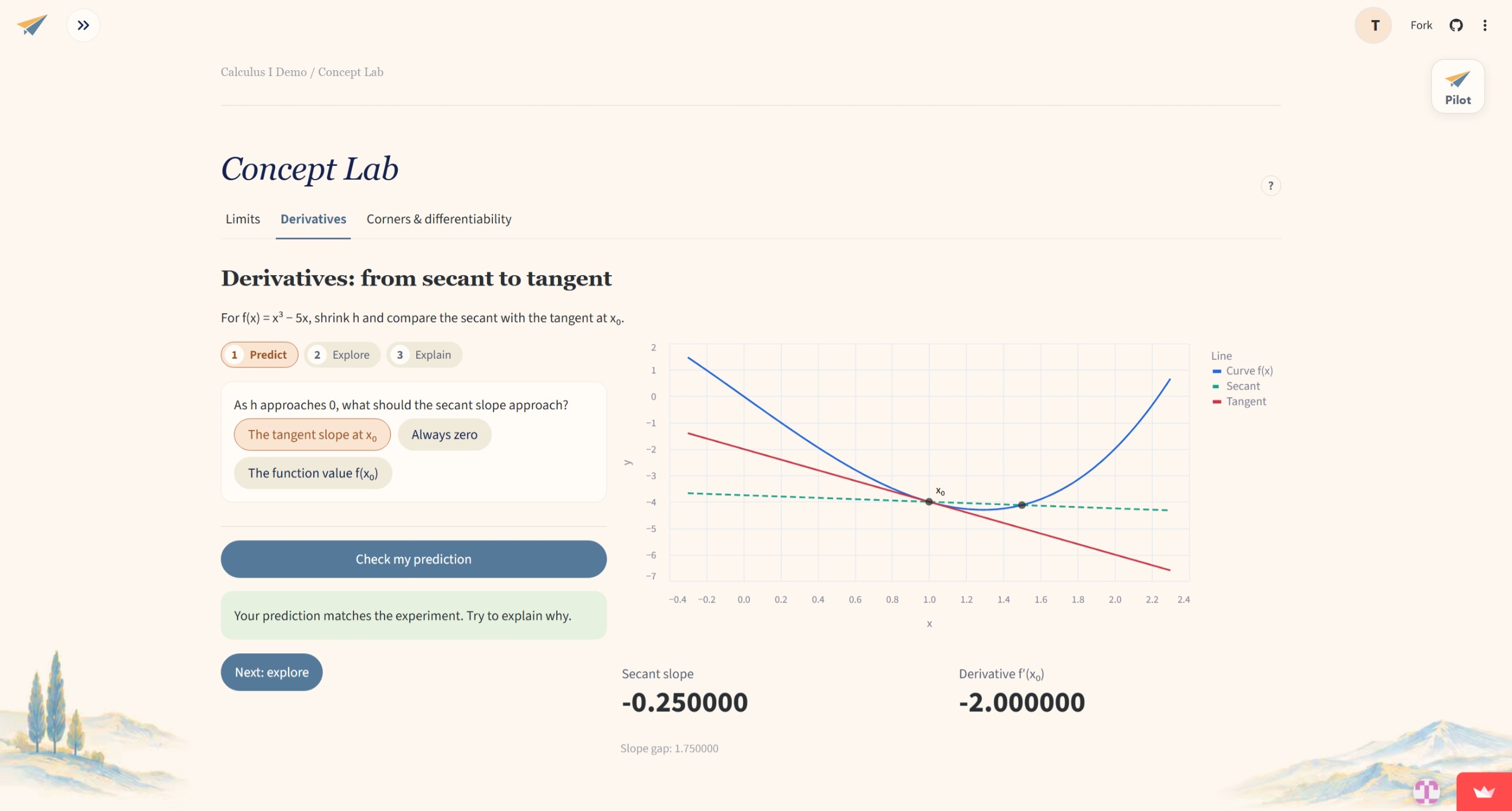
8. Concept Lab Predict, experiment, and understand mathematical concepts through interactive visualizations.
-
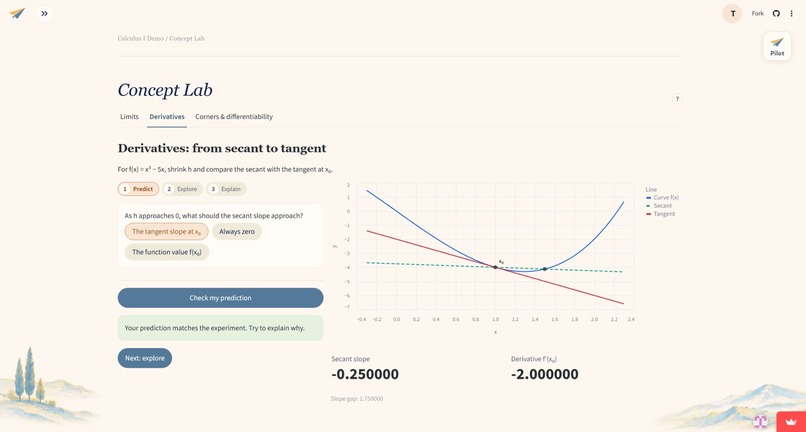
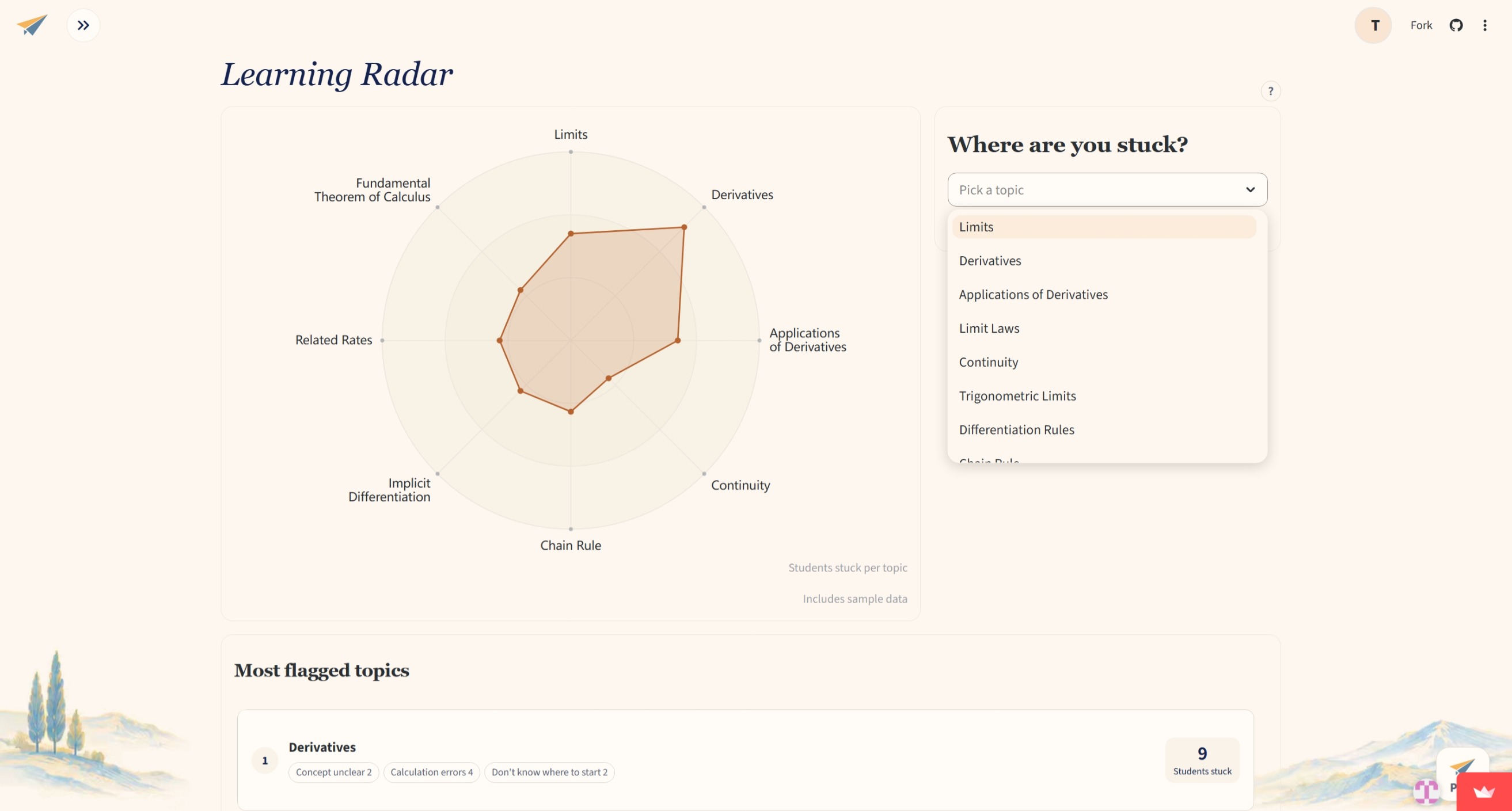
9. Learning Radar Explore topics students struggle with and contribute feedback. Demo charts include clearly labeled sample data.
Inspiration
Many students do not struggle because they are unwilling to learn — they struggle because studying often feels overwhelming, disorganized, and discouraging. Existing learning tools are either too static, too generic, or too utility-driven, which makes practice feel like a chore instead of a guided journey.
We wanted to build ExamPilot, a learning experience that feels more like a study flight plan than a question bank. Our goal was to make students feel guided, calm, and motivated while practicing. We focused especially on two things:
- making the interface feel welcoming and less stressful, and
- helping students understand not only what question they are on, but also what skills they are weak in.
What it does
ExamPilot is an intelligent study and practice platform that helps students learn through a clean, structured, and supportive experience.
The platform includes:
- A modern practice interface designed to make students actually want to sit down and do problems
- A paper-plane style progress path that turns question progress into a light, visual journey
- A Learning Radar that helps students quickly see which topic areas need more attention
- Reference Notes that keep key formulas and concepts close to the question
- A more focused and less distracting UI that makes practice feel clear, calm, and approachable
In our current prototype, students can work through math practice questions in a way that feels more guided and visually engaging than a traditional worksheet or generic quiz page.
How we built it
We designed and developed ExamPilot as a web-based educational product prototype. We worked on both the product thinking and the user experience, focusing on how students actually feel when practicing.
Our work included:
- Designing the product concept and study flow
- Building the frontend practice experience
- Creating a new visual system for the practice page
- Adding the paper-plane progress interaction
- Adding the Learning Radar feature to surface topic-level learning signals
- Organizing the project so it can evolve into a broader intelligent study platform
We also iterated on the interface multiple times, refining layout, hierarchy, colors, and interaction patterns to make the experience cleaner and more student-friendly.
Challenges we ran into
One of our biggest challenges was balancing beauty, clarity, and usefulness.
It is easy to make an interface visually attractive, but much harder to make it genuinely helpful for learning. We had to repeatedly rethink:
- how much information should be visible at once,
- where support features like notes and analytics should appear,
- how to keep the page clean without losing functionality,
- and how to make the product feel different from a generic AI chat or ordinary question bank.
Another challenge was time. Because this was built within a hackathon environment, we had to focus on the most meaningful improvements we could implement and present clearly in a limited timeframe.
Accomplishments that we're proud of
We are proud that ExamPilot is not just another study tool idea — it already has a distinct learning experience.
Some highlights we are especially proud of:
- Creating a practice interface with a clear and polished product identity
- Turning progress into a more delightful visual interaction through the paper-plane flight path
- Introducing the Learning Radar as a simple but compelling way to surface student weaknesses
- Building a prototype that feels calm, premium, and genuinely student-centered
- Making the platform feel like a guided learning journey rather than a cold task list
What we learned
Through building ExamPilot, we learned that educational products are not only about content — they are also about emotional experience.
Students are more willing to continue studying when the interface feels clear, supportive, and motivating. We also learned how important it is to connect product design decisions with actual learning behavior, rather than adding features just for complexity.
On the technical and product side, we also learned how to quickly prototype, iterate, and communicate a learning product under hackathon constraints.
What's next for ExamPilot
Next, we want to expand ExamPilot beyond a polished practice interface into a more adaptive learning system.
Possible next steps include:
- smarter question recommendation,
- deeper topic diagnosis,
- a stronger mistake review system,
- personalized study paths,
- and tighter integration between practice, review, and analytics.
Our long-term vision is for ExamPilot to become a platform that helps students study with more clarity, confidence, and direction.
Built With
- css
- figma
- github
- html
- javascript
- next.js
- node.js
- react
- typescript
- vercel
