Inspiration
I was preparing for JAMB in Nigeria, and I realized something frustrating.
Most studying is passive.
You read notes, highlight textbooks, watch videos, and solve random past questions, but none of it truly prepares you for the pressure of a real exam environment.
During practice sessions, I noticed I often understood topics while studying, but performed differently once time pressure was introduced. My accuracy dropped, I rushed difficult questions, hesitated too long on others, and became mentally fatigued later into exams.
That made me ask a question:
What if students could train for exam pressure itself, not just the content?
That idea became ExamGhost.
Instead of building another AI study assistant or quiz generator, I wanted to create a system that simulates real exam conditions, analyzes how students behave under pressure, identifies weaknesses, and actively helps them recover from them.
What it does
ExamGhost is a pressure-aware exam simulation platform with adaptive recovery learning.
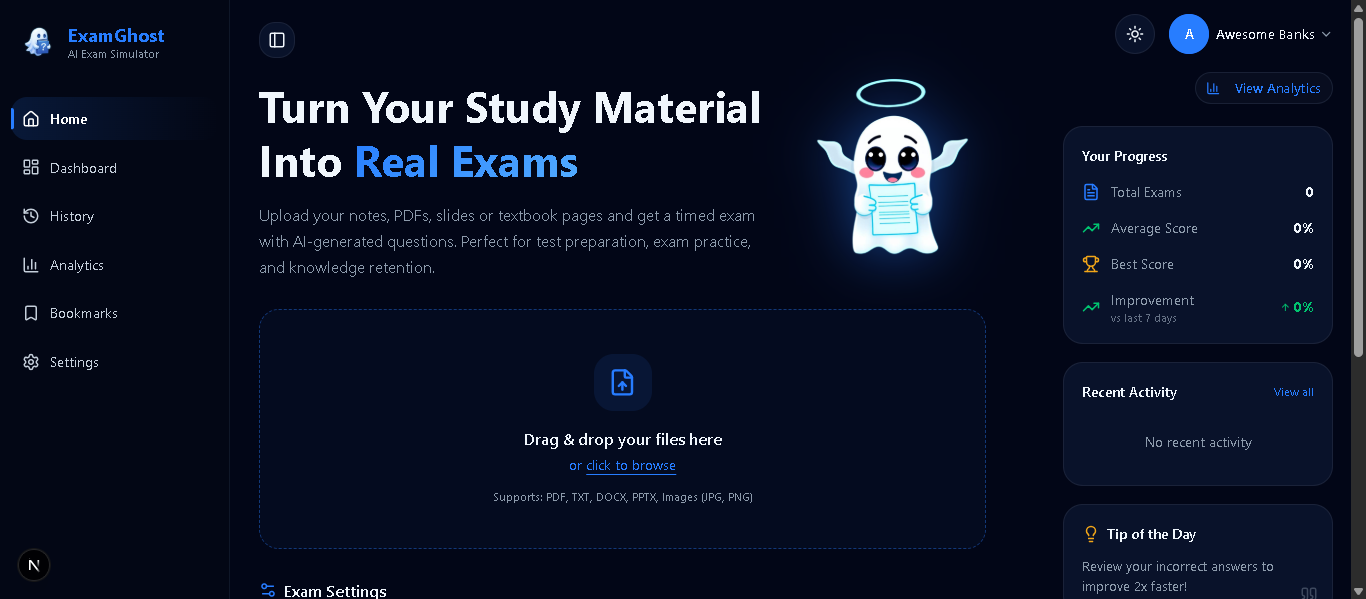
The platform transforms study materials such as PDFs, notes, textbook pages, and slides into structured timed exams using AI.
But ExamGhost goes beyond question generation.
It is built around 3 core systems:
1. Exam Simulation Engine
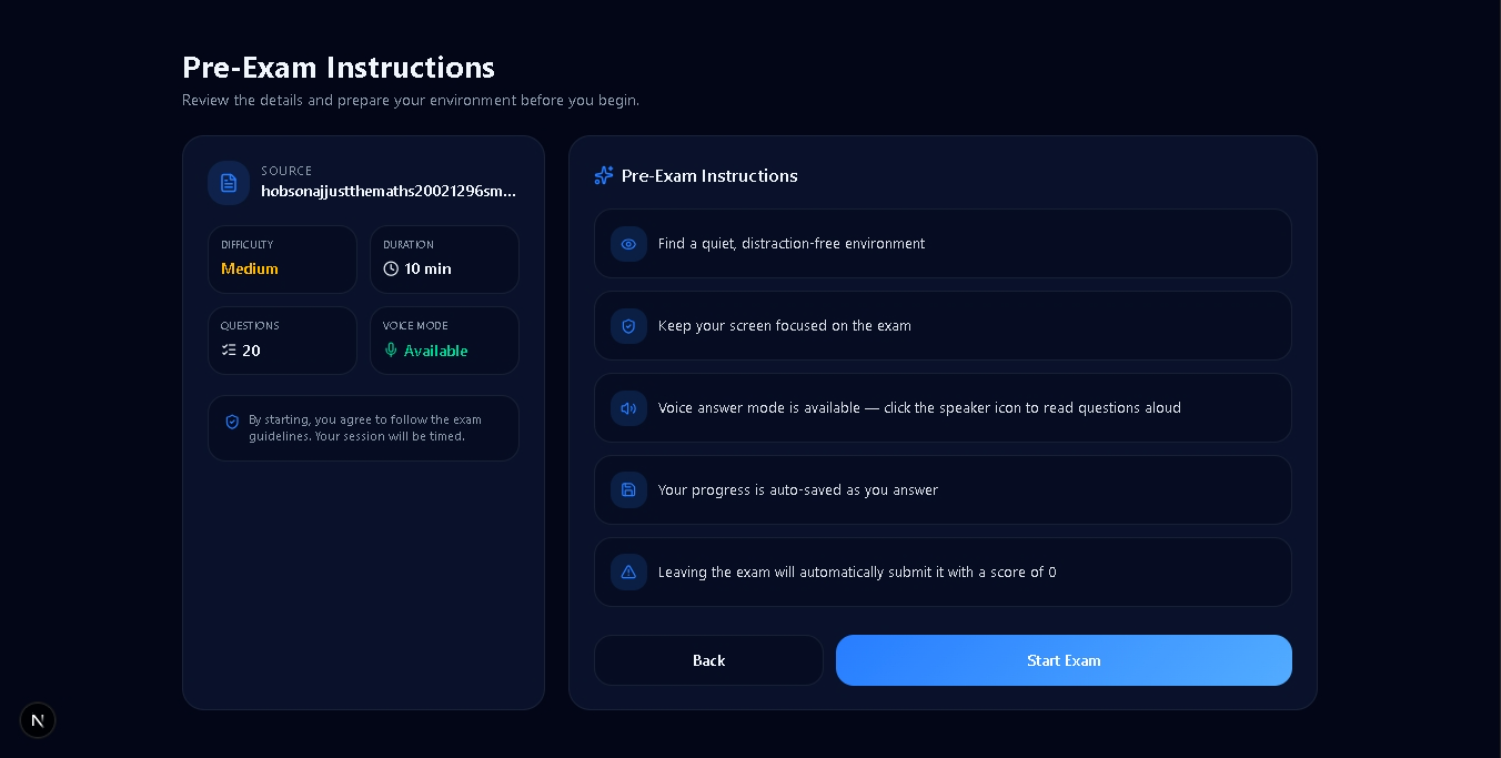
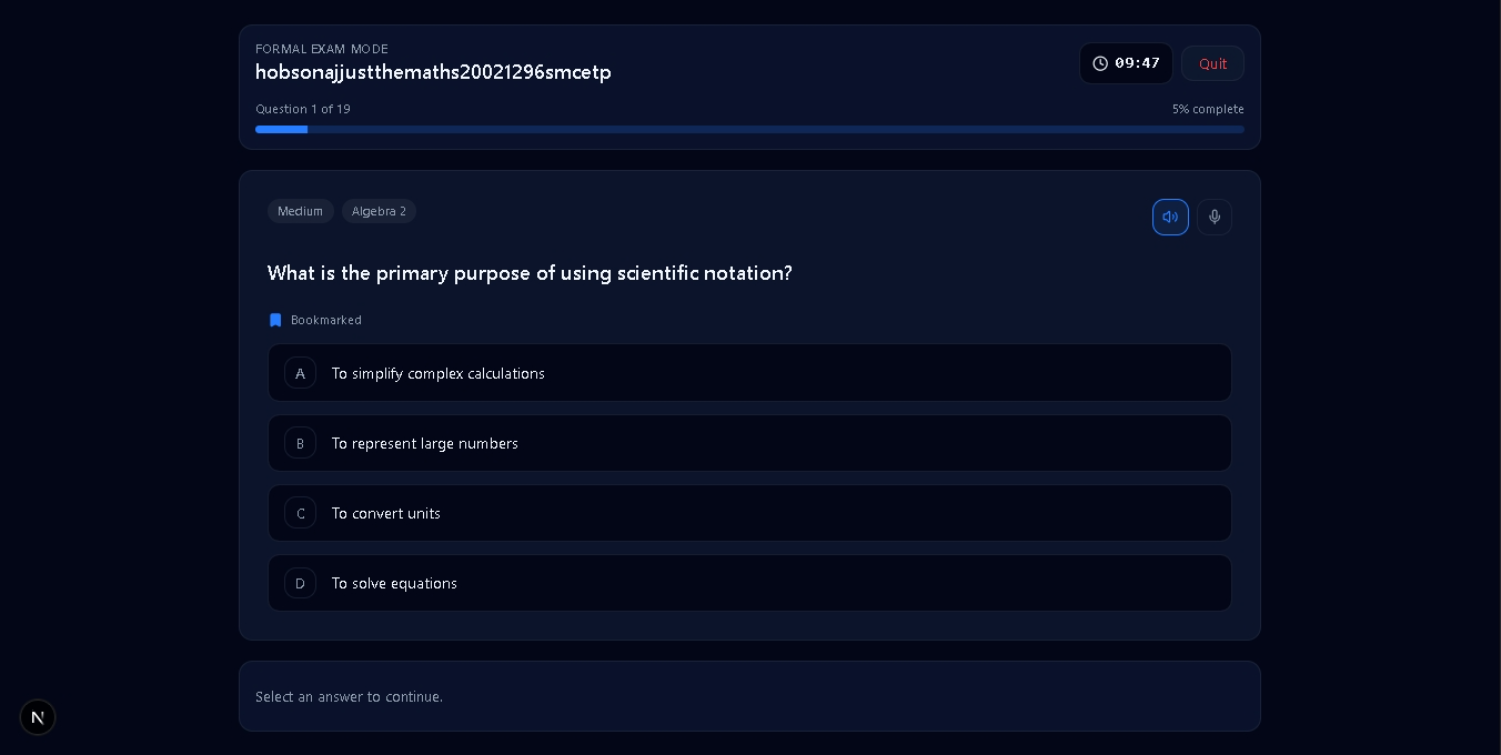
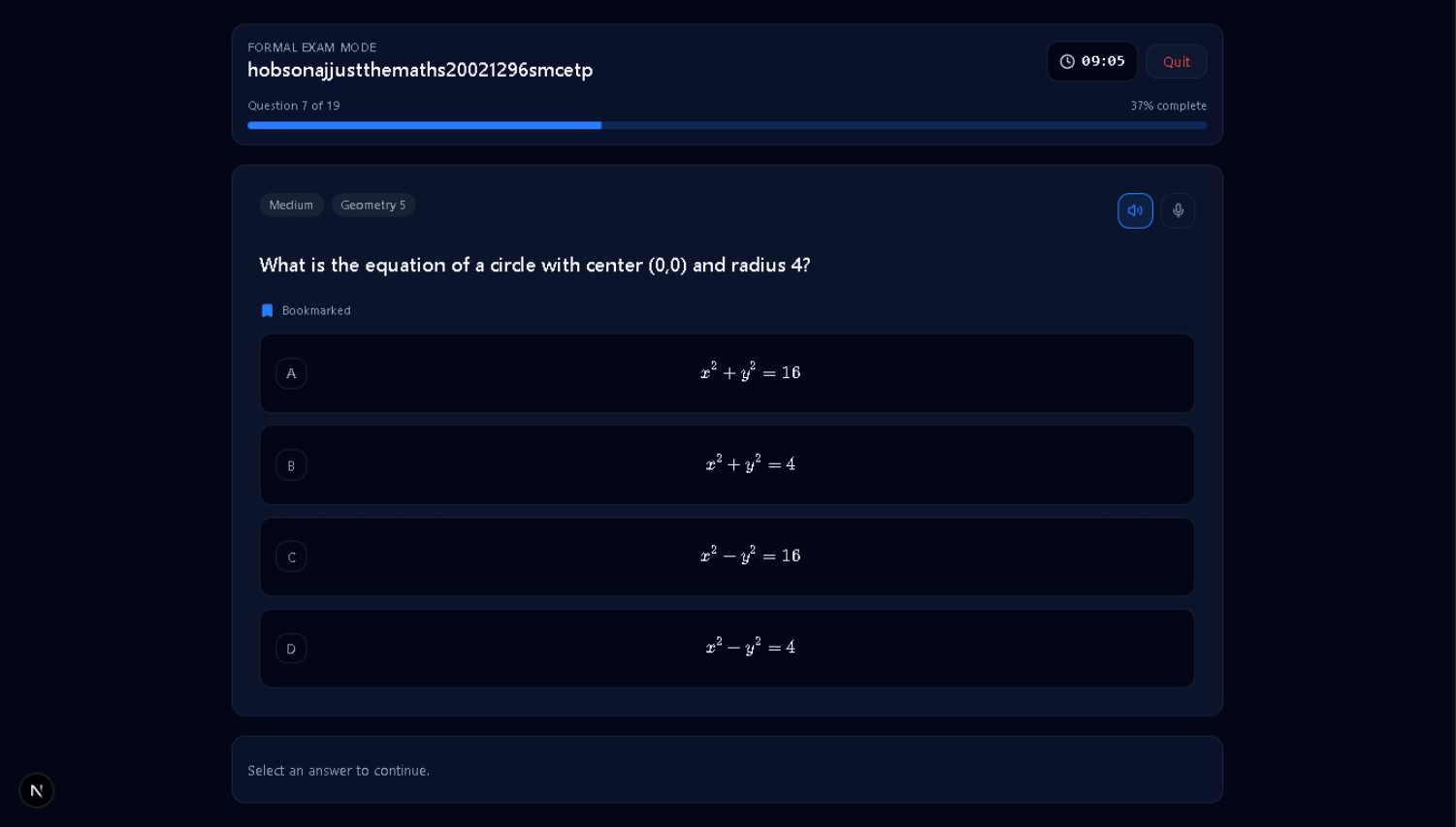
Creates realistic timed exam environments with:
- strict progression
- countdown timers
- local exam execution
- voice interaction support
- pressure-focused exam flow
The goal is to recreate the feeling of an actual CBT exam rather than a normal quiz app.
2. Pressure Intelligence System
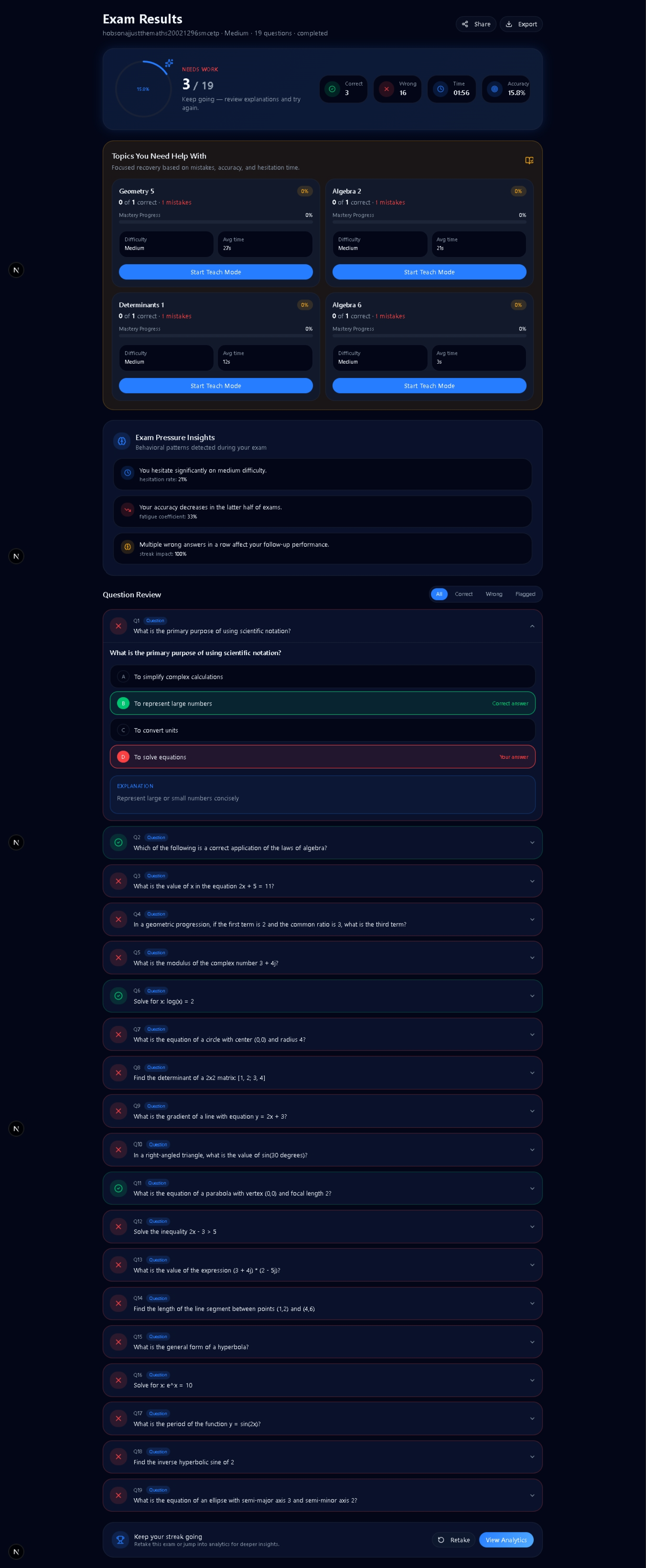
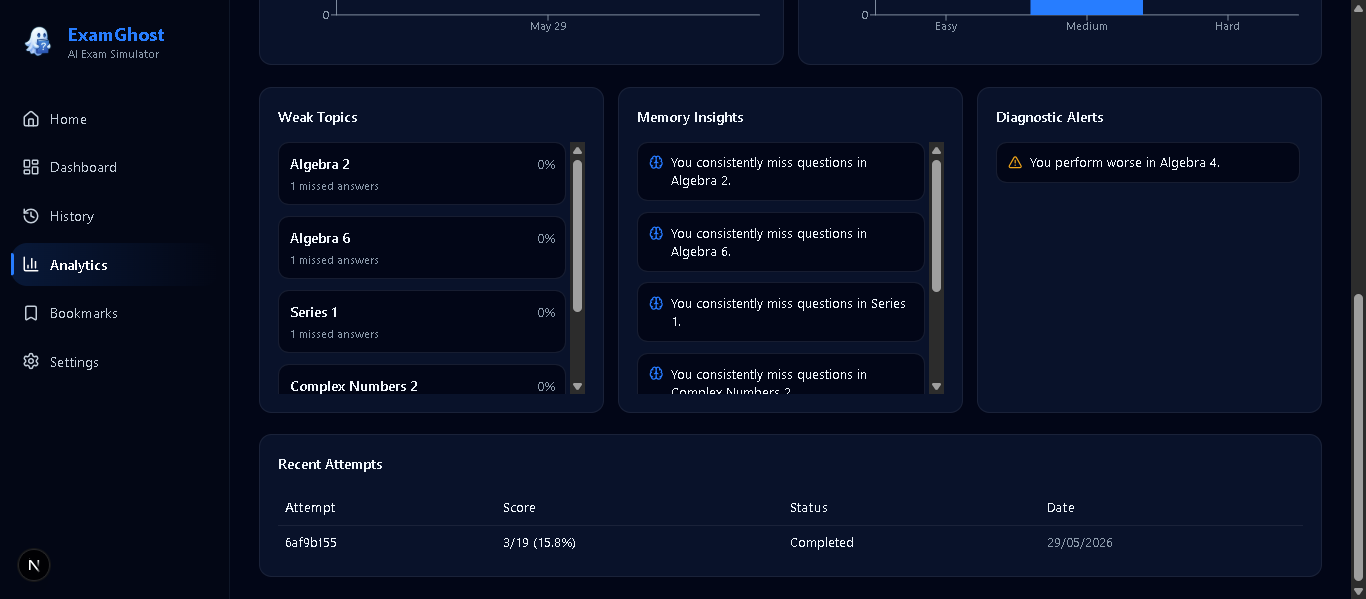
During exams, the platform continuously tracks measurable behavior patterns such as:
- hesitation time
- rapid guessing
- confidence shifts
- fatigue progression
- performance under time pressure
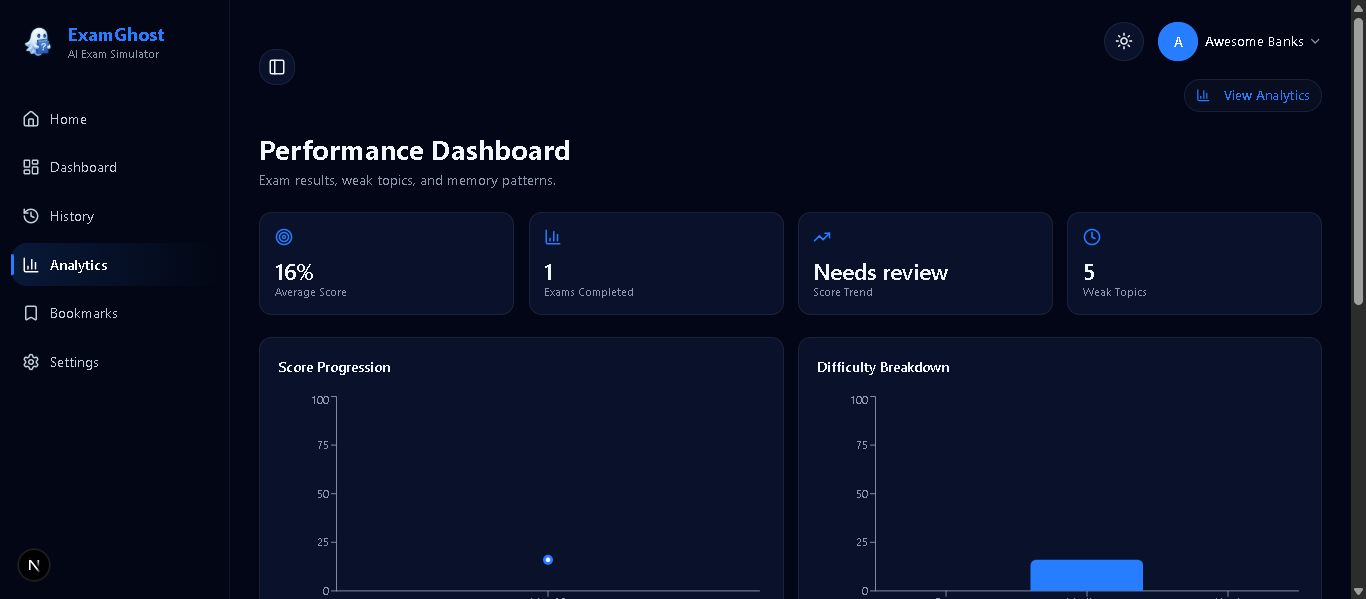
After the exam, the system generates behavioral insights like:
- “Your accuracy dropped after question 10.”
- “You rush medium-difficulty questions.”
- “You perform better when taking slightly longer to think.”
This helps students understand not just what they got wrong, but how they behave during exams.
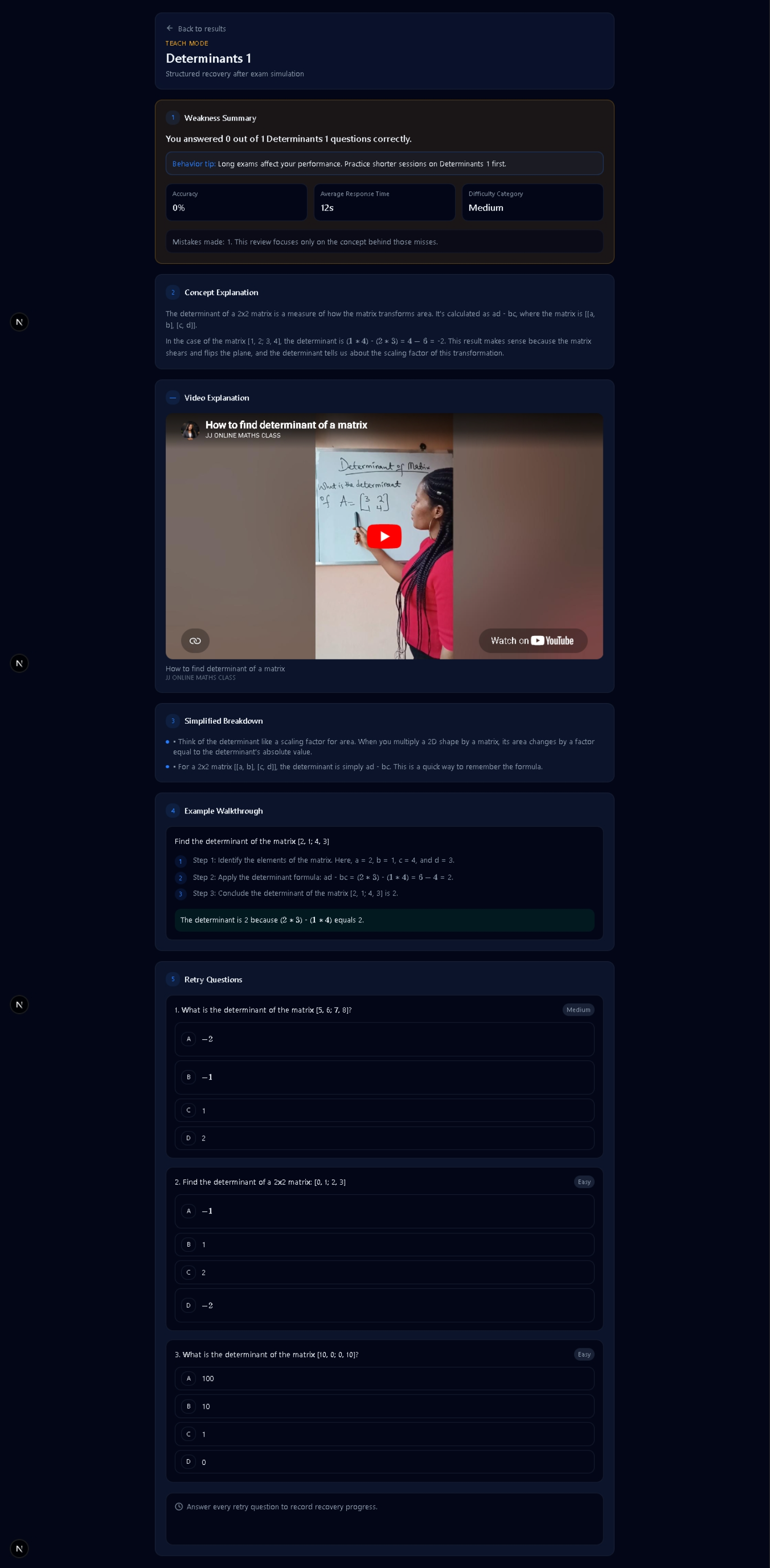
3. Recovery Loop Engine (Teach Mode)
After detecting weak topics, ExamGhost immediately enters Teach Mode.
Instead of only showing corrections, the platform:
- reteaches weak concepts
- simplifies difficult topics
- gives guided explanations
- validates understanding with retry questions
This creates a continuous learning loop:
Study → Exam → Analysis → Teaching → Improvement
How I built it
I built ExamGhost as a full-stack web application focused on performance, simplicity, and educational realism.
One of the biggest architectural decisions was limiting AI usage to only the exam generation phase.
When a user uploads study material, AI generates all exam questions at once. The exam is then stored locally and executed without additional AI calls.
This approach:
- reduces latency
- improves consistency
- avoids interruptions during exams
- makes the simulation feel instant and reliable
The system was designed around modular engines:
- Exam Simulation Engine
- Pressure Intelligence System
- Recovery Loop Engine
Behavioral analytics are generated using measurable data such as response time, answer changes, and accuracy progression instead of fake psychological assumptions.
The UI was intentionally designed to feel minimal, calm, and academic rather than flashy or gamified.
Challenges I ran into
One of the hardest challenges was preventing the project from becoming “just another AI education app.”
Initially, it was tempting to add chatbot systems and real-time tutoring everywhere, but that quickly made the experience noisy and unfocused.
I realized the product became much stronger when I centered everything around realistic exam simulation instead of conversational AI.
Another challenge was designing the Pressure Intelligence System in a believable way.
I wanted the platform to generate meaningful insights without pretending to “read emotions” or make fake psychological claims. Because of this, every insight had to be grounded in measurable exam behavior data.
Balancing simplicity with advanced functionality was also difficult. I wanted the platform to feel intelligent without overwhelming users with too many charts or analytics.
Accomplishments that I'm proud of
I’m proud that ExamGhost evolved beyond a simple quiz generator into a complete exam recovery system.
Some accomplishments I’m especially proud of include:
- building a realistic exam simulation experience
- designing the Pressure Intelligence System
- creating Teach Mode and the Recovery Loop
- generating meaningful behavior insights from exam patterns
- keeping the platform fast by minimizing AI dependency
- designing a clean interface that feels like a real educational product
Most importantly, I’m proud that the platform focuses on improving performance under pressure, which is something many learning platforms ignore.
What I learned
I learned that educational technology is not just about delivering information.
The real challenge is designing systems that create feedback loops between performance, analysis, and improvement.
I also learned that AI becomes much more powerful when it is used intentionally instead of everywhere at once.
Building ExamGhost also taught me a lot about product architecture, behavioral analytics, and designing user experiences that feel focused instead of overloaded.
Most importantly, I learned that students often don’t just need more studying.
They need better exam training.
What's next for ExamGhost
Next, I want to make the Recovery Loop Engine more adaptive over long-term usage.
I plan to improve how the platform detects learning patterns across multiple exams and personalize Teach Mode based on:
- fatigue behavior
- pressure sensitivity
- recurring weak concepts
- long-term improvement trends
I also want to introduce smarter simulation modes that mimic different real-world exam environments and difficulty patterns.
The long-term vision for ExamGhost is to become an intelligent exam training platform that helps students not only learn content, but master performance under pressure.
Built With
- file-system-api
- firebase
- google-oauth
- grok
- javascript
- next.js
- react
- tailwind-css
- vercel
- web-speech-api


Log in or sign up for Devpost to join the conversation.