-
-
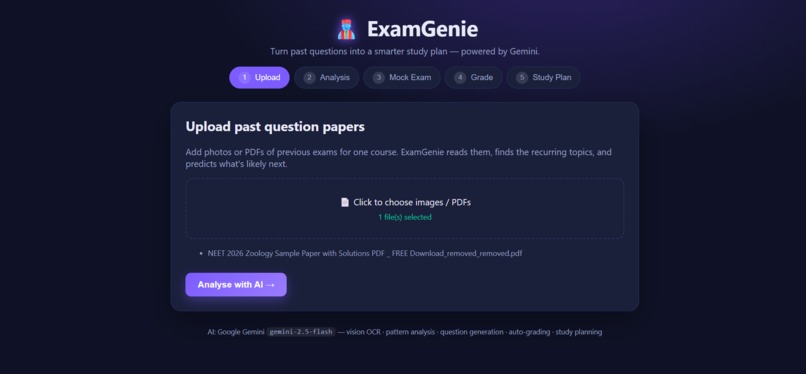
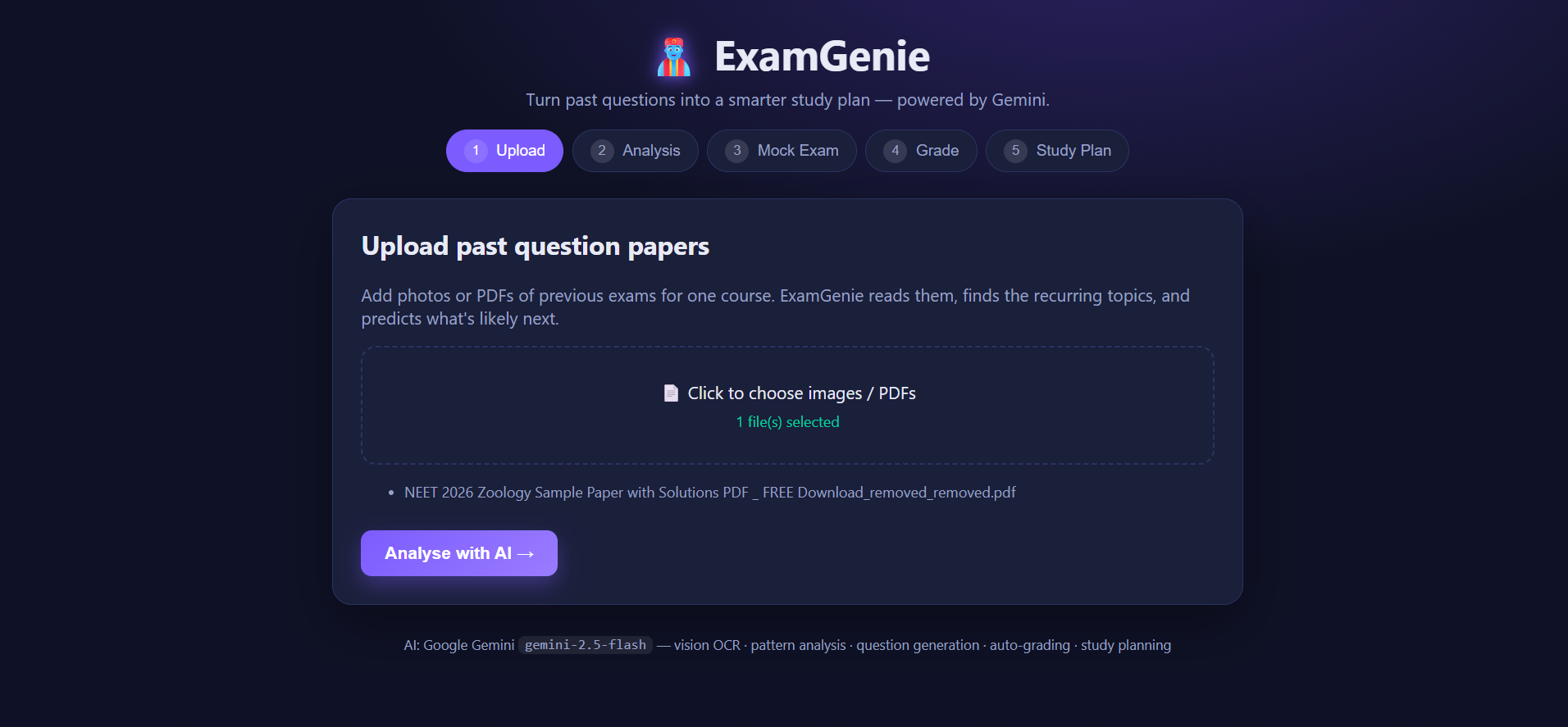
Upload past exam papers and start AI-powered analysis.
-
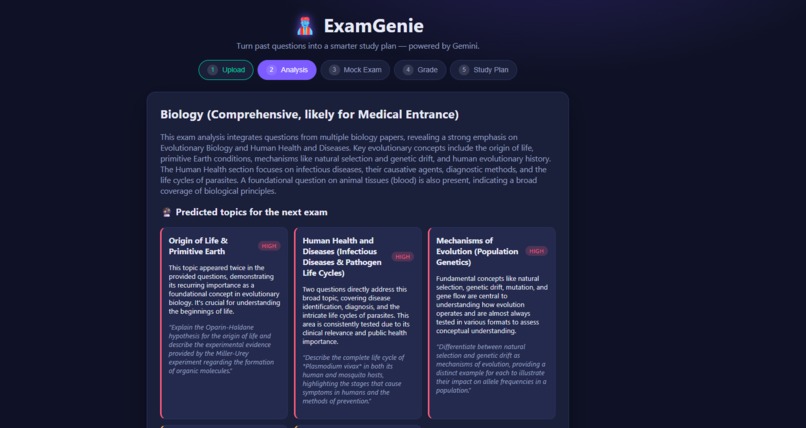
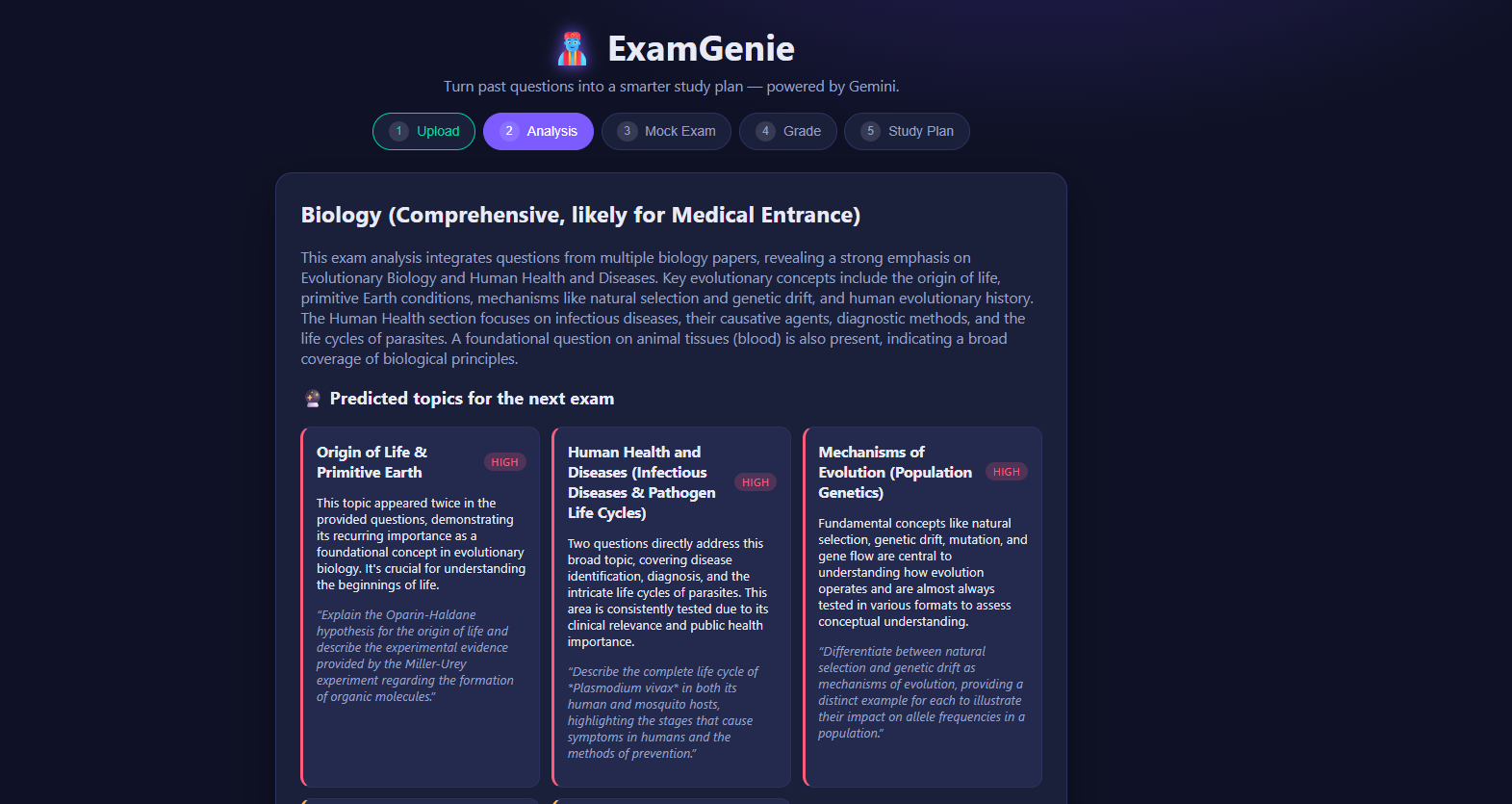
ExamGenie extracts questions, topics, and exam patterns from the paper.
-
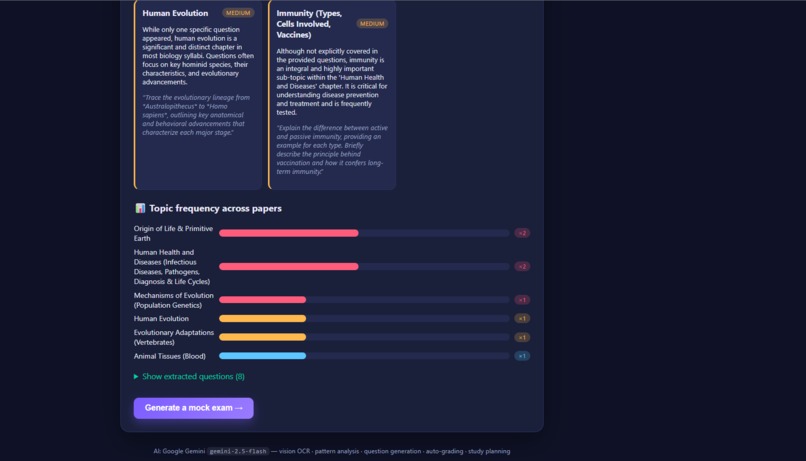
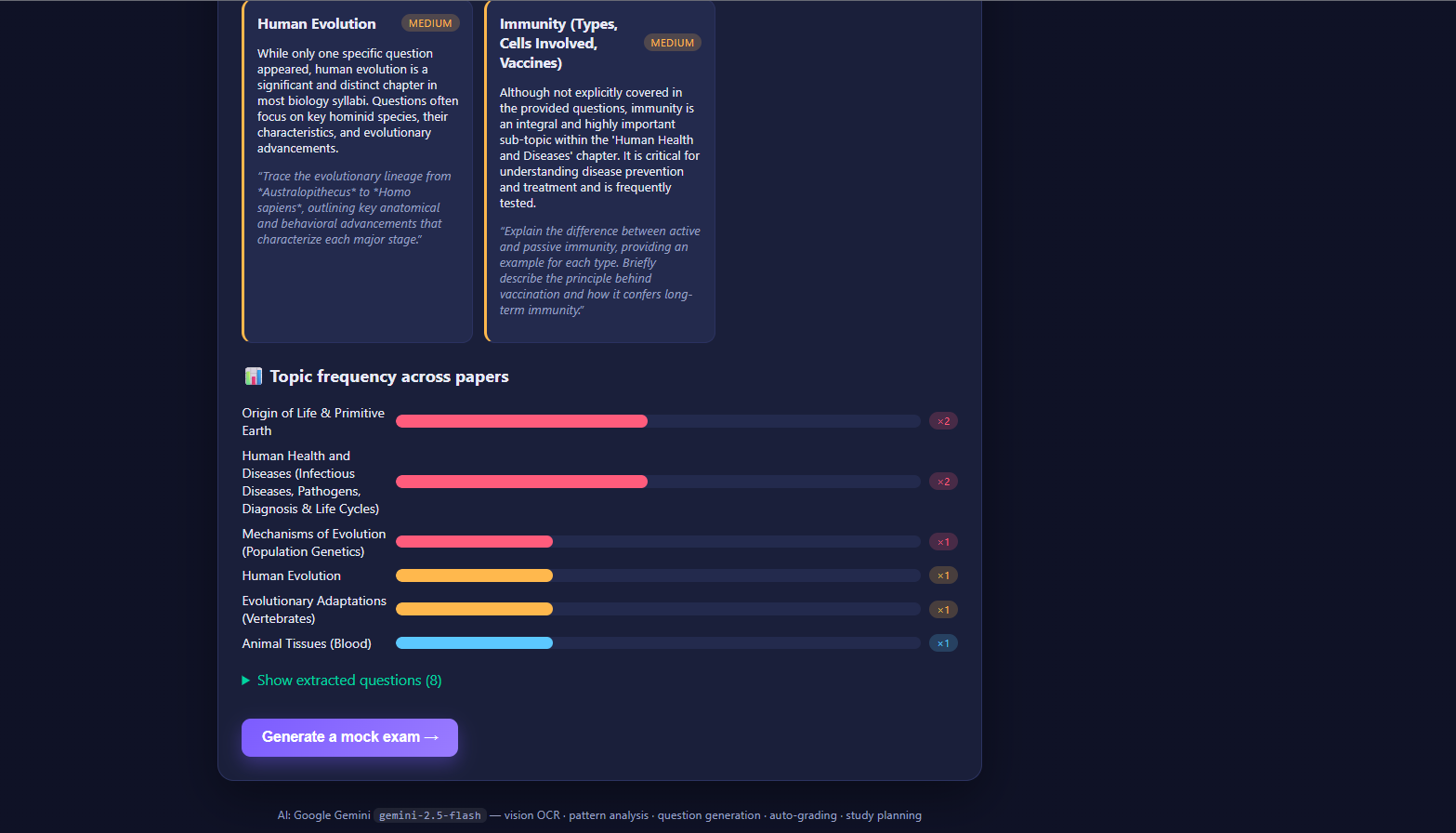
Topic frequency results show the highest-priority areas for the next exam.
-
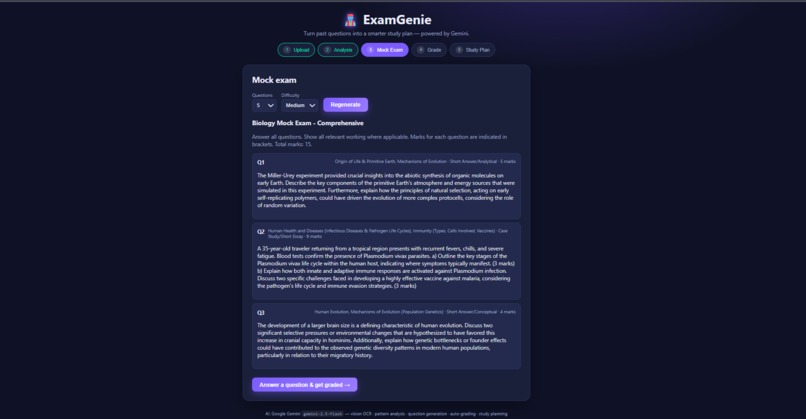
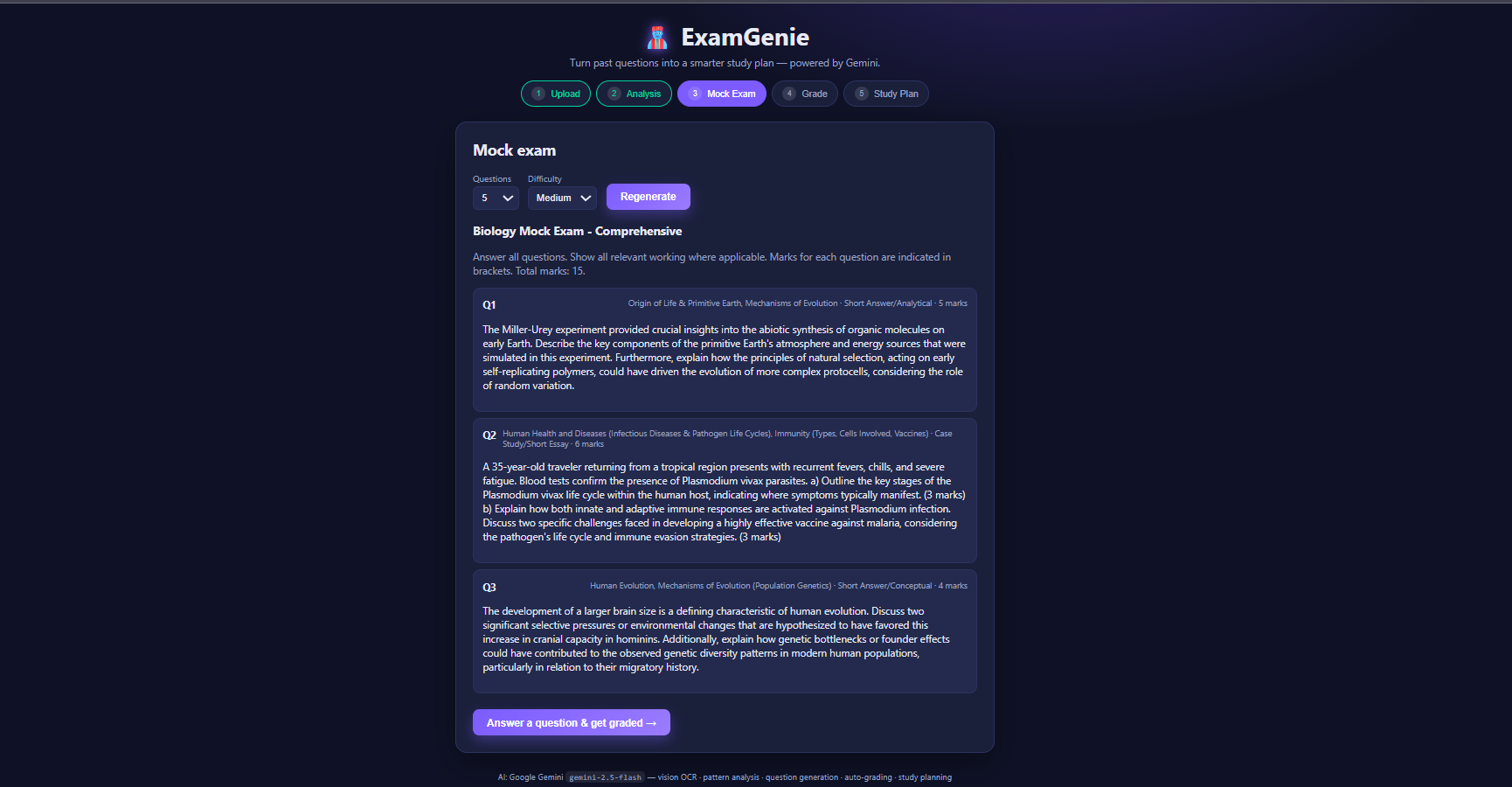
ExamGenie generates a realistic mock exam in the paper’s style.
-
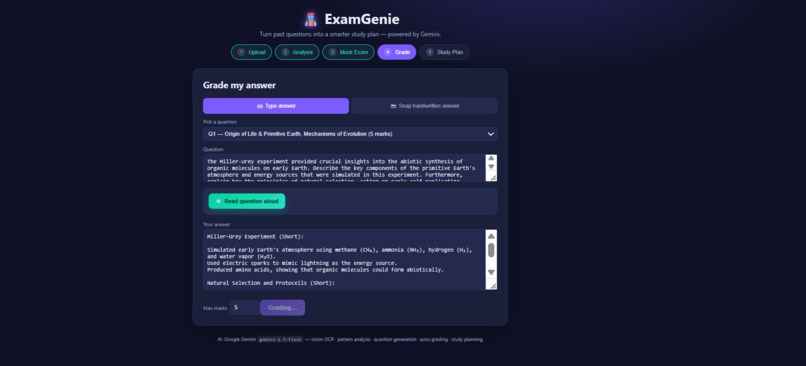
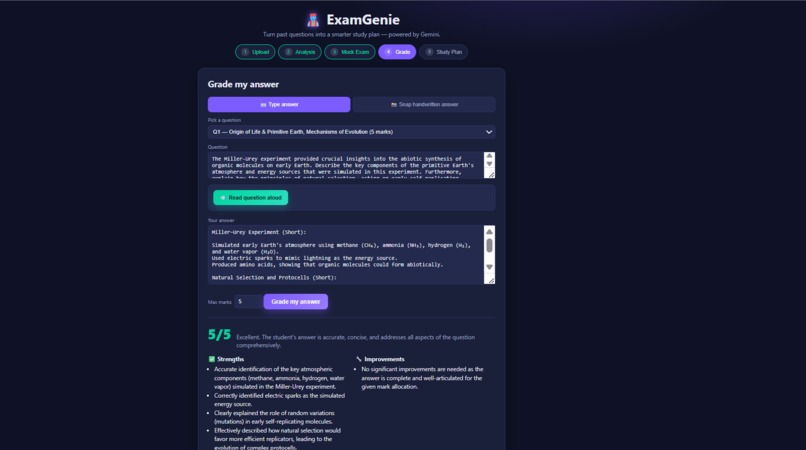
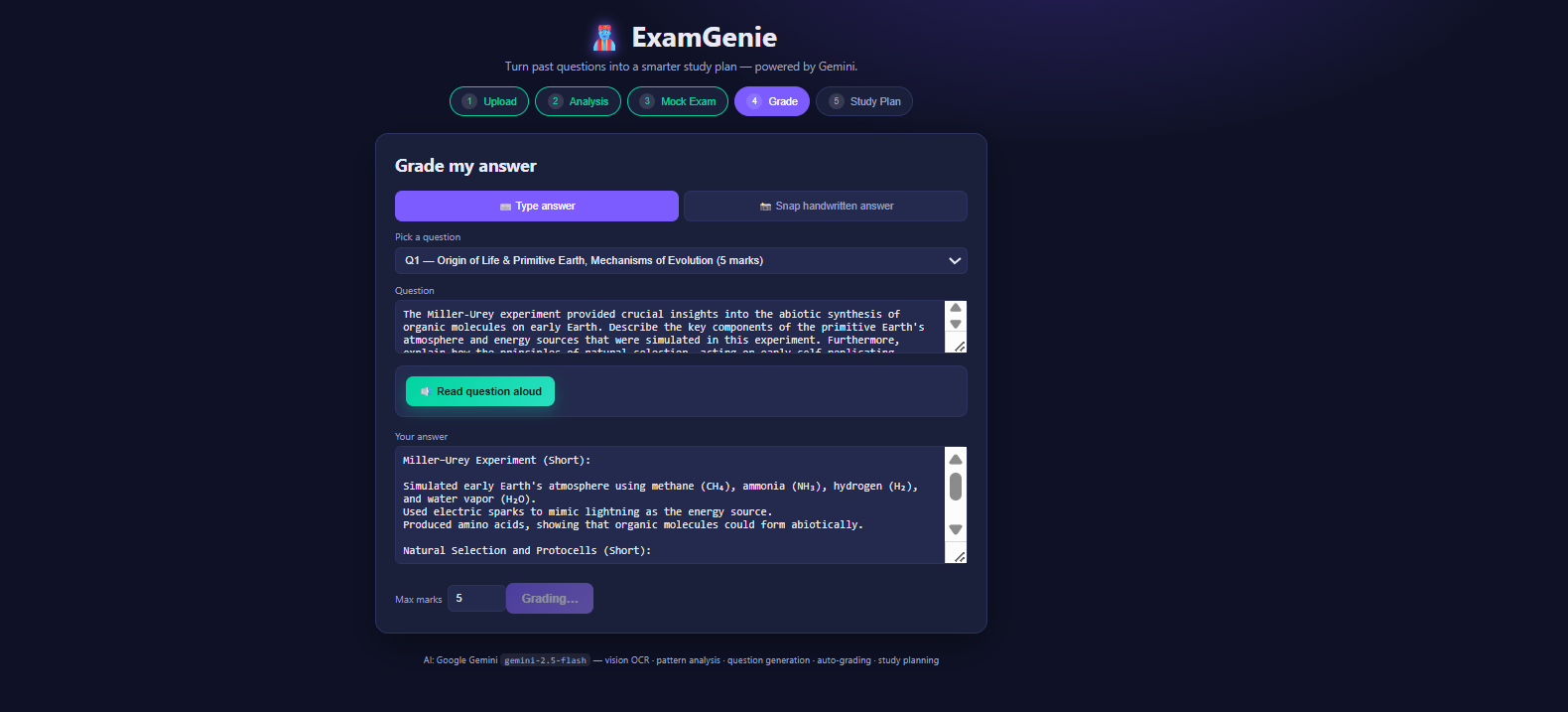
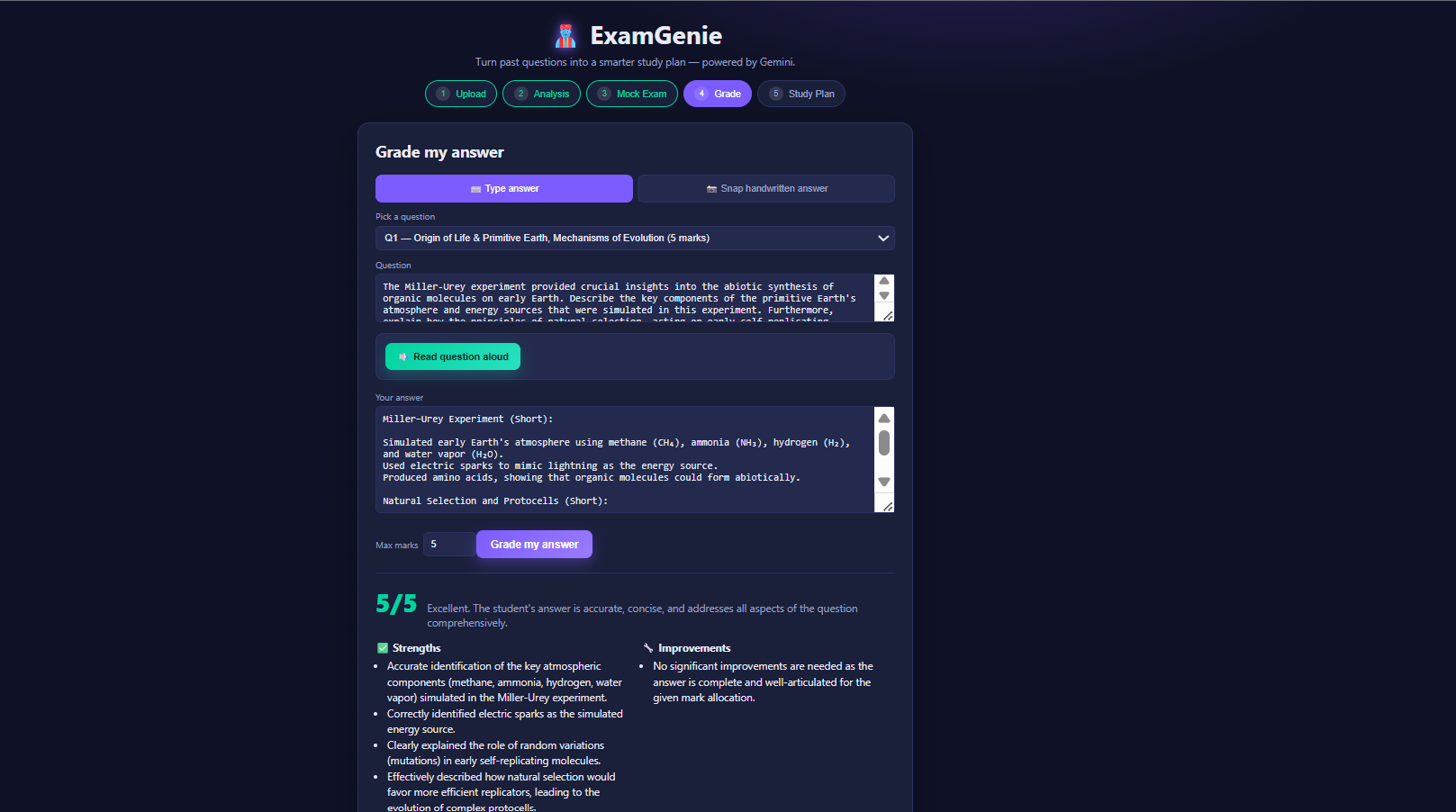
Grade your answer with marks, feedback, and a model solution.
-
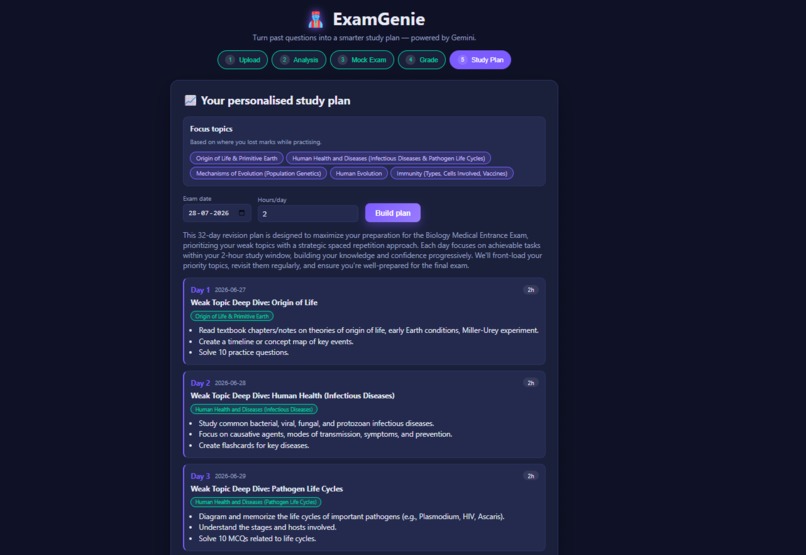
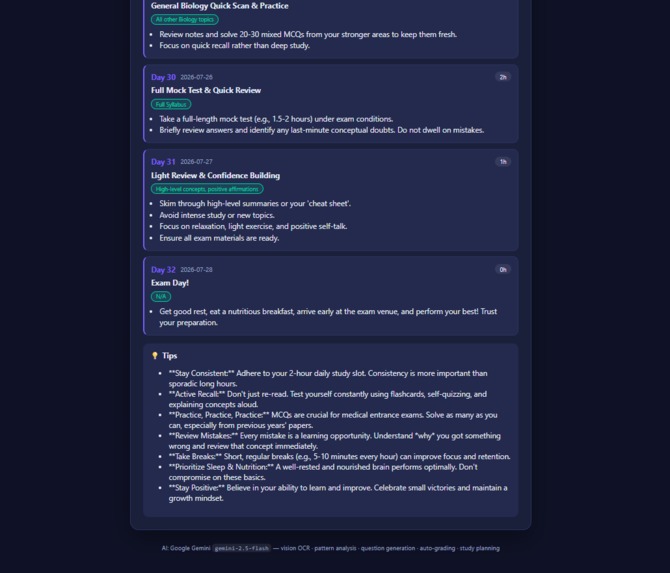
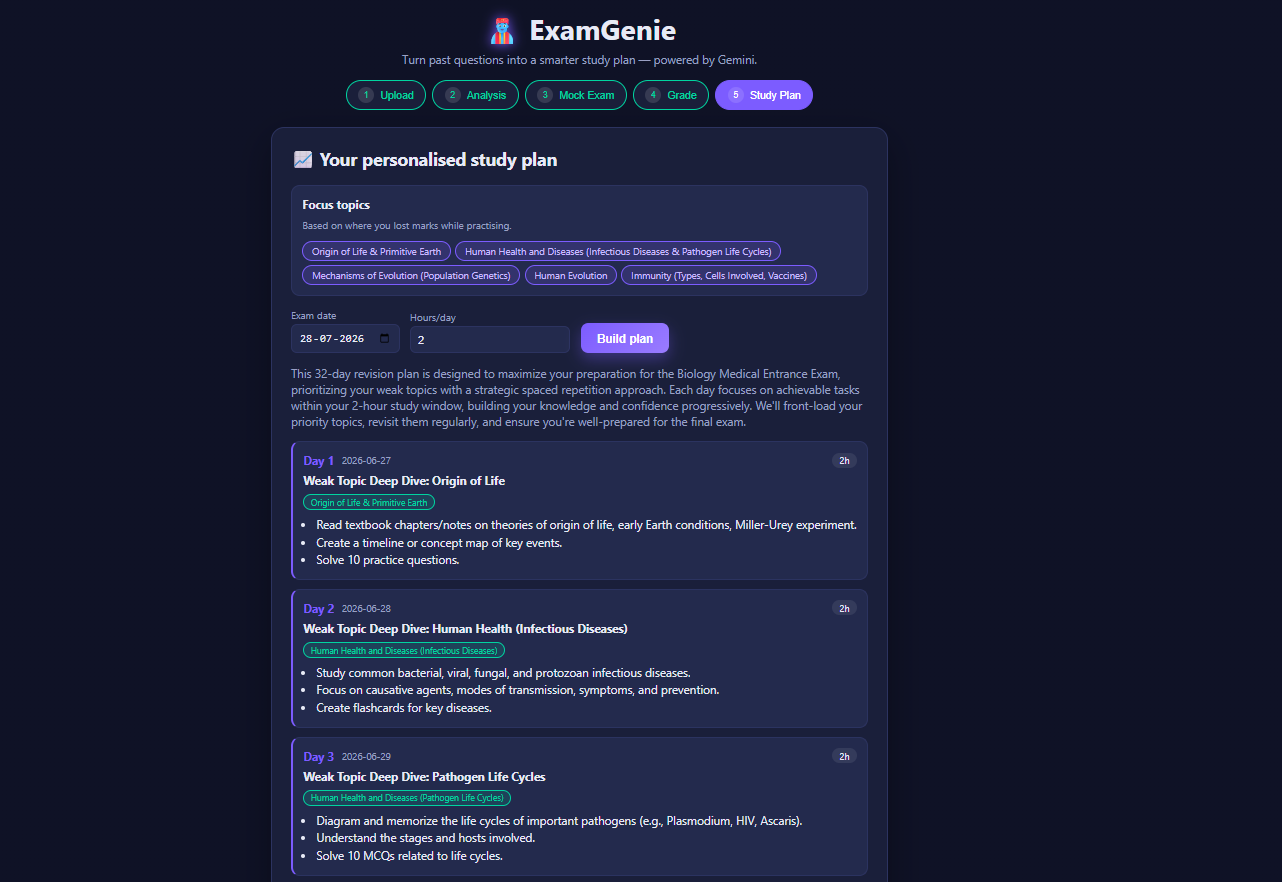
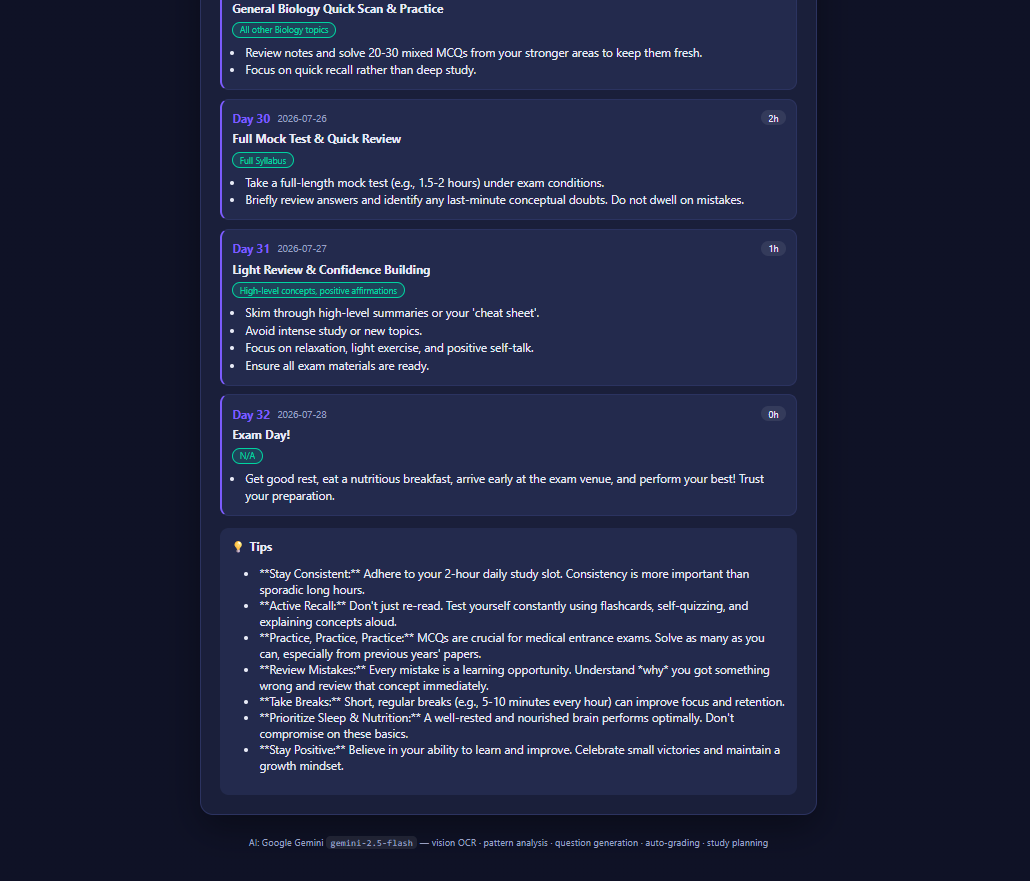
Generate a personalised study plan from your weak topics.
-
End-to-end flow: past paper → analysis → mock exam → grading → study plan.
-
End-to-end flow: past paper → analysis → mock exam → grading → study plan.
Inspiration
ExamGenie was inspired by the way students in Nigeria and elsewhere rely on past exam questions as the primary study habit. Instead of just re-reading old papers, we wanted to build a tool that could surface the real patterns hidden in those questions and turn them into smarter preparation. The idea came from watching classmates spend hours manually sorting topics and guessing what will appear next — we wanted AI to do that hard work.
What it does
ExamGenie transforms past exam papers into an intelligent study workflow:
OCRs images and PDFs of past questions using Google Gemini vision. Extracts and groups recurring topics. Ranks topics by frequency and importance. Predicts the most likely topics for the next exam. Generates a realistic mock exam in the paper’s style. Grades answers with marks, feedback, and a model answer. It is built for the exact pain point of “past questions” prep: not just review old questions, but learn from them.
How we built it
We built ExamGenie as a full-stack app:
Backend: Python + FastAPI Frontend: React + Vite AI: Google Gemini (gemini-2.5-flash) for vision, structured outputs, generation, and grading The backend accepts uploaded files, runs OCR and topic analysis, and returns structured JSON. The frontend guides users through a step-by-step flow: upload → analysis → mock exam → grading → study plan.
We used structured response schemas so Gemini returns typed data instead of free-form text, which makes the UI reliable.
Challenges we ran into
Getting robust OCR from mixed images/PDFs and handling both handwritten and printed text. Designing prompts that produce consistent structured JSON from Gemini. Making the app fast enough for users, since one analysis can take 20–40 seconds. Ensuring the generated mock exam felt like a real past paper instead of generic practice questions.
Accomplishments that we're proud of
Built a complete end-to-end experience from file upload to AI-powered grading. Used Gemini not only for OCR, but also for pattern analysis, prediction, question generation, and feedback. Created a clean React flow with upload, analysis, mock exam, grading, and study plan stages. Delivered a real hackathon-ready MVP with a clear use case for exam preparation.
What we learned
AI is most powerful when combined with structured outputs: response_schema turned Gemini from “chatty” into dependable data. A hybrid workflow is effective: use vision for OCR and the same model again for analysis and generation. Real student problems need more than raw answers — they need trends, predictions, and actionable study guidance. Even simple UX improvements, like showing topic frequency and predicted topics, make AI feel much more useful.
What's next for ExamGenie
Add better study-plan generation based on student strengths and weaknesses. Support more exam formats and automatic mark allocation like ( \text{total marks} = \sum_{i=1}^{n} m_i ). Improve PDF/question parsing so the model can detect question numbers, subparts, and mark schemes automatically. Add collaborative features such as shared mock tests and progress tracking for study groups.

Log in or sign up for Devpost to join the conversation.