-
Problem statement and Solution
## EXAM STRESS
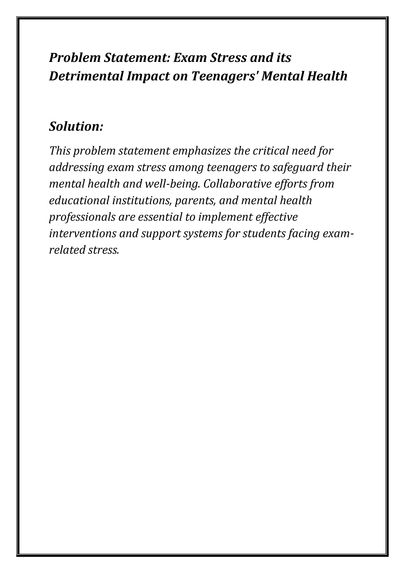
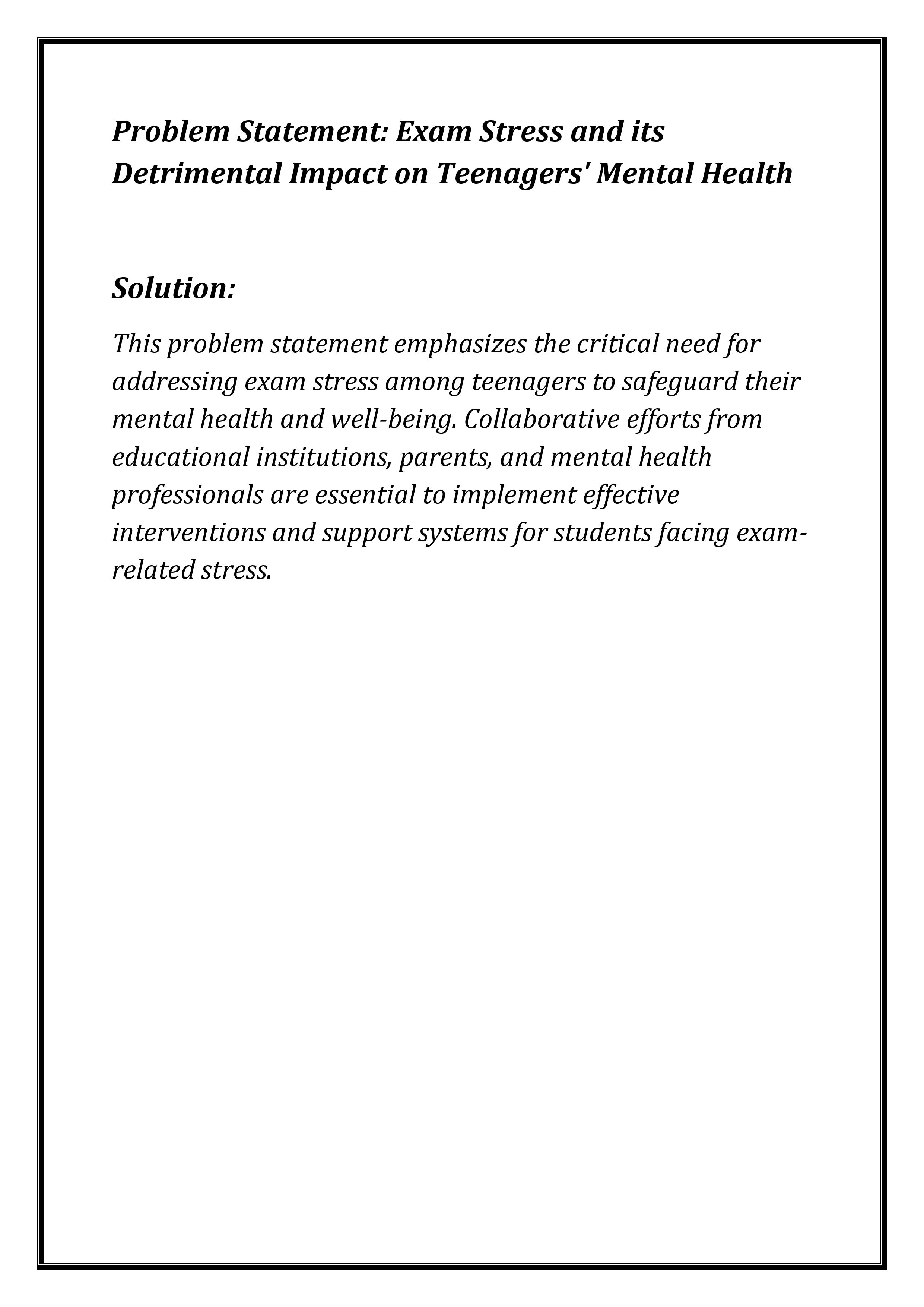
Problem Statement: Exam Stress and its Detrimental Impact on Teenagers' Mental Health
Inspiration
Navigating exam stress requires resilience. Acknowledge the anxiety, but find inspiration in proactive coping strategies. Embrace self-care, break tasks into manageable steps, and seek support. Remember, exams don't define you. Your well-being matters most. Stay focused, stay calm, and believe in your ability to overcome challenges.
What it does
Exam stress can have various effects on individuals, impacting both their mental and physical well-being. Here are some common consequences of exam stress:
Anxiety and Nervousness: Exam stress often leads to heightened levels of anxiety and nervousness, affecting an individual's ability to think clearly and perform optimally.
Sleep Disturbances: Stress can interfere with sleep patterns, causing insomnia or disrupted sleep, which, in turn, affects concentration and cognitive functions.
Physical Symptoms: Increased stress levels may manifest physically, leading to headaches, muscle tension, fatigue, and other stress-related symptoms.
Decreased Concentration: High levels of stress can impair concentration and focus, making it difficult for individuals to absorb and retain information.
Negative Impact on Health: Prolonged exam stress may contribute to a weakened immune system, digestive issues, and other health problems.
Emotional Distress: Exam stress often brings about emotional distress, including feelings of sadness, frustration, and a sense of being overwhelmed.
Impact on Self-Esteem: Fear of failure and the pressure to perform well can negatively affect self-esteem and self-confidence.
Social Isolation: Some individuals may isolate themselves from social activities and relationships while under exam stress, leading to feelings of loneliness.
Long-Term Psychological Effects: Chronic exam stress may contribute to long-term psychological effects, such as increased susceptibility to anxiety disorders or depression.
Performance Decline: Paradoxically, excessive stress can lead to a decline in academic performance as it hinders effective learning and problem-solving.
It's essential to recognize these effects and take proactive measures to manage and alleviate exam stress. Implementing stress-reduction techniques, seeking support, and fostering a healthy balance between academic and personal life are crucial for mitigating the negative consequences of exam stress.
How we built it
Exam stress is a complex phenomenon influenced by various factors within the educational and societal context. Here are some key contributors to the development of exam stress:
High Stakes: Educational systems that place heavy emphasis on exams as the primary means of assessment create a high-stakes environment. The significance attached to exam results can contribute to increased stress levels.
Competition: Intense competition among students, fueled by grade-focused cultures and limited opportunities, can elevate stress levels. The fear of falling behind peers or not meeting academic expectations adds to the pressure.
Parental and Societal Expectations: Societal and parental expectations regarding academic achievement can contribute significantly to exam stress. The desire to meet or exceed these expectations can create a substantial burden on students.
Lack of Support Systems: Insufficient support systems within educational institutions, such as limited access to counseling services or inadequate teacher-student communication, may leave students feeling isolated and without resources to cope with stress.
Teaching Approaches: Teaching methods that emphasize rote memorization and exam-oriented learning, rather than fostering critical thinking and understanding, can contribute to stress. Students may feel pressured to memorize information rather than truly comprehend it.
Limited Focus on Well-being: Educational systems that prioritize academic achievement over the well-being of students may inadvertently contribute to stress. The lack of emphasis on mental health and stress management within the curriculum can leave students ill-equipped to handle exam-related pressures.
Testing Frequency: Frequent testing and a heavy exam schedule can contribute to chronic stress. A packed exam calendar with limited time for preparation may leave students feeling overwhelmed.
Lack of Alternative Assessment Methods: Relying solely on traditional exams for assessment limits the diversity of skills and talents that students can showcase. Introducing alternative assessment methods may reduce the singular focus on exams.
Cultural Factors: Cultural attitudes towards success and failure can influence the perception of exams. Cultures that place a strong emphasis on academic achievement may inadvertently contribute to heightened stress levels.
Technology and Social Media: The constant connectivity enabled by technology and social media can intensify stress. Comparisons with others, unrealistic expectations, and the fear of missing out can contribute to overall anxiety.
Challenges we ran into
Pressure to Perform: High expectations from oneself, parents, or teachers can create immense pressure, leading to stress.
Time Constraints: Limited time for exam preparation can contribute to stress as students may feel overwhelmed with the amount of material to cover.
Fear of Failure: The fear of not meeting expectations or failing exams can be a significant source of stress.
Competition: A competitive environment can intensify stress, with students feeling the need to outperform their peers.
Health Impact: Prolonged stress can have physical and mental health consequences, affecting sleep, appetite, and overall well-being.
Uncertainty: Unclear exam expectations or lack of preparation strategies can contribute to stress and anxiety.
Social Isolation: During intense study periods, students may isolate themselves, leading to a lack of social support and increased stress.
Performance Anxiety: The pressure to excel in exams may result in performance anxiety, hindering concentration and effective problem-solving.
Addressing these challenges through support systems, effective study techniques, and stress management strategies is crucial for minimizing the impact of exam stress.
Accomplishments that we're proud of
Amidst the challenges of exam stress, individuals can achieve several positive outcomes and personal growth:
Resilience Development: Overcoming exam stress cultivates resilience, teaching individuals to bounce back from difficulties and setbacks.
Time Management Skills: Navigating tight study schedules enhances time management abilities, a valuable skill in academics and beyond.
Adaptability: Handling exam stress fosters adaptability, as individuals learn to adjust to changing circumstances and unexpected challenges.
Self-Reflection: Exam stress often prompts self-reflection, helping individuals understand their strengths, weaknesses, and effective coping mechanisms.
Goal Setting: Confronting exam stress encourages setting realistic goals and breaking tasks into achievable steps, contributing to a sense of accomplishment.
Stress Management Techniques: Learning to cope with exam stress introduces valuable stress management techniques that can be applied to various aspects of life.
Increased Focus and Concentration: Managing stress improves focus and concentration, enhancing academic performance and overall productivity.
Character Building: Overcoming exam stress contributes to character development, fostering qualities like perseverance, determination, and a strong work ethic.
Recognizing and celebrating these accomplishments can provide a positive perspective on the challenges posed by exam stress, turning them into opportunities for personal and academic growth.
What we learned
Experiencing exam stress can provide individuals with various insights and lessons that contribute to personal growth and coping strategies. Here are some things people may learn from going through exam stress:
Resilience: Coping with exam stress cultivates resilience, teaching individuals to bounce back from challenges and setbacks in academic and personal life.
Time Management: Managing study schedules and deadlines during exam stress enhances time management skills, a valuable asset for future endeavors.
Self-Awareness: Exam stress often prompts self-reflection, allowing individuals to better understand their strengths, weaknesses, and preferred methods of coping with pressure.
Prioritization: Balancing multiple tasks and subjects during exam periods teaches the importance of prioritization and effective task management.
Coping Mechanisms: Individuals may discover and develop effective coping mechanisms, whether it's through mindfulness, exercise, or seeking support from others.
Perseverance: Navigating exam stress requires perseverance. Individuals learn to keep going, even when faced with challenges and difficulties.
Goal Setting: Setting realistic and achievable goals becomes a crucial skill, helping individuals break down tasks and manage their workload effectively.
Adaptability: Coping with exam stress fosters adaptability, as individuals learn to adjust their study strategies and responses to changing circumstances.
Seeking Support: Exam stress often emphasizes the importance of seeking support from friends, family, or mental health professionals, fostering a sense of community and connection.
Life Balance: Learning to balance academic responsibilities with personal well-being becomes a valuable lesson, promoting a healthier and more sustainable approach to life.
Understanding Limits: Exam stress can help individuals recognize their limits and the importance of setting realistic expectations for themselves.
Mindfulness: The experience of exam stress may introduce individuals to mindfulness techniques, helping them stay focused and present in the midst of pressure.
While exam stress is challenging, the lessons learned during these periods can contribute to personal development, resilience, and the acquisition of skills that extend beyond the academic setting. The key is to reflect on these experiences and use them as tools for growth and well-being in various aspects of life.
What's next for EXAM STRESS
Addressing exam stress involves ongoing efforts to create a supportive and conducive learning environment. Some potential future directions and considerations include:
Mental Health Support: Implementing comprehensive mental health support systems within educational institutions, including counseling services, workshops, and resources to help students manage stress and anxiety.
Holistic Education: Encouraging a shift toward holistic education that values not only academic achievement but also emotional well-being, creativity, and personal development.
Stress Management Programs: Introducing structured stress management programs that teach students effective coping strategies, time management skills, and mindfulness techniques.
Parental Education: Providing resources and educational materials for parents to understand and support their children during stressful periods, fostering a collaborative approach to managing academic pressures.
Flexible Assessment Methods: Exploring alternative assessment methods that reduce the reliance on high-stakes exams and promote a more varied and inclusive evaluation of students' knowledge and skills.
Incorporating Well-being into Curriculum: Integrating well-being and stress management into the curriculum, teaching students essential life skills alongside academic content.
Peer Support Networks: Establishing peer support networks or mentorship programs where students can share experiences, offer advice, and provide emotional support to each other.
Continuous Research: Conducting ongoing research to understand the evolving nature of exam stress and its impact, leading to the development of targeted interventions and strategies.
The future of addressing exam stress involves a comprehensive, multi-faceted approach that considers not only the individual's coping mechanisms but also the broader educational environment and support structures. It requires collaboration among educators, parents, mental health professionals, and policymakers to create a more balanced and nurturing learning experience for students.
Built With
- healerspsychiatry
- mind
- wikipedia
- wion


Log in or sign up for Devpost to join the conversation.