-
-
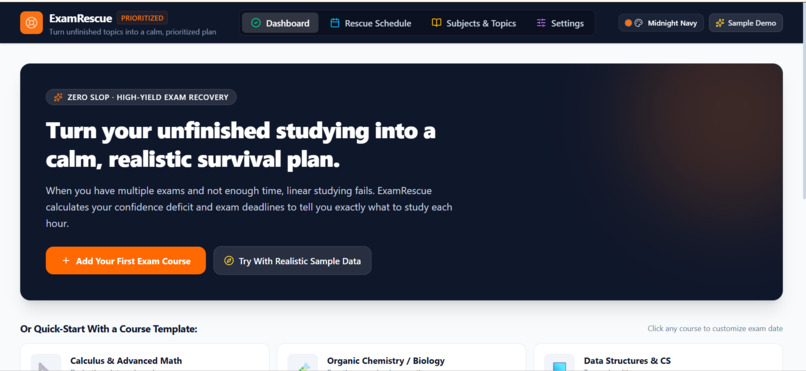
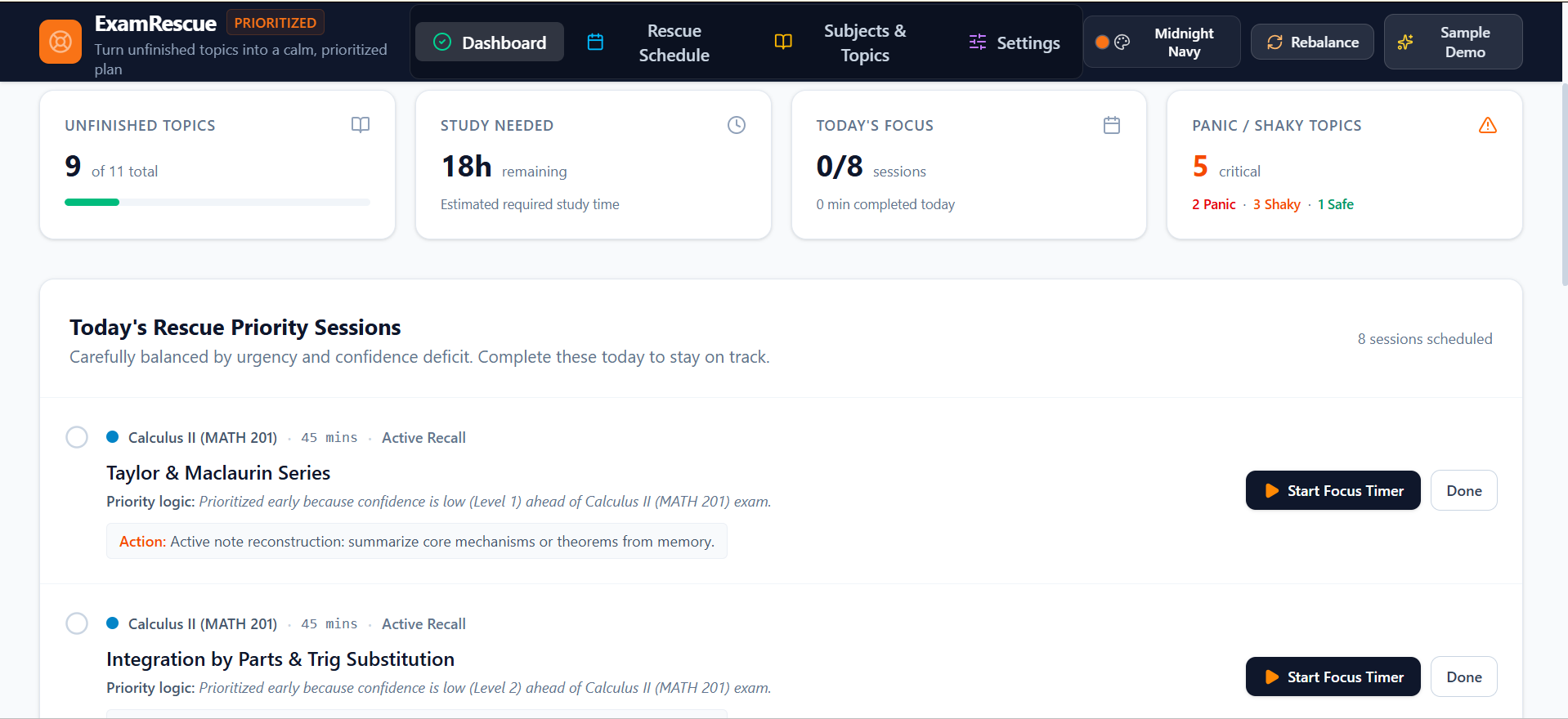
Dashboard
-
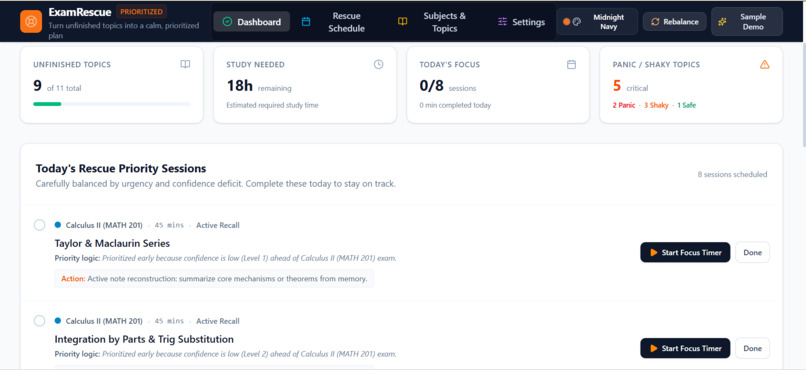
Progress Indicators
-
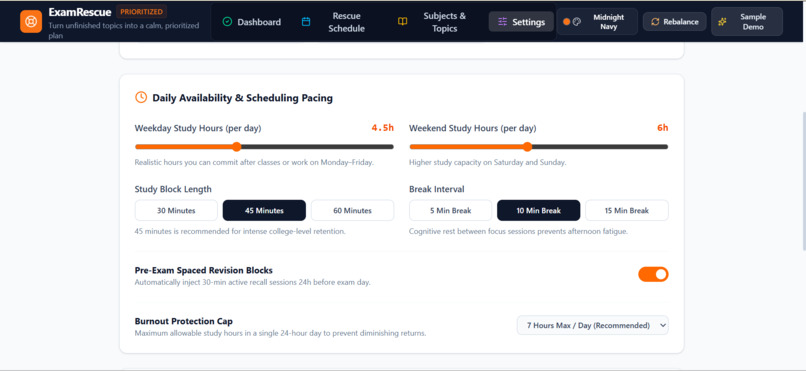
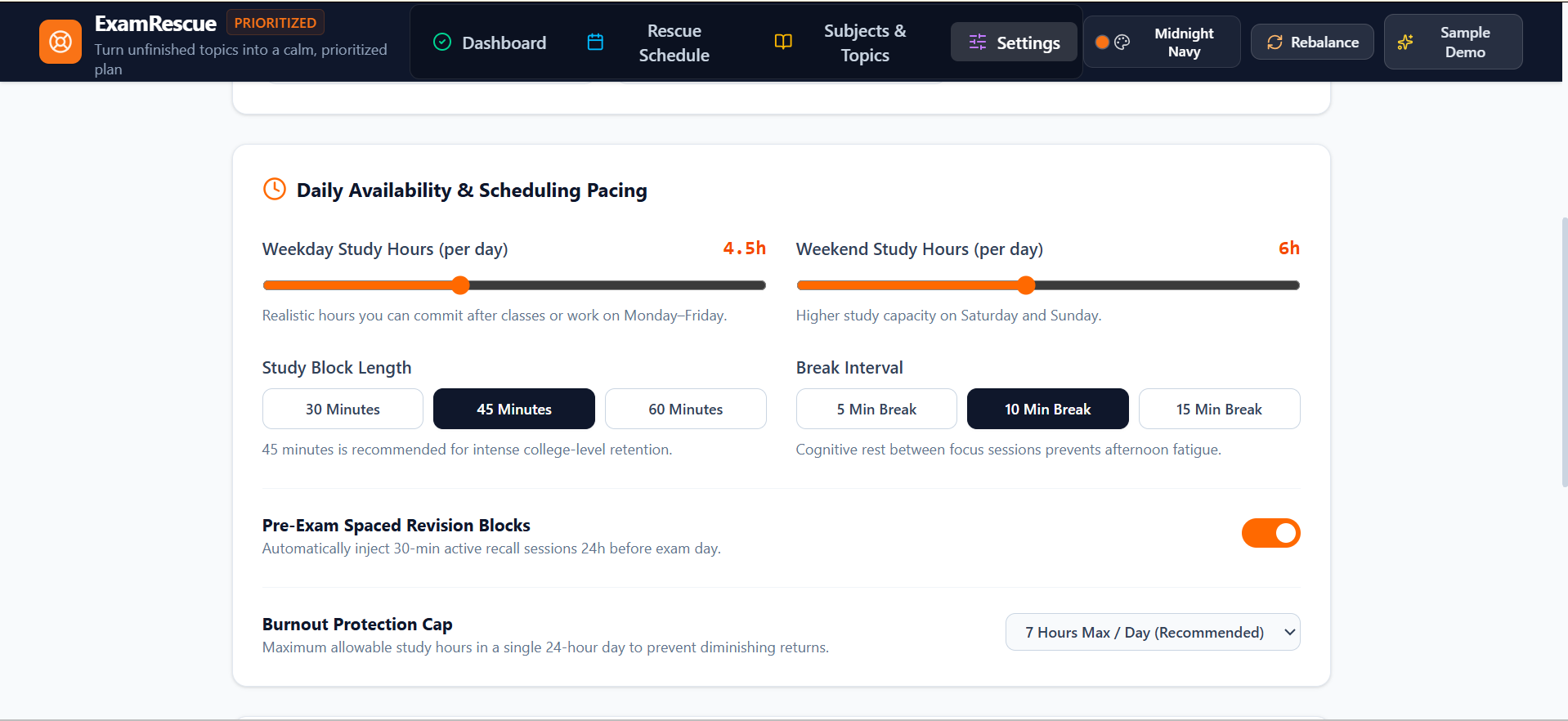
Personalized Settings
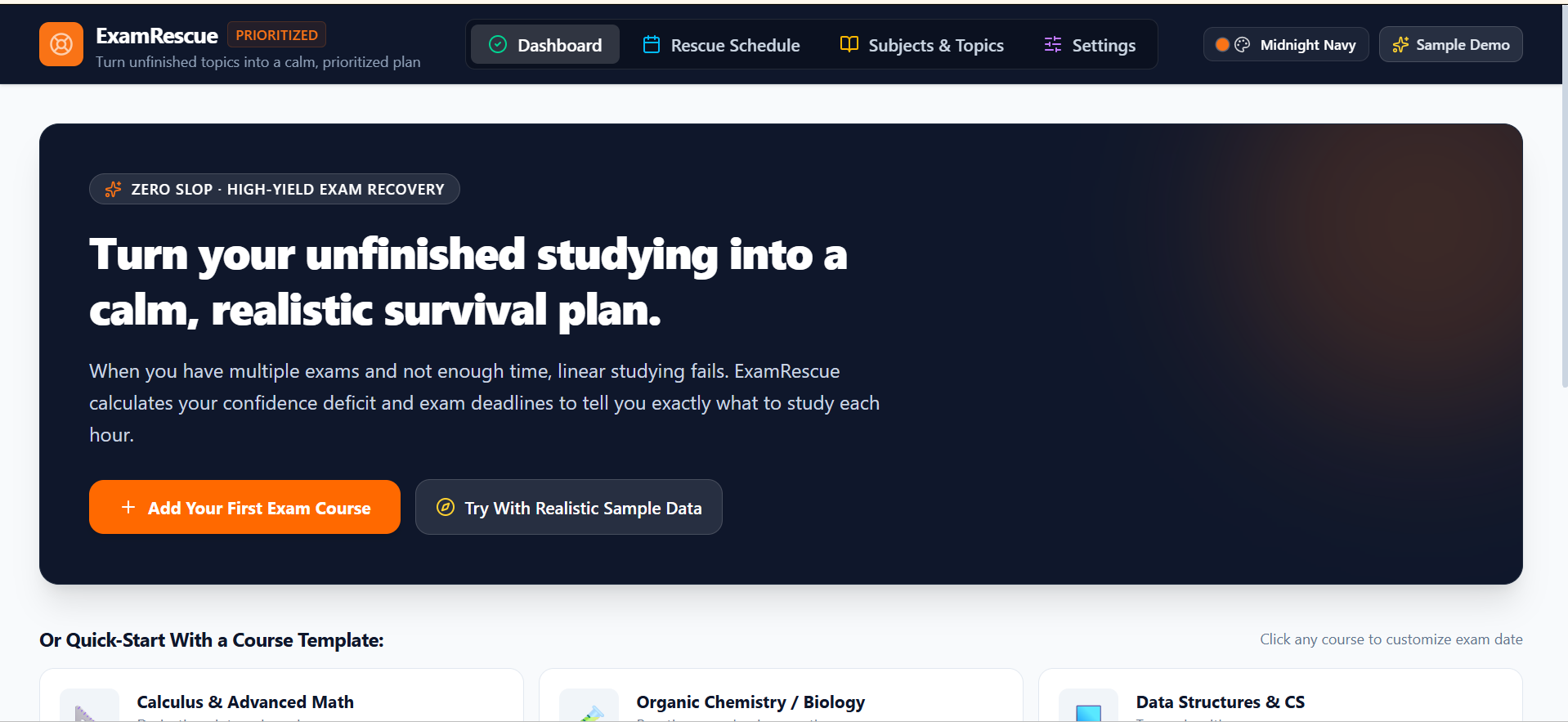
ExamRescue: Turning Study Overwhelm into a Plan
Inspiration
The inspiration behind ExamRescue came from a common problem faced by students: having so much to study that it becomes difficult to decide where to begin. With multiple subjects, unfinished chapters, and approaching examinations, students can struggle to organize their time and prioritize their work effectively.
I wanted to explore whether technology could help make this process simpler. Rather than creating another platform filled with study materials, I decided to focus on a different question: What if students could turn their overwhelming list of pending topics into a clear, manageable study plan?
This idea led to ExamRescue, a web application designed to help students organize their academic workload and approach studying with greater clarity.
How I Built It
I developed ExamRescue using Google AI Studio and an AI-assisted development approach. I began by defining the problem, identifying the intended users, and outlining the essential features of the application. I then translated those requirements into prompts to generate the initial web application.
Instead of treating the first generated version as the final product, I reviewed the result and focused on creating an application that presented the idea clearly and was ready to publish. This process allowed me to experience how AI tools can accelerate the journey from an initial concept to a working web application.
The project also taught me that building a product involves more than generating code. Defining the problem, making design decisions, evaluating the result, and thinking about the user's experience are all important parts of development.
Challenges Faced
One of the main challenges was translating a broad problem into a focused product. Study planning can involve many different factors, including deadlines, subject difficulty, available time, and individual learning preferences. Deciding which capabilities should be included in the initial version required prioritizing the core idea rather than attempting to build every possible feature at once.
Another challenge was understanding the role of AI-assisted development. Although AI tools can generate application code quickly, the developer still needs to guide the process, review the output, identify shortcomings, and ensure that the final product meets its intended purpose. This reinforced the importance of human judgment, clear instructions, and iterative improvement.
What I Learned
Developing ExamRescue gave me practical exposure to product thinking, AI-assisted development, and turning an idea into a published web application. I learned how breaking a problem into smaller requirements can make development more manageable and how AI tools can support rapid prototyping.
More importantly, I learned that a published application is only the beginning. Its usefulness ultimately depends on whether it solves a real problem for its intended users. Gathering feedback, testing functionality, and improving the user experience will be essential next steps.
What's Next
My goal is to continue improving ExamRescue by evaluating its functionality, gathering feedback from students, and identifying which features would provide the most value. Future improvements could include more personalized study recommendations, flexible rescheduling, and clearer progress tracking, depending on what users need and what the application can reliably support.
ExamRescue represents my interest in combining technology, artificial intelligence, and problem-solving to build practical solutions. This project is an early step in learning how to develop products that move beyond ideas and create meaningful value for people.
The goal is simple: help students spend less time wondering where to start and more time making progress.
Built With
- chatgpt
- css
- friendsguidance
- gemini
- googleaistudio
- html
- javascript

Log in or sign up for Devpost to join the conversation.