-
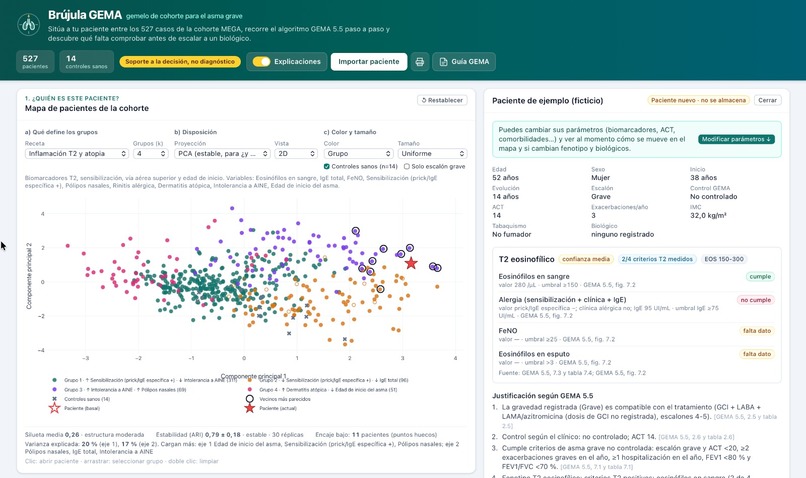
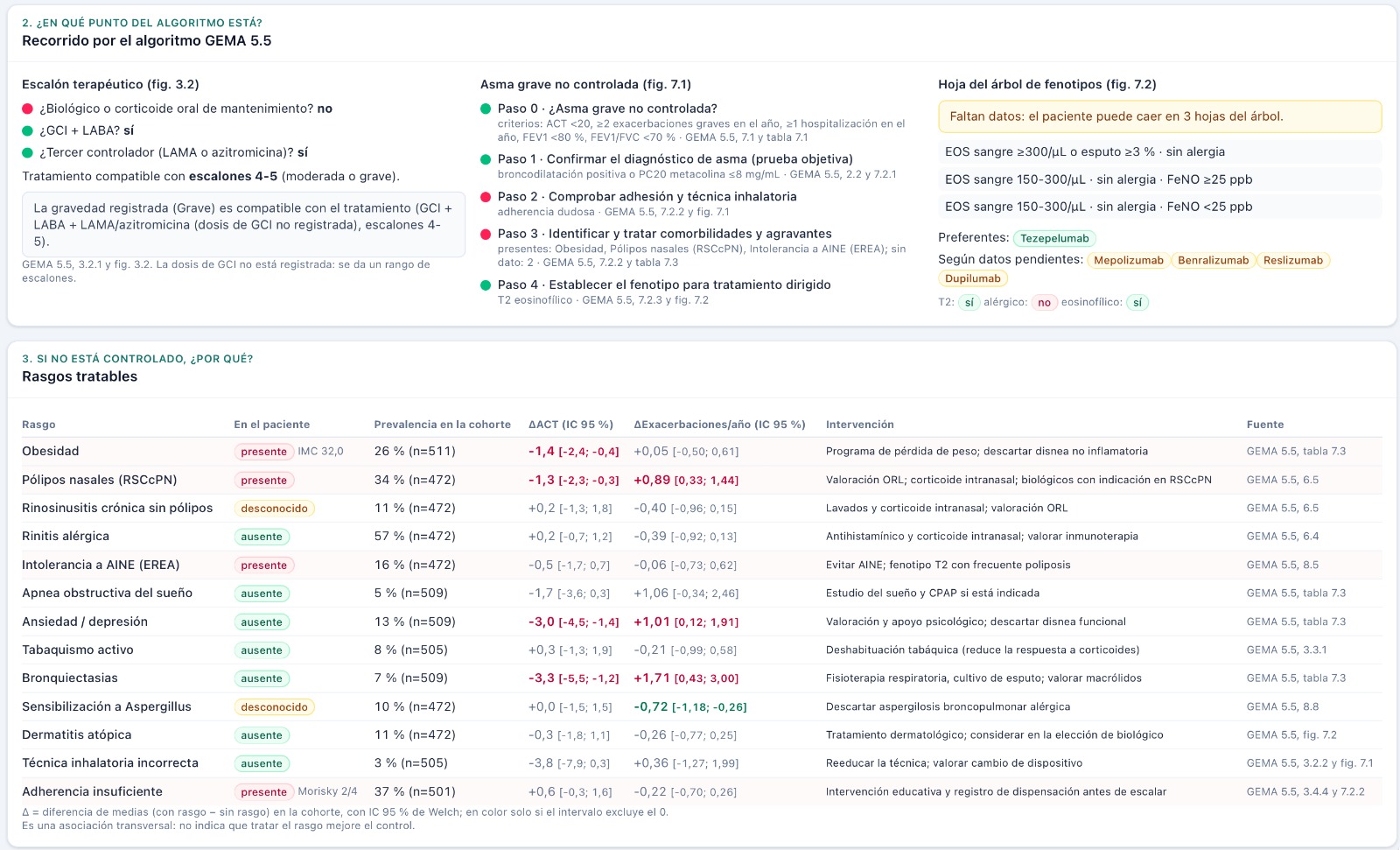
PCA 2D and pacient data
-
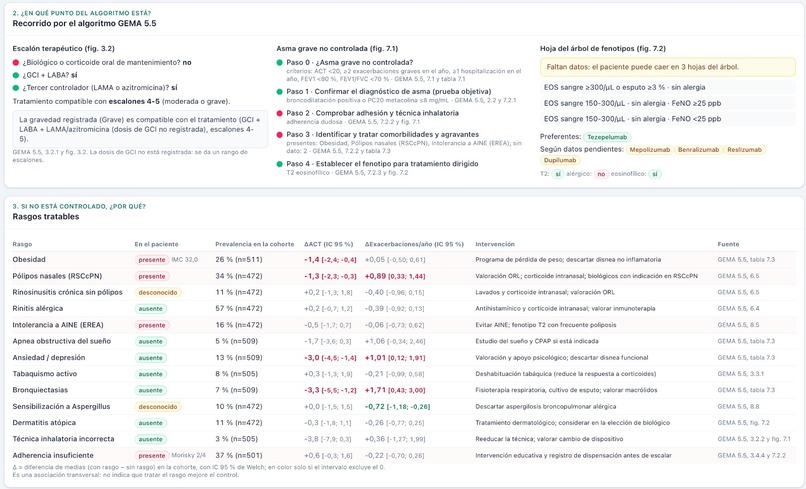
Information displays
-
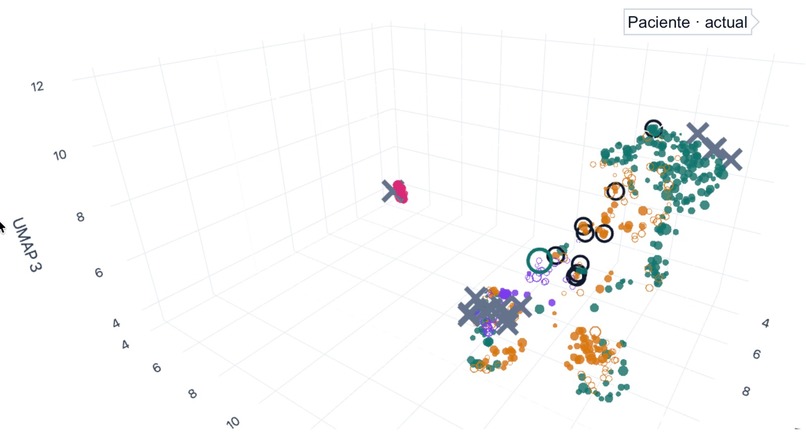
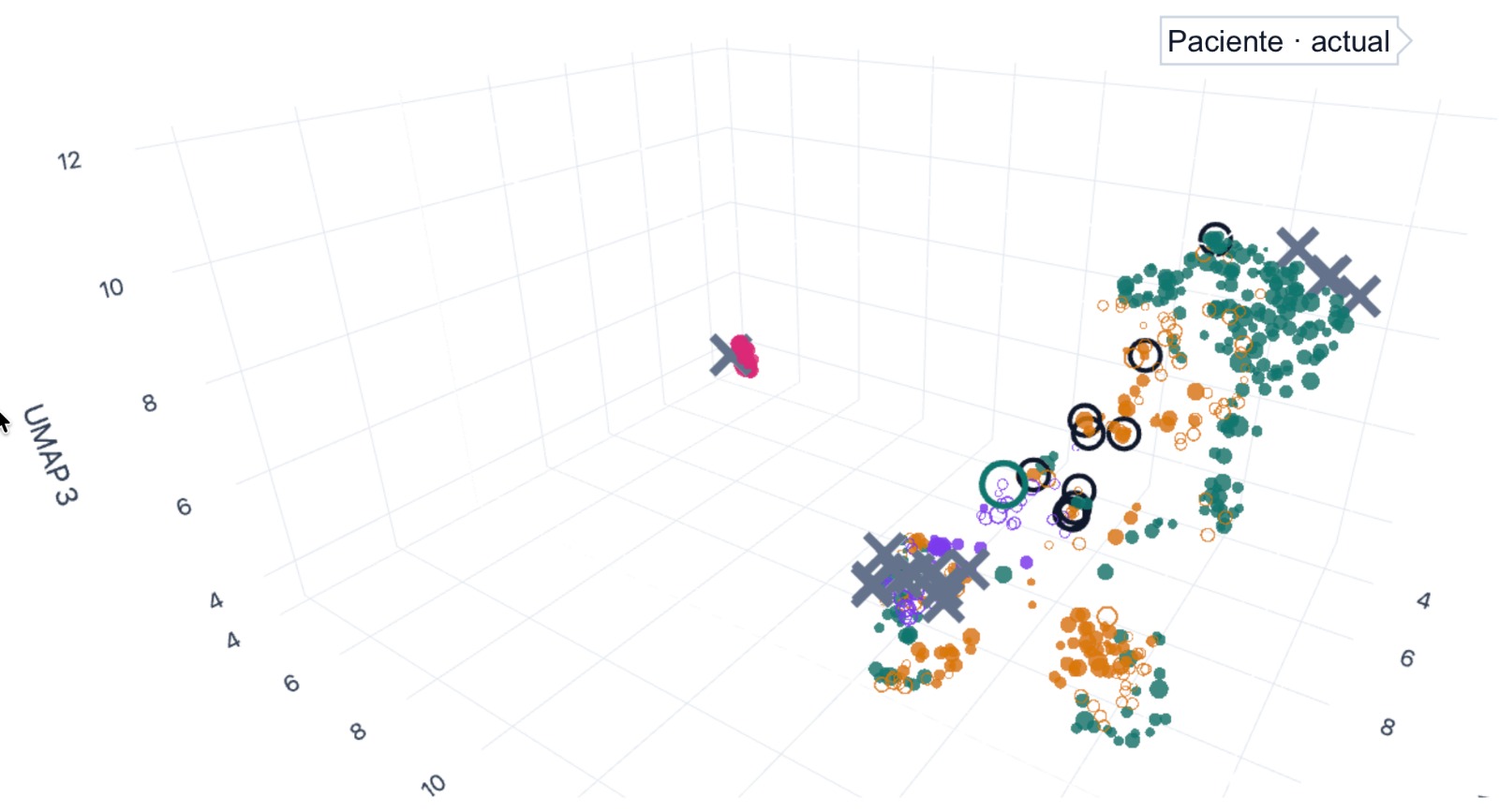
3D map of pacients clustering
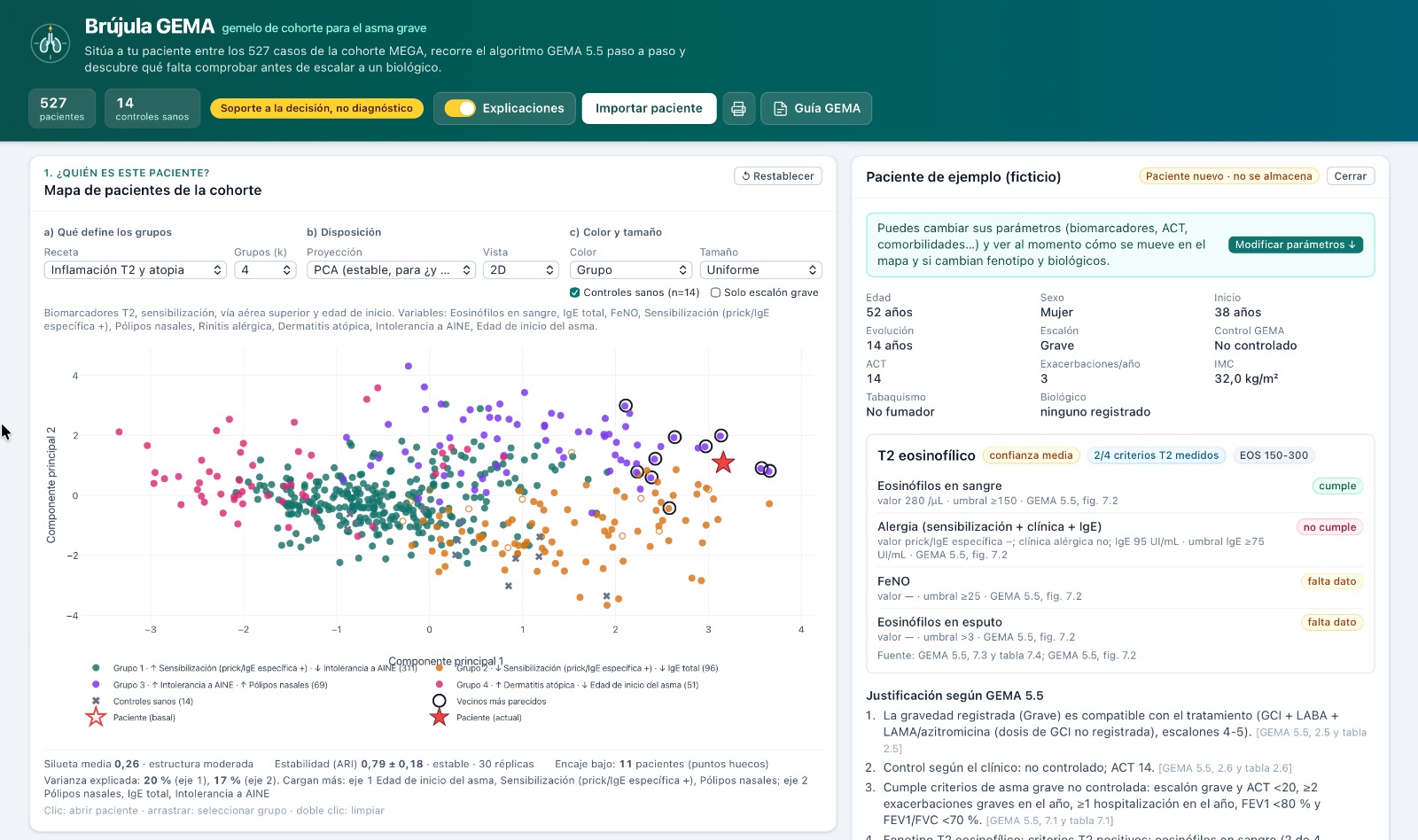
Inspiration
We found it heartbreaking to see the daily challenges faced by individuals living with asthma. To help improve their quality of life, we set out to streamline and facilitate clinical decision-making by providing doctors with a fast, intuitive, and actionable diagnostic interface.
What it does
Our application visualizes the relationships between key biomarkers and effective treatments using a rich, comprehensive dataset. By leveraging UMAP (Uniform Manifold Approximation and Projection), doctors can quickly map a patient's current biomarker profile against historical patient data to understand their health status and make informed, personalized treatment decisions.
How we built it
Through dedicated effort, creative problem-solving, and a strong team dynamic. We combined biomedical data processing with interactive frontend visualization tools, focusing heavily on user experience to ensure clinicians can extract insights quickly.
Challenges we ran into
Initially, defining our exact methodology and project scope was difficult due to the inherent complexity of respiratory diseases like asthma. However, through extensive domain research and valuable collaboration with medical experts, we successfully translated complex biomedical concepts into a functional, user-friendly application.
Accomplishments that we're proud of
Building a seamless team dynamic that allowed us to iterate and execute quickly under time constraints.
Translating high-dimensional biomarker data into an accessible UMAP visualization for clinicians.
Establishing wonderful collaboration with clinical experts and advisors whose feedback shaped our application.
What we learned
Dimensionality Reduction in Healthcare: How to effectively apply techniques like UMAP to simplify multi-dimensional biomedical data without losing clinical context.
User-Centric Design for Clinicians: The importance of designing fast, low-friction interfaces tailored to busy medical environments.
Cross-Disciplinary Collaboration: How to bridge technical data science concepts with domain expertise from medical advisors.
What's next for exa-cerbantes
We plan to refine our visualization algorithms, validate our platform using broader clinical datasets, and partner with healthcare professionals to continuously improve patient outcomes.

Log in or sign up for Devpost to join the conversation.