-
-
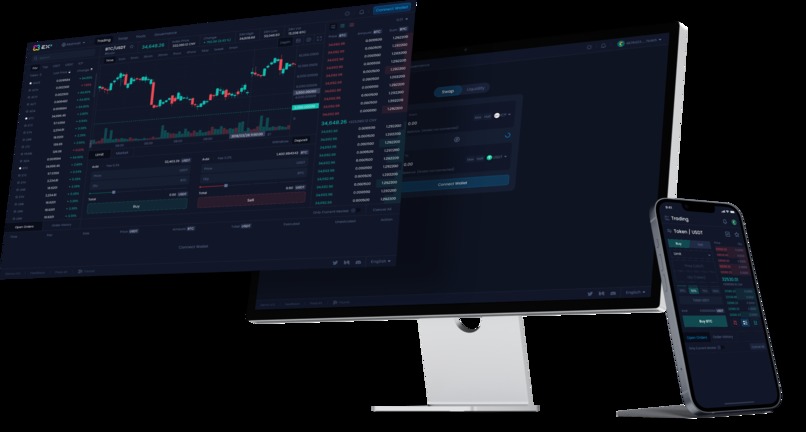
EX3 Orderswap
-
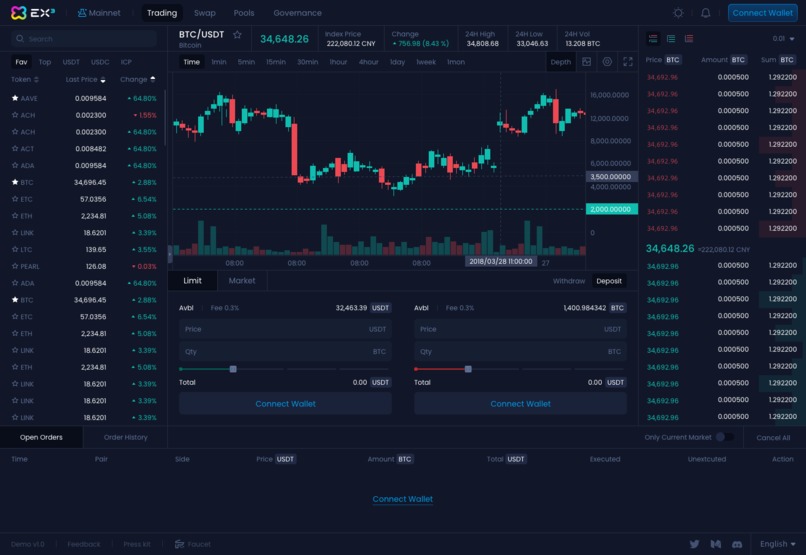
orderbook
-
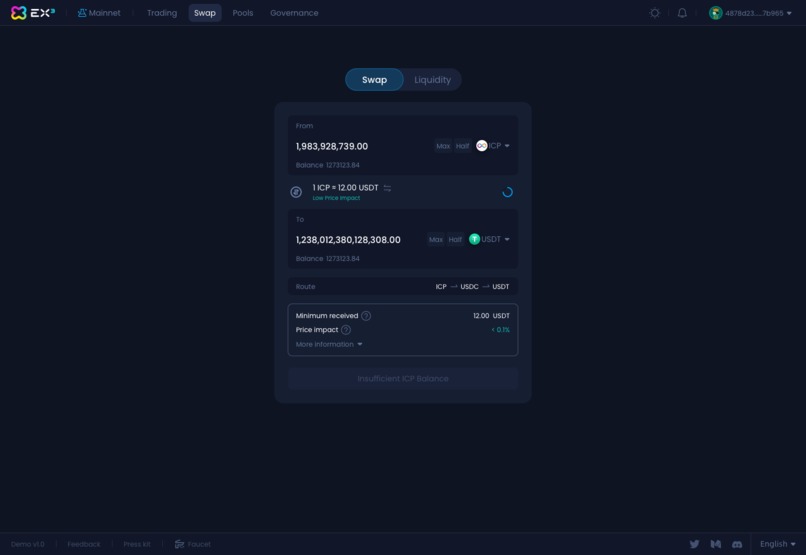
swap
-
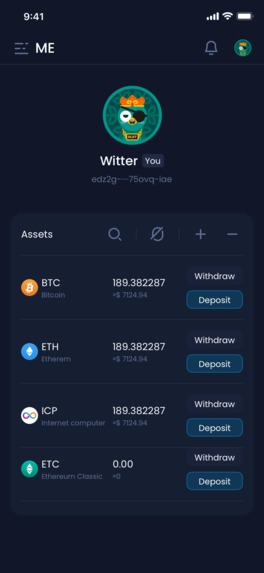
assets
-
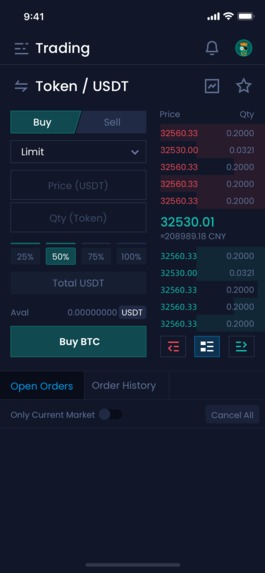
h5orderbook
-
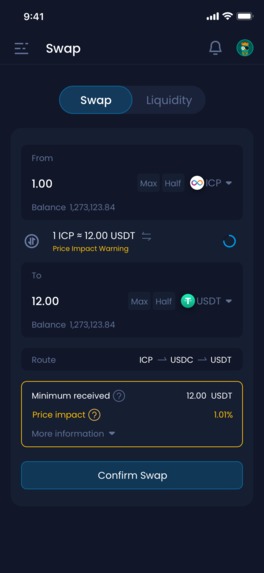
h5swap
Inspiration
Before the establishment of EX3, Our team has conducted very detailed research of numerous popular DEX platforms, including but not limited to uniswap/0X project/curve/pancakeswap/sushiswap/dYdX, etc. We found that each of the models of AMM and orderbook has its advantages and disadvantages. Therefore, we decide to combine both of them and save the best parts of each model.
What it does
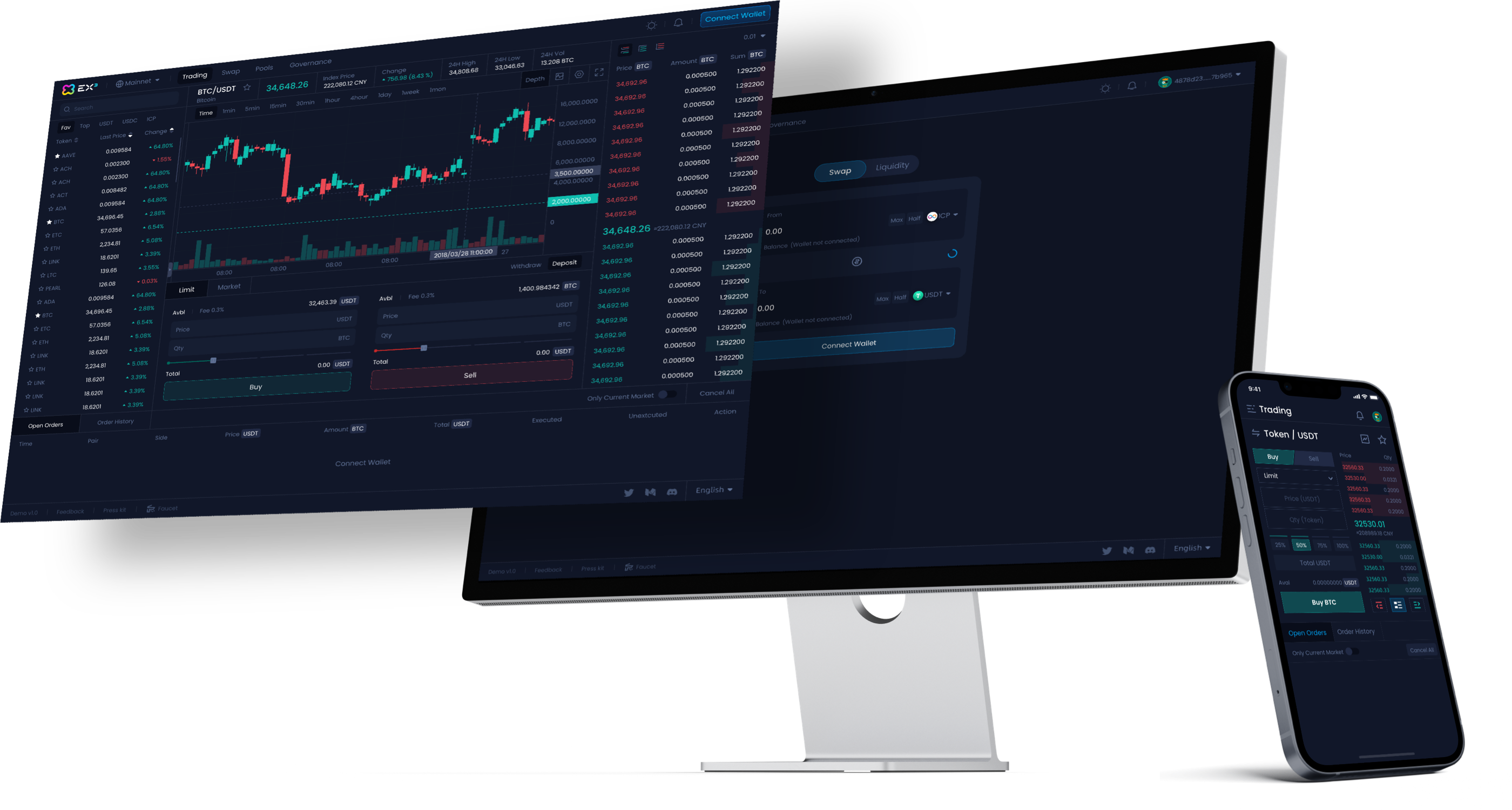
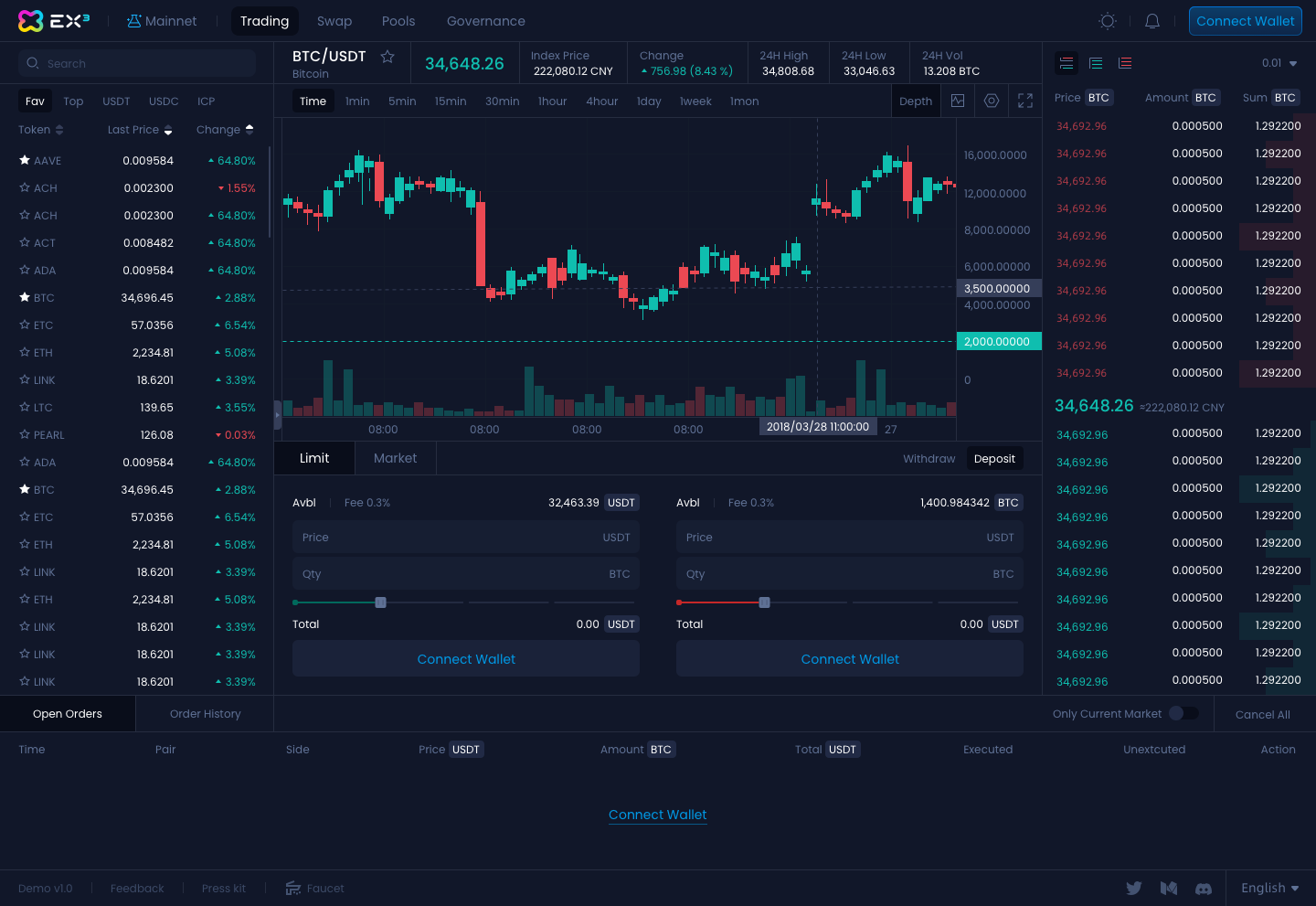
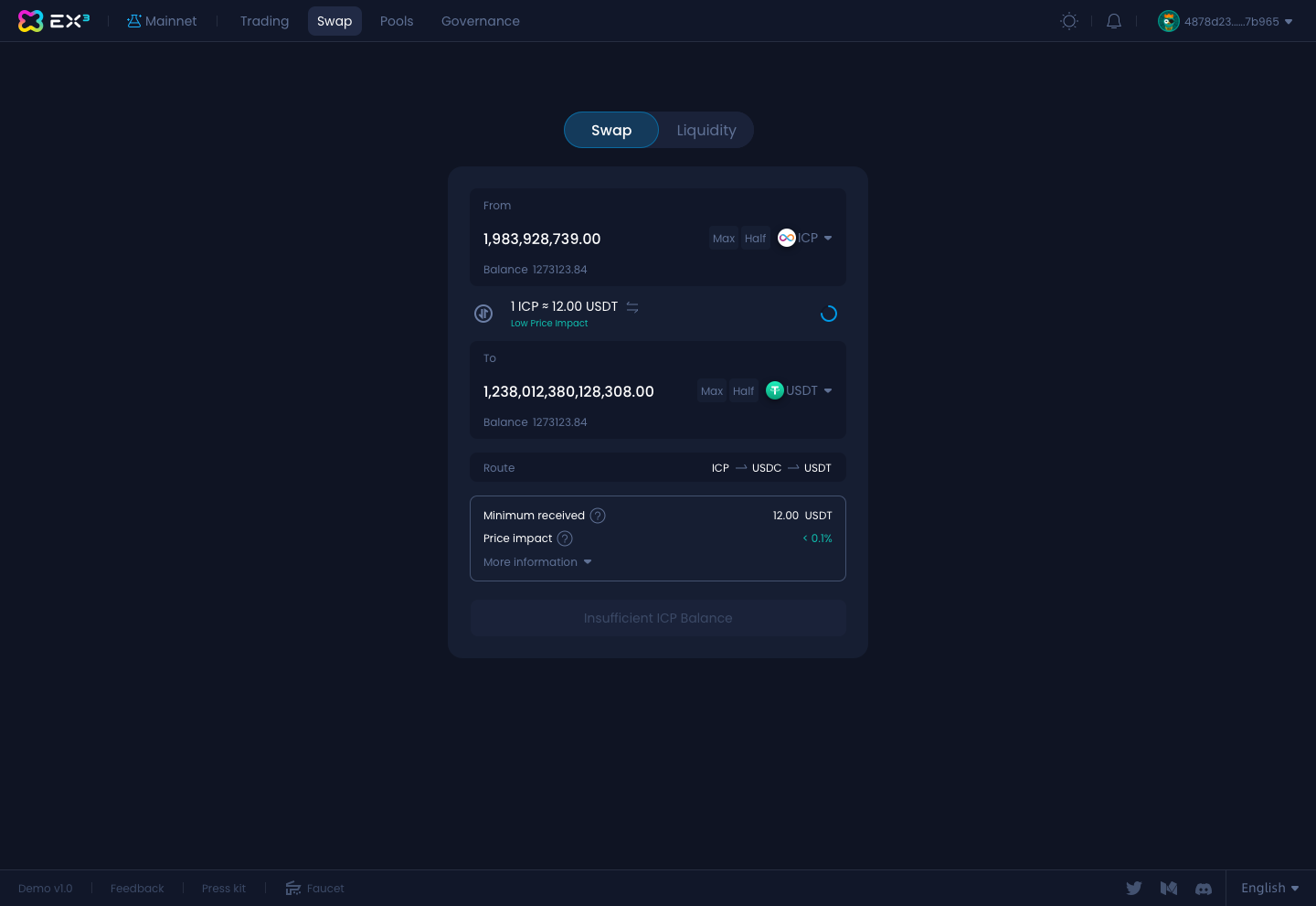
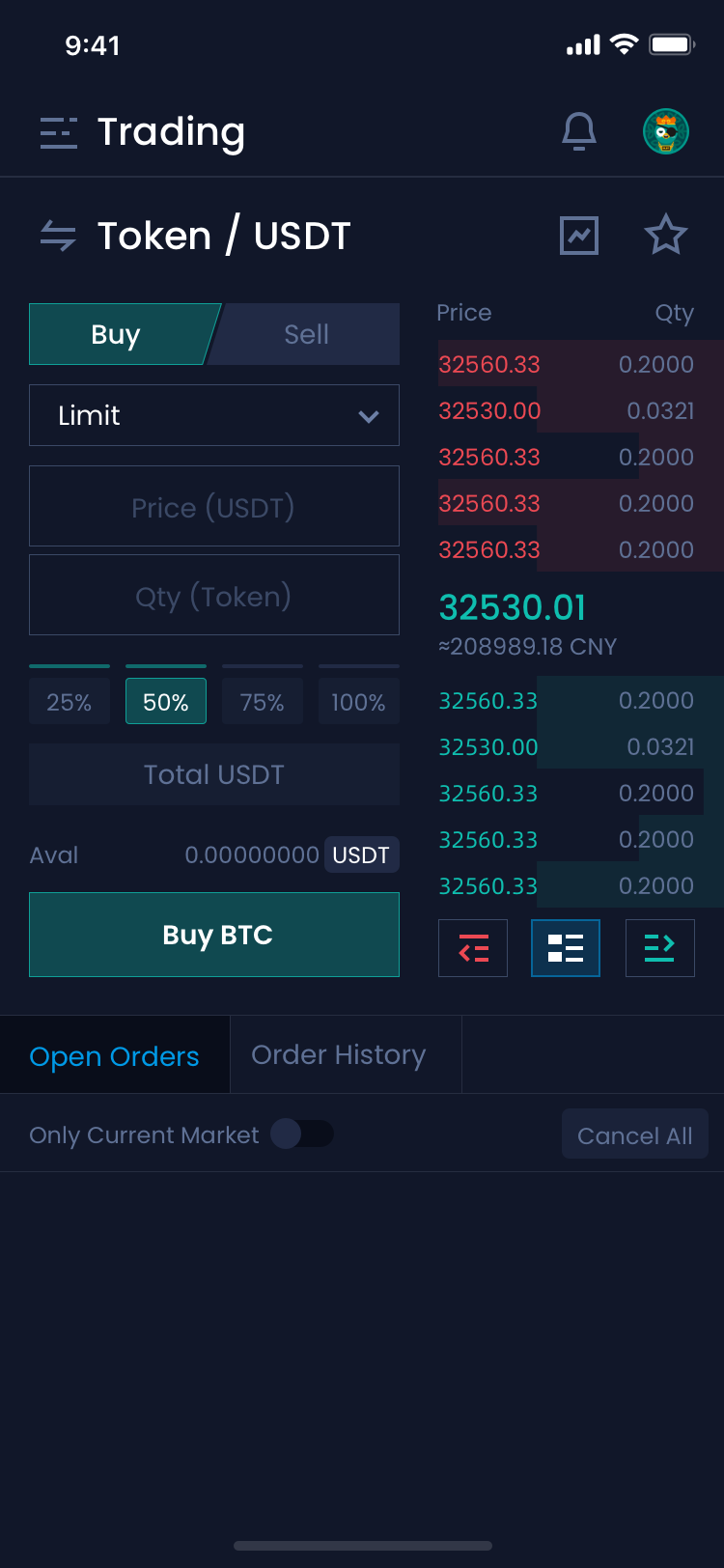
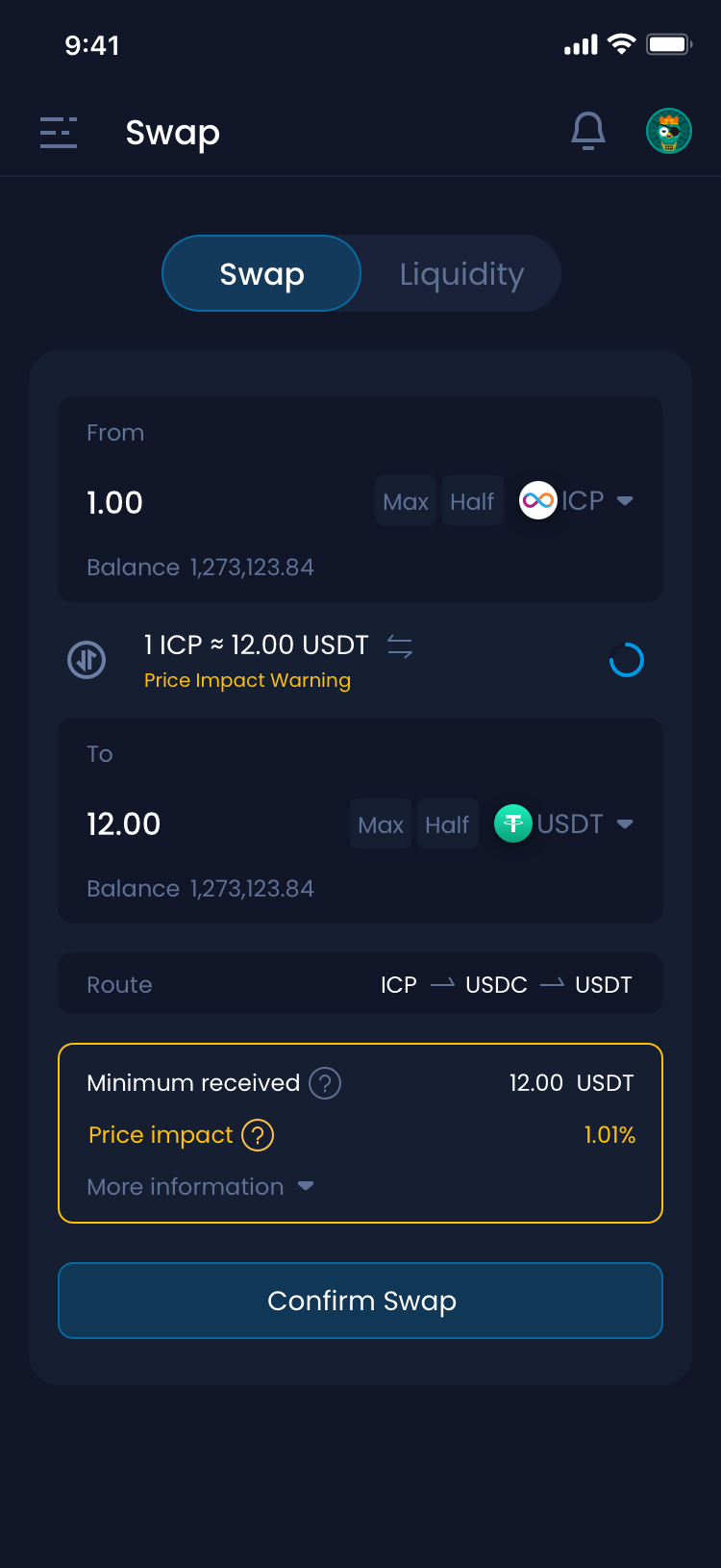
EX3 is a powerful decentralized exchange that provides millisecond response and a converged trading solution. EX3 combines the best part of traditional orderbook and AMM models, in which it allows users to get the best deal at the best price. As we know, AMM brings a more flexible liquidity strategy to the market especially in the initial stage when there's not enough liquidity. AMM is a great way to attract users and increase the liquidity pool. To some extent, it provides an efficient solution that helps driven the market activity. On the other hand, orderbook is one of the most widely adopted trading models. When the liquidity is enough, orderbook is a perfect way to trade as slippage will remain low even when the trading volume is high. Also, orderbook carries a lot of the traditional features in the centralized exchange that many people are familiar with. Hence, EX3 merged the adaptability and low slippage of the orderbook and applied the AMM model to attract users to increase the liquidity pool, therefore, even some tokens with very small liquidity can be swapped.
How we built it
As we know, IC attracted a lot of developers due to the fast process speed and low gas fees. Hence, we chose IC to make EX3 happen. On top of that, we made it even faster by building a layer 2 solution on the IC. As a result, there's no need to worry about the "traffic jam" or high slippage caused gas fees during the trading or transaction. Moreover, EX3 will always make you trade at the best price, because EX3 will match the most favorable price between the orderbook and AMM through a converged matching engine. In simple terms, the EX3 model is very similar to DYDX from a technical perspective. We are all decentralized exchange that are built on layer 2. The only difference is that DYDX uses Starkware as layer 2 solution to avoid the impact of high gas fees, while we build a layer2 on the IC by ourselves to support EX3. A simple summary: EX3 is a hybrid decentralized exchange that combines AMM and orderbook style with very low slippage and a self-built layer 2 solution that provides EX3 with lightening speed, great performance, and minimum gas fee. Additionally, the smart matching engine will help users to choose the best price to trade at any moment. EX3 is indeed an incredible revolutionary DEX that brings Defi to another level.
Challenges we ran into
Challenges we ran into This project combines three challenges:
- A full understanding of the IC technology stack
- Layer2 infrastructure build
- High-performance matching engine First, building a fusion DEX on IC needs a thorough and deep understanding of the IC technology stack. Therefore, as a team, we have spent years studying and accumulating experiences by building projects and creating token standard (DFT) on IC. Second, building a layer 2 on IC usually takes years for a team to work on. Imagine, how difficult that would be, but we managed to conquer this challenge not only because we have an incredible team that has 7 years of experience in the blockchain industry, but also as a team we are always learning and absorbing the new things and we work hard for our dream. Third, creating a matching engine that combines the AMM and order book model is hard, because of that we have done much blockchain R&D to advance our technology and what you can see right now is the product that our whole team has spent years to accumulating such knowledge and experience. Any of the three challenges would be extremely difficult for a team to conquer, but we did it, not only because we work hard but also because as a team we are always learning and advancing ourselves.
Accomplishments that we're proud of
The DFT Token Standard
https://github.com/Deland-Labs/fungible-token-standard
As a very experienced team, we are one of the token standard development teams on IC. Token standard is a very important topic, which has been frequently debated in the IC community. In EX3, we use DFT token standard. We are confident that DFT will become the most widely used token standard in IC. Due to the DDoS protection design and a built-in blockchain that aim to provide underlying cryptographic proof. Next, we will introduce the unique features of DFT in detail. We all know that ERC20 is the world's first alternative token standard for blockchain, which has been fully verified and recognized. DFT combines the advantages of ERC20 and is customized for IC. From a technical point of view, DFT has a DDoS protection design and a built-in blockchain to provide the underlying cryptographic proof for the Defi developers. While realizing the above features, the unit test coverage of DFT is as high as 85%, and the automatic integration test coverage of public methods is 100%. We can confidently say that DFT is the token standard with the highest test coverage in the community, and the quality is reliable For developers, DFT has built-in common features. Third-party developers can select their own specific needs through configuration, which is simple and easy to use. The entire token standard is completely open-source and fully documented.
What we learned
Best practices for building projects on IC. How to build a blockchain on IC.
What's next for EX3 orderswap
- DFT token tool set.
- Layer2 match engine
- Layer2 Infrastructure.
- Governance DAO.
- Support derivatives trading.
- Support cross-chain.


Log in or sign up for Devpost to join the conversation.