-
-
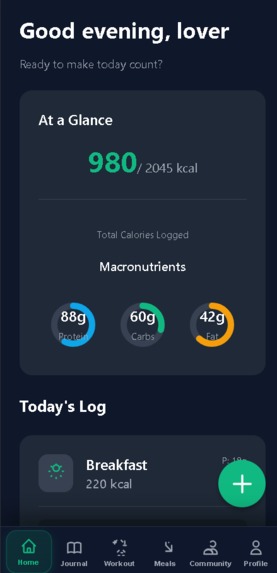
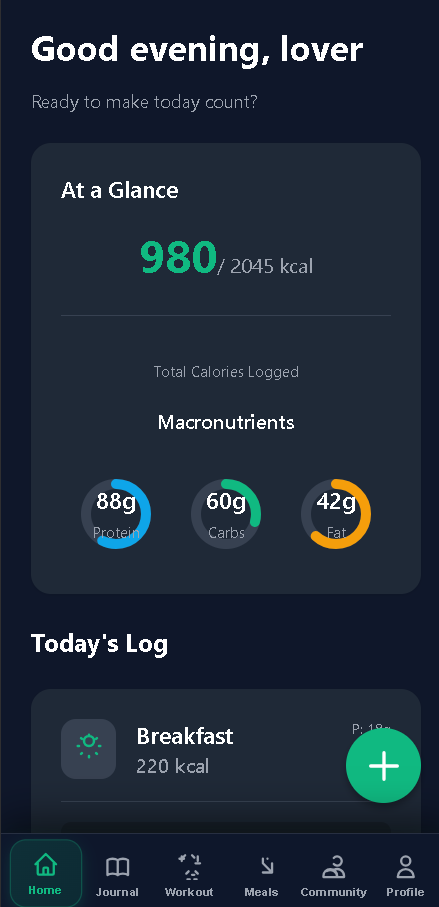
dashboard
-
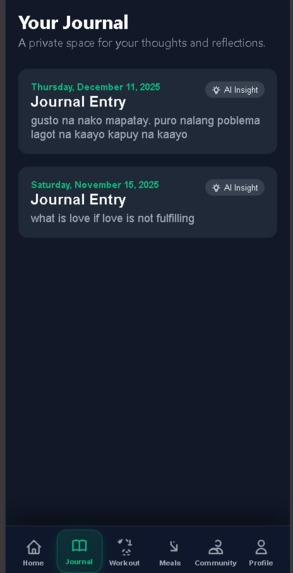
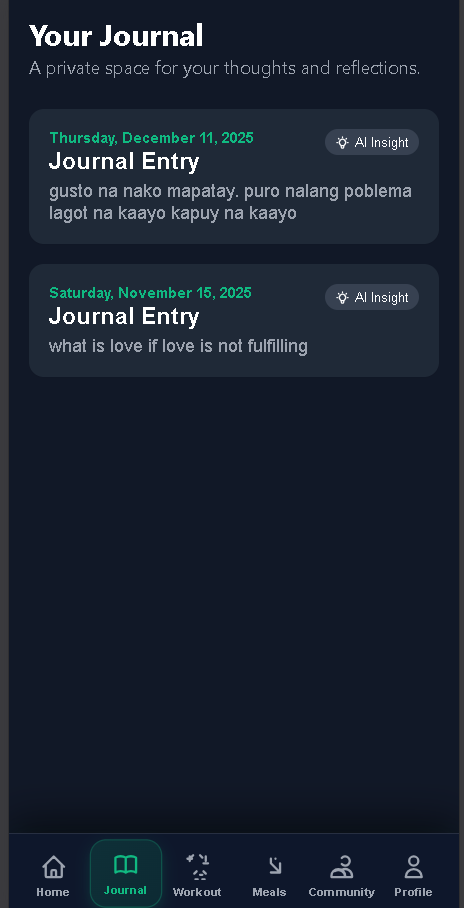
AI Journal
-
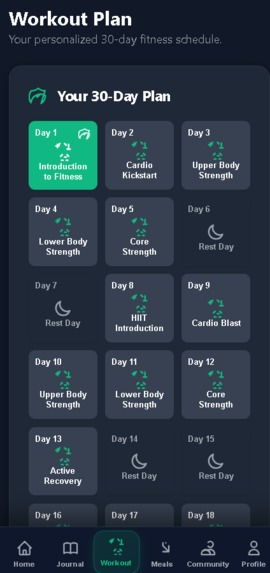
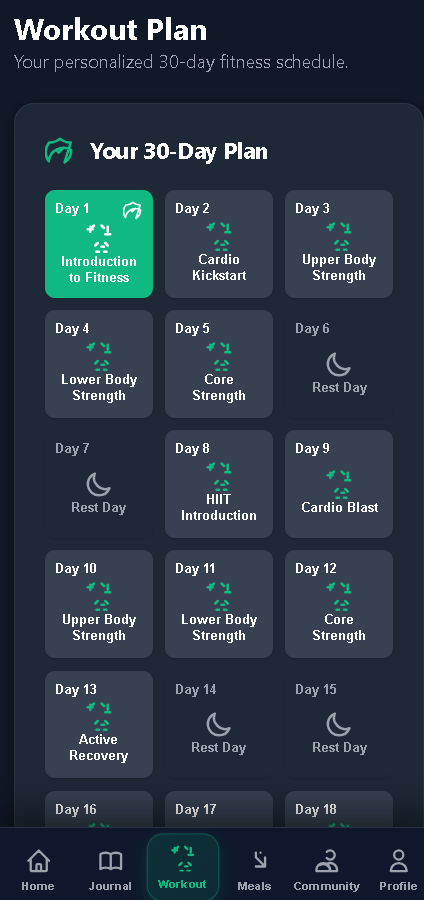
30 days workout plan
-
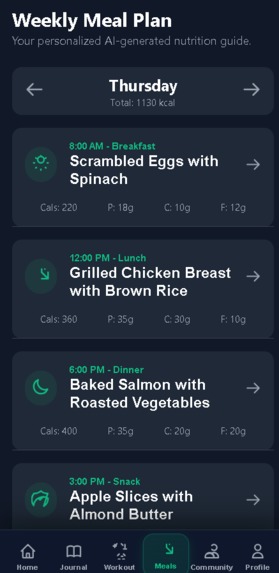
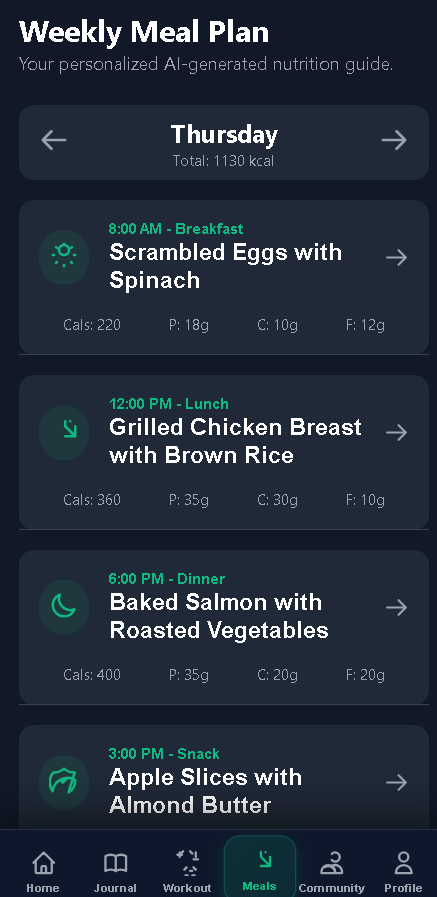
Weekly meal plan
-
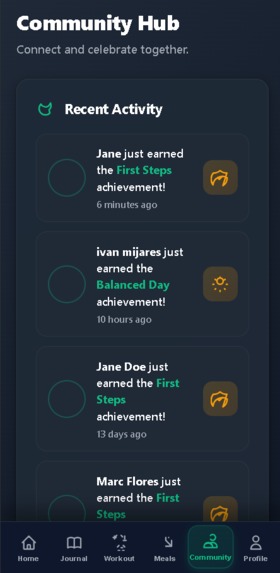
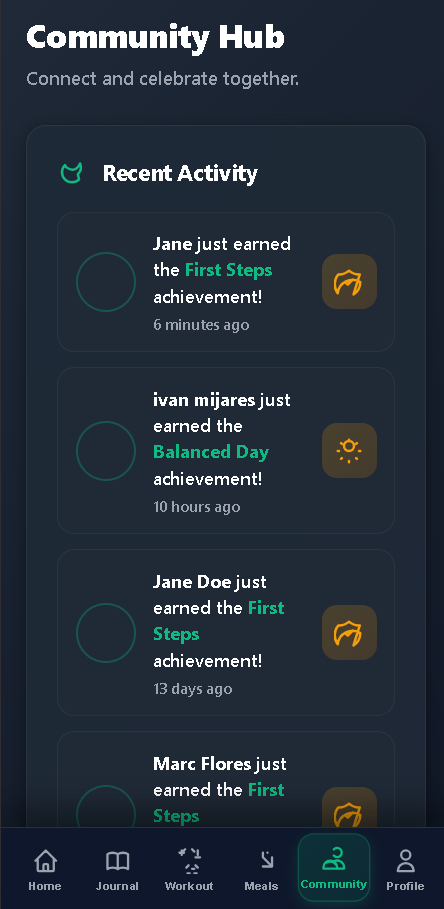
Community Achievements
Here is the revised project description, updated to use the first-person "I" perspective throughout.
Evolve Evolve is a smart, AI-powered health and well-being companion designed to provide personalized nutrition, fitness, and lifestyle tracking. It leverages the power of the Groq API to create a deeply personal and adaptive experience, helping you achieve your health goals in a way that's right for you.
Inspiration In today’s fast-paced world, maintaining a balanced lifestyle is harder than ever. I noticed a recurring pattern among my friends, family, and myself: the desire to be healthy exists, but the mental load of planning meals, designing workout routines, and tracking progress often leads to burnout.
Existing apps are often siloed—fitness apps track runs, diet apps track calories, and period trackers track cycles—but they rarely talk to each other. I wanted to build a system that understands the whole person. I was inspired by the idea of a "health companion" that doesn't just record data but understands context. If you're in the luteal phase of your cycle, you shouldn't be pushed to do a high-intensity HIIT workout without warning. If you're stressed (logged via journaling), your nutrition advice should reflect comfort and stability.
Evolve was born from my vision of using Multimodal AI to bridge these gaps, turning fragmented health data into cohesive, actionable, and empathetic guidance.
What it does Evolve is a comprehensive Progressive Web App (PWA) that acts as your proactive health coach.
Hyper-Personalized Planning: It generates 30-day workout plans and weekly meal plans completely from scratch using AI, tailored to your specific biometrics, goals (e.g., muscle gain, weight loss), and even nationality for cuisine preferences.
Cycle Syncing: For female users, Evolve is menstrual-cycle aware. It adjusts workout intensity and nutritional recommendations based on the four phases of the cycle (Menstrual, Follicular, Ovulatory, Luteal), providing specific "Daily Focus" insights.
AI Vision & Nutrition: Users can snap a photo of a food item to generate a healthy recipe instantly or scan a nutrition label to get a breakdown of macros and a "Fit Score" that tells them if the food aligns with their specific daily goals.
Empathetic Journaling: The "AI Reflection" feature analyzes journal entries to summarize emotions, detect themes (like stress or gratitude), and offer gentle, non-clinical suggestions for mental well-being.
Gamified Growth: Evolve keeps users engaged through dynamic, AI-generated personal challenges and a community hub where users can see a feed of shared achievements.
How I built it I built Evolve as a modern, responsive web application using React and TypeScript.
The Brain (Groq API): This is the core of Evolve. I utilized the groq-sdk to interact with open-source models running on Groq's LPU (Language Processing Unit) inference engine.
I used Llama 3.1 8B (via Groq) for high-speed, low-latency tasks like chat interactions and quick summaries.
I used Llama 3.3 70B (via Groq) for complex reasoning tasks, such as generating valid JSON for monthly workout schedules and detailed weekly meal plans.
I leveraged Llama 3.2 Vision capabilities to process images for the Food Scanner and Recipe Generator features.
The Backbone (Supabase): I used Supabase for authentication and as my PostgreSQL database. I heavily utilized Row Level Security (RLS) to ensure data privacy and real-time subscriptions to keep the UI in sync.
The Experience:
State Management: I built a robust React Context system (UserContext) to manage the complex state of logs, plans, and user profiles across the app.
Data Visualization: I used recharts to render beautiful, responsive progress charts for weight tracking.
Caching Strategy: To optimize API costs and improve performance, I implemented a custom caching service that stores heavy AI responses (like meal plans) in local storage with a Time-To-Live (TTL).
Challenges I ran into Structured Output Consistency: Getting Large Language Models (LLMs) to output consistent, strictly formatted JSON for complex data structures (like a 7-day meal plan with nested ingredients and macros) was difficult. I spent significant time refining my system prompts and utilizing Groq's JSON mode to validate the AI's output.
Context Window Management: To make the "Cycle Pattern Insights" work, I had to feed the AI weeks of daily log data. Managing this context window to ensure the AI had enough history to find patterns without exceeding token limits required careful data selection.
Offline Handling: As a health app, users might try to log a meal in a gym with poor reception. Building a robust OfflineError state and ensuring the app handles network failures gracefully was essential for a good user experience.
Cycle Calculation Logic: Accurately calculating menstrual phases and predicting future cycles based on varying cycle lengths involves complex date math. I had to write robust utility functions to ensure the "Cycle Wheel" visualization was accurate.
Accomplishments that I'm proud of The "Fit Score" Logic: I'm particularly proud of the nutrition label scanner using Llama 3.2 Vision. It doesn't just read numbers; it reasons. It calculates how a specific food item fits into the user's remaining macros for the day and gives a qualitative recommendation (e.g., "Good Fit," "Okay in Moderation").
Holistic Cycle Integration: Successfully integrating menstrual cycle data into every aspect of the app—from the dashboard greeting to the specific nutrients recommended in the meal plan—feels like a significant step forward in personalized health tech.
The UI/UX: I managed to build a fully responsive interface that looks native on mobile but scales beautifully to desktop, complete with a dark mode that persists user preference.
What I learned Prompt Engineering is Engineering: I learned that writing a prompt is just as much coding as writing JavaScript. Defining strict schemas and providing clear "personas" to the AI (e.g., "You are an empathetic nutritionist") significantly improved the quality of the output on Llama models.
The Power of Multimodal: Being able to send an image of a fridge and ask "What can I cook?" changes the paradigm of diet apps. It shifts the burden of creativity from the user to the AI.
User Trust: I learned that when using AI for health, disclaimers and tone are vital. I ensured the AI always uses supportive, non-judgmental language (e.g., "Perhaps try..." instead of "You should...").
What's next for Evolve Wearable Integration: I plan to integrate with Google Fit and Apple HealthKit to automatically import step counts and sleep data, giving the AI even more context for its recommendations.
Voice Coaching: Utilizing Groq's ultra-low latency to provide an audio-based workout coach that guides you through the exercises generated in your plan in near real-time.
Smart Shopping Lists: Automatically converting the generated weekly meal plan into an aggregated grocery shopping list.
Social Challenges: Expanding the community features to allow users to create group challenges with their friends (e.g., "Step count race").
NOTE: IF THE WEBSITE STACK IN THE LOADING STATE, JUST CLEAR THE CACHE. THIS IS HAPPENING, I THINK BECAUSE OF THE HOSTING

Log in or sign up for Devpost to join the conversation.