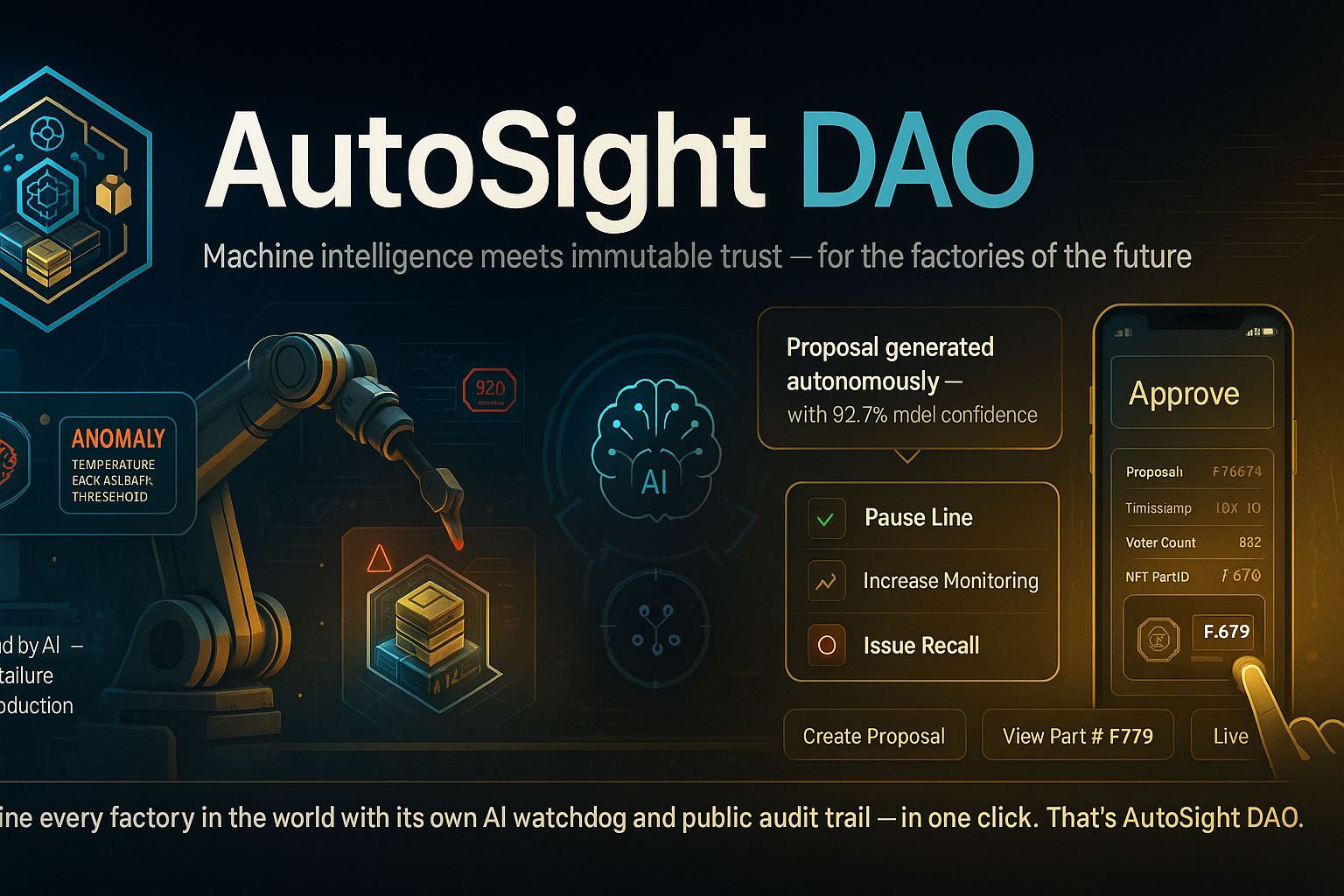


AutoSight DAO: Test the AI-Agent Chatbot https://lnh8imcdllnp.manus.space/
AutoSight DAO: Web and Mobile https://youtu.be/MreRN8sYfV8
AutoSight DAO: AI and Blockchain https://youtu.be/oYkBaiM-5KA
Inspiration
In 2025, a series of tariffs were implemented by President Trump under the International Emergency Economic Powers Act (IEEPA). A 10% tariff on all countries was initiated on April 5th, 2025, with individualized reciprocal tariffs on countries with the largest trade deficits starting April 9th, 2025. Additionally, tariffs on steel and aluminum from all countries were imposed on March 12th, 2025, with potential further increases depending on retaliatory actions.
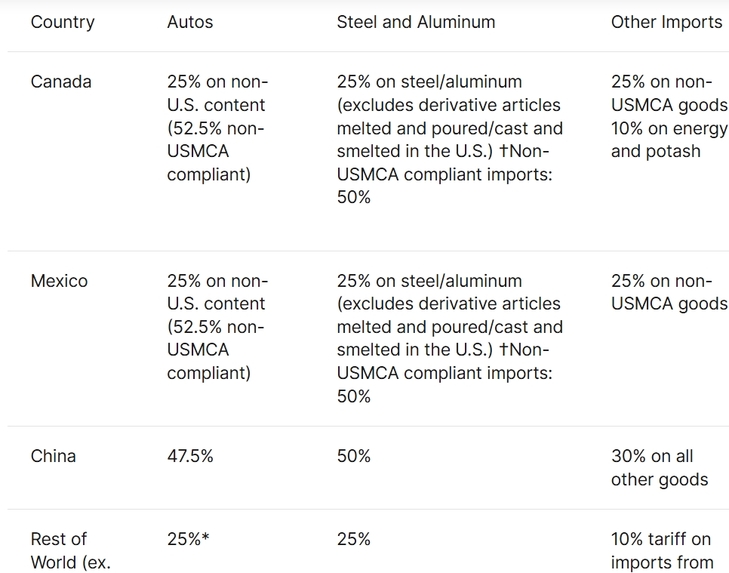
April 5, 2025: A 10% tariff on all countries was implemented, going into effect at 12:01 a.m. EDT.
April 9, 2025: Higher individualized reciprocal tariffs were applied to countries with the largest trade deficits, also going into effect at 12:01 a.m. EDT.
March 12, 2025: 25% tariffs on steel and aluminum from all countries, including Canada and Mexico, took effect.
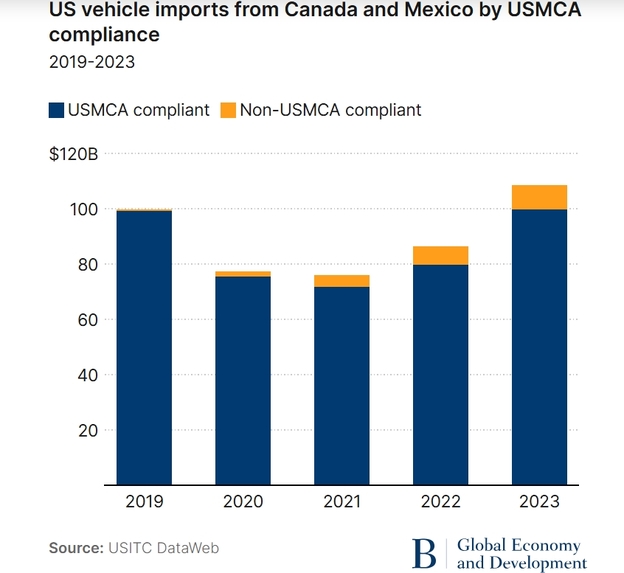
USMCA-compliant products are those that meet the rules of origin outlined in the United States-Mexico-Canada Agreement (USMCA), allowing them to enter the US, Mexico, or Canada duty-free or at a reduced tariff rate. To qualify, products must have a certain amount of regional value content (RVC) originating from the US, Mexico, or Canada
✅ Current Reality: Tariffs & Compliance Pressure in the USA
The U.S. has tariffs and import restrictions—especially targeting: China-based Tier 2/3 suppliers (e.g., EV batteries, semiconductors, rare-earth parts). Entities linked to forced labor (e.g., Uyghur Forced Labor Prevention Act). Low-transparency sourcing (which puts entire shipments at risk). This affects automotive OEMs and any company relying on global Tier 2/3 suppliers.
- Pro-compliance: Your Web3 traceability app helps U.S. manufacturers prove their supply chains are clean, ethical, and legally compliant, reducing tariff risk.
- Ally-shoring aligned: The U.S. is encouraging "ally-shoring" — sourcing from friendly or verified countries. Your platform allows small suppliers in Chile, Vietnam, Mexico, etc., to digitally prove they're safe partners.
- De-risking supply chains: If you're U.S.-based, you're helping domestic companies reduce risk of fines, seized goods, or rejected imports by showing real-time, tamper-proof sourcing data.
What it does
Reinvent a concept.
AutoSight DAO know the risks domestic manufacturers face from supply chain opacity. The Web3 traceability platform reduces tariff exposure, unlocks compliant sourcing, and makes Tier 2/3 suppliers from allied countries globally verifiable and contract-ready.
"Why hasn’t this existed before?"
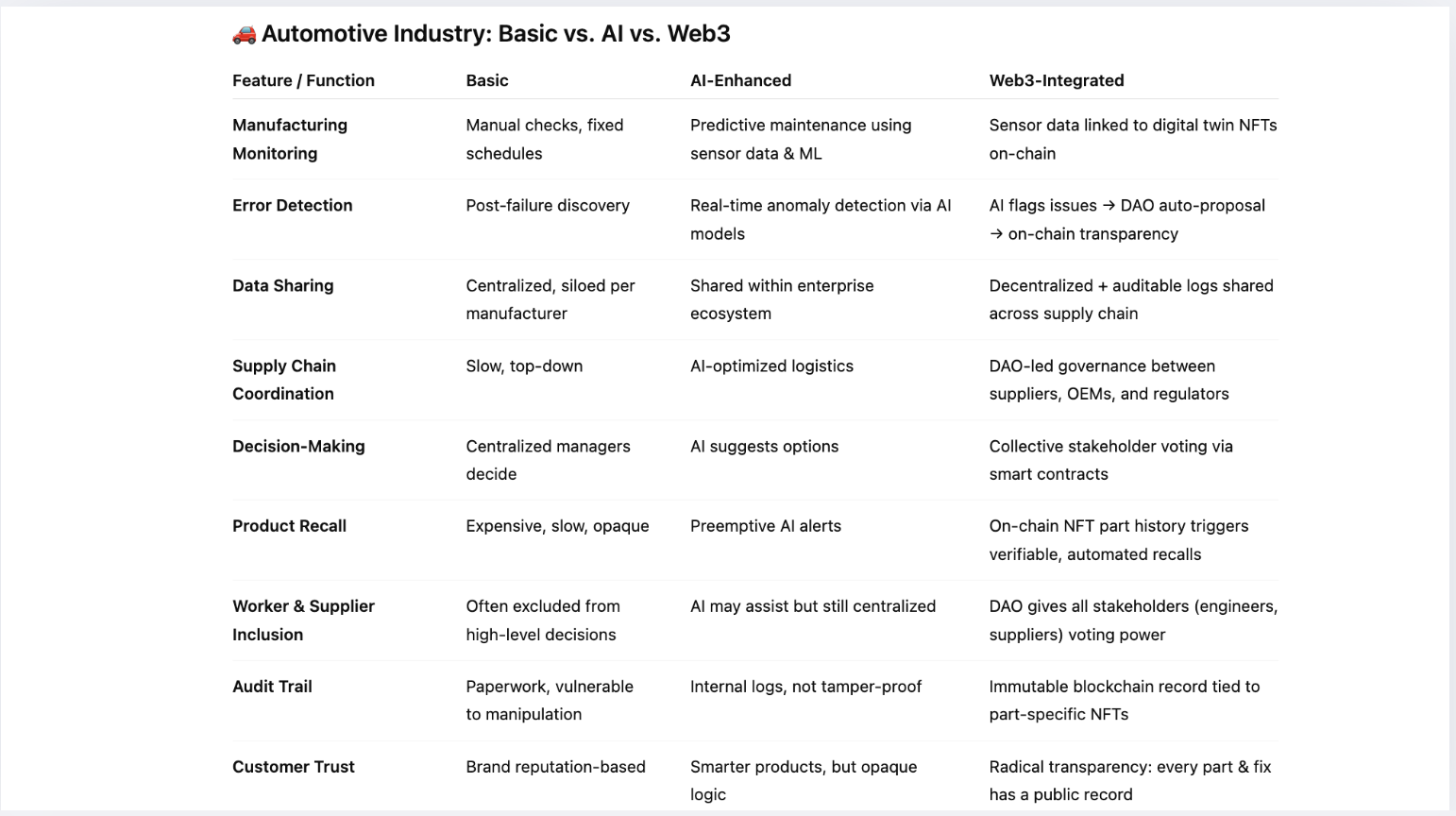
Because until now, three critical technologies—AI for real-time detection, blockchain for immutable traceability, and DAOs for decentralized decision-making—have never been meaningfully integrated in automotive supply chains. Legacy systems rely on siloed databases, manual inspections, and centralized quality control processes that lack transparency, speed, and collective oversight. AutoSight DAO merges these innovations to create something truly new: An autonomous, accountable quality control layer for global manufacturing. Now, any stakeholder—not just OEMs—can detect, verify, vote, and act on anomalies in near real-time, with cryptographic proof.
Multi-Agent RAG Chatbot for Automobile Manufacturing Workers
To enhance accessibility and provide interactive information about AutoSight DAO, a multi-agent Retrieval-Augmented Generation (RAG) chatbot has been developed. This chatbot is specifically tailored to assist automobile manufacturing workers by providing relevant and context-aware information about the platform's functionalities, benefits, and technical aspects.
Chatbot Architecture
The chatbot operates on a Flask backend, serving a simple HTML/CSS/JavaScript frontend. It integrates a multi-agent system with a RAG mechanism to deliver precise and role-specific responses.
- Retrieval-Augmented Generation (RAG) System
The RAG system is built upon a comprehensive knowledge base derived directly from the AutoSight DAO project documentation. When a user submits a query, the RAG system first retrieves the most relevant information from this knowledge base. This ensures that the chatbot's responses are always grounded in factual data about AutoSight DAO.
Knowledge Base Structure:
• Overview: General description and purpose of AutoSight DAO.
• Problem Statement: Details on tariffs, compliance pressures, and supply chain opacity.
• Solution: In-depth explanation of AI, Blockchain, and DAO integration.
• Benefits for Workers: Specific advantages for manufacturing workers.
• Technical Stack: Information on AI models (Teachable Machine), frontend (Bubble/React), and Web3 components (Solidity contracts).
• Use Cases: Practical examples of the platform's application.
- Multi-Agent System
The chatbot incorporates a multi-agent system, where each agent specializes in a particular domain of AutoSight DAO. This allows for more accurate and targeted responses, simulating a team of experts ready to answer questions.
Defined Agents:
• Alex (Quality Inspector): Specializes in AI-powered defect detection and quality control. Responds to queries about anomalies, inspections, and AI models.
• Sam (Supply Chain Manager): Focuses on Blockchain traceability and supplier verification. Handles questions related to supply chain, sourcing, and ethical compliance.
• Jordan (Compliance Officer): Expert in regulatory compliance and tariff management. Provides information on tariffs, regulations, and legal aspects.
• Casey (DAO Coordinator): Manages decentralized governance and stakeholder voting. Answers questions about DAO mechanisms, proposals, and decision-making.
Agent Selection Logic: When a user inputs a query, the system analyzes keywords and intent to determine the most appropriate agent to handle the request. This ensures that the user receives information from the most relevant
expert within the AutoSight DAO context.
Chatbot Functionality
• Interactive Chat Interface: A user-friendly web interface allows workers to type questions and receive immediate responses.
• Contextual Responses: The RAG system ensures that answers are relevant and draw directly from the AutoSight DAO project details.
• Role-Specific Guidance: Agents provide information from their specialized perspectives, offering deeper insights into specific areas like quality control or supply chain compliance.
• Quick Question Prompts: Pre-defined questions are available to guide users and demonstrate the chatbot's capabilities.
• Dynamic Agent Display: The chatbot interface dynamically updates to show which agent is currently responding, along with their role and expertise.
Deployment
The chatbot is deployed as a web application, accessible via a permanent URL, making it readily available for demonstration and use. The Flask backend handles the RAG and multi-agent logic, while the HTML/CSS/JavaScript frontend provides the interactive user experience.
Access the Chatbot: https://lnh8imcdllnp.manus.space
This multi-agent RAG chatbot serves as a powerful tool to communicate the value and intricacies of AutoSight DAO to a target audience of automobile manufacturing workers, providing them with an intuitive and informative resource.
Track 3: A.I. + Web3 + Cars
AI and blockchain technology can help navigate the complex car manufacturing tariff situation in several ways, particularly by increasing transparency, efficiency, and predictability within the supply chain.
- AI = efficiency, prediction, and smarter decisions.
- Web3 = trust, transparency, and collective action.
Together = a resilient, inclusive, and decentralized auto industry—not another bailout case.
Supply Chain Transparency and Traceability: Blockchain's role: Blockchain's decentralized, immutable ledger can create a secure and transparent record of every transaction and step within the automotive supply chain, from the sourcing of raw materials to the delivery of the finished vehicle. Benefits: This enables manufacturers, suppliers, and regulators to trace the origin of every component, ensuring authenticity and compliance with trade regulations. This transparency can help mitigate risks associated with counterfeit parts and tariff disputes by providing verifiable proof of origin.
Predictive Analytics and Risk Mitigation: AI's role: AI can analyze vast amounts of trade data, tariff regulations, and geopolitical events to identify potential risks and predict future policy changes. Benefits: This allows companies to make more informed decisions about sourcing, production, and shipping routes to minimize tariff exposure. Predictive models can even suggest alternative sourcing options in real-time, helping businesses quickly pivot away from tariff-hit regions. Example: AI models can help evaluate suppliers based on factors like cost and compliance, enabling companies to proactively reduce their exposure to tariffs.
Automating Compliance and Reducing Errors: AI's role: AI can process complex tariff codes and regulatory changes in real-time, automating tasks like customs declarations and ensuring compliance. Blockchain's role: Blockchain's immutable ledger ensures the integrity and authenticity of documentation related to origin and transactions, reducing the risk of fraud or misclassification of goods. Benefits: This combination can significantly reduce processing costs and speed up customs clearance, minimizing delays and increasing efficiency.
Optimizing Supply Chain Strategies: AI's role: AI-powered platforms can optimize inventory management, supply chain networks, and logistics, suggesting the most efficient shipping paths to avoid high-tariff areas. Benefits: This can help automakers and suppliers navigate the unpredictable tariff landscape and adapt their strategies to changing trade policies. Facilitating Secure and Efficient Payments: Blockchain's role: Blockchain can facilitate faster and more transparent cross-border payments within the automotive supply chain, reducing reliance on traditional intermediaries. Benefits: This can lower transaction costs and improve cash flow management for businesses operating in a tariff environment.
By combining the strengths of AI and blockchain technology, automakers can enhance transparency, improve efficiency, and make data-driven decisions to mitigate the negative impacts of tariffs, ultimately creating a more resilient and agile supply chain. This proactive approach can help them stay ahead of policy changes, reduce costs, and maintain compliance in the evolving global trade landscape
==================================================================
How we built it
AutoSight DAO
3percentclub-Hackathon-2025/
├── ai-models/
│   ├── part-a123-detection/
│   │   ├── model.json            # Teachable Machine model config
│   │   ├── metadata.json         # Labels, classnames, description
│   │   ├── weights.bin           # Neural network weights
│   │   └── README.md             # Summary of what the model detects (e.g. "Surface fractures in Part A123")
│   ├── chip-fault-detection/
│   │   ├── model.json
│   │   ├── metadata.json
│   │   ├── weights.bin
│   │   └── README.md             # Describes how the AI flags overheating in chips
│   └── motor-vibration-anomaly/
│       ├── model.json
│       ├── metadata.json
│       ├── weights.bin
│       └── README.md             # Covers detection of out-of-spec vibration patterns
│
├── frontend/
│   ├── bubble-ui-export/         # AutoSight DAO frontend (Bubble export or React wrapper)
│   │   └── index.html
│   └── assets/
│       └── hero-banner.png       # Generated preview banner for pitch/demo
│
├── web3/
│   ├── contracts/
│   │   ├── AutoSightDAO.sol      # Solidity DAO contract (proposal, vote, storage)
│   │   ├── Storage.sol           # Data storage layer for proposals/anomalies
│   │   ├── Ballot.sol            # Handles DAO voting mechanisms
│   │   └── Owner.sol             # Admin controls (summoner, shaman logic)
│   ├── abi/
│   │   └── AutoSightDAO.json     # ABI file for Web3.js or Ethers.js integration
│   ├── scripts/
│   │   └── deploy.js             # Deployment script (for Ganache or Sepolia)
│   └── README.md                 # Setup, Ganache usage, DAO invocation guide
│
├── public/
│   └── sample-logs/
│       ├── anomaly-001.json      # Simulated detection event
│       └── proposal-001.json     # Proposal linked to AI detection
│
├── README.md                     # Main project documentation (Problem, Solution, Stack, Demo, What’s Next)
└── LICENSE
Artifical Intelligence Models
📦 From Teachable Machine: Downloaded Model Files After opening a model (e.g. this one), click:
Export Model → TensorFlow.js → Download
You’ll get:
model.json — structure of the model
metadata.json — training info
weights.bin — the AI’s actual “brain”
Optional HTML + JS preview script
AI Integration
https://teachablemachine.withgoogle.com/models/N6pNG-n11/
https://teachablemachine.withgoogle.com/models/dZx-tr_9z/
https://teachablemachine.withgoogle.com/models/2R8itJ8ep/
https://teachablemachine.withgoogle.com/models/GSDHiFw9E/
https://teachablemachine.withgoogle.com/models/SctOqQ0h9/
Each Teachable Machine model is used in the AutoSight DAO web/mobile app for real-time anomaly detection.
- A webcam scans the part on the factory line.
- The Teachable Machine model returns the most probable class (e.g., Cracked).
- If anomaly detected → auto-generate DAO proposal.
- Result + confidence score is written on-chain, tied to NFT of the part.
Challenges we ran into
- I choose Track 3 because i thought it would be fun to combine Cars+ AI + Web3. I do think the idea is interesting, but it is a little chaotic to think about...
- I only trained the computer vision models with 1-2 images given the time length of the hackathon. In real life it should be 1000s of pictures. That is why the accuracy of the image classification model is very low. Example for the corroded PCB board v.s clean PCB board is 53% and 47%.
Accomplishments that we're proud of
What we learned
- RWAs: Tokenized Asset vs. Native On-chain Assets https://www.kaleido.io/blockchain-blog/tokenized-assets-vs-native-on-chain-assets
What's next for EVOLVE Chain
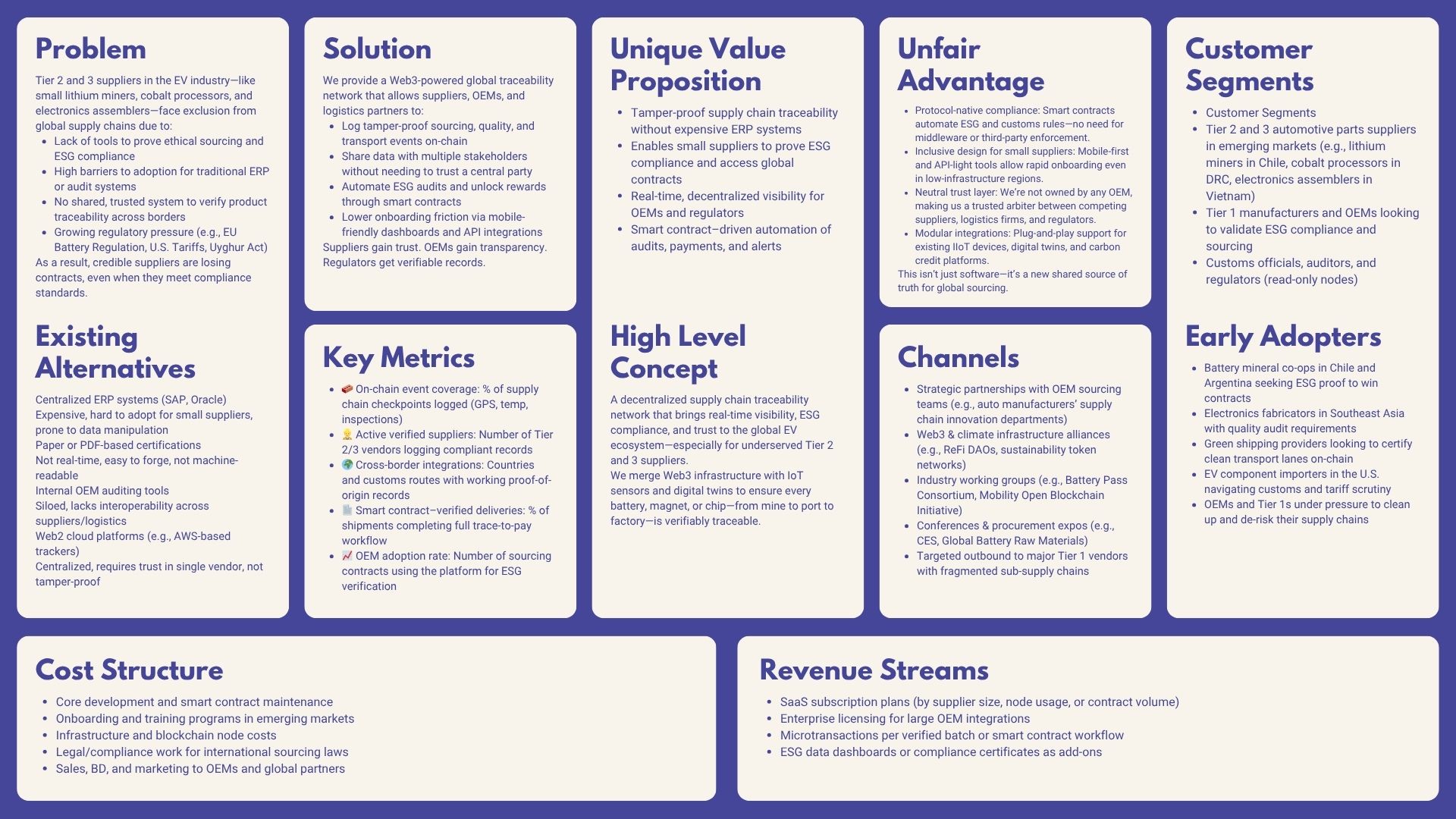
Imagine AutoSight DAO as the next big AI Blockchain STARTUP... at scale… This isn't just about cars. It's about reimagining how we build, govern, and trust complex systems.
🚙 10,000+ Smart Vehicles Every part linked to a digital twin NFT Predictive AI prevents recalls before they happen 🏭 Decentralized Factory Networks Suppliers, engineers, and auditors vote via DAO Shared innovation, shared accountability 📊 Real-Time, Transparent Compliance Governments & regulators view verified on-chain part histories Recalls are automated, not scandalous
💰 Incentivized R&D Ecosystem Open-source hardware blueprints governed by token-holders Contributions rewarded with crypto—not buried in IP litigation 🌍 A New Kind of Supply Chain Borderless, transparent, efficient AI + blockchain rebuild American manufacturing from the bottom up
Built With
- tensorflow
Log in or sign up for Devpost to join the conversation.