-
-
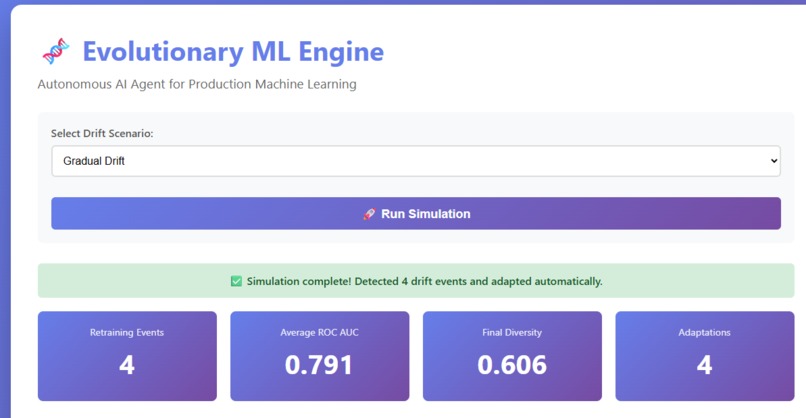
Engine
-
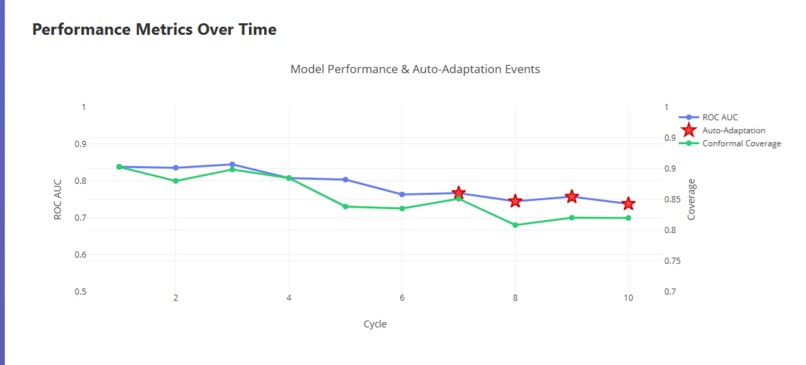
Performance
-
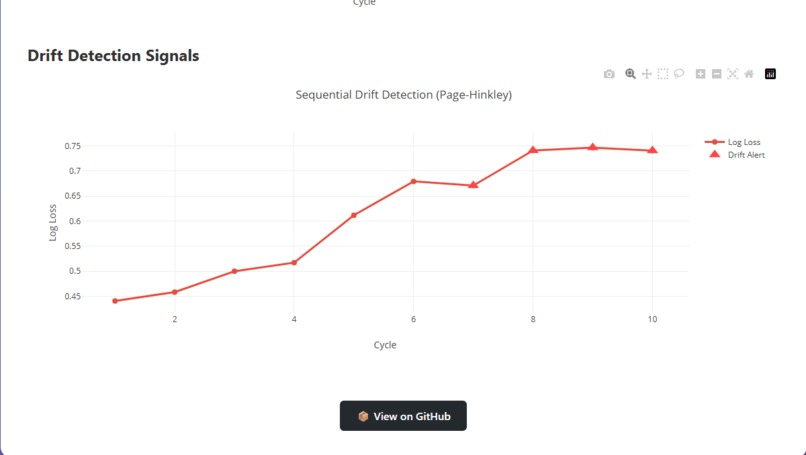
Drift
-
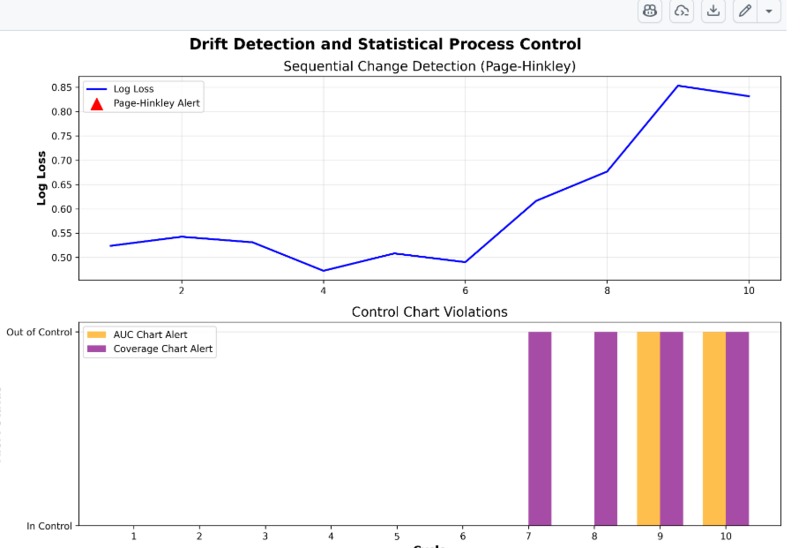
Drift2
-
Evolution
-
Results Table
-
Inspiration
A fraud detection model dropped from 92% to 63% accuracy over three weeks. Every dashboard showed green—the model ran perfectly. But it was making terrible predictions. By the time anyone noticed, they'd lost $2.3 million.
What happened? Fraudsters changed tactics. The model still caught the old fraud pattern flawlessly. There just wasn't any left. The new pattern sailed past it. This is model degradation. The model doesn't break. The world changes around it. Netflix recommendations drift as viewing habits change. Medical models fail when patient populations shift. Trading algorithms crash when markets flip. Models are frozen snapshots; the world is a moving target.
Currently, companies handle this with humans. ML engineers watch dashboards, investigate complaints, manually retrain, tune hyperparameters, deploy. This consumes 30-40% of ML engineering time and costs millions in lag between drift and fix.
We asked: why do ML models need babysitters? We studied three domains. Evolutionary biology showed us population-based training where configurations compete on current data. Statistical theory gave us conformal prediction with guaranteed uncertainty estimates. Industrial process control gave us Shewhart charts and Page-Hinkley tests for detecting changes.
These solve the same problem: maintain quality in changing environments without human intervention. Wire them together and you get an autonomous ML agent that monitors itself, detects drift, evolves new configurations, and recalibrates uncertainty—all without approval.
What It Does
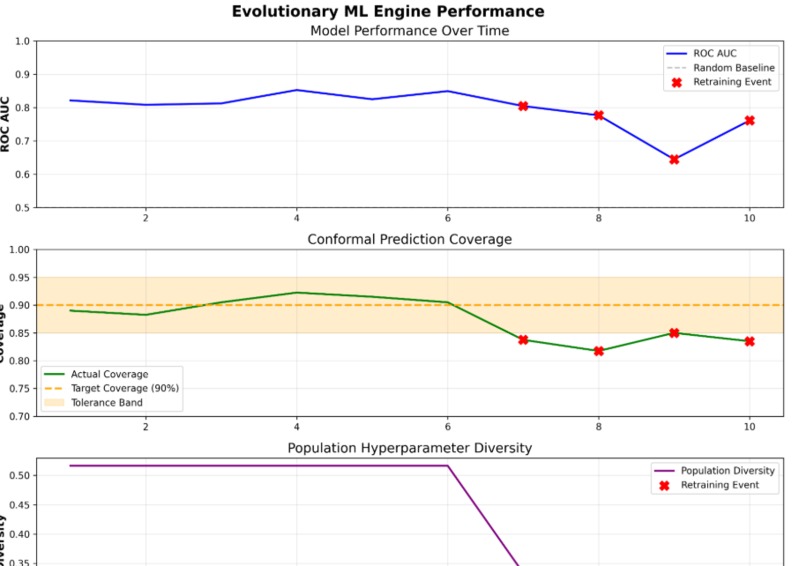
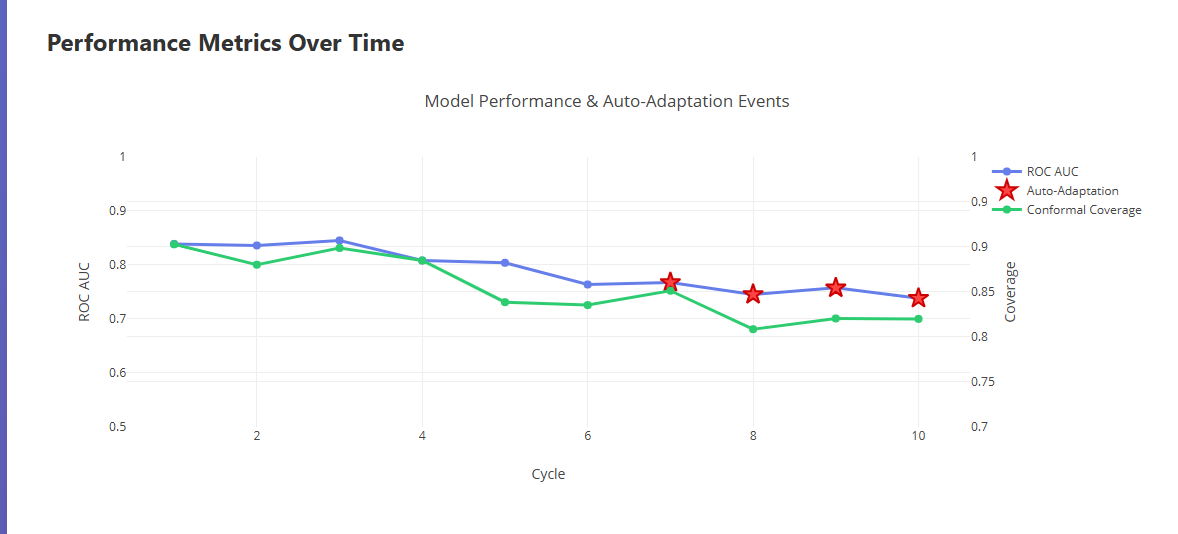
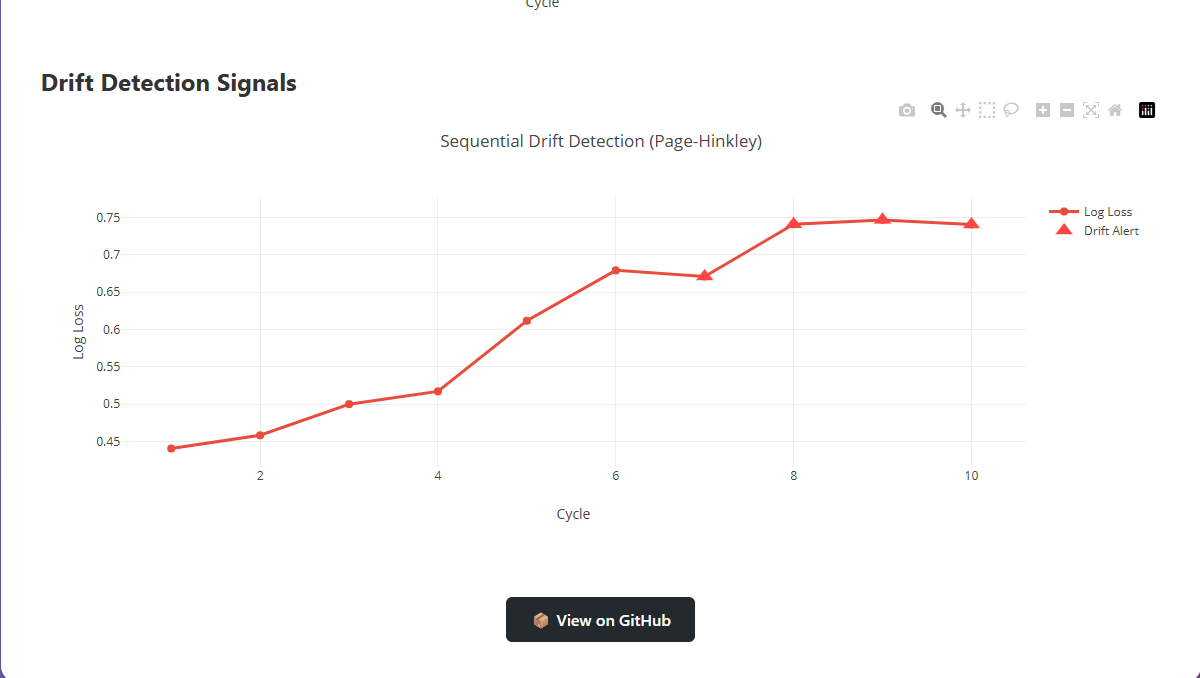
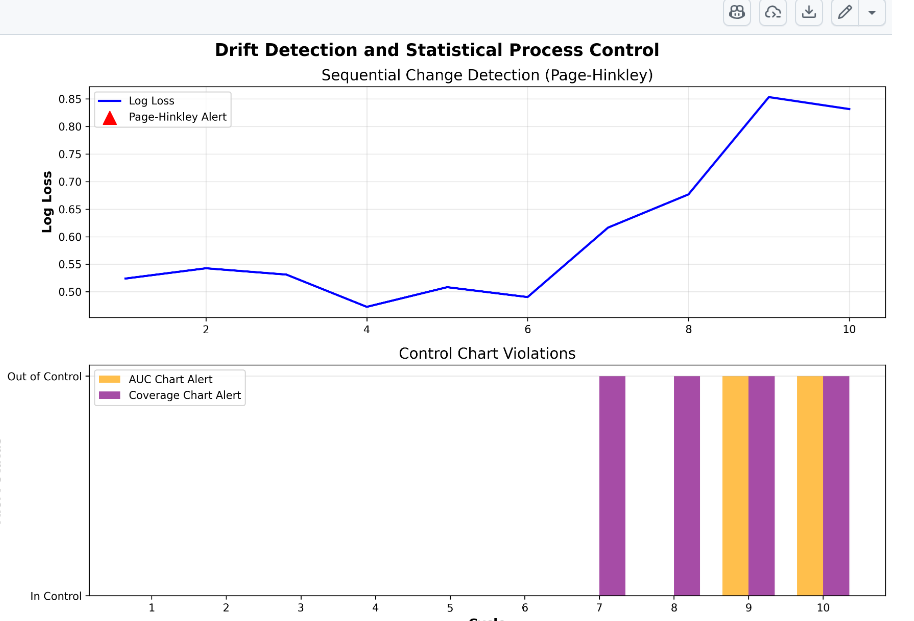
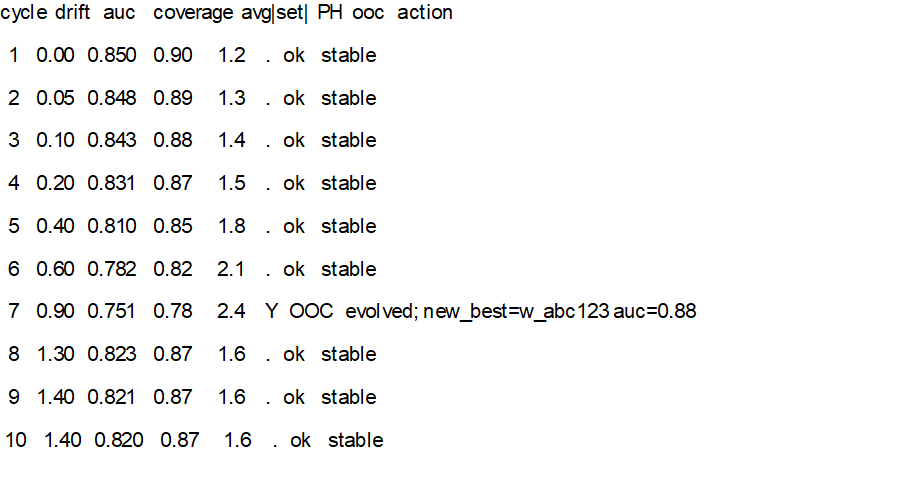
The Evolutionary ML Engine maintains production models autonomously. It watches three signals: accuracy (Shewhart charts), coverage (conformal prediction), and log loss (Page-Hinkley detector). When any signal moves out of range, the agent knows the world changed.
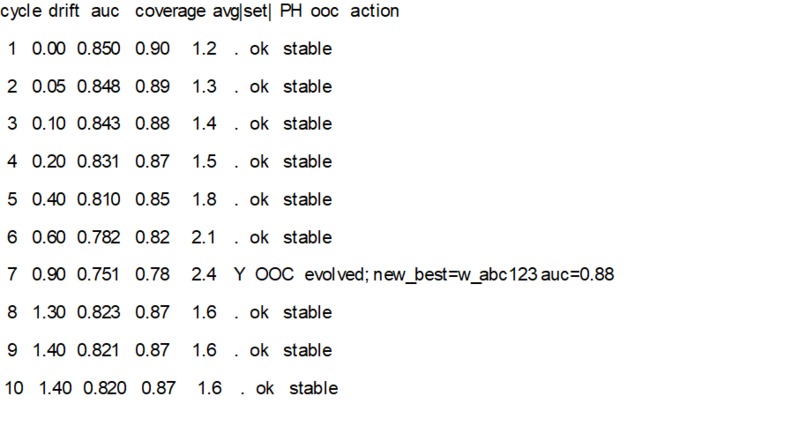
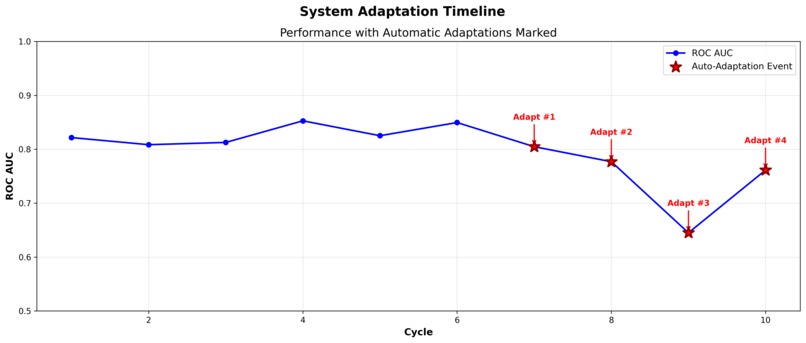
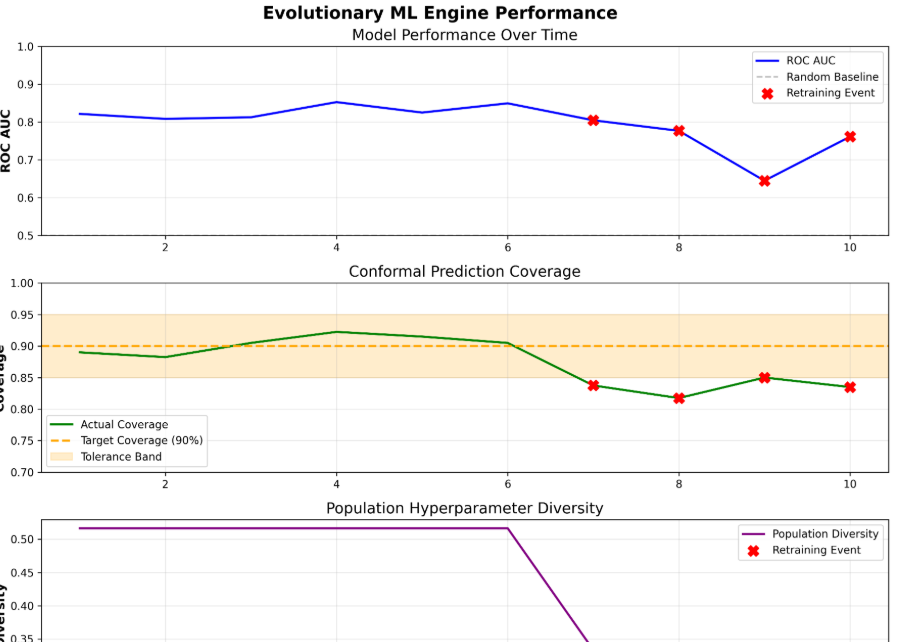
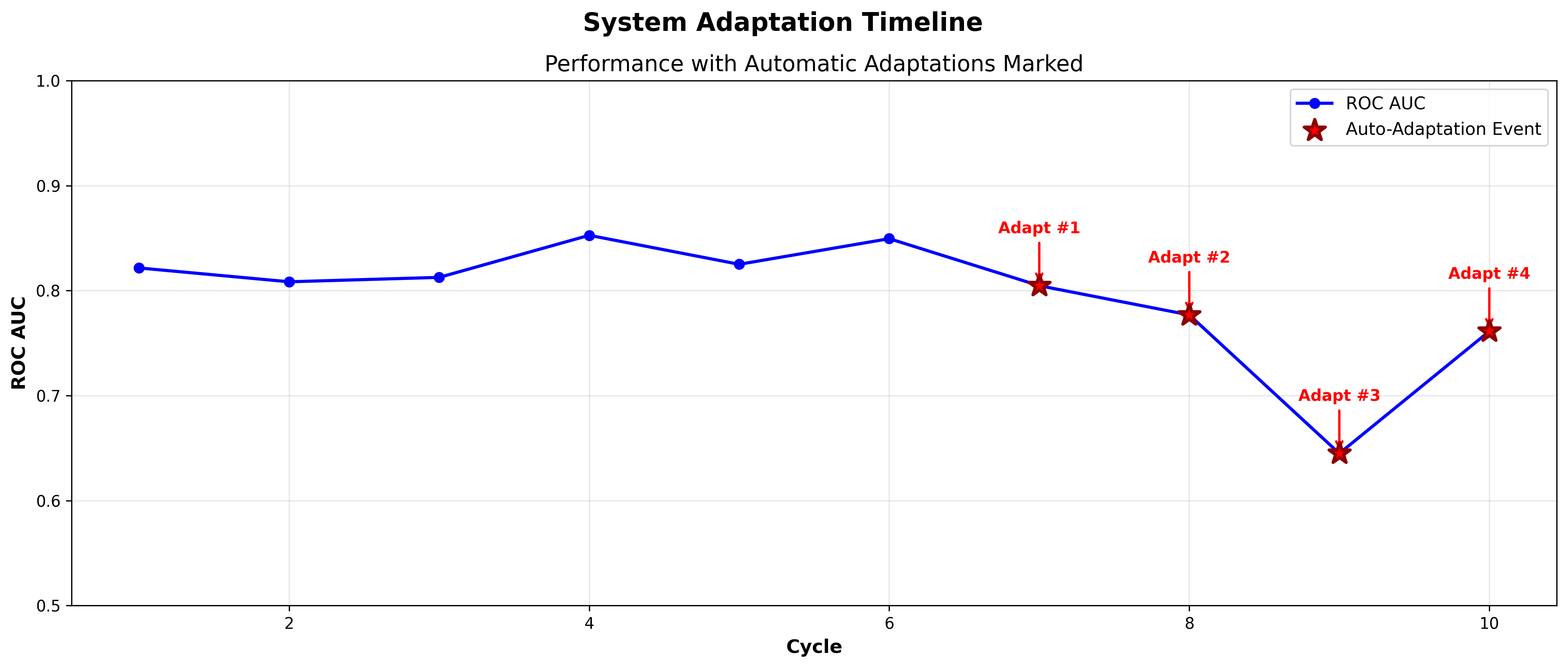
When drift hits, it evolves a population of competing configurations. Top performers stay. Bottom quarter gets replaced with mutated children of winners. Population drifts toward what works on current data.
The elegance: the system never asks what changed, which features matter now, or whether to retrain. It simply notices performance degraded, tries different configurations on new data, picks whatever works best, and repeats. Evolution, not analysis. Under a minute. Zero human intervention.
After evolution, it recalibrates uncertainty using split conformal prediction—mathematical guarantee that true labels land in predicted sets 90% of the time, regardless of distribution.
How We Built It
Day one: architecture. Three subsystems: population-based training, conformal prediction, statistical process control. Day two-four: bottom-up implementation. Hyperparameter genome, population mechanics, monitoring layer, integration. Day five: real-world examples. Fraud detection with quarterly shifts. Churn prediction with seasonal patterns. Day six: pivot. Original Streamlit needed Python installation. Rebuilt as standalone HTML with JavaScript and Plotly. No backend. No dependencies. Deployed to Vercel. Works everywhere.
What We're Proud Of
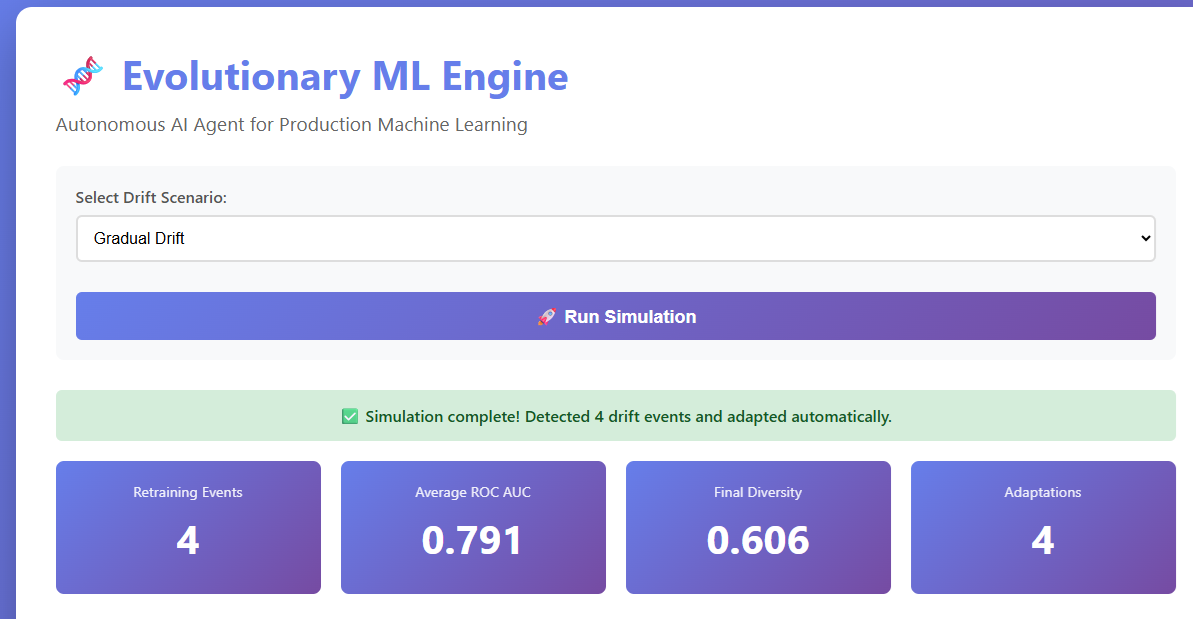
Built something that works. Run python evolutionary_ml_engine.py and watch drift detection, evolution, adaptation in thirty seconds. Web dashboard accessibility. Visit evolutionary-ml-engine.vercel.app on any device. No installation barrier.
Made conformal prediction understandable. Plain English: compute nonconformity scores, take adjusted quantile, build guaranteed prediction sets.
Real-world examples with ROI. Fraud detection maintains >75% accuracy with zero manual interventions. Churn prediction adapts to seasonal changes.
What's next for Evolutionary ML Engine
Weeks 1-4: Open source release under MIT license. Blog series. Video tutorials. Build community.
Months 1-3: Add model families—PyTorch, LightGBM, XGBoost. Implement label delay queue. Docker containers. Deployment guides for AWS, GCP, Azure. Expand examples: healthcare, retail, manufacturing.
Months 3-6: Build managed service MVP. Core engine as cloud service with REST API. Web dashboard. Slack integration. Webhooks.

Log in or sign up for Devpost to join the conversation.