-
-
EvoForge: Evolution+Forge
-
-
-
-
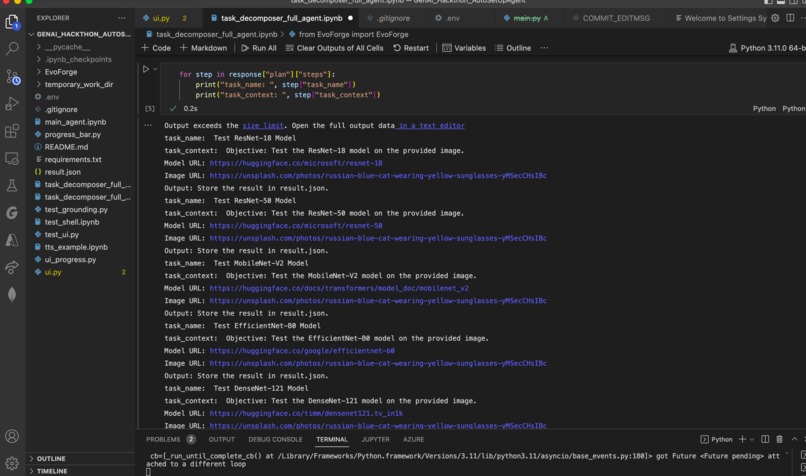
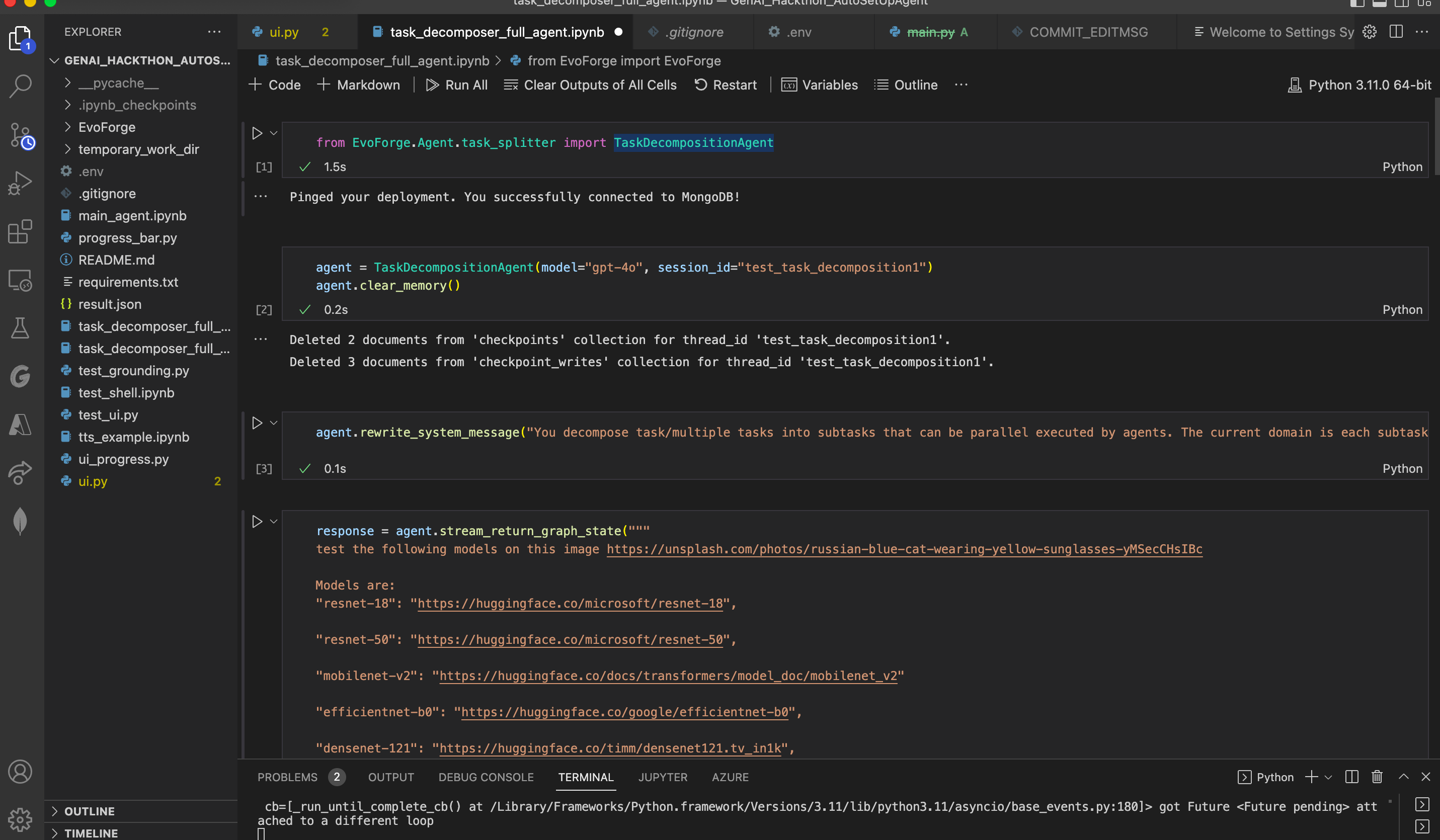
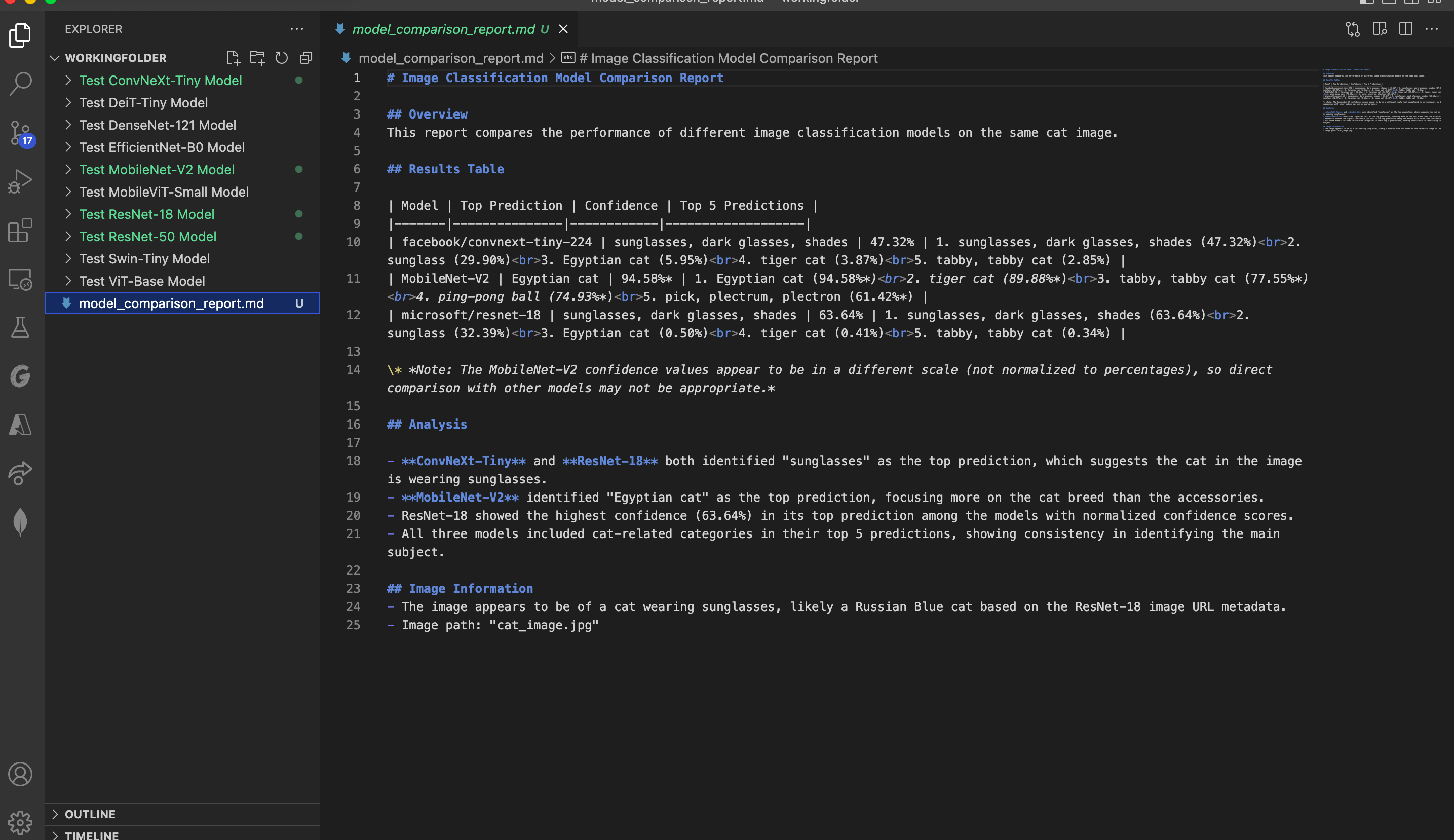
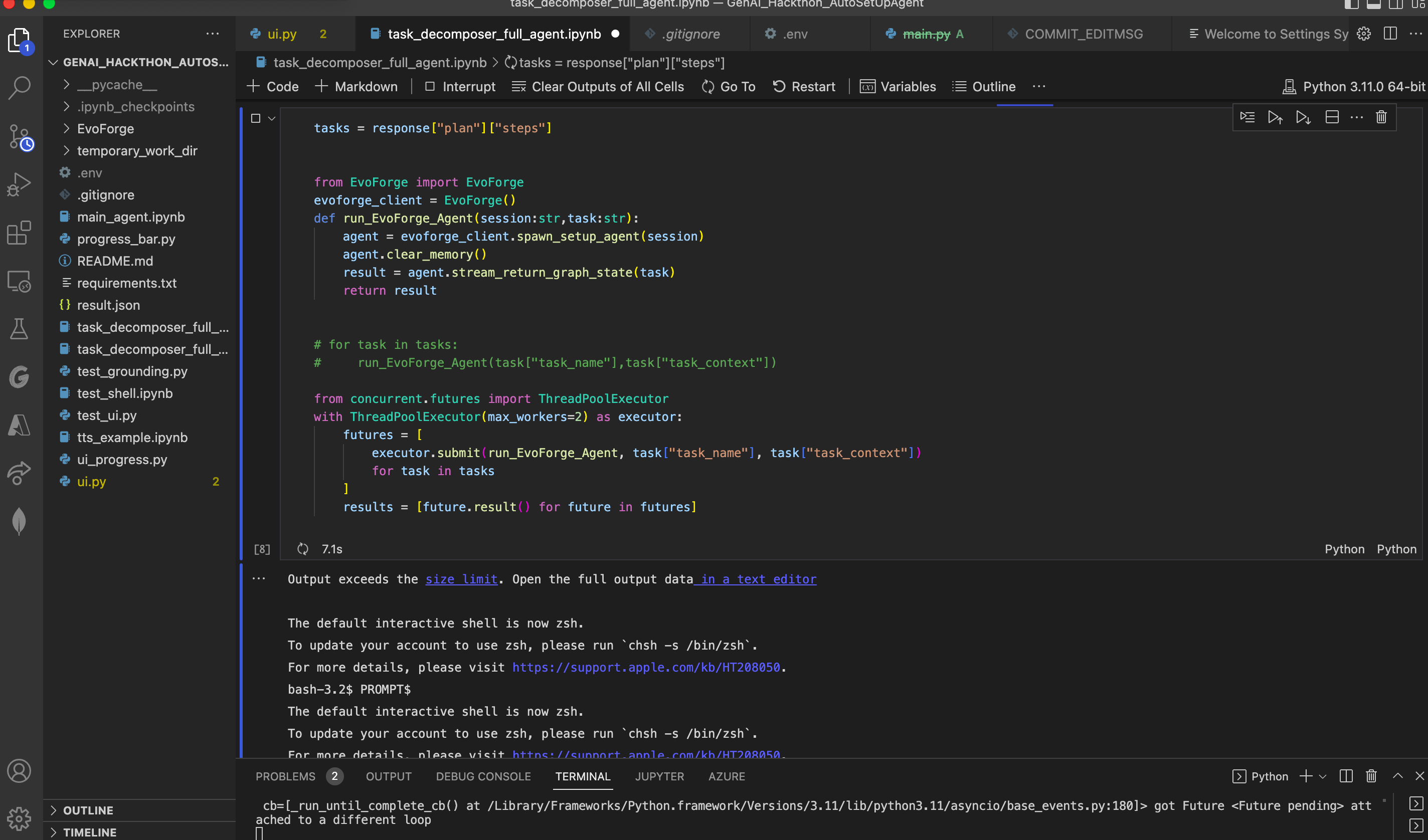
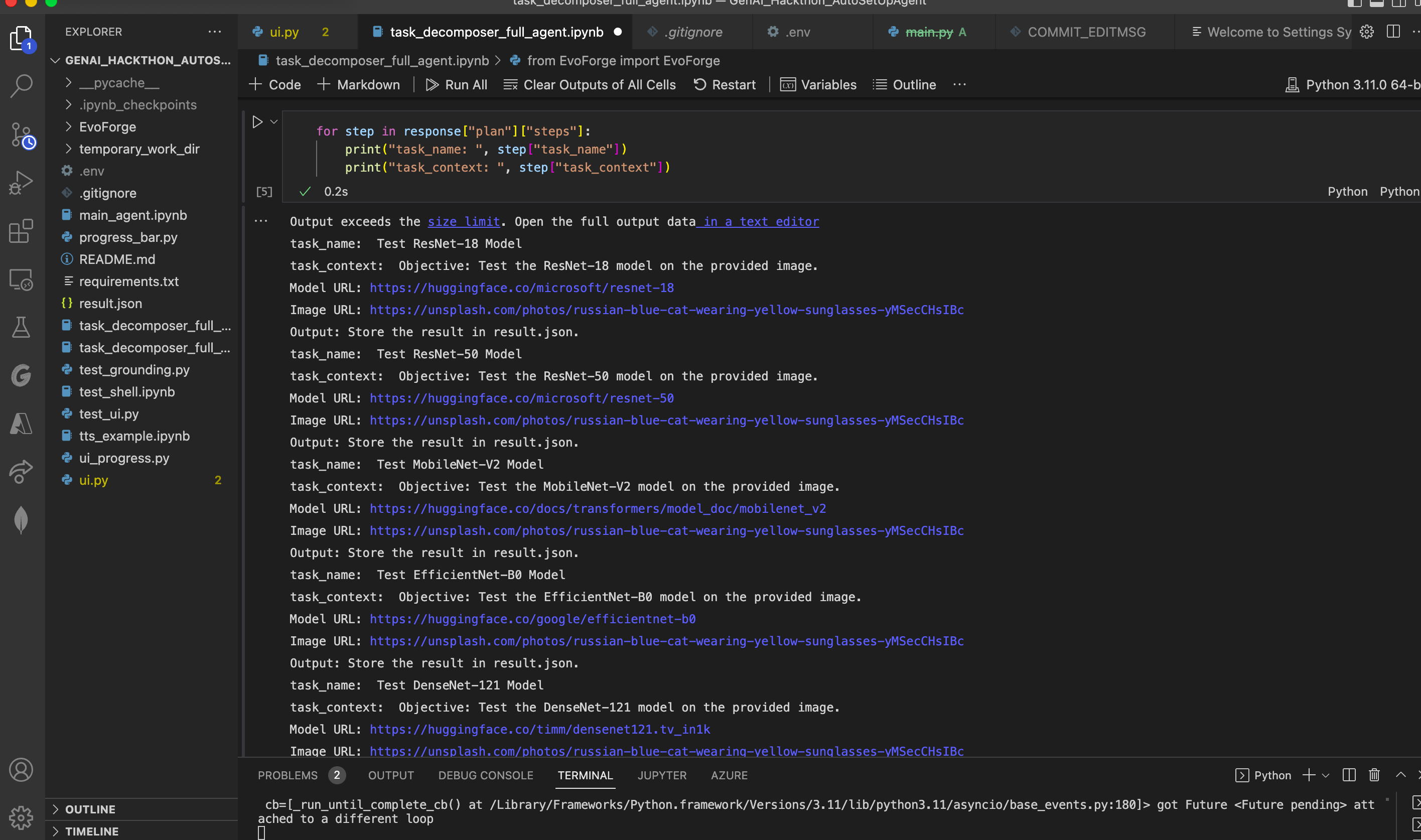
Our video demonstration uploaded on Github repo readme file (facing technical difficulties submitting in the desired format)
Inspiration
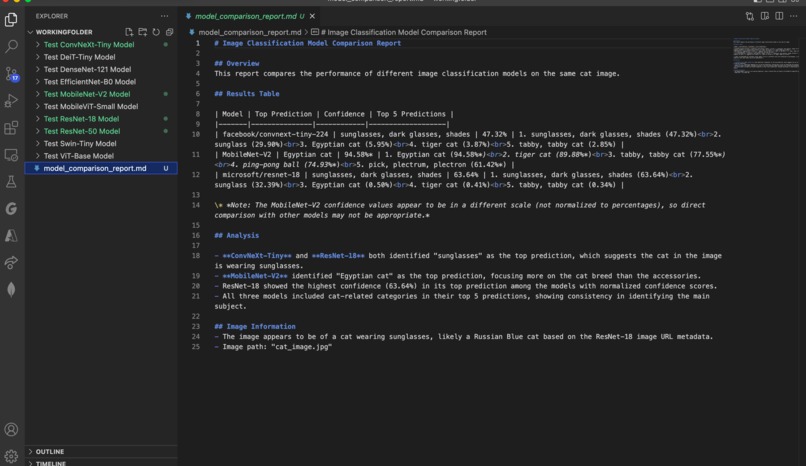
Our project is inspired by the idea of augmenting human capability and democratizing access to advanced AI. In today’s fast-paced world, making informed decisions quickly is essential. We saw an opportunity to empower users—whether data scientists, business leaders, or everyday users—to harness the power of AI by automating the evaluation and comparison of multiple machine learning models. By distributing tasks among specialized agents, our solution drastically reduces the time required for model evaluation and fosters a more agile, human-centric approach to decision-making.
What it does
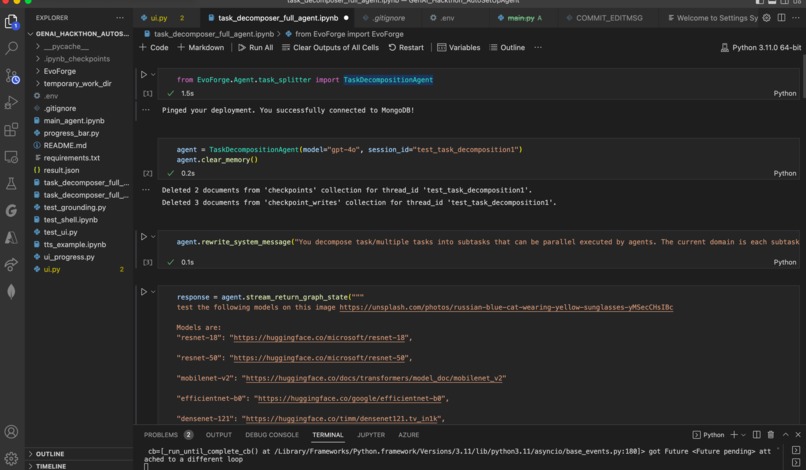
EvoForge is an innovative, agent-driven platform built to empower researchers by automating the concurrent analysis of diverse data sources, including repository URLs, documents, and datasets. Leveraging a modular Streamlit interface and a robust MongoDB backend, EvoForge tracks the real-time progress of independent tasks managed by intelligent agents operating in parallel. Each agent processes its assigned inputs, updates its status in the database, and delivers immediate feedback through an interactive dashboard, streamlining the research process.
How we built it
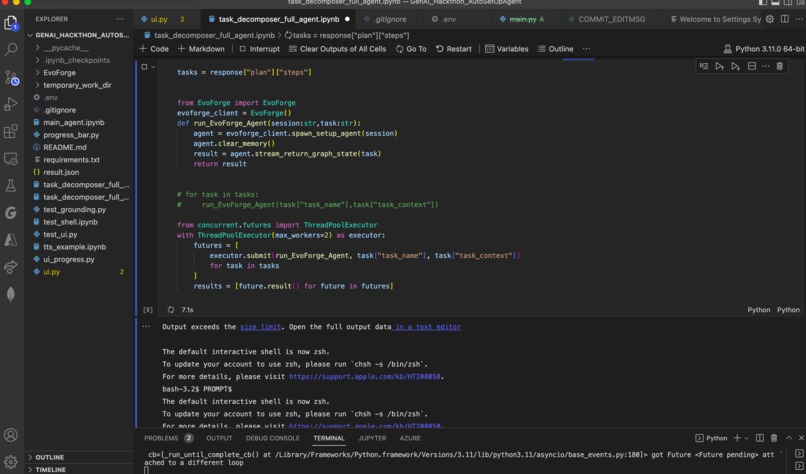
We built EvoForge by combining a multi-agent framework with parallel processing techniques. Using Python as our core language, we developed a Streamlit interface that interacts seamlessly with a MongoDB backend to track real-time task progress. Intelligent agents, implemented using a mix of custom tools and frameworks like LangChain, were designed to operate concurrently, each handling different research inputs. This architecture allowed us to automate complex analysis workflows while providing immediate, actionable feedback via an interactive dashboard.
Challenges we ran into
Starting from the brainstorming phase, each group member’s differing background knowledge in GenAI led to communication hurdles, especially since we were all unfamiliar with each other’s expertise. Coordinating multiple intelligent agents to work simultaneously demanded careful design, as limited computing power created bottlenecks for handling parallel tasks. Moreover, managing dependencies and resolving compatibility issues among various libraries proved to be another major obstacle, necessitating extensive debugging and environment adjustments.
Accomplishments that we're proud of
We're proud of building a functional multi-agent system capable of handling tasks in parallel and delivering real-time insights. we could successfully integrate diverse tools and models including Hugging Face models. We also developed custom tools that allow agents to interact with the file system, execute shell commands, and dynamically generate and run Python scripts, which allowed to be flexible. Despite the time constraints of a hackathon, we managed to implement a user-friendly interface and create a system that meaningfully accelerates research workflows and empowers human decision-making. Just as importantly, we grew significantly as a team—learning to collaborate under pressure, divide responsibilities effectively, and support each other through technical challenges.
What we learned
Despite these challenges, our project spurred all three members to deepen their understanding of agentic-driven modules and their capabilities. By searching samples on public model hubs like Huggingface and GitHub, we uncovered which tasks generate the most interest and the specific problems that developers frequently address. This exploration expanded our insight into emerging trends and practical applications in the GenAI community.
What's next for EvoForge
-Adaptive Agent Interaction Adaptive agent interaction enables parallel modules to share insights, reducing duplicated efforts and accelerating solution-finding through real-time, cooperative information exchange.
-Performance Monitoring Performance monitoring illuminates bottlenecks, logs critical events, and empowers data-driven improvements by tracking resource usage, execution times, and error rates.
-Incremental Learning Incremental learning continuously updates agents with real-world feedback, refining model accuracy and preserving knowledge while introducing novel insights and capabilities.

Log in or sign up for Devpost to join the conversation.