💡 Inspiration:
The Infrastructure GapIn the Mount Everest region of Nepal where I grew up, and across the broader South Asian subcontinent, the primary bottleneck in public health is not a lack of doctors—it is a lack of predictive digital infrastructure. Currently, the global response to Antimicrobial Resistance (AMR) is entirely reactive. We wait for resistant strains to emerge clinically before mobilizing resources. As a Chemical Engineering student specializing in Computational Biomedicine, I view biological outbreaks as complex reaction systems. I realized that to solve the "silent pandemic" of AMR, we must treat pathogen evolution as a predictable kinetic process. My goal for this project was to mathematically architect a digital early-warning system—the EVO-MOE Engine—that can forecast resistance trajectories months before they hit our clinics.
⚙️ The Blueprint:
What EVO-MOE Will DoThe EVO-MOE Engine is a proposed hybrid computational framework. It is designed to replace traditional, purely statistical epidemiological models with a deterministically validated workflow.Once developed, the engine will act as a secure, decentralized forecasting pipeline that mathematically bridges Time-Series Machine Learning, Agent-Based Modeling (ABM), and Ordinary Differential Equations (ODEs) to simulate real-world drug-pathogen dynamics.
🏗️ Technical Architecture:
How I Designed the Framework I have spent my time designing the mathematical logic and system architecture required to make this engine a reality. The framework is built upon three highly technical pillars:
- The Deterministic Biological Foundation (ODEs & PK/PD)Traditional machine learning models act as "black boxes" that ignore physical biological constraints. To fix this, I architected the core of EVO-MOE around Pharmacokinetic/Pharmacodynamic (PK/PD) parameters. The system proposes the use of the Hill Equation to define drug efficacy: E = (E_max * C^γ) / (EC_50^γ + C^γ)
applying RK4 Integration and Stochastic Extinction Theory, the framework calculates the exact kinetic threshold at which a bacterial strain will mathematically overcome antibiotic concentration, triggering the emergence of resistance.
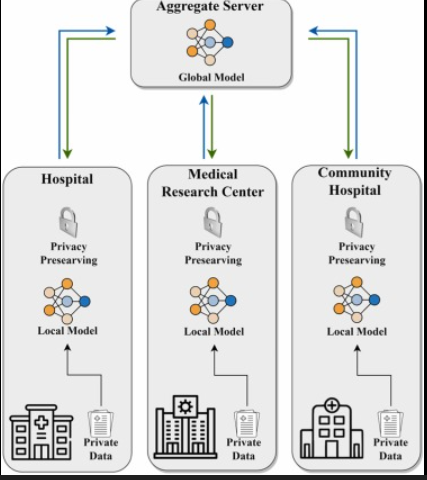
- The Probabilistic AI Layer (Machine Learning & ABM)Once the biological constraints are defined via ODEs, the architecture feeds these parameters into an Agent-Based Model (ABM). The framework outlines a Time-Series ML pipeline—utilizing Ridge Regression (L2 regularization) and K-fold cross-validation—to analyze historical infection vectors and project the spread of the mathematically defined resistant strains across simulated populations.3. Privacy-Preserving Scalability (Federated Learning)Because AMR forecasting requires analyzing highly sensitive clinical data, centralized data warehouses are a security risk. I designed the EVO-MOE deployment architecture around a Federated Learning (FedAvg) network. Python # Proposed logic for decentralized model training without exposing patient data def federated_averaging_protocol(global_model, local_weights_from_clinics): # Aggregates localized learnings at the edge avg_weights = compute_mean_weights(local_weights_from_clinics) global_model.update_weights(avg_weights) return global_model Under this architecture, individual hospitals will train the model locally on their WHO GLASS-standardized data, and only the cryptographic weight updates are sent to the global engine.
⚠️ Challenges in the Architectural Design The most intense technical hurdle during the design phase was formulating the mathematical bridge between continuous variables (the ODEs describing drug decay) and discrete entities (the individual agents in the ABM). Ensuring that the kinetic transport phenomena of real-world bacteria could be accurately translated into hyperparameter constraints for the ML algorithm required rigorous system-dynamics modeling.
🏆 Accomplishments that I'm proud of I am incredibly proud of designing a first-of-its-kind hybrid mathematical blueprint that is fundamentally viable. I have successfully created an architecture that proves, theoretically, how we can use decentralized digital networks to train complex, biologically-validated AMR forecasting models without violating patient privacy laws.
🚀 What's Next: The Engineering Phase (The ITU/Huawei Vision)The mathematical framework is complete; the next critical phase is engineering and deployment. Through support and resources from programs like the ITU and Huawei Generation Connect Young Leadership Programme, my immediate next steps are to: Translate the ODE and Time-Series mathematical frameworks into a functioning Minimum Viable Product (MVP) using Python and C++.Leverage advanced cloud computing infrastructure to simulate the Federated Learning node network. Run a simulated pilot utilizing open-source AMR surveillance datasets to validate the predictive accuracy of the hybrid model. The EVO-MOE Engine is designed to be the future of predictive digital health infrastructure. Now, it is time to build it.
Built With
- agent-based-modeling
- computational-biology
- differential-equations
- federated-learning
- machine-learning
- machine-learning-design
- mathematical-modeling
- numpy
- pandas
- pharmacokinetics
- scikit-learn
- system-architecture

Log in or sign up for Devpost to join the conversation.