-

-
-
-
-
-
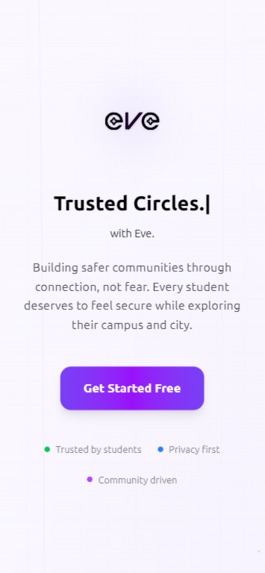
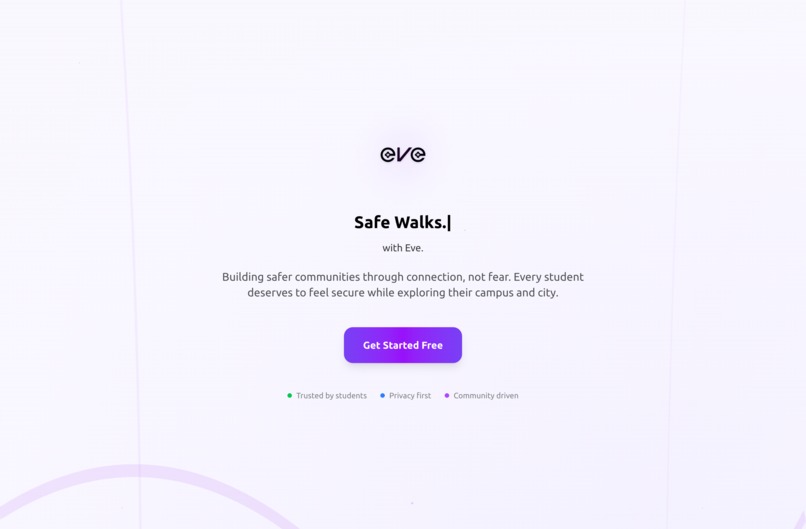
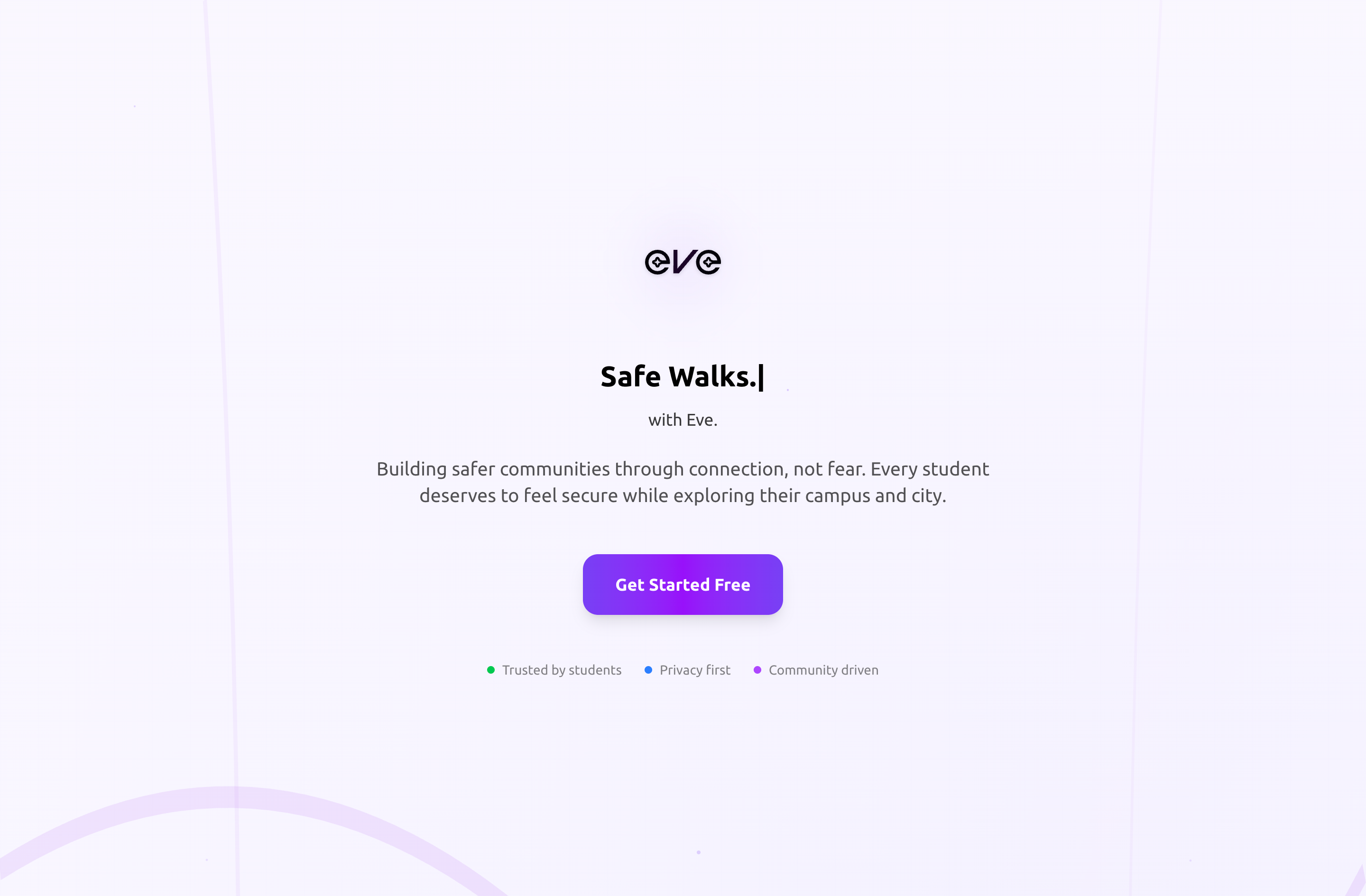
Landing Page
-
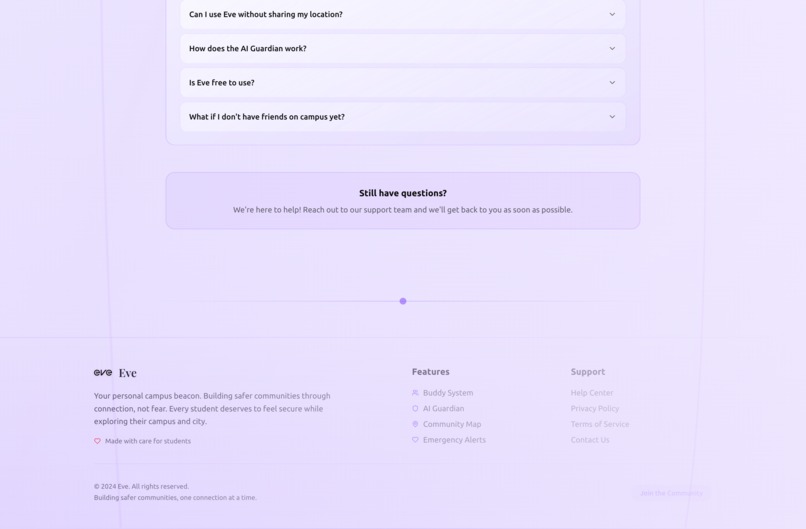
-
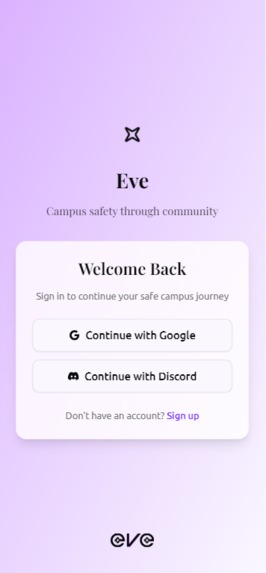
Signup / Login
-
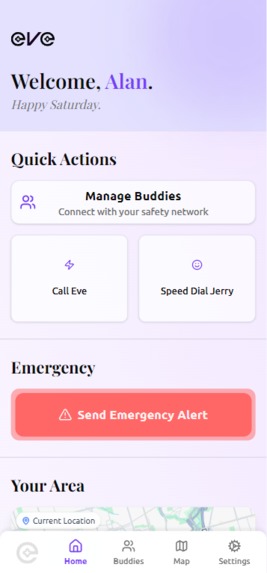
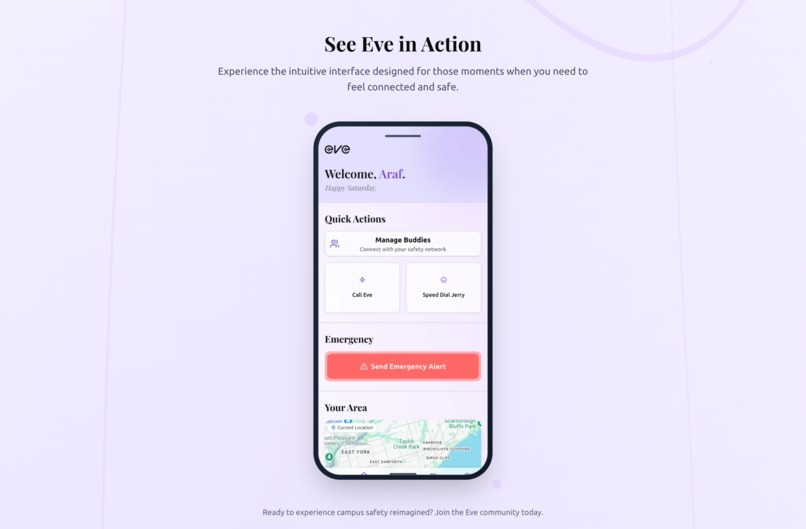
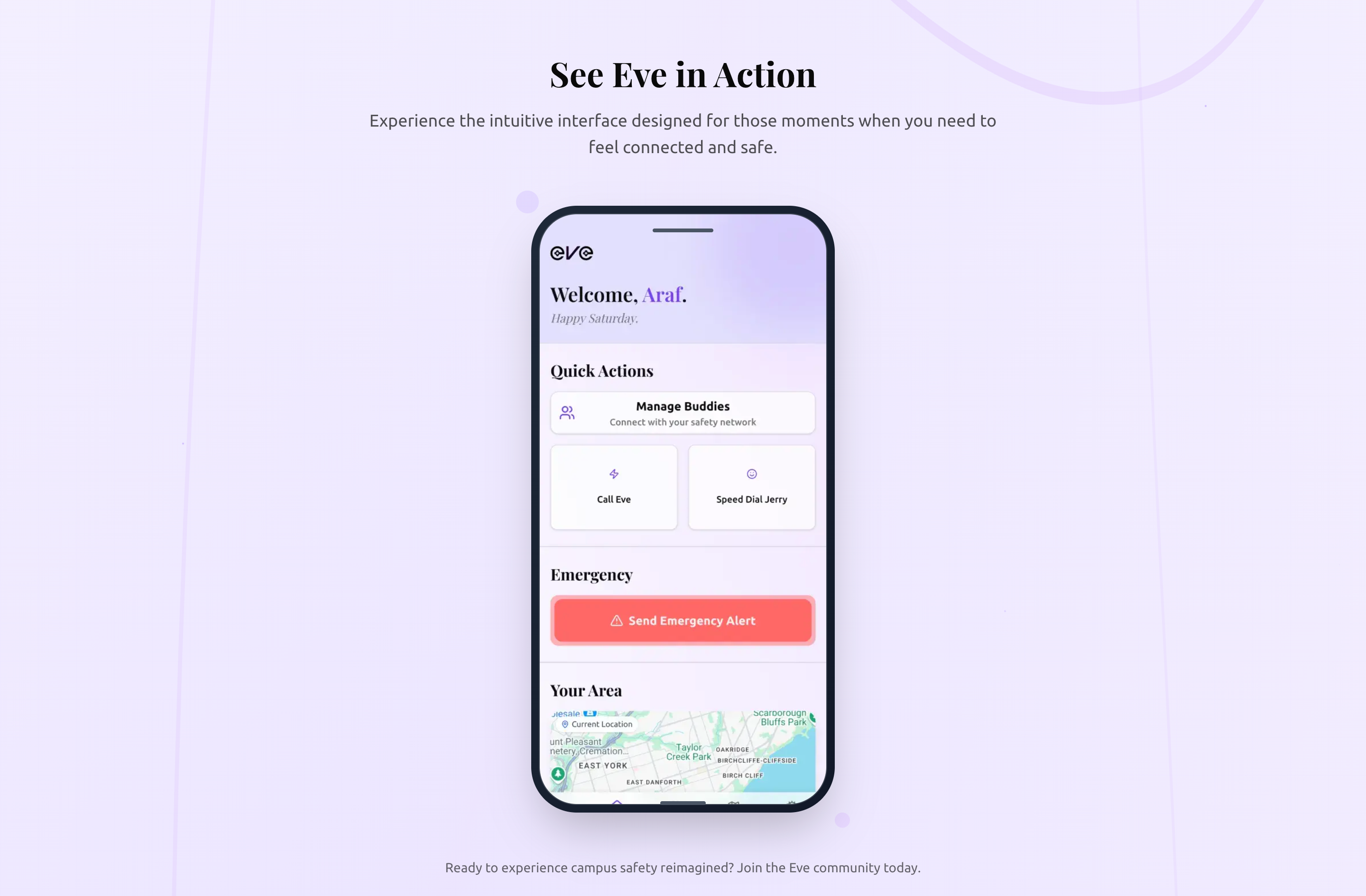
Dashboard
-
Buddies
-
Map
-
-
Inspiration
The origin for "Eve" initiated from a critical gap in personal safety technology. While walking at night, particularly in urban environments, a state of heightened awareness often precedes any actual incident. This period of suspicion, the feeling of being followed or entering an unsafe area, is a valid and stressful experience, yet it falls short of the legal threshold required for an emergency services call. Existing solutions are often reactive, designed for use only after a threat has escalated. Our inspiration was to develop a proactive, preventative tool that empowers individuals in this intermediate "gray area." We aimed to create a system that provides a sense of security and a tangible deterrent without prematurely involving law enforcement, leveraging trusted social networks and technology as a first line of defense.
What it does
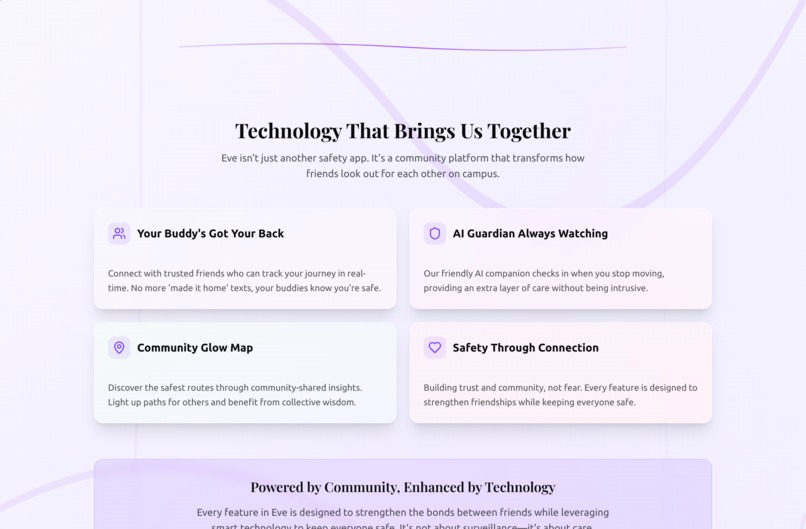
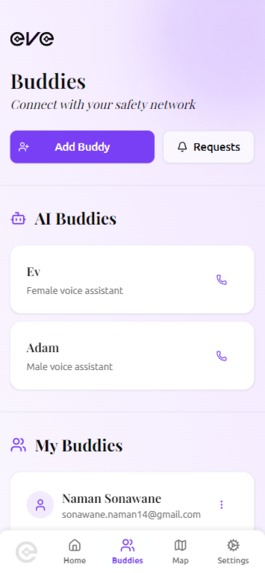
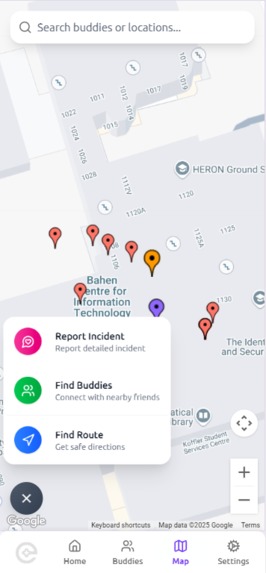
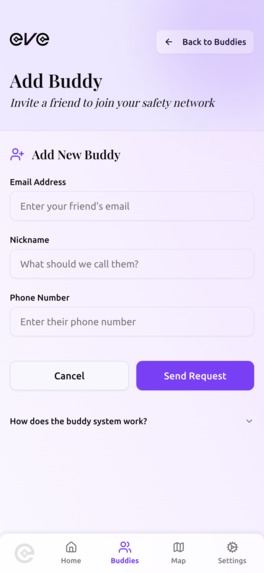
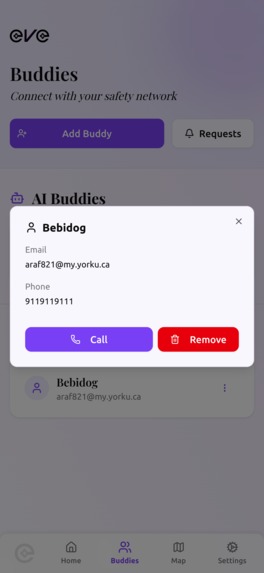
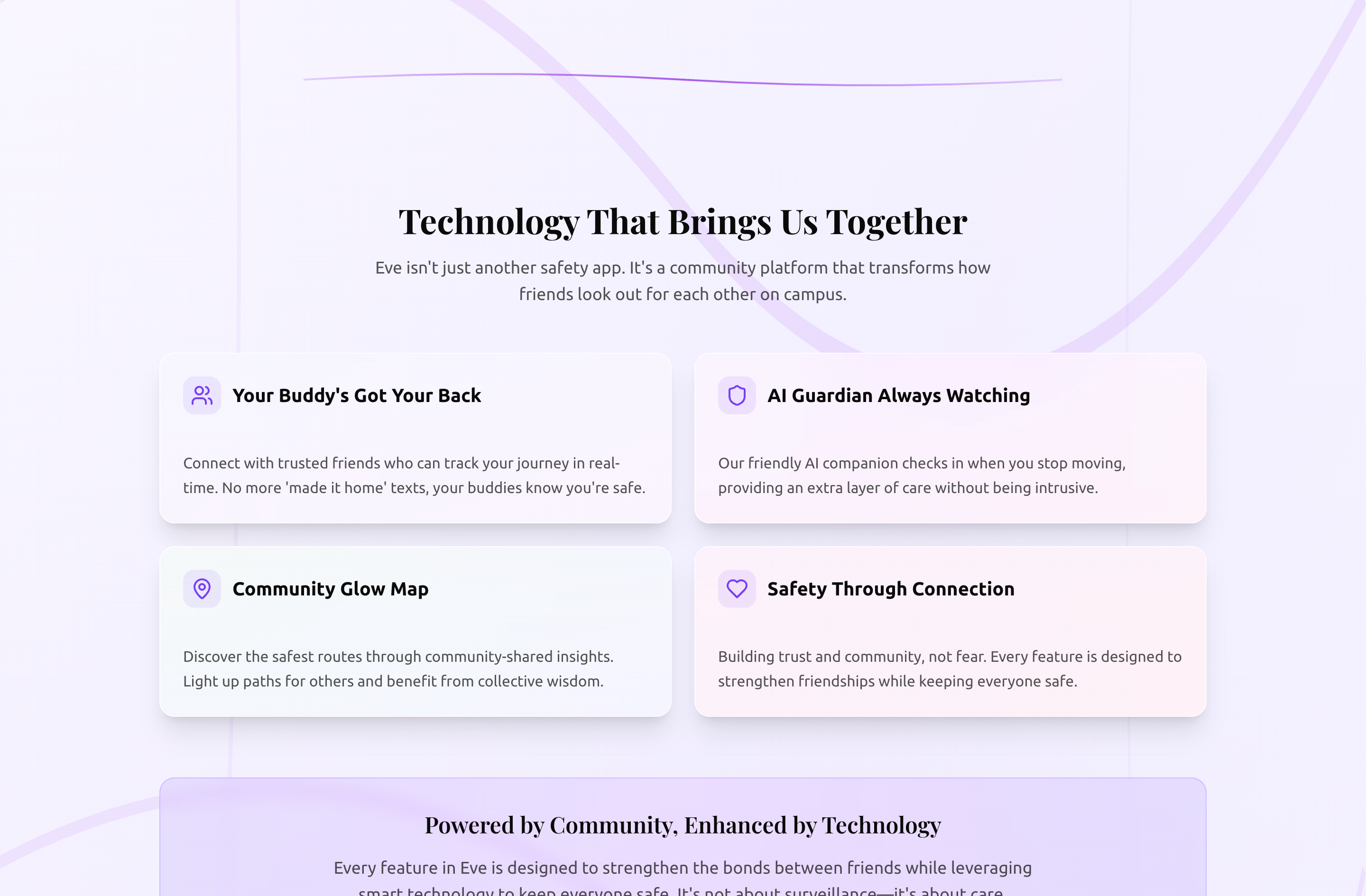
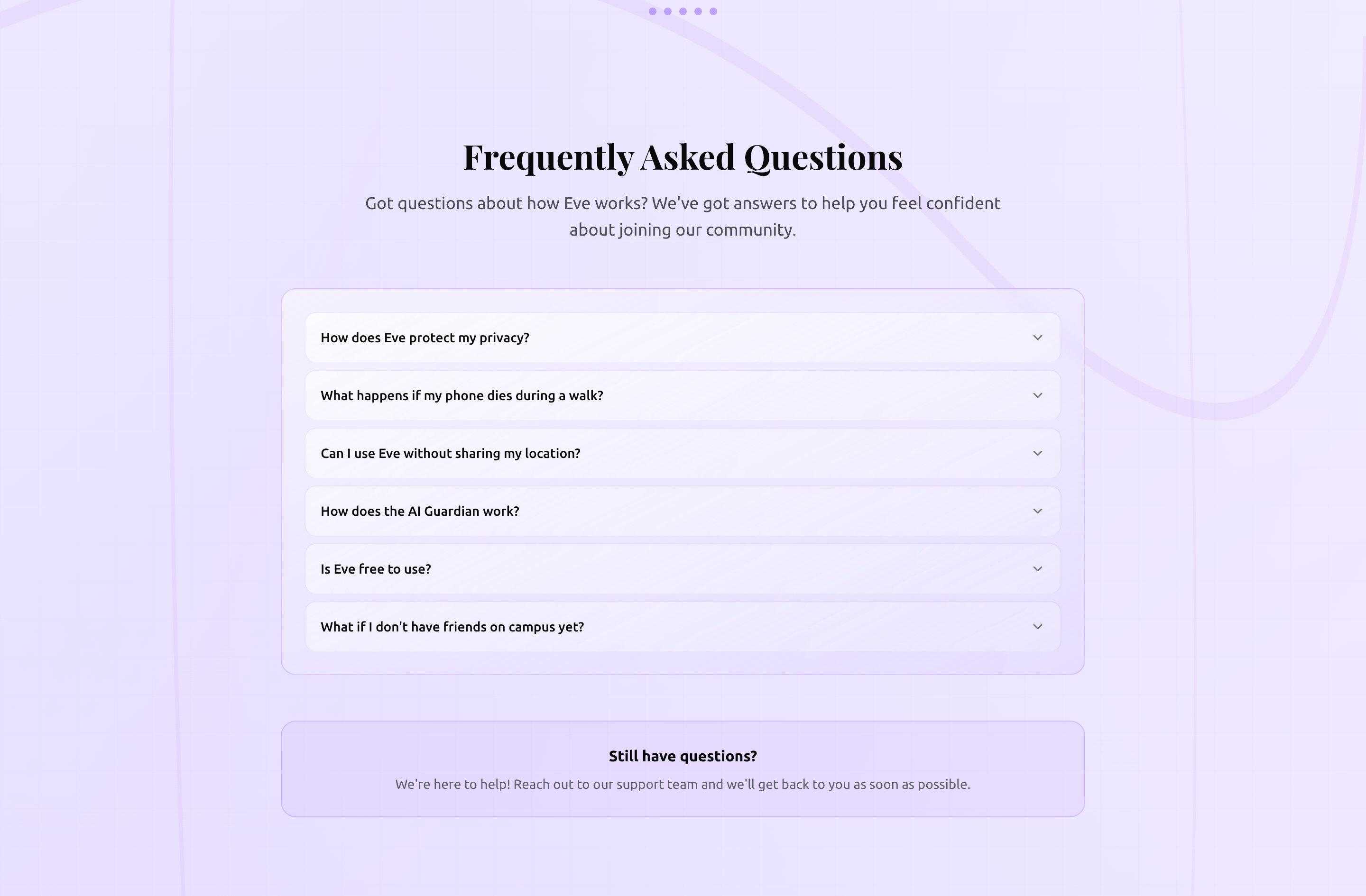
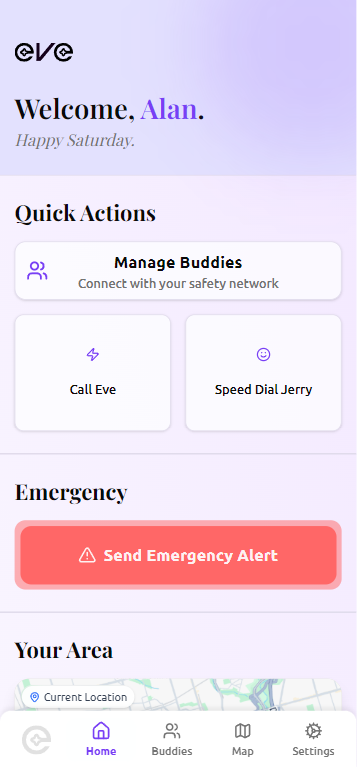
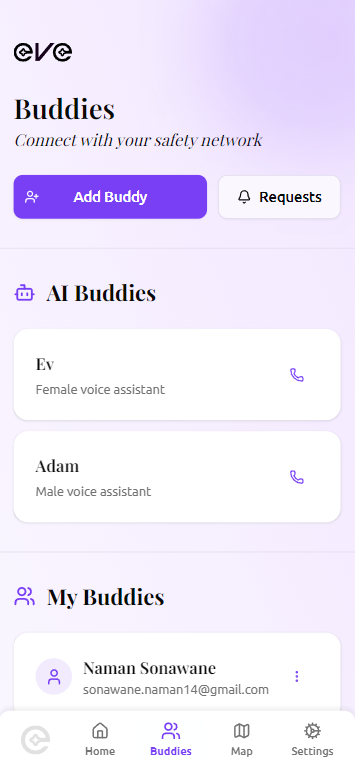
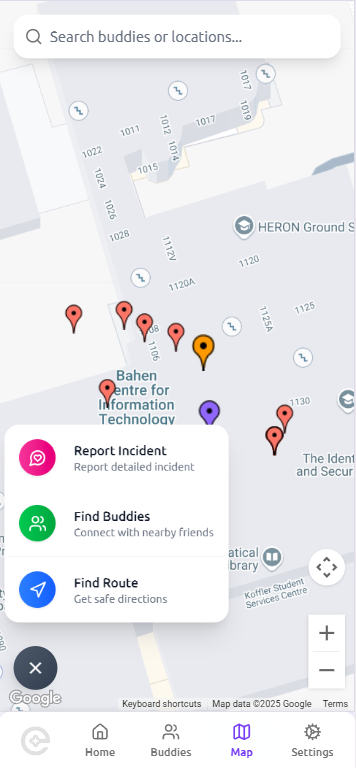
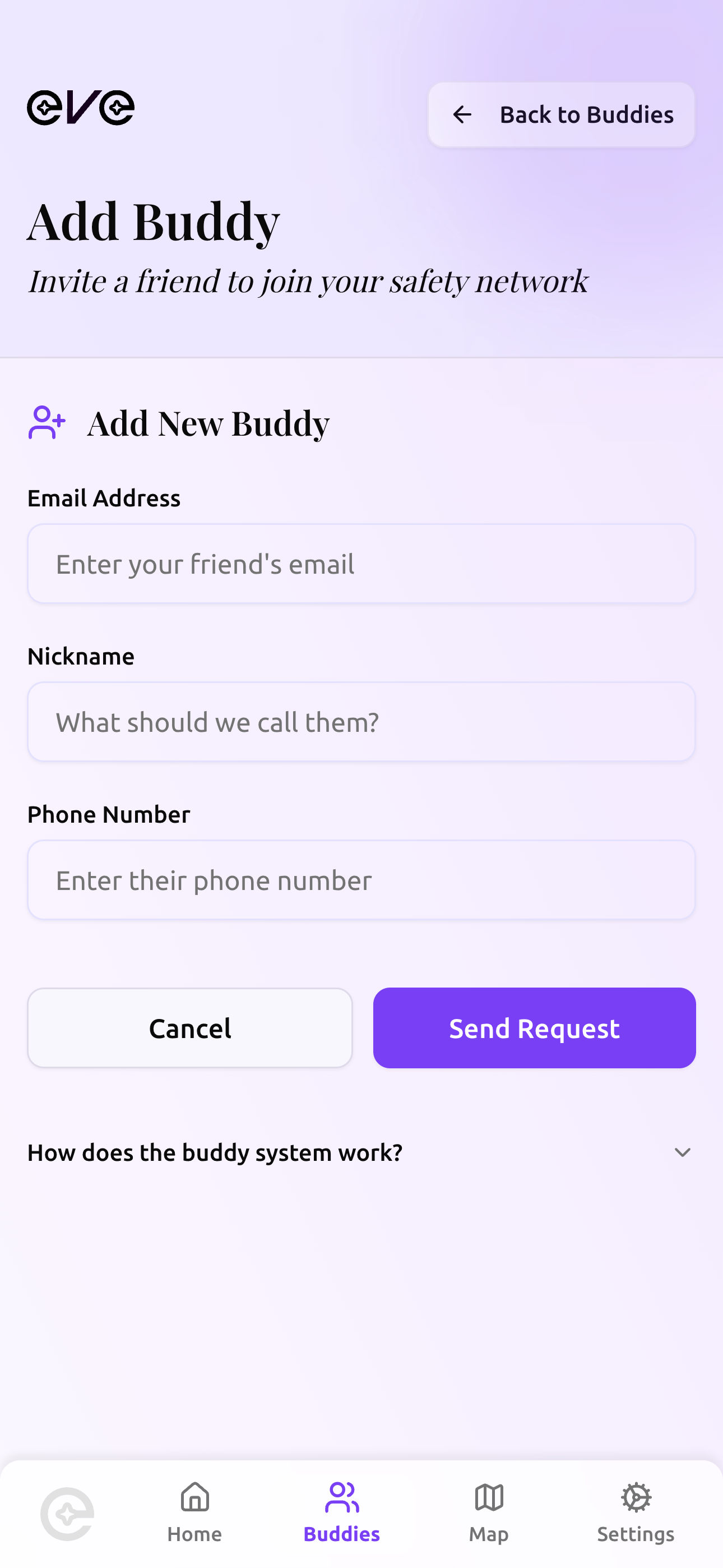
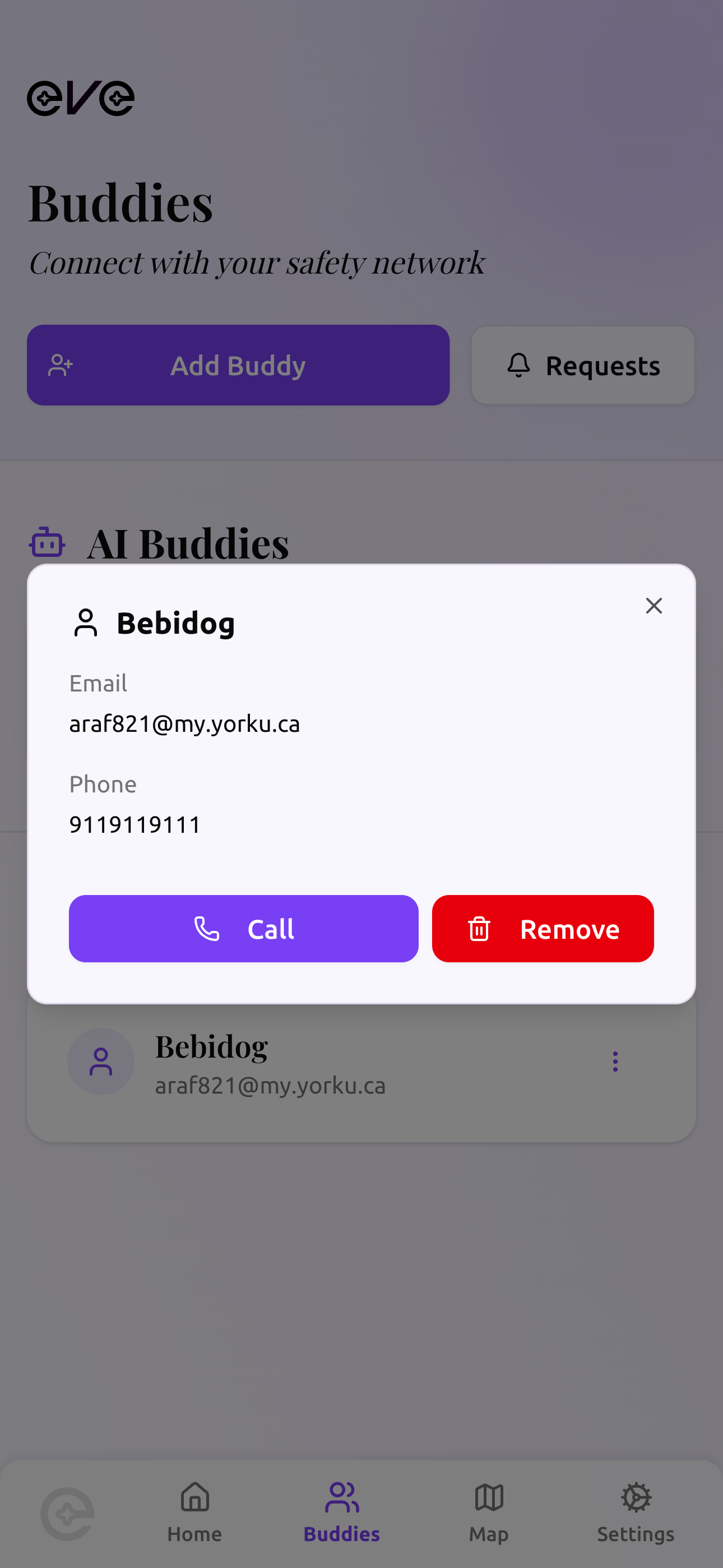
Eve is a Progressive Web App (PWA) engineered to enhance personal safety for individuals walking alone. Its core functionality provides a multi-faceted safety net, beginning with an Emergency Alert System that allows a user to instantly notify a pre-selected list of "buddies" with an alert and their precise, real-time GPS coordinates via a single button press. This is complemented by an AI Chatbot Deterrent, an integrated, voice-enabled AI powered by ElevenLabs, which allows a user to appear engaged in a phone call—a proven tactic for deterring unwanted approaches. Furthermore, Eve incorporates Community-Sourced Incident Reporting, a map-based feature where users can anonymously drop a pin to report unsafe incidents, populating a collective, real-time map of potential danger zones. Users can manage their trusted contacts through a dedicated Buddy Management & Tracking interface, which also includes a "Find My Buddy" feature to display the live location of all connected buddies on a map, subject to privacy permissions. The pinnacle feature of Eve is its Safe Routing Navigation, which leverages the Google Maps API and our incident database to generate walking routes that intelligently navigate around these user-reported danger zones, prioritizing safety over the shortest path.
How we built it
Eve was architected using a modern, full-stack JavaScript and cloud-native technology stack, chosen for performance, scalability, and developer experience. For our framework, we selected Next.js to enable a hybrid approach of Server-Side Rendering for a fast landing page and client-side rendering for the interactive dashboard, with its API routes providing a seamless backend. Styling was rapidly implemented using the utility-first methodology of Tailwind CSS, ensuring a consistent and responsive UI. Our data persistence layer was built on a PostgreSQL relational database, hosted on Neon's serverless platform, which provided cost-effective scalability and resilience. We chose to build Eve as a Progressive Web App (PWA) to deliver a native-app-like experience without requiring an app store. The application's core geospatial and interactive features are powered by the Google Maps API, while the AI chatbot's realistic voice is synthesized through the ElevenLabs API.
Challenges we ran into
The development process presented several complex technical challenges. The most significant hurdle was designing and implementing the safe routing algorithm, which required creating an efficient system to query our Postgres database for incident coordinates and request a new route from the Google Maps API that explicitly avoided these calculated "no-go" zones. Another challenge was achieving real-time location synchronization for the "Find My Buddy" feature, which demanded careful management of GPS polling and data transmission to avoid excessive battery drain. Structuring our PostgreSQL database with PostGIS extensions to handle geospatial data efficiently was also critical and involved a steep learning curve. Finally, configuring the PWA's service worker for reliable offline caching of essential data, such as the buddy list and the last known safe route, proved complex and required meticulous testing to ensure data was updated correctly and served reliably.
Accomplishments that we're proud of
Despite the challenges, we achieved several key milestones that validate our concept and technical execution. We successfully built and deployed a functional safe routing prototype, proving the viability of using community-sourced data to dynamically generate a walking route that actively avoids user-flagged danger zones. We are also proud of the seamless full-stack integration of our entire tech stack, orchestrating the Next.js application, the Neon-hosted Postgres database, and multiple third-party APIs into a cohesive user experience. The implementation of the one-touch emergency alert is both fast and reliable, successfully fetching user and buddy data to dispatch location-based alerts in seconds. Ultimately, by building the incident reporting feature, we have created a framework that empowers users to not only protect themselves but also to contribute to the safety of their entire community.
What we learned
This project was a significant learning experience, providing deep insights into modern application development. Utilizing Neon for our database demonstrated the immense value of serverless architecture, as the simplified management and automatic scaling allowed us to focus entirely on application logic. We also learned how to manage and orchestrate multiple, disparate APIs to create a single, value-added service, handling the complexities of authentication, rate limits, and error states. We gained a profound appreciation for the intricacies of working with geospatial data, moving beyond simple map rendering to complex spatial analysis with PostGIS. Finally, we learned that building a truly effective PWA requires a deep understanding of service workers, caching strategies, and the web app lifecycle to deliver a reliable and resilient user experience.
What's next for Eve
We view the current version of Eve as a robust foundation for a more comprehensive safety platform. Our future roadmap includes developing automated "smart" alerts, which would trigger a "check-in" notification if a user remains stationary for an unusual length of time or deviates significantly from their planned safe route. To ensure data integrity, we also plan to implement an incident verification system, potentially through user upvoting. Extending Eve's functionality to wearable devices like smartwatches is a key priority to allow for more discreet alert activation. We will also be enhancing the AI chatbot's conversational scenarios to make it a more dynamic deterrent and exploring potential partnerships with institutional security to allow alerts to be routed to official response teams.
Built With
- framer-motion
- neon
- next.js
- postgresql
- pwa
- react
- tailwind


Log in or sign up for Devpost to join the conversation.