Inspiration
Patients and caregivers dealing with complex or chronic conditions are overwhelmed by conflicting information scattered across lab reports, doctor notes, research papers, and personal logs. Traditional AI health tools either give direct (and sometimes hallucinatory) answers or demand perfectly clean structured data that real patients don't have. We were inspired to build a tool that makes the structure of evidence and uncertainty visible and auditable without pretending to act as a doctor.
What it does
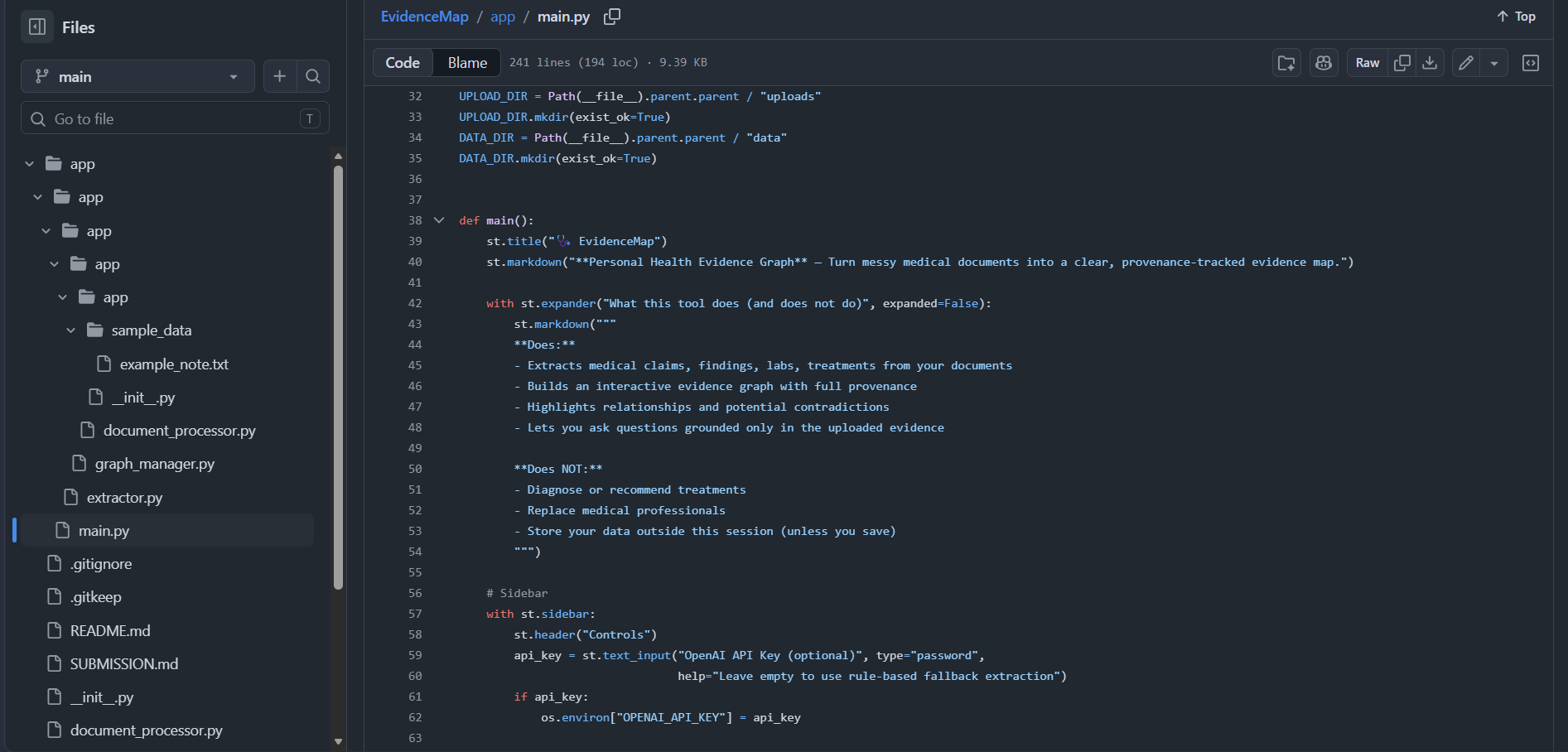
EvidenceMap is a personal health evidence graph tool that processes messy real-world medical documents:
- Multi-Format Processing: Accepts doctor notes, lab reports, PDFs, text, and personal tracking logs.
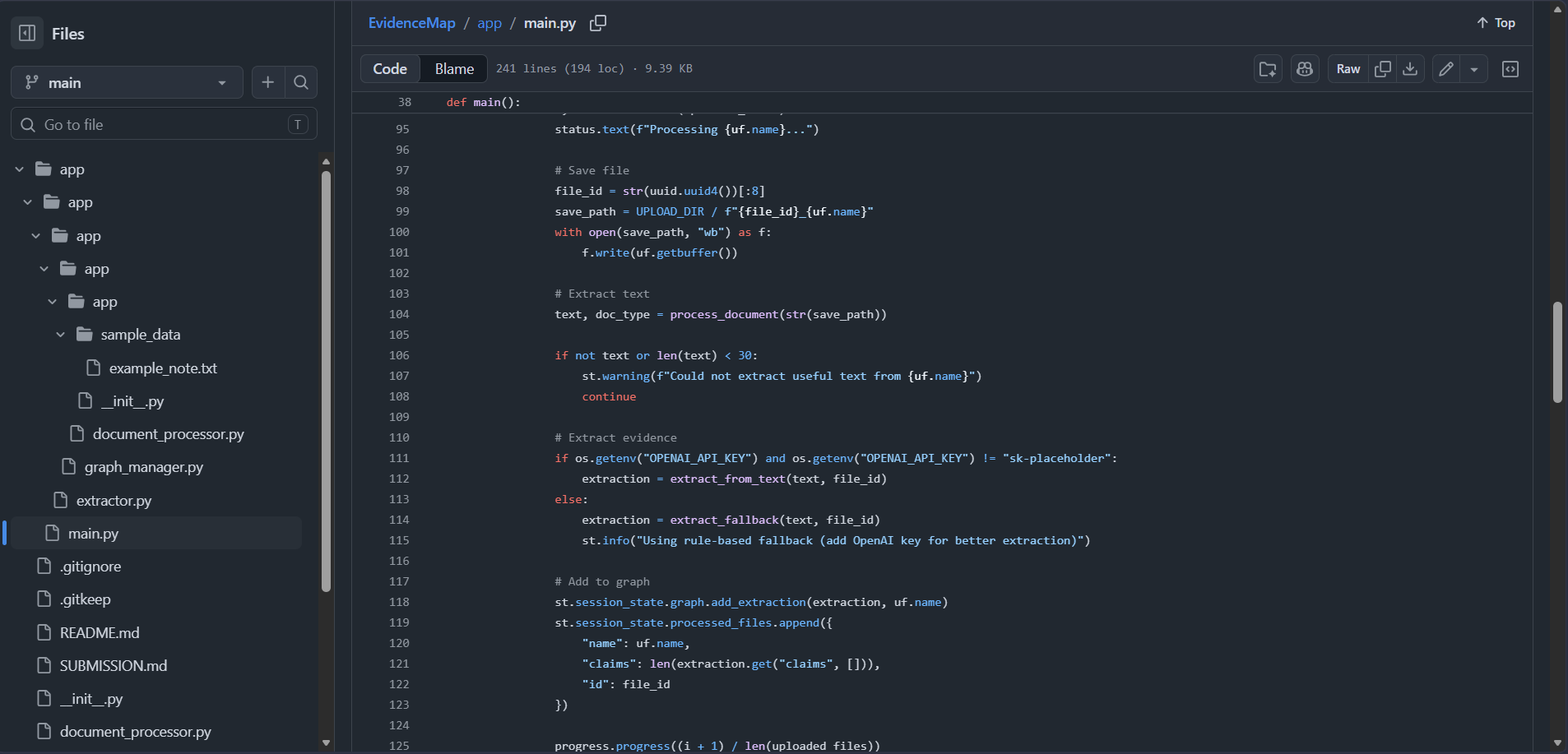
- AI Extraction: Extracts medical claims, lab findings, diagnostic values, and treatments along with explicit relationships.
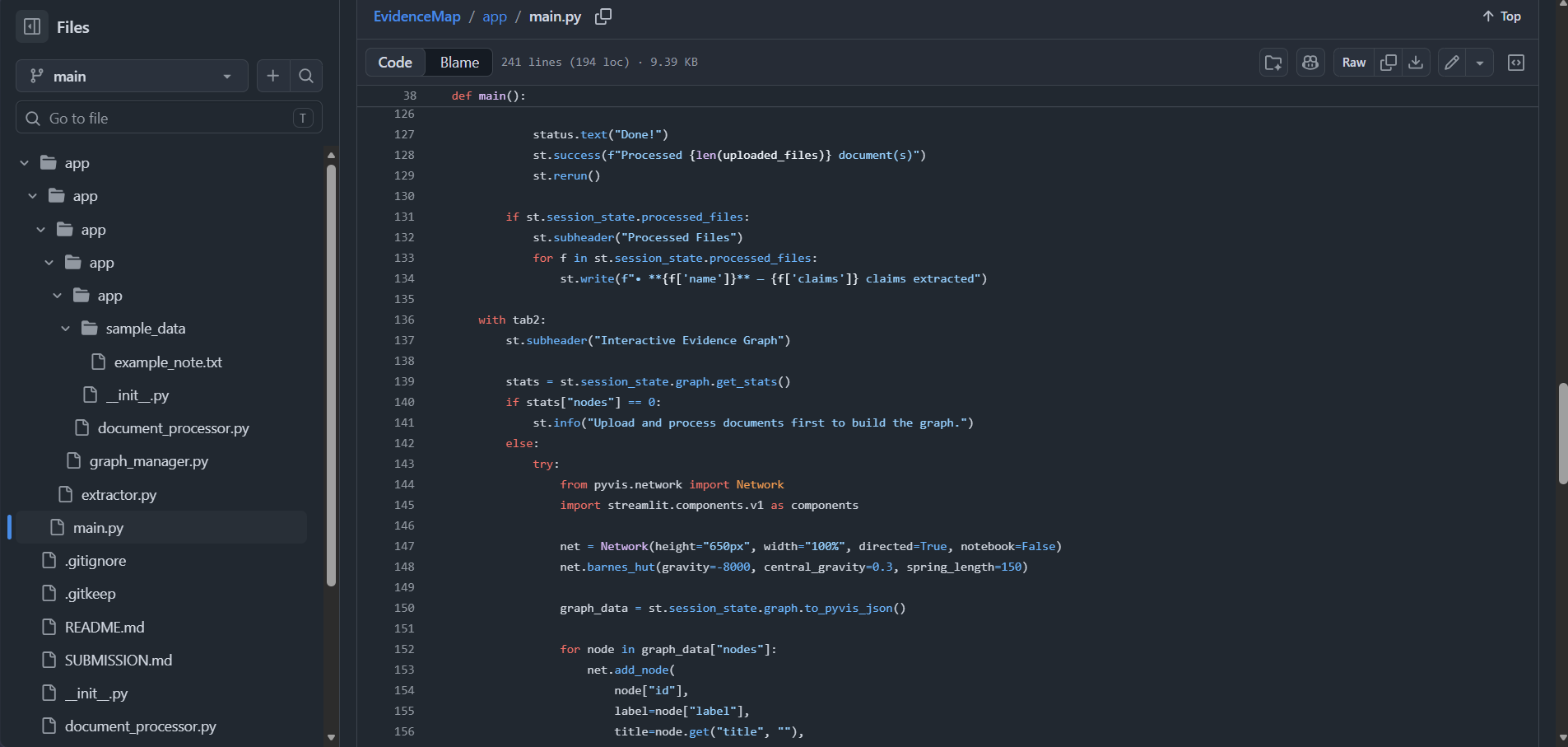
- Interactive Visual Graph: Builds a living evidence graph where every node and edge carries full provenance (source document, evidence class, confidence score, and original snippet).
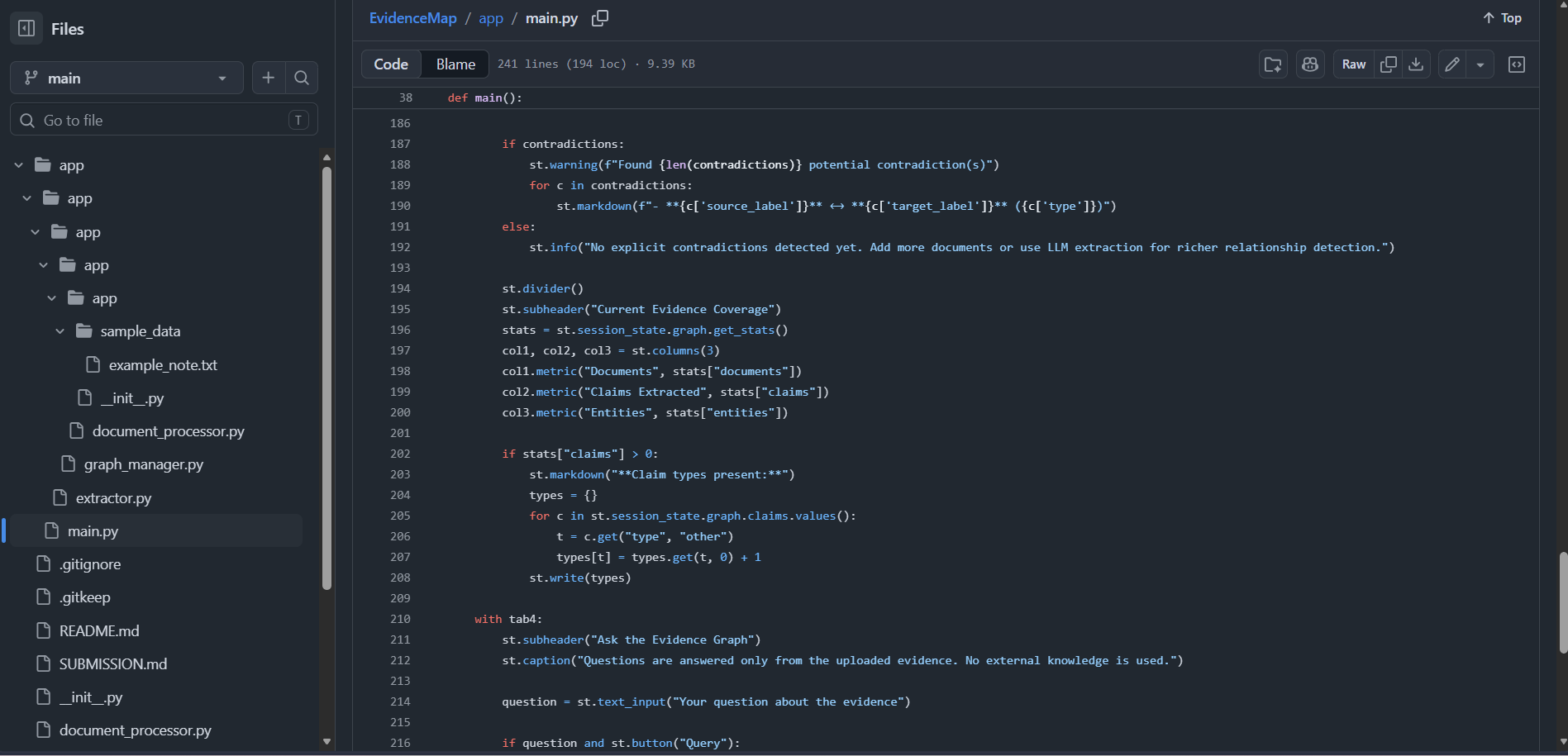
- Contradiction & Gap Detection: Explicitly flags conflicting medical data and identifies missing context.
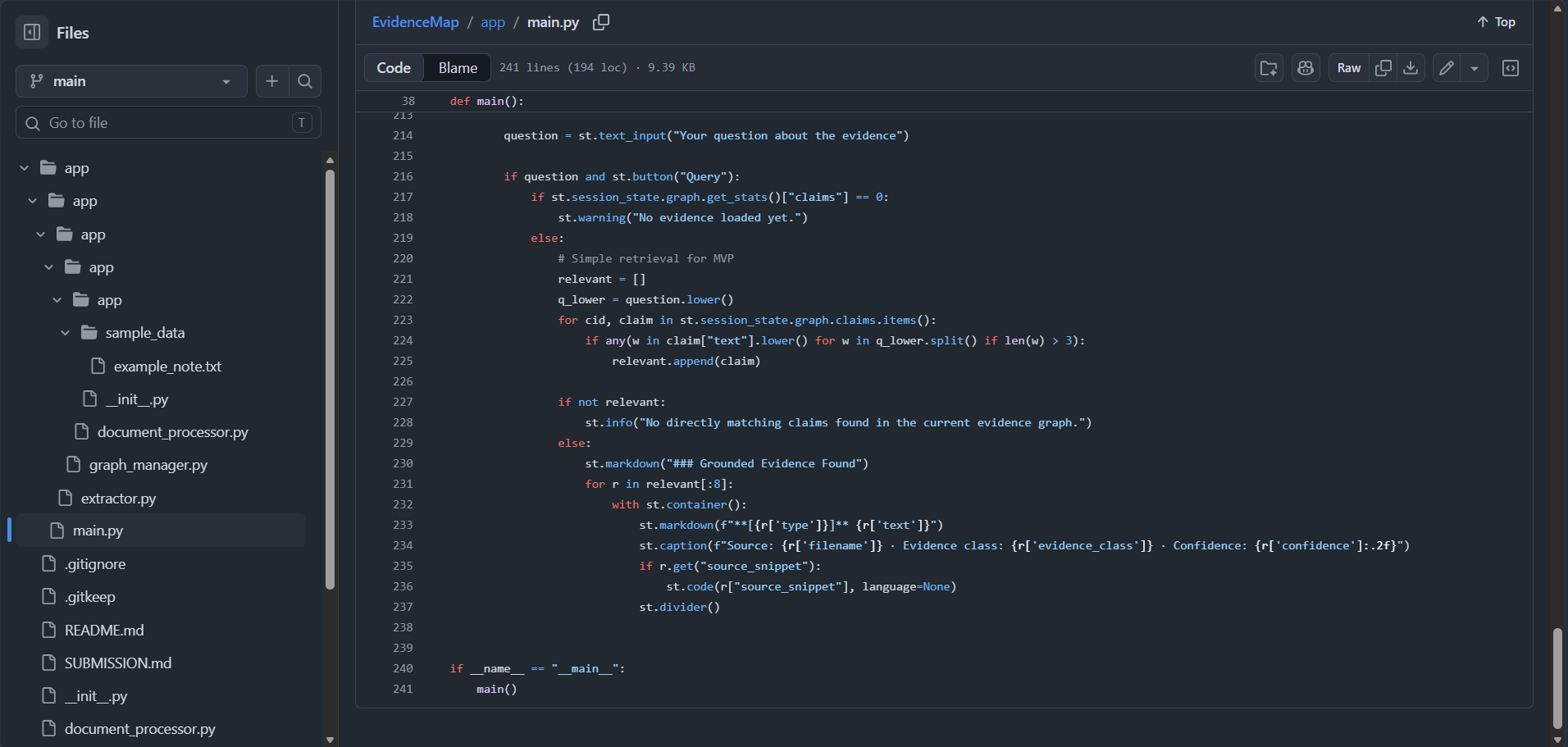
- Grounded Q&A: Answers natural language questions strictly based on the extracted graph without using external ungrounded knowledge.
How we built it
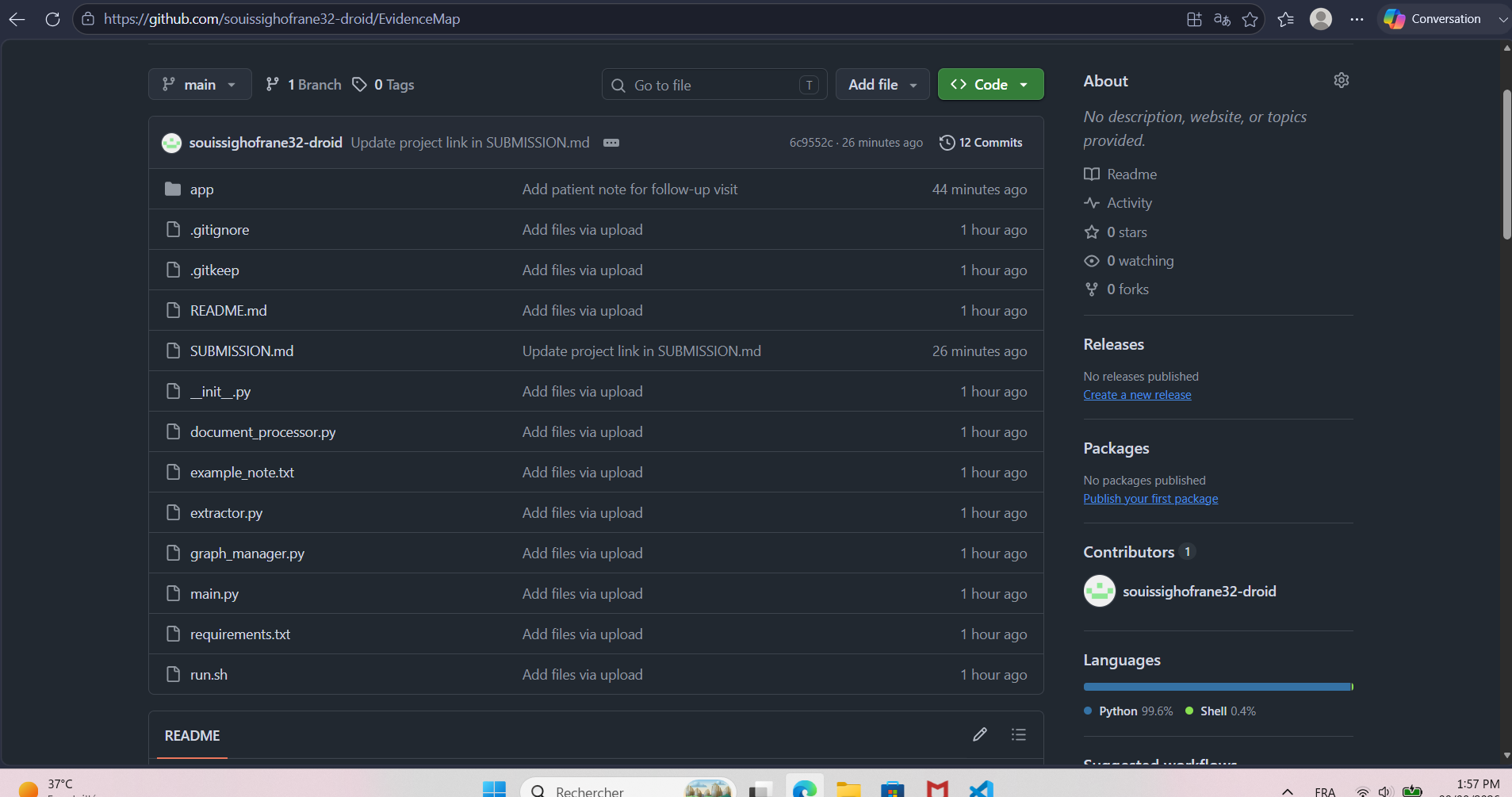
- Backend: Built with Python and FastAPI to manage document processing pipelines and API endpoints.
- Document Processing: Used PyMuPDF and pdfplumber for document ingestion and text extraction.
- AI Extraction & Graph Logic: Leveraged LLM structured outputs to identify entities/relationships, and used NetworkX to build and manage the underlying evidence graph.
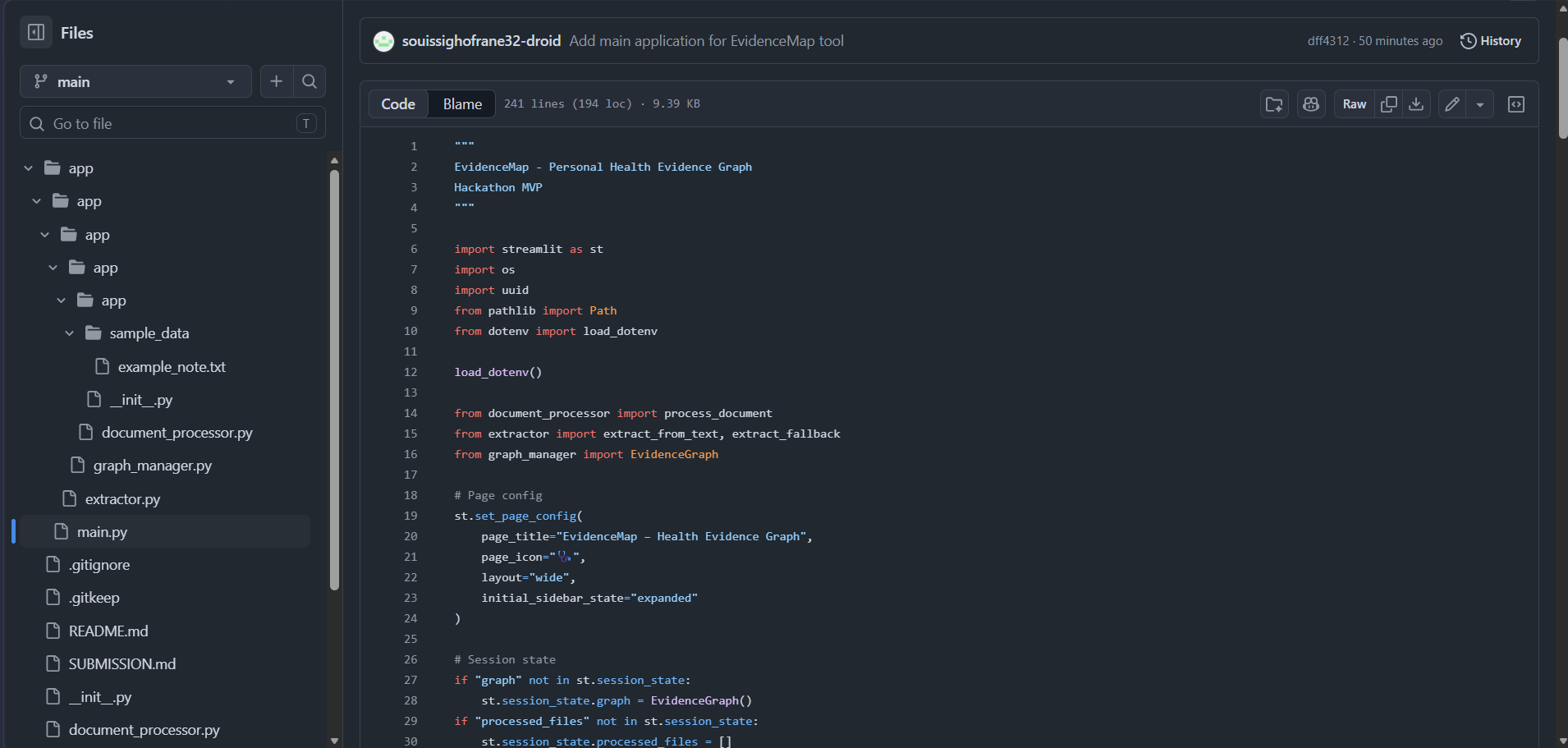
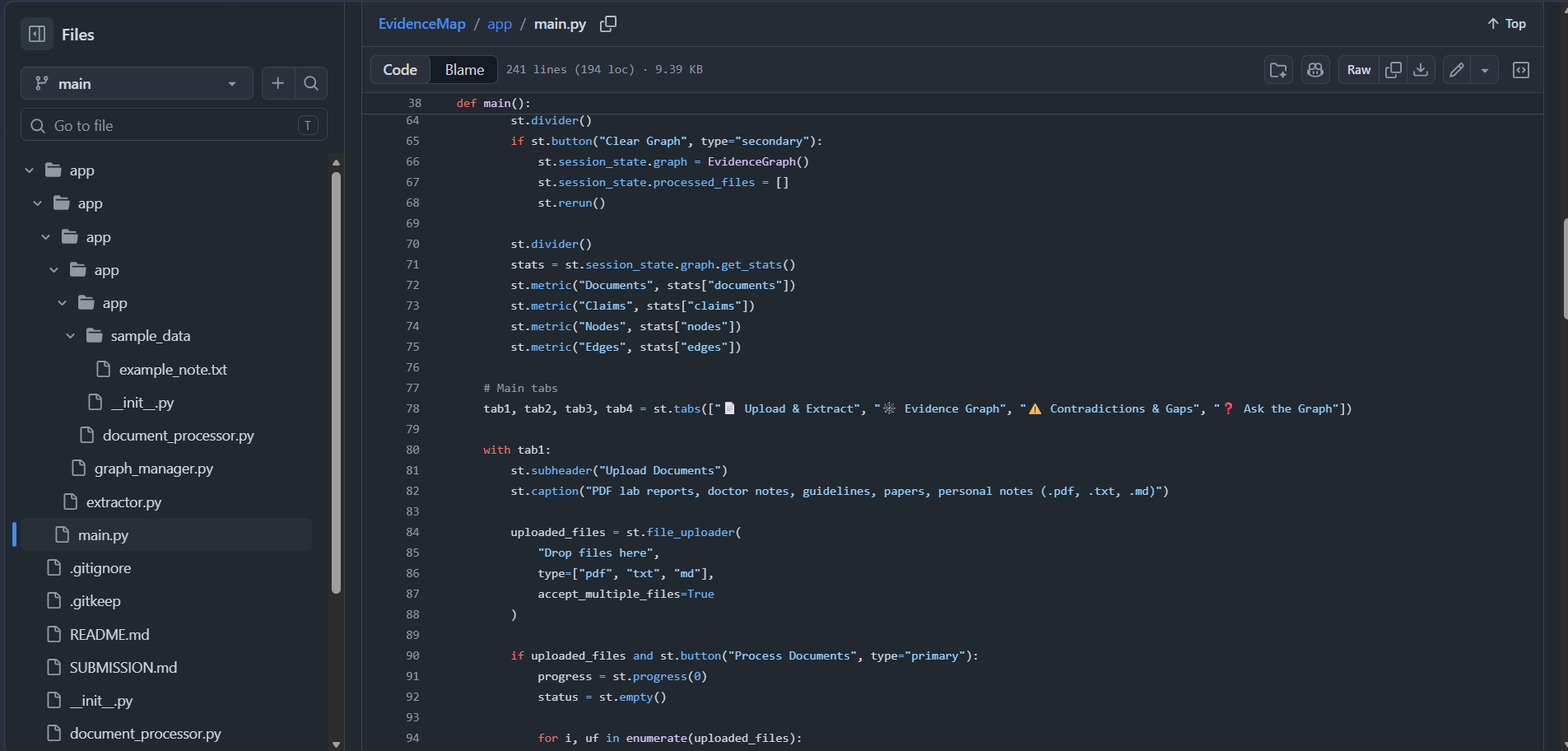
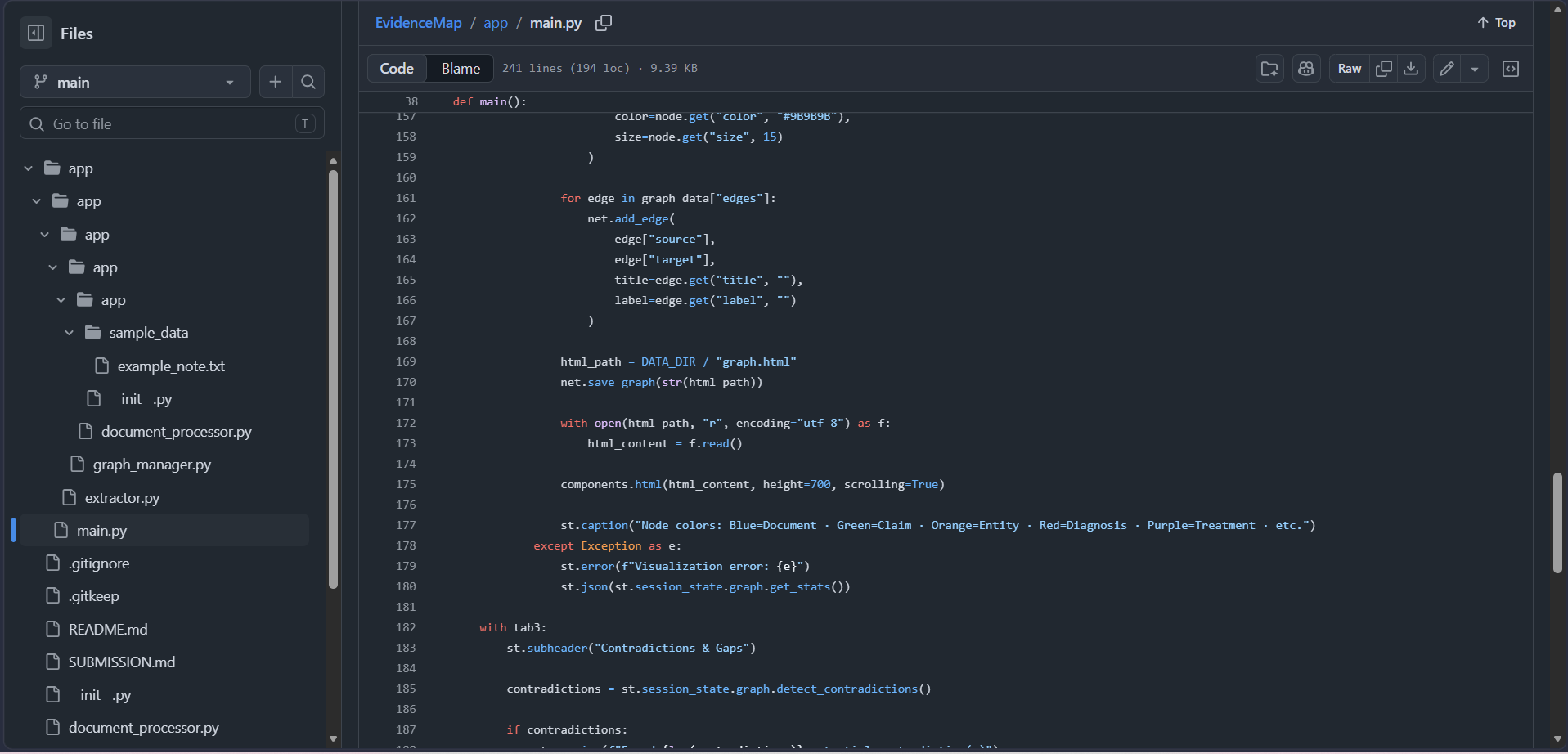
- Frontend: Developed an intuitive demo interface using Streamlit to interactively visualize graph relationships.
Challenges we ran into
- Data Extraction Consistency: Unstructured medical clinical notes vary wildly in format. Creating reliable schemas for medical findings without dropping crucial contextual qualifiers (like dates or previous diagnoses) required careful prompt engineering and structured validation.
- Avoiding Hallucinations: Ensuring the Q&A system strictly bounds its answers to the grounded graph rather than drawing on general training knowledge.
Accomplishments that we're proud of
- Successfully building an end-to-end pipeline that transforms raw clinical text into an interactive, visual graph.
- Implementing strict provenance tracking so users can click on any insight and trace it directly back to the exact line in their original document.
- Designing a safety-first AI architecture that highlights uncertainty and contradictions rather than giving risky, speculative diagnostic advice.
What we learned
- How critical provenance and auditability are when presenting health data to non-experts.
- Techniques for converting unstructured clinical text into deterministic graph structures.
- Designing human-centered AI interfaces that highlight uncertainty rather than hiding it.
What's next for EvidenceMap
- FHIR & EHR Integration: Enabling direct import from electronic health record (EHR) systems and standardizing output to FHIR formats.
- Scalable Graph Database: Upgrading the graph backend from NetworkX to Neo4j to handle hundreds of documents seamlessly per patient.
- Multi-Modal OCR: Expanding document ingestion to handle handwritten doctor notes and scanned fax images using multimodal models.
Built With
- fastapi
- llm
- networkx
- openai
- pdfplumber
- pymupdf
- python
- streamlit

Log in or sign up for Devpost to join the conversation.