-
-

Scattered records become a connected, traceable evidence trail—while preserved originals and human judgement remain in control.
-

Evidence Workbench turns scattered records into one traceable evidence
-
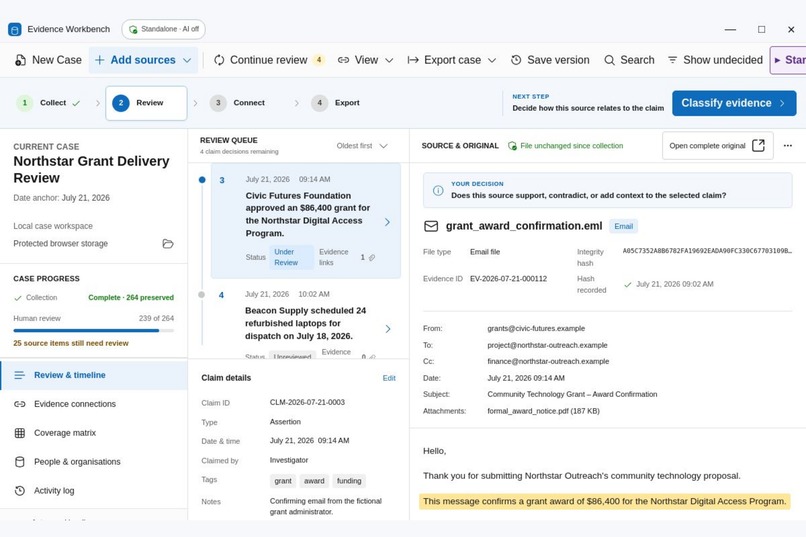
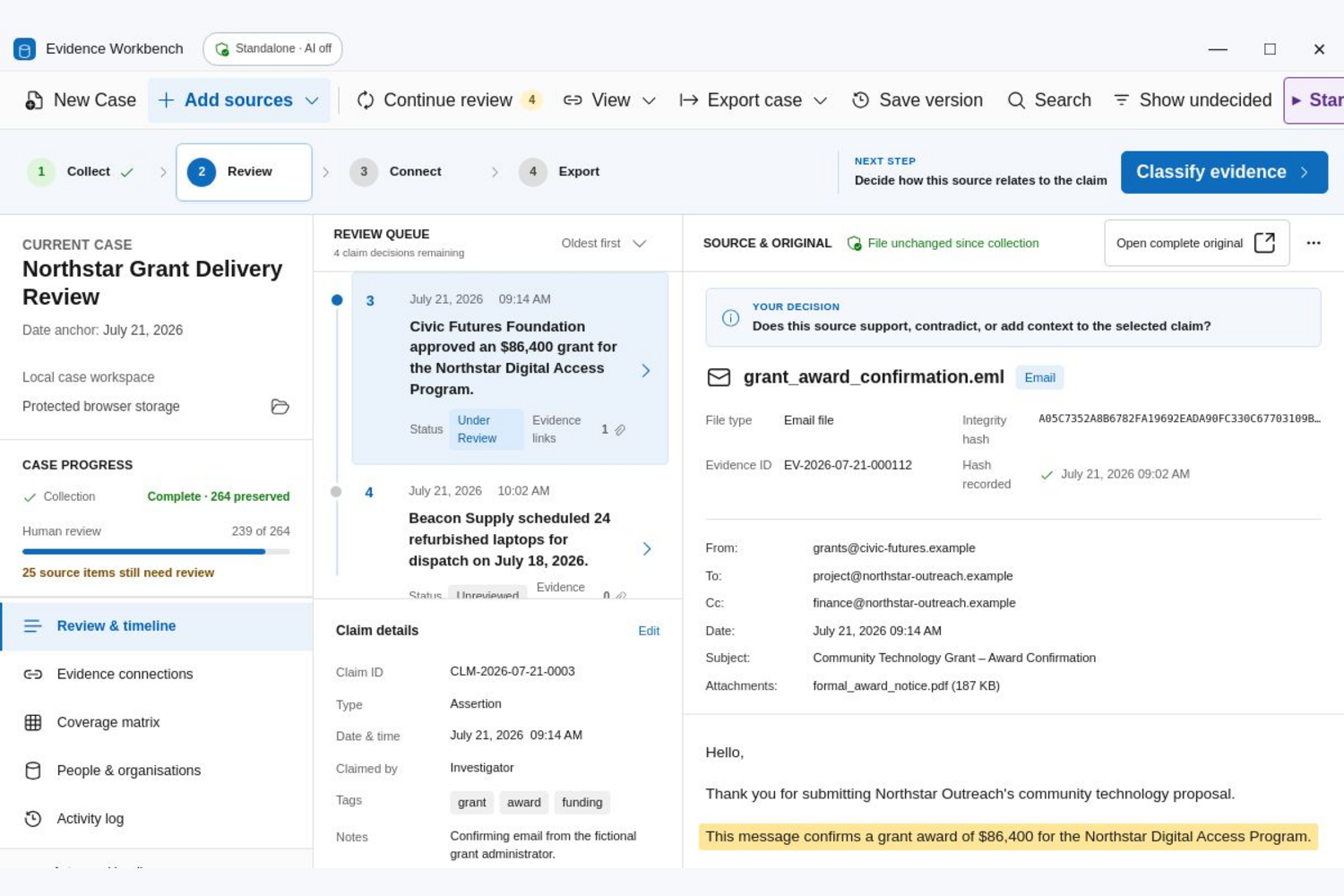
Working prototype: review claims against preserved original evidence.
-
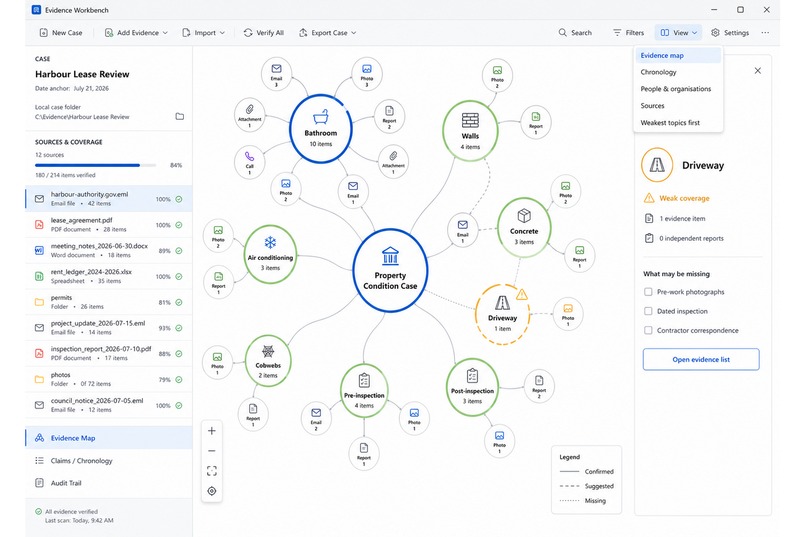
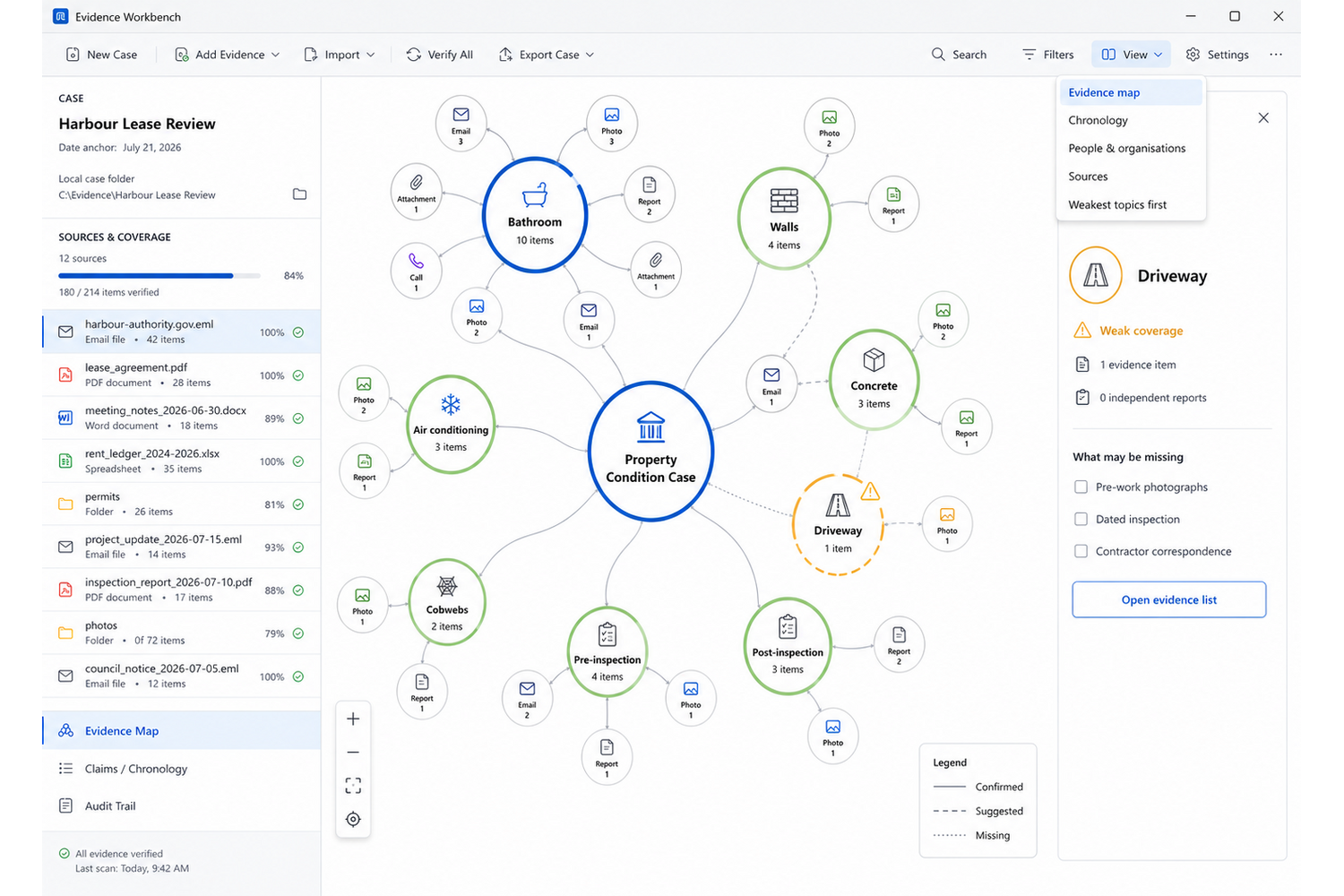
Design direction: relationships, coverage strength and missing evidence at a glance.
-
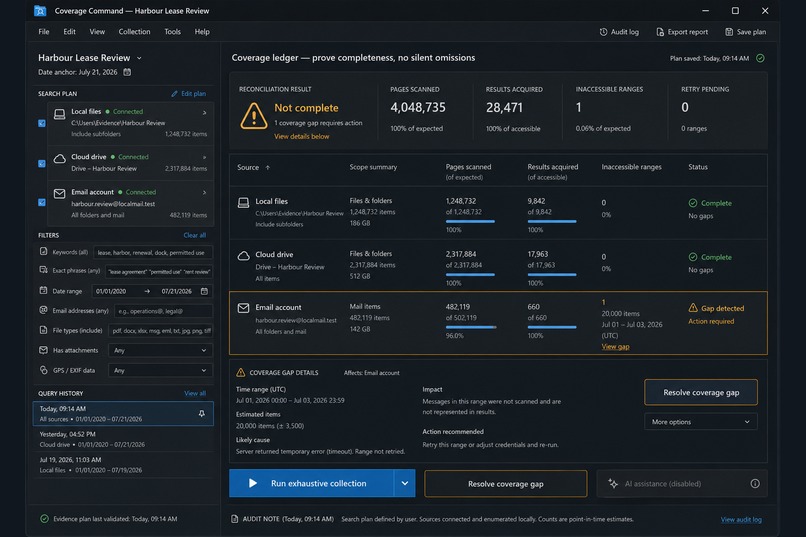
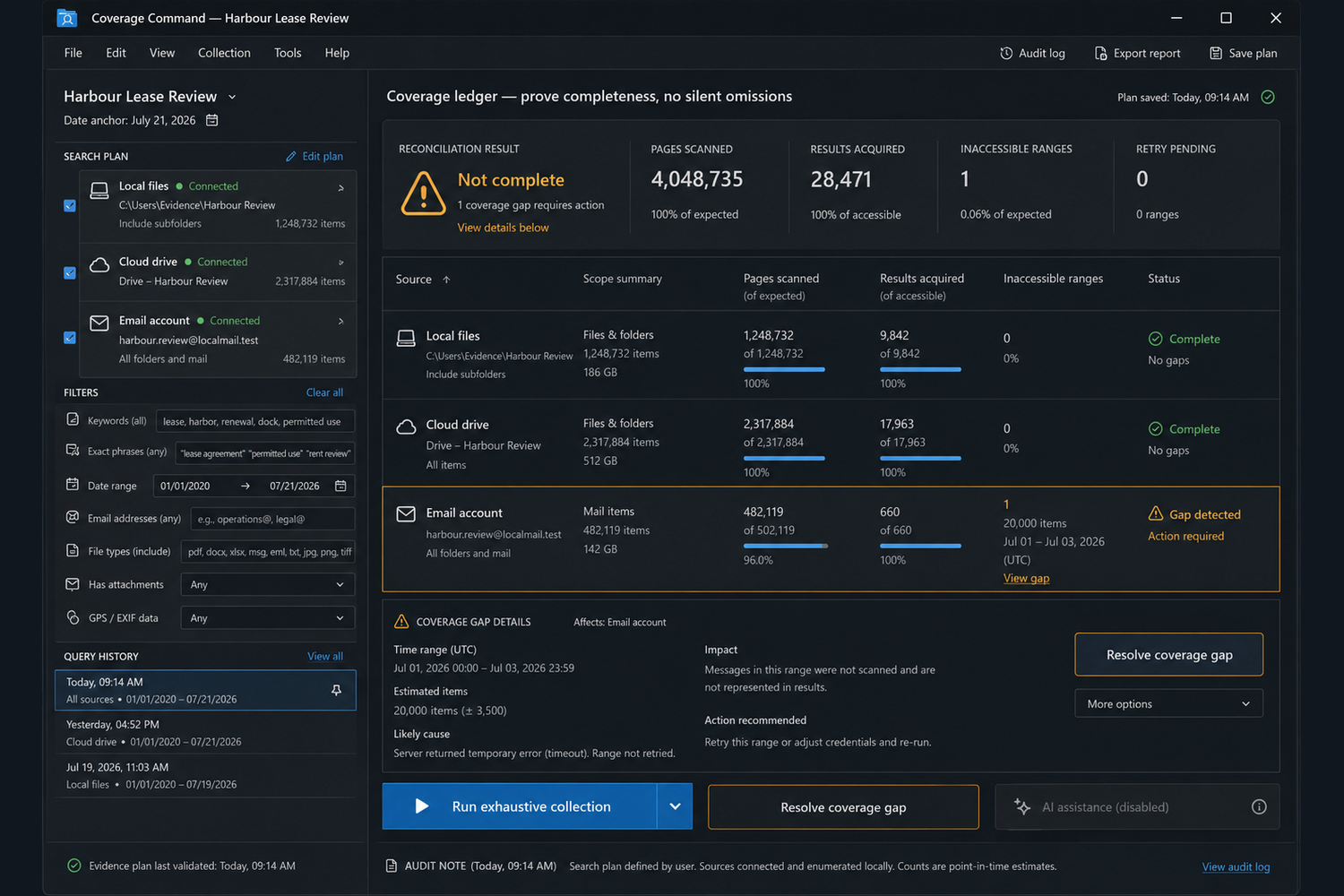
Design direction: detect collection gaps before they become silent omissions.
-
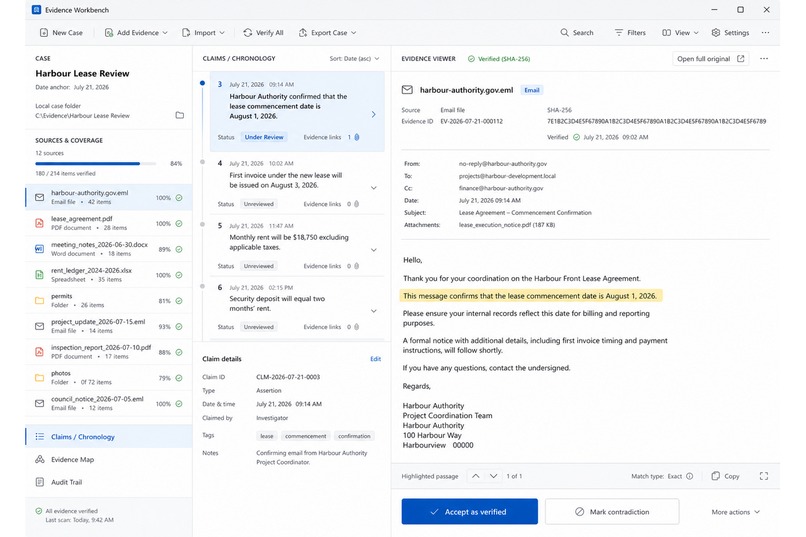
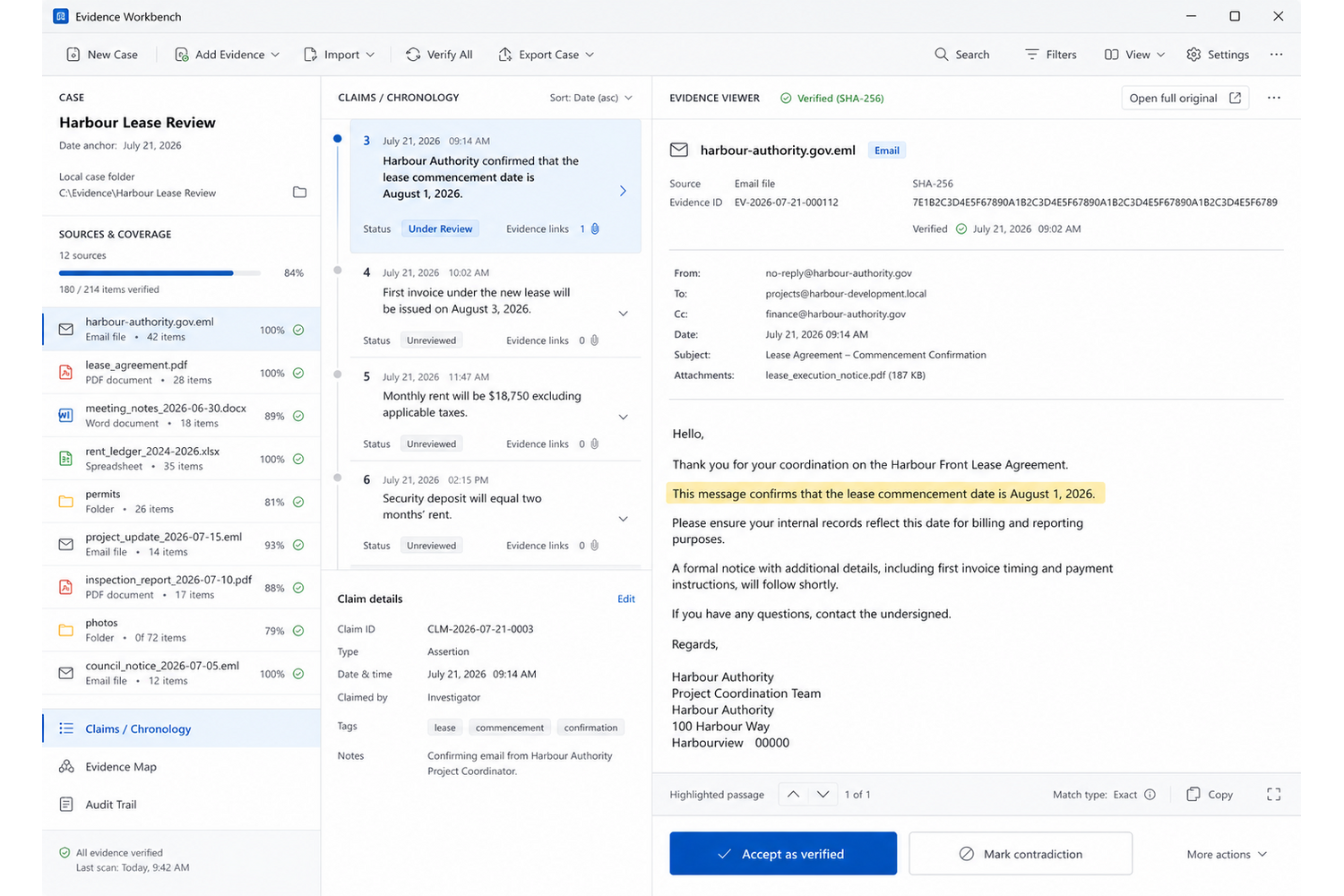
Design direction: every claim remains linked to its complete source context.


Inspiration
What it does
How we built it
Inspiration
People often lose valid disputes not because the evidence does not exist, but because it is scattered, difficult to connect, and even harder to present.
Evidence Workbench grew from a real problem: trying to reconstruct a complex dispute from hundreds of emails, photographs, videos, reports, notes, dates, people, and competing accounts. The evidence existed, but understanding the complete trail required enormous manual effort. Ordinary folders could store the files, but they could not show which claims were well supported, where the gaps were, or how everything connected.
We wanted to build the tool we needed: a private, visual workspace that helps an ordinary person think like an investigator without requiring specialist software or legal training.
What it does
Evidence Workbench turns scattered records into an understandable, defensible case.
Users can bring together material from email servers, local and external drives, cloud storage, photographs, documents, and other sources while preserving the untouched originals and their provenance.
The same case can then be explored through several connected visual interfaces:
- A balloon-style canvas for planning and organising complex issues
- Timelines showing events, sequence, and causation
- Flowcharts showing processes and decisions
- Relationship maps connecting people, organisations, accounts, and events
- Claim maps showing supporting, opposing, and missing evidence
- Coverage views highlighting corroboration, contradictions, duplication, and gaps
- Location views using image and file metadata
Every visual item remains connected to its source. A user can move from any claim, event, person, or relationship directly back to the original evidence.
Context-sensitive toolbars follow the selected content, while remaining movable, pinnable, and customisable. The interface begins simply and reveals more power as it is needed, keeping the learning curve low.
Optional AI, under human control
Evidence Workbench remains useful without AI. When AI is enabled, it acts as an assistant rather than an authority.
It can help users:
- Search images using visual content, dates, metadata, and location
- Find related material expressed using different wording
- Trace people, accounts, organisations, and events across multiple sources
- Follow separate or competing versions of events without silently merging them
- Suggest relationships between evidence and claims
- Highlight weak coverage, contradictions, and missing corroboration
- Prioritise material using visible, adjustable criteria
AI suggestions remain reviewable and traceable to their sources. The system does not silently turn generated conclusions into facts, decide legal admissibility, or replace human judgement.
From evidence to submission
Organising evidence is only useful if the result can be presented.
Evidence Workbench can package selected material into an indexed, portable, submission-ready bundle containing the evidence, chronology, claim map, source information, manifest, and integrity records.
Packages can be exported to USB or external storage for tribunals, courts, complaints, audits, investigations, research, advocacy, or secure handover—without surrendering control of the original collection.
How we built it
For Build Week, we focused on proving the complete workflow: bringing evidence into a case, visually connecting it to claims and events, moving between synchronised views, identifying weak coverage, and preparing the result for export.
The system uses a local-first evidence model in which source items, claims, events, entities, and relationships are separate but connected. This allows one piece of evidence to appear in several views without creating conflicting copies. The visual interface sits over this shared case model, while optional AI services operate as clearly separated, user-controlled tools.
Challenges
The greatest design challenge was making a powerful evidence system feel understandable rather than overwhelming.
Evidence is rarely a simple collection of facts. Sources may conflict, several people may describe the same event differently, metadata may be incomplete, and a persuasive document may still be weakly corroborated. We therefore had to avoid presenting an AI confidence score as truth.
Another challenge was balancing visual freedom with evidentiary integrity. Users need to rearrange, group, colour, and explore information freely, while the underlying originals and provenance must remain unchanged.
What we learned
Visualisation is not decoration. For complex evidence, it is a reasoning tool.
A timeline may reveal an impossible sequence. A relationship map may expose an undisclosed connection. A claim map may show that five documents all repeat the same unsupported account rather than independently corroborating it.
We also learned that local-first architecture and optional AI are not limitations—they are trust features. People handling legal, medical, workplace, journalistic, or personal evidence need to know where their information is and how every conclusion was reached.
Where it can help
The same problem occurs in tenancy disputes, insurance claims, workplace investigations, regulatory complaints, medical advocacy, court and tribunal matters, journalism, research, audits, incident reviews, and historical archiving.
Evidence Workbench is designed to make complex evidence accessible to individuals while remaining useful to advocates, investigators, researchers, legal professionals, and organisations.
Think visually. Follow the trail. Click through to the proof.
Challenges we ran into
Accomplishments that we're proud of
What we learned
What's next for Evidence Workbench
Built With
- accessibility
- cloudfare-workers
- css3
- github
- gpt-5.6
- html5
- indexeddb
- javascript
- jszip
- openai-api
- openai-codex
- react
- responsible-web-design
- sha-256
- typescript
- vinext
- vite
- web-crypto-api
- web-speech-api

Log in or sign up for Devpost to join the conversation.