
Inspiration:
Drug discovery starts with a question: which genes should we target for a disease?
Two big public sources help answer that. Open Targets scores how strongly genetics links a gene to a disease. ClinicalTrials.gov shows what drugs and trials have been run in people.
Those answers live in different systems. A researcher often checks genetics in one place, then hunts for related trials in another, and still can’t see at a glance: strong genetics but little clinical work, or lots of trials but weak genetic support?
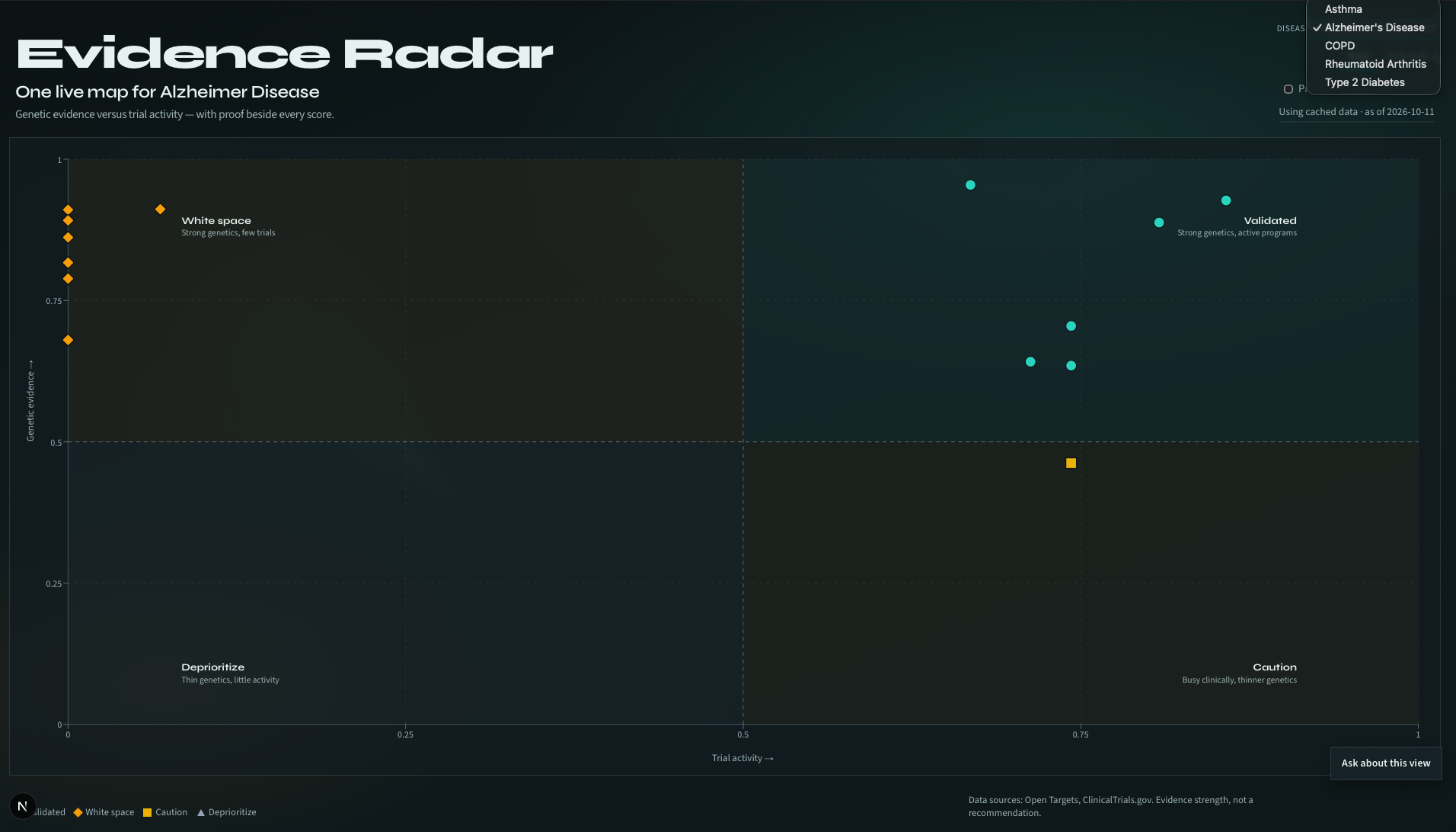
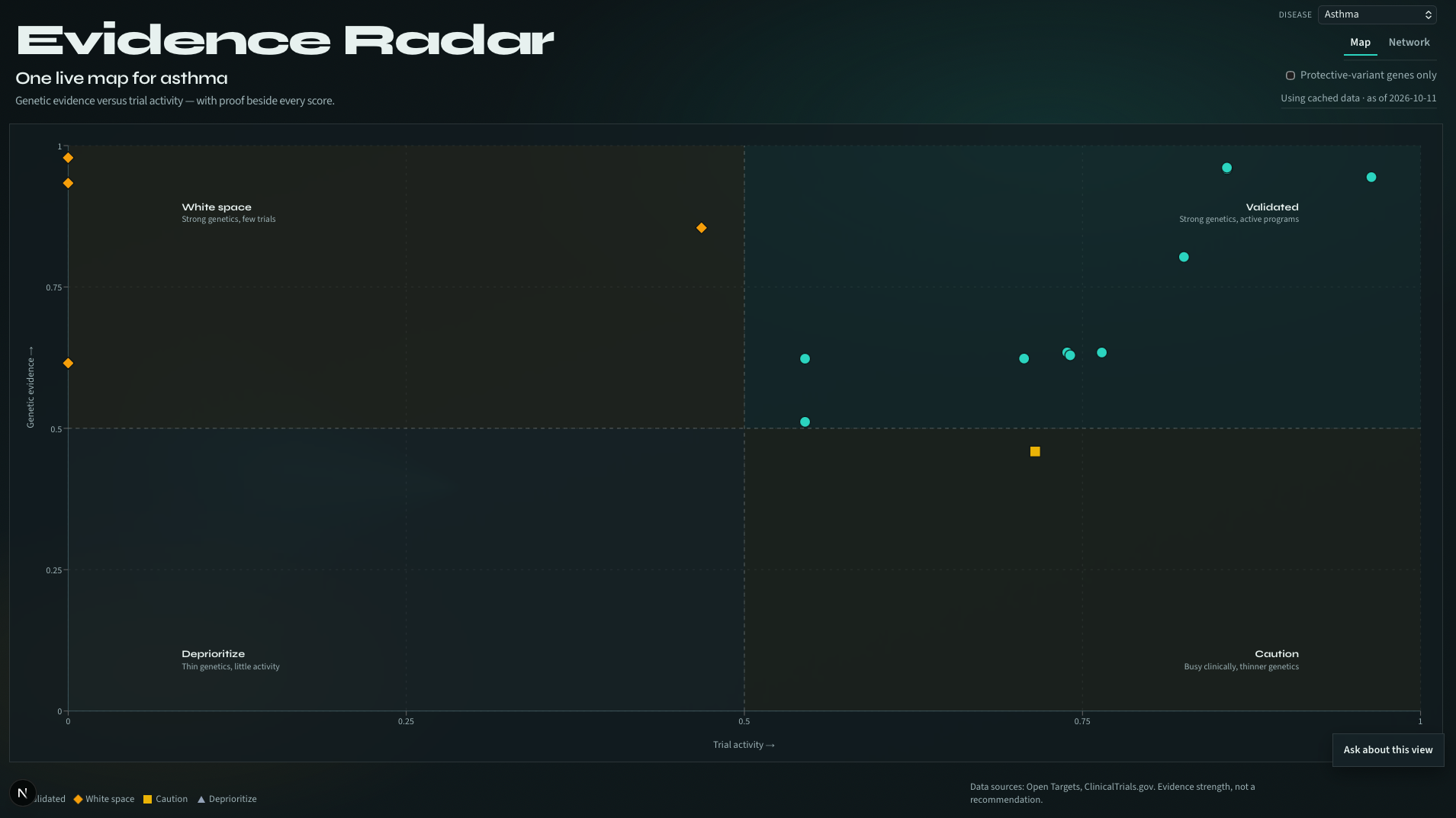
That’s the problem Evidence Radar solves: it puts genetic evidence and clinical trial activity on one map so you can triage targets quickly, without jumping between databases.
What it does:
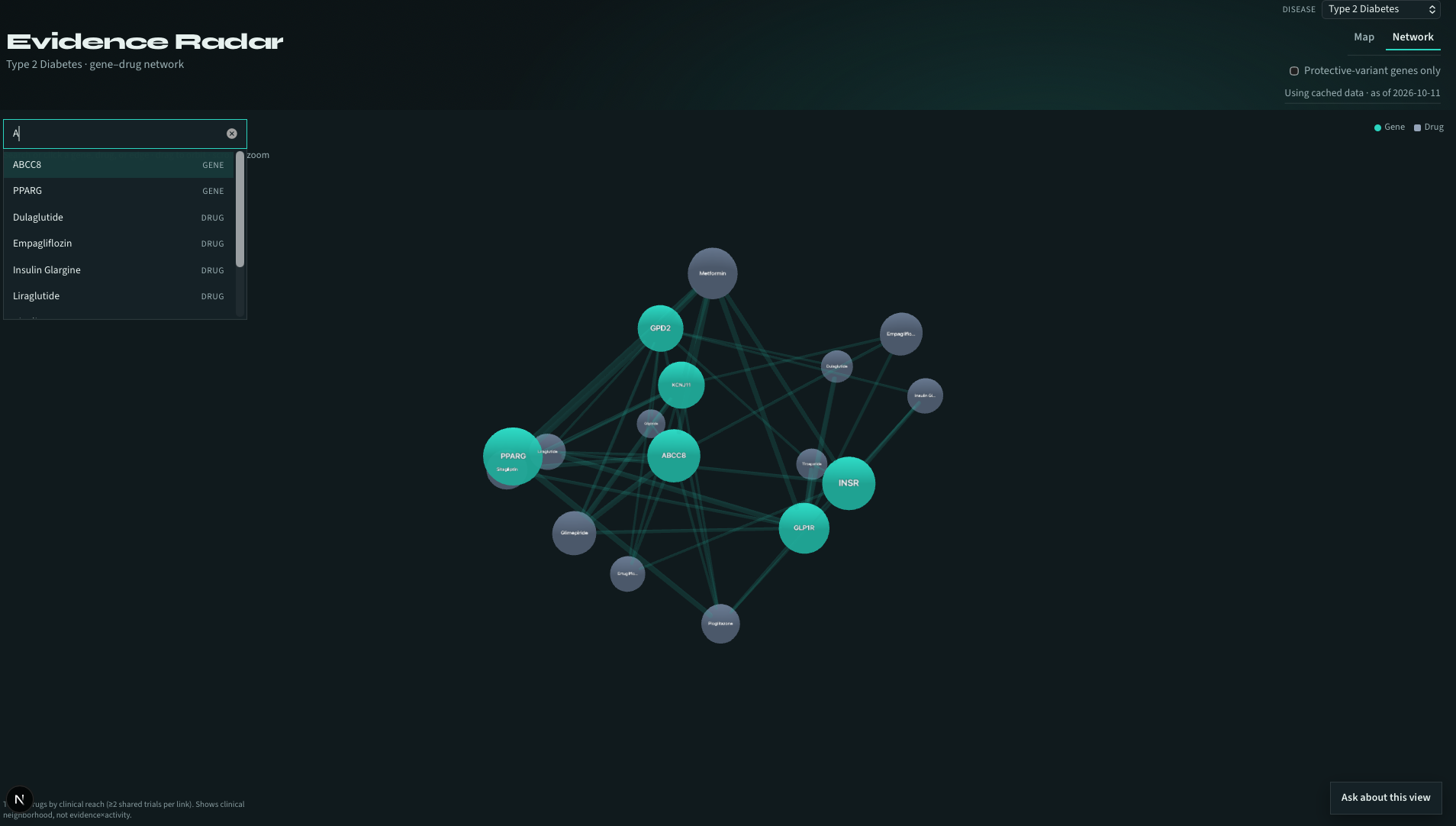
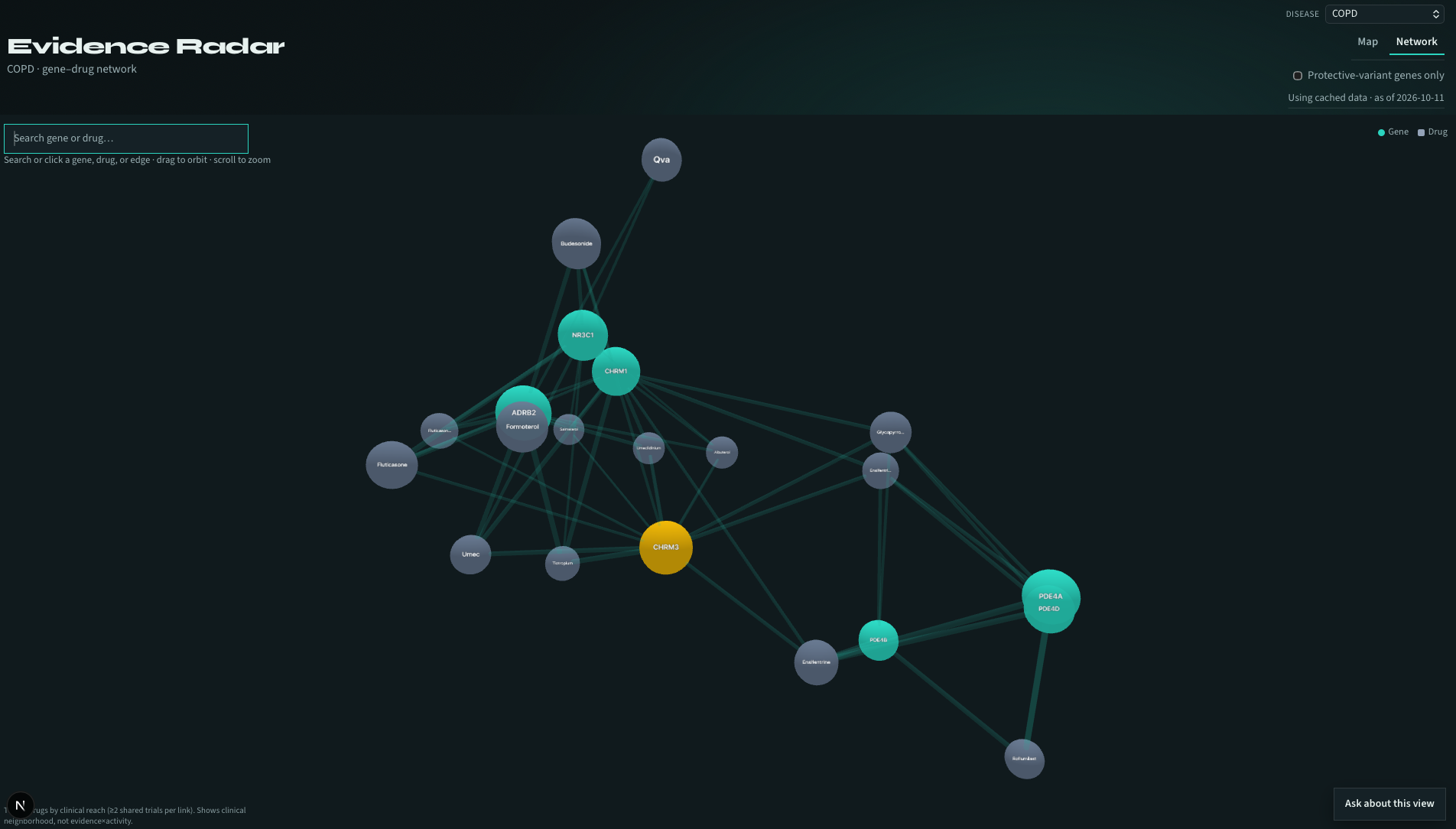
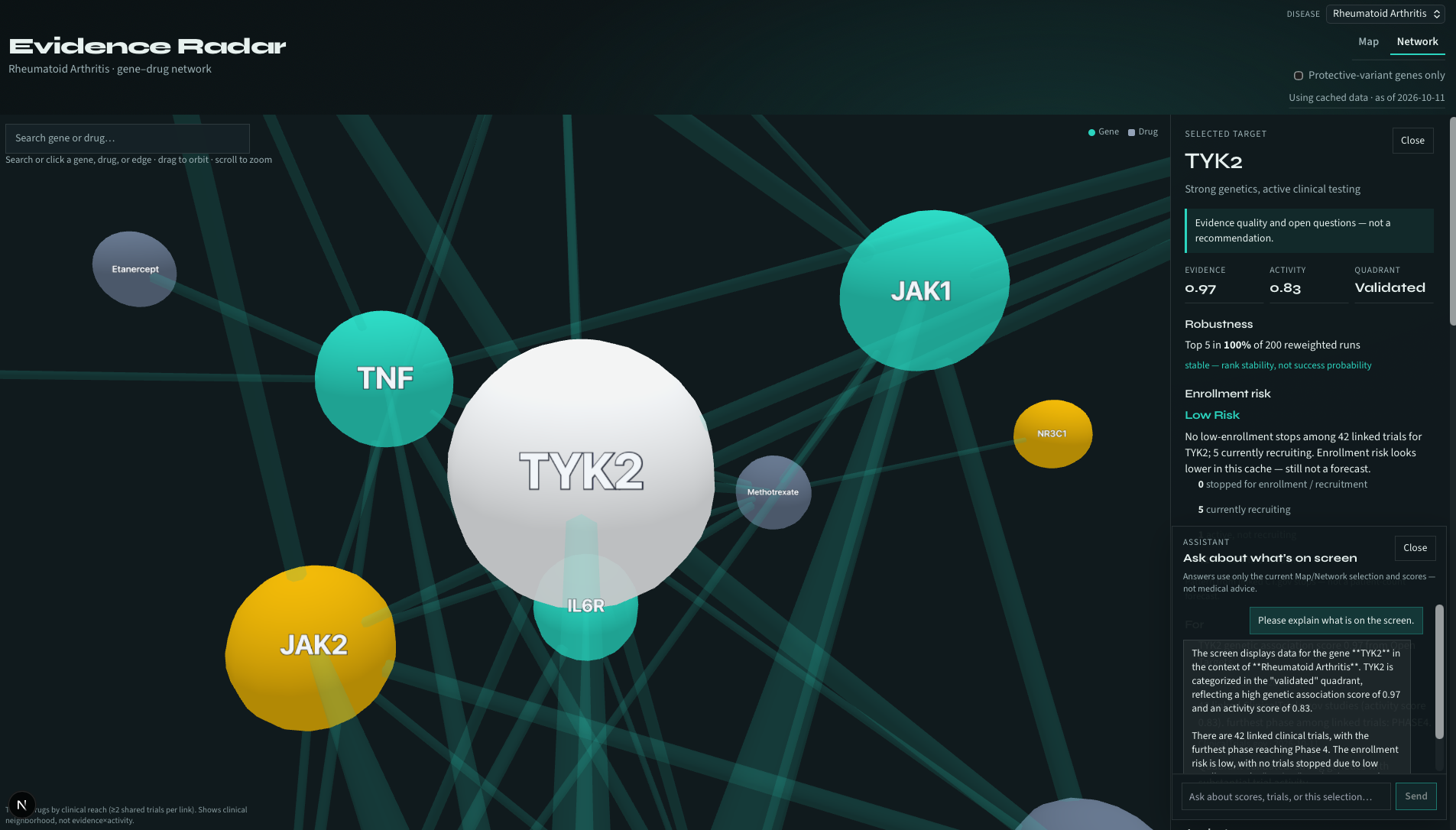
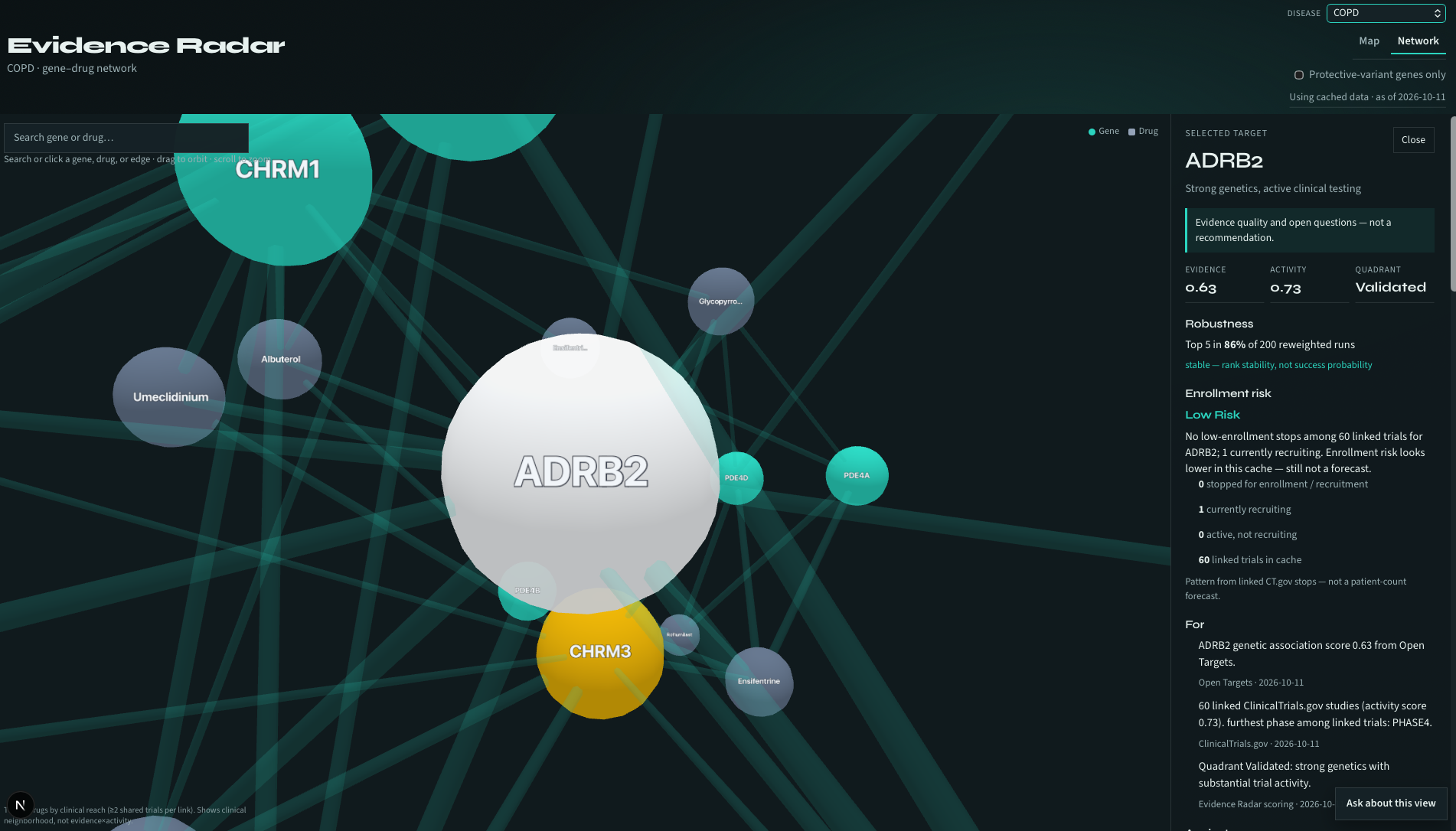
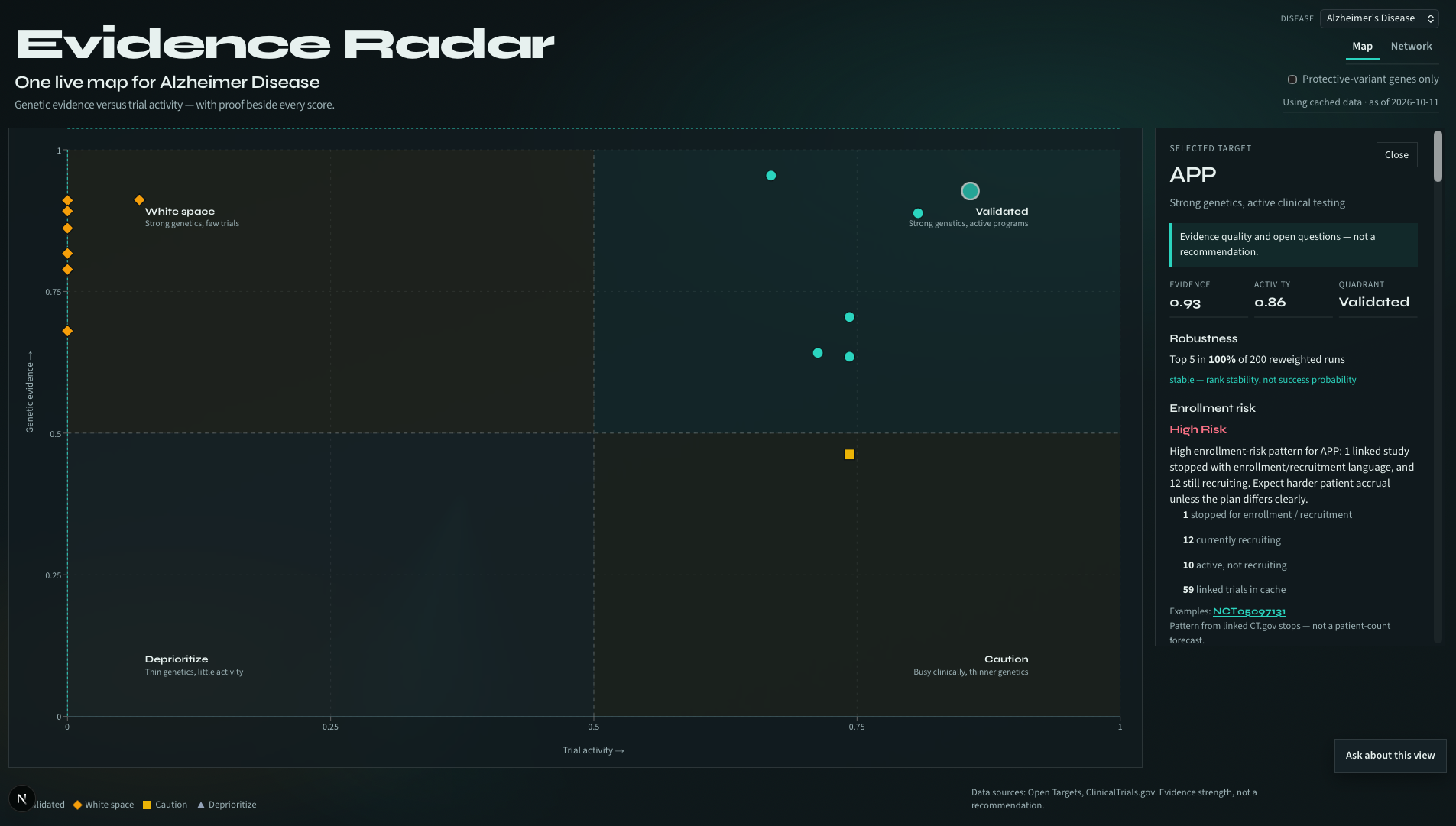
Evidence Radar maps disease genes by Open Targets genetic score vs ClinicalTrials.gov-derived activity. Click a gene for a judgment card, switch to a gene–drug network, and chat against the on-screen context. Demo diseases: Asthma, COPD, Type 2 Diabetes, Rheumatoid Arthritis, Alzheimer’s.
How I built it:
I pull Open Targets + ClinicalTrials.gov offline into per-disease caches, join drugs to genes with a curated map, score activity, serve via FastAPI, and visualize in Next.js (map, network, judgment, grounded chat).
Challenges I ran into:
CT.gov lists drugs, not gene IDs, so linking them was hard. Multi-disease support needed per-disease paths so diseases don’t overwrite each other.
Accomplishments that I'm proud of:
Five real disease demos from live API pulls. A clear evidence × activity map with judgment beside every point. Architecture where a new disease is mostly config + fetch + drug map.
What I learned:
Working with Open Targets and ClinicalTrials.gov showed me how useful public biomedical data can be, and how much careful joining and cleanup it takes to make it usable.
What's next for Evidence Radar:
Richer known-drug joins, better stop-reason analysis, change-feed alerts, and deeper robustness, plus more diseases on the same pipeline.

Log in or sign up for Devpost to join the conversation.