-
-
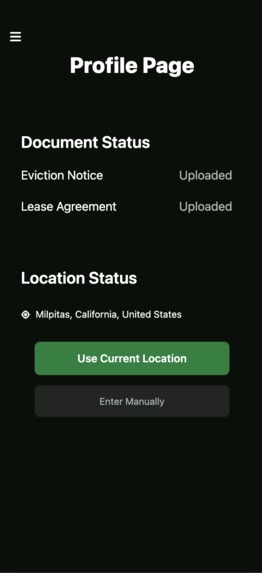
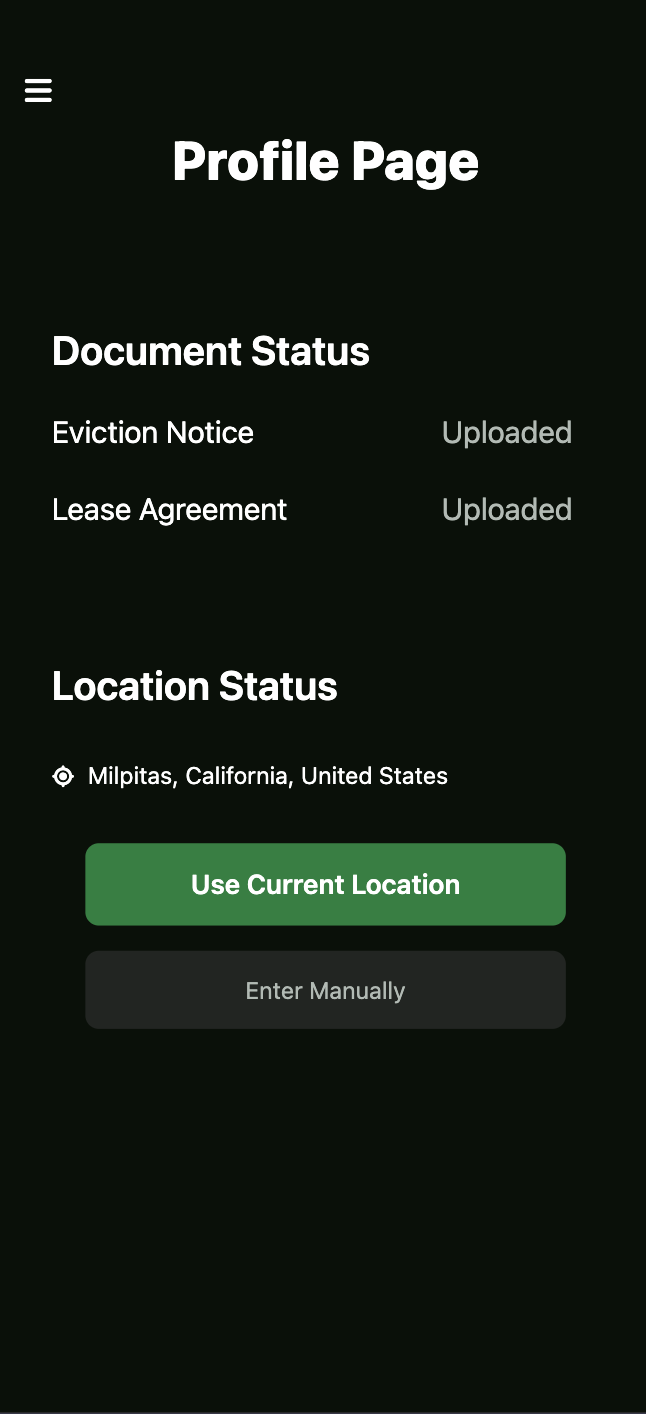
Profile Settings Page
-
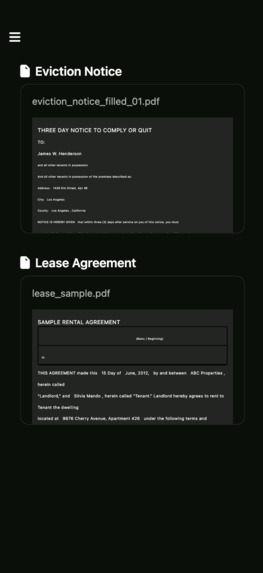
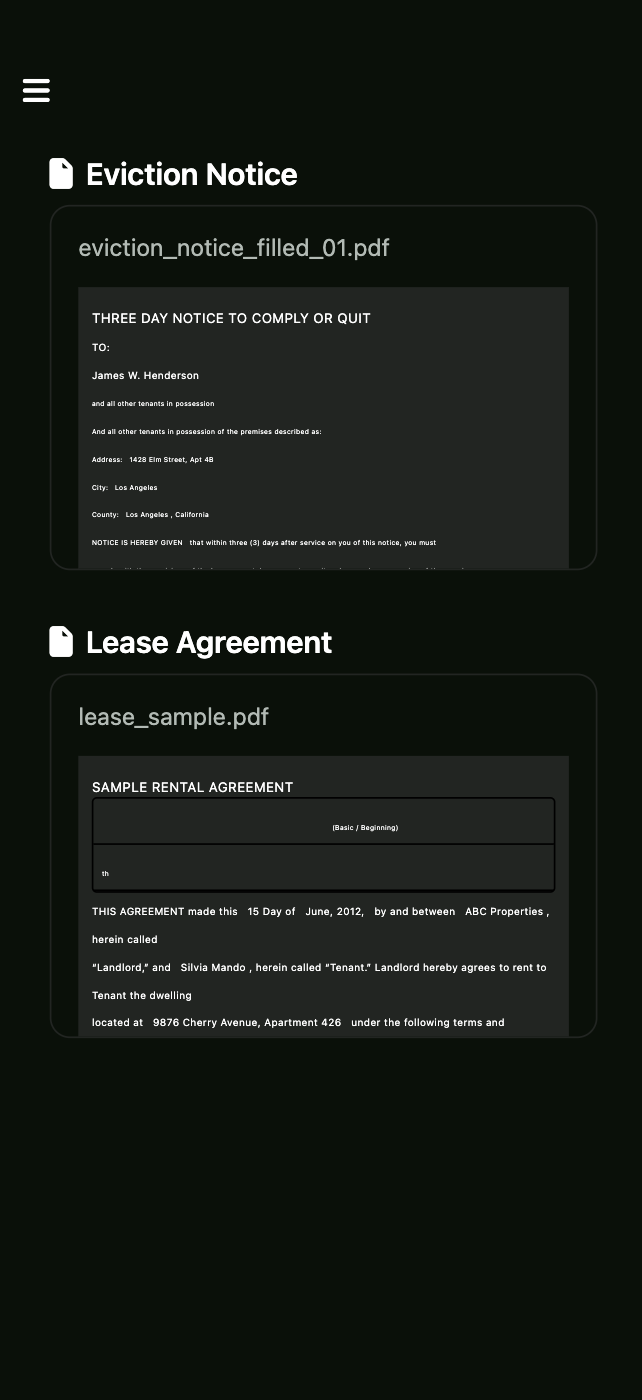
Documents Page
-
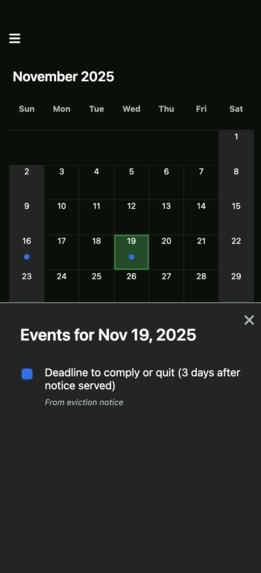
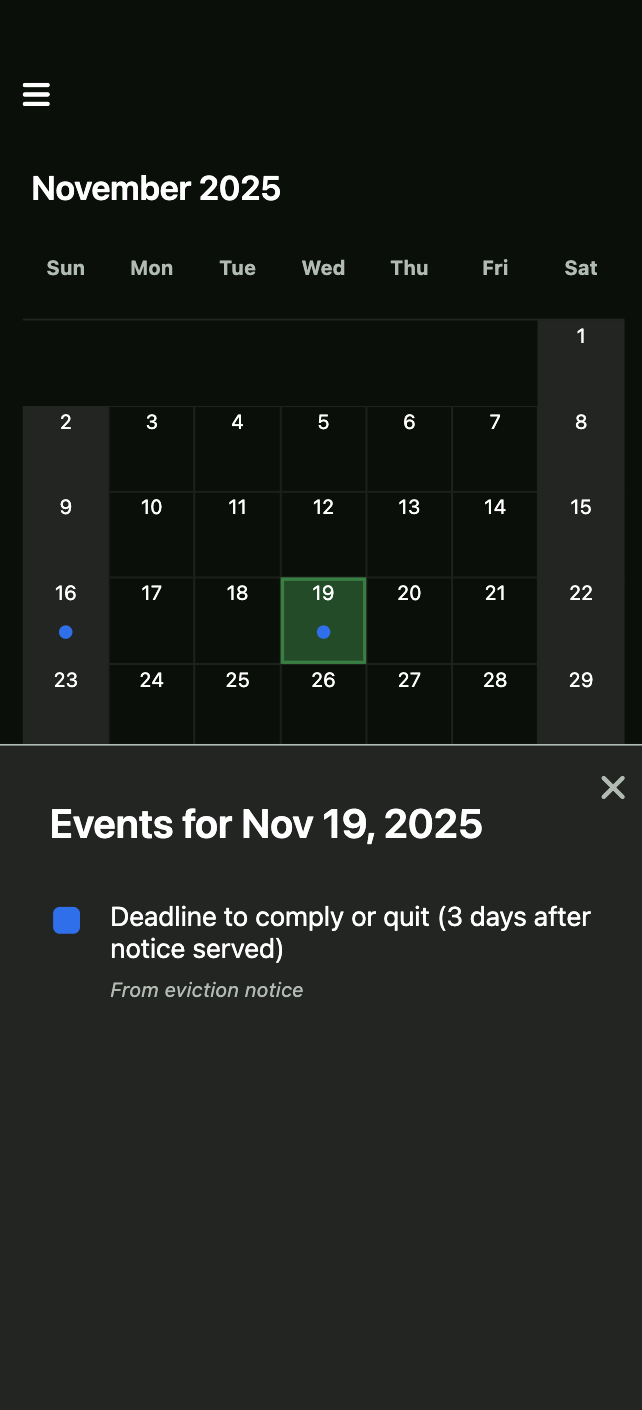
Calendar Page
-
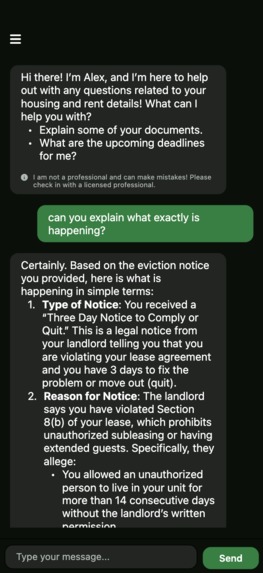
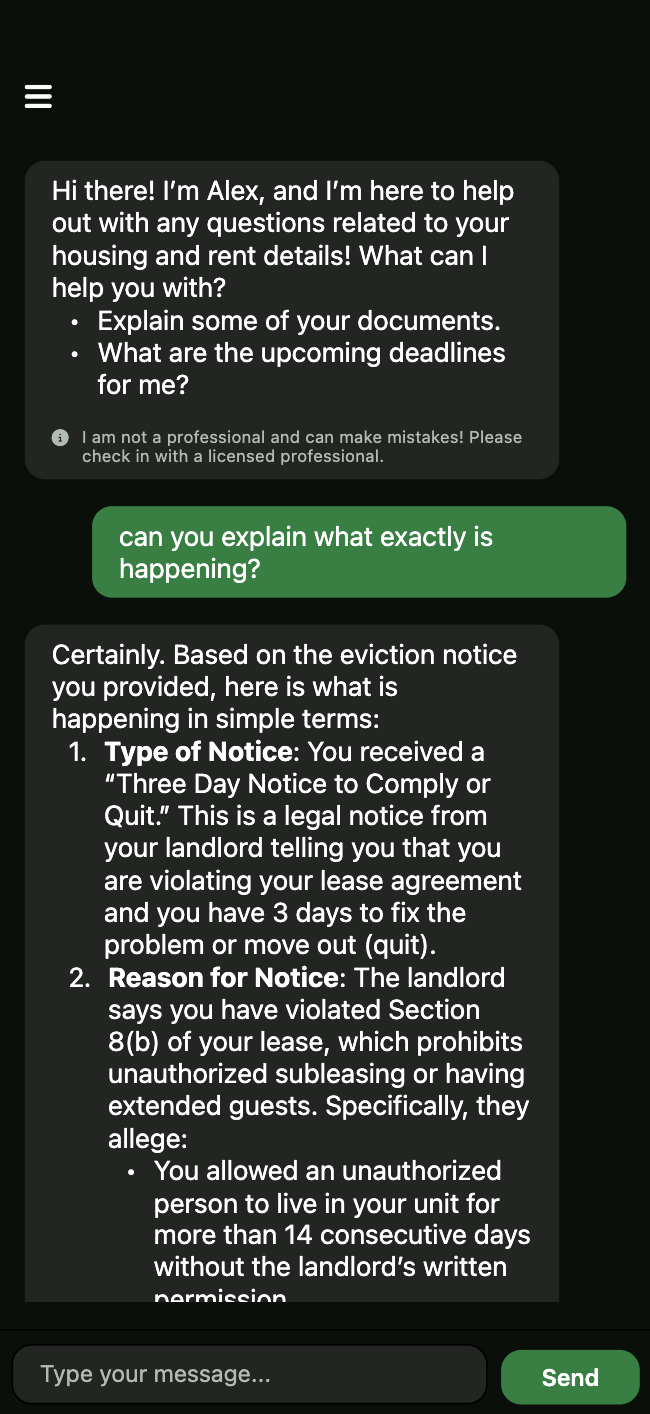
Chat Page
Inspiration
For our school's statistics course, we were assigned topics and presented on related recent studies' data. A classmate presented on a recent housing survey conducted by the US government, and we were shocked by the stats! There are more illegal than legal evictions, but tenants don't know this because there is such a divide in legal understanding and representation between landlords and tenants. These findings stuck with us, so when we heard the Track 2 - Housing Dignity, we knew what we wanted to code.
What it does
Users upload their eviction notice and lease agreement documents in the app and can either use their current location or manually upload their housing city. The integrated AI automatically parses through the files to extract critical dates and deadlines. These dates are then placed in the app's built-in calendar, and the app sends notifications as deadlines approach. If tenants miss these deadlines, they forfeit their right to a hearing. So, these features are important to ensure tenants get the best chance at keeping their homes.
The AI also explains the document's legal terms in plain language to promote broader understanding of tenants' rights. It is capable of answering user questions based on local law and regulations, the user's critical documents, and the user's personalized calendar of events, including the current date.
Finally, the AI is capable of alerting users to the possibility of an unlawful eviction or answering questions about evidence required to prove unlawful activity. In the case that legal representation is needed, the app can connect users with legal representation. Ultimately, the app would prevent people from unjustly losing their homes.
How we built it
We used a mix of regular programming through the IDE to fix bugs and compilation issues while extensively using AI to scaffold our app. Each line of code was reviewed by a human at least once. Of course, we used vibe coding, but as a tool to speed up our own development, not as a blind crutch.
Challenges we ran into
The biggest challenges we ran into were scope and technical difficulty. Our project required numerous integrations, from AI agents to PDF parsing. All of this must also run on a phone app, heavily limiting our options in terms of libraries and code. However, with the help of numerous AI models from the web and in the IDE, we were able to integrate everything together smoothly and debug through every challenge.
Accomplishments that we're proud of
Custom user and system prompts for our AI Fully automated PDF parsing for AI understanding Automated events from PDF files
What we learned
We both have experience primarily in robotics. This app was the first time either implement a custom AI feature or really dealt with packaged apps running on phones. As such, we learned quite a bit, not just about the language and frameworks (React, TS, and Expo GO) but also just how to persevere through tough, rapid learning challenges.
Also, this is both of our first hackathons. Most of our time at robotics is heavy testing, whereas here we push any code that doesn’t crash the app. This time constraint and efficiency are important skills as we go to college and startups. We are also learning to sell our visions. Even as we are answering these questions, we are learning how to pitch ideas and present confidently in front of crowds and judges.
This means we are leaving this hackathon as more versatile, adaptable developers. We’ve proven to ourselves we can learn complex stacks, deploy software on the fly, and effectively sell our vision to judges and stakeholders alike. We will take confidence with us throughout our CS careers.
What's next for EvictWise
Obviously, we were under a major time constraint when making this app. If we had 48 more hours, we would build language features into the app—so users whose primary language isn’t English can still have an easy time navigating. Furthermore, we would expand the AI to be trained on laws outside of California so we can have a more global user interface.
Once our app is fully fledged, we would begin contacting lawyers to ensure our app provides good advice and follows the proper legal codes. Furthermore, we would reach out for potential partnerships between our app and lawyers, local organizations, and government grants or programs. We would also crowd-test the product to see what UI’s are preferred and which additional features are needed.
Most importantly, we would focus heavily on cybersecurity to ensure all user data is secure so users feel confident when uploading.
More future features are also on the GitHub issues page in case anyone wants to contribute to our project.

Log in or sign up for Devpost to join the conversation.