-
-
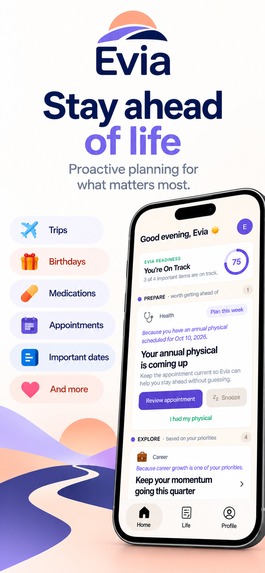
What is Evia?
-

Logo
-
-
-
-
-

Inspiration
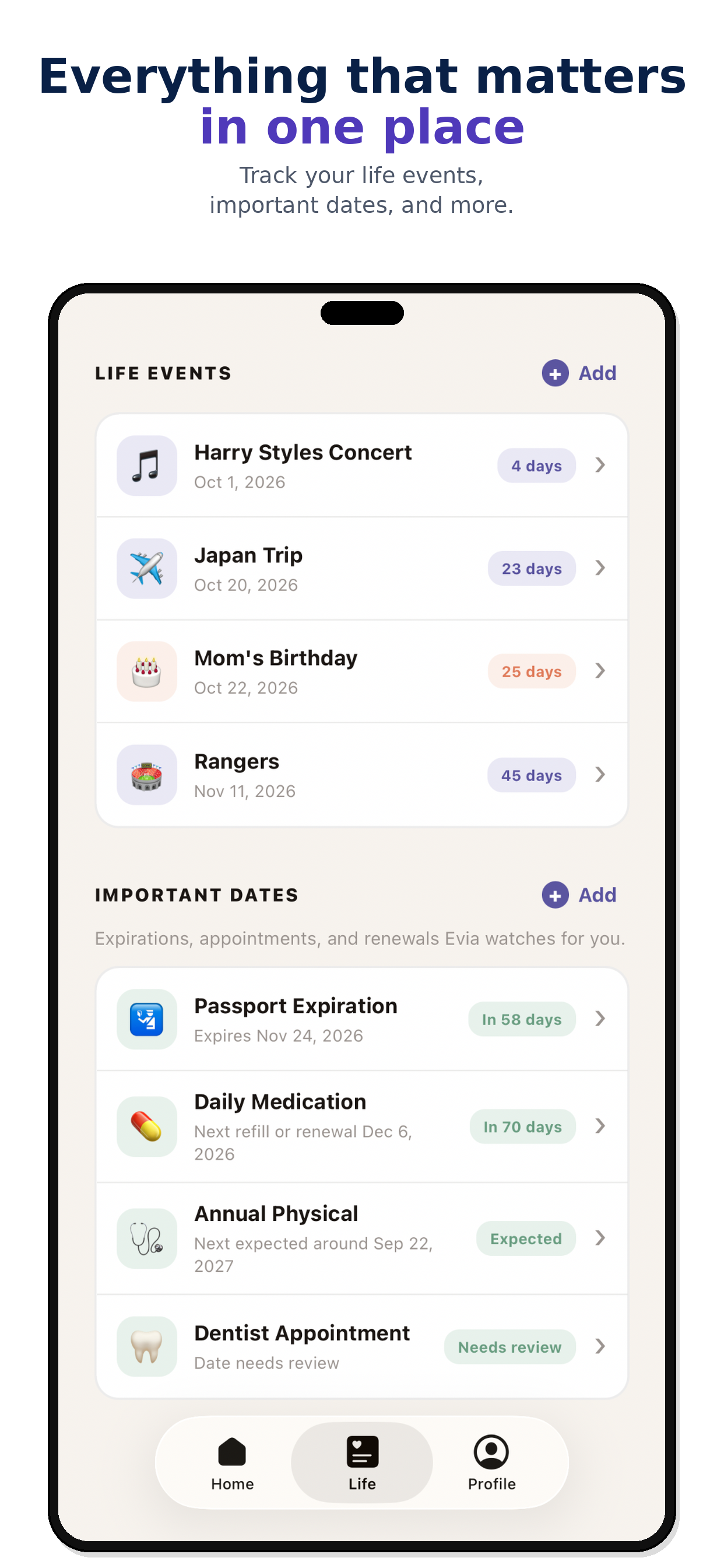
Evia started with a simple observation: people rarely miss important life deadlines because they don't care, they miss them because life gets busy.
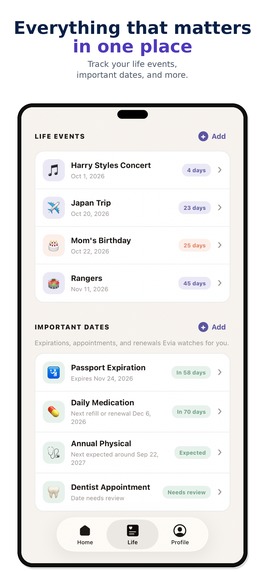
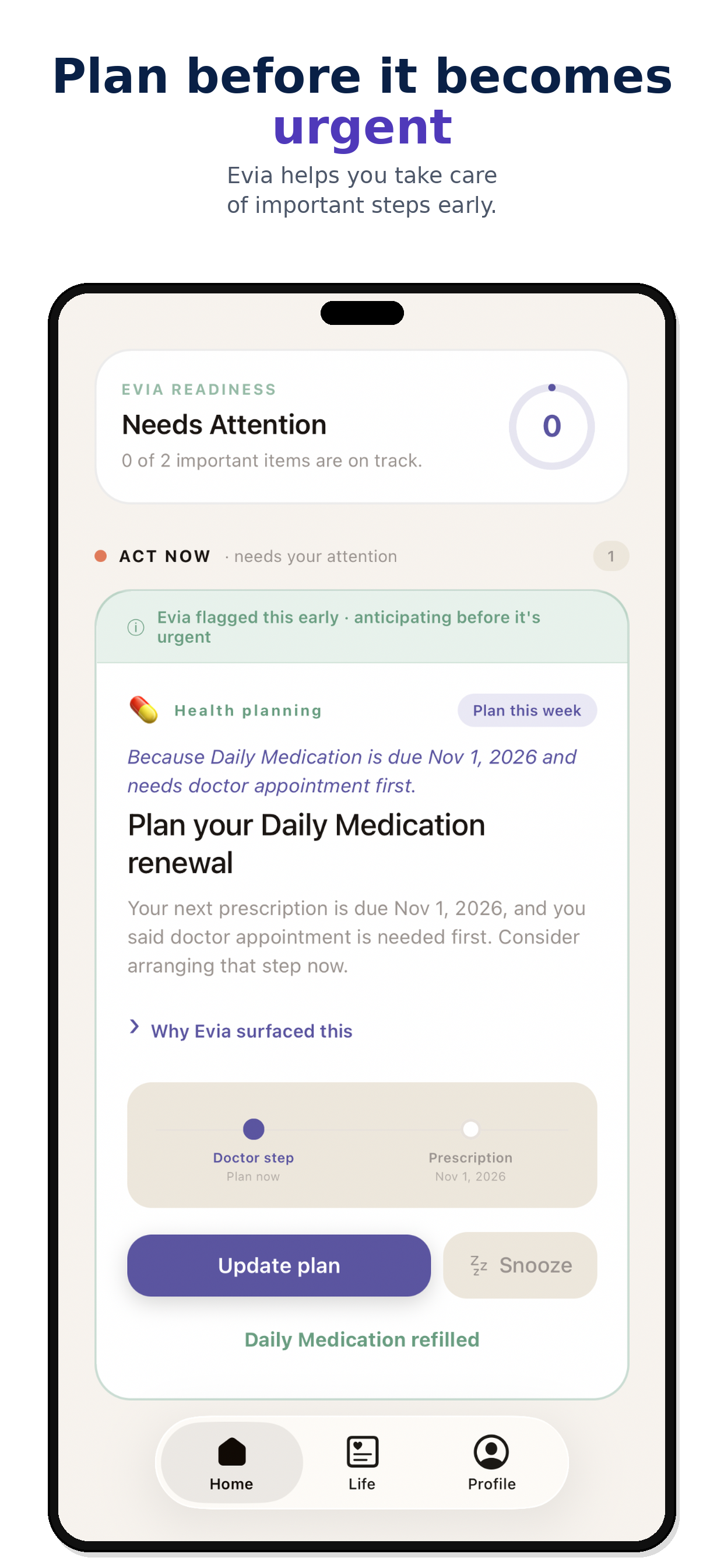
I saw friends, family members, and coworkers run into avoidable issues from missing or reacting too late to important dates, from prescription refills and passport renewals to appointments and birthdays. I wanted to build something that could help people stay ahead of these moments instead of scrambling when they became urgent.
That idea became Evia: a proactive life manager designed to help you stay ahead of life.
What I Built
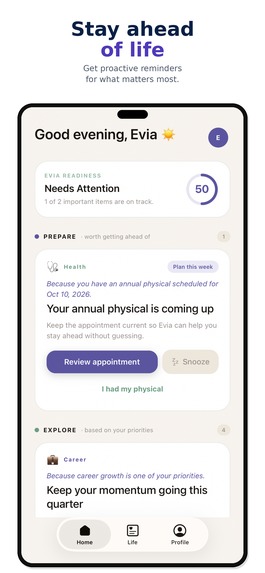
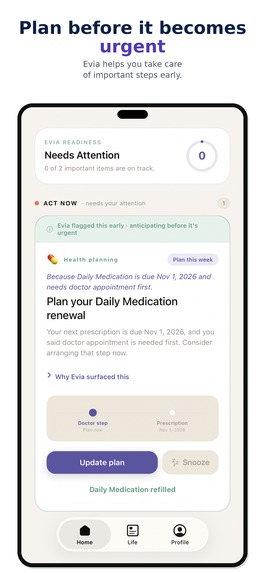
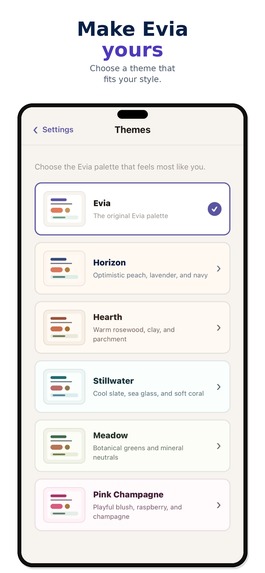
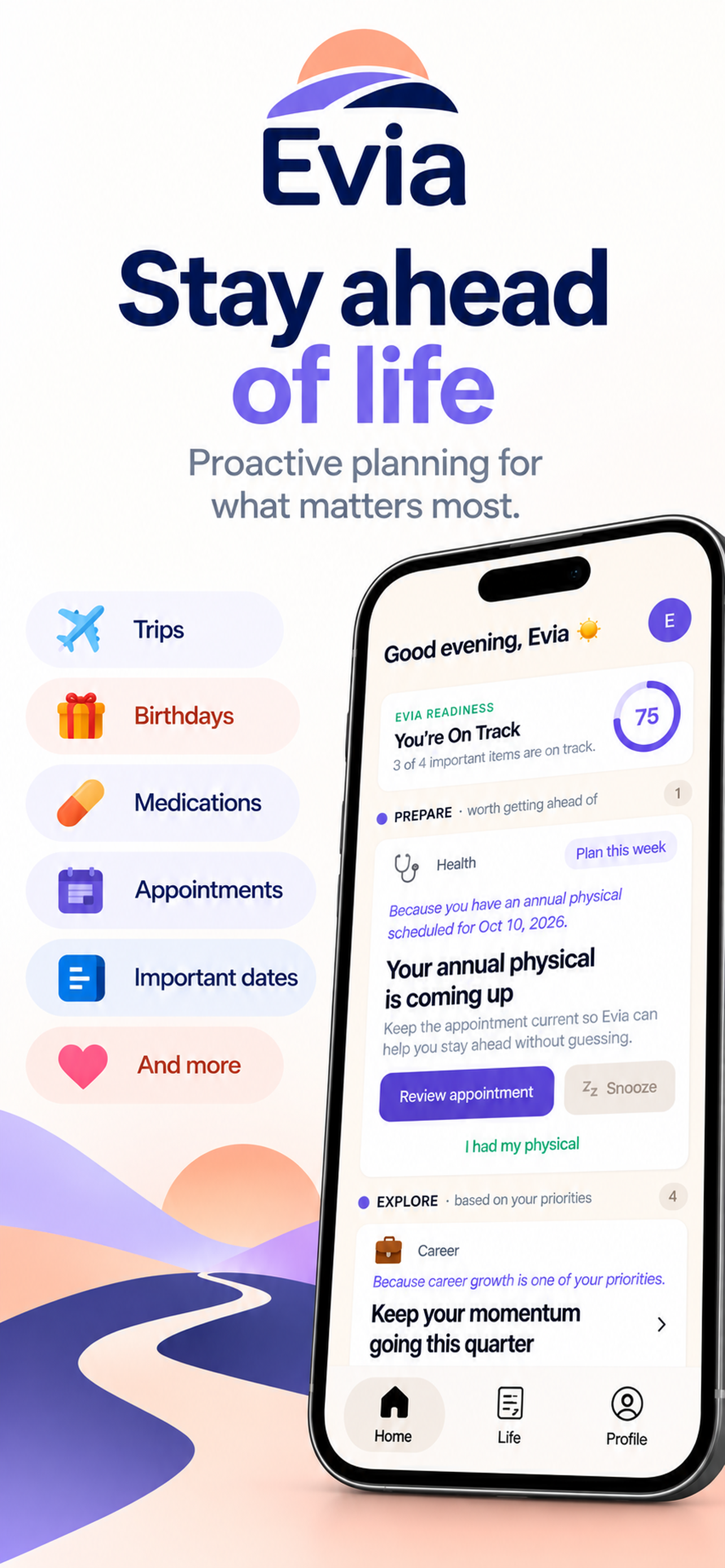
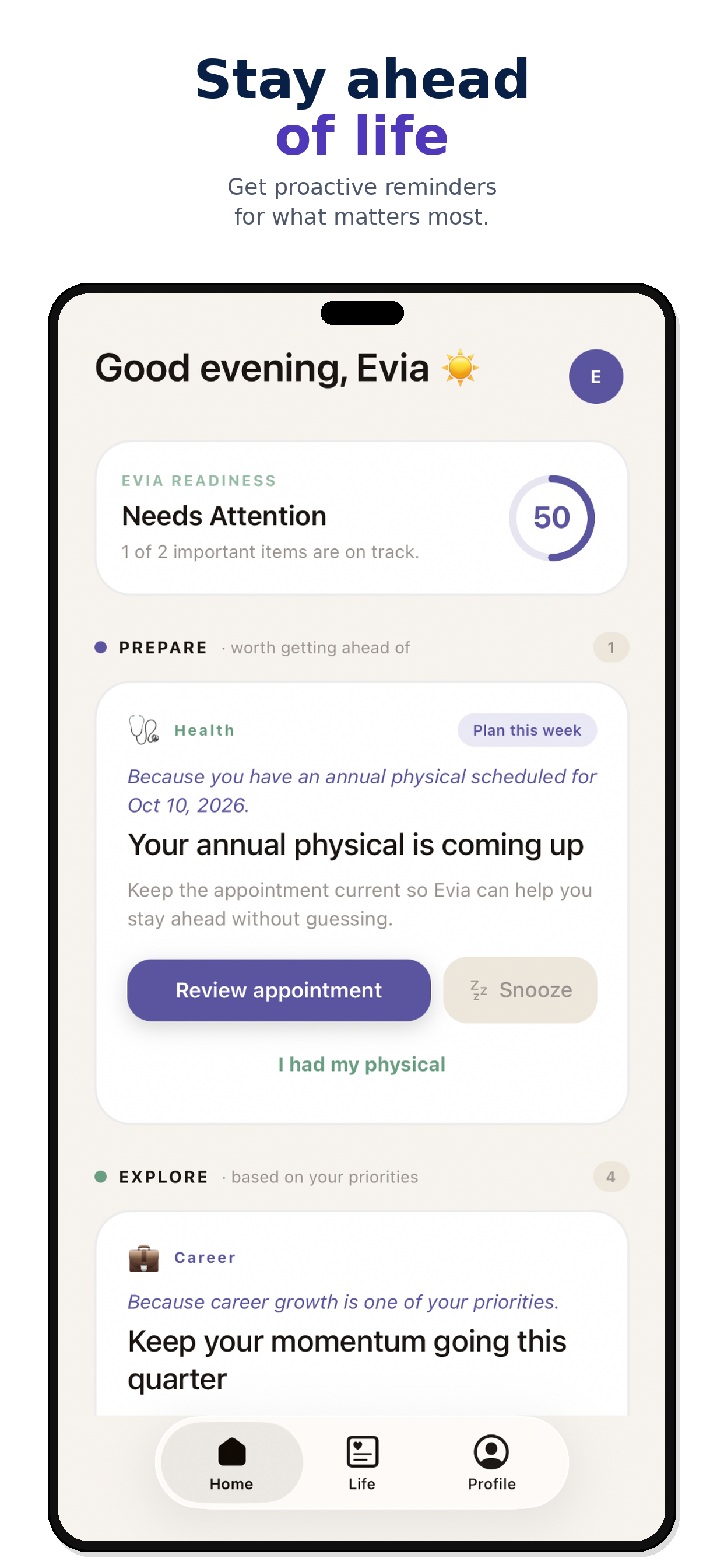
Evia helps users keep track of important life events and dates and turns them into proactive, actionable recommendations. Rather than simply reminding someone that something is due, Evia is designed to think ahead, surfacing what they should be preparing for and when they should take action.
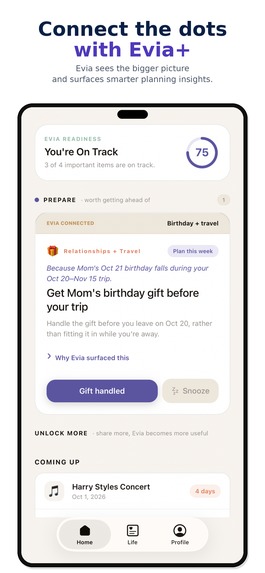
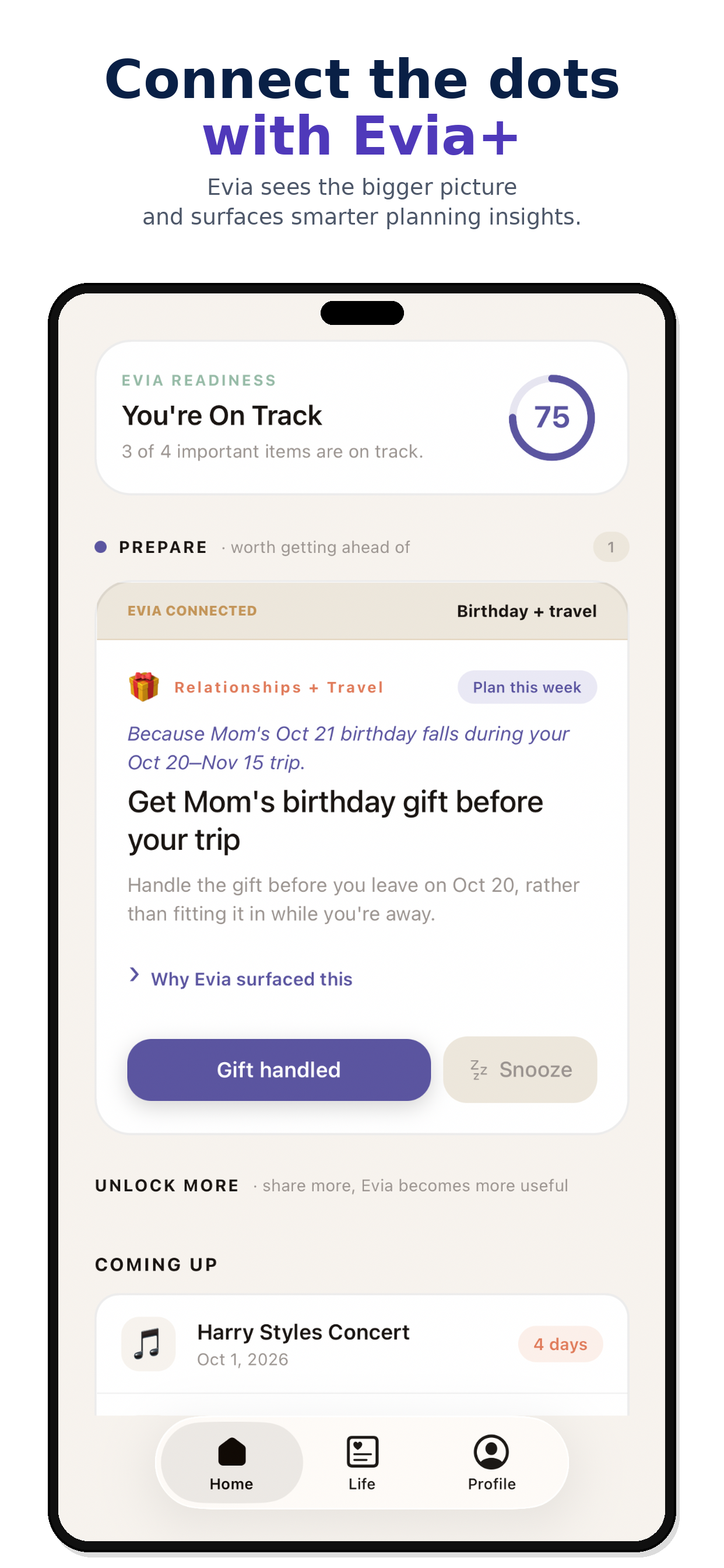
Evia+ takes this a step further by connecting context across different parts of a user's life. For example, if an important birthday is approaching while the user will be traveling, Evia can recognize that overlap and recommend taking action earlier.
The goal is to move beyond reminders toward proactive life planning.
How I Built It
I started Evia with an idea and a prototype in Figma Make. From there, I migrated the concept into a real mobile application using Expo and React Native, iterating on both the product experience and the underlying logic as I built.
I used AI development tools throughout the process, including Claude Code and Codex, to help me learn, troubleshoot, and accelerate development. I integrated RevenueCat for Evia+, tested the application through TestFlight, and worked through the process of preparing and submitting Evia to the App Store.
What I Learned
This was my first time building and launching an app, and I came into the project without a software engineering background.
I learned how to take a product from an idea to a prototype and then turn that prototype into a functioning mobile application. Along the way, I learned about React Native and Expo, mobile architecture, subscriptions and in-app purchases, testing, App Store requirements, and the many details involved in actually shipping a product.
More importantly, I learned how much is possible when product thinking, rapid experimentation, and AI-assisted development come together.
Challenges
My biggest challenges were the learning curve and the timeline. Nearly every part of launching Evia, from migrating the prototype to building the mobile app, implementing subscriptions, testing, and navigating App Store submission, was new to me.
Building within the Shipaton timeframe meant learning and shipping at the same time. There were plenty of moments where something didn't work the first time, but each one required me to understand the problem, iterate, and keep moving.
What I'm Proud Of
I'm most proud that Evia went from an idea to a real iOS application within the Shipaton timeframe. This is the first app I've ever built, and seeing something that began as an idea and a Figma prototype become a product that people can actually use has been incredibly rewarding.
I'm also proud that I didn't stop at building a reminder app. I kept pushing the concept toward the original vision: creating something that can proactively help people navigate the things happening across their lives.
What's Next
This is just the beginning for Evia.
The next step is making Evia increasingly intelligent and personalized — expanding the life scenarios it can support, learning from a user's timeline and preferences, and making more connections across events and context.
The long-term vision is for Evia to understand what happened, what's coming next, how different parts of your life connect, and when you should act, helping people spend less time remembering what they need to do and more time living their lives.
Stay Ahead of Life.
Built With
- apple-app-store-connect
- claude-code
- codex
- expo.io
- figma-make
- github
- react-native
- revenuecat
- supabase
- testflight
- typescript

Log in or sign up for Devpost to join the conversation.