-
-
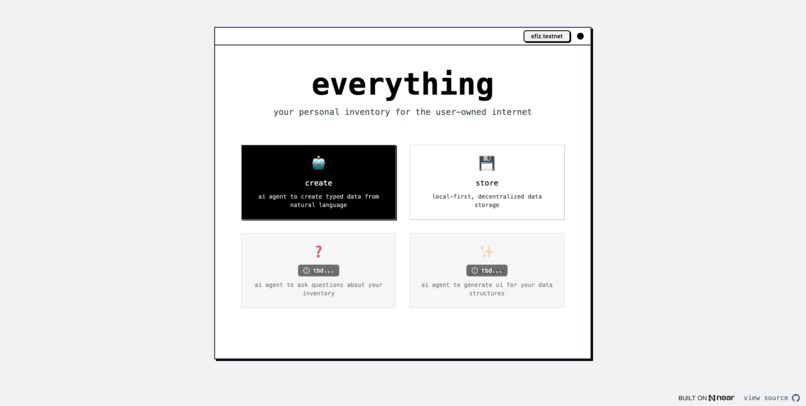
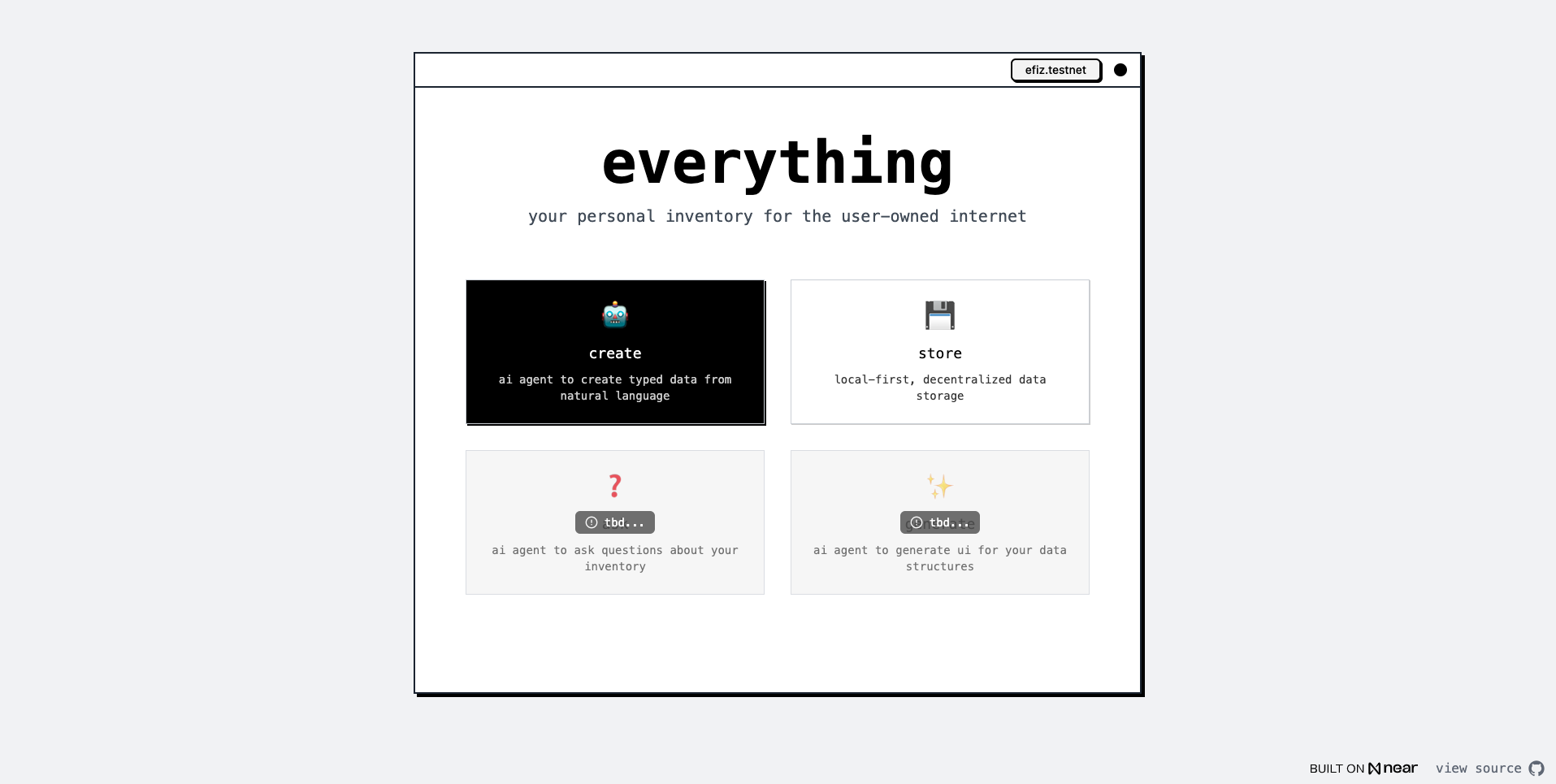
main screen
-
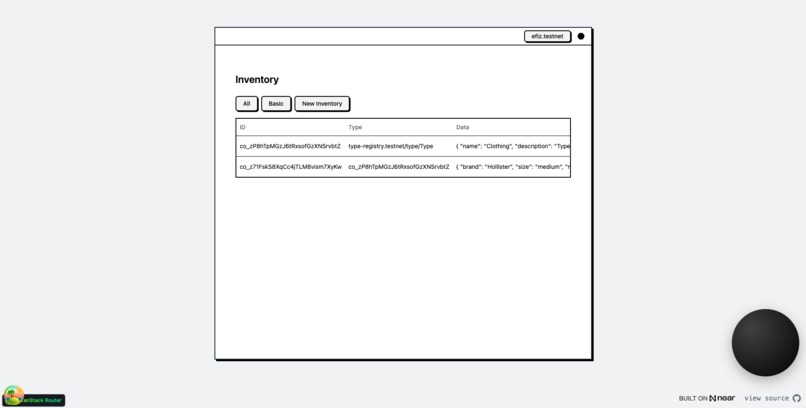
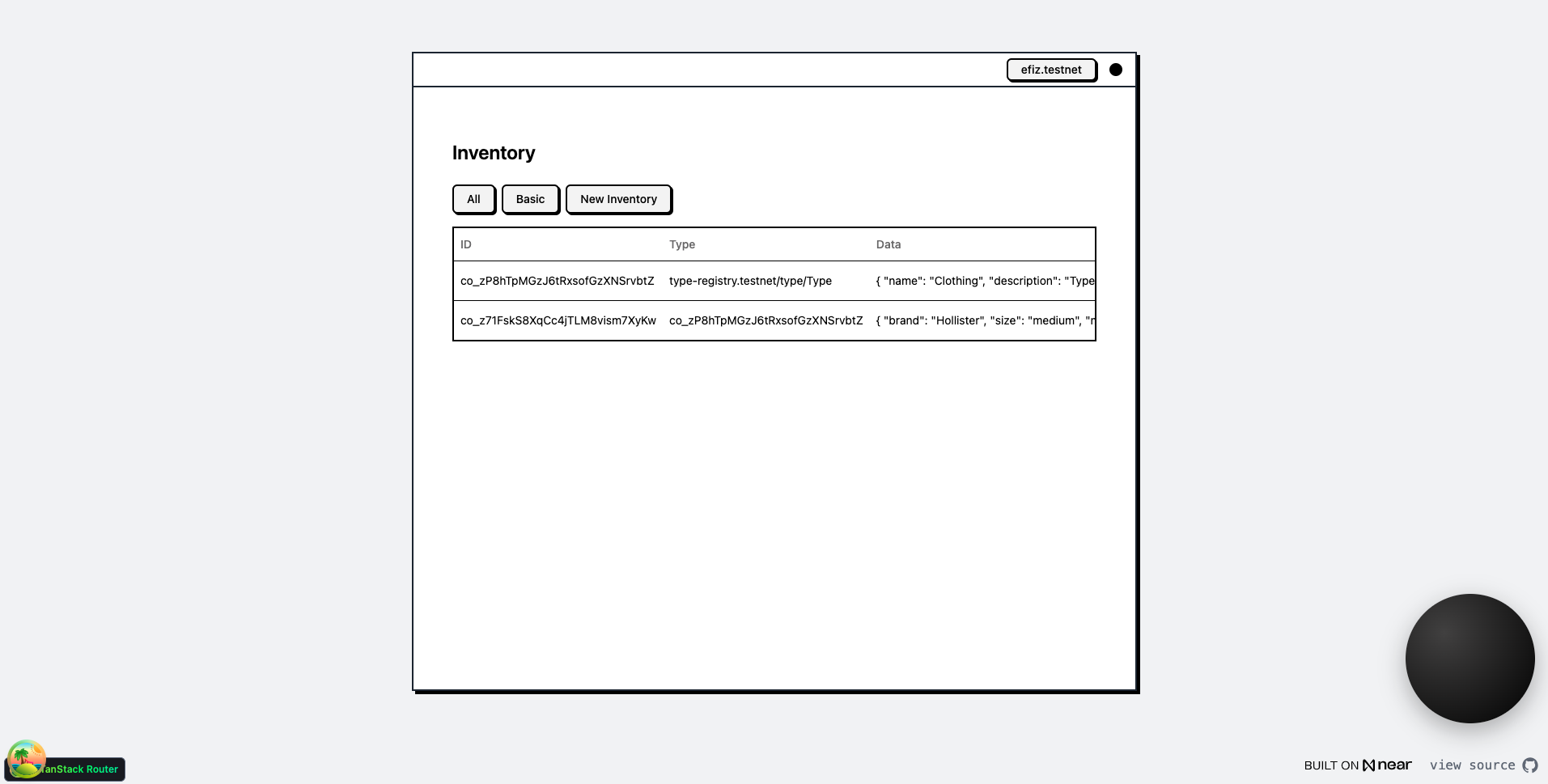
personal, local-first inventory
-
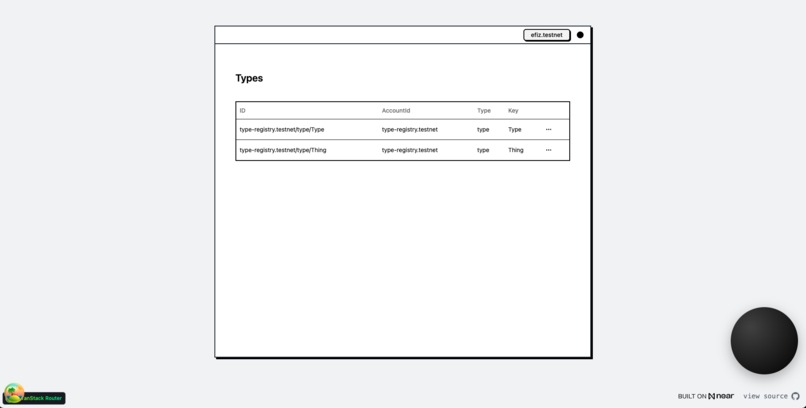
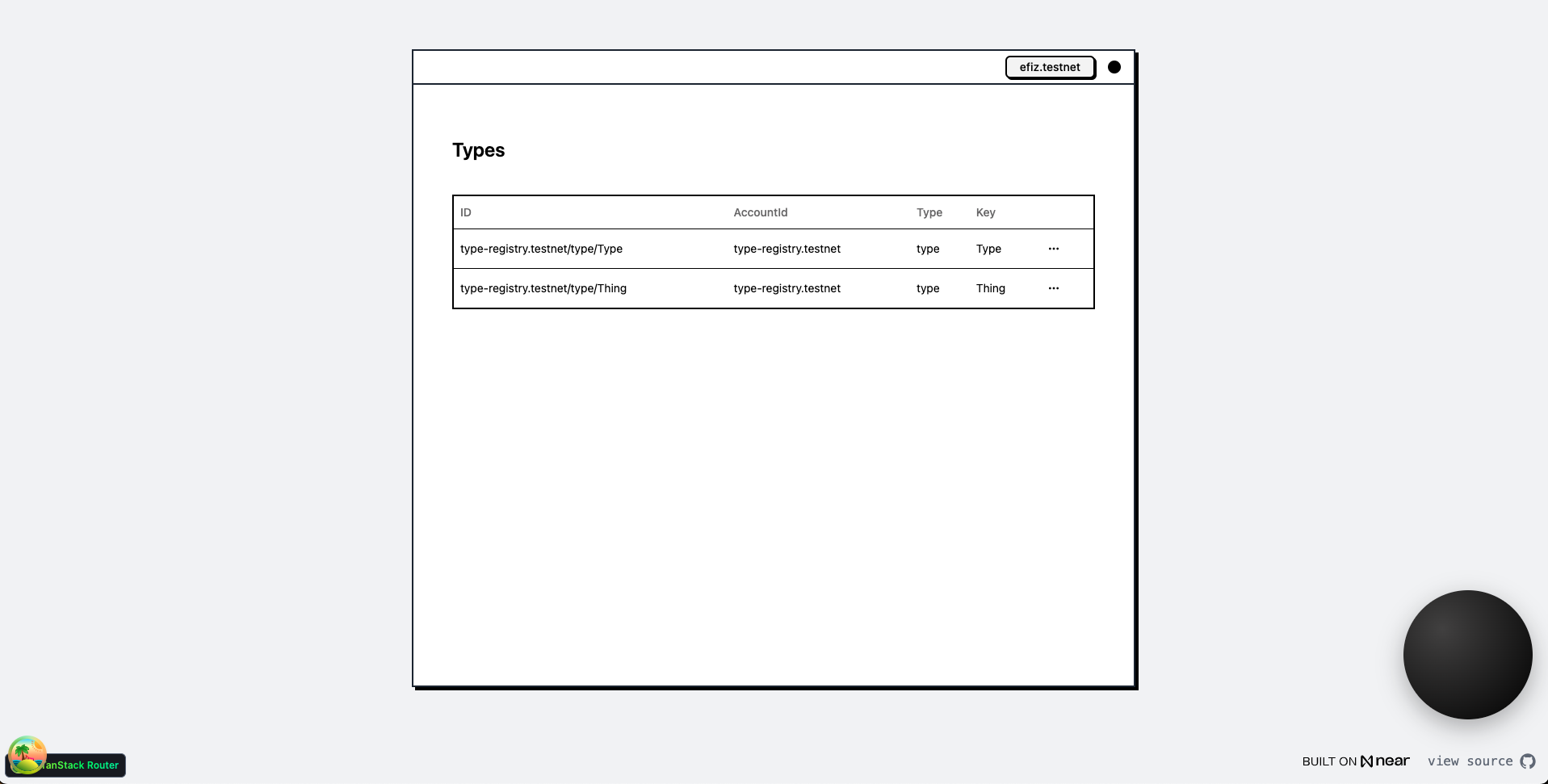
type registry
-
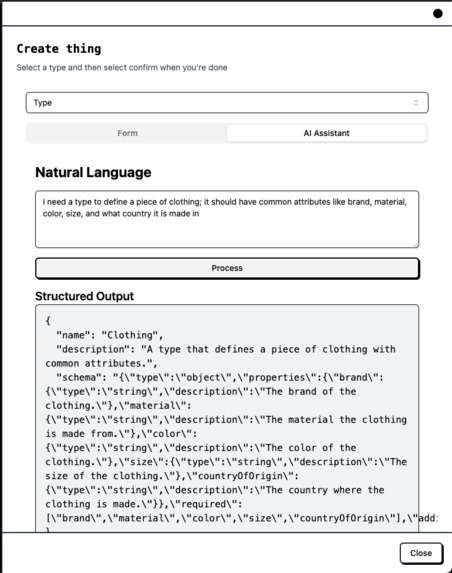
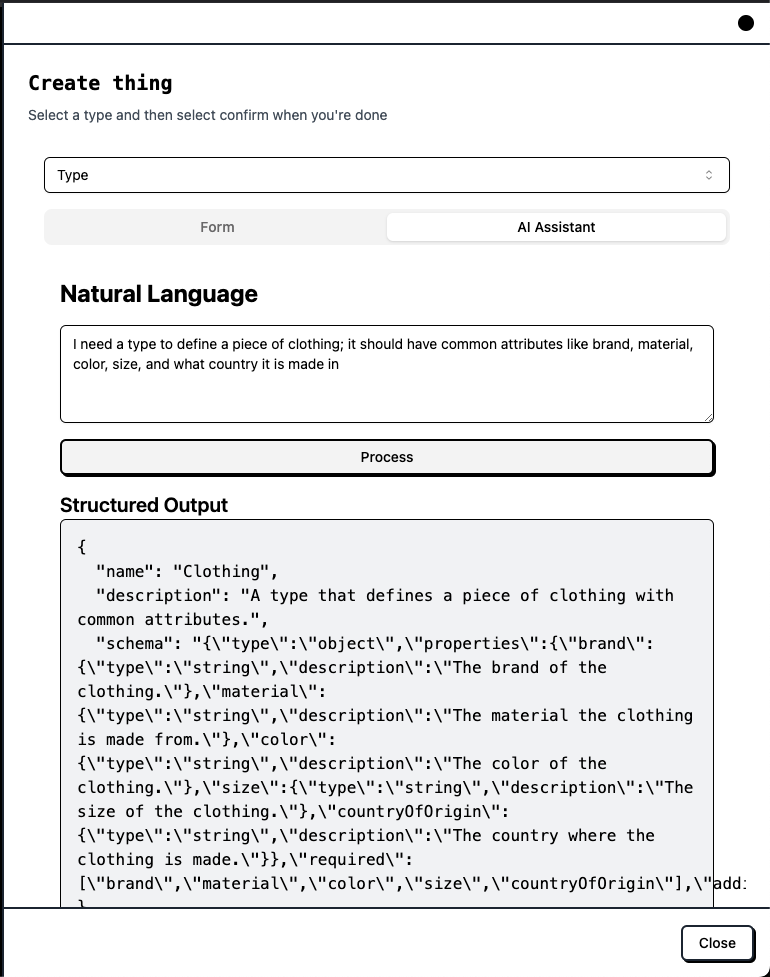
create types and things from natural language
Inspiration
Everything started three years ago with my first project on NEAR; a hackathon submission called "collect, for the common good". It was an ambitious idea motivated by the urgency of the climate crisis, meant to tap into what I believe to be the MOST undervalued (and unorganized) sector in the world: second hand product markets. collect was a combination of six apps that worked together to effectively "collect", categorize, and label items into an easily queryable “database” of real, existing, and available after-market products. Each app typically involved a camera and a free form prompt in order to describe these things.
However, there were some challenges: how to store the data in a decentralized way, and how to make upload and organization as easy as possible.
Fast forward two years, and everything evolved into the everything project, and then when BOS was released, I became obsessed with the idea of "Types on chain". I had built a proof of concept of a flexible creator based on these types, with swappable templates, and I spent months attempting a BOS-native framework for rendering predictable apps. The decentralized front end framework of BOS came with it's own challenges, but the concepts of data-first design were rock solid: data and it's types can define the way it is supposed to be used and interacted with, which makes building composable front ends much simpler -- and so many other things, too.
What it does
This project addresses the initial challenges with collect -- it stores data local first through a sync engine, public data and types are published to a decentralized, permissioned data storage layer (social-db), and new types and things can be generated from natural language, following the specified type definition because of structured outputs.
How we built it
This project consists of several components:
- Vite project using near-vite-starter template, bundle stored on NEARFS, served through Web4
- Web4 NEAR login to authorize a local-first session with Jazz for data storage and sync
- Types stored on-chain in the social-db
- Express proxy server for Open AI requests to gpt-4o-mini for NLP and structured outputs
- Turborepo to support a monorepo and easy extension
- Automatic form generation based on JSON Schemas, using react-jsonschema-form
Challenges we ran into
- Web4 login to authorize a peer connection does not work across devices and browsers... so will need some sort of proof here, maybe.
- I really wanted to use Calimero for the data privacy, but ran into challenges connecting to a peer, so opted for Jazz instead. I would still like to pursue this direction, because I think running nodes can introduce some cool value props when it comes to marketplaces.
- Recursive form generation is always a head ache! What comes first, the chicken or the egg?! Sometimes you gotta hard code some things to get it started.
Accomplishments that we're proud of
I don't do great with front end design, but I actually feel pretty good with how it turned out! Also, a lot of these concepts have been burned in my brain for too long, and it feels good to get them out and in a somewhat-stable form. Perseverance!
What we learned
I learned a lot about P2P and I feel like my understanding of web technologies has shifted some over the course of the past few weeks. Although it's all still not clear, I do feel like I gained some more understanding about NEAR key pairs and how they are used to sign, which is integral to chain signatures.
What's next for everything
- I want to use this app to solve my own problems -- I want to keep a record of all the things I own and publish them to marketplaces, since I will be moving soon.
- I think it'd be really nice to be able to bulk import data, detect a type, and publish these types so others can bulk import items such as Instagram or Facebook data, so people can get off these platforms.
- Generate UI's from data and share templates with others -- data is source of truth and you can choose how to represent it.
- I'd like a multi-agent flow to be able to talk to my inventory, or have it do major reorganization for it.
- Minting things and publishing to marketplaces, Keypom link drops for transferring ownership.
- Everything context that can be integrated into apps, so you can access your local data from your near account proof, to use it in community-built apps.
Above all, I want to be validated in whether or not this is a worth while endeavor. With this project comes everything.dev, everything.market, every.near.page, and everythingproject.com. It's an offer for a common goal and a common mission: to build everything, for everyone. Together.
Built With
- jazz
- near
- react
- typescript




Log in or sign up for Devpost to join the conversation.