-
-
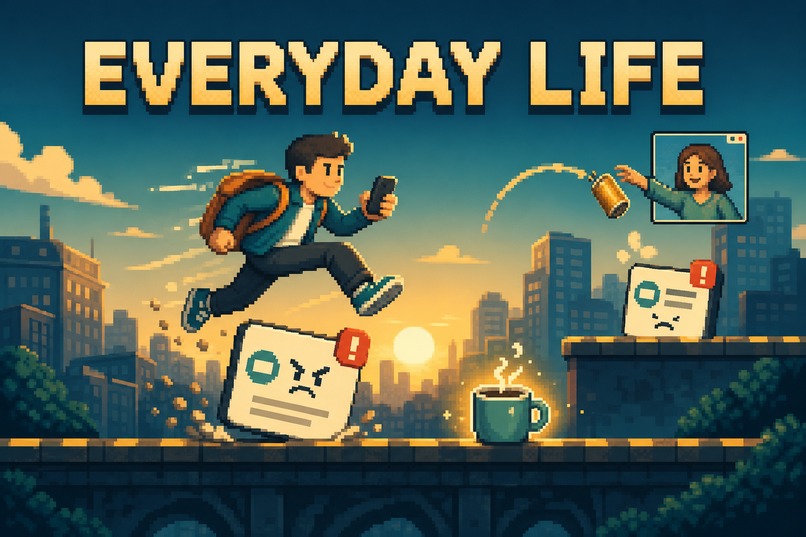
Hero image
-
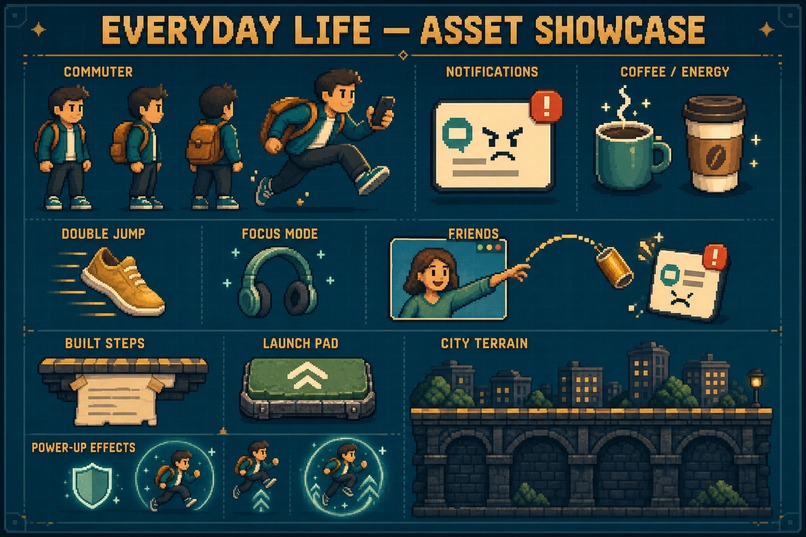
Asset showcase
-
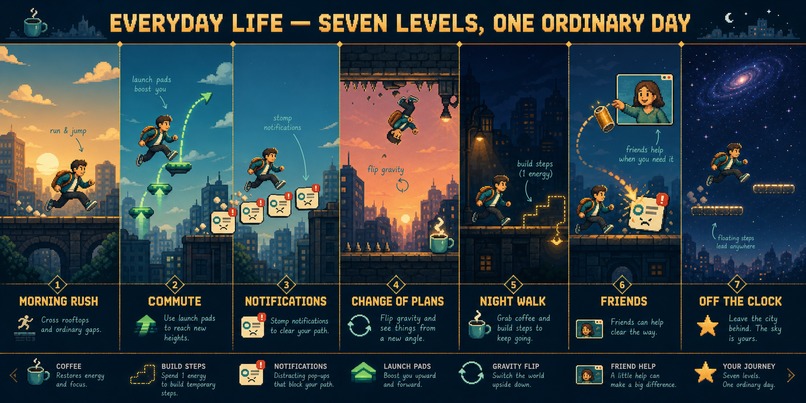
Level showcase
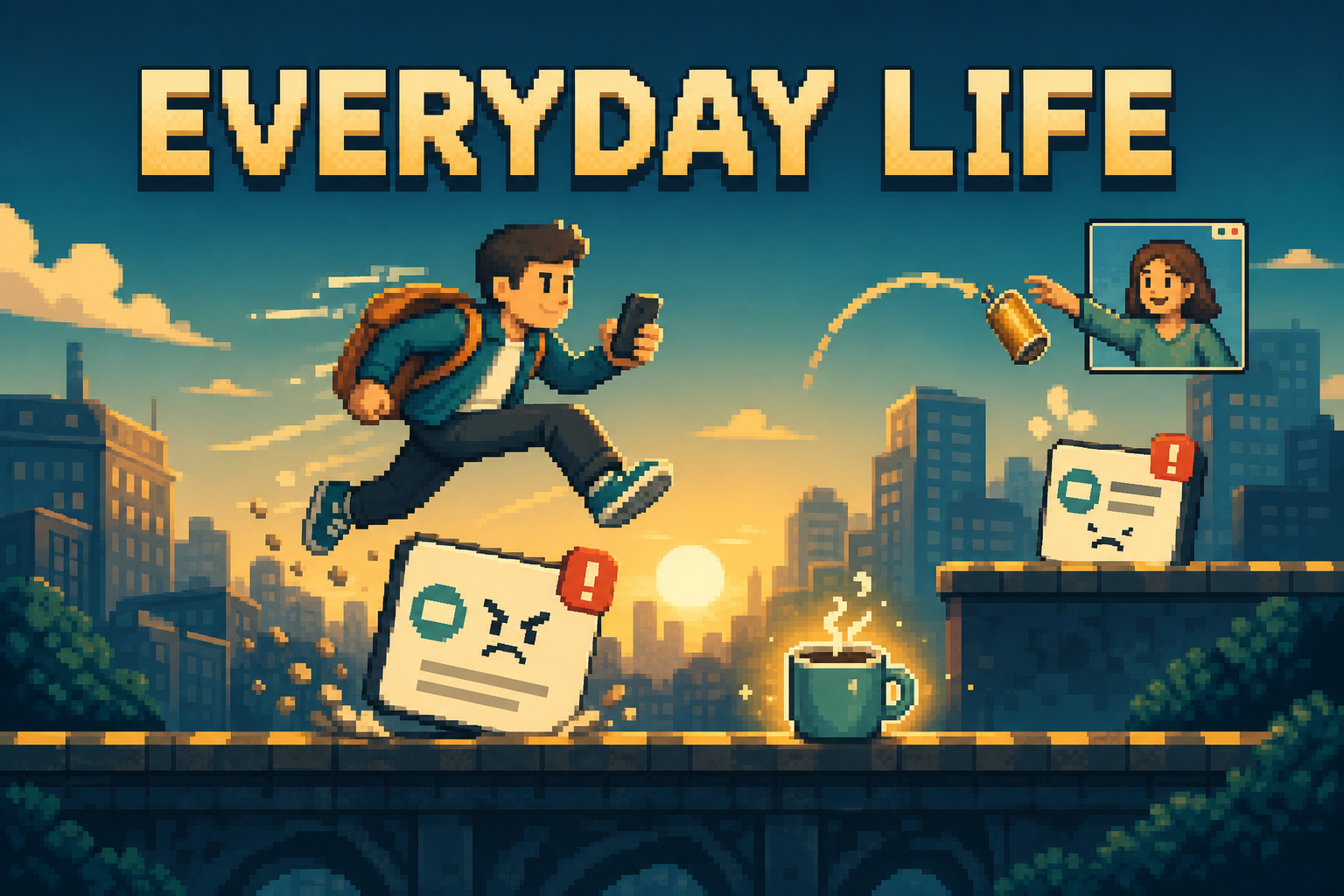
Inspiration
Everyday Life started with a simple irony: ordinary life can feel like an obstacle course when screens constantly compete for my attention. I wanted to turn commuting, coffee, notifications, doomscrolling, and meeting friends into a playful platforming adventure.
What it does
Everyday Life is an auto-running platformer about making it through the day without being consumed by digital distractions.
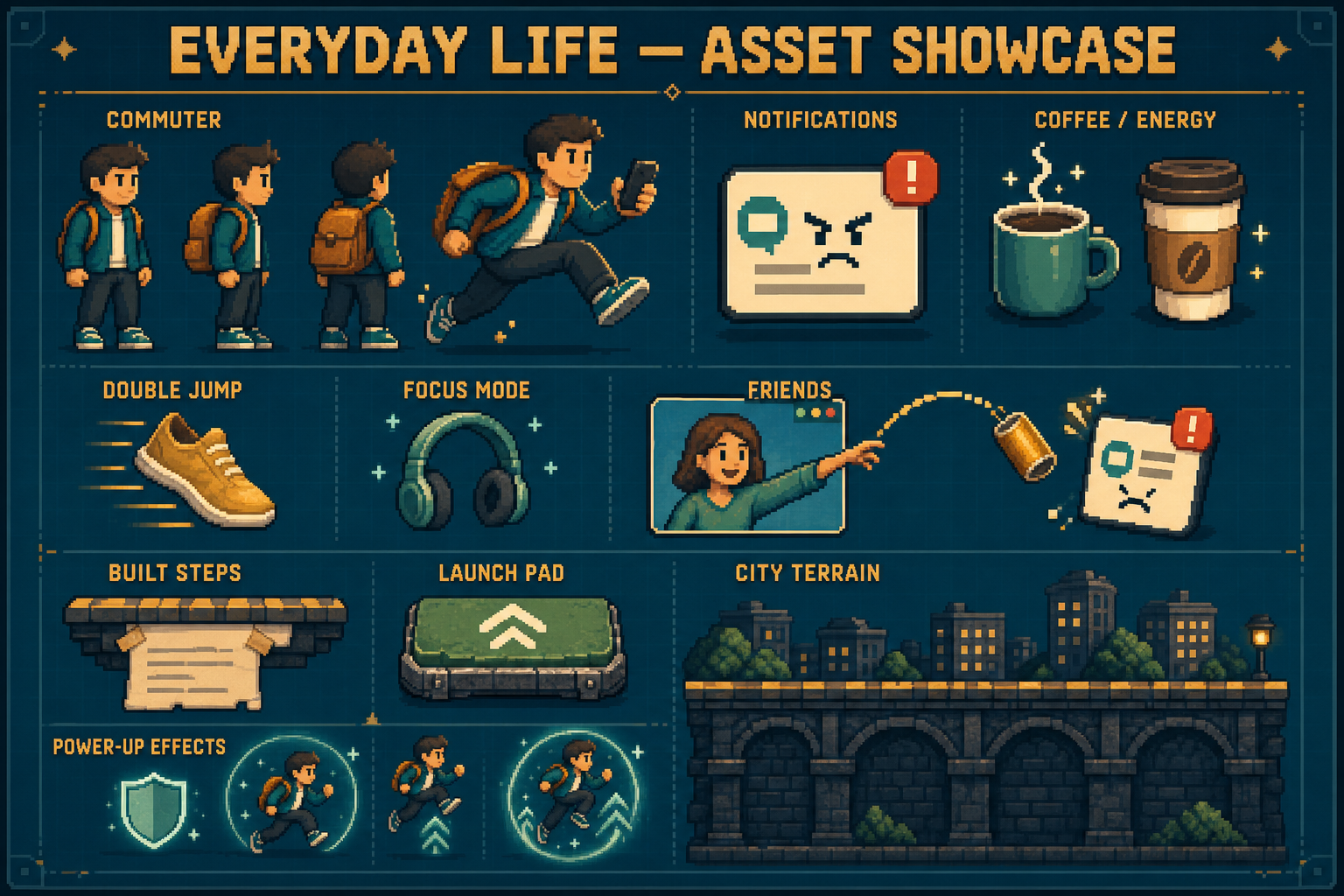
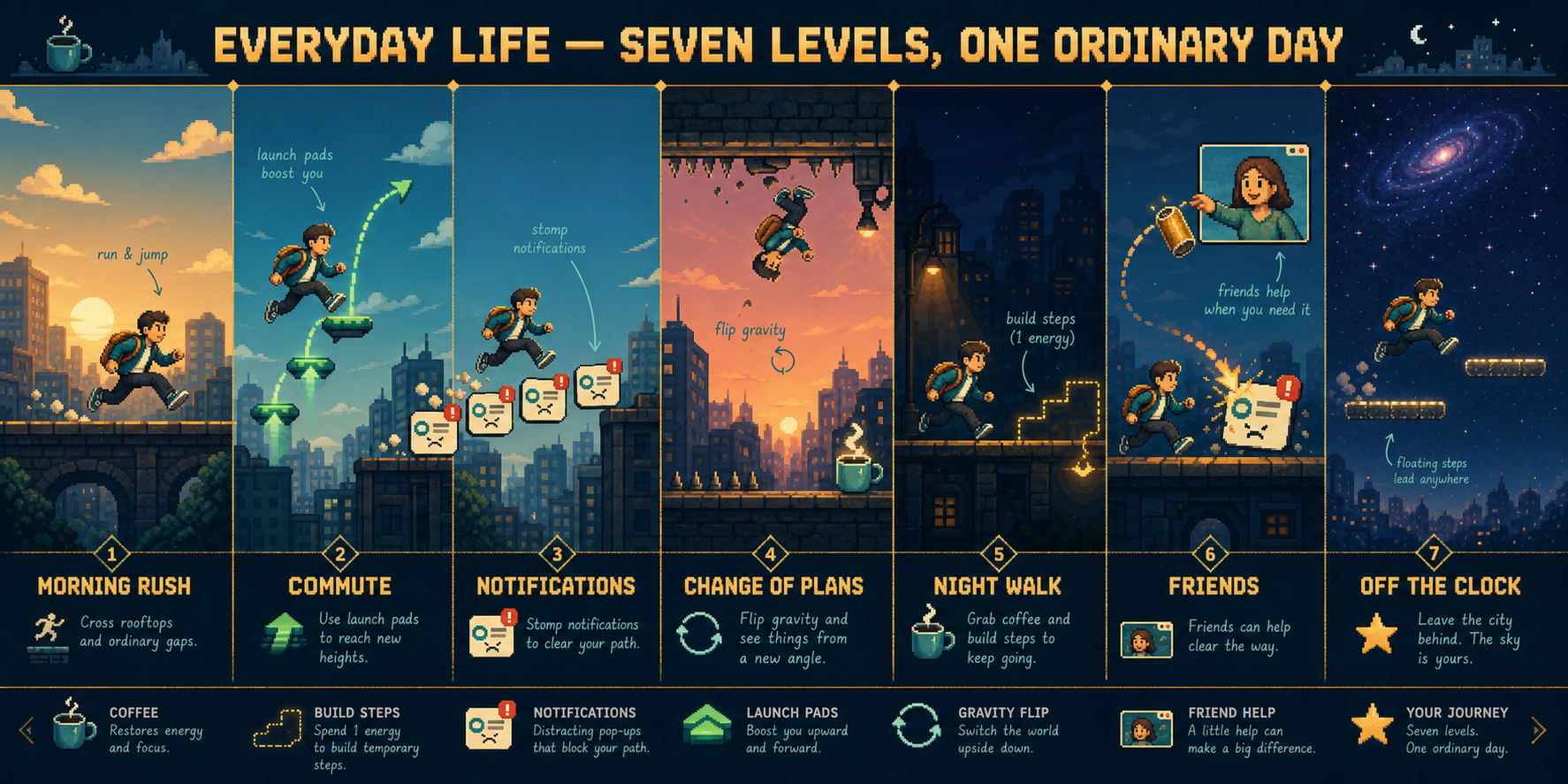
The player collects coffee for energy, jumps over gaps, builds temporary steps, and dodges or stomps hostile notification cards. Second Wind grants double jump, Focus Mode blocks a notification that would otherwise kill the player, and a friend can join through a video-call bubble to mute an incoming notification.
The journey progresses through seven parts of the day, from Morning Rush and Commute to Friends and Off the Clock.
How I built it
I built the game with the help of Claude Fable using Godot 4 using GD Script. I gave the code to Codex to overhaul the game's graphics and brainstorm the aesthetic theme of the game. The terrain is procedurally generated, with the speed, difficulty, obstacles, and level-specific mechanics changing throughout each run.
Codex drew the pixel-inspired characters, environments, pickups, and effects directly in code using Godot’s custom drawing tools. It also synthesized the music and sound effects at runtime, including an original chat-style notification chime.
Challenges I ran into
My biggest challenge was making the procedural levels difficult without creating impossible situations. Increasing speed, random gaps, changing gravity, and temporary platforms all had to remain fair in every generated run.
I also discovered that some visual primitives rendered differently between Godot’s desktop and Mobile renderers. This caused missing faces, coffee-cup details, notification badges, and powerup effects. Codex rebuilt the affected visuals with mobile-safe shapes and verified them using the same renderer as the game.
Finally, transforming an existing platformer into a coherent story about attention required more than renaming things. Every mechanic needed a visual metaphor that players could understand immediately.
Accomplishments that we're proud of
I’m proud that the theme and gameplay reinforce each other. The game started with the Wizard aesthetic with classical hat and robed wizard that collects mana fragments. However, the connection with every day life proved to be much more relatable for me, and other players.
Coffee provides energy, notifications become enemies, Focus Mode protects the player, Second Wind offers another chance, and friends help silence digital noise.
I also created seven mechanically distinct stages, a procedural difficulty system, original code-generated visuals and audio, and an automated smoke-test suite covering the core mechanics and terrain generation.
Most importantly, I kept the controls simple: jump, build, and keep moving.
What I learned
I learned that a strong theme can completely change how familiar mechanics feel. Small visual decisions, such as turning an enemy into a notification icon, can communicate more than a long explanation.
I also learned the importance of testing both gameplay rules and visual output on the target renderer. Procedural games need clear constraints and automated checks because one unfair combination can undermine an otherwise enjoyable run.
What's next for Everyday Life
Next, I want to get the game into hands of more people to playtest it and give feedback. I also want to improve the animations, difficulty balancing and mobile feedback through playtesting.
Longer-term ideas include daily challenges, achievements, leaderboards, more everyday environments, and additional ways for friends to help players reclaim their attention.
Built With
- audiostreamwav
- canvasitem
- gdscript
- git
- godot

Log in or sign up for Devpost to join the conversation.