-
-
A native iPhone app solo-built from nothing during OpenAI Build Week with Codex and GPT-5.6 Sol.
-
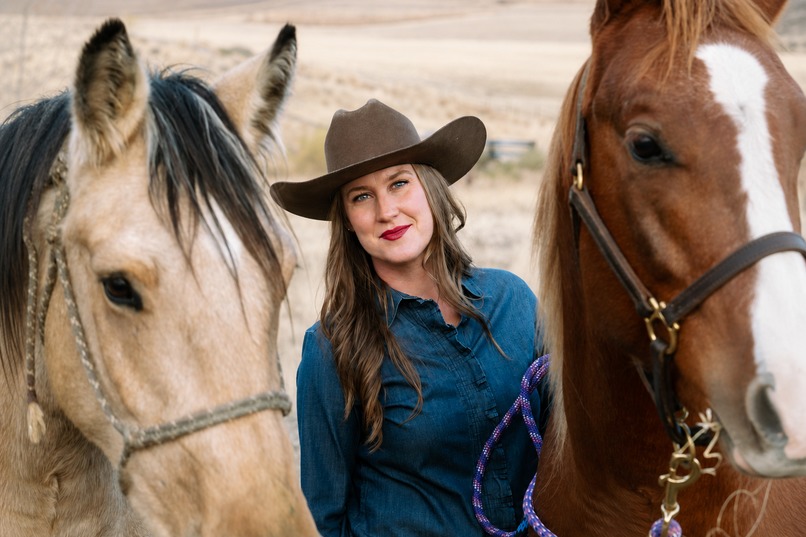
I built the tool I had spent years looking for—because managing several horses should not depend on memory.
-
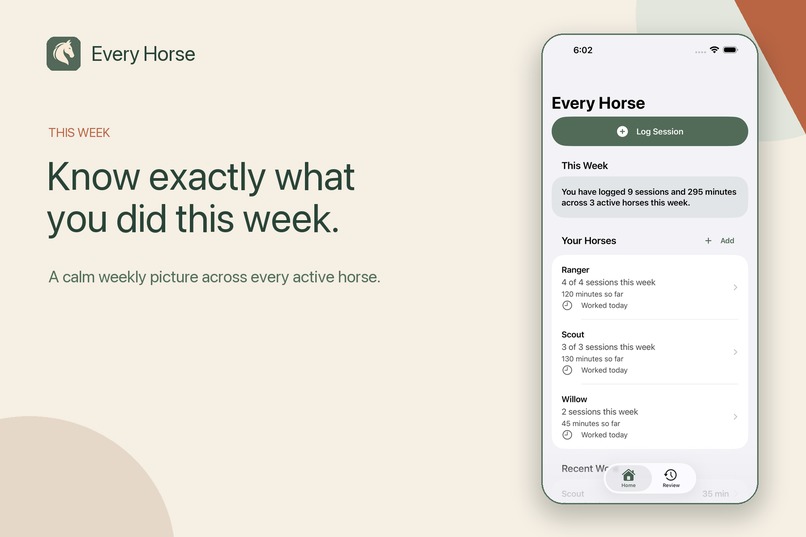
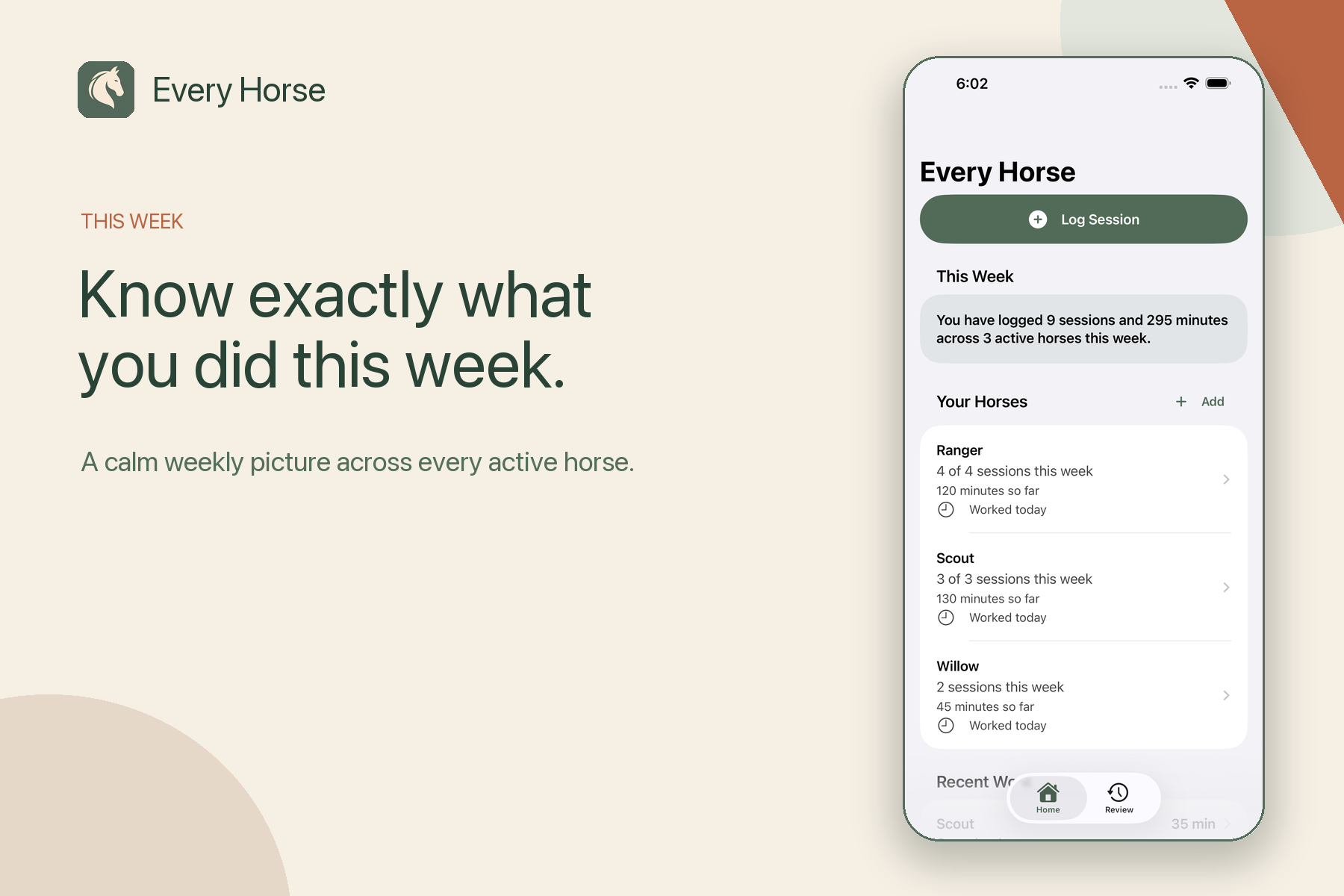
One glance shows sessions, minutes, weekly intentions, and last-work recency across every active horse.
-
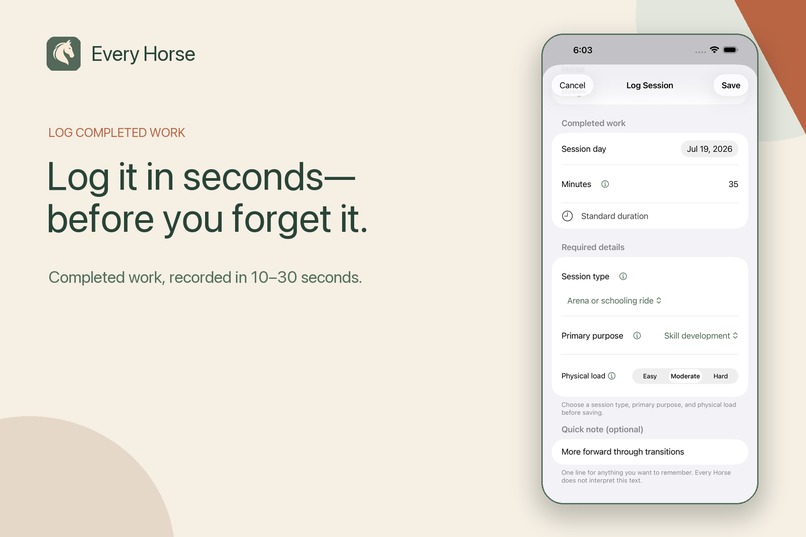
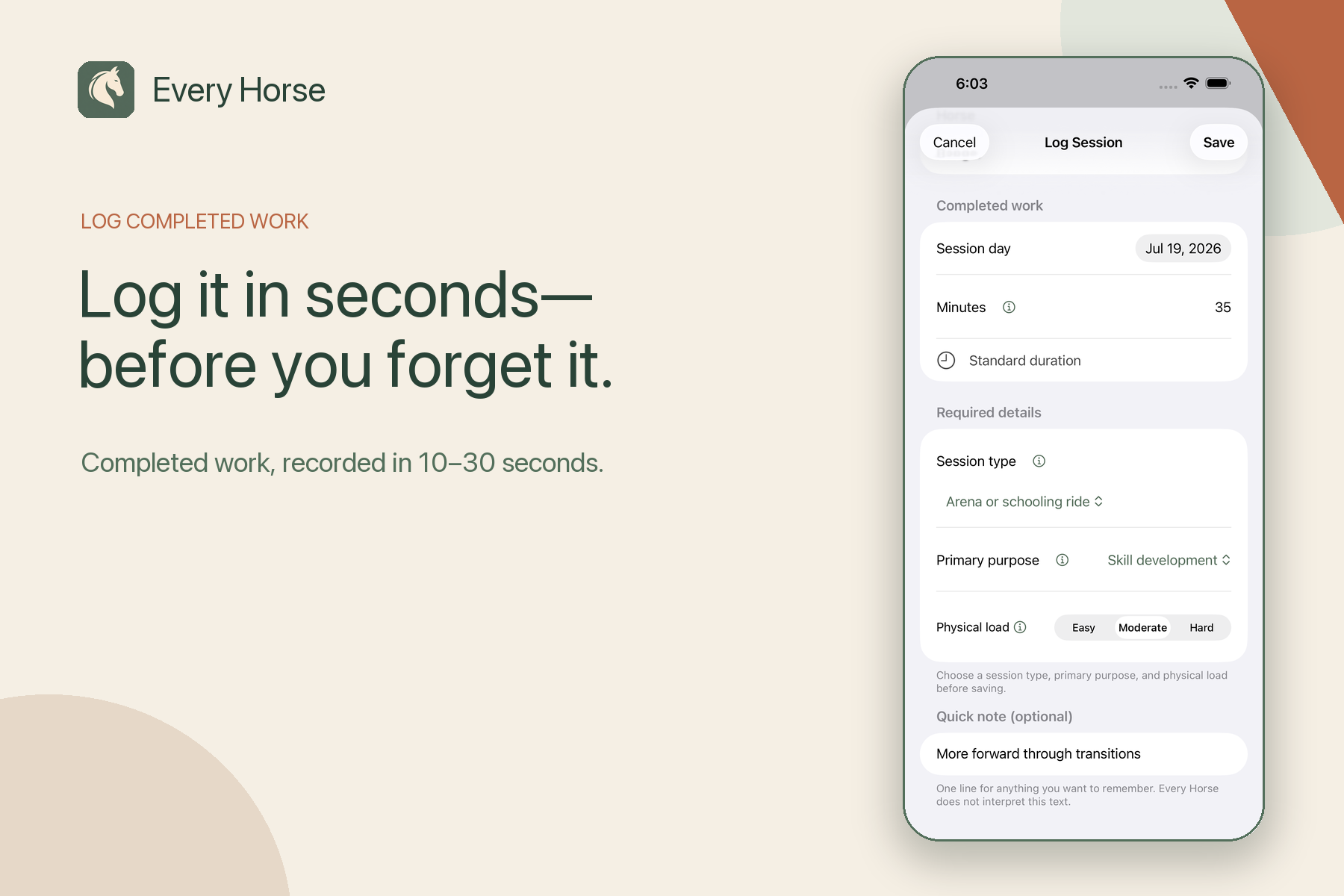
Log completed work in seconds: session type, purpose, physical load, duration, and one private Quick Note.
-
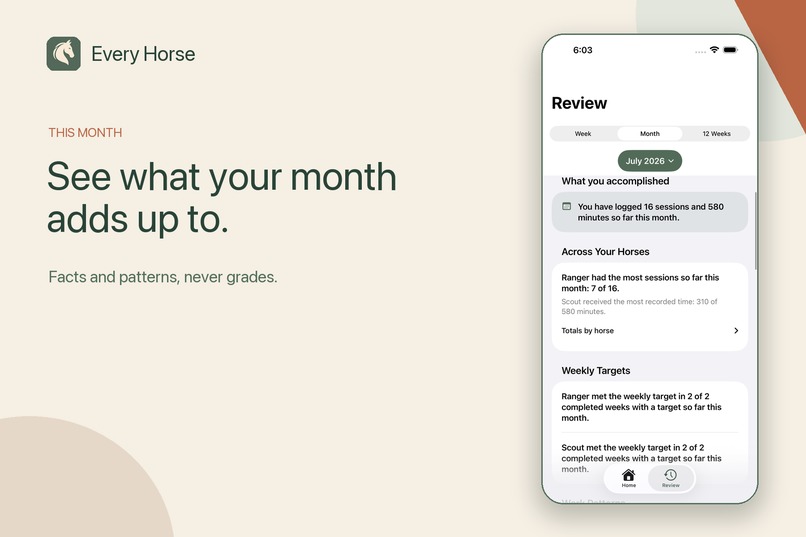
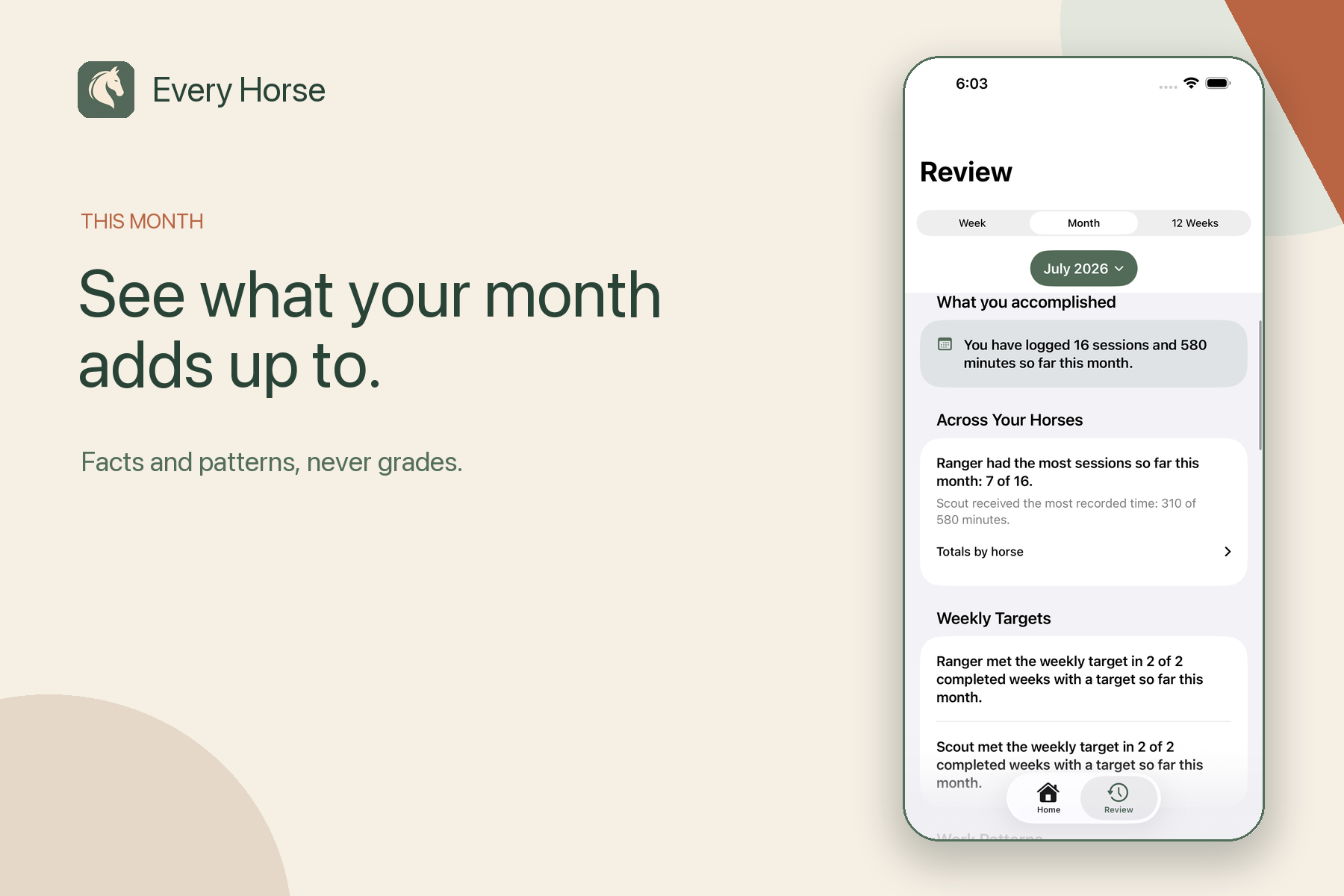
Tracking is the input. Reflection is the product: see what you accomplished this month and the patterns emerging across your horses.
-
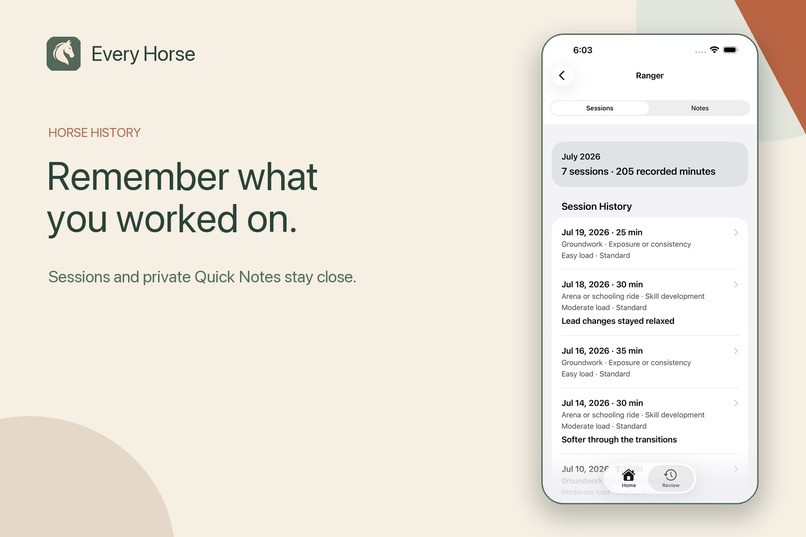
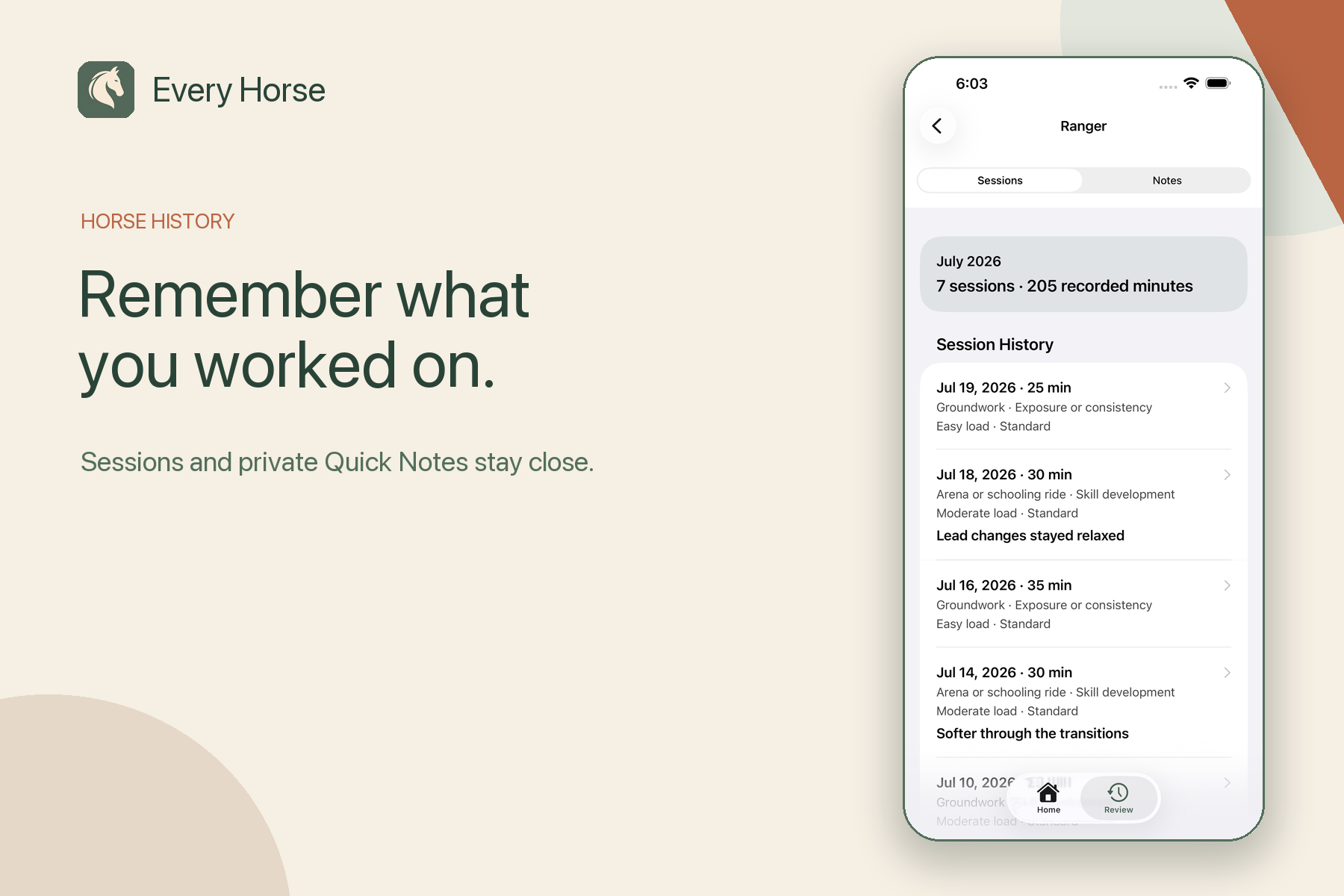
Every session and Quick Note stays attached to the right horse and stored privately on-device—creating a history you can trust.
-
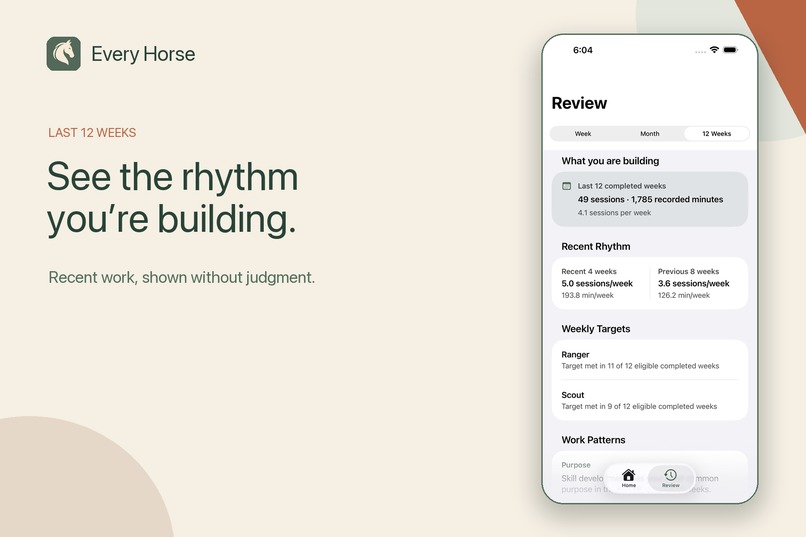
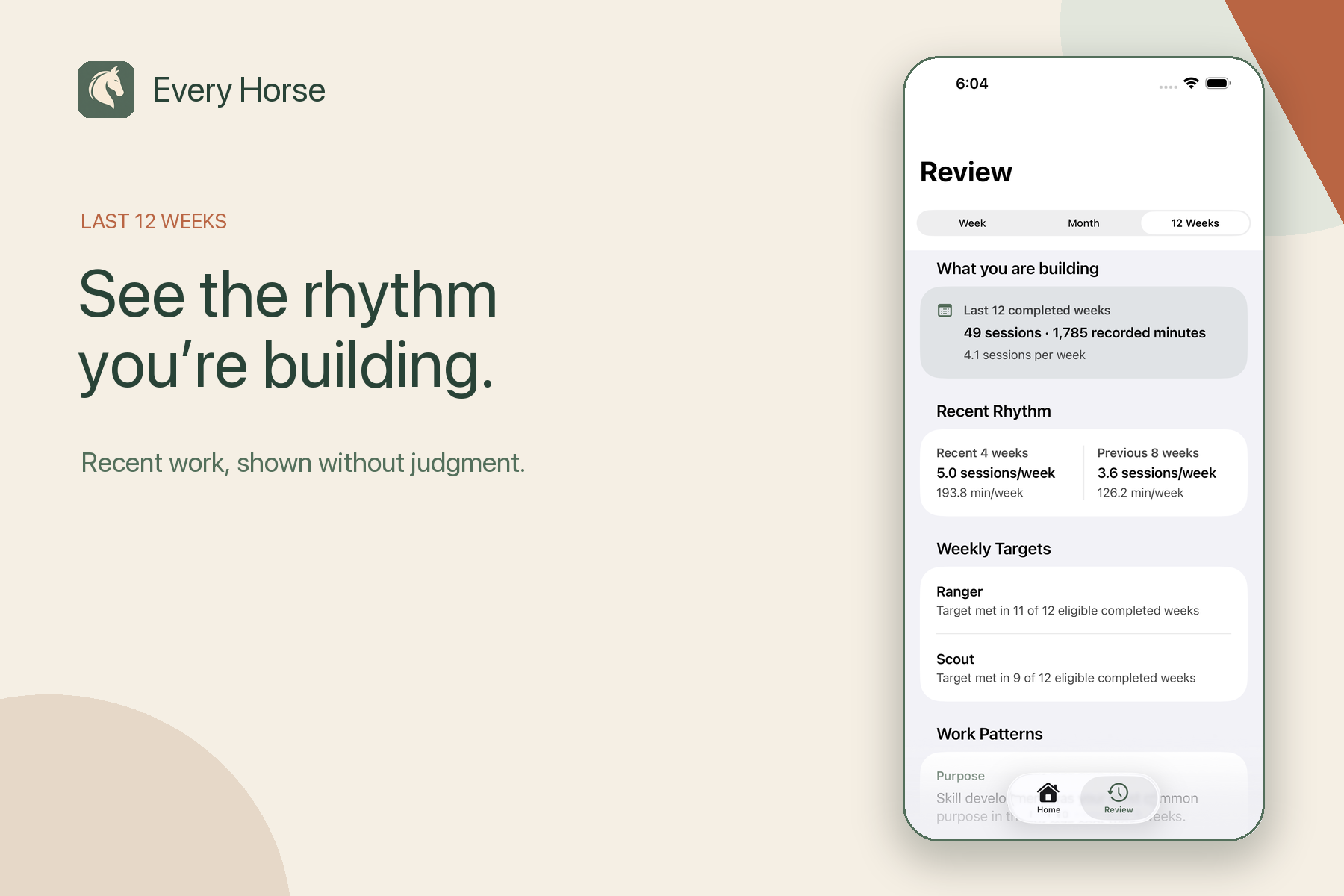
Compare the most recent four weeks with the previous eight to see how your sessions, time, and training rhythm are taking shape.
-
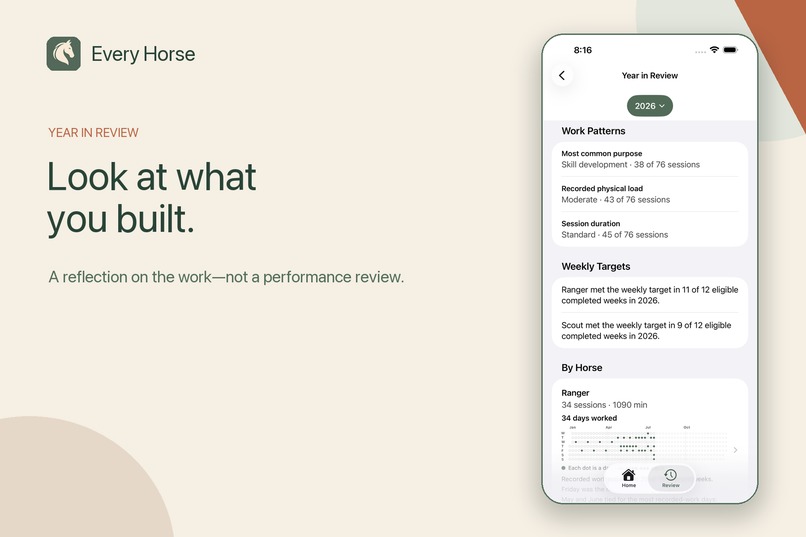
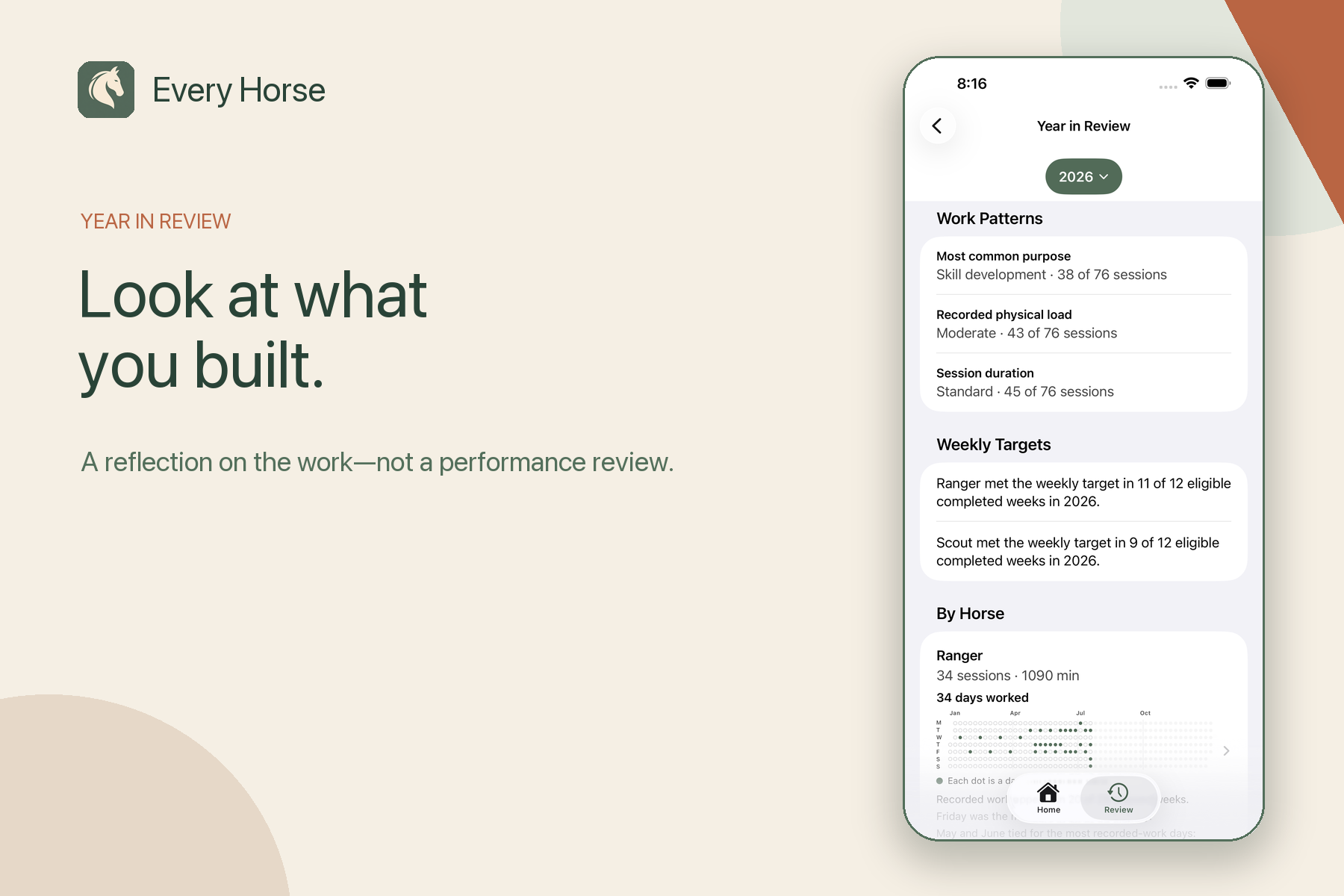
A year of sessions becomes something visible: work patterns, weekly intentions, and each horse’s recorded rhythm.
Every Horse: The app I spent years searching for—and built in one week
For years, I kept searching the App Store for an app I was sure someone must have made.
I downloaded riding journals, barn-management systems, habit trackers, and general-purpose planners. I tried to make each one fit. None of them answered the simple questions I actually had:
When did I last work this horse? How many times have I worked each horse this week? What has all of that work added up to?
I run a business, raise three children, and care for multiple horses with different needs. In the hustle of everyday life, I would genuinely forget whether I had worked a particular horse two, three, or four times that week. Reconstructing it meant mentally replaying days: I rode these two horses on Tuesday, then worked my other horse on Thursday…or was that last week?
The uncertainty created an enormous amount of guilt. Without a record, my brain defaulted to telling me I had not done enough.
The horse apps I found tended to solve different problems: mapping rides with GPS or managing stable logistics such as veterinary care, farrier schedules, and feed. Those tools could be useful, but none helped me remember the shape of everyday work across my own horses.
Habit trackers made that feeling worse. They are built around daily repetition, streaks, and empty boxes. But the goal was never to work every horse every day. Rest is not failure, and different horses should not have identical schedules. A young horse may need several short, light sessions; an older horse may do fewer, longer, more demanding sessions. A row of missed days cannot tell that story.
I did not need an app to judge me or prescribe a training program. I needed one to remember the truth.
That is why I built Every Horse.
What Every Horse does
Every Horse is a calm, native iPhone training tracker for riders with one or several horses. Its promise is:
Keep every horse in work—without keeping it all in your head.
A rider can create a profile for each horse, choose an optional weekly session target, and log completed work in seconds. A session can be an arena ride, trail ride, lesson, competition, groundwork, lunging, hand walking, or something else. The rider records the session’s duration, primary purpose, and the horse’s physical exertion, with space for one optional note.
The app then turns those small records into something more valuable: perspective.
Home answers the immediate question, “Where does every horse stand this week?” It shows current-week sessions and minutes, progress toward optional individual targets, when each horse was last worked, and recent activity.
Review helps riders see what their effort is building across a week, a calendar month, the most recent 12 completed weeks, or an entire year. It surfaces understandable facts and neutral patterns: how work was distributed across horses, which kinds of sessions occurred, how recent rhythm compares with earlier weeks, and how consistently a rider met the intentions she chose for each horse.
Every conclusion remains connected to the underlying records. There are no mysterious scores, competitive rankings, red failure states, or instructions about what a horse “should” do next.
Tracking is the input. Reflection is the real product.
From no software experience to a working native app
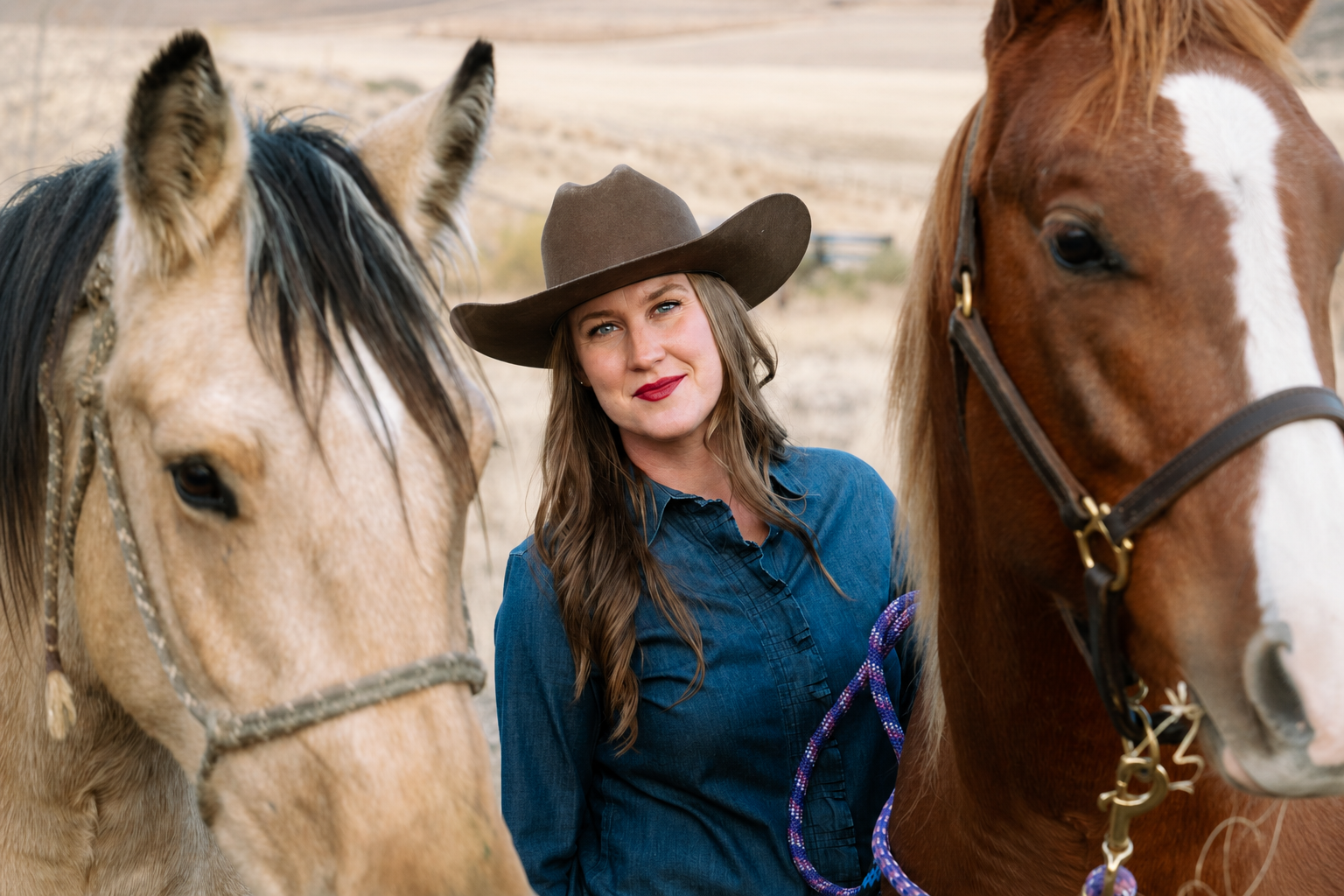
Before OpenAI Build Week, I had never built software. I'm a cowgirl, not an iOS engineer.
Every Horse did not exist as a prototype, codebase, or half-finished side project. On July 13, it was an idea I had carried for years. I began working through that idea with Codex on July 15, created the first Git checkpoint on July 16, and had a complete native product running on my own iPhone within days.
Using Codex and GPT-5.6 changed what was possible for me.
I brought the lived experience, product intent, and taste. I explained what riders feel, what existing products get wrong, which distinctions matter, and how I wanted the app to make someone feel. Codex helped turn those ideas into explicit product rules, technical architecture, Swift code, tests, accessibility behavior, and a repeatable release process.
We worked as a product and engineering pair. I would describe an outcome in ordinary language. Codex would translate it into acceptance criteria and identify the hidden decisions. We would build one small vertical slice, run it in the iPhone Simulator, inspect the real interface, test edge cases, and refine it. When something was technically correct but felt too clinical, too busy, or too judgmental, I changed the direction. Codex then carried that decision consistently through the interface, business rules, persistence, and tests.
The result is a native Swift 6 and SwiftUI application using Apple’s SwiftData framework for local persistence and StoreKit 2 for subscriptions. It has no third-party dependencies, no advertising, no analytics, no Every Horse account, and no backend collecting horse or session information. Riders’ training records remain local and private.
By the end of the build, Every Horse contained more than 13,000 lines of Swift across the app and its tests. The release candidate passed:
- 87 unit tests across 22 suites
- 31 complete UI journeys
- Focused accessibility testing at the largest Dynamic Type sizes
- Dark-appearance and increased-contrast inspection
- Simulator and physical-iPhone installation checks
The app has a complete onboarding experience, local persistence, session creation and editing, confirmed deletion with Undo, multi-horse history, active and paused horse states, accessible layouts, subscriptions, a production icon, App Store screenshots, public support and privacy pages, and an App Store Connect build that Apple successfully processed.
This became much more than a hackathon mockup. It became a real product I now use.
The defining challenge: revealing effort without turning it into a score
The hardest part was not counting sessions. It was making sure the app could reveal effort without turning that effort into a score.
Most tracking products quietly assume that more is better, every goal should be maximized, and an unfilled day represents failure. That logic would have reproduced the exact guilt I wanted Every Horse to solve.
So we created a different product language and encoded it into the app’s behavior.
Weekly targets are optional and belong to individual horses. They are context, not grades. A paused horse is called Paused, not neglected, behind, or inactive in a way that implies failure. The app says what happened without claiming whether it was good or bad. It shows patterns without turning them into training or health recommendations.
Even the calendar required careful thought. Future days must not look like missed work. Several sessions on one day count as one worked day in a rhythm view. A target changed halfway through a week cannot honestly be applied to the entire week, so that transition week is excluded rather than labeled a success or failure. Current partial weeks are never treated as misses.
Those may sound like small wording or calculation choices. Together, they determine whether the app feels like proof of effort or another source of pressure.
Building for horses with different needs
Another major challenge was representing different kinds of work without flattening them into a single idea of productivity.
A 12-minute session with a young horse is not automatically less valuable than a 45-minute ride with an older horse. Duration, purpose, and physical load describe different things. Every Horse therefore records them separately.
Duration is classified automatically as Micro, Standard, or Extended, but no category is presented as better. Physical load describes the horse’s bodily exertion—not the difficulty of the skill, the quality of the ride, or the rider’s emotions. A rider can see that two horses are following different rhythms without being told those rhythms should be equal.
That distinction came directly from lived experience. Codex helped me turn it into typed, testable rules that remain consistent everywhere the app summarizes work.
What I learned
I learned that building software is not primarily about having every answer at the beginning. It is about making one clear decision at a time, testing that decision against reality, and preserving its meaning as the product grows.
I learned that lived experience is a form of technical knowledge. I may not have arrived knowing Swift, persistence models, calendar arithmetic, accessibility APIs, or StoreKit. But I knew the problem with extraordinary precision because I had lived it for years. I knew why a streak was wrong, why “paused” mattered, why a young horse’s short session still counted, and why a rider needed evidence more than advice.
Codex gave me a way to translate that knowledge into working software.
I also learned that AI-assisted building does not remove the need for human judgment—it makes that judgment more consequential. Codex could implement, test, inspect, and iterate at a speed I never imagined. My responsibility was to decide what the product should mean, protect its boundaries, and keep asking whether it truly respected the person using it.
The most valuable parts of Every Horse came from that collaboration: human experience defining the problem, and Codex making it possible to explore and execute the solution with engineering depth.
What's next
Every Horse is headed toward App Store release. After launch, I want to explore private Apple-account continuity and rider-controlled ways to share meaningful reflections—without compromising the calm, local-first foundation that makes the app trustworthy.
Why this matters
Every Horse serves a specific audience, but the underlying problem is universal.
People often abandon tracking tools because those tools turn imperfect lives into failure states. They measure behavior without understanding intent. They show what was missed more loudly than what was accomplished.
Every Horse demonstrates another possibility: technology that helps people remember accurately, understand patterns, and make their own decisions—without grading them.
For years, I kept looking for this app because I wanted relief from the mental load of managing multiple horses and the guilt of never knowing whether I was doing enough.
During Build Week, I finally stopped searching and built it.
Now, when I wonder what I have done with each horse, I do not have to reconstruct the week, rely on guilt, or keep everything in my head.
I can look at the evidence and say:
Look at what you built.

Log in or sign up for Devpost to join the conversation.