Inspiration
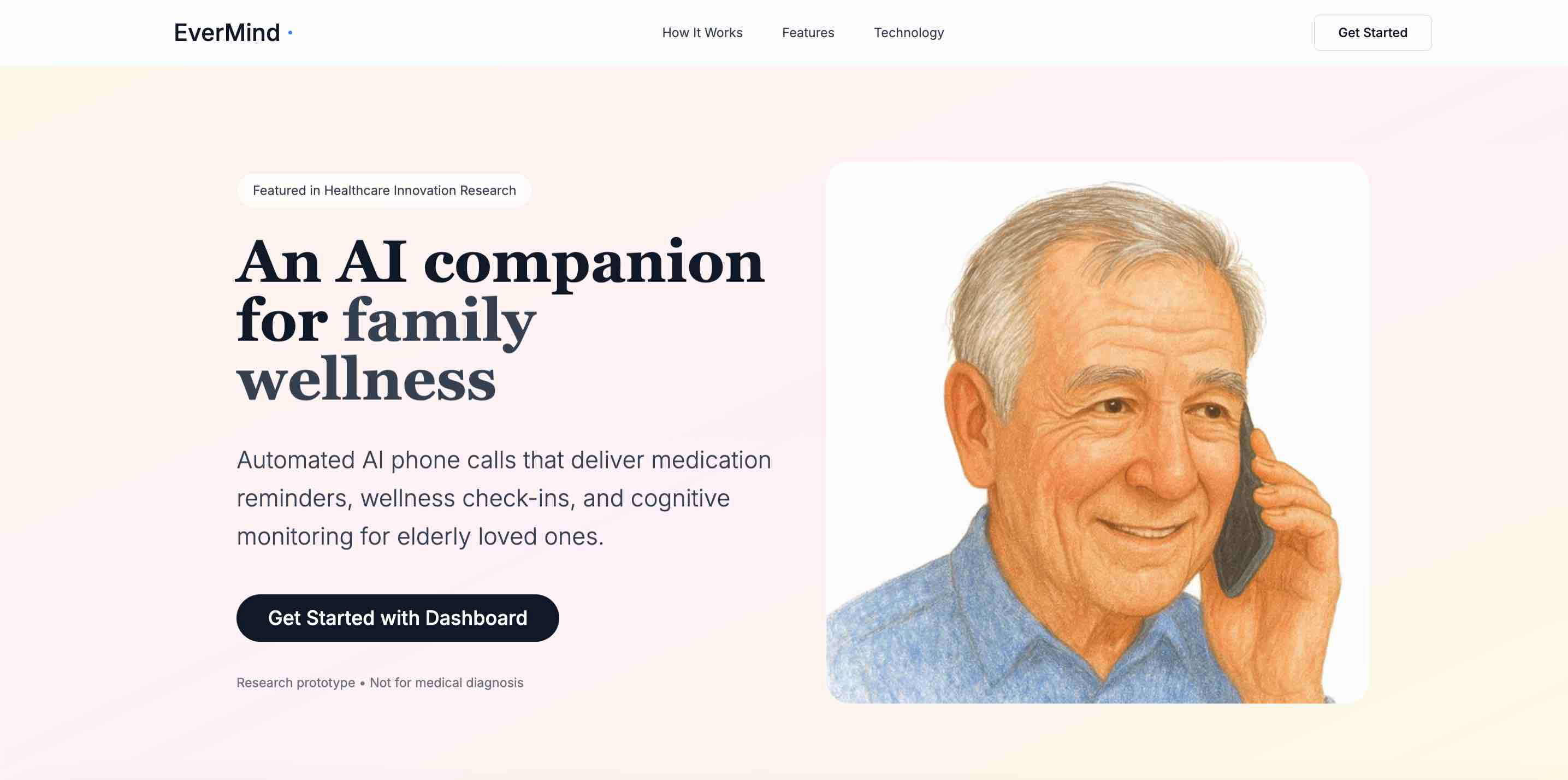
Over 55 million people worldwide live with alzheimers, and many struggle with missed medications, isolation, and safety risks. We noticed that families and caregivers need simple tools that actually reduce daily burden without adding new apps to learn. A phone call is universal. We set out to build a compassionate caller that blends reminders with light cognitive check-ins and clear dashboards so people can stay independent longer and caregivers can spot changes early.
What it does
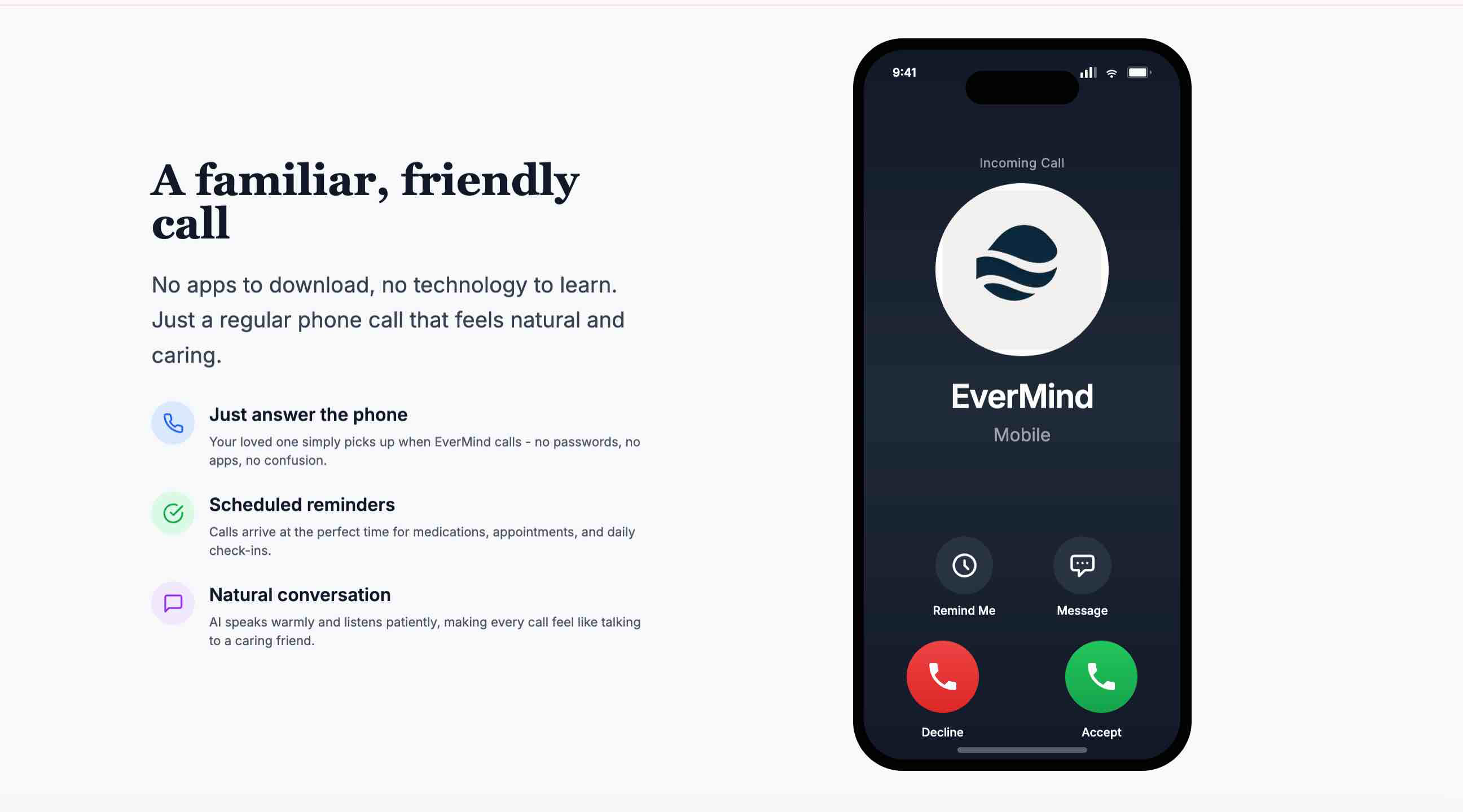
- Makes automated, natural-sounding calls using ElevenLabs voices.
- Provides smart reminders for medication, appointments, bills, and daily wellness check-ins.
- Detects emergency keywords and alerts caregivers instantly via SMS.
- Tracks speech patterns, recall, coherence, sentiment, and repetition to infer cognitive changes over time.
- Learns the best call frequency per user with Bayesian Thompson Sampling.
- Displays real-time analytics and call transcripts on a clean caregiver dashboard.
How we built it
Frontend: Next.js 14 dashboard with Tailwind CSS and shadcn/ui for real-time cognitive trends, call history, and reminder management.
AI & Voice: Twilio for telephony, transcription, and SMS alerts; Gemini for context-aware conversation; ElevenLabs for natural speech output.
Data & Analysis: Supabase + PostgreSQL for storage and live updates; post-call analysis scores orientation, recall, verbal fluency, response latency, and repetition.
Integration: Calls trigger start, mid, and end checkpoints that collect brief, phone-friendly cognitive tasks and push results to the dashboard immediately.
Challenges we ran into
- Making AI conversations feel caring and clear rather than robotic.
- Getting reliable cognitive signals from short phone interactions.
- Managing API interplay among Twilio, Gemini, and ElevenLabs without latency spikes.
- Designing a dashboard that is simple for families but still useful to clinicians.
- Staying within wellness scope while preparing for future clinical validation.
Accomplishments that we’re proud of
- Built a full end-to-end system in 36 hours that can place calls, converse, and log analytics.
- Implemented speech-based cognitive tracking inspired by validated telephone screens.
- Delivered a real-time dashboard with trends, transcripts, and reminder controls.
- Created an adaptive scheduler that tunes call frequency per user.
- Laid a clear path toward research pilots and future clinical integration.
What we learned
- How to orchestrate multiple AI and telephony services into a smooth caller experience.
- Voice interfaces are powerful for accessibility when designed with empathy.
- Small UX details like pacing, confirmations, and tone greatly affect trust and engagement.
- Bayesian bandits are practical for personalizing outreach without overcalling.
- Tight collaboration and rapid prototyping make complex health tech feasible on a hackathon timeline.
What’s next for Evermind
- Validate cognitive metrics against reference phone screens in a small pilot.
- Partner with care facilities and neurology clinics to study real-world outcomes.
- Add multilingual support for international families and communities.
- Expand emergency detection with richer acoustic and sentiment cues.
- Prepare HIPAA-ready deployments and consent workflows for clinical use.
- Build companion mobile apps and smart speaker skills for broader access.
Built With
- elevenlabs
- google-gemini
- node.js
- supabase
- twilio
- typescript


Log in or sign up for Devpost to join the conversation.