Inspiration
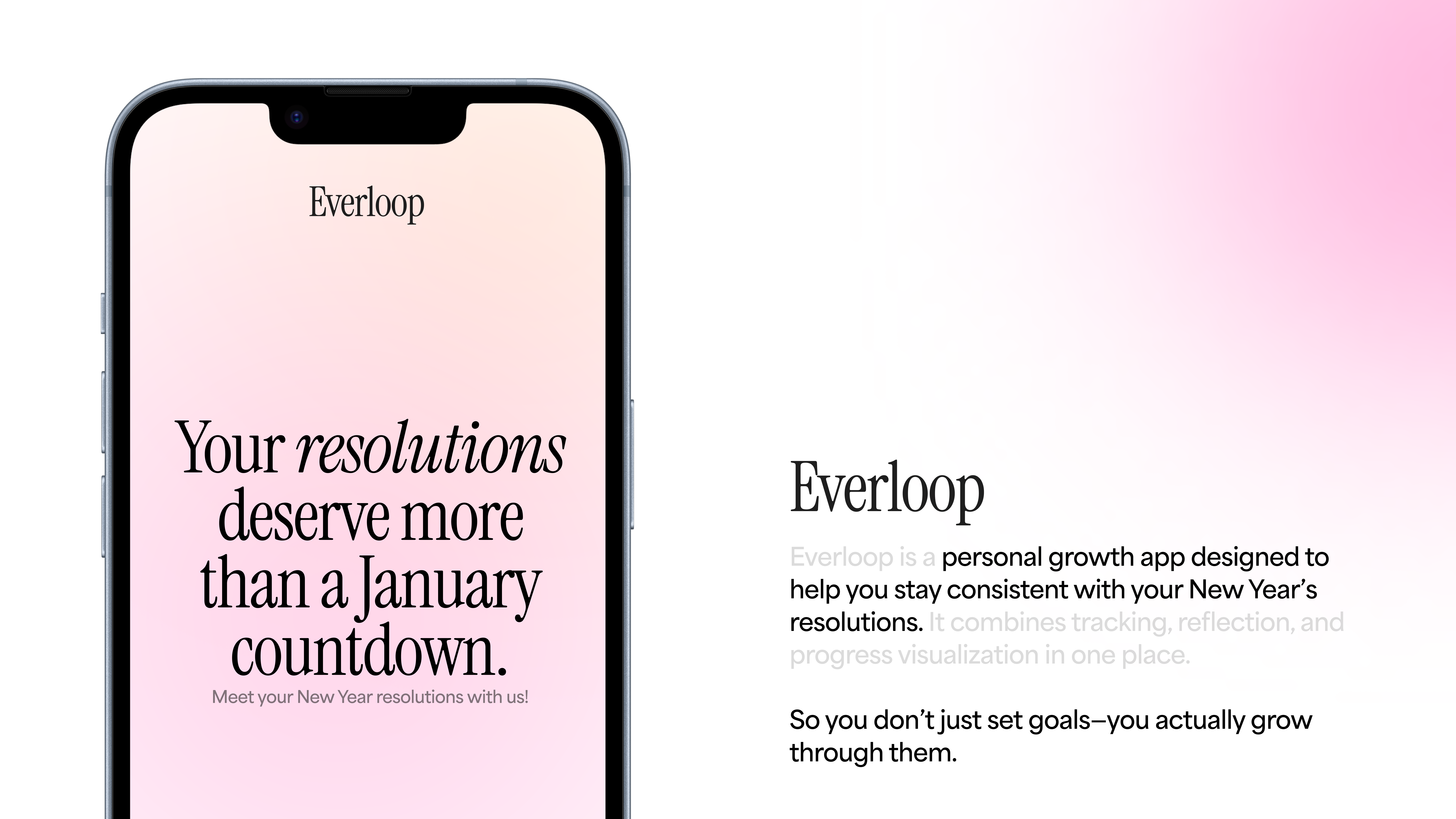
The idea started with a simple observation: most resolution apps measure what you haven't done yet. They count the days you missed, the streak you broke, the gap between where you are and where you said you'd be. We wanted to build the opposite — an app that looks backward to push you forward. The inspiration came from a question: who is the most credible person to motivate you? Not a celebrity. Not a generic quote. You. The version of you who showed up on a hard day three months ago. The version who came back after a break. The version who hit a number they set for themselves at the start of the year. That person is real, that progress is yours, and no external motivator is more powerful than being shown proof of your own growth.
We also noticed that every culture has its own way of beginning — 12 grapes at midnight, goals tied to your age, lunar calendars, seasonal rhythms. None of them start on January 1st, and none of them look the same. We wanted to build something that met people inside their own tradition of setting/ tracking goals, and then used that tradition as the lens through which their growth gets measured and reflected back to them.
What it does
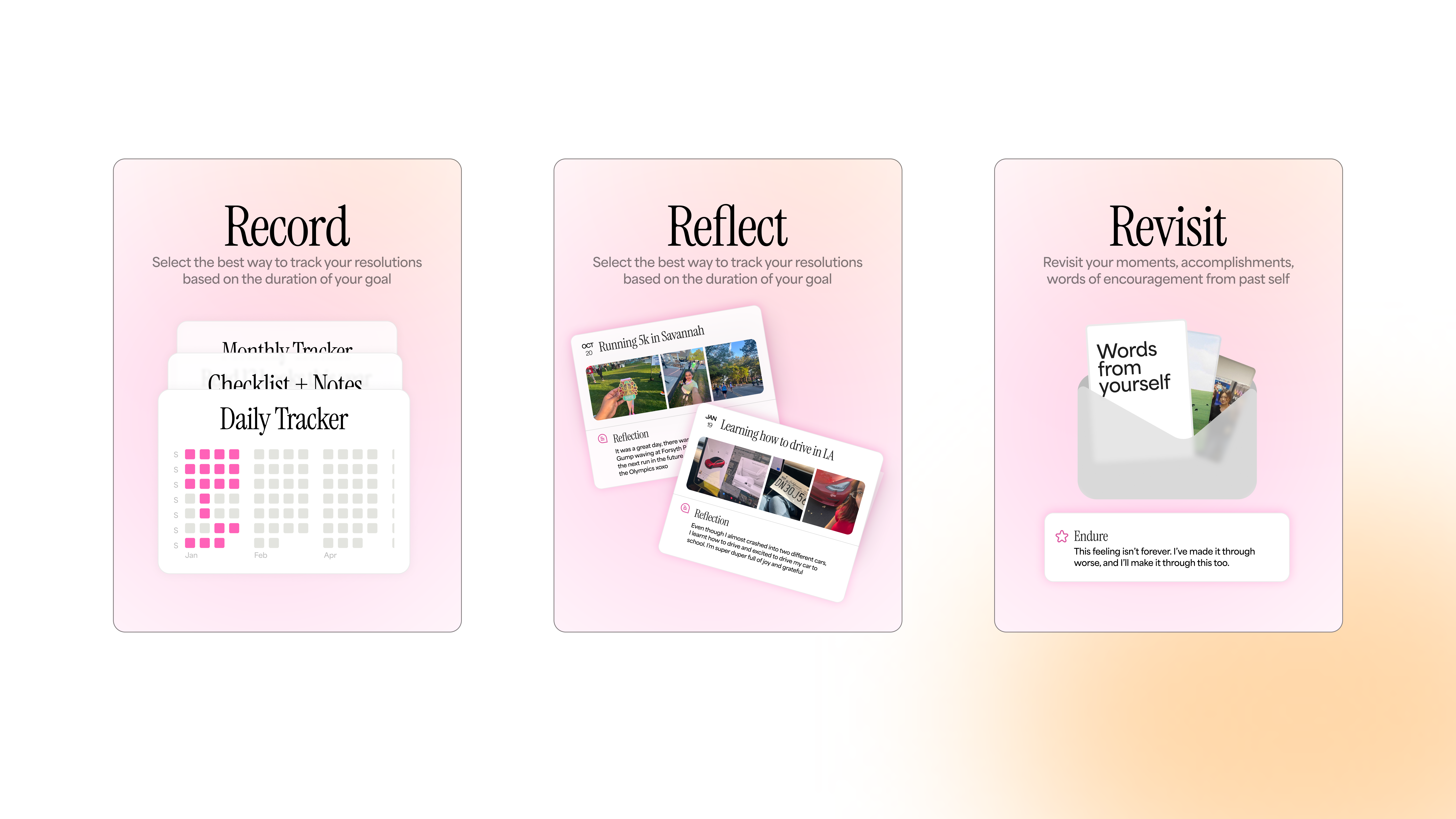
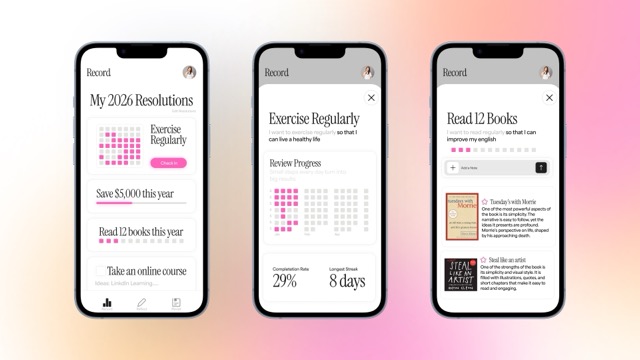
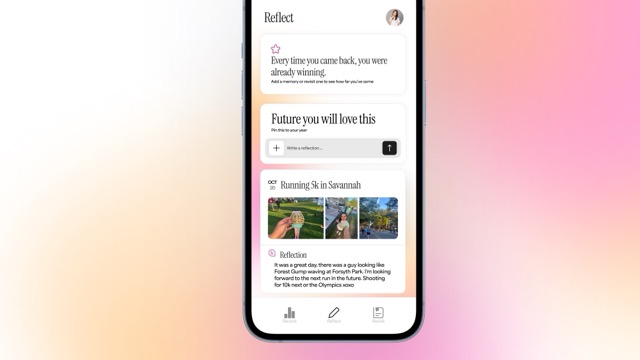
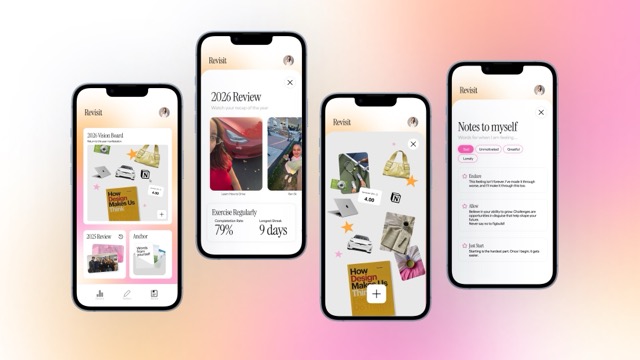
The app is built around one idea: the most powerful motivation you will ever encounter is your own past. Not a quote. Not a streak counter. Not a badge. The proof of what you have already done, shown back to you at exactly the right moment. Everything in the app flows through three features — the three R's. They are designed to work in sequence, each one building on the last.
How we built it
We started with the core philosophy before touching any features: the user is the inspiration. That framing changed everything. Instead of asking "how do we motivate users," we asked "how do we show users what they've already built?"
From that foundation we developed the three R's — Revisit, Reflect, Record — each one a different way the app uses the user's own past as fuel.
Challenges we ran into
The hardest challenge was resisting the temptation to add external motivation. Early versions of the Reflect feature included prompts, mood stamps, rotating quotes — things borrowed from other apps. Every time we added something external, the feature got weaker. The breakthrough was committing fully to the idea that the user's own history is the only motivation that matters. That meant stripping everything back and trusting the data the user had already generated.
Accomplishments that we're proud of
goal apps are built around the fear of stopping. Everloop is built around the joy of returning. That shift — from punishment to celebration, from streaks to stories, from external motivation to personal proof — is not a small design tweak.
What we learned
We learned that the best product decisions often look like removals. Every time we stripped something out — the journaling prompts, the mood stamps, the external motivational quotes, the streak counters — the product got stronger. The instinct when building an app is to add. The discipline is knowing what to take away. Everloop became what it is by subtraction as much as by addition.
Built With
- design
- figma


Log in or sign up for Devpost to join the conversation.