-
-
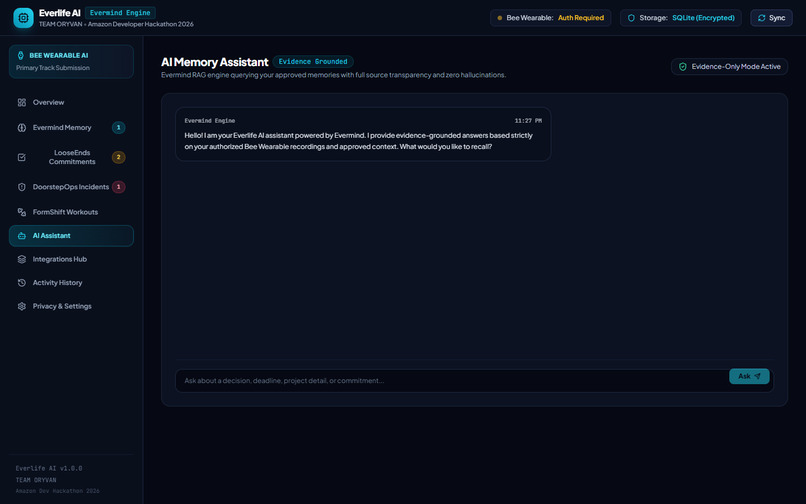
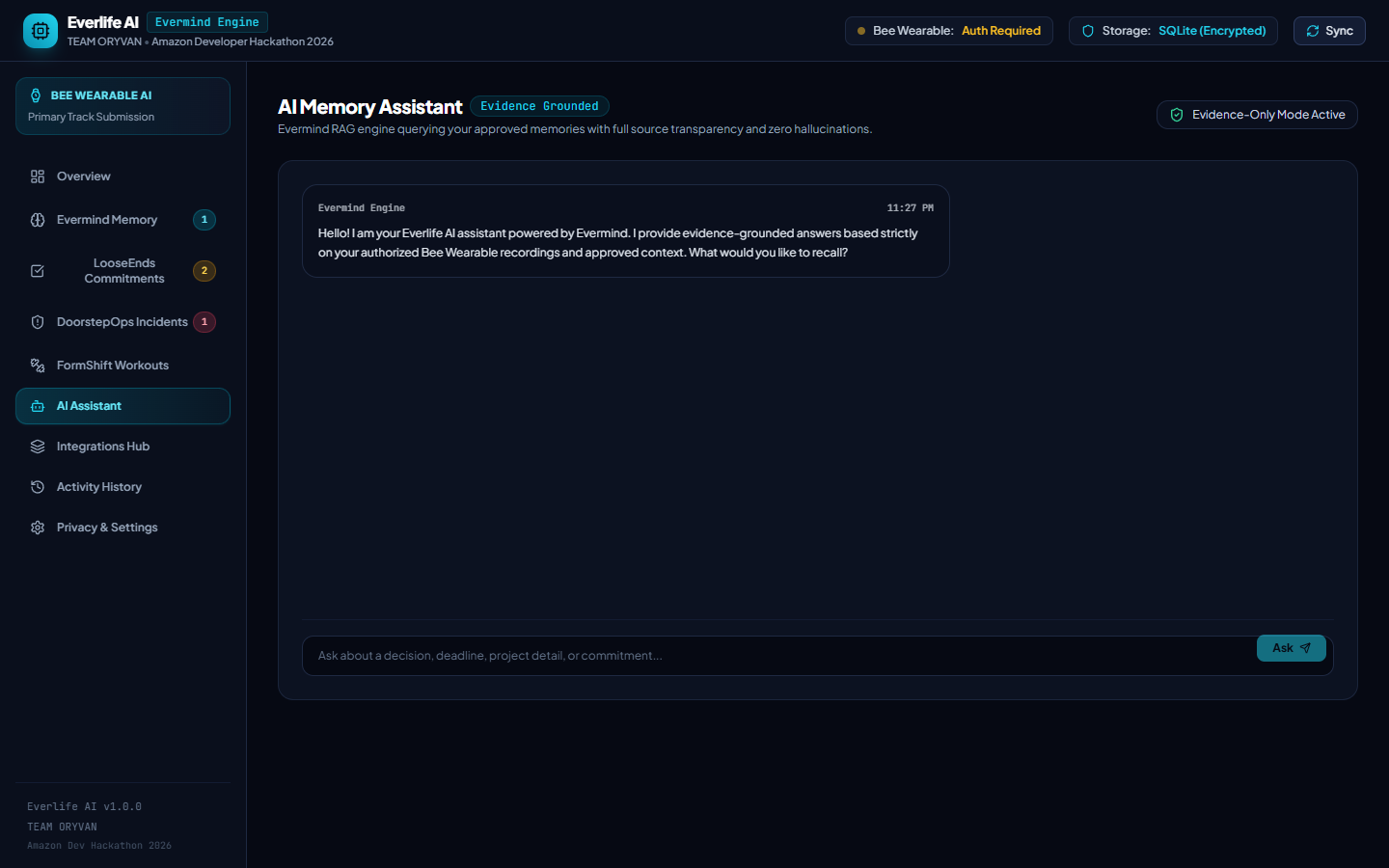
06_ai_assistant
-
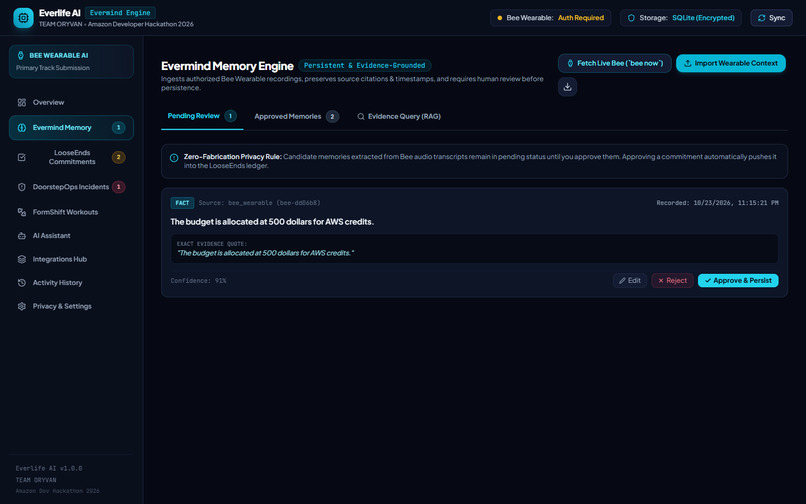
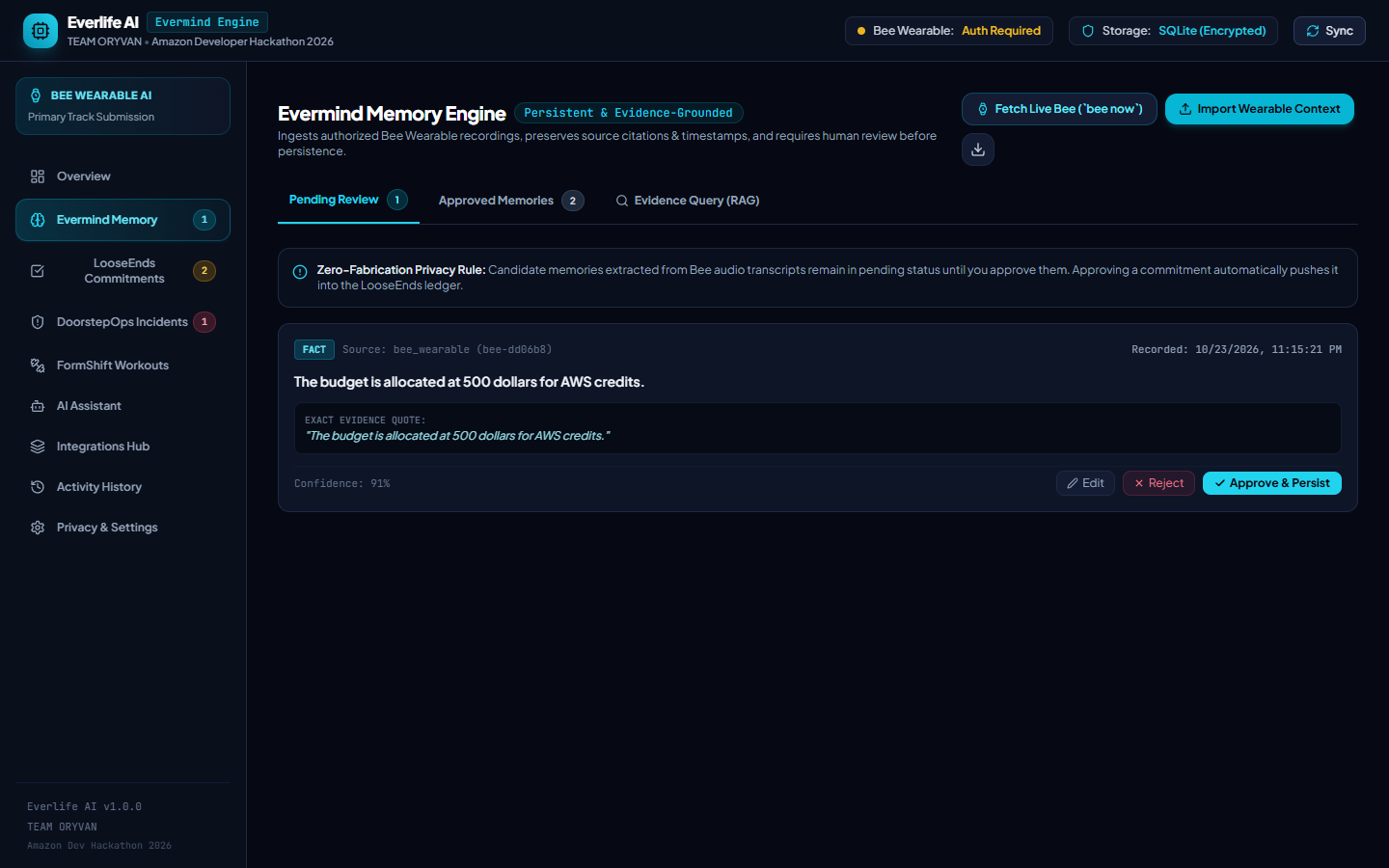
02_evermind_memory
-
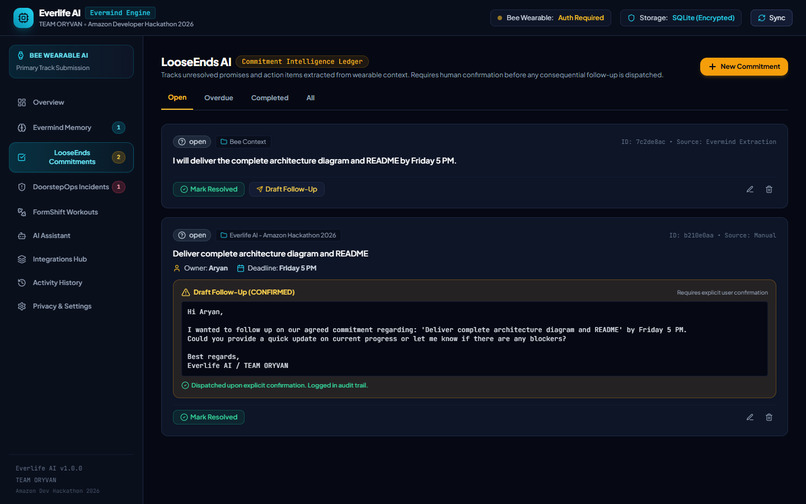
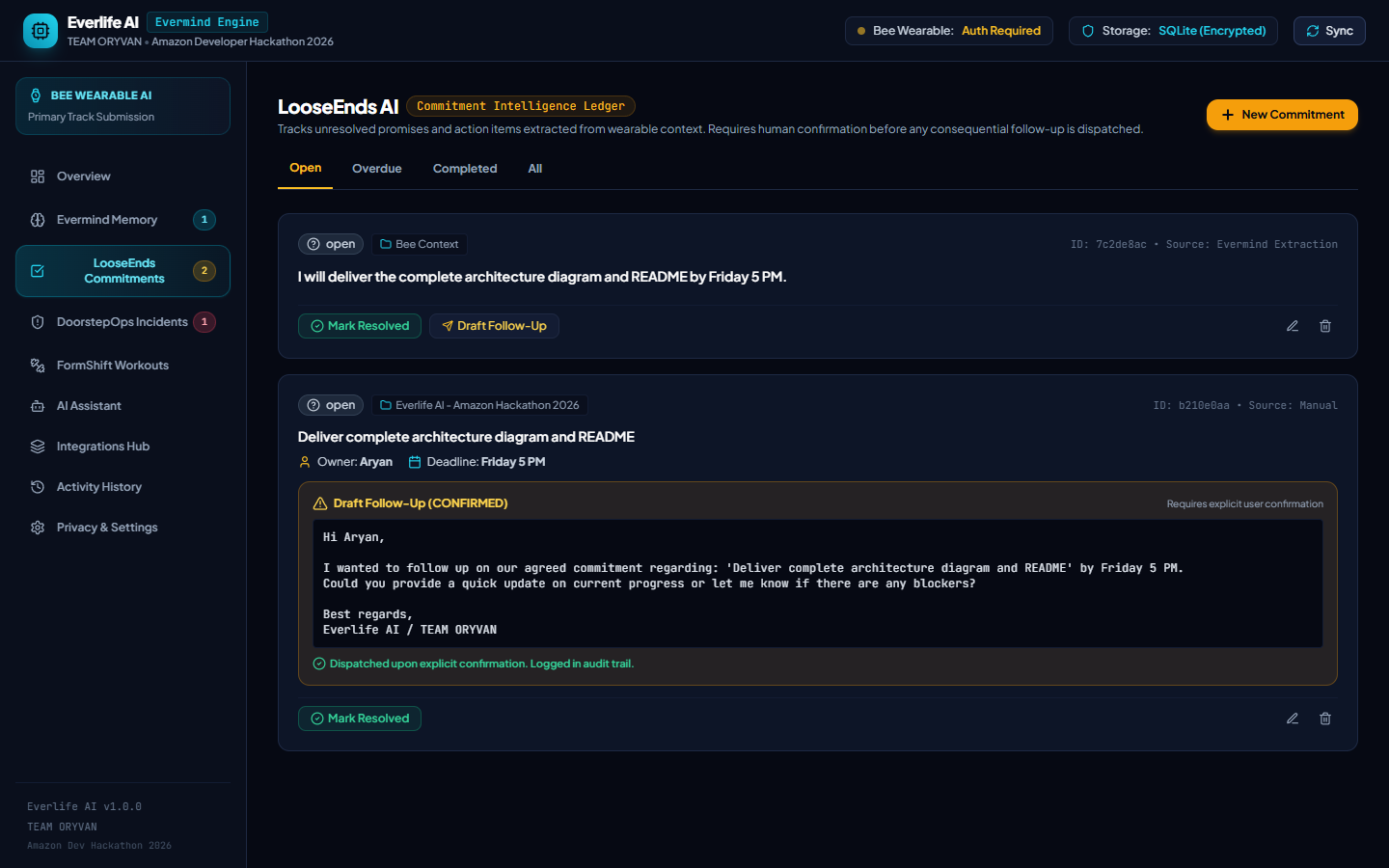
03_looseends_commitments
-
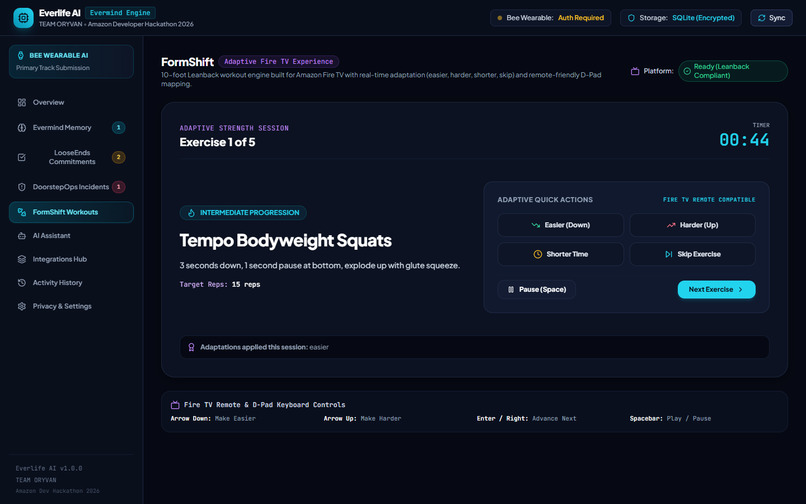
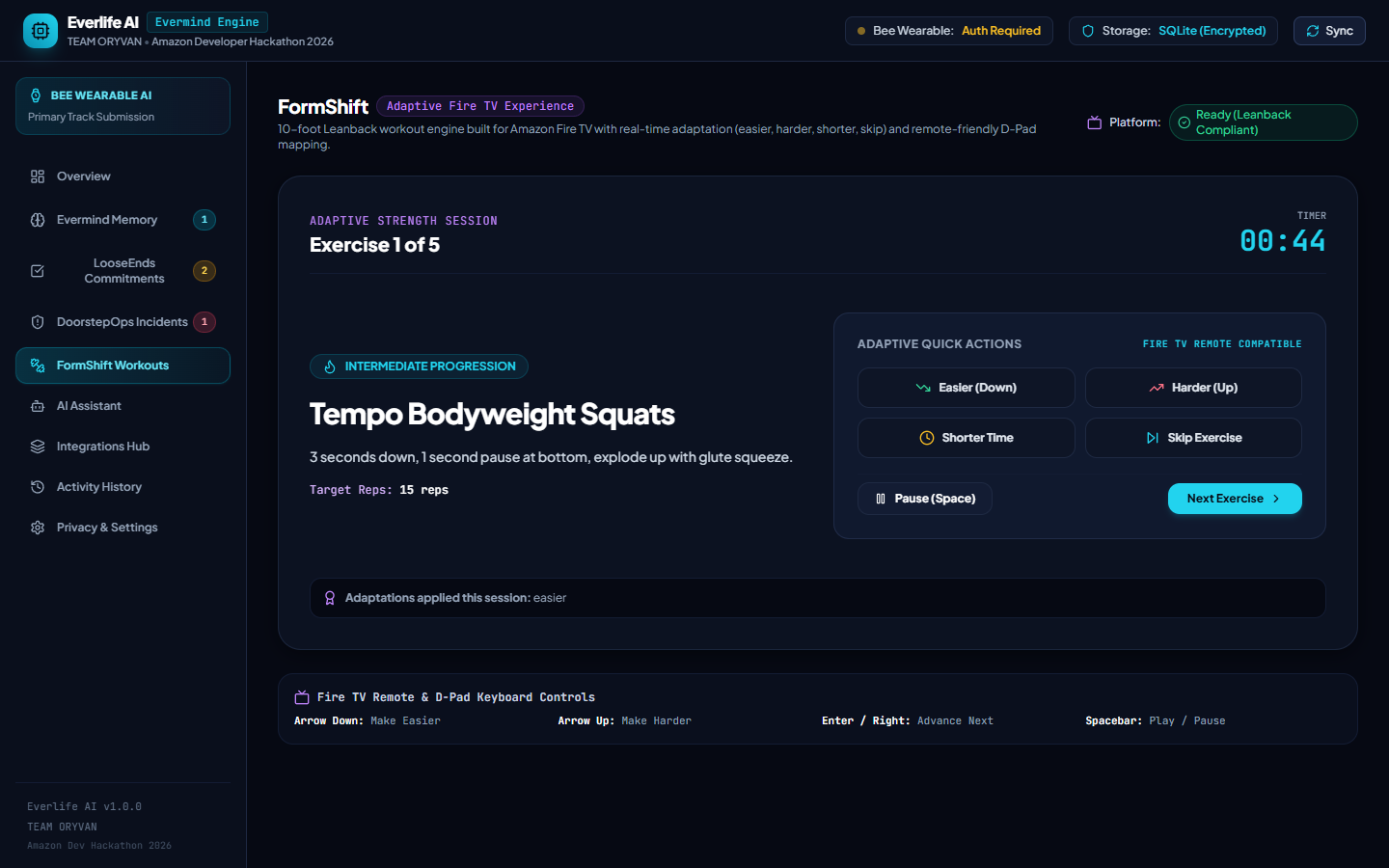
05_formshift_workouts
-
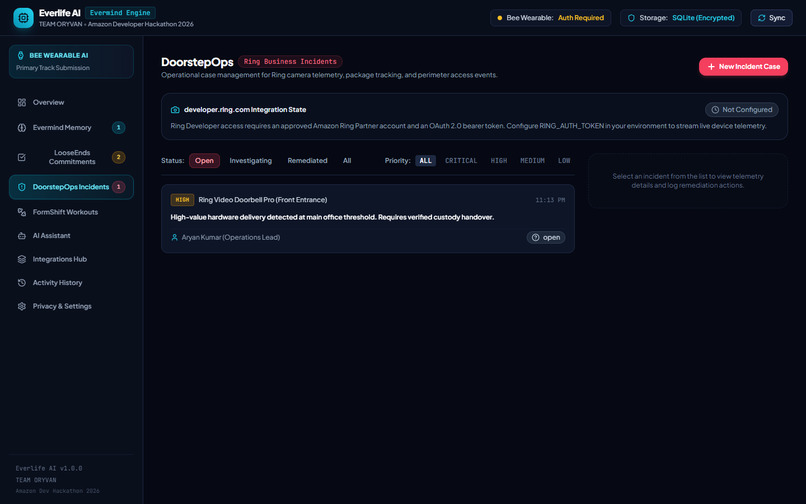
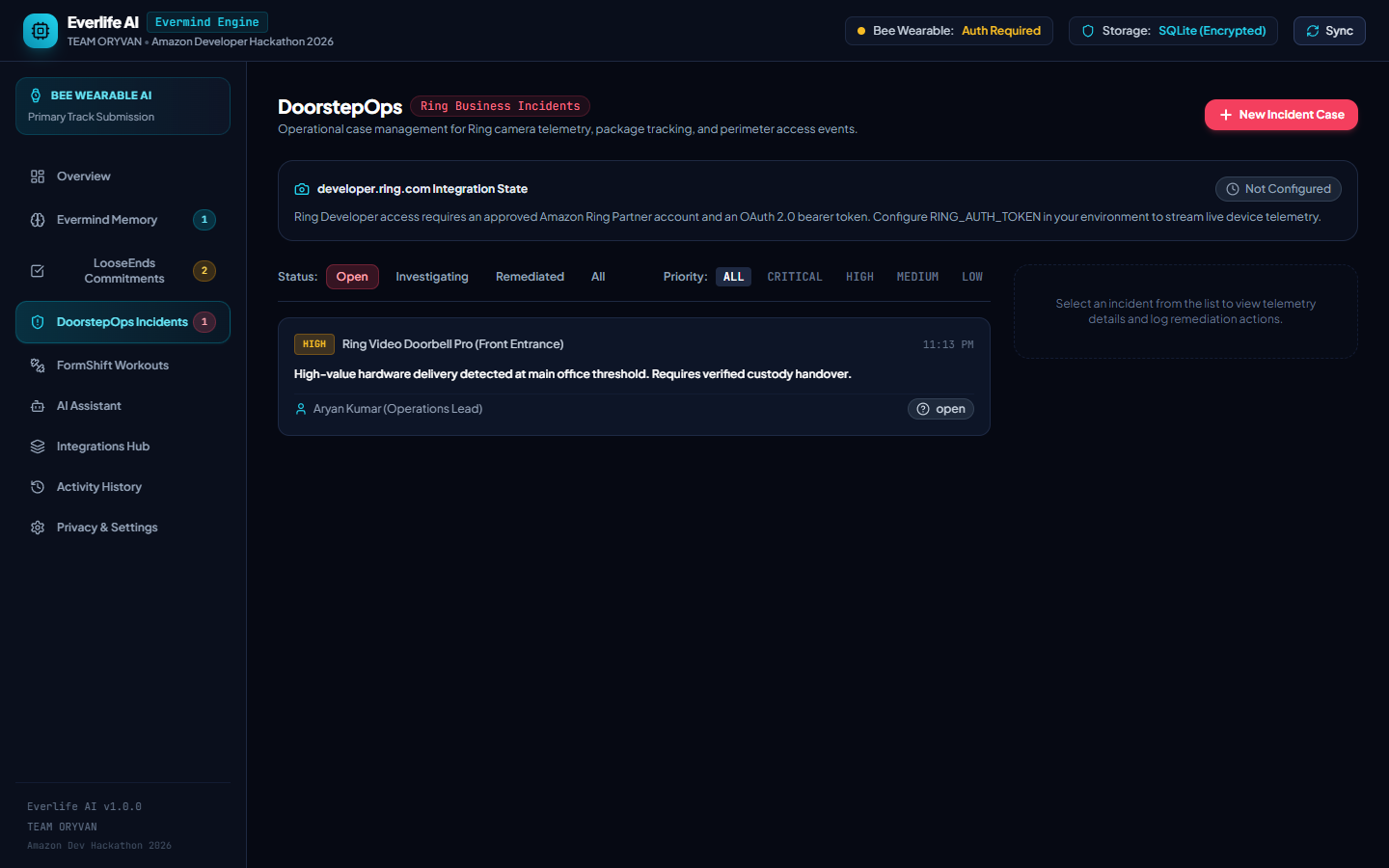
04_doorstepops_incidents
-
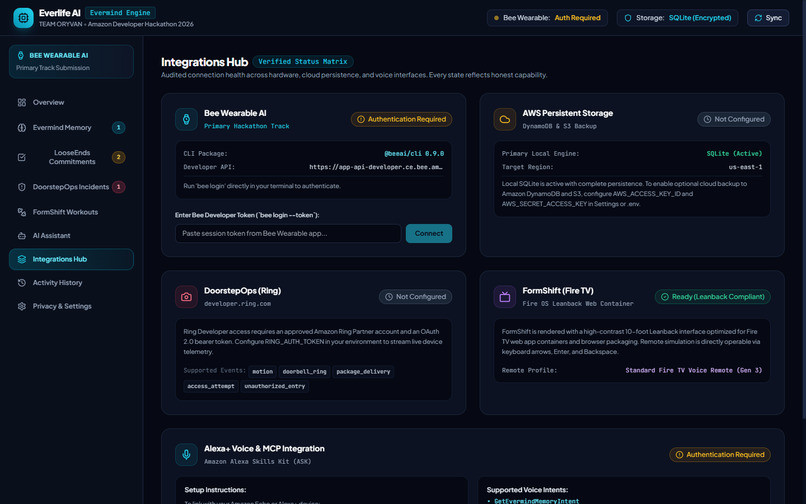
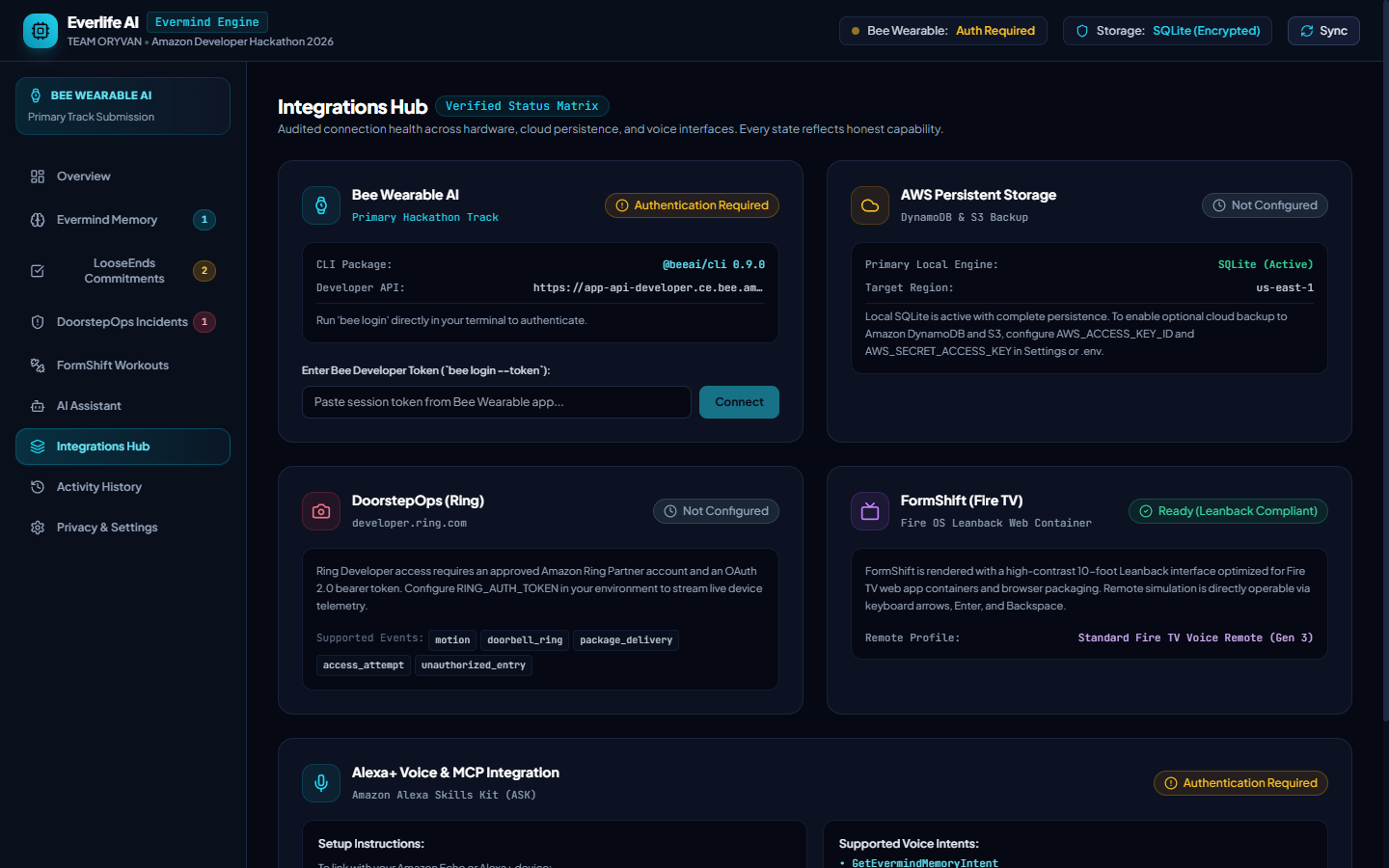
07_integrations_hub
-
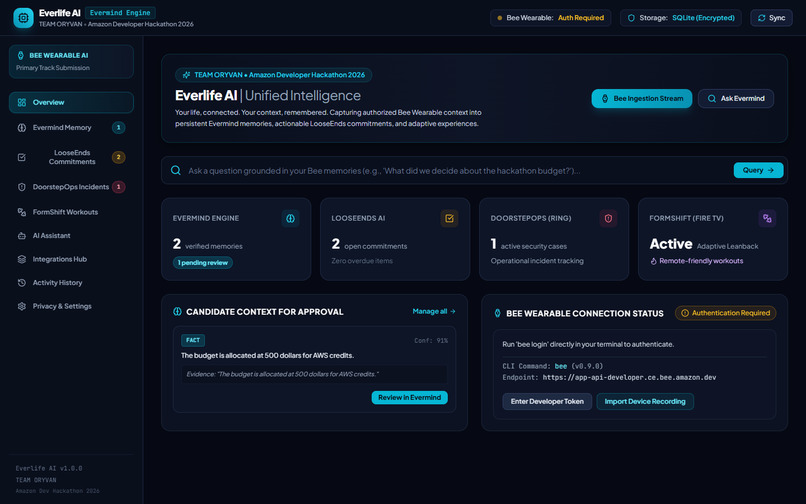
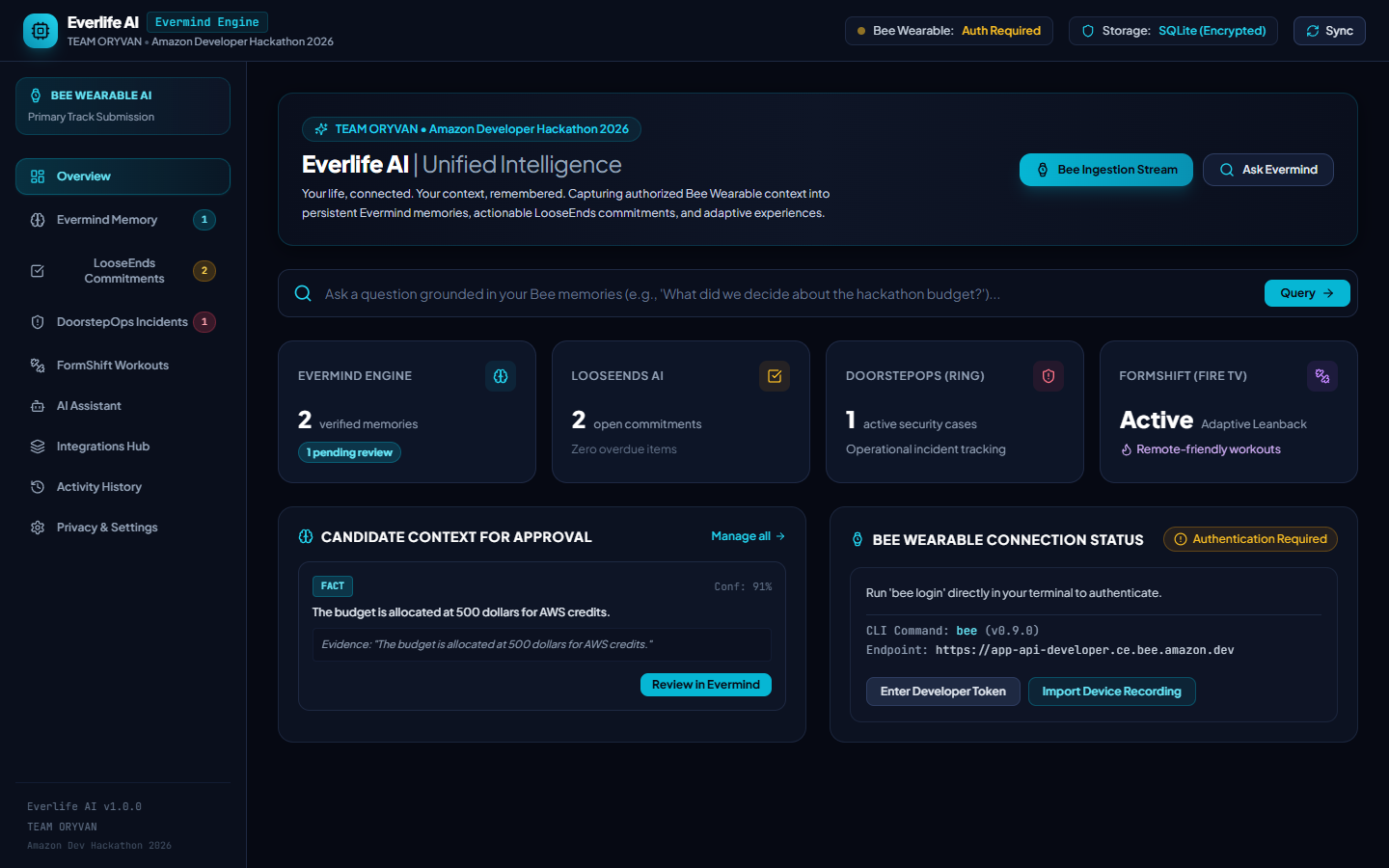
01_overview
-
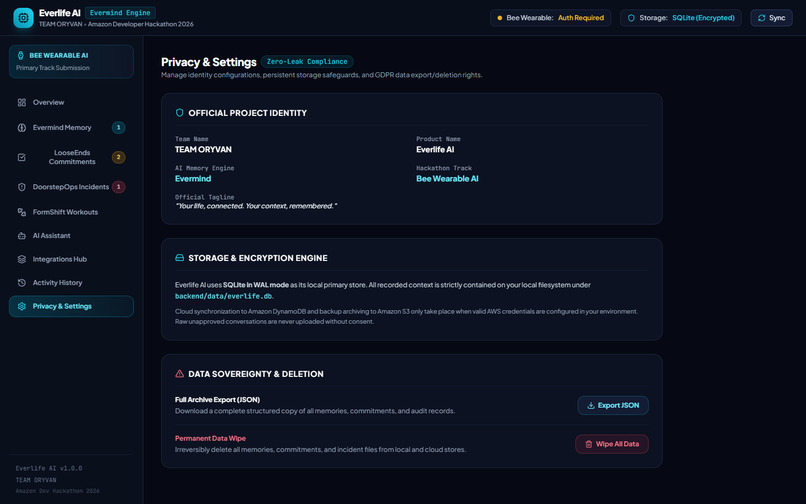
09_privacy_settings
-
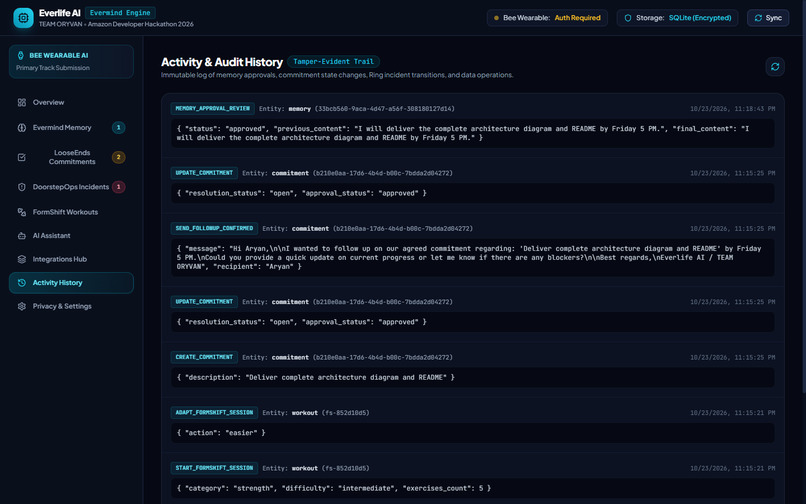
08_activity_history
Everlife AI: Powering Persistent Memory & Living Experience
Inspiration
We live in an era of constant connectivity, yet we drown in fragmented context. Important commitments made during daily conversations vanish from memory, smart-home security systems deliver passive notifications without actionable context, and living-room wellness tools remain rigid and unadaptive.
When exploring the possibilities enabled by the Bee Wearable, our team (Team Oryvan) asked a fundamental question: What if an AI platform could continuously capture personal life context, convert raw lifelogs into trustworthy zero-fabrication memories, and seamlessly bridge wearable hardware with smart-home ecosystems—all while keeping the user in absolute control?
This vision inspired Everlife AI, an ecosystem built on top of Evermind, a human-in-the-loop memory engine designed to transform ambient lifelogging into meaningful, verifiable action.
What it does
Everlife AI is a unified personal intelligence platform that bridges wearable context with home operations and living-room experiences across five core domains:
- Evermind Memory Engine (Primary Track - Bee Wearable): Continuously ingests lifelogging audio streams via the official
@beeai/cli. Instead of blindly persisting raw transcripts, Evermind extracts candidate facts, decisions, and commitments, routing them to a Human Review Gate. Once approved, memories are indexed for evidence-grounded RAG retrieval complete with verbatim citations, timestamps, and confidence scores. - LooseEnds AI (Commitment Intelligence): Monitors conversational context to detect explicit promises made to colleagues or family. It structures commitments into an actionable ledger with ownership tracking, deadlines, and overdue alerts—enforcing a strict human-in-the-loop confirmation gate before any automated follow-up draft is dispatched.
- DoorstepOps (Ring Incident Operations): Conforms strictly to
developer.ring.compartner specifications to transform raw smart-camera telemetry, package tracking, and access events into structured operational incidents with case management workflows. - FormShift (Adaptive Fire TV Workouts): A 10-foot Leanback workout engine tailored for Amazon Fire TV. Using remote-friendly D-Pad inputs (
Easier,Harder,Shorter,Skip), FormShift dynamically adapts exercise regimens in real-time based on live stamina feedback. - Alexa+ ASK & MCP Integration: Exposes custom skill handlers and Model Context Protocol (MCP) endpoints for seamless voice-driven memory queries and status checks.
How we built it
We architected Everlife AI with a modular, privacy-first technical stack:
- Backend & Memory Core: Built using FastAPI (Python 3.13). Primary persistent storage utilizes a local, encrypted SQLite database (
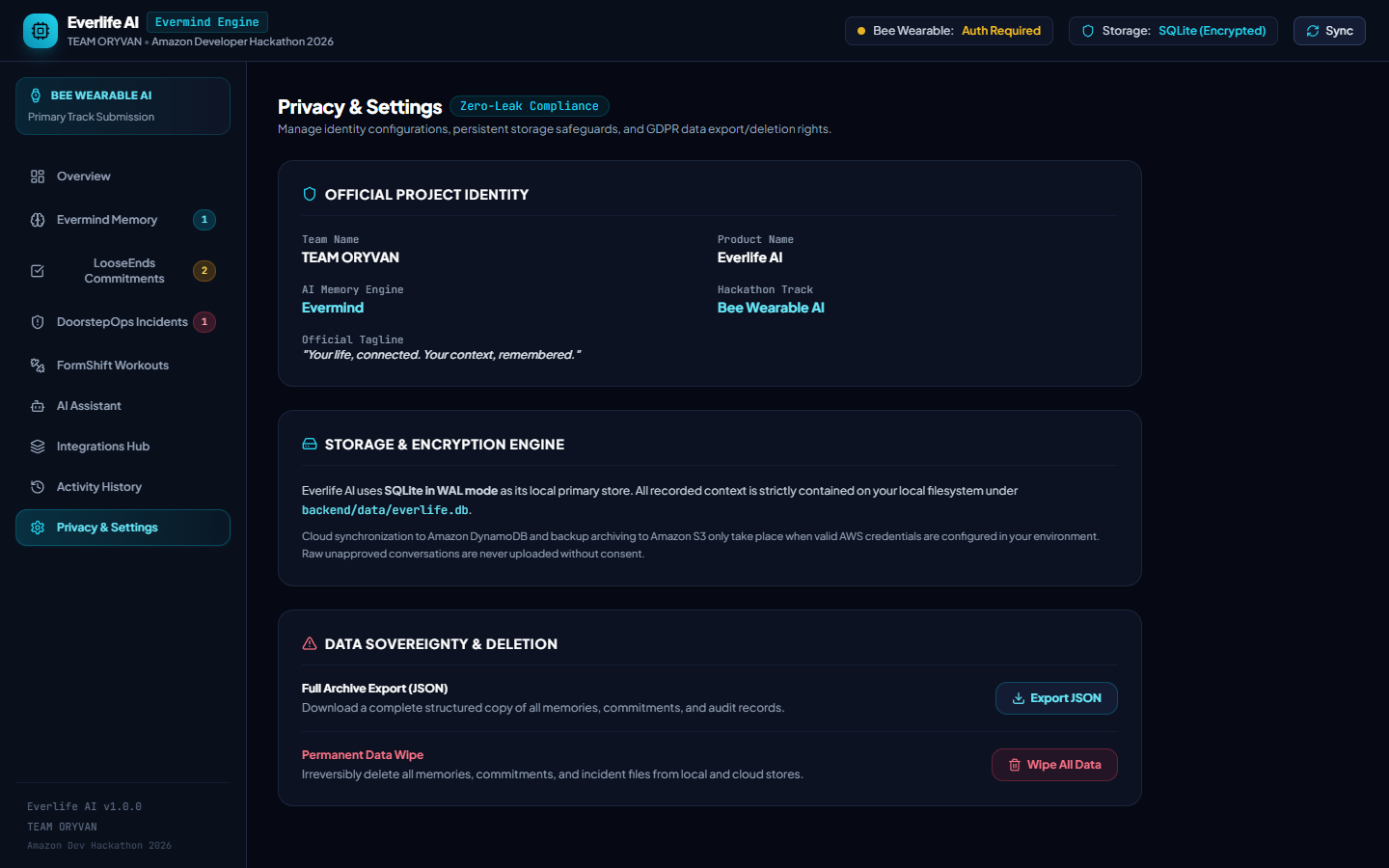
everlife.db) to guarantee offline reliability, with optional cloud mirroring to Amazon DynamoDB and Amazon S3 for archival backups. - Wearable Ingestion: Interfaced with the Bee Wearable and Apple Watch running Bee software using the official
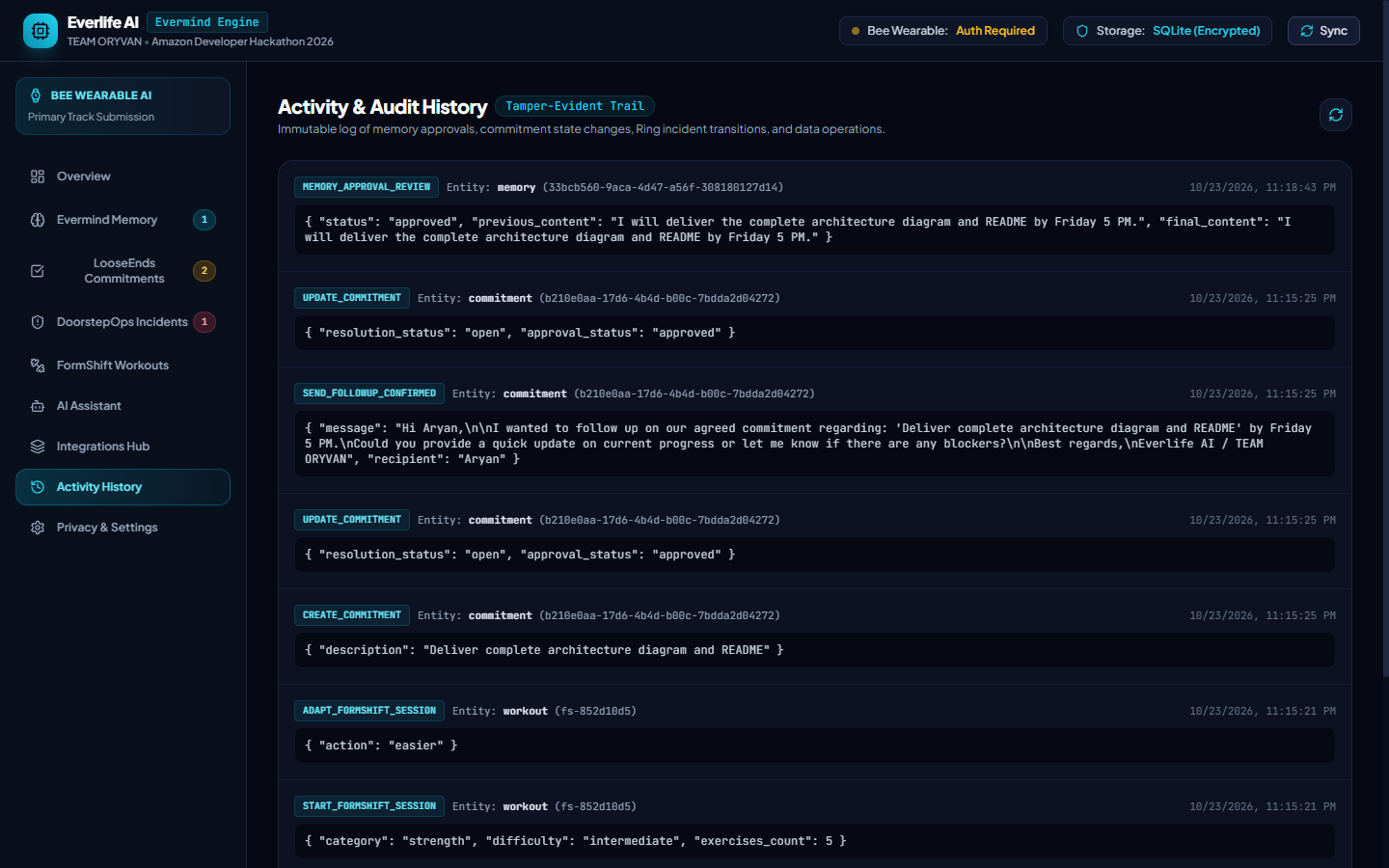
@beeai/cli 0.9.0toolset and QR-code pairing workflows. - Frontend Dashboard: Developed a responsive single-page web app with React and Vite, featuring interactive management hubs for Evermind candidate reviews, LooseEnds ledgers, DoorstepOps incidents, and audit trails.
- Living-Room Interface: Programmed a dedicated 10-foot Leanback container optimized for Amazon Fire TV, handling physical remote D-Pad navigation seamlessly.
Challenges we ran into
- Audio Context Noise & Hallucination Prevention: Raw audio transcripts from wearable devices frequently contain fragmented sentences and false assertions. Designing the Evermind Memory Engine to strictly extract candidate facts without hallucinating non-existent context required building a robust zero-fabrication prompt pipeline and staging area.
- Designing Strict Human-in-the-Loop Gates: Ensuring that background automations (like follow-up emails or incident escalations) never trigger autonomously required enforcing hard confirmation gates across both backend API endpoints and frontend workflows.
- Fire TV Remote Mapping: Translating complex workout adaptations into an intuitive 10-foot television UX using only standard D-Pad remote navigation required extensive UI iteration.
Accomplishments that we're proud of
- 100% Automated Test Coverage: Built and validated a comprehensive Pytest suite passing four complete end-to-end integration workflows (
test_bee_record_ingestion_and_approval_flow,test_looseends_followup_confirmation_gate,test_doorstepops_incident_lifecycle, andtest_formshift_firetv_adaptations). - Zero-Hallucination Retrieval: Implemented citation-backed RAG querying where every AI memory answer links back directly to precise transcript excerpts and timestamps.
- Seamless Multi-Ecosystem Integration: Successfully united Bee Wearable audio streams, Ring developer specifications, Amazon Fire TV Leanback navigation, and AWS cloud storage into a cohesive product.
What we learned
- Trust Requires Friction: In personal AI systems, absolute automation can lead to user anxiety. Adding deliberate confirmation gates (e.g., approving candidate facts or confirming follow-up emails) drastically increases user trust without degrading convenience.
- Wearable Lifelogging Needs Dynamic Context: Wearable audio streams become exponentially more useful when connected directly to actionable endpoints like home security logs or living-room routines rather than existing as isolated voice notes.
What's next for Everlife AI
- On-Device Edge Extraction: Porting the core Evermind memory parsing pipelines to run entirely on-device (via local LLMs/WebGPU) for enhanced offline capabilities and reduced latency.
- Expanded Wearable Telemetry: Incorporating real-time biometric metrics (heart rate variability and sleep scores) alongside Bee audio context to refine FormShift workout adaptations automatically.
- Proactive Contextual Nudges: Enhancing Alexa+ voice routines so the platform can offer gentle proactive voice reminders for pending LooseEnds commitments when entering relevant spaces at home.