Inspiration
Our inspiration came from recent public health data. According to a January 2026 report from Statistics Canada (source), about 15% of Canadians aged 15 and older meet diagnostic criteria for mood or anxiety disorders, including depression, bipolar disorder, generalized anxiety disorder, and social phobia. Many people in this group report significant mental health challenges and face barriers to accessing professional support.
This made us think about the space between professional care and everyday life. Many people struggle quietly, often needing small reminders to pause, reset, or take care of themselves during the day.
Evergreen explores whether gentle gamification could help fill that gap. Instead of pushing people to achieve more, the goal is to encourage them to move through the day one small step at a time.
We also wanted the experience to feel shareable. Progress can be shared with trusted people such as friends, family members, or therapists, allowing support systems to be part of the journey.
What it does
Evergreen turns small daily actions into visible growth.
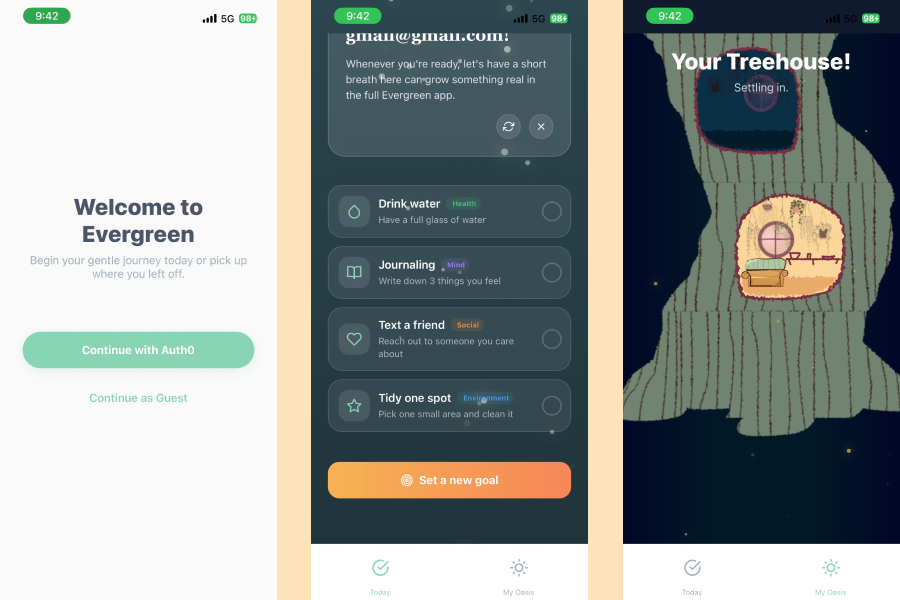
Each day, the system provides three to five small tasks. These might include simple activities like drinking water, stretching, taking a short breathing break, or sending a message to someone you care about.
Tasks are personalized using a short onboarding questionnaire so that the suggestions feel relevant to the cause. Every completed task helps grow the user’s environment. The treehouse expands gradually, and new rooms unlock over time. In our prototype, each room represents a new month of consistent progress, but the tree itself continues to grow indefinitely.
How we built it
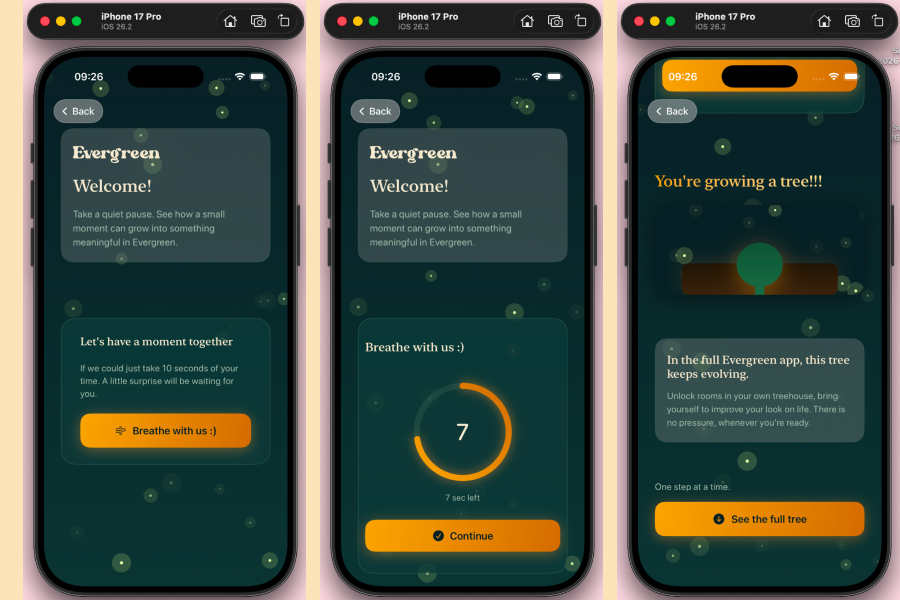
The project involves two repositories: one for a Reactiv ClipKit, which we built and styled using Swift. It introduces users to the app with a small breathing exercise and some information about the app itself. The other repository is for the cross-platform mobile app, built using React Native and Expo; we chose Expo to quickly handle tab and stack navigation, which allows professional-level routing across pages. We also used Supabase as the database because of its reliable use of PostgreSQL and because it is easy to connect with the frontend. Supabase has 4–5 relational tables that store data about the user, their tasks, the user’s progress, and also the user’s questions and answers. We also used Auth0 to authenticate users, which allows us to store additional data such as tasks and their progression.
Challenges we ran into
The primary challenge we faced was coming up with many ideas and features that could have paired nicely with the initial concept, and the real difficulty was not continuing to pursue those dead ends. The way we handled it was by prioritizing the features and functionalities that served our goals the most. This, in turn, helped us plan more deliberately, and in the end we were closer to the goals we set than we expected.
Accomplishments that we're proud of
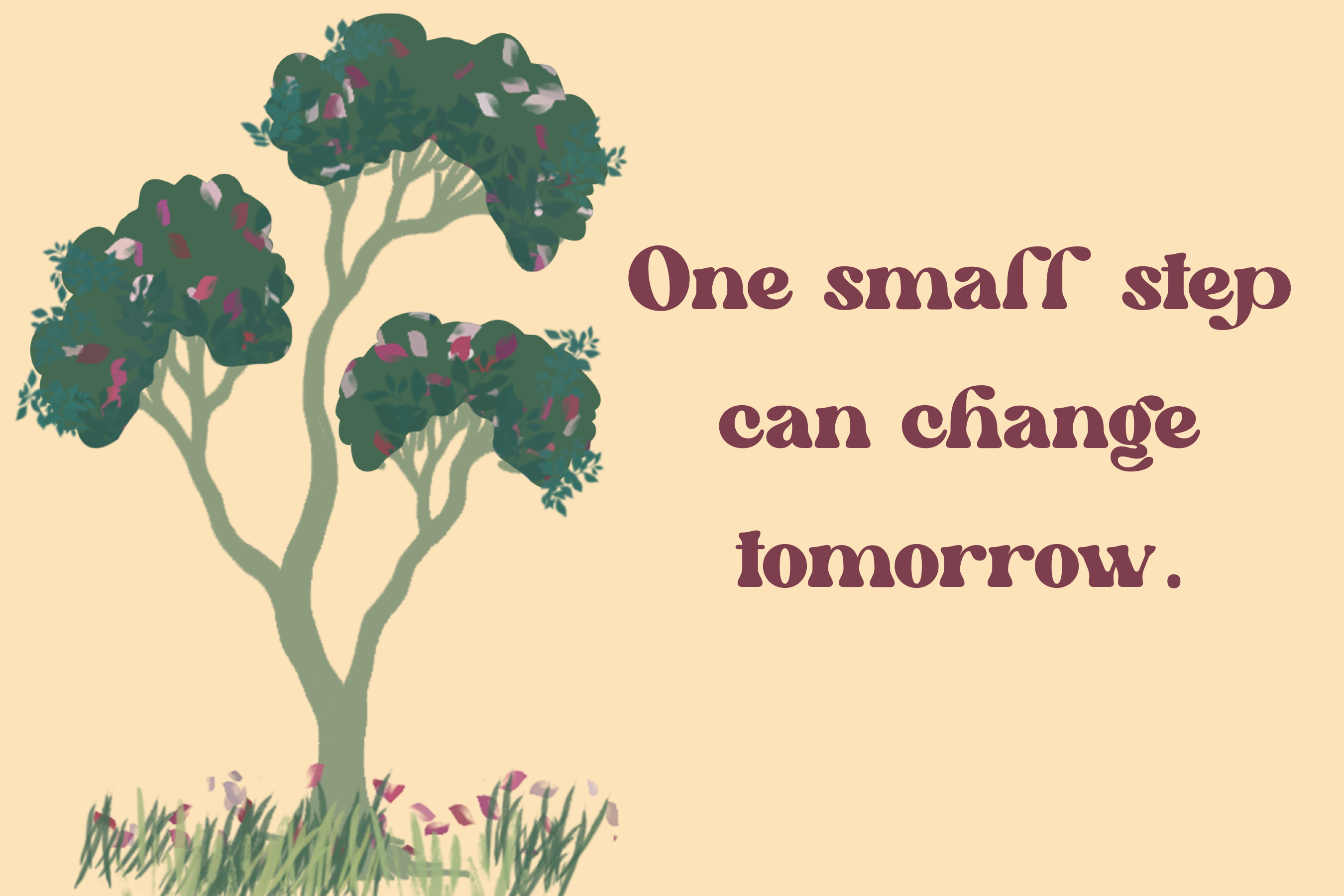
This application is user-friendly, and we put a strong focus on its visual design. One of the accomplishments we are most proud of is the hand-drawn graphics and the intentionally imperfect style of artwork, which allows our users to see a much-needed charm in imperfection. We also take pride in the implementation of gamification, which has proven to help users stay consistent with the app and follow through with their personal achievements.
What we learned
We learned how to build, create, and share Reactiv Clips, which are mini mobile apps that are very simple and efficient for users to install and uninstall. We used them to potentially share information about the app through a “bite-sized” demo experience. We also worked on the database by directly querying it to manipulate data for testing purposes and to fix potential bugs. This hands-on engagement with the “brains” of the system is not new to us, but doing it on a somewhat live database was a new experience.
What's next for Evergreen
One possible direction is allowing users to share analytics of their accomplishments with trusted people such as friends, family members, or therapists. This could help close supporters better understand how the person is doing and provide encouragement when it is needed.
ClipKit Lab makes this especially useful because people receiving the link do not need to download the full app. They can instantly open the experience through the clip, and if they like it, later install Evergreen and start their own journey of building small daily habits.
In future versions, completed tasks could also be categorized using the Life Balance Wheel (health, personal growth, relationships, daily responsibilities, etc.). This would create a simple visual overview of how a person’s efforts are distributed across different areas of life and help track improvements in overall well-being over time.
Built With
- auth0
- backboard-io
- expo.io
- react-native
- reactiv-clipkit-lab
- swift
- vultr


Log in or sign up for Devpost to join the conversation.