-
-
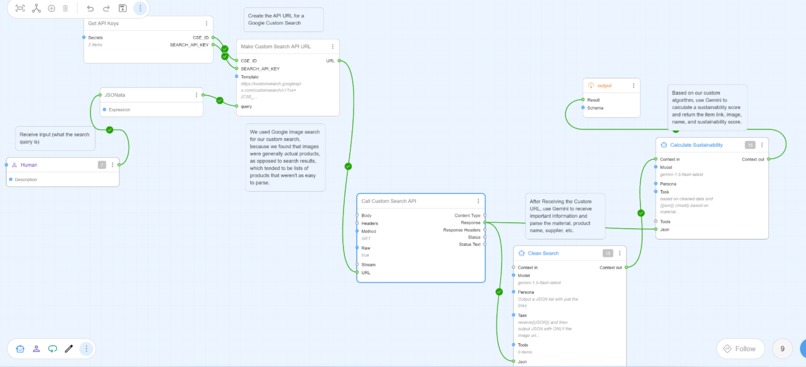
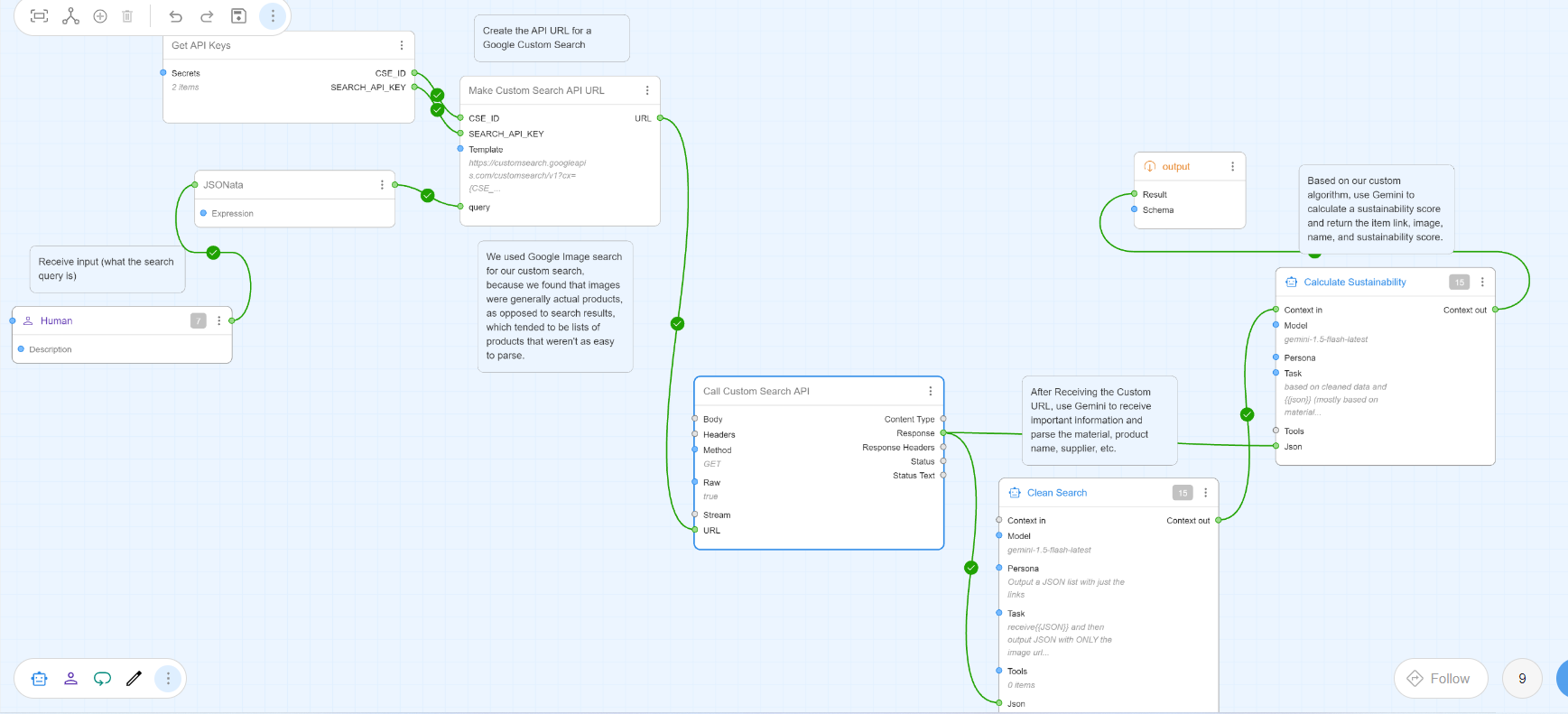
Breadboard flow
-
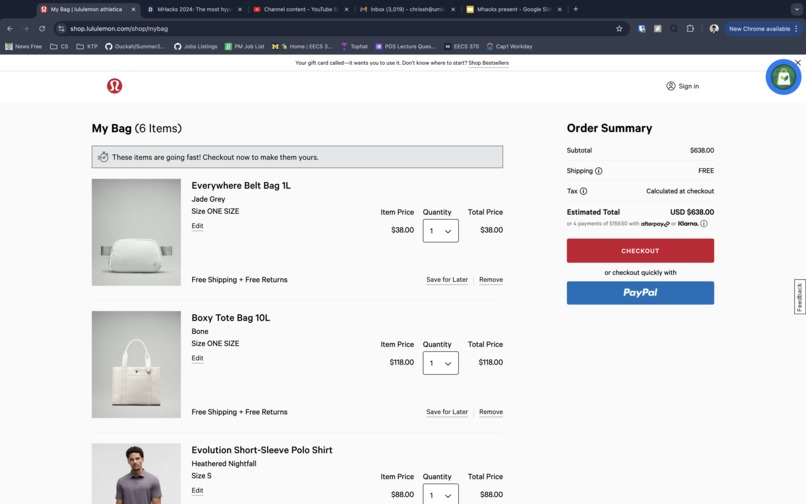
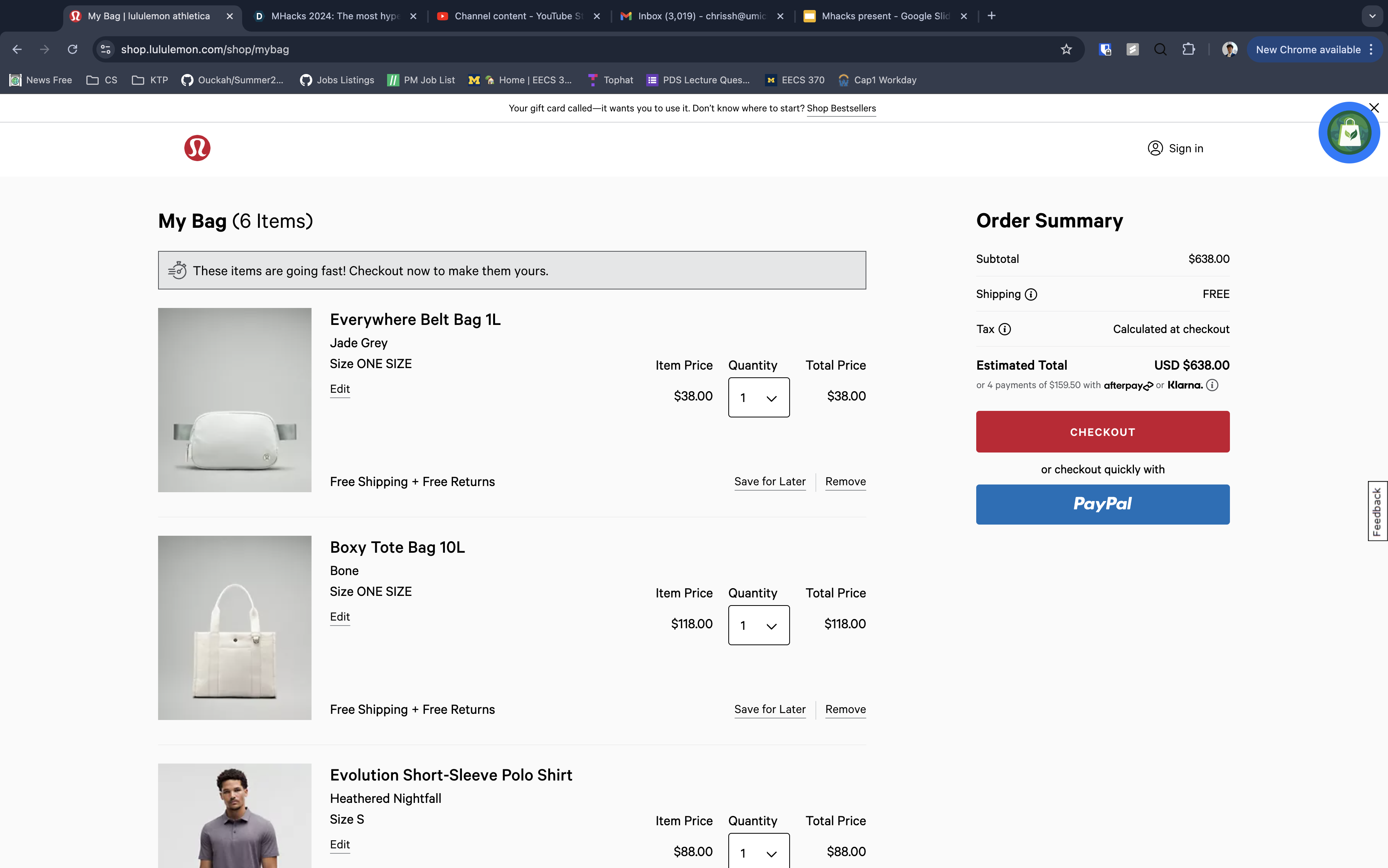
Collapsed extension logo - clickable button
-
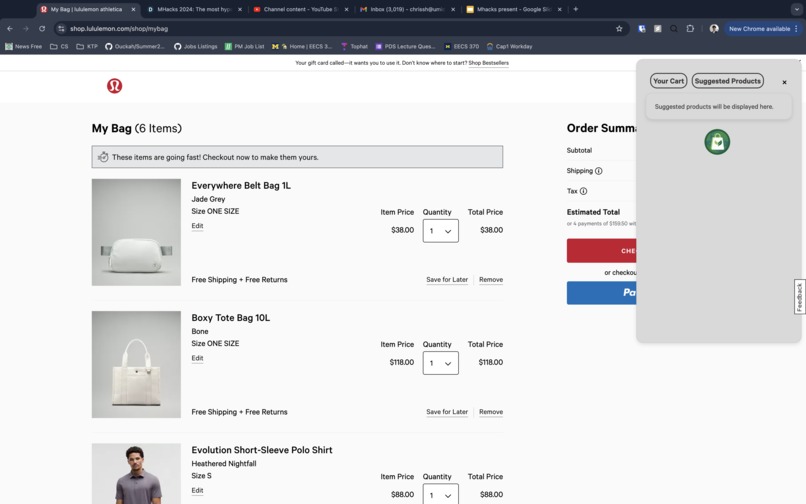
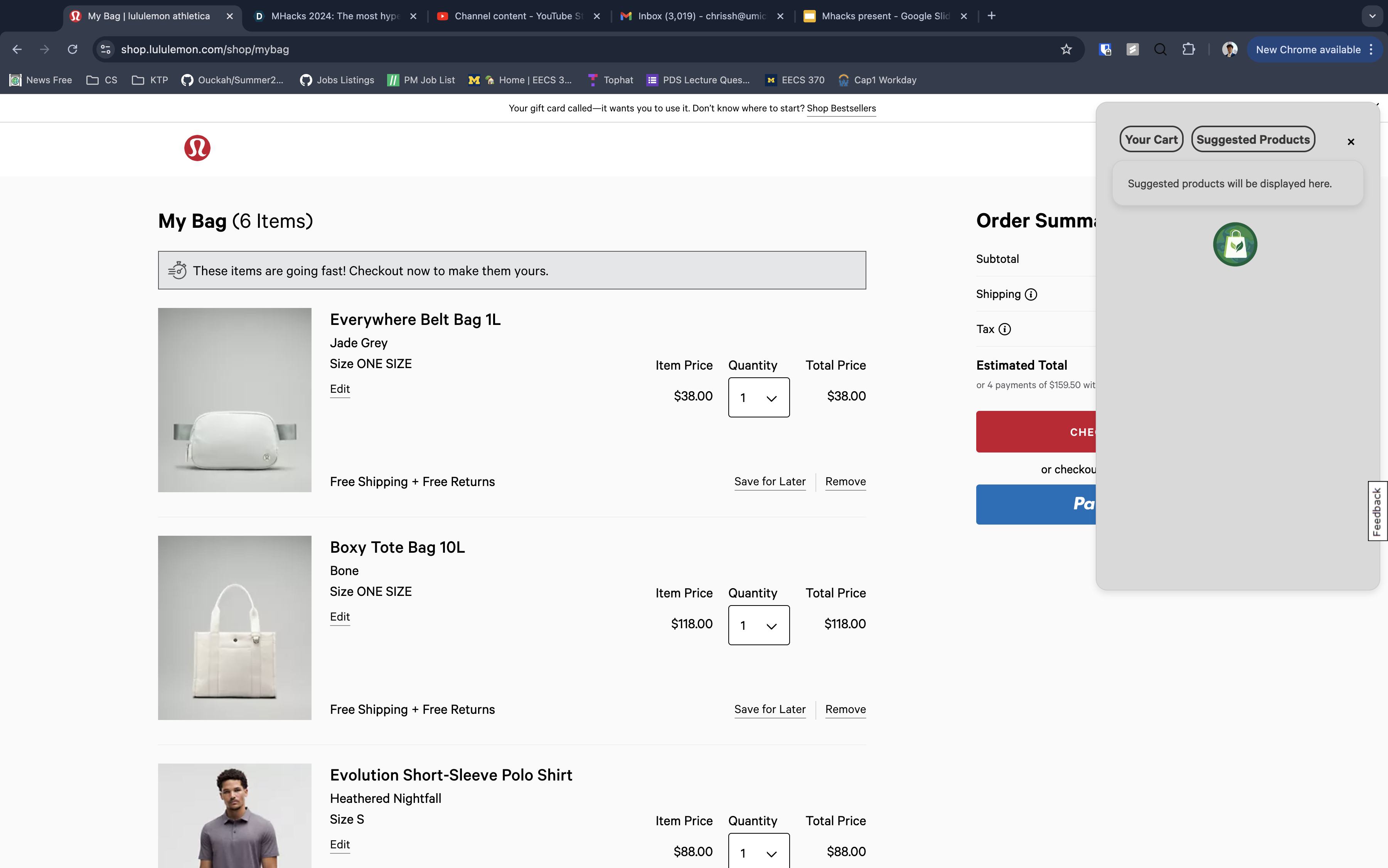
Suggested products page
-
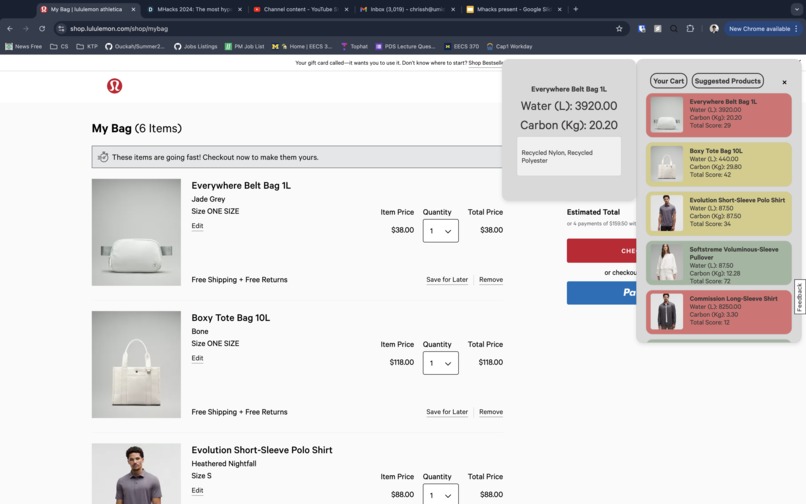
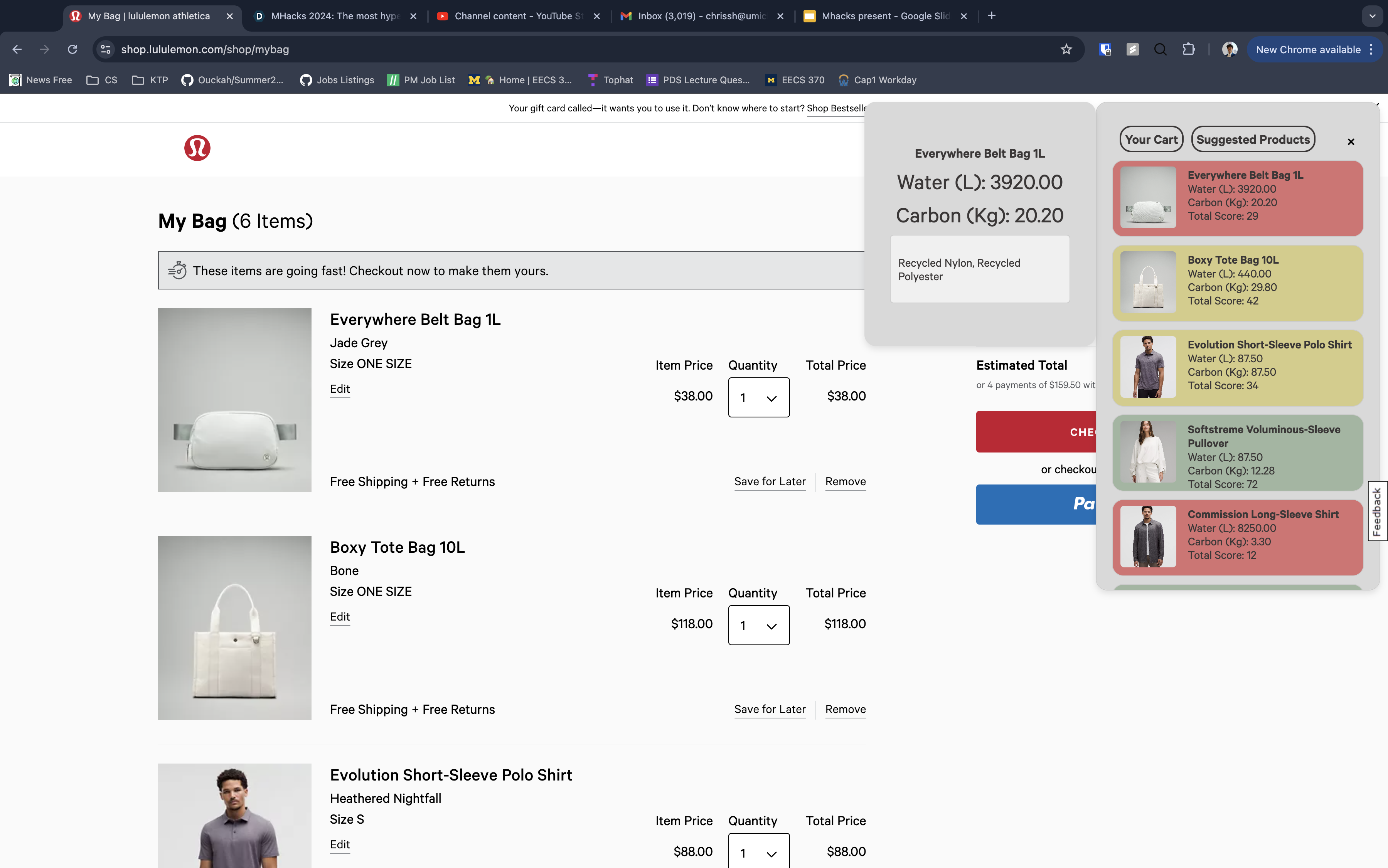
Main page with product description hover open
Link to the presentation: https://docs.google.com/presentation/d/1nEPhT7dVR7g2YvHA1EmW0MXbyG3WJIn9pOCm1NFQK4Q/edit?usp=sharing
Inspiration
By 2030, carbon emissions from the fashion industry could rise to 1.5 billion tons per year, and the fashion industry is responsible for 20% of global wastewater. Gross overconsumption, especially with the rise of fashion "micro-trends" and “Buy-More” Incentives, is enabled and exacerbated by the ease of online shopping. The lack of accessible information about the carbon impact of items in online shopping carts prevents individuals from making informed choices that align with their sustainability goals. Consumers are unaware of the ecological footprint associated with their purchasing decisions, leading to widespread harmful practices and mass consumption.
So, we created EverCart.
What it does
Evercart is a Google Chrome Extension that provides live water consumption and carbon emission data for the products in your shopping cart, allowing you to easily see accurate and reliable information about the items you want to buy. Evercart also uses Google BreadBoard to recommend more sustainable alternatives to your items, promoting cleaner and greener spending habits.
How we built it
Evercart's frontend is built with Javascript and HTML. We have three main screens to be displayed, so they are represented as three display containers that grow dynamically based on how many products are in the cart. We scrape the cart page and extract all product details and incorporate the backend details to get all of the information to show. The main page displays all products and score, event listeners add an additional information page when hovering over each individual product. Additionally, we have buttons that can switch between the main cart page and a suggested products page (which is still a work in progress in the backend).
Evercart's backend is built using Javascript. The backend scrapes the web data given a link to a product, searching for the title to get the type of clothing as well as keywords such as "materials" to find the fabric types and percentage makeups of the clothing. Using this site data, the program efficiently searches for matches of the clothing in extensive maps that contain data such as the average square meters of cloth used to create a given item, the carbon emissions for a type of material, and the water needed to cultivate the material.
We also worked on an experimental similar products feature using Google Breadboard. We decided to use Breadboard because we needed to incorporate both LLMs and API calls in sequence, and Breadboard allowed us to normalize our calls and ensure that we were passing standard formatted data in. First, we parse the query, add "sustainable" to the item we're trying to find, and create a custom google search API URL. We decided to search for images, because we found that oftentimes the actual search page had compiled lists of products, not products themselves. Then, we receive those URLs and use Gemini to parse the relevant information (material, product name, square footage, supplier, etc). We then pass that information to another Gemini agent, which calculates the sustainability score and returns the most sustainable products we found.
Due to time constraints, we weren't able to get this feature into a stable version of the extension, but we plan to use Breadboard as a way to efficiently and safely include LLM technology in our product. See the demo here: https://youtu.be/f8d5mEEaUrw
Challenges we ran into
Obtaining an accurate Climate Score to display and compare different products with was a challenge for us, because we wanted to create a metric that weighed the carbon emissions and water use of different items fairly while being instantly understandable to our customers. We landed on a metric that is based on the most and least climate-effective materials for carbon and water respectively, normalizing a product's individual score with those maximum and minimum values for all of the common clothing types.
Accomplishments that we're proud of
We're proud of our frontend that displays a different color for the project background: red, green, or yellow based on the products Climate Score. We were having trouble coming up with a UI that was not too wordy but still informative, and utilizing color in this instance helped us keep things clean while still being helpful to the customer. We're also proud of the algorithm that we used to inform the customer of their choices. We knew coming in that we wanted to promote sustainability, but deciding what to use as a metric for sustainability was difficult: at one point, we were attempting to calculate the emissions of thousands of LuluLemon leggings on a freight ship across the Atlantic (this was scrapped). Our final display is efficient and makes sense, by only showing the exact emissions and water usage for a given item's creation.
What we learned
Javascript was a new language for most of us, so learning the quirks and differences of Javascript from our more comfortable languages was a struggle but a worthwhile learning experience. Splitting between backend and frontend work was new for some of us as well, as this is our first hackathon: splitting up tasks based on experience helped us learn how to efficiently manage a large project like EverCart.
What's next for EverCart
We hope to expand the web-scraping functionality to larger sites like Amazon or Ebay to be able to combat overconsumption through online shopping in other industries besides fashion, as this would bring us closer to achieving our largest sustainability goals. Scraping these larger sites would need us to update our algorithms to include more data on different types of products besides clothing, as well as updating our webscraping functionality to search for different material information. Our prototype was built off of only the Lululemon site to show how reputable companies also have a negative impact. The goal for the final product is to work across all shopping sites for all products. Due to time constraints, we weren’t able to complete this.
Also, we would like to allow users to set up a profile and save the data of their total climate footprint. Eventually, we want to incorporate a positive feedback features that rewards consumers for what they haven’t purchased. We would also want to reward users for sustainable behavior. For example, items that are currently in their cart but not yet purchased. Users would receive points for leaving carts not purchased and closing out of tabs. It would be cool to offer rewards associated with accumulating sustainability points.
Finally, we would also want to increase the amount and accuracy of information users can see about their shopping habits. Our current algorithm only takes the water consumption and carbon emissions into account for the sake of the prototype. A completed version of this product would also use user location, distribution centers and factories to estimate the carbon footprint and plastic waste associated with shipping and distribution.
Motto
Anyone will benefit from this product, because everyone shares the same Earth. Whether you are shopping for a Christmas gift or your treat of the week, being aware of the impacts that your purchases create will help everyone on our planet see a greener tomorrow.
Built With
- breadboard
- javascript


Log in or sign up for Devpost to join the conversation.