-
-
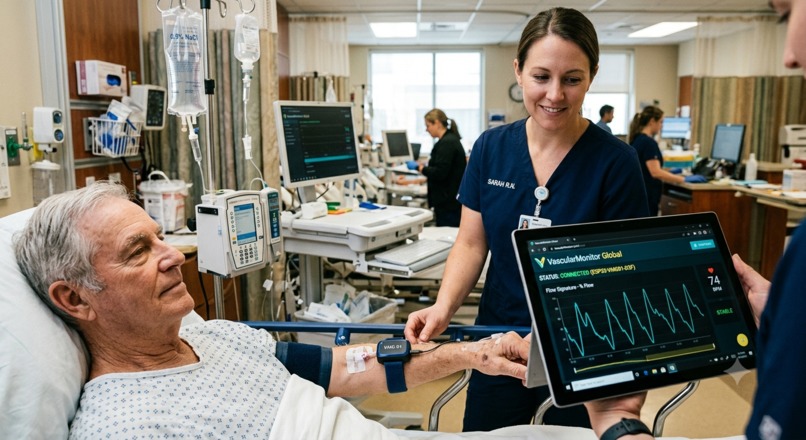
Smart vascular access monitor (pre-fistula)
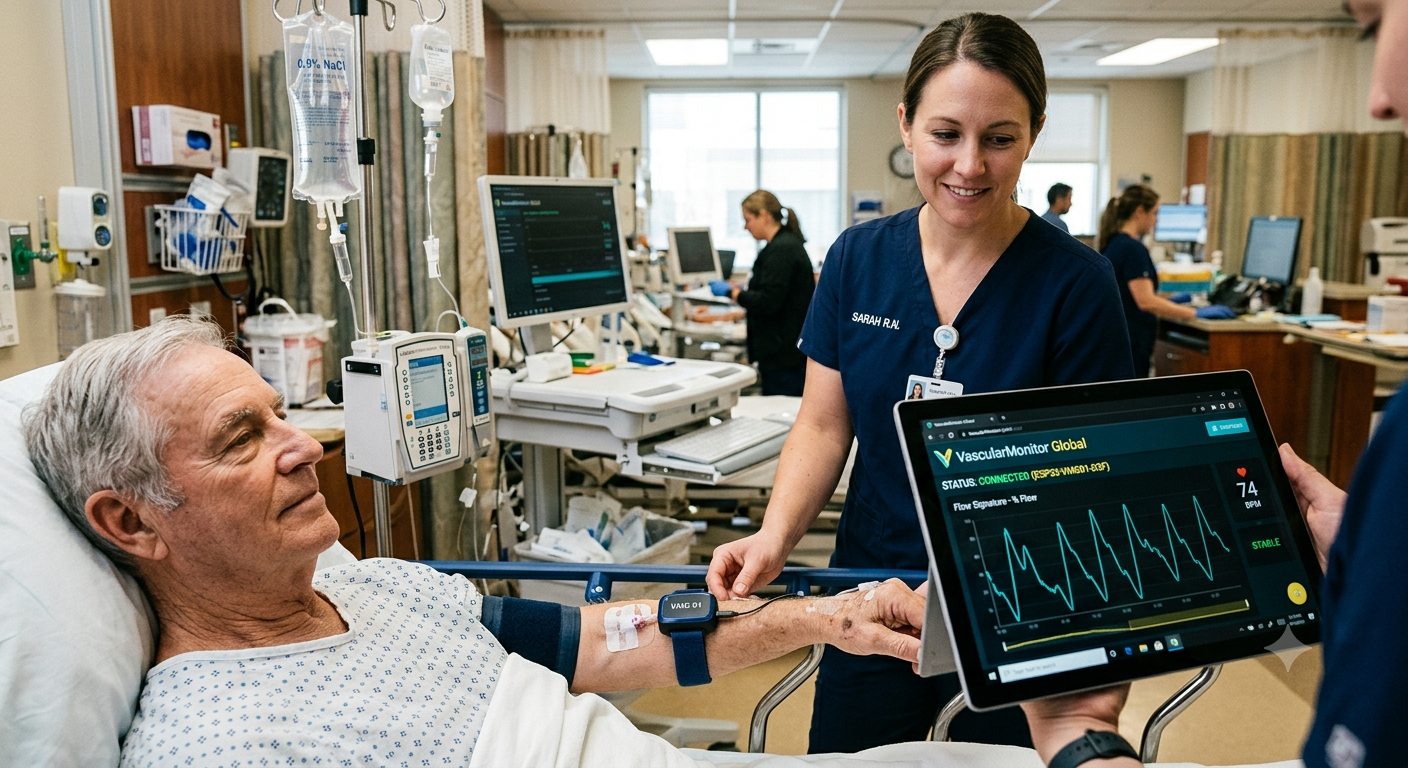
Inspiration
I was inspired by the urgent need to democratize precision medical monitoring. Vascular access complications are one of the main causes of morbidity in hospitals worldwide, affecting millions of patients every day. XPRIZE challenges us to think of solutions that are not only innovative but truly scalable. We’re participating because we believe that vascular monitoring shouldn’t be a privilege of high-end clinics, but a global tool available to any healthcare professional, anywhere on the planet.
What it does
VascularMonitor Global is a real-time medical telemetry web interface designed to wirelessly connect to a hardware device (an ESP32 microcontroller). Its main function is to monitor, visualize, and report the status of a vascular access (like an intravenous line or a fistula) using modern web technologies.
Here’s exactly what it does step by step:
- Instant wireless connection (BLE): It uses Web Bluetooth (BLE) technology to scan and connect directly from the browser to the physical sensor without needing to install mobile apps or heavy drivers.
- Real-time data visualization: It continuously receives raw data from the sensor and processes it instantly to display it on a smooth, dynamic line graph, allowing you to observe any changes in the vascular access immediately.
- Clean and portable design: It features an interface optimized for both mobile and desktop screens in a dark environment—ideal for reducing eye strain in medical or continuous monitoring environments.
- Report export: Allows healthcare staff to copy key metrics to the clipboard with a single button to easily share them via chat, emails, or add them to the patient's medical record.
How we built it
We built VascularMonitor Global using a full-stack approach focused on lightweight performance. On the hardware side, we utilized an ESP32 microcontroller programmed in C++/Arduino to handle data acquisition from the sensor and broadcast it via Bluetooth Low Energy (BLE). For the frontend, we built a responsive web interface using HTML5, CSS3 (Tailwind CSS for styling), and modern JavaScript. We leveraged the Web Bluetooth API to achieve driverless browser connectivity and used a high-performance graphing library to render the real-time data stream smoothly without lagging the UI.
Challenges we ran into
One of the biggest hurdles was managing data packet loss and latency over BLE; we had to optimize the transmission rate from the ESP32 to prevent the browser from freezing due to data overflow. Another major challenge was cross-browser compatibility with the Web Bluetooth API, as it is strictly supported in specific environments (like Chrome or Edge) and requires HTTPS, which forced us to set up secure local environments for testing. Lastly, translating raw sensor signals into meaningful medical visualizations required fine-tuning our data-smoothing algorithms.
Accomplishments that we're proud of
We are incredibly proud of achieving a completely zero-install solution. A healthcare worker can literally open a web link on their phone or laptop, click 'Connect', and start monitoring a patient in seconds without downloading a 100MB app. We also succeeded in creating a stable, high-refresh-rate graph that updates in real-time without draining the device's battery, proving that robust medical telemetry can live entirely on the web.
What's next for Smart VascularMonitor Global
Our next step is integrating edge AI anomaly detection. We want the ESP32 or the web app to not just show the graph, but actively alert the medical staff via audio or push notifications if it detects signs of infiltration, occlusion, or extravasation. We also plan to implement secure WebSockets to allow remote monitoring, so a doctor can check patients' vascular statuses from a central nursing station or even from home.


Log in or sign up for Devpost to join the conversation.