-
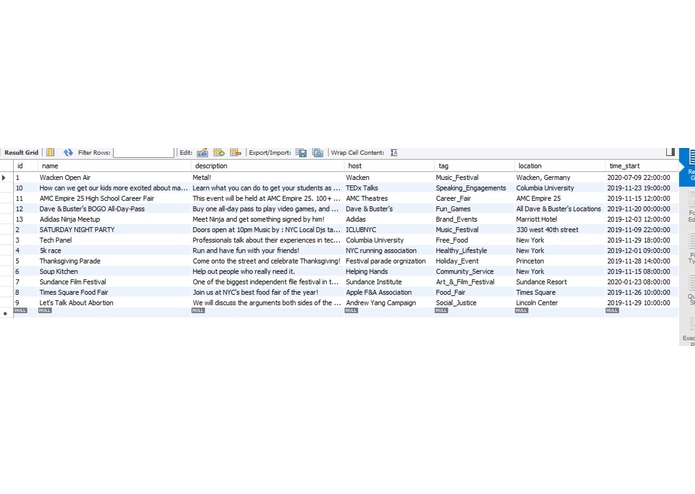
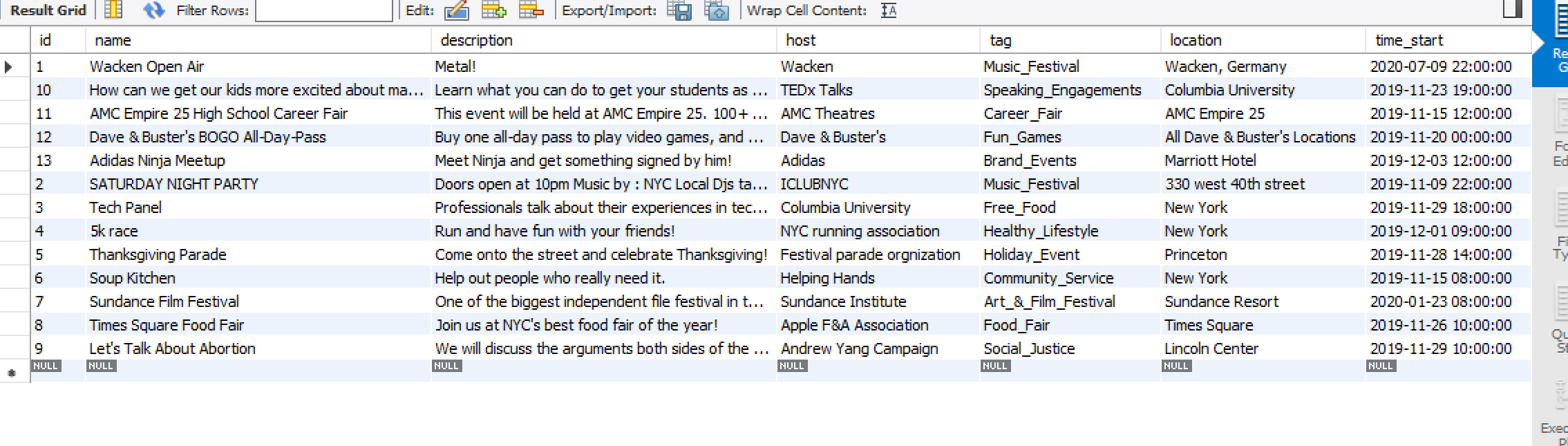
Event database
-
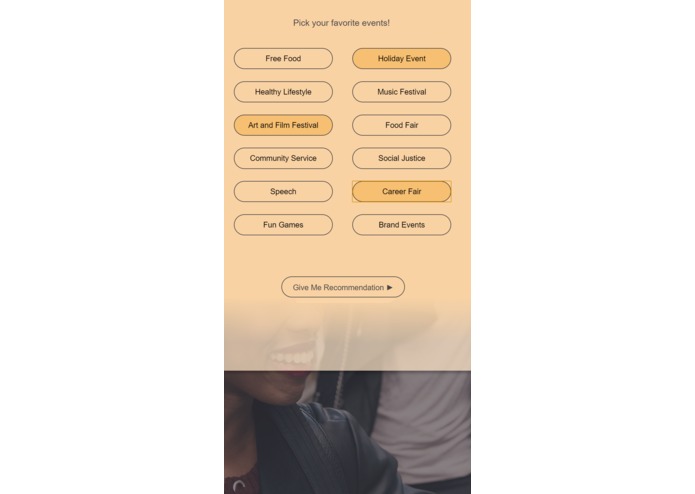
Tag selection screen
-
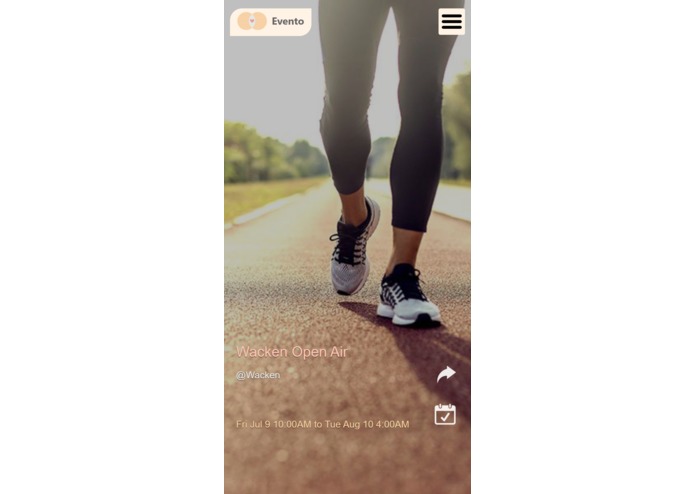
Event screen
-
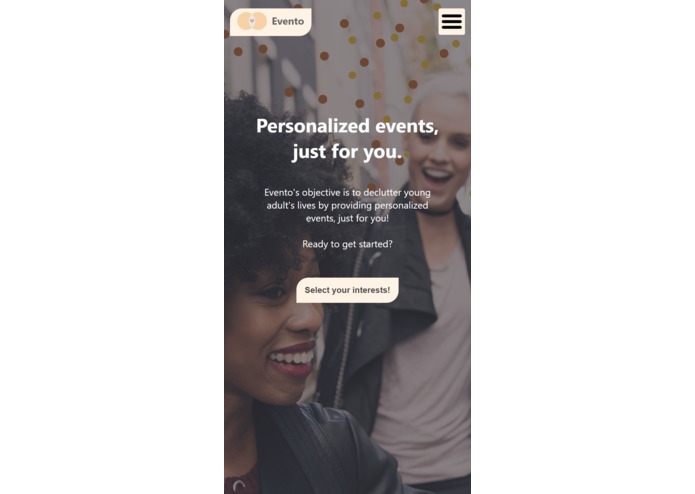
Home screen


Inspiration
Michael: My first year in college was a bummer. Despite the effort my resident advisor dedicated to hosting dorm events, few people showed up. That’s why I applied and became a resident adviser in my second year — I wanted to foster a closer community. Little did I expect, this commitment led me into developing a solution that combines technology and social interactions.
In universities, event information is usually sent through emails: club and campus events, meetups, etc. After interviewing my residents, I found that emails about random events would not only clutter up their inboxes, but their brains. For extroverts, an event is an inherently social activity: they rarely go to events without friends. However, for most introverts, they go because of their strong passion for a subject matter. I discovered, among all my observations, a need for decluttering and genuine social interaction. It is true that many event platforms and campus venues provide great events, but without a fun way to integrate social media with smart event information distribution, young people’s lives are always crammed with hundreds of options.
Hence, what I wanted to build is a social media event recommendation application that understands every eventgoer’s need through his or her interests, social interaction, and in-app behaviors. The app aggregates event information from various platforms and pushes only a few to each user. For each event, users can send creative invitations to their friends, sign up for recurring reminders, and share or integrate with popular platforms such as calendar apps, Facebook, or Snapchat. Users are presented with a clean feed of two recommended event tabs, and by swiping right on either tab, they access the camera to create a selfie/video/message invitation to send to their friends. In its essence, the app is not an event directory, but a continuously optimized, accurate AI recommendation engine that understands young people’s needs by pushing them impactful and educational events while encouraging them to go with their friends. In a world of virtual and digital relationships, this app paves the way for real-life engagement, intimate connection, and true friendships.
What it does
Evento is an application that allows you to access our event database in order to find event recommendations just for you whenever you feel a need to go out and do something.
How we built it
Before we started, we knew that we were going to create an application targeted towards mobile users, and were debating whether we should proceed with a mobile application or a web application. We decided to proceed with web, since we believed it would be much faster.
As such, we used React, JS, & CSS for the frontend. Good old pen & paper and Figma were used for wireframing and mock-ups. For the backend, we used Python, Flask, and MySQL.
We split the group in half. One half focused on front end, the other focused on back end.
Challenges we ran into
Figuring out how to set up a REST service and a server proved to be a more difficult task than originally expected. Our original plan was to incorporate Machine Learning through the use of the Google Cloud Platform, but we were unable to make any time for that since we were too busy trying to figure out the backend and how to connect the backend to the frontend. We were able to accomplish the creation of a REST service, however, we fell just short of true completion, as our backend service started giving us 504 Gateway Timeout errors despite the initial success.
Another challenge we ran into was when we were trying to use the Eventbrite API. We were unaware that we would have to request access to the API days in advance before we could make use of it.
Accomplishments that we're proud of
Ellie: I am proud that I was able to step out of my comfort zone and come and compete at a hackathon with a group of complete strangers. I am also proud about my increasing proficiency in the use of the React framework.
What I learned
Ellie: Backend is more difficult than I originally expected. Not only do you have to plan the database, the routing, and the actual functionality, but you also have to pay consideration to the server speed.
What's next for Evento
The next steps for Evento:
- Definitely the biggest next step would be to figure out how to properly implement the REST service
- Consider user & event locations
- Figure out how to efficiently scrape events from multiple sources and store into our database
- Train a machine learning model to recommend events based on previously attended events & interests
- Train a machine learning model to categorize according to tags that we feel college students care more about, such as free food.


Log in or sign up for Devpost to join the conversation.