-
-
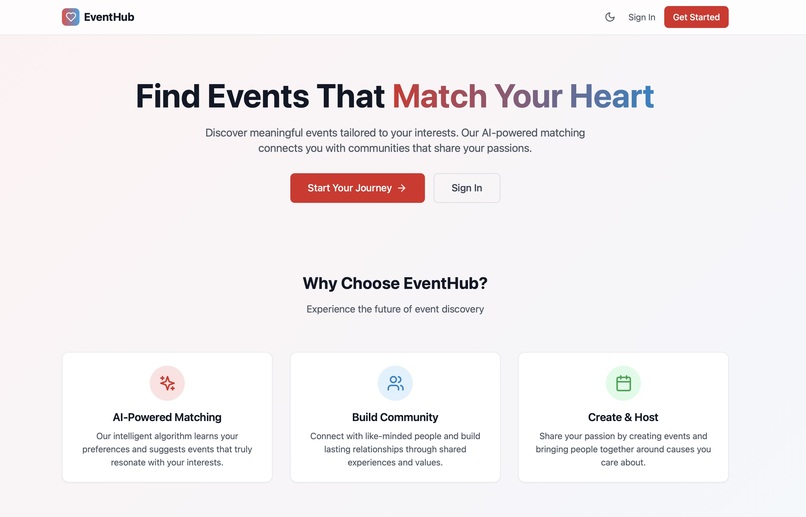
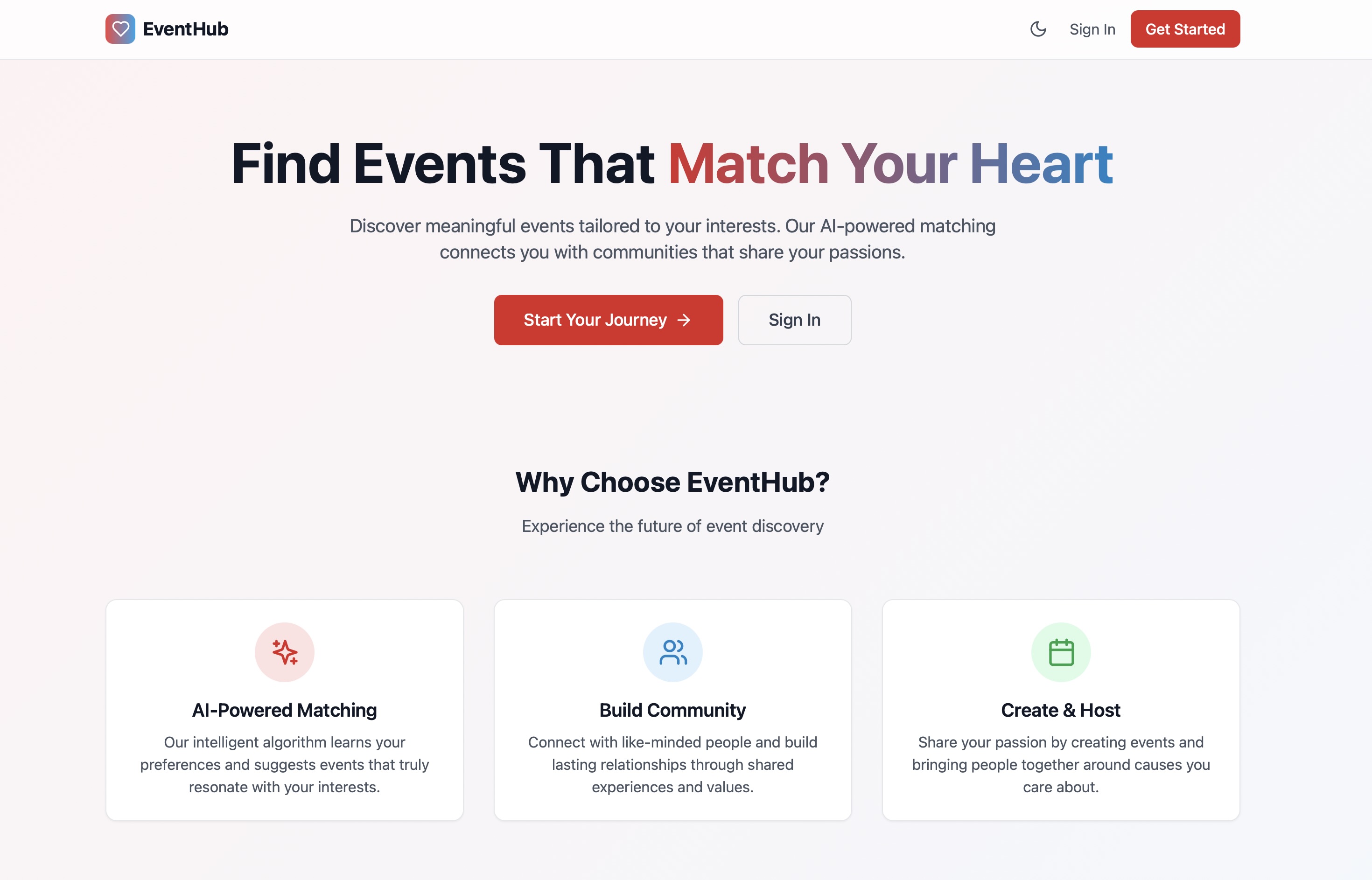
Our Hero section which introduces the user to what we do at EventHub
-
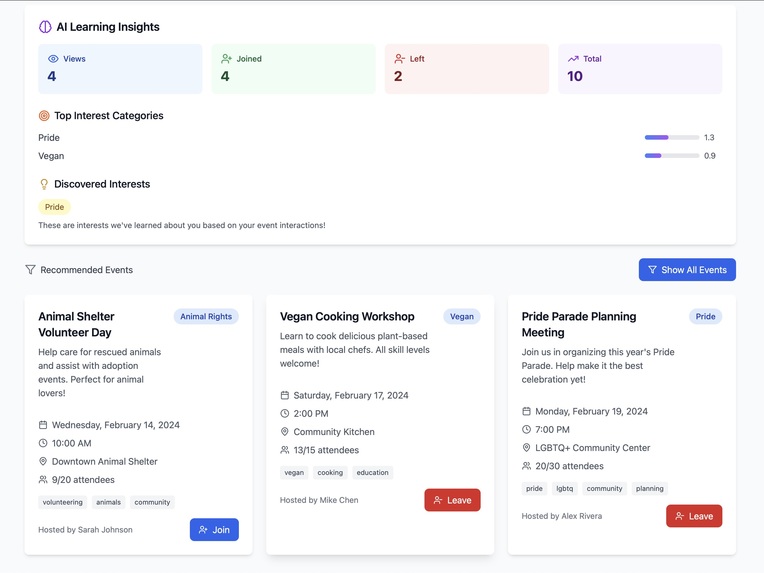
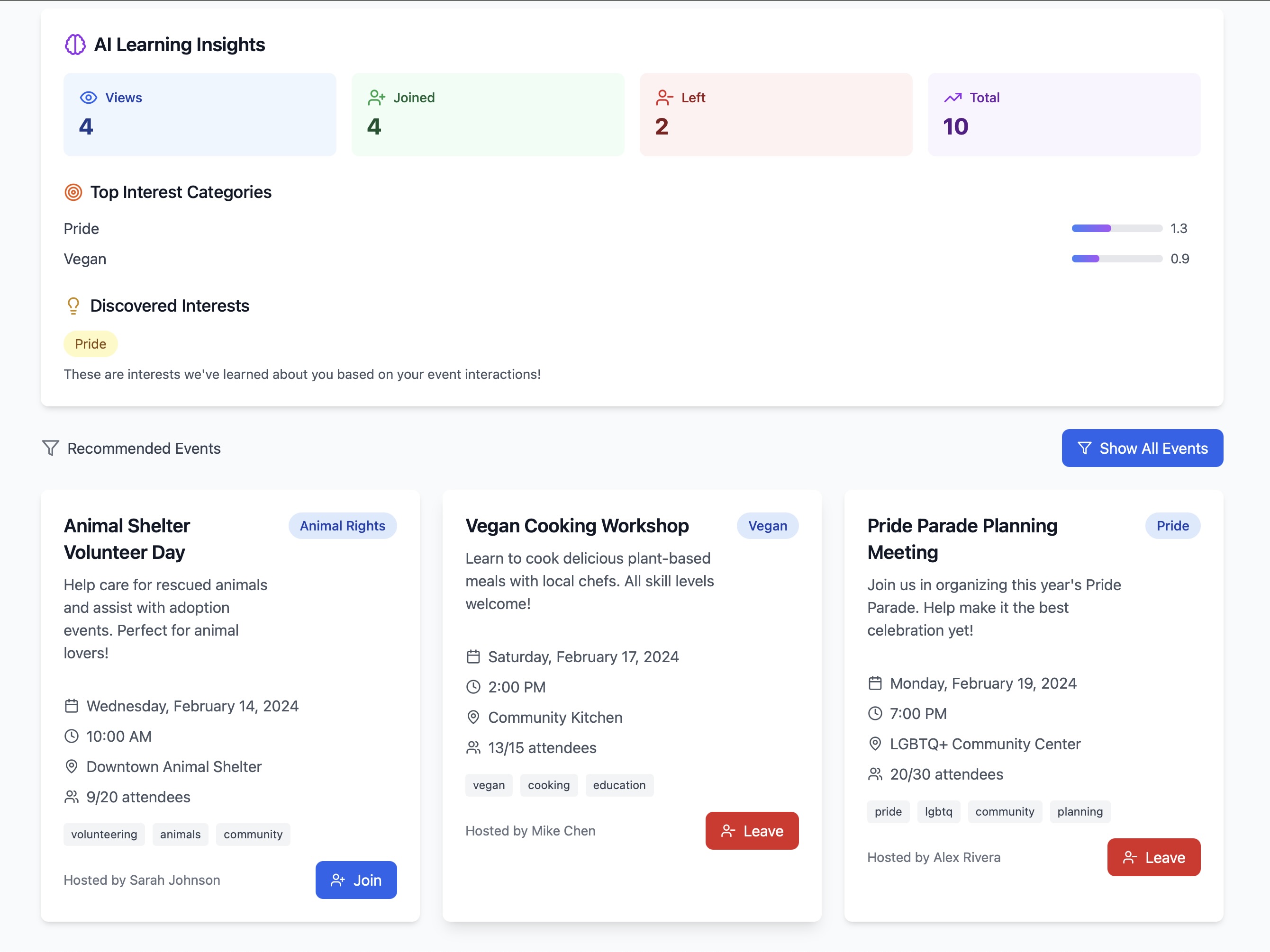
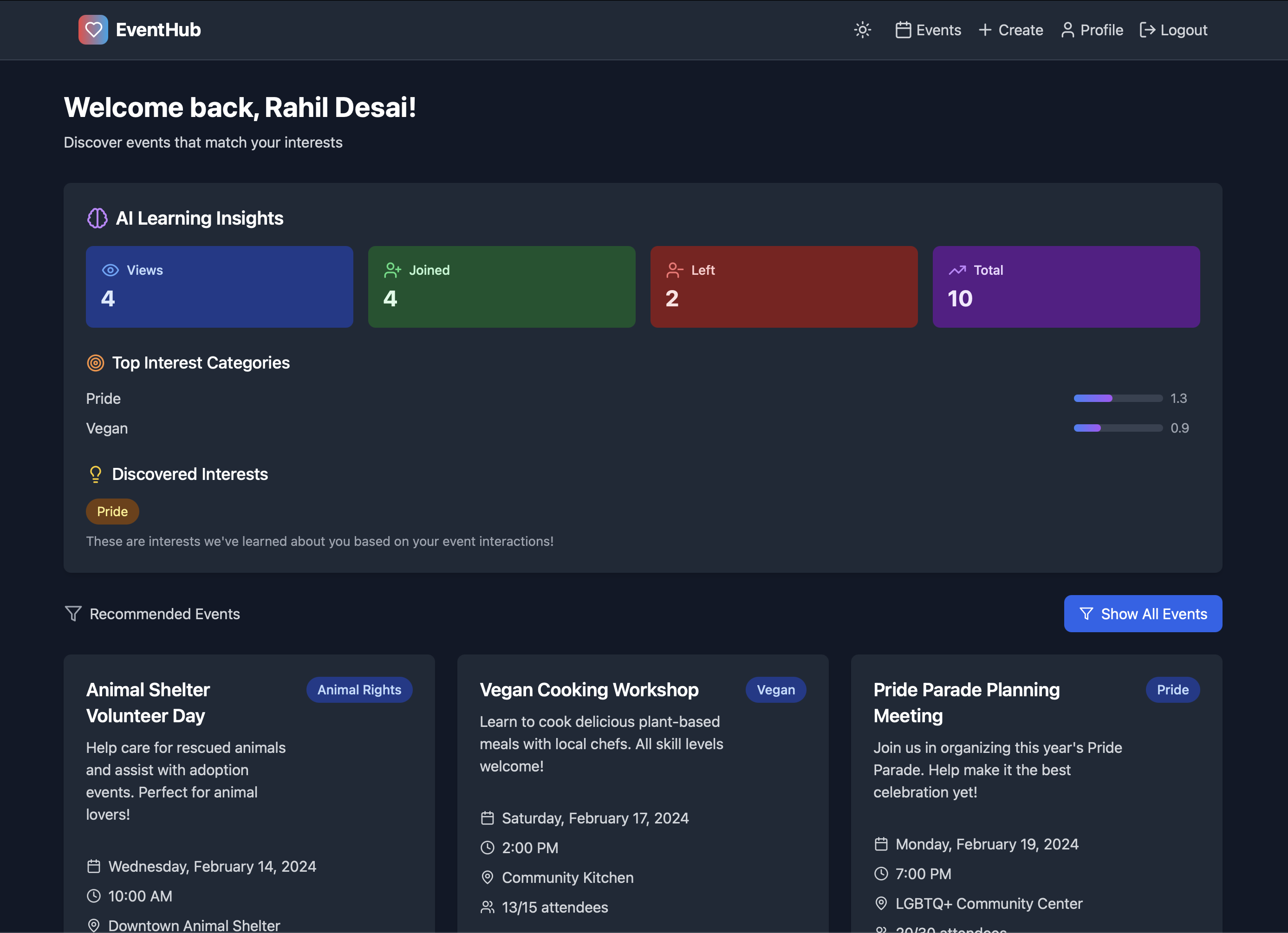
The dashboard portion which helps users view all possible events and AI Insights that our model has learned about them
-
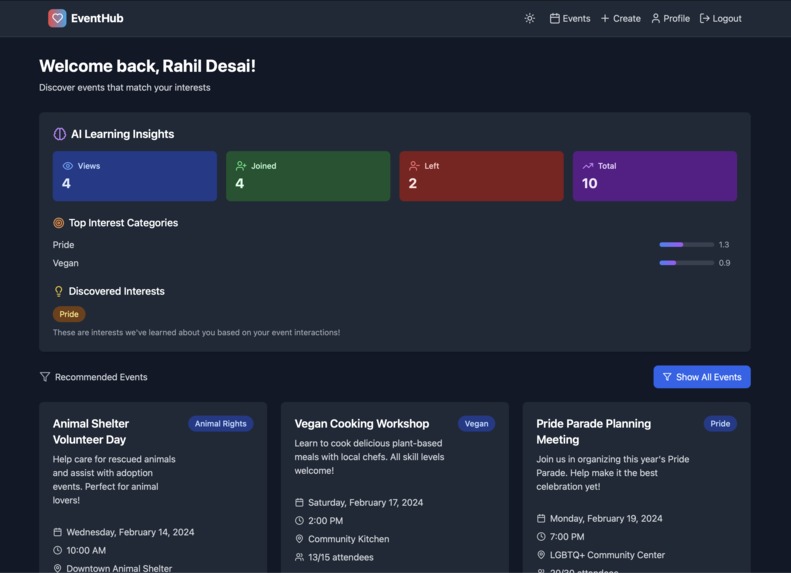
Showcases that we have a dark mode as well for every page
-
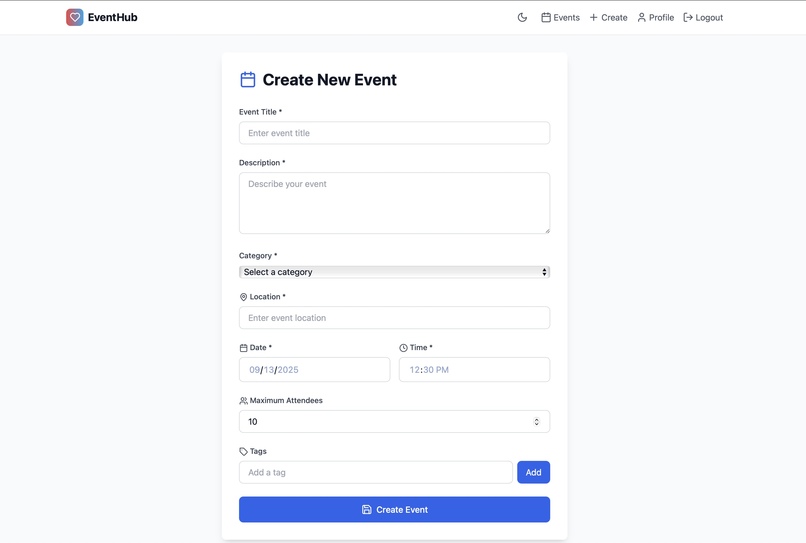
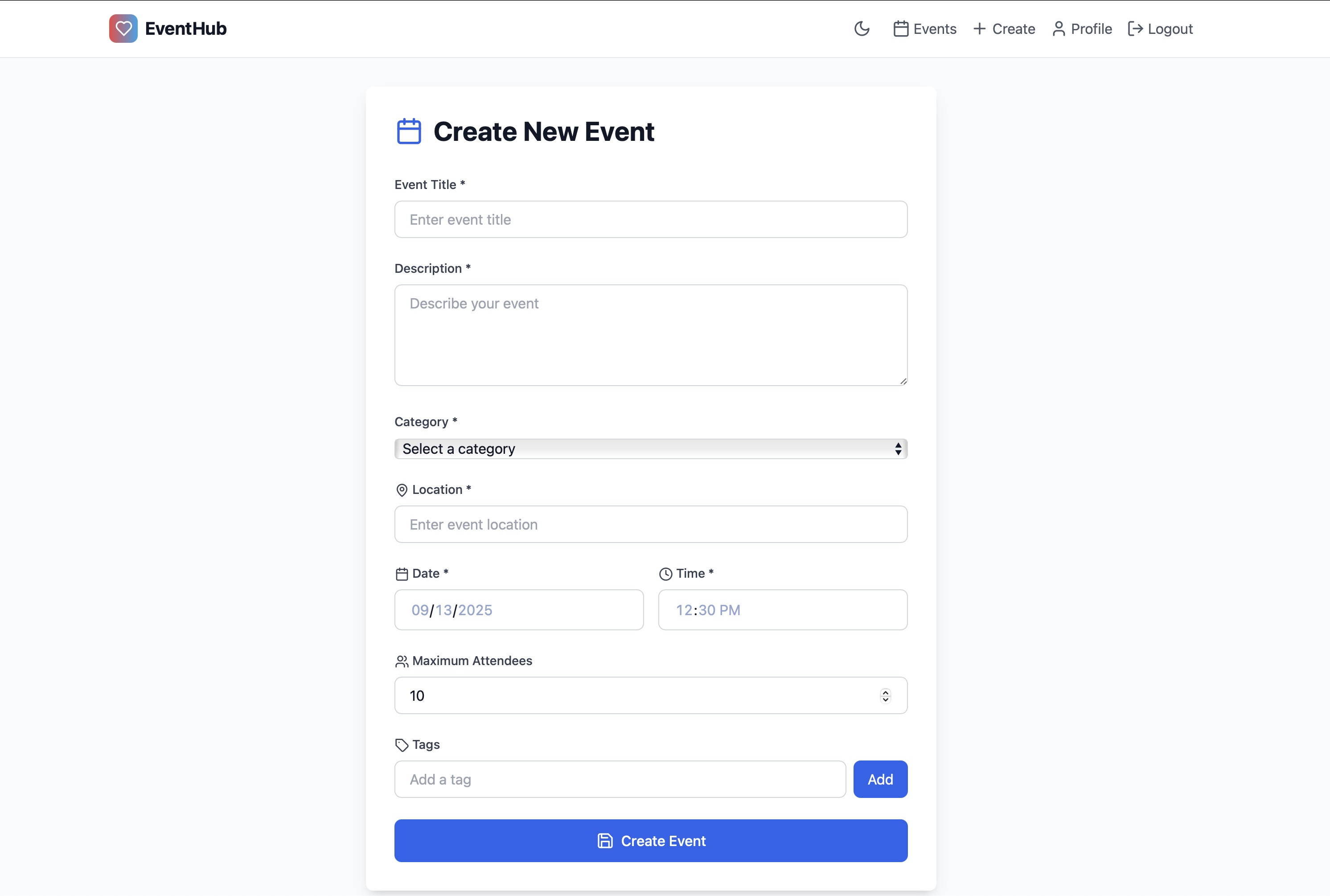
Our section which features how to create an event
-
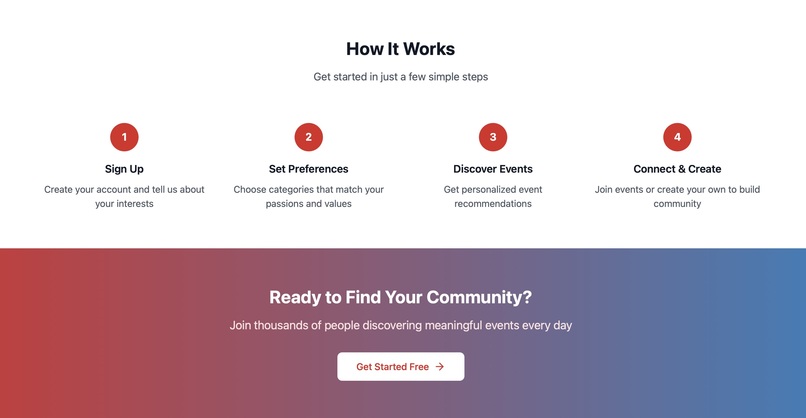
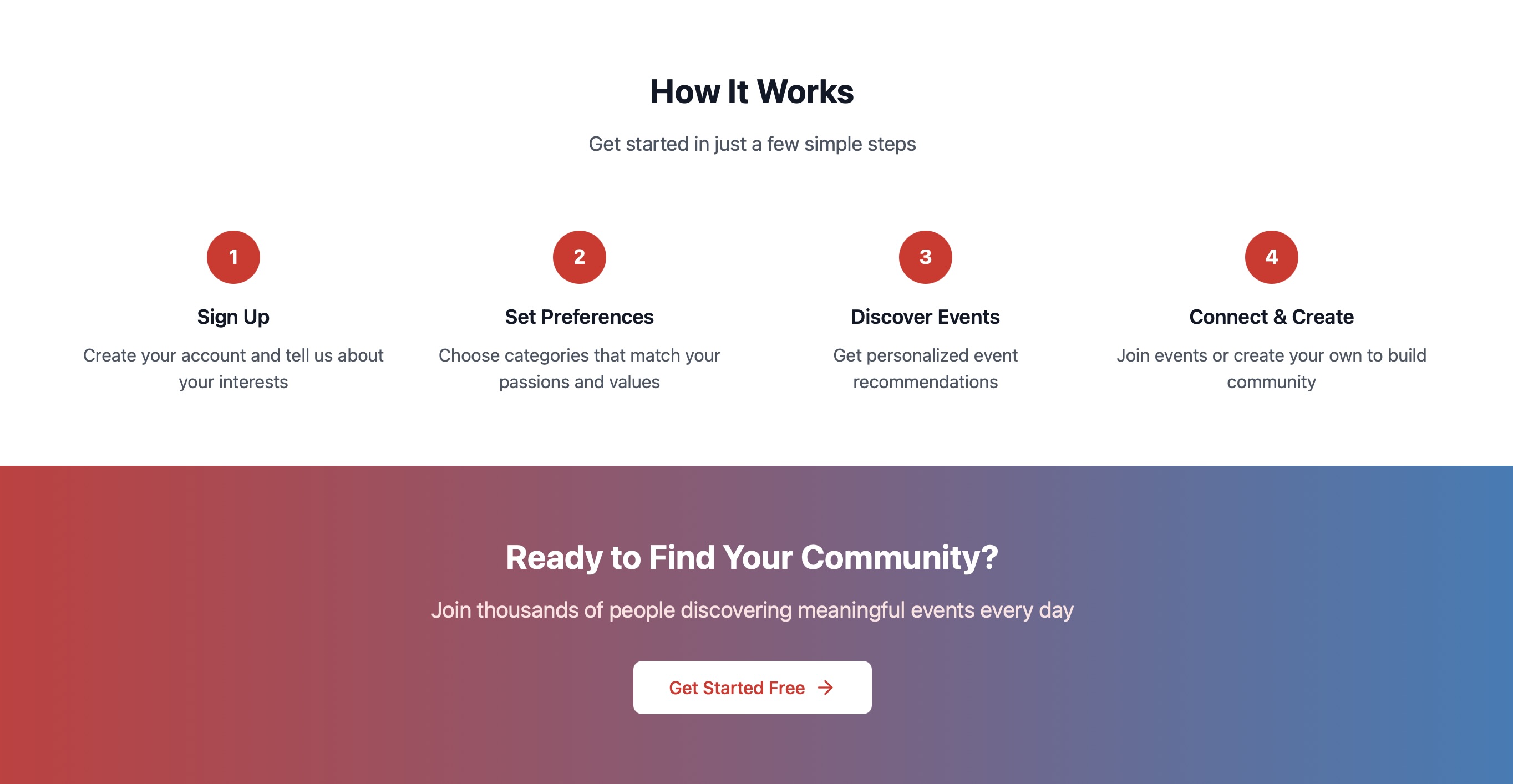
The bottom section of our landing page which demonstrates how the process works to connect our users
-
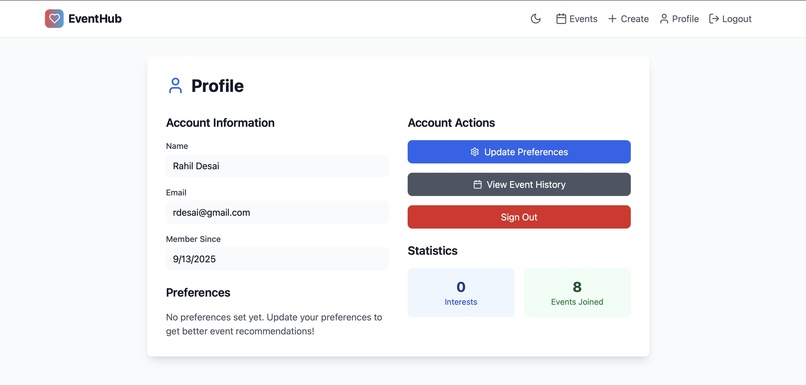
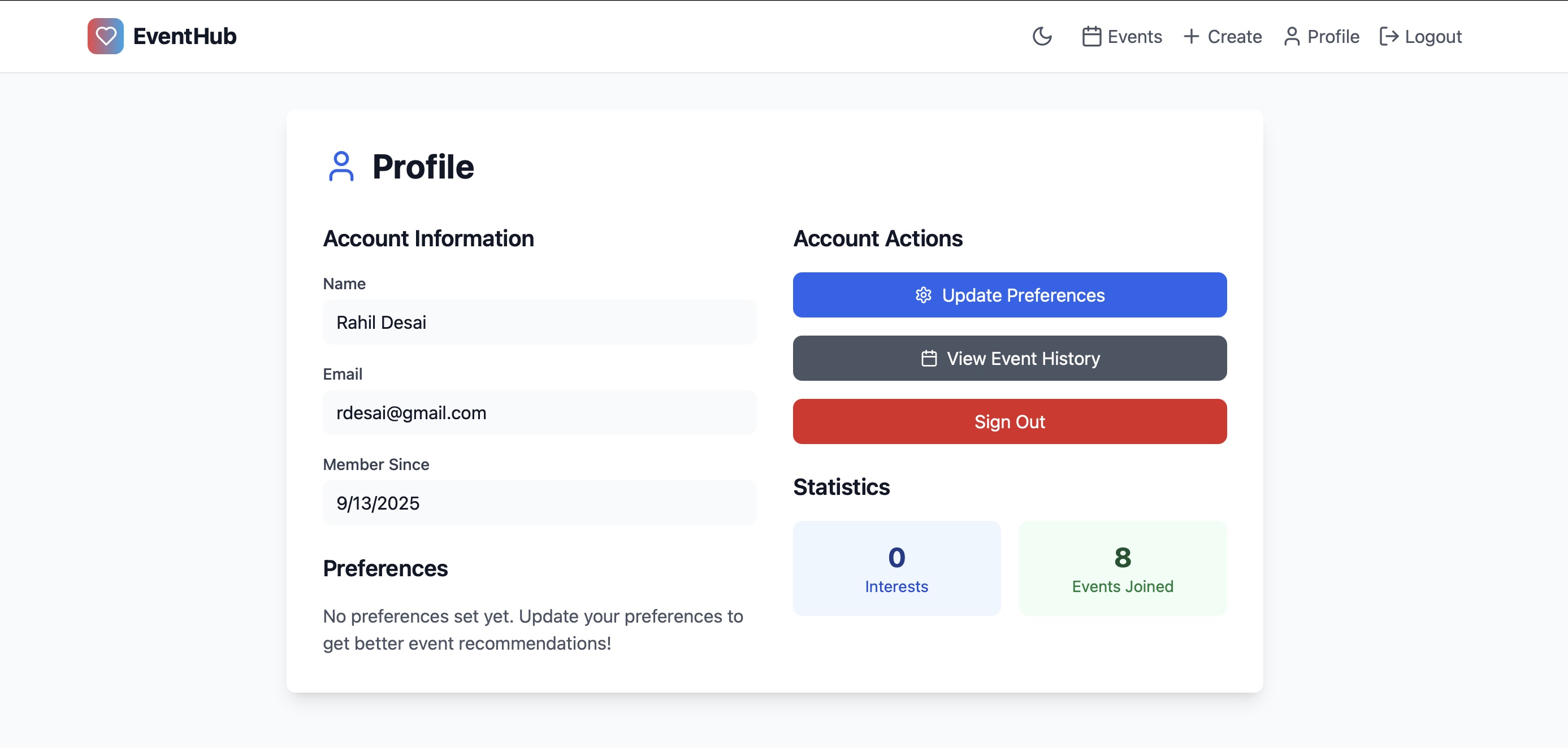
A page showing user metrics and important information about them
Event Hub - Project Overview
Inspiration
The frustration of endlessly scrolling through irrelevant event listings inspired Event Hub. We noticed how people spend hours searching for events that match their interests, often settling for mediocre options or giving up entirely. Traditional event platforms treat all users the same, showing chronological listings without understanding individual preferences. We wanted to create an intelligent system that learns what users love and connects them with truly meaningful experiences.
What it does
Event Hub is an AI-powered event discovery platform that personalizes the entire event experience:
- Smart Matching: Uses machine learning to analyze user preferences, past interactions, and interests to deliver tailored event recommendations
- Intelligent Categorization: Automatically categorizes events using natural language processing
- Event Management: Allows users to create, join, and leave events with detailed information including location, timing, and attendee limits
- Preference Learning: Continuously improves recommendations based on user behavior and feedback
- ML Insights: Provides data-driven insights to help users discover new interests and event categories
- Responsive Interface: Offers a modern, clean UI with dark/light themes that works seamlessly across all devices
How we built it
We built Event Hub using a modern tech stack focused on performance and user experience:
- Frontend: React 18 with TypeScript for type safety and component-based architecture
- Styling: Tailwind CSS for responsive, utility-first styling
- Routing: React Router DOM for seamless navigation
- State Management: React Context API for efficient state handling
- AI/ML Components: Custom algorithms for event matching, preference learning, and NLP categorization
- Icons & UI: Lucide React for consistent iconography
- Build System: Create React App for streamlined development workflow
The architecture separates concerns with dedicated components for authentication, event management, and intelligent features, while utility functions handle the core AI algorithms.
Challenges we ran into
- Algorithm Complexity: Balancing recommendation accuracy with performance while handling diverse user preferences and behaviors
- Real-time Learning: Implementing ML models that adapt quickly to user preferences without overfitting to recent interactions
- NLP Accuracy: Training the categorization system to understand varied event descriptions and automatically assign relevant categories
- State Management: Managing complex user states across authentication, preferences, and event data without performance degradation
- Responsive Design: Creating an interface that maintains functionality and aesthetics across different screen sizes and devices
- Data Privacy: Ensuring user preference data is handled securely while still enabling personalized experiences
Accomplishments that we're proud of
- Intelligent Matching: Successfully implemented an AI algorithm that genuinely improves event discovery through personalized recommendations
- Seamless UX: Created an intuitive, modern interface that users can navigate effortlessly
- Adaptive Learning: Built a system that continuously learns and improves from user interactions
- Full-Stack Integration: Developed a complete platform with authentication, event management, and AI features working harmoniously
- Performance: Achieved fast load times and smooth interactions despite complex background processing
- Accessibility: Implemented both light and dark themes with responsive design for inclusive user experience
What we learned
- User-Centric Design: The importance of understanding user pain points before building technical solutions
- AI Implementation: How to balance algorithm sophistication with practical performance in a web application
- React Ecosystem: Advanced patterns for managing complex state and component interactions in modern React
- TypeScript Benefits: How strong typing prevents bugs and improves development efficiency in larger applications
- Iterative Development: The value of continuous testing and refinement for AI-driven features
- Modern Web Standards: Best practices for responsive design, accessibility, and performance optimization
What's next for EventHub
- Enhanced AI: Implementing more sophisticated ML models including collaborative filtering and deep learning for even better recommendations
- Social Features: Adding friend connections, event sharing, and social proof to enhance community building
- Mobile App: Developing native iOS and Android applications for improved mobile experience
- Real-time Features: Adding live chat, notifications, and real-time event updates
- Event Analytics: Providing creators with insights about their events and attendee engagement
- Geolocation Integration: Advanced location-based features including proximity alerts and location-specific recommendations
- API Development: Building a robust API for third-party integrations and partner event platforms
- Machine Learning Expansion: Adding sentiment analysis, trend prediction, and seasonal event recommendations
Built With
- lucide
- machine-learning
- react
- tailwind


Log in or sign up for Devpost to join the conversation.