Inspiration
As a busy urban professional, I’d spend hours jumping between Eventbrite, Meetup, and community boards every Friday—overwhelmed by options, never finding the right fit. I realized young professionals like me needed a smarter way to discover weekend plans that aligned with our unique tastes, not just generic listings. That’s where EventDiscovery AI was born: to turn scattered event data into personalized, actionable recommendations.
What it does
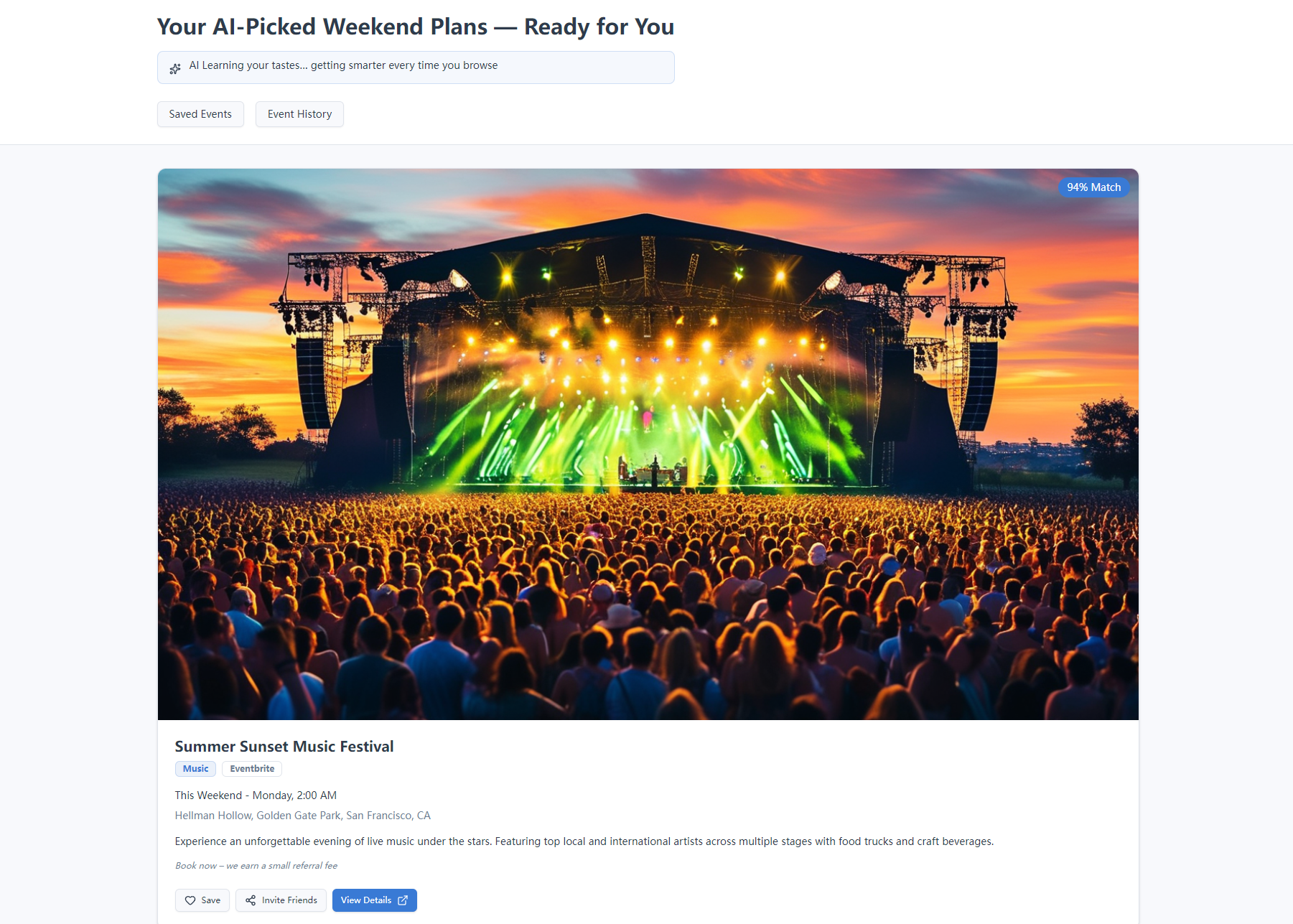
EventDiscovery AI aggregates local events from multiple sources, uses AI to learn user preferences (from clicks, saves, and ratings), and delivers a curated feed of 5-10 hyper-relevant weekend activities. Users can save events, share with friends, rate past experiences, and sync plans to their calendar—all in one intuitive interface.
How we built it
We started by mapping user workflows (discovery → saving → sharing → feedback) to design a single-column, card-based UI with React. Backend with Node.js/Python pulls and normalizes data from Eventbrite/Meetup APIs, storing it in PostgreSQL on AWS. The AI recommendation engine (powered by OpenAI) weights user behavior (40%), category alignment (30%), popularity (20%), and location (10%) to calculate match scores (82-96%). We integrated Firebase for session persistence (saved events/history) and an ICS generator API for calendar downloads.
Challenges we ran into
The biggest hurdle was unifying inconsistent data formats across event APIs—each source structured dates, locations, and descriptions differently. We also struggled with the AI model over-indexing on popular events (ignoring niche user tastes) until we added a diversity rule (max 40% same-category events). Handling edge cases (e.g., missing event images, failed rating submissions) required robust error handling and fallback UI states.
Accomplishments that we're proud of
We created a seamless feedback loop: user ratings directly refine AI recommendations, with a 3-second fade-out confirmation that feels responsive. The multi-source aggregation works in real time (daily data refreshes), and the share functionality works across 4 major messaging platforms without requiring app installation for recipients. Most importantly, beta users reported cutting their weekend planning time by 70%.
What we learned
We mastered API normalization and balancing AI personalization with diversity—avoiding "filter bubbles" while keeping recommendations relevant. We also learned that subtle UI feedback (e.g., filled heart icons, loading indicators) drastically improves user trust. On the business side, transparent referral fee labeling built credibility with users.
What's next for this project
First, we’ll add advanced filtering (distance from user, price range) and a map view for event locations. We plan to integrate more local small-business event sources to support community organizers. Long-term, we’ll test in-app notifications for saved event reminders and a lightweight login system (to sync preferences across devices)—staying focused on our core mission: making weekend planning effortless for urban professionals.

Log in or sign up for Devpost to join the conversation.