-
-
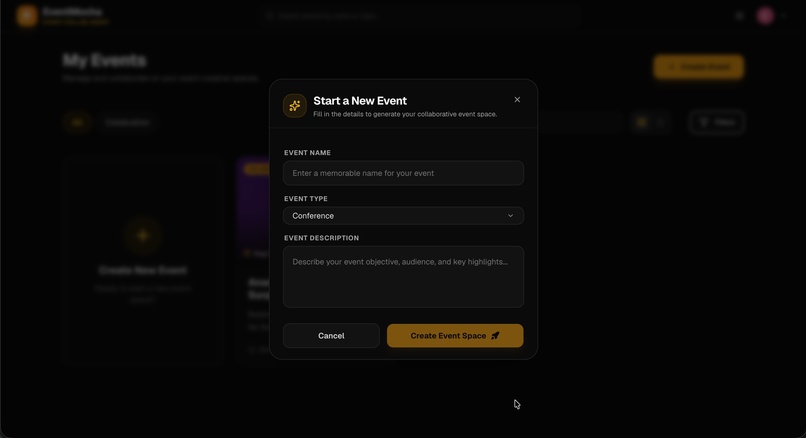
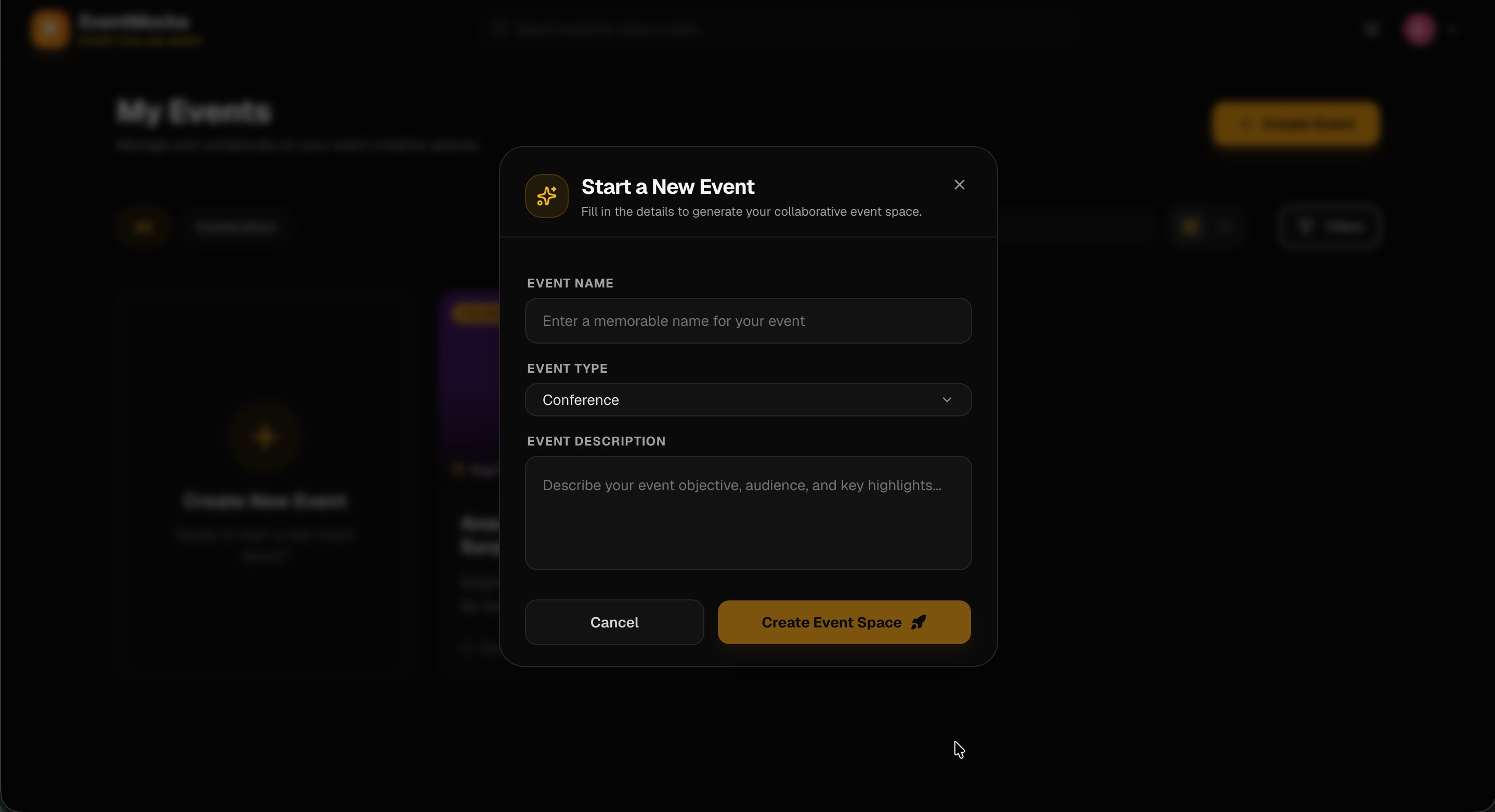
Event creation
-
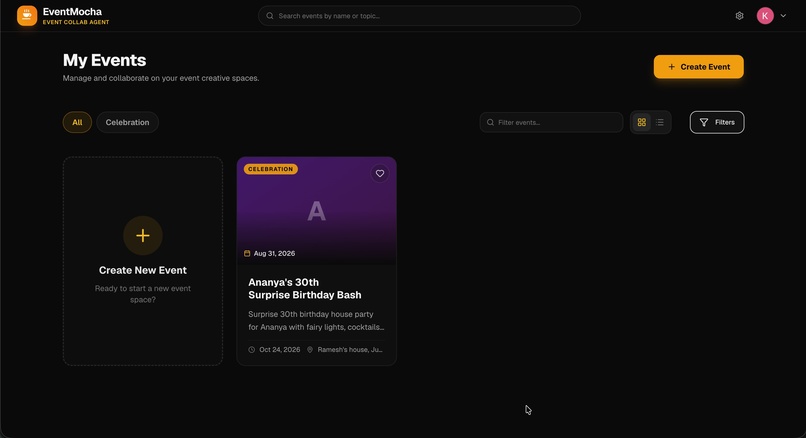
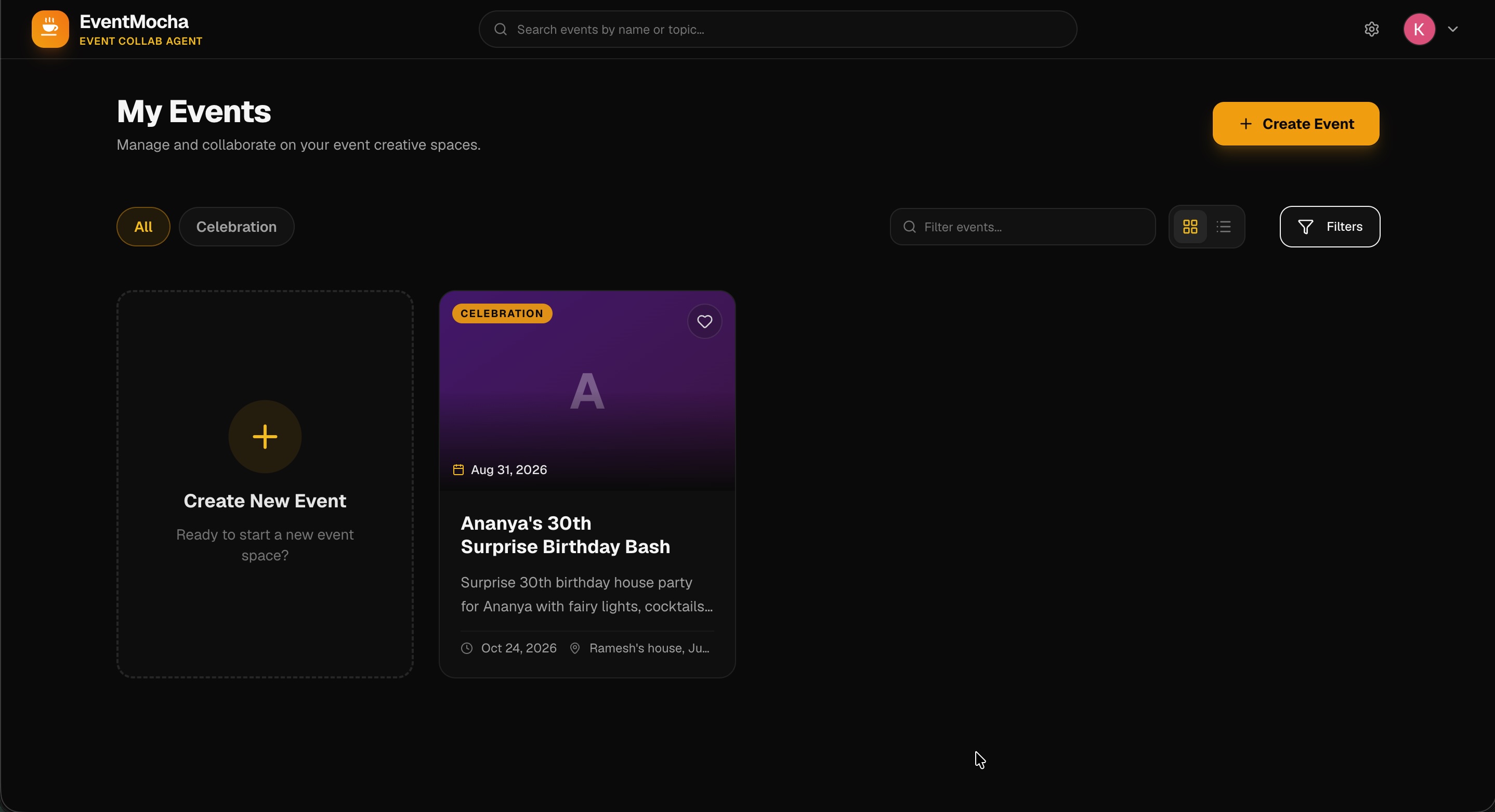
Events list
-
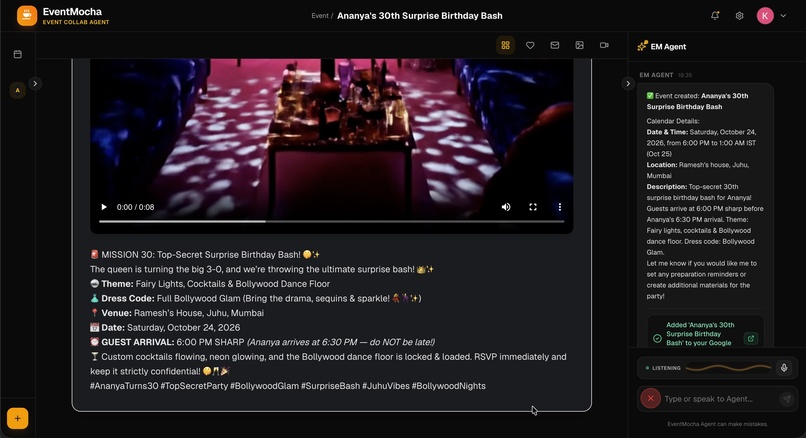
Voice mode
-
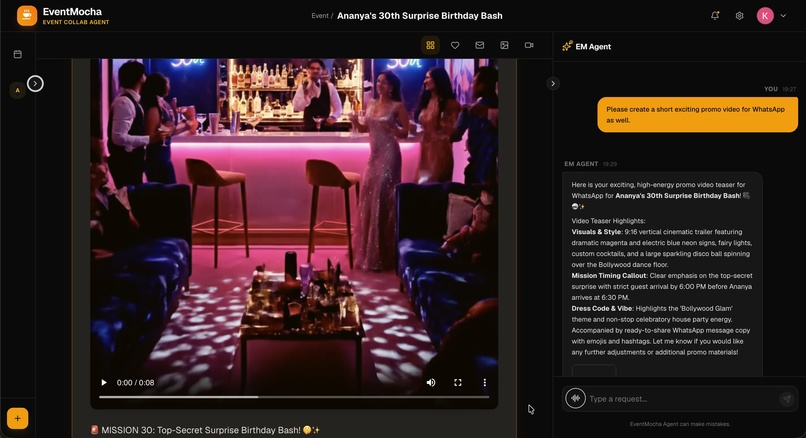
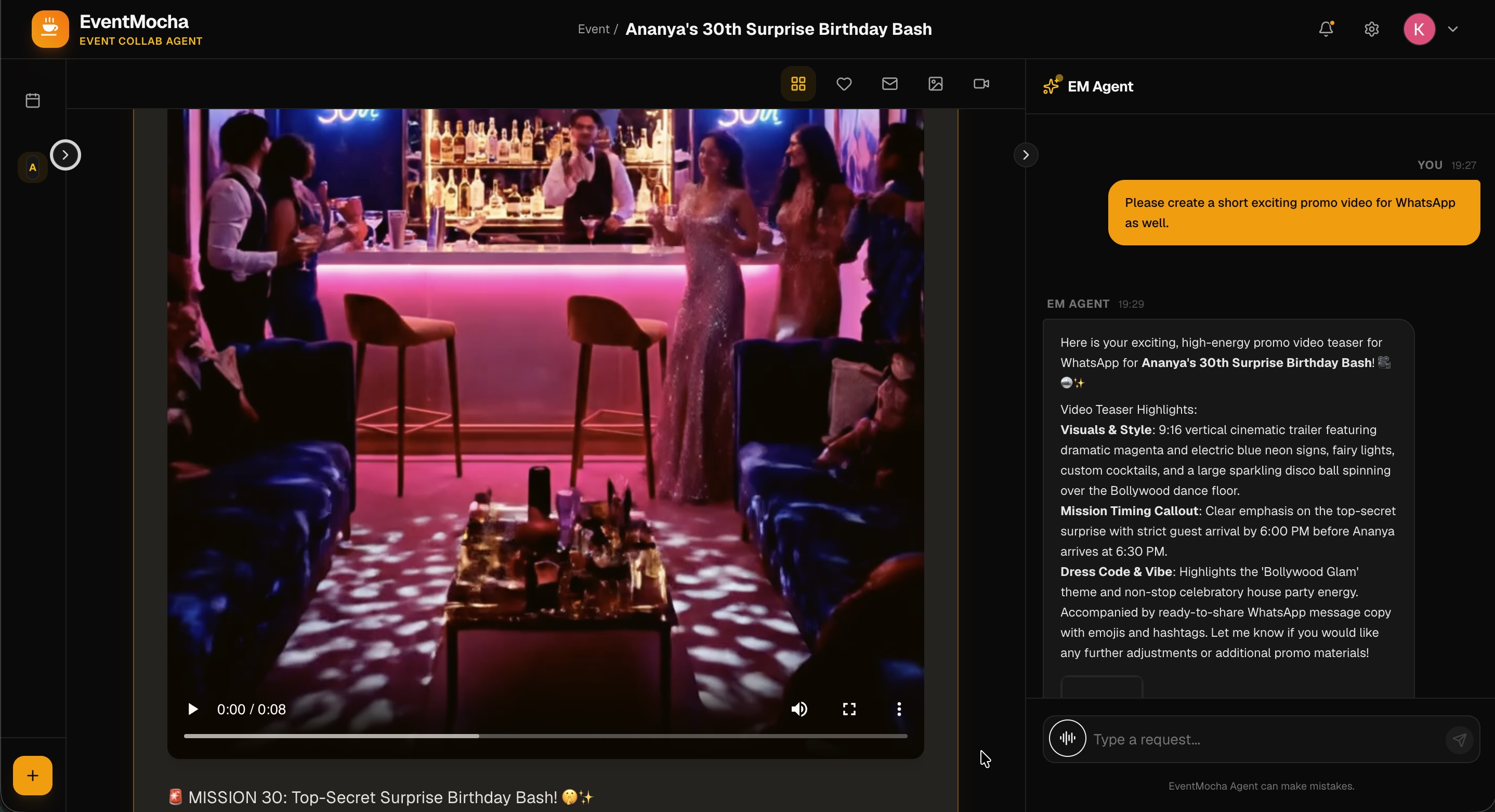
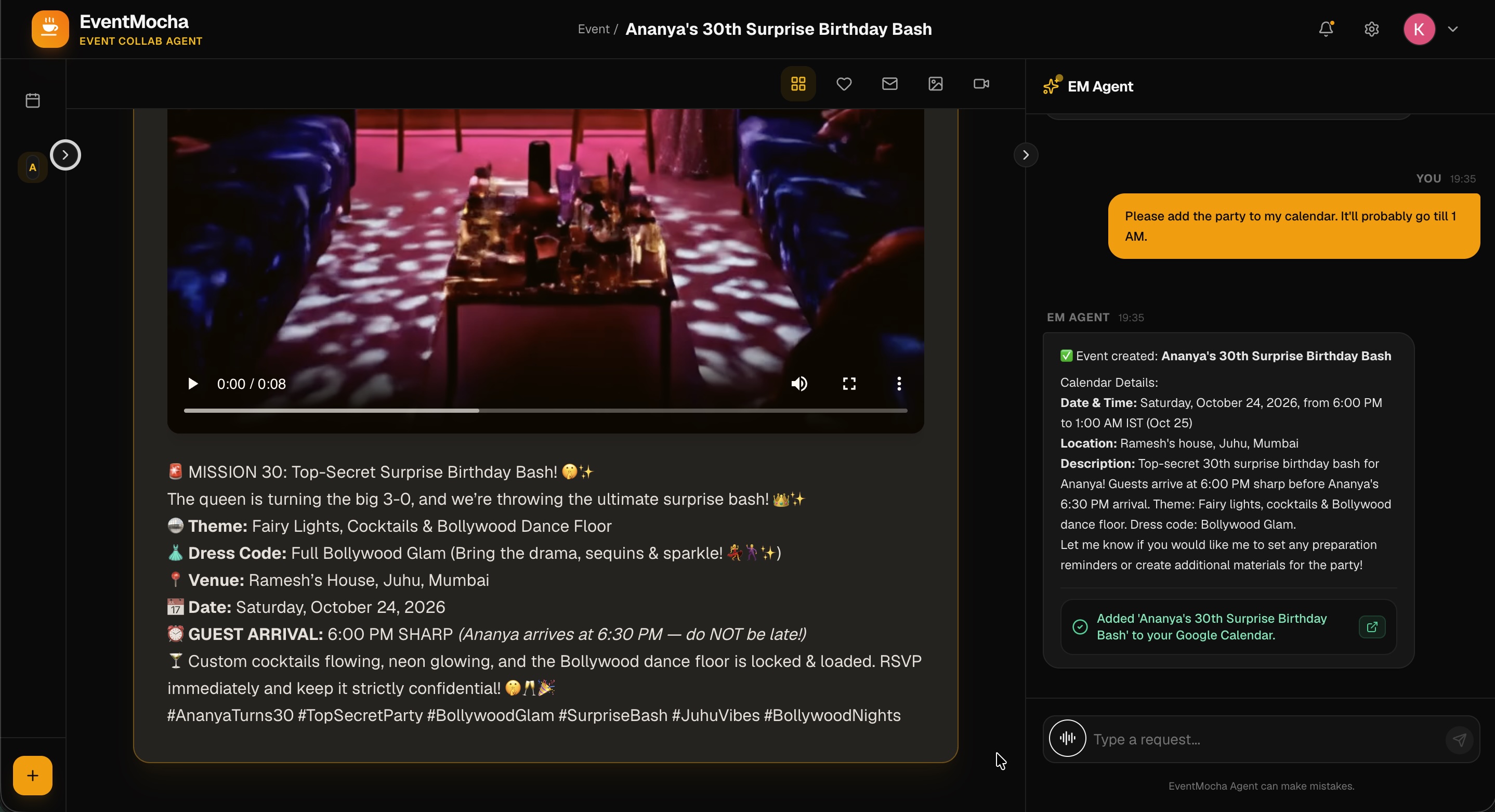
Video generation for social media post
-
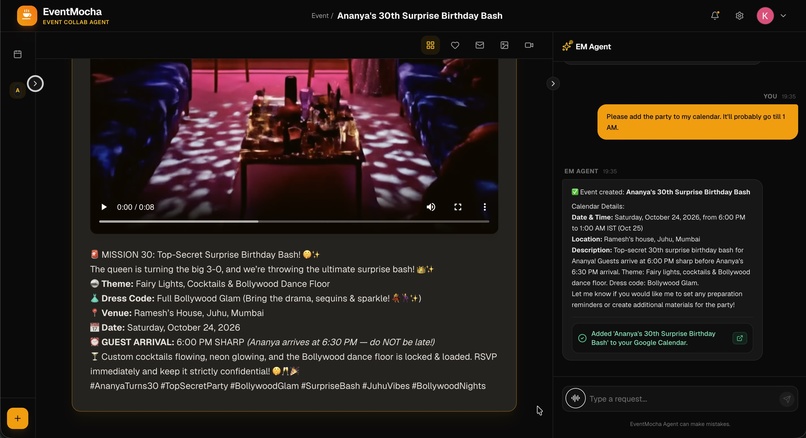
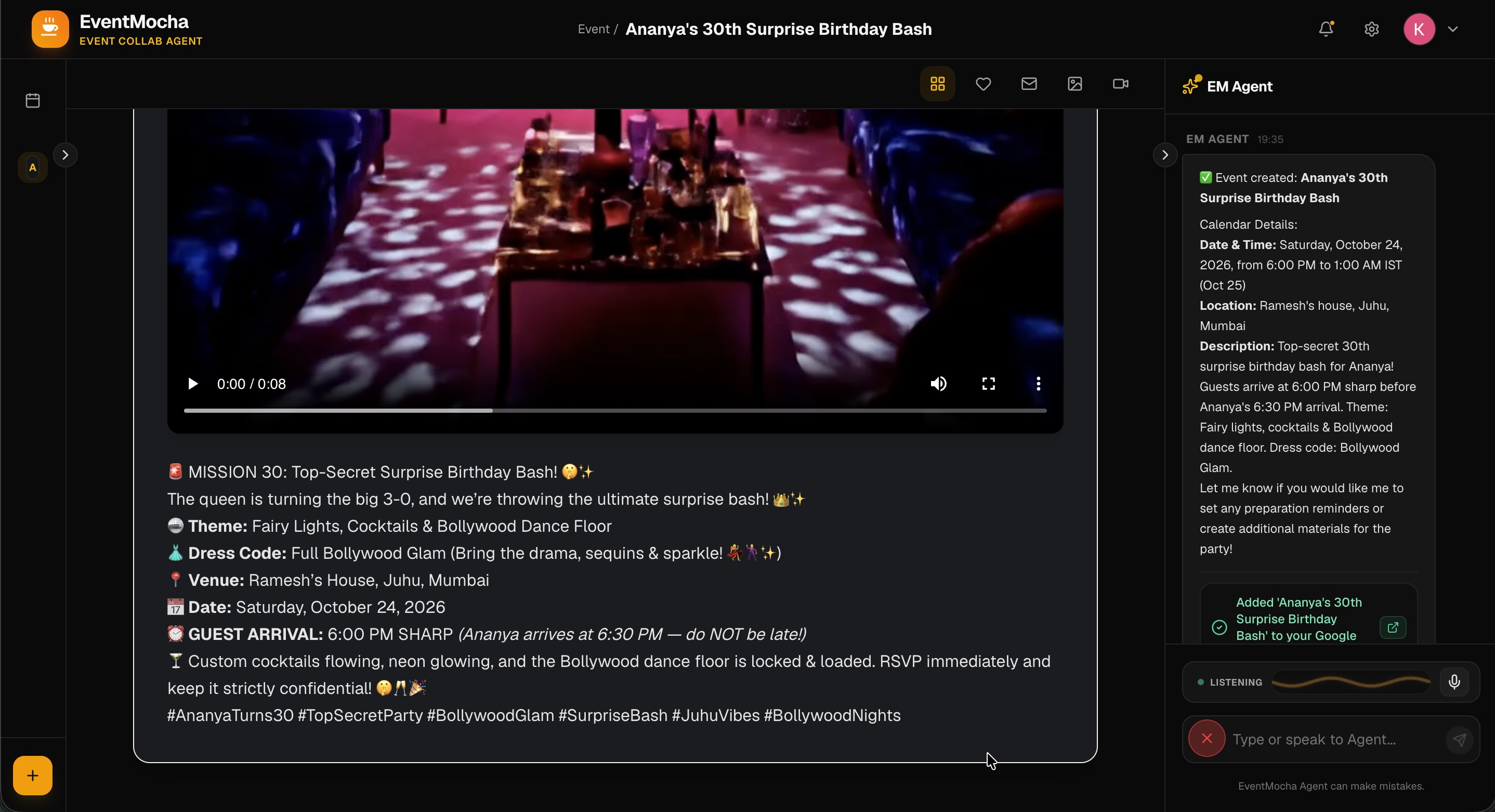
Google workspace actions
-
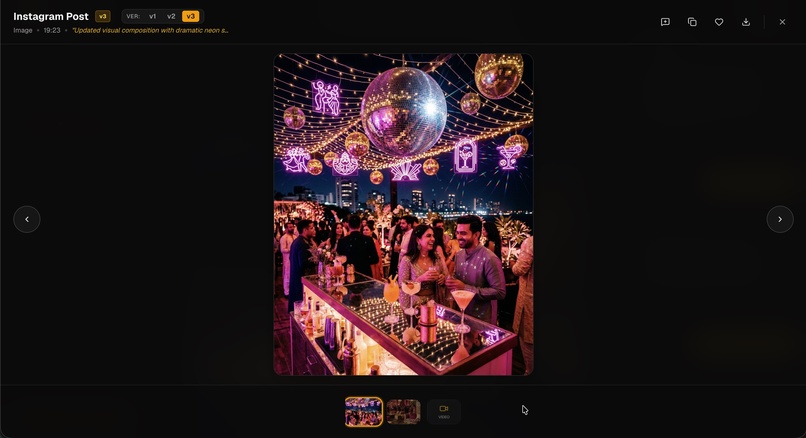
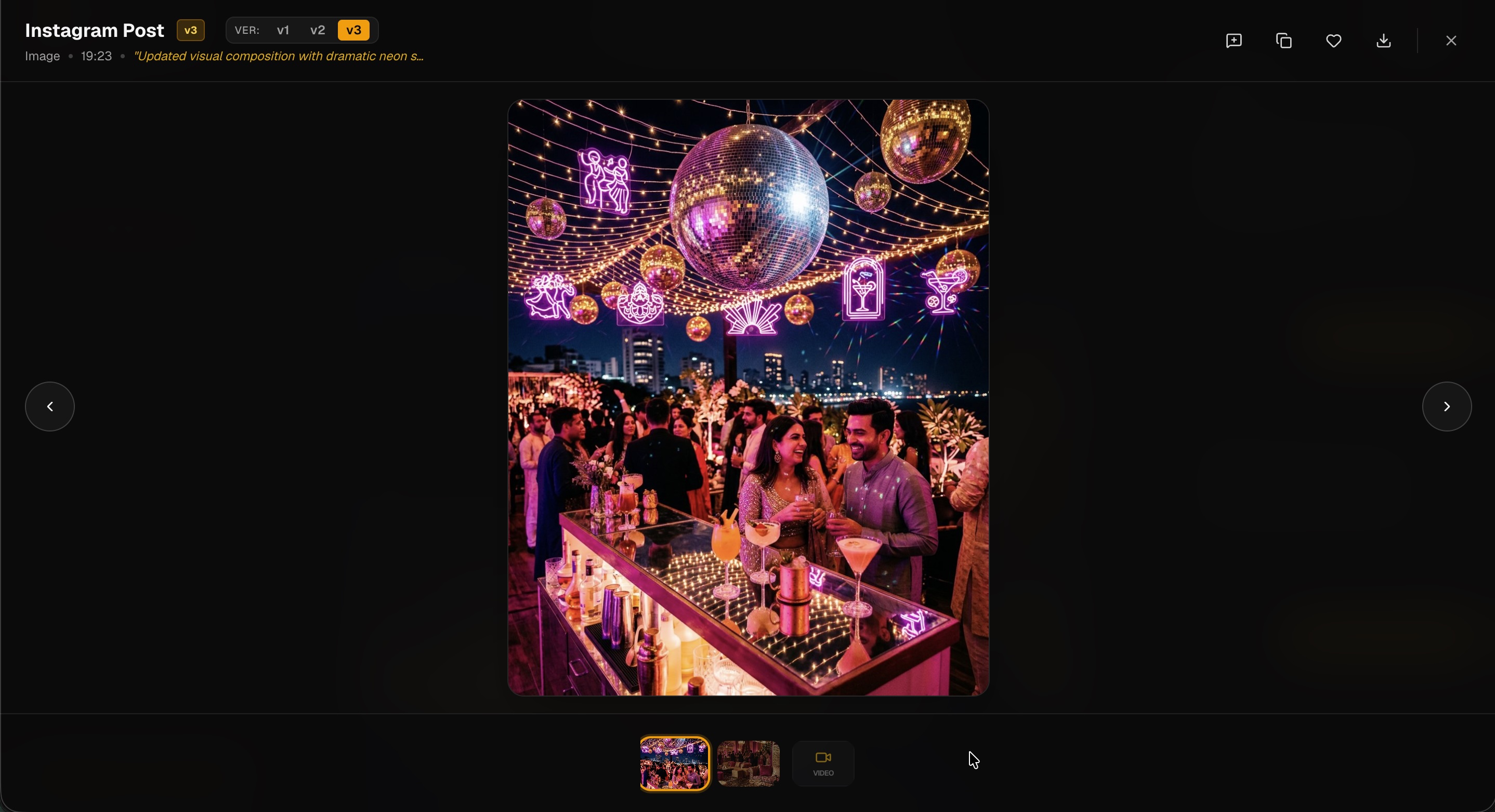
Media gallery with versions
-
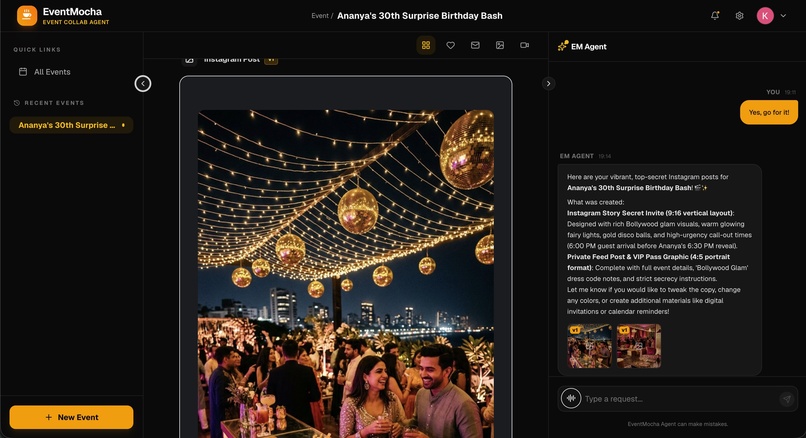
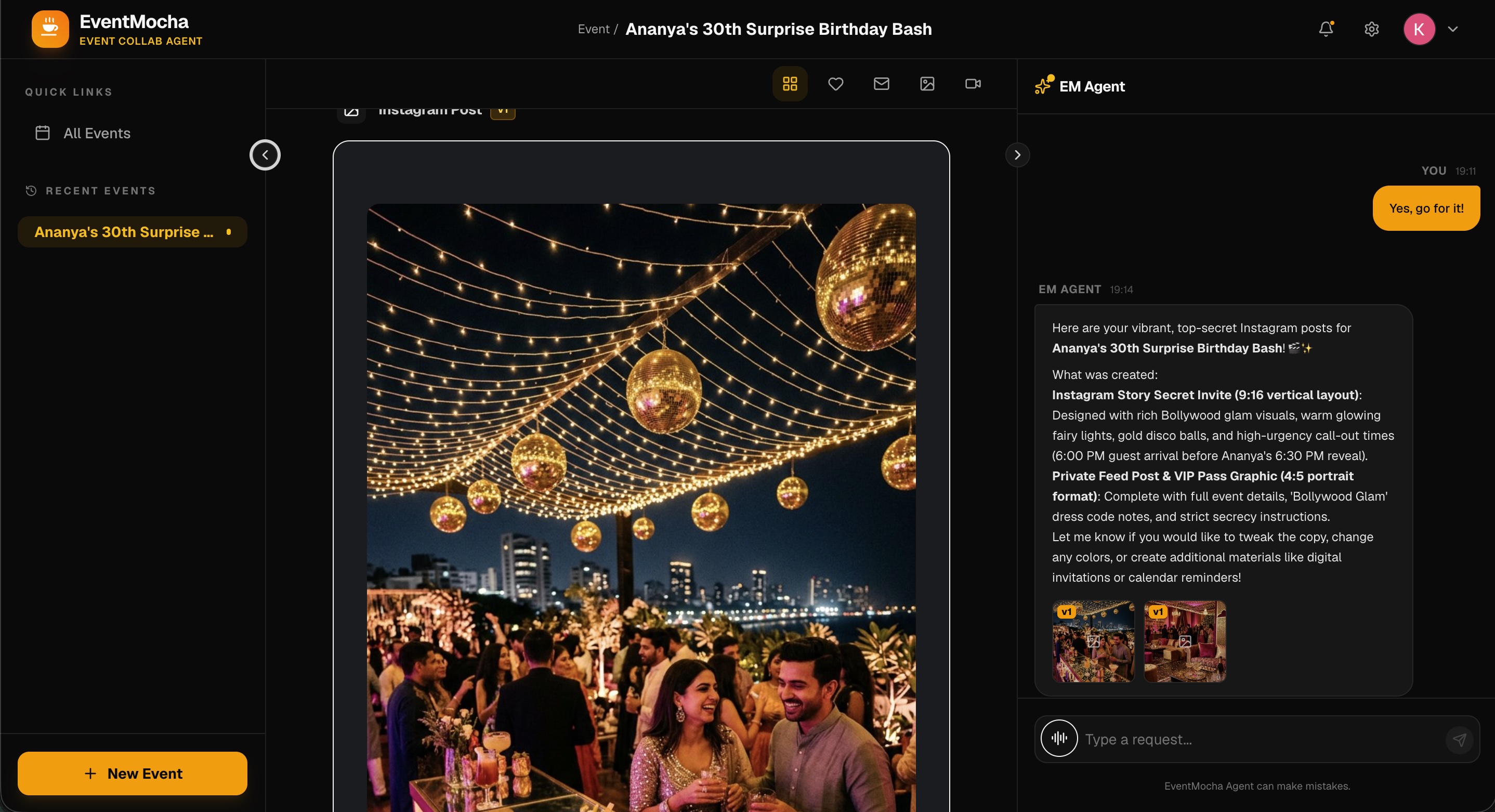
Image generation for social media post
-
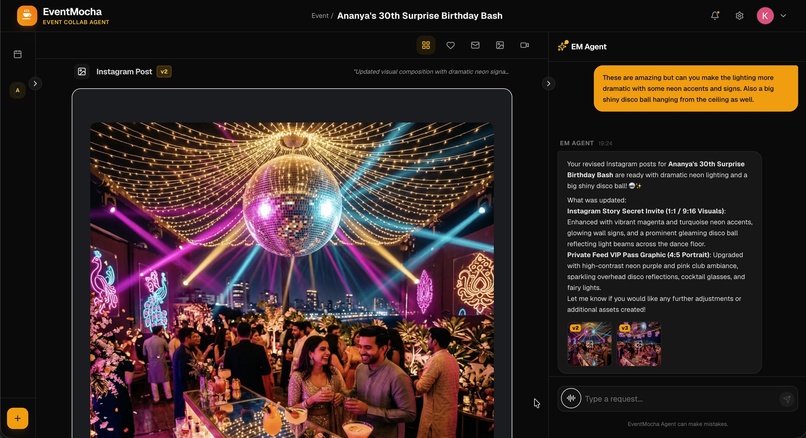
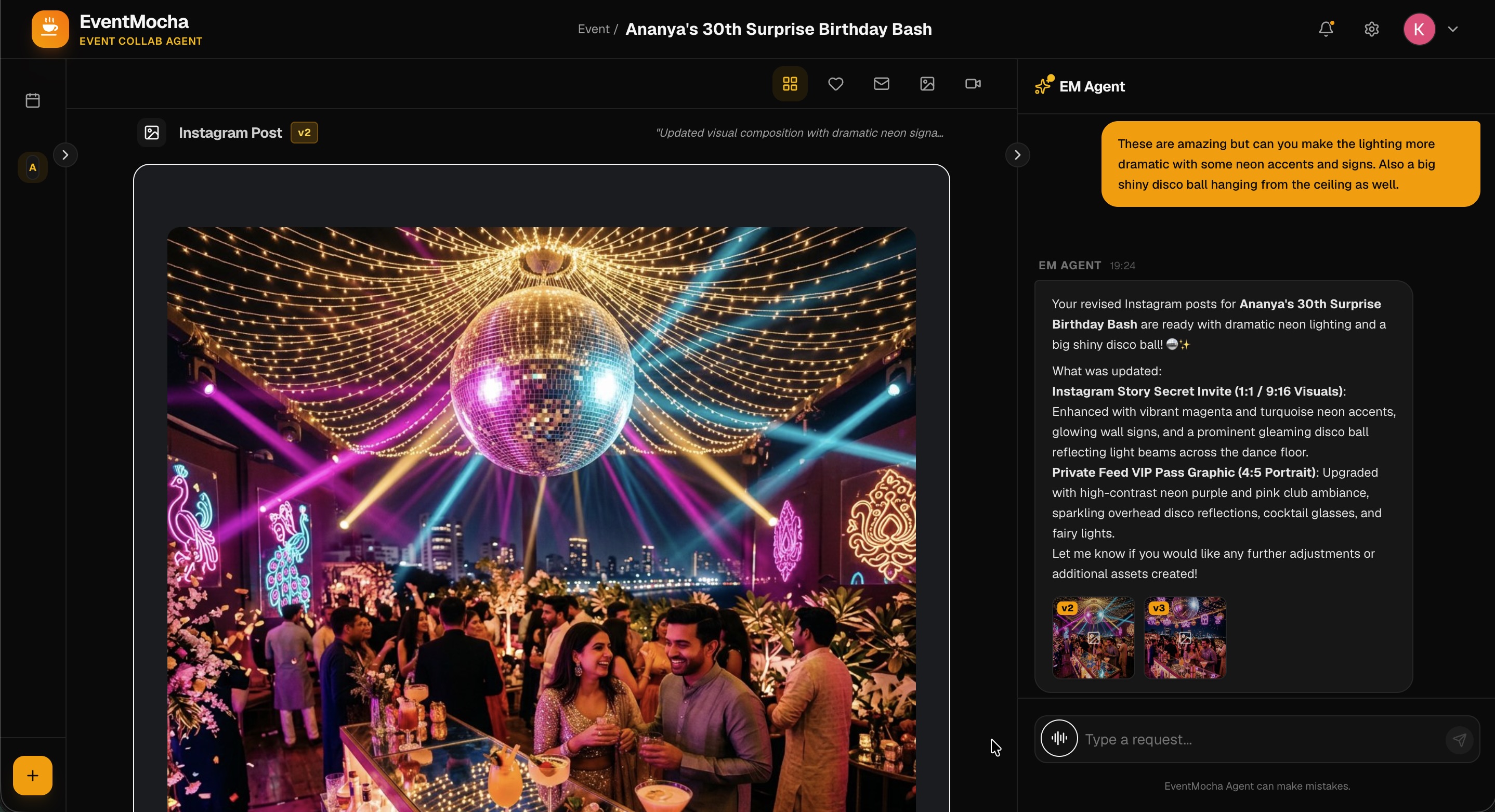
Image revision
EventMocha — AI-Powered Multimodal Event Planning & Content Generation Assistant
Inspiration
Planning and promoting an event—whether a tech conference, community meetup, workshop, or product launch—is notoriously fragmented and time-consuming. Event organizers frequently find themselves juggling multiple disparate tools: brainstorming ideas in text notes, coordinating visual designs with graphic editors, scripting and editing video teasers, drafting email announcements, and manually scheduling calendar invites and task milestones.
I envisioned EventMocha as an AI-native event collaboration studio: an intelligent multi-agent copilot that feels like sitting down over coffee with an expert event marketing team. By orchestrating the latest Google Gemini models, Imagen, Veo, and Google Workspace automation via the Model Context Protocol (MCP), EventMocha transforms a rough spark of an idea into a complete, publish-ready event campaign in minutes.
What it does
EventMocha handles the entire event lifecycle from concept to execution through an interactive, multimodal conversational workspace:
Conversational Event Discovery (Voice & Text):
- Conducts multi-turn discovery dialogues to capture the event's theme, target audience, venue, schedule, and branding tone.
- Supports real-time, low-latency bidirectional voice conversations powered by Gemini Live (
LiveConnectWebSockets).
Grounded Research & Strategic Planning:
- Employs real-time Google Search grounding to discover trending industry topics, competitor themes, relevant hashtags, and speaker backgrounds to build a tailored campaign blueprint.
Multimodal Content Generation:
- Visual Posters & Banners: Generates customized event artwork using Imagen.
- Cinematic Video Teasers: Creates dynamic, motion-rich video previews with Veo.
- Multi-Channel Copy: Produces polished email invitations, social media campaign posts (LinkedIn, X/Twitter, Instagram), and agenda breakdowns structured in rich HTML cards.
Targeted Revisions & Version Lineage Tracking:
- Users can select specific generated assets and request granular revisions (e.g., "Make the headline punchier", "Make the poster cyberpunk-themed", or "Tweak the date and agenda").
- Preserves text copy when only visual changes are requested and reuses existing media when refining text, tracking complete
v1,v2,v3... version lineage trees in Firestore.
Google Workspace Automation (MCP):
- With natural language commands, creates Google Calendar events, logs milestone checklists in Google Tasks, and drafts invite emails directly in Gmail via FastMCP.
How I built it
EventMocha is architected as a modern monorepo with strict separation of concerns across frontend, agent orchestration, and integrations:
Frontend
- Built with React 19, Vite, TanStack Query, and TailwindCSS.
- Features an interactive split-view EventSpace with real-time markdown/HTML rendering, multi-version asset carousels, theater preview modals, and Web Audio API (
AudioWorklet) for bidirectional raw PCM16 audio streaming.
Multi-Agent Service (Python & Google ADK)
- Powered by the Google Agent Development Kit (ADK) and FastAPI.
- Hierarchical Multi-Agent Architecture:
Orchestrator/VoiceOrchestrator: Routes requests and handles live audio streaming.EventInfoGatherer: Manages stateful multi-turn discovery dialogues.ContentPipeline: A sequential pipeline runningContentGenerationManagerfollowed byResponseFormatter.- Specialist
AgentTools:ResearchAndPlanner(withBuiltInPlanner+google_search),MultimodalContentCreator(with Imagen),VideoGenerator(with Veo), andProductivityContentCreator.
Google Workspace MCP Integration
- Standalone FastMCP service providing structured tools for Google Calendar, Google Tasks, and Gmail with secure OAuth token handling.
Cloud Infrastructure & Persistence
- Google Cloud Run: Hosts the Agent Service and Workspace MCP containers with concurrency, session affinity, and zero-cold-start configurations.
- Google Cloud Firestore: Real-time persistence for event metadata, session states, and version lineage trees.
- Google Cloud Agent Platform Session Service: Session memory persistence for agent to maintain context across interactions
- Google Cloud Storage (GCS): High-speed hosting and streaming for generated images, audio, and video assets.
- Firebase Auth & Firebase Hosting: Secure user authentication and frontend delivery.
Challenges I ran into
- Low-Latency Bidirectional Live Voice Streaming:
- Bridging browser audio input (Web Audio API / AudioWorklet at 16kHz) with Gemini Live's real-time WebSocket protocol (24kHz output) while maintaining shared session state and uninterrupted agent context required fine-grained audio buffering and state synchronization.
- Symmetrical Callback Media Pipelines & Version Lineage:
- Preventing unnecessary and expensive re-rendering of images or videos during text revisions required designing an asset registry and structured lineage pointers.
- Stateless Cloud Run with Stateful MCP & Streaming:
- Ensuring seamless WebSocket connections and session continuity across Cloud Run instances required fine-tuning session affinity, memory allocations and timeout configurations.
- Multi-Agent design: Identifying agent responsibilities, tuning agent instructions, optimizing the tooling of individual agents and making them function as expected in the overall flow in different scenarios.
- ADK nuances and best practices: Figuring out the different rules and ways of using ADK functions and callbacks was also a challenge at times.
6. MCP Server Integration: Ensuring reliable and smooth agent interaction with the Workspace MCP server by selecting the right tools, passing the correct params and performing actions as expected.
Accomplishments that we're proud of
- Unified Multimodal Agent Experience: Supporting a true multimodal input by supporting seamless communication with agent via text and voice modes, and a multimodal output experience through generation of rich content with image and video.
- Granular Lineage & Revision Control: A non-destructive revision pipeline where users never lose previous iterations and can iterate on copy or visuals independently.
- Production-Grade Architecture: Full end-to-end deployment on Google Cloud with Google ADK, FastMCP, Cloud Run, Firestore, and GCS.
What I learned
- Deep hands-on experience designing multi-agent hierarchies, callbacks, and tool routing with the Google Agent Development Kit (ADK).
- Implementing real-time audio processing lifecycle and WebSockets with the Gemini 2.5 Live API.
- Strong understanding of working with Workspace MCP server to perform a whole host of actions across the Google Workspace apps.
- Best practices for optimizing multimodal latency and streaming performance on Google Cloud Run.
What's next for EventMocha
- Direct Multi-Platform Publishing: Direct API integration with social platforms (LinkedIn, X, Instagram) for one-click publishing.
- RSVP & Attendance Management: Generating RSVP web page based on event theme for invitees to confirm attendance and hosts to track RSVPs.
- Post-Event Analytics & Attendee Follow-Up: Automated post-event attendee sentiment analysis, thank-you email automation, and recap highlight video generation.

Log in or sign up for Devpost to join the conversation.