-
-
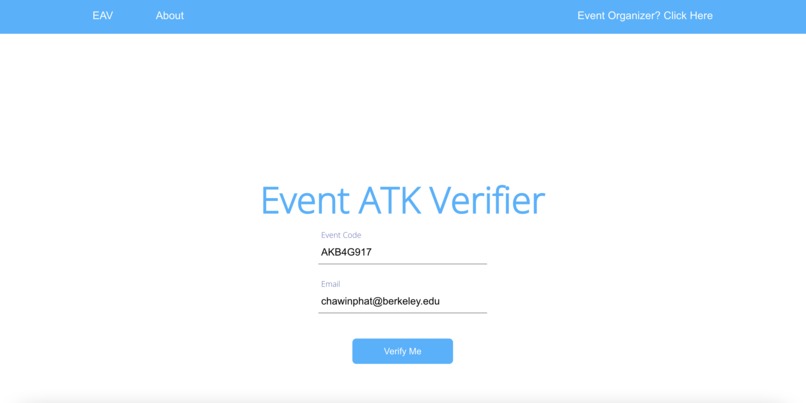
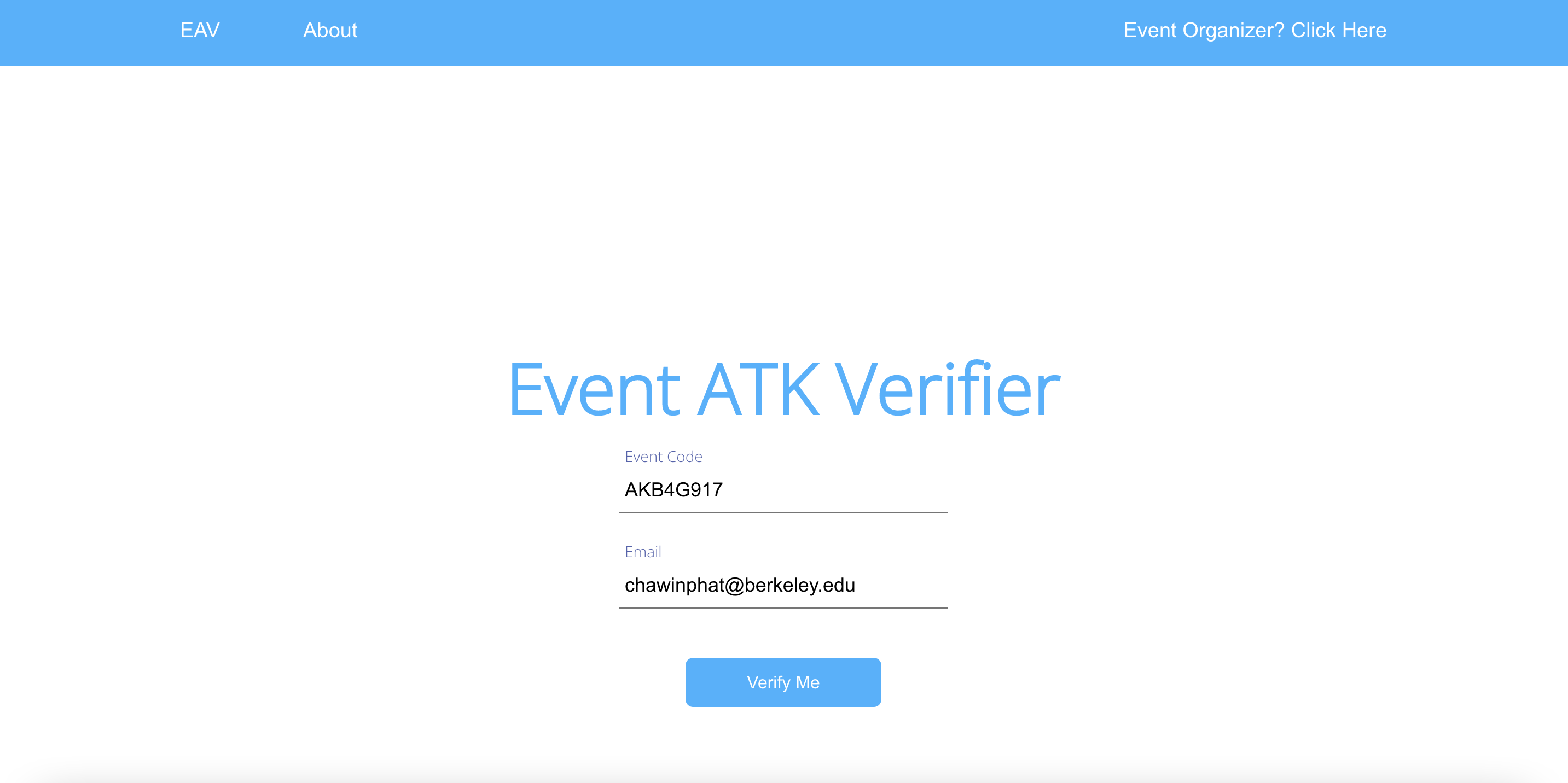
Users input event code and their email
-
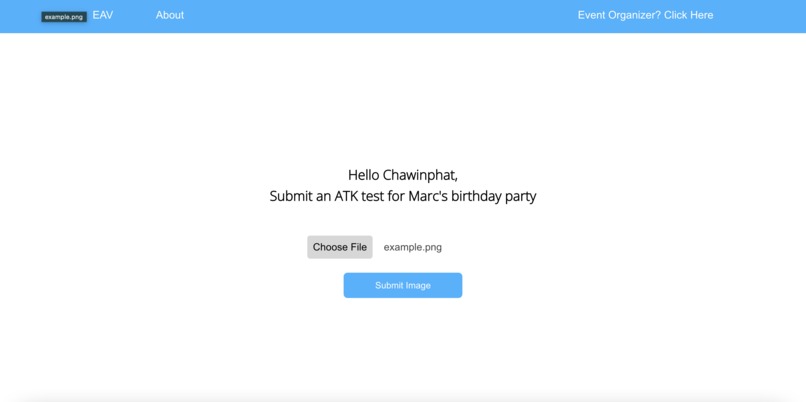
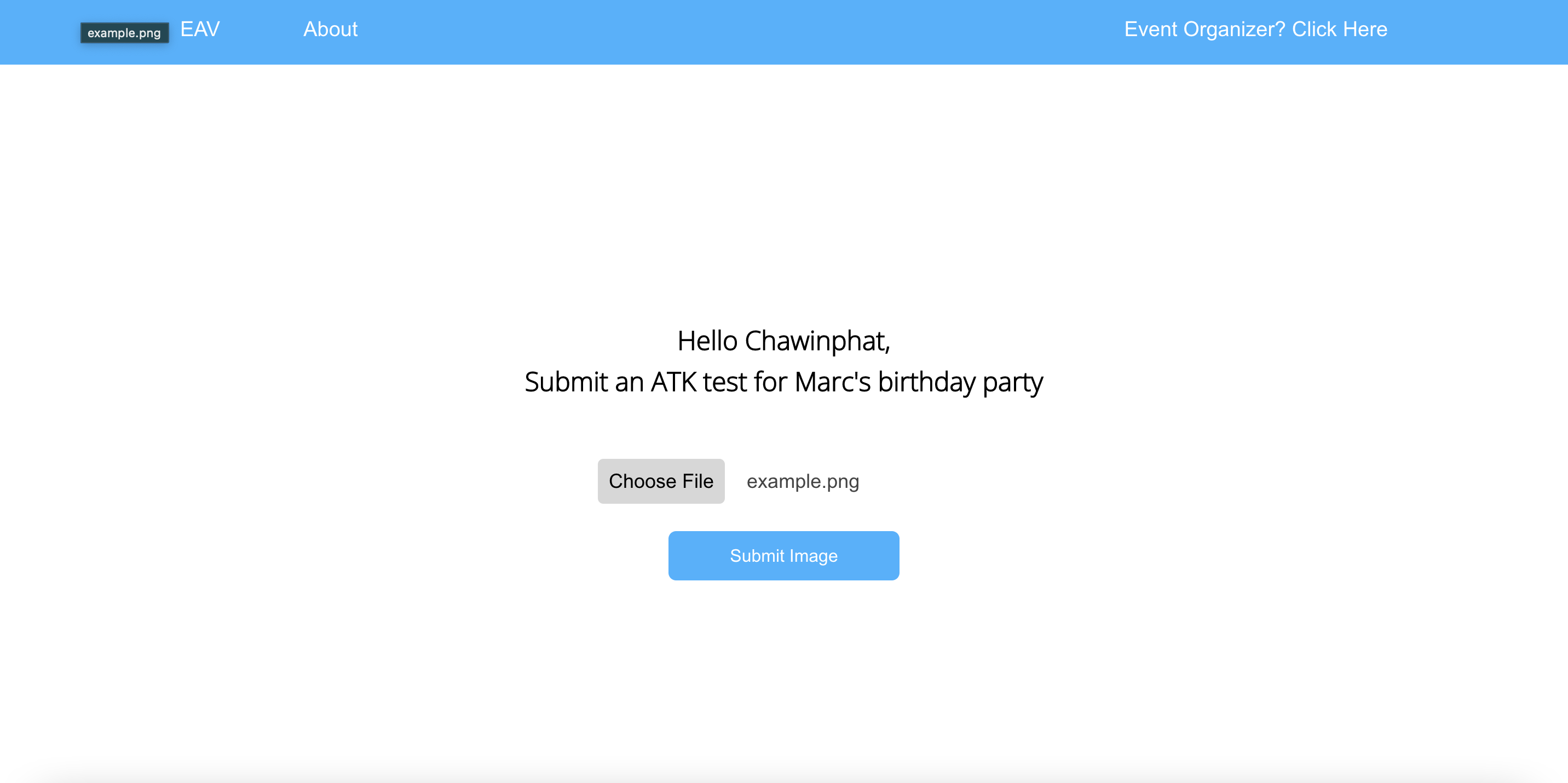
Users add image of ATK test and uploads it
-
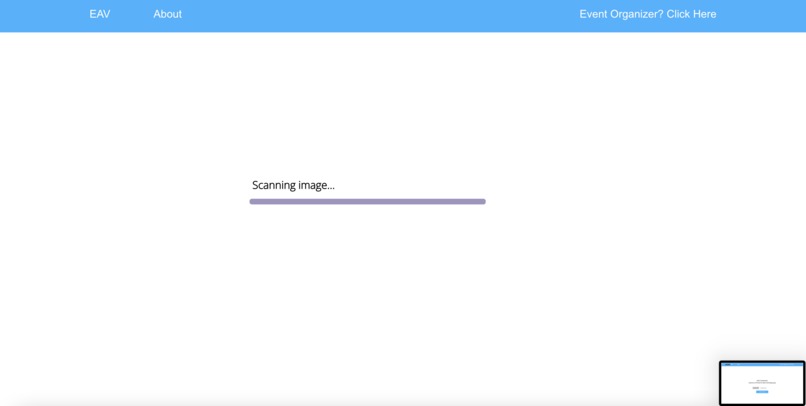
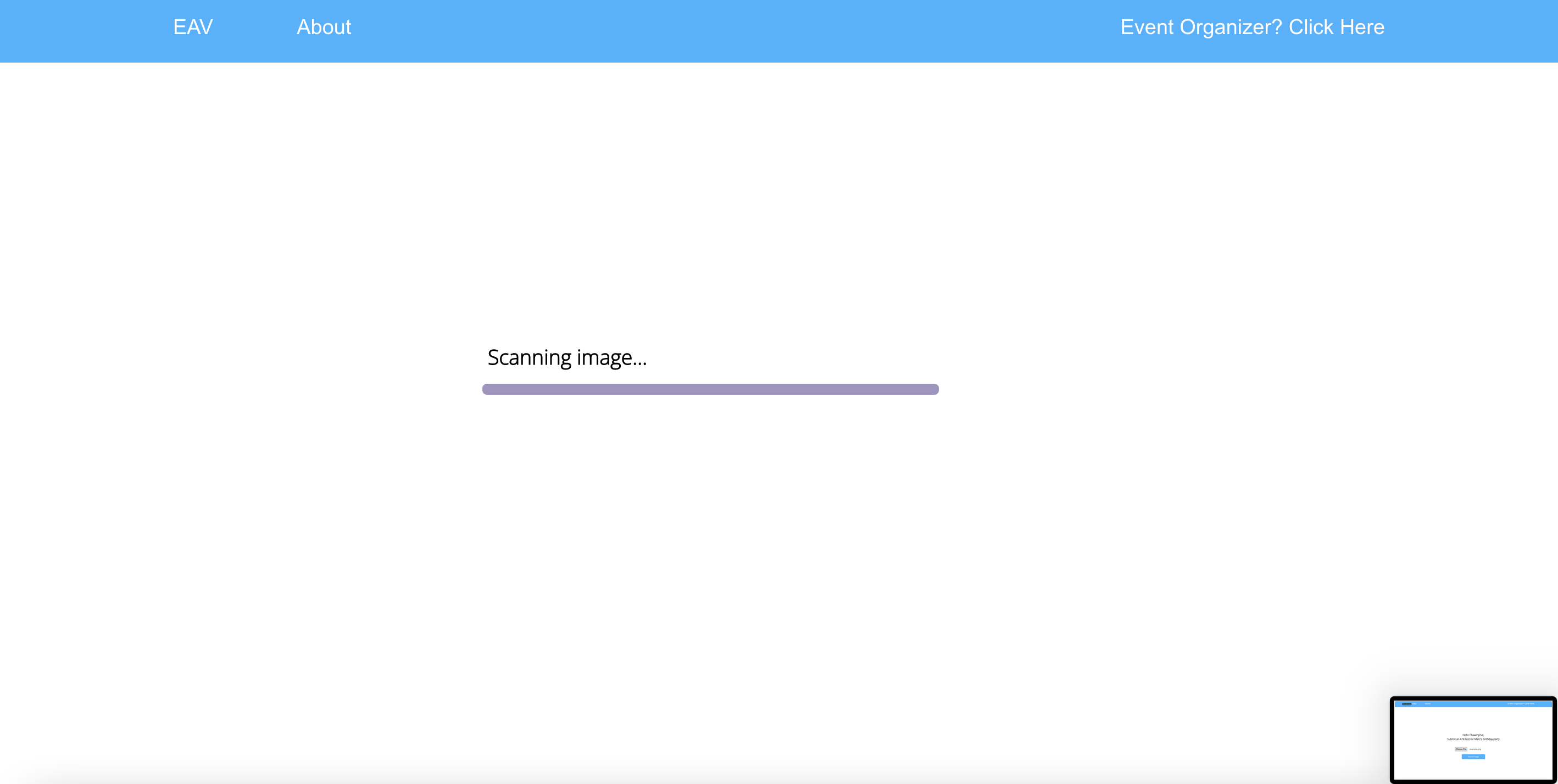
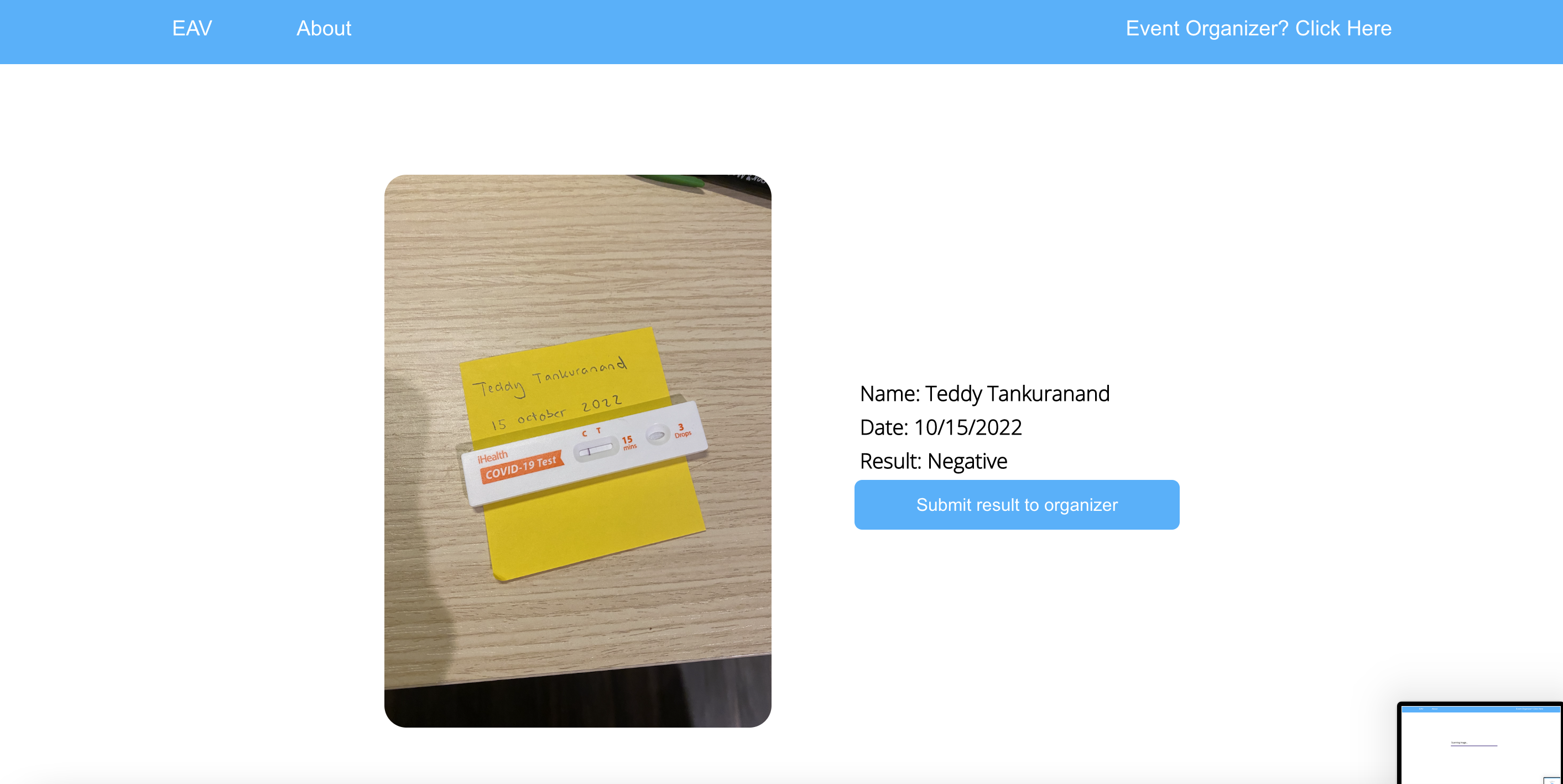
Our computer vision system analyzes the image for the name, date, and ATK test result
-
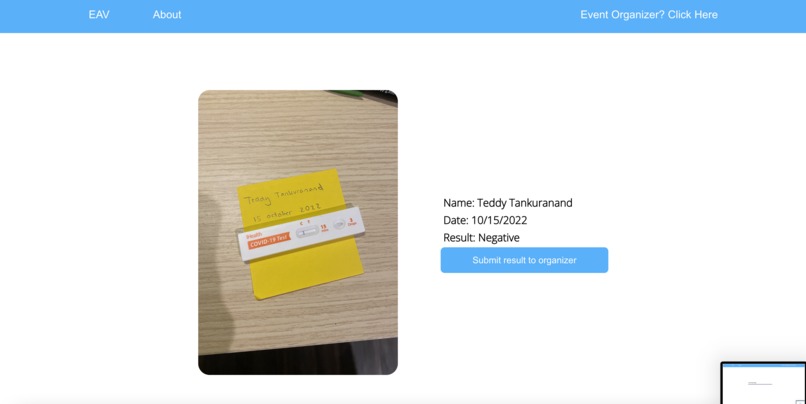
Results are displayed here, and users then submit it to the event organizer
-
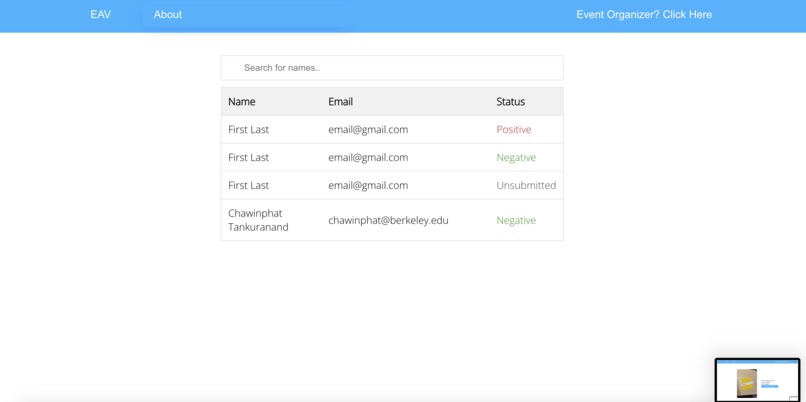
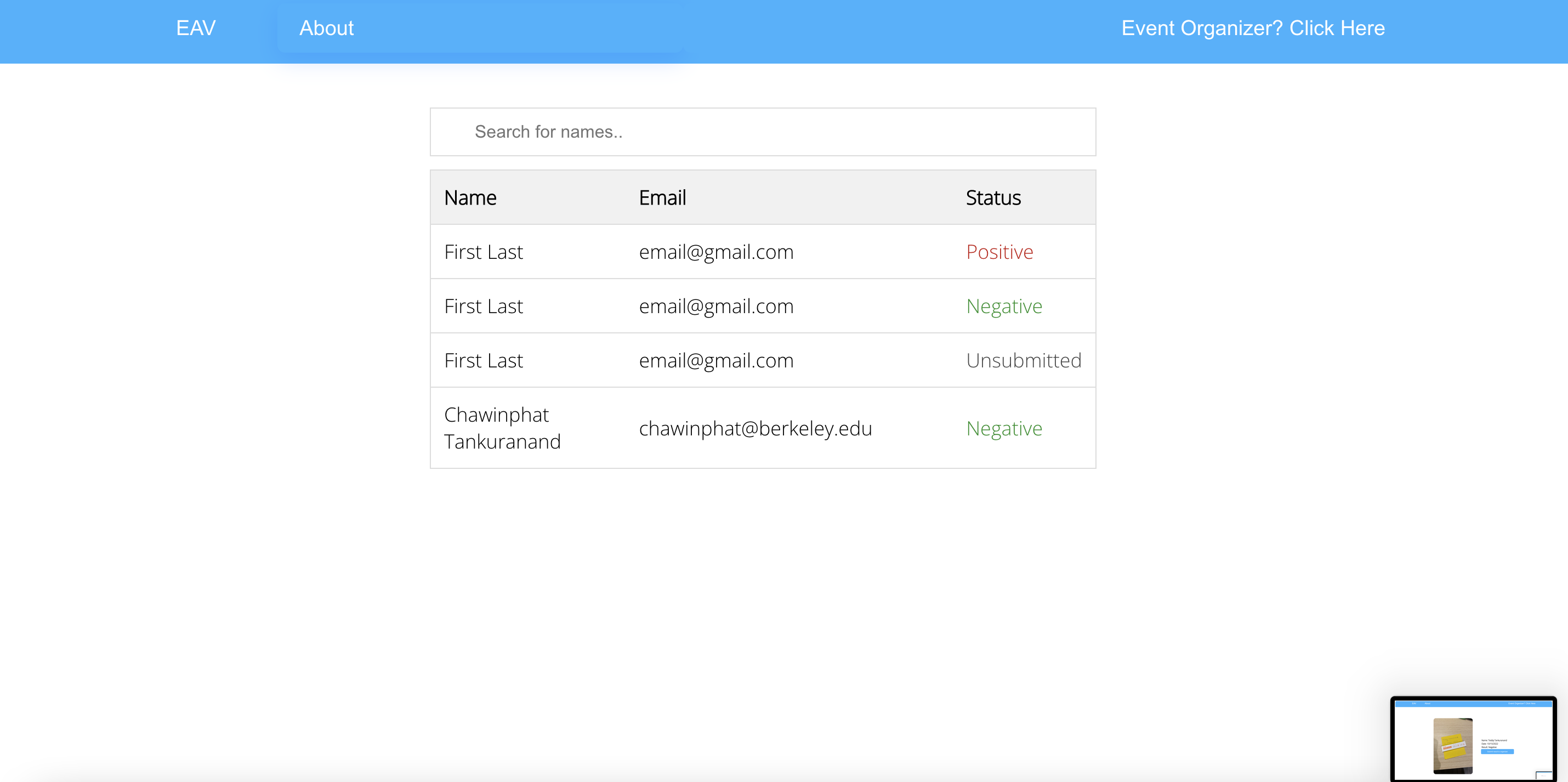
On the organizer's side, results are displayed here.
Inspiration
COVID-19 has impacted our ability to gather with friends, family, and more. Especially in large events, testing and ensuring the safety of the people have become essential. However, the process requires too much time and resources.
We wanted to create an application that takes away the hassle of long lines and abundant staffing for ATK check-ins and allows all future events to revert back to the easy process of immediate walk-ins.
What it does
EAV is a computer vision software that optimizes ATK submission and checking to streamline large events.
Personal Identification
On the landing page, the user is able to input their personal information (email) and the associated event code to authenticate their submission, ensuring people unrelated to the event are not able to access or pose for another attendee.
Image Submission and Computer Vision
EAV uses a computer vision algorithm to determine the ATK result from the image uploaded by the attendee, whether it be positive or negative. Our model also scans for name and date inside the submitted photo, to verify the authenticity of the user and time submitted. We utilized a database to store all ATK test images submitted, and when verifying new images, we reference this database to ensure no repeated photos. So submitting the same photo twice will result in a needed resubmission.
Guest List
The guest list is a function only available to the event coordinator. It allows them to add new guests by entering their first name, last name, and email address, where a corresponding event code will automatically be sent to the potential attendee. The event coordinator is also able to access the ATK results of the guest list, summarized and color-coded by the status (Positive, Negative, Unsubmitted) and the corresponding photo submitted.
How we built it
We built the front-end using React and other frameworks. The computer vision model was built using openCV, and a dataset of covid test we had found online. Back end is using Python, connected with flask API.
Challenges we ran into
Verifying the covid tests using the computer vision model was difficult, since we had very minimal prior experience with this, and there weren't examples online of similar models. We also ran into challenges regarding the UI/UX of this tool, as it needs to be simple and fast for both user and organizer.
Accomplishments that we're proud of
We hit a good accuracy for our computer vision model, which was especially impressive since we came in with little to no experience in developing computer vision models.. It is able to accurately analyze most of the photos we fed into it. However, bad lighting and certain types of ATK tests are harder to read.
What we learned
This project allowed us to explore computer vision and web development/mobile app development. More specifically, learning about rapidly developing a full stack application that utilizes an intricate machine learning model too. We have also improved our teamwork skills, simulating a fast, agile development environment.
What's next for Event ATK Test Verifier
Deployment
Next up in our plan is deployment. We plan to use the app starting with smaller events and then move on to larger events worldwide! So refining the front end for a better user experience, improving the computer vision algorithm, and then getting it on App Stores is our next move.
Additional Features
We are looking to add new functions to EAV as well. Some of our ideas include the following.
- Applying the data to reinforce covid safety and identify communities with high covid rates
- Visual map of the results of the submission
Let us know if you have any other ideas!

Log in or sign up for Devpost to join the conversation.