-
-
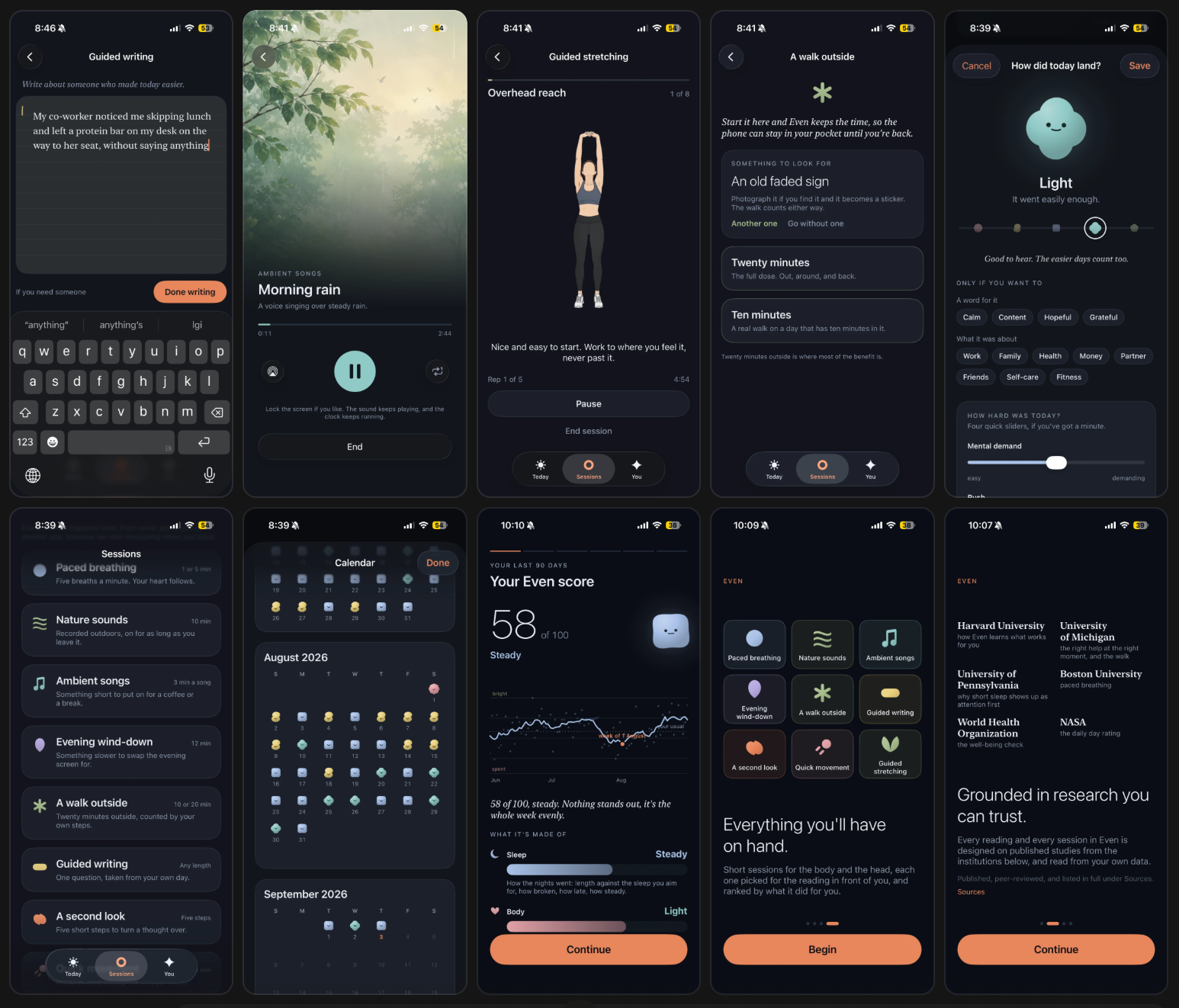
even-ui
-
app-icon
-
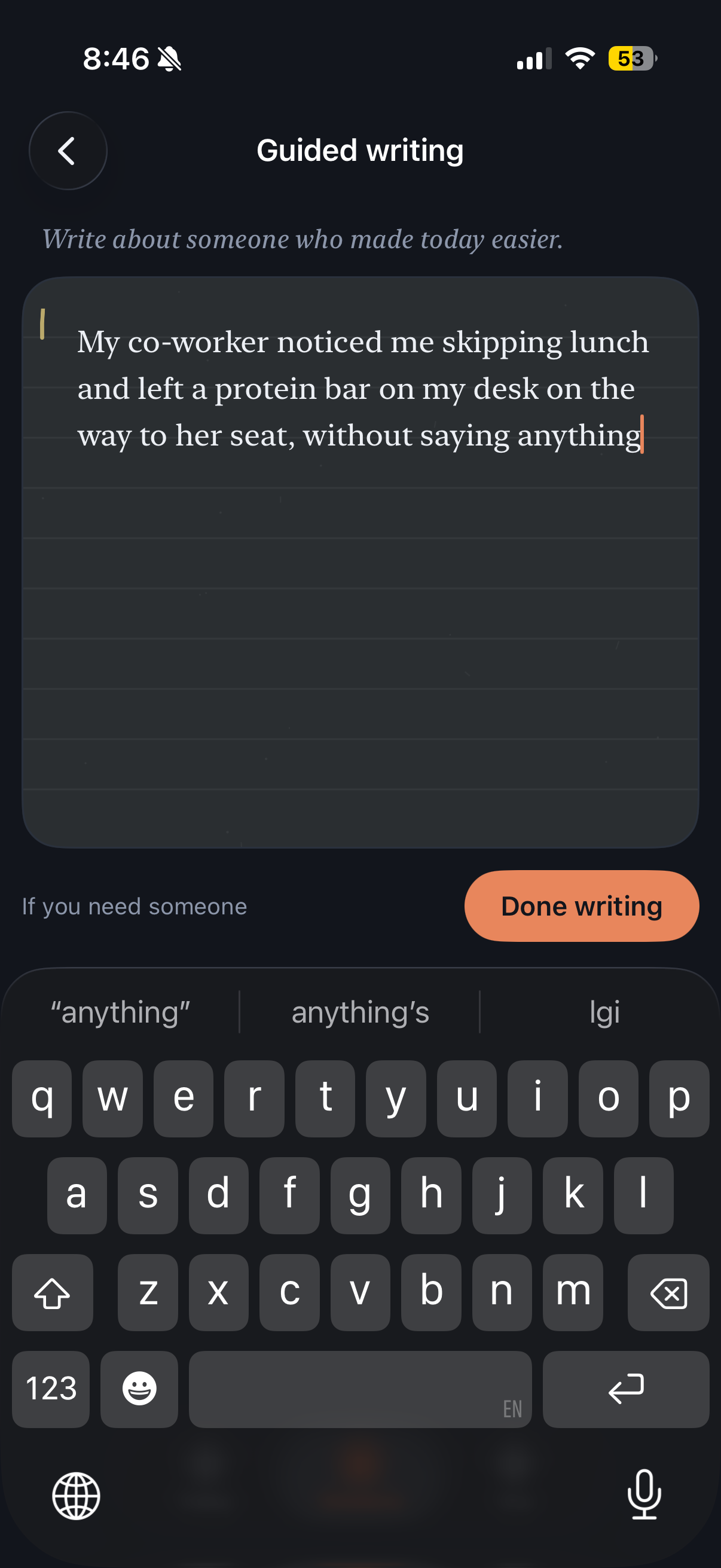
journaling-ui
-
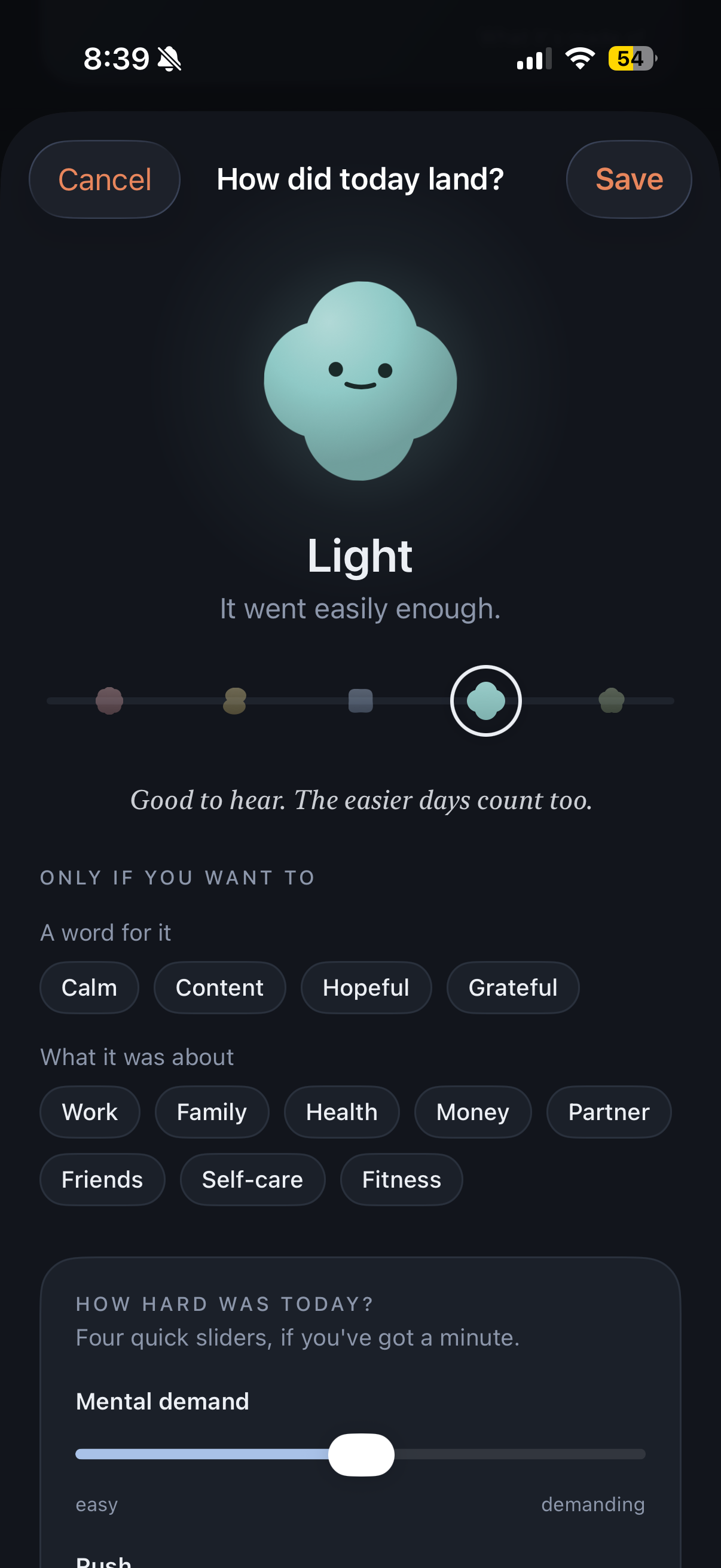
mood-log-ui
-
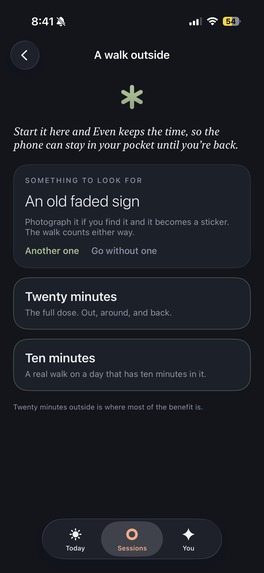
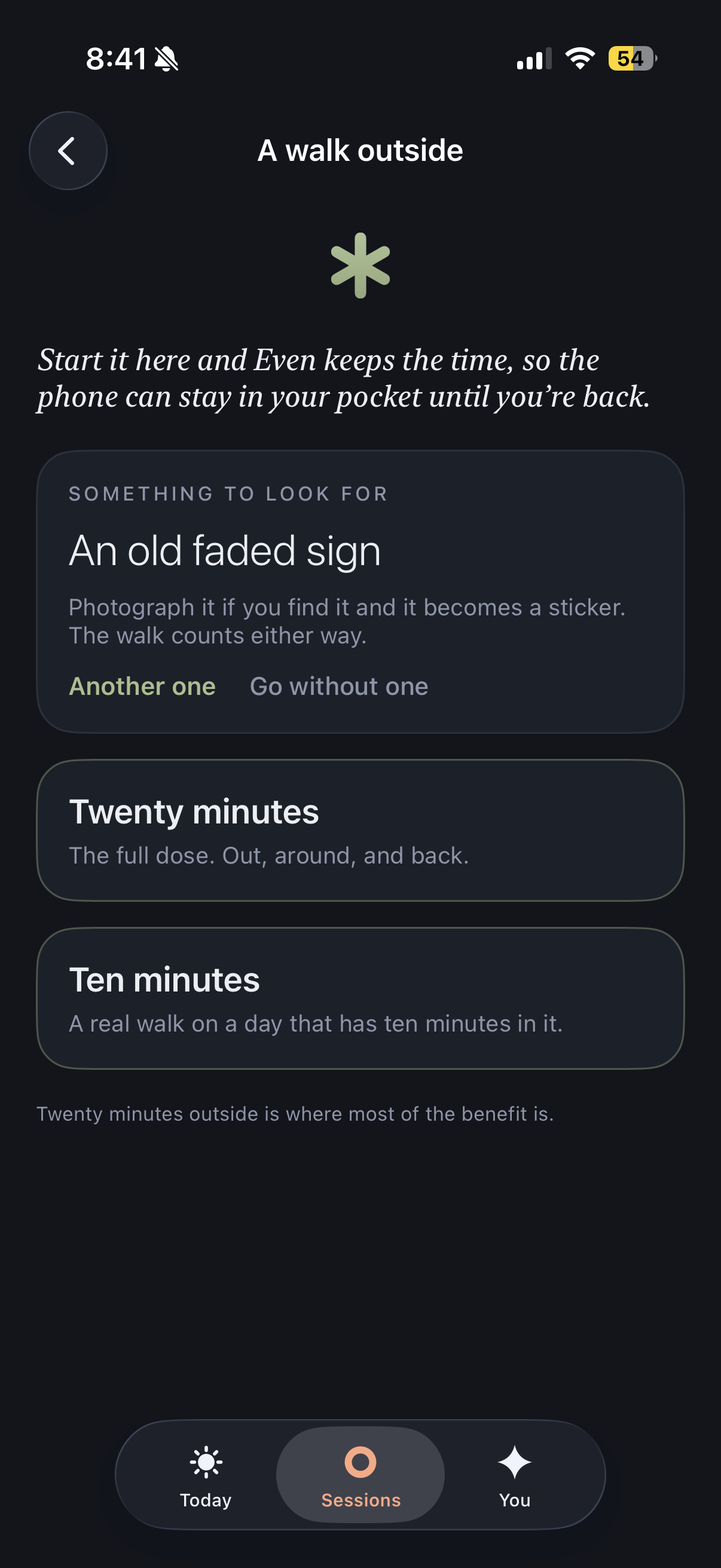
walking-ui
-
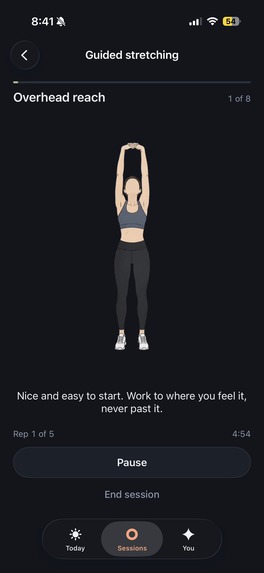
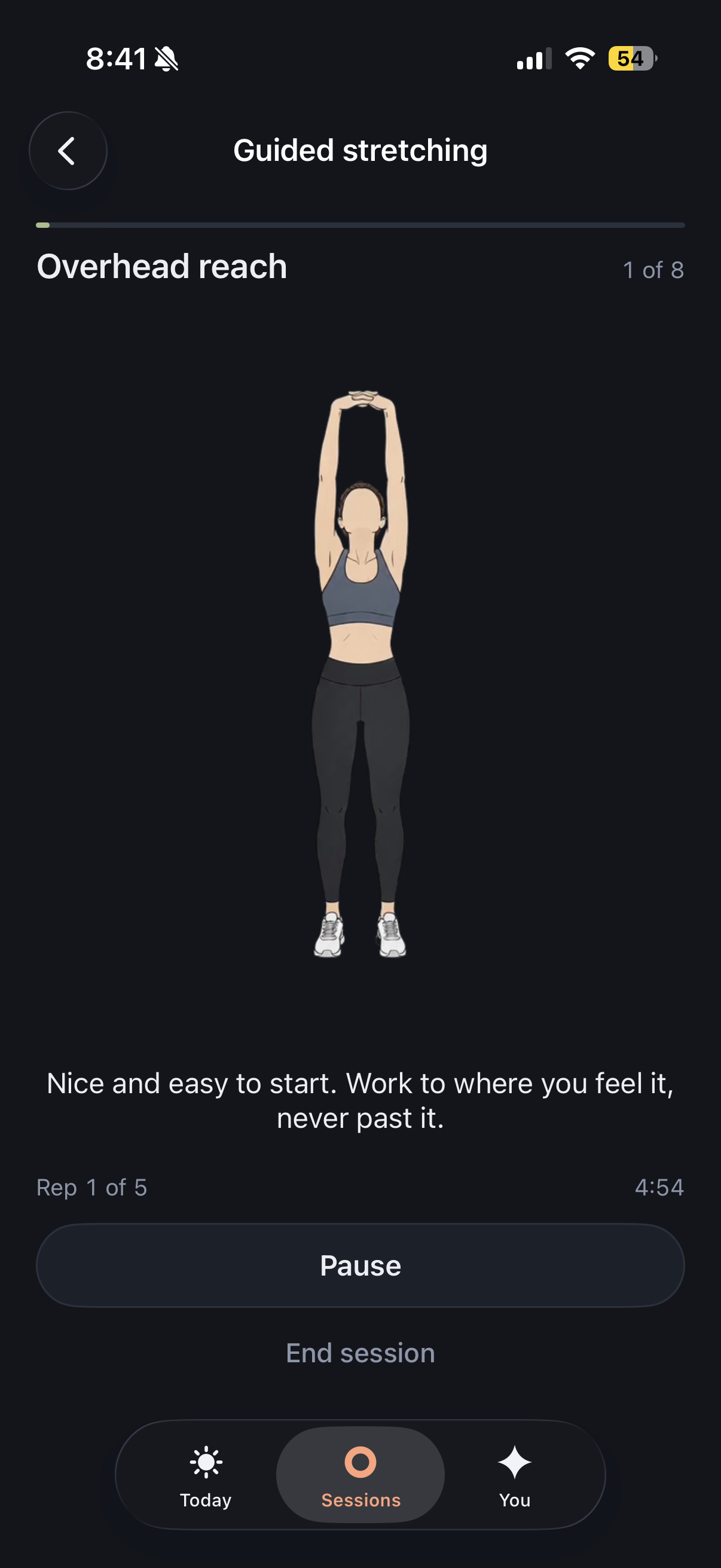
stretching-ui
-
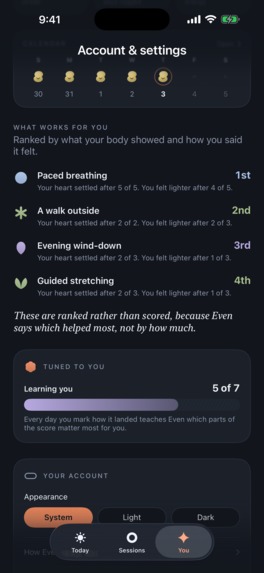
account-ui
-
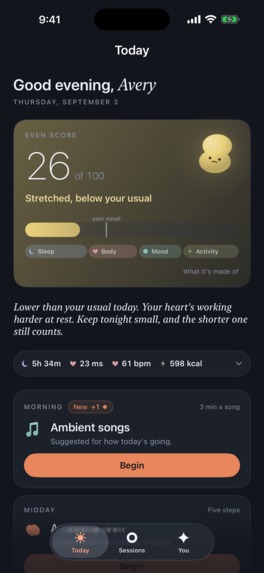
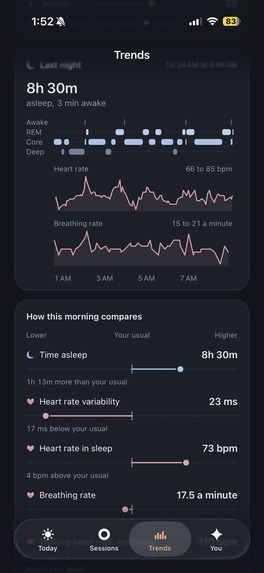
today-ui
-
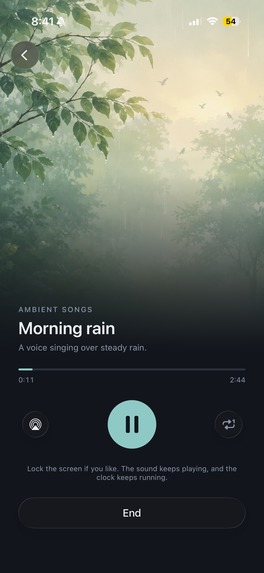
music-ui
-
Inspiration
Even started with my own year. I run product at a biotech startup and a small AI research lab, and I ship iOS apps on my own under Aster Studio. This year also brought a relocation, a parent's health getting worse, and turning thirty with a body that started answering back. Restless nights, brain fog, mild migraines, aches that had no obvious cause. The demanding cognitive load did not pause for any of it.
I went looking for help and found the wellness industry at its most exhausting. Every app wanted me to decide more things: pick a program, book a coached Pilates class, commit to the gym three times a week, buy a supplement for "high cortisol" that nobody had ever measured. What I needed was smaller and harder: something that would look at the data my phone already had, tell me plainly where I was starting from that morning, and suggest one thing I could actually do between meetings. Something that calmed my nervous system and gave me energy back without guilt streaks, without hearts and leagues, and without pretending I had an hour.
Most people are in the same place. They do not have the time or the money for coached sessions, and the world outside is not getting quieter. Environmental worry, geopolitical tension, and a feed that never ends have made overstimulation an ordinary condition. The usual answer, a forced digital detox, does not survive a working week.
So Even was born to help people live better, starting with small habits that take the edge off the two stressors that compound fastest: the cognitive one and the physical one. And it is built on published science, not on myths.
What it does
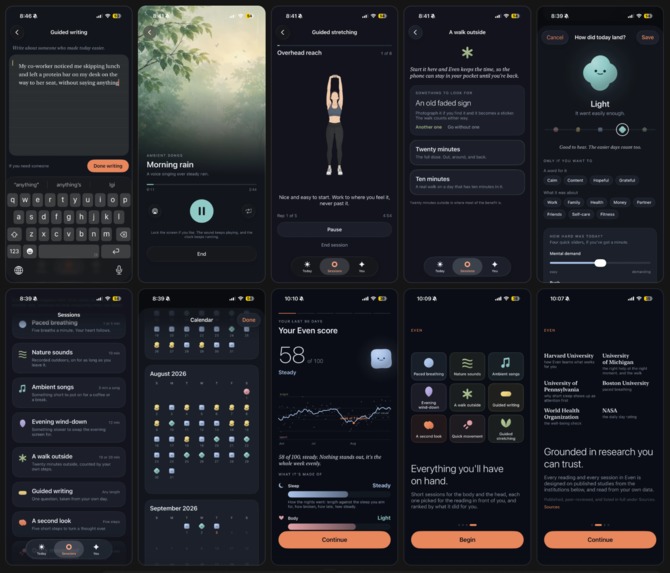
Even is the first intuitive stress tracker and manager. It reads what your life is costing you from data your iPhone already holds, tells you plainly, suggests the right relief for the moment you are in, and then shows you what actually works for you.
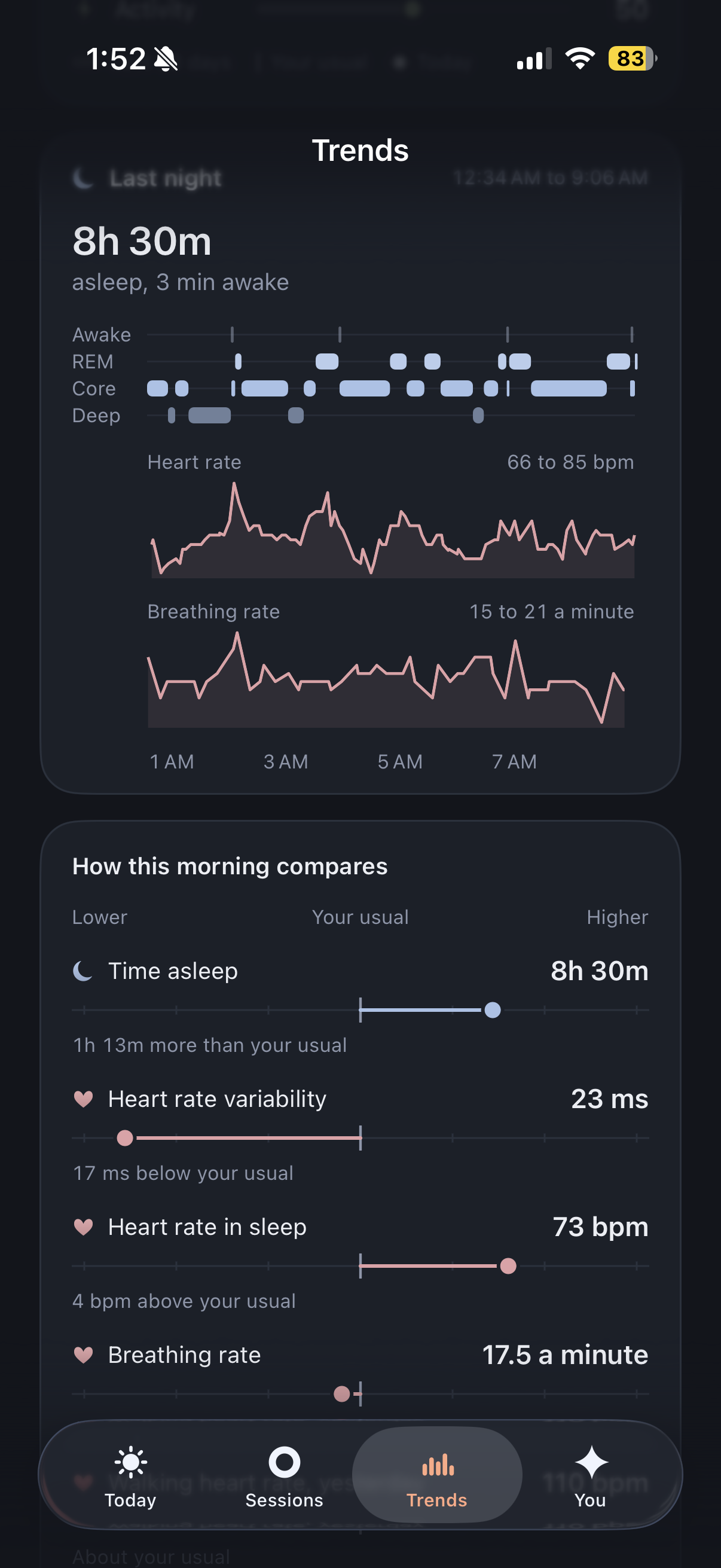
It starts by reading the last ninety days. Before Even asks you to do anything, it reads sleep, heart rate, heart rate variability, resting heart rate, wrist temperature, breathing rate, activity, cycle tracking, and State of Mind from Apple Health, and asks thirteen questions in four short acts about your week, your nights, your days, and what you are carrying. Then it plays back the season you have just lived: what it cost, where it landed, when it peaked, and a name for the stretch you have been in. Not "you are", but "you have been". Quizzes guess and wearables cold-start. The phone already knows.
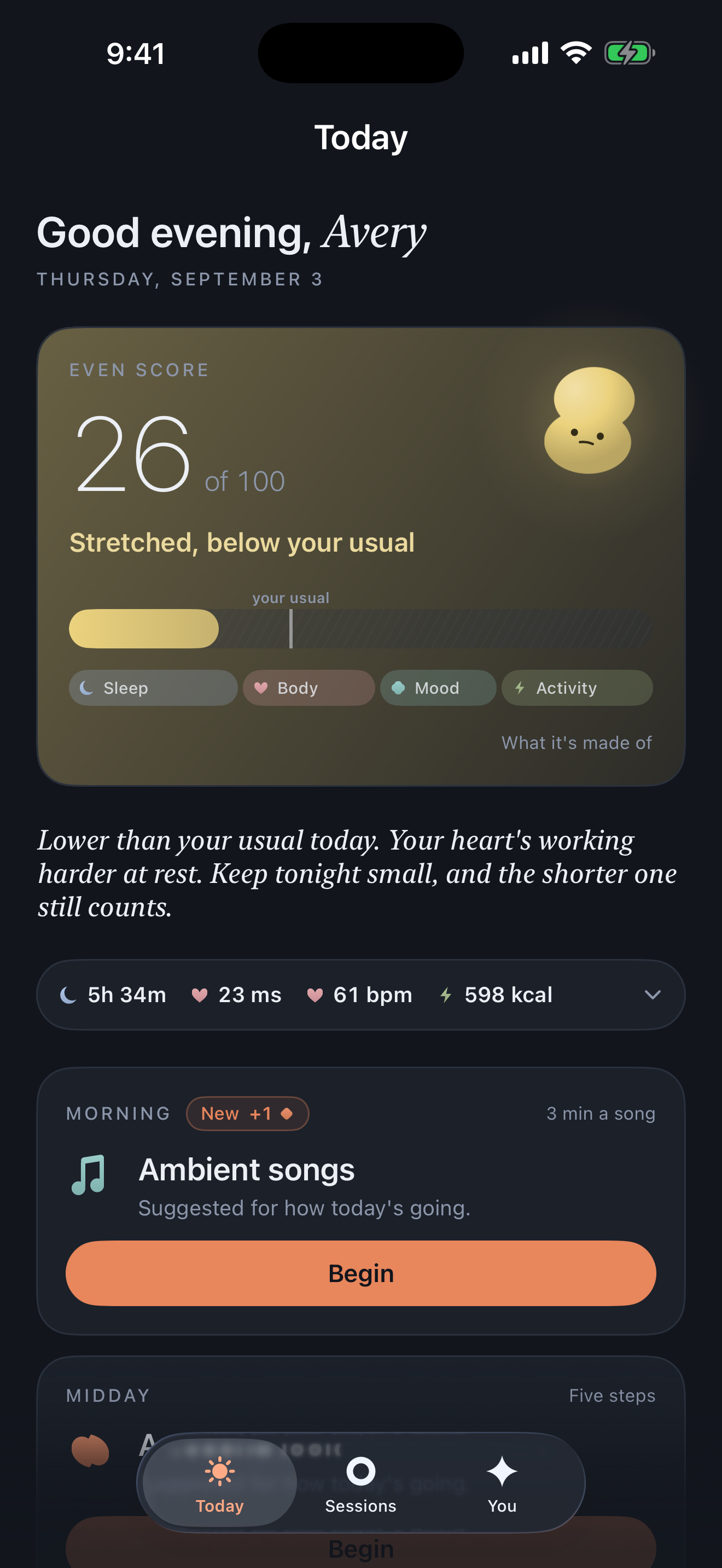
Every morning after that, one number. The Even score runs from 0 to 100, higher meaning more even, in five bands: Spent, Stretched, Steady, Light, Bright. It is a weighted composite of five things, each read against your own history: sleep, body at rest, the day's demand, mood, and activity balance. The morning line never reads the bare band. It says where you stand against your own usual, names the cause without blame, and gives one way to pace the day. A separate Foundations layer quietly checks the absolutes the score is not allowed to flatter, like a seven-hour sleep floor and sleep regularity, so a chronic short sleeper is never told there is nothing to work on. If you track your cycle, the second-half rise in resting physiology is measured from your own data and corrected rather than read as strain.
Three suggestions a day, sized to your life. The router picks three sessions, varied by effort and time of day, one of them exploratory, from a library of nine families. Each family owns a distinct mechanism, and each is proved by its own measure.
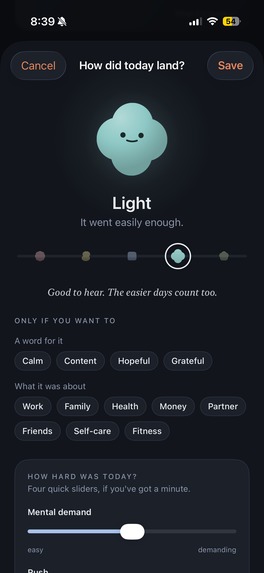
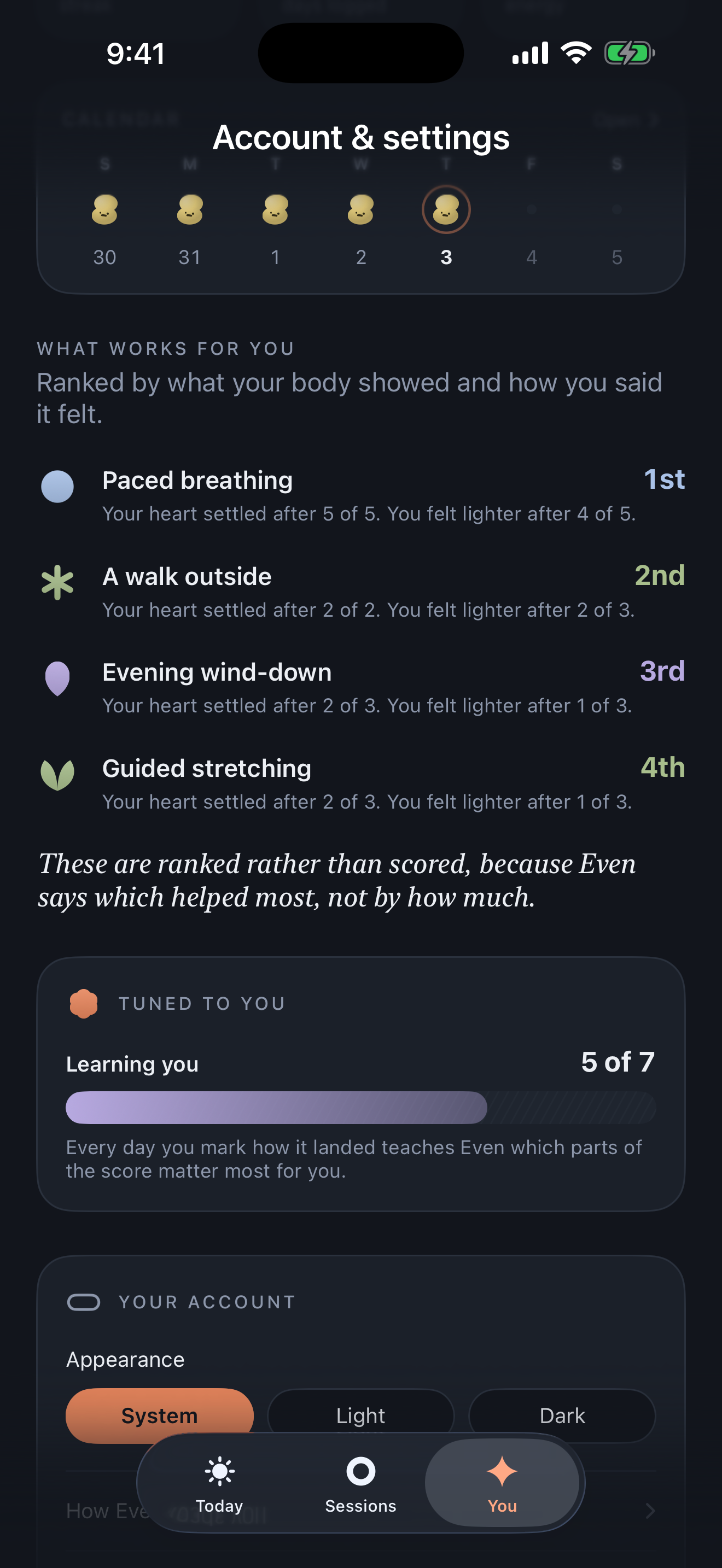
Then it closes the loop. After a session, Even captures the result from your physiology and one tap of how you feel, and over weeks it ranks what works for you. Suggestions are randomised within the shown set and every choice is logged with its propensity, so the ranking is a real per-person effect estimate rather than a popularity contest. Sessions are written back to Apple Health as mindful minutes or workouts, and mood is logged on Apple's own State of Mind model so it syncs both ways.
And it refuses the dark patterns. Energy is earned and spent, never a measured state. The streak is real but gentle: rest days are covered automatically, history never resets to zero, and a missed day is framed forward. No hearts, no leagues, no decay. The one rule above every engagement decision: the app must never be able to make you feel bad for not opening it.
How we built it
Even is a native iOS app in Swift 6 and SwiftUI, iOS 18 and up, built solo.
The engine. Per-user causal rolling baselines, so the ninety-day retrospective never leaks the future into the past. Component weights and thresholds live in a remote model parameter set, delivered through Firebase Remote Config and cached for offline launches, so the model can be tuned without a release. The learning design follows the micro-randomised trial literature: randomise within the shown set, log propensity, measure proximal outcomes (heart settle, that night's HRV, sleep onset) first and next-day score second. No language model ever estimates anything.
Claims that cannot lie, by construction. There is no code path from a string literal to an on-screen claim. A Computed value carries its unit, its provenance, and its confidence. A Comparison only initialises against a population reference with a real citation. Claim text is computed from a phrase enum and has no text initialiser anywhere. Every sentence Even shows about you traces to a number it computed. The nine sources on the Sources sheet were each verified on PubMed by DOI.
On-device intelligence. "A second look" writes its question with Apple's Foundation Models on devices that have Apple Intelligence, inside a three-second budget, and falls back to a curated bank otherwise. The provenance line under the question says which.
Everything drawn in code. The glyph vocabulary, the five mood bodies, and the single parameterised face are all code. Mood transitions morph polar silhouettes rather than cross-fading images.
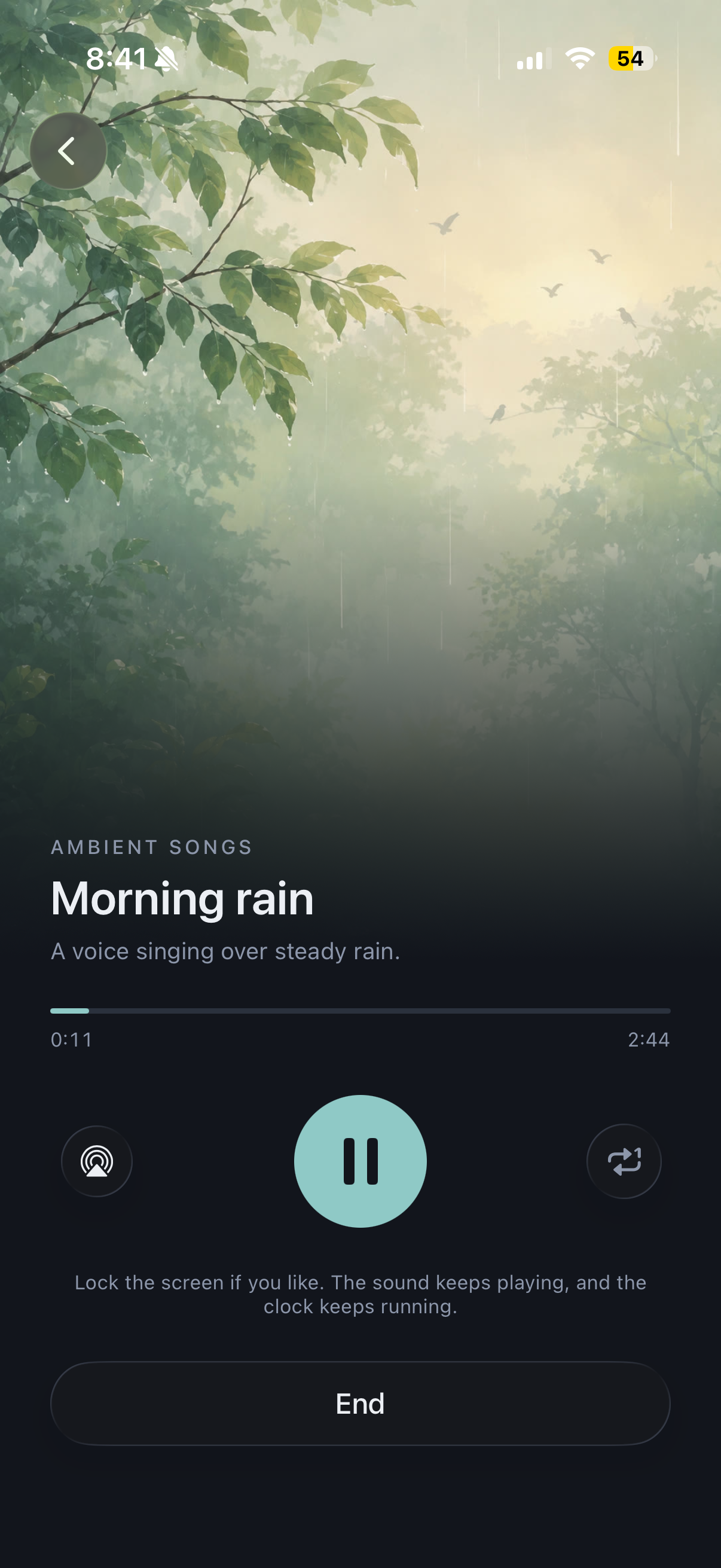
Sound and figures. The soundscapes and the session beds are mastered by a Python pipeline to a single loudness target. The stretching and movement coaches are frame sequences cut from our own footage and matted by hand.
The commerce and account layer. RevenueCat with monthly, yearly (seven days free), and lifetime, plus a two-hour exit offer on a second offering. Sign in with Apple and Google through Firebase Auth, derived readings synced to Firestore under user-scoped rules, and delete-my-data in the app.
Challenges we ran into
Inference from a sample of one. The hard problem is not modelling, it is causal inference with tiny N and regression to the mean: people start a session when they feel worst, so almost anything looks like it worked. Randomising within the shown set and logging propensity from day one was the fix, and it had to be designed before the first session shipped.
A number that lands before the day begins. A low morning score is accurate and can still ruin the day. We rewrote the entire narration layer so the bare band word never appears alone on the home card, every low line reads against the person's own usual, and every morning line ends with one pacing action. The rules are tested over the whole band by driver by hour table.
The scale ran the wrong way. The first score had higher meaning heavier, defensible in isolation and wrong in a world where every other score rewards a bigger number. Flipping it also exposed that the old middle band leaned negative, so we rebuilt the bands to be symmetric with a true neutral.
Steady on an unhealthy baseline. A self-referential score told a chronic six-hour sleeper "nothing to fix". The answer was a separate Foundations layer for absolutes, not penalties smuggled into the composite.
Which mornings are real? Opened at midday, the app once built tomorrow out of half a day's movement and showed it as today. A morning is now scored only when the day it reads has finished, with a coverage floor.
Every intervention has to earn its seat. "Why not just do a shorter stretch in the morning?" needs a mechanism for an answer. Quick movement's ingredient is raised intensity, so its readout is the heart going up, which meant it could not share the settle measure that every other family uses. The evening wind-down's ingredient is substitution, so it has no result screen and reports the next morning.
Honesty where the data does not exist. Apple Watch HRV has no published normative distribution, so Even cannot give you a percentile and does not. Apple exposes no sleep score API. The app shows insufficient readings as designed states rather than hiding them.
Accomplishments that we're proud of
- One score that reads you against yourself, with a breakdown that is arithmetic and a morning line that never turns a hard night into a verdict.
- A ninety-day retrospective on day one that no wearable and no quiz can offer.
- Nine session families, each with its own active ingredient and its own proof, from a heart that settles to a screen that leaves to a sentence you did not have before.
- A design language drawn entirely in code: one face, five bodies, a glyph vocabulary that means something, and faces that blink, wander, and react to a tap.
- A codebase where the copy cannot lie, enforced by types and tests rather than discipline.
- Cycle-aware physiology, on-device intelligence with an honest fallback, and a coach that talks.
- An engagement economy with no dark patterns that we are still willing to call sticky.
- A complete commerce and account stack ready for the store: RevenueCat, Firebase, Sign in with Apple, and delete-my-data.
What we learned
- A number has to be translated before it is shown. "36 ms" is not a fact about a person's Tuesday.
- Name the mechanism before you draw the screen. Doing that changed real decisions and cut the art request for the movement coach almost in half.
- Honest uncertainty reads as trust, not weakness, as long as it comes with a best estimate.
- Gentle and sticky are not opposites, but only if every incentive is logged as a covariate from the first day so the model can tell motivation from effect.
What's next for Even: Stress Tracker & Relief
- Launch on the App Store with the current library and the learning loop live.
- The model gets smarter across people. Once a few hundred consented users are in, hierarchical pooling on the backend turns per-person effect estimates into a bandit router with a real prior, so day one gets better for everyone who follows.
- Beyond our own library. Even should become the layer that decides, not just the layer that delivers. We want partner sessions from wellness studios, health and wellness events, and healthcare practitioners where relevant to show up in the same three daily slots, ranked by the same evidence, so a real Pilates class and an eight-minute breathing session compete on what works for you.
- Women's health as the focus. Cycle correction is in. Perimenopause, pregnancy, and postpartum baselines are the next readings the score should understand.
- Apple Watch and widgets, so the morning line and the next suggestion arrive without opening the app.
- More families, only when each earns its seat.

Log in or sign up for Devpost to join the conversation.