Inspiration
Universities, research offices, accelerators, and funding teams review large numbers of proposals every year. Much of this work is still manual, slow, inconsistent, and difficult to audit.
Evalora ReviewerOS was inspired by the need for a more transparent and structured way to evaluate proposals with AI. Instead of building another generic chatbot, the goal was to create an observable reviewer operating system: a workspace where multiple specialist AI reviewers can analyze a proposal, generate structured outputs, and leave a workflow that can be governed, reported, and eventually traced.
The core idea is simple:
proposal review should be faster, more consistent, and more transparent.
What it does
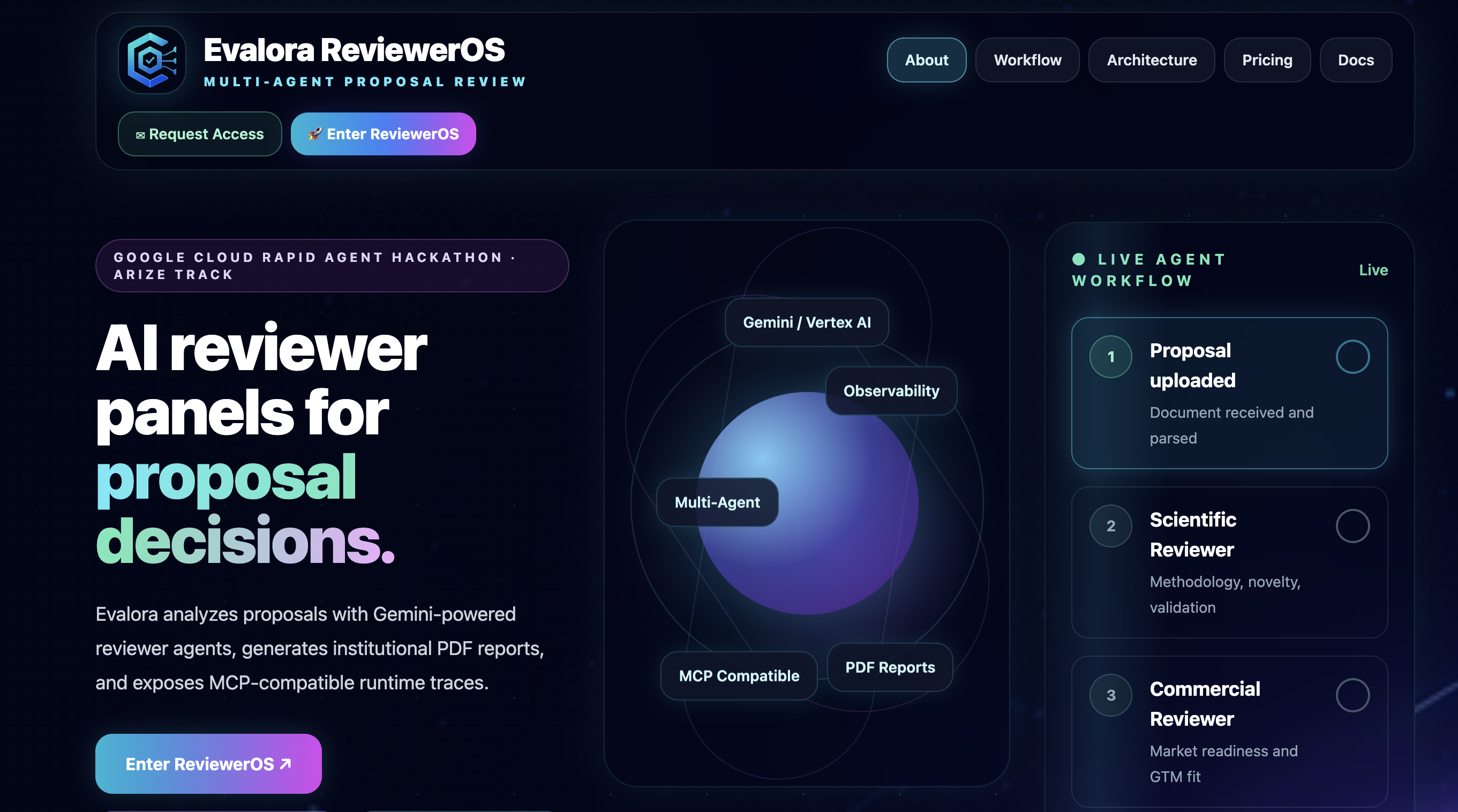
Evalora ReviewerOS is an observable multi-agent AI platform for proposal review and funding decisions.
It allows users to:
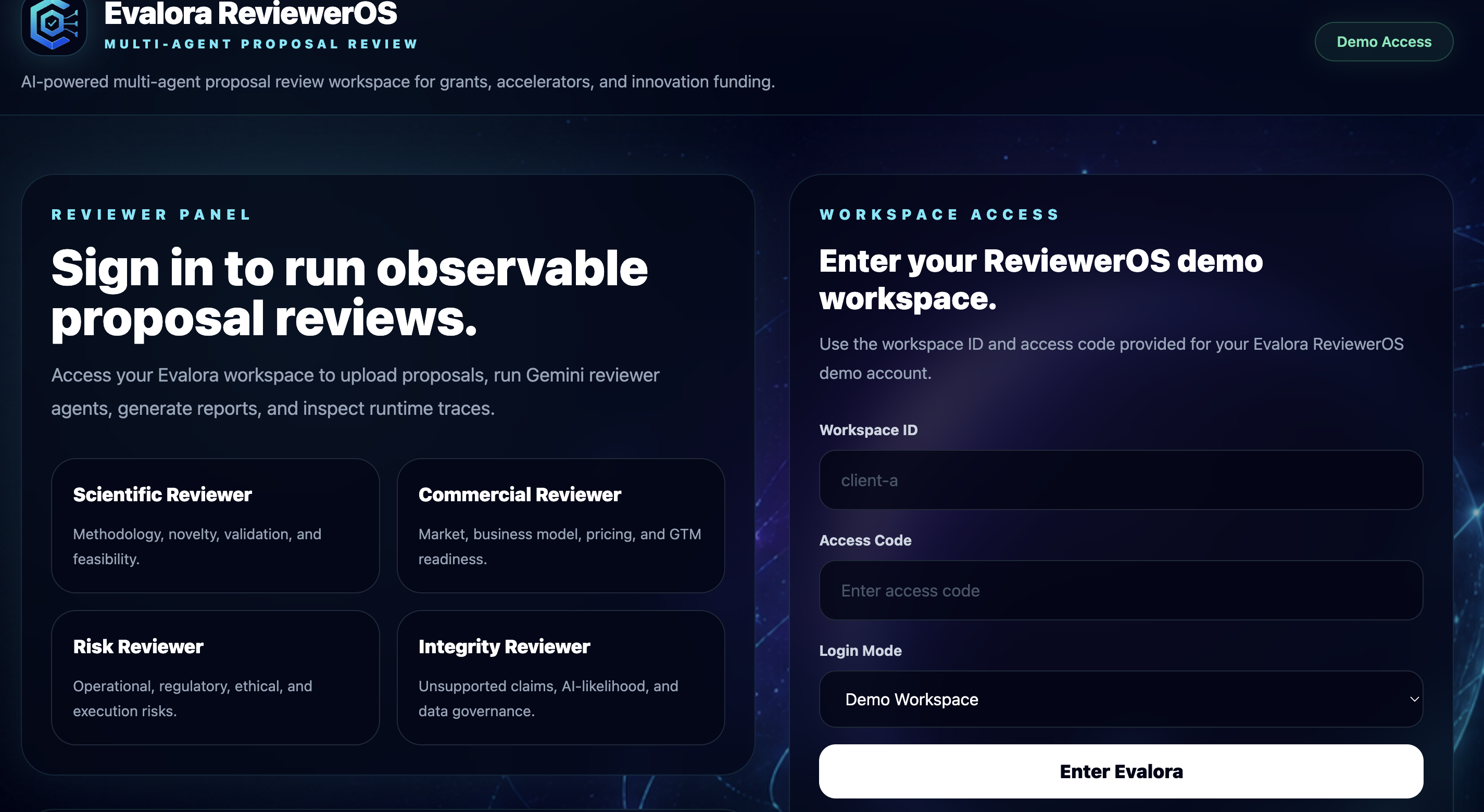
- Access a controlled demo workspace
- Upload or submit proposal content
- Run structured AI-assisted proposal analysis
- Generate reviewer-style assessments
- Produce institutional-style PDF reports
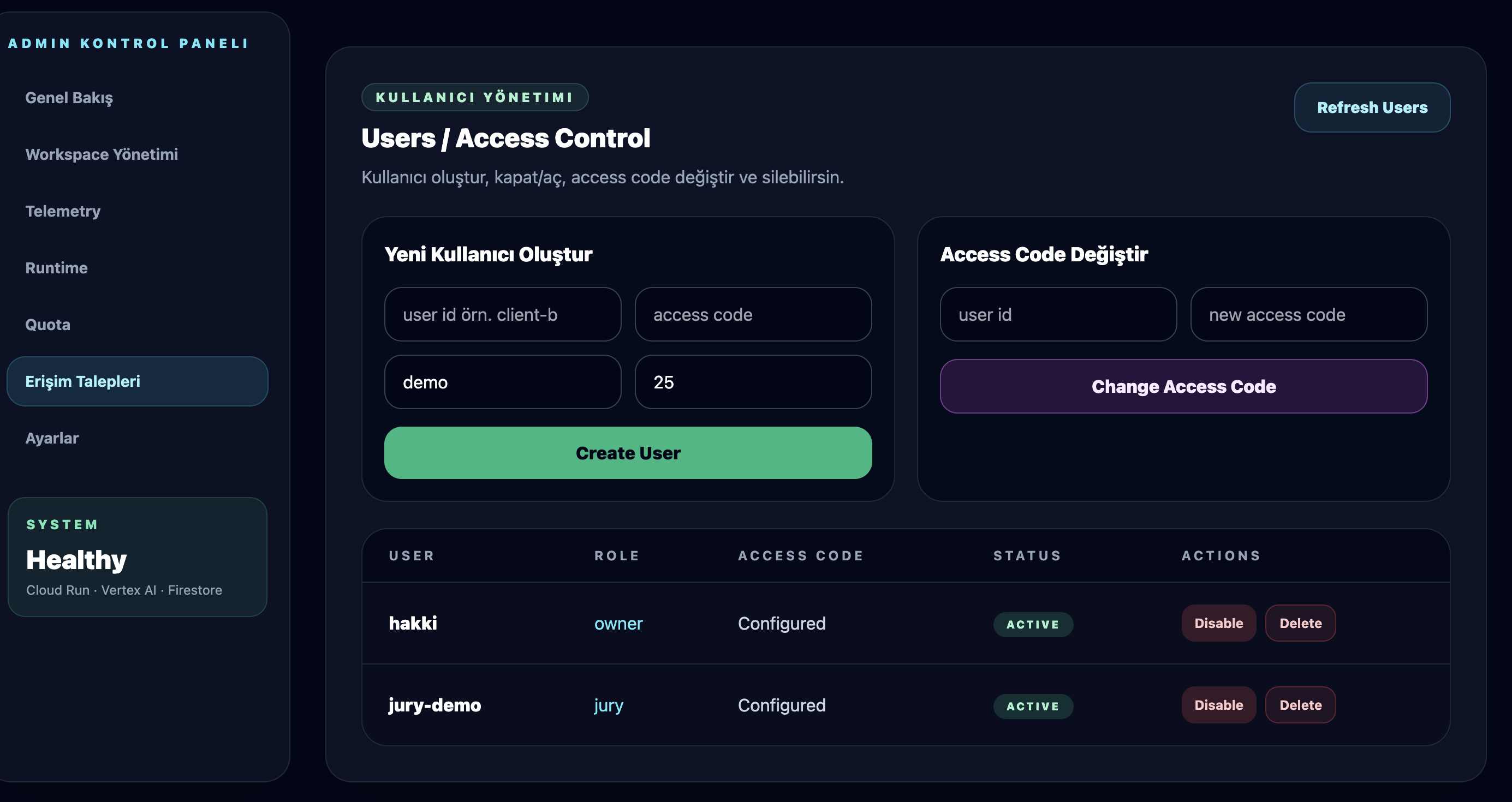
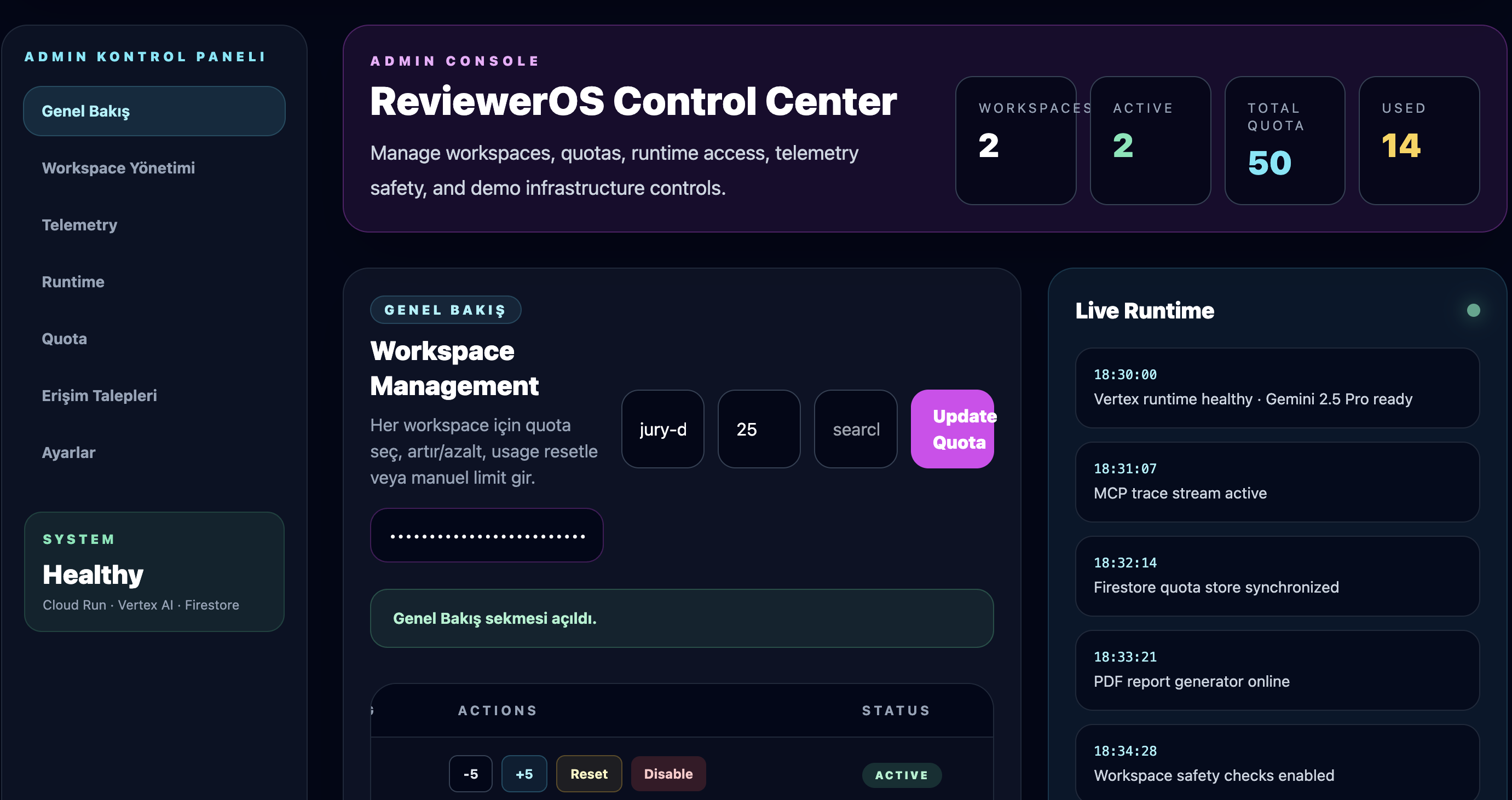
- Manage users, access codes, quotas, and workspace controls
- View runtime status and observability-oriented system information
- Prepare review workflows for Arize Phoenix MCP-compatible tracing
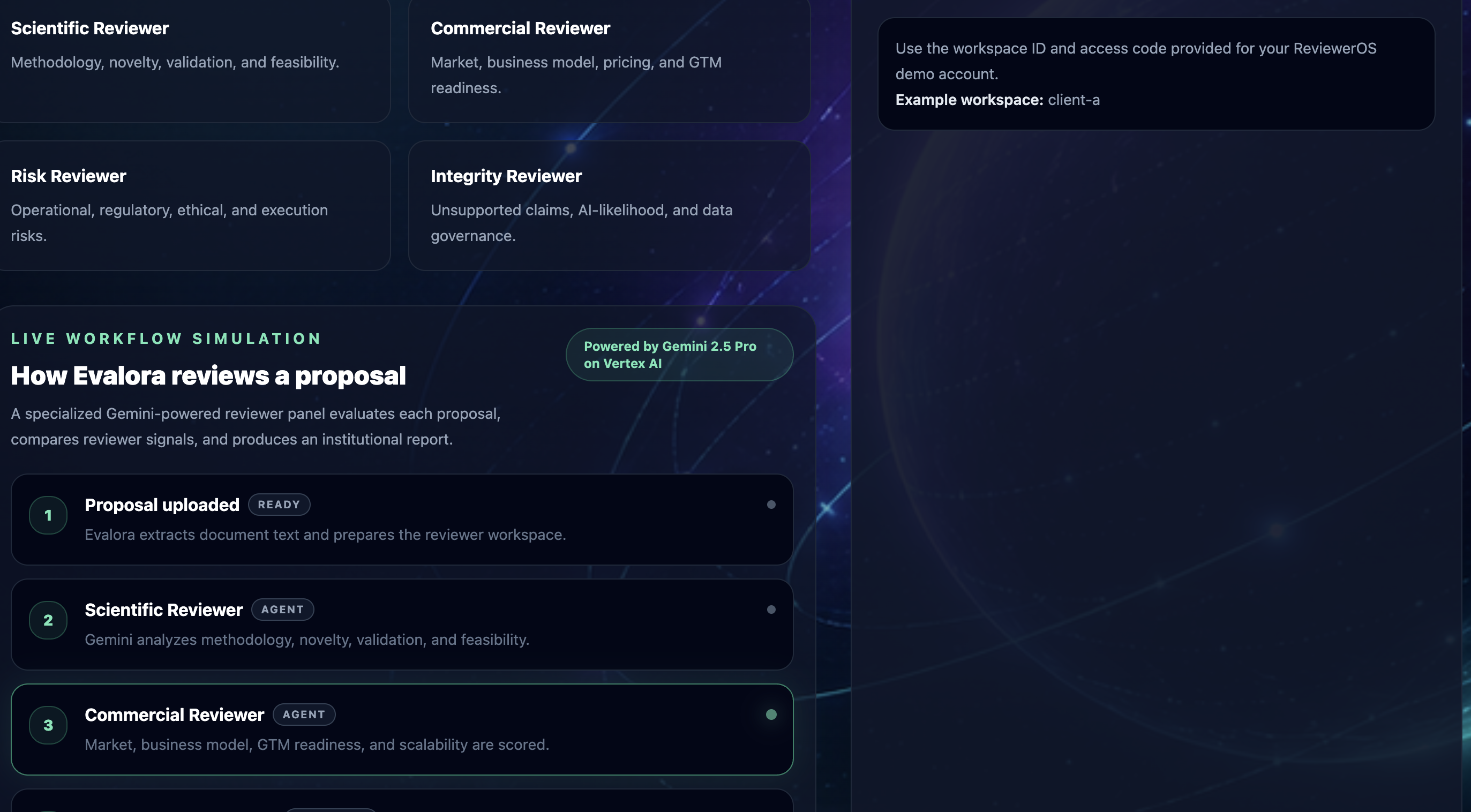
The review workflow is designed around specialist reviewer roles, including:
- Scientific Reviewer
- Commercial Reviewer
- Risk Reviewer
- Integrity Reviewer
- Chair / synthesis agent
Instead of a single generic AI response, Evalora produces a structured review flow that is closer to how real funding panels evaluate proposals.
How we built it
Evalora was built as a cloud-oriented web application with a modern frontend, backend API, workspace governance, report generation, and observability-ready architecture.
The frontend provides the product experience: landing page, demo login, proposal review workspace, dashboard, admin console, quota controls, and runtime visibility.
The backend is designed around proposal analysis, workspace access control, usage tracking, quota management, and report generation.
The system architecture includes:
- React frontend
- TypeScript
- Tailwind CSS
- FastAPI backend
- Python
- Google Cloud Run
- Google Firestore
- Google Cloud Storage
- Gemini / Vertex AI-oriented analysis workflow
- PDF report generation
- REST API endpoints
- WebSocket-style runtime streaming
- Arize Phoenix MCP-ready configuration
A key part of the project is the admin console. It includes user management, access code control, quota reset, workspace disable controls, and demo safety tools. This makes the project feel closer to a real SaaS workflow rather than only a model demo.
Challenges we ran into
One challenge was turning a broad proposal review idea into a clear product workflow. Proposal evaluation has many dimensions: scientific merit, market potential, implementation quality, risk, integrity, feasibility, and funding fit. The interface had to make this complex process understandable without overwhelming the user.
Another challenge was governance. A useful AI system for institutional workflows needs access control, quotas, workspace safety, admin controls, and usage visibility. Building these features made the project more operationally realistic, but also more complex.
A third challenge was observability. For high-impact workflows such as funding decisions, AI outputs need to be inspectable. Evalora therefore includes an Arize Phoenix MCP-ready configuration and is designed so future analysis runs can connect to traces, sessions, annotations, and observability workflows.
We also had to balance demo speed with realistic architecture. The project needed to work well as a hackathon demo while still showing a credible path toward production deployment.
Accomplishments that we're proud of
We are proud that Evalora is not just a prompt demo. It combines product UI, multi-agent review logic, governance controls, quota management, report generation, and observability-oriented architecture into one coherent workflow.
Key accomplishments include:
- A polished ReviewerOS product interface
- Demo workspace login and access control
- Proposal review workspace
- Multi-agent reviewer concept
- Admin console for user and quota management
- Runtime and system health visibility
- PDF-style report generation flow
- Google Cloud-oriented architecture
- Arize Phoenix MCP-ready observability configuration
- A complete hackathon demo video and product story
Most importantly, Evalora demonstrates how AI proposal review can become a governed, observable workflow rather than a black-box response.
What we learned
We learned that useful AI systems need more than model output. They need structure, governance, and traceability.
The biggest lesson was that proposal review is a workflow problem as much as an AI problem. The quality of the experience depends on how the review is organized: reviewer roles, criteria, scoring, synthesis, reporting, access control, and auditability.
We also learned that observability is essential for serious AI applications. When AI is used in institutional decision-making, teams need to understand what happened, which agents ran, what outputs were generated, and how decisions were formed.
Evalora helped us think about AI products as operating systems: not just tools that generate answers, but systems that coordinate work, enforce controls, and create transparent records.
What's next for Evalora ReviewerOS
The next step is to make Evalora more production-ready and expand the review workflow.
Planned improvements include:
- Deeper Gemini / Vertex AI integration
- Full Arize Phoenix trace integration
- More detailed reviewer scoring rubrics
- Better PDF report templates
- Multi-language proposal review
- Organization-level admin dashboards
- Reviewer comments and human-in-the-loop feedback
- More funding templates for grants, accelerators, and investment screening
- Exportable audit trails
- Stronger workspace and role-based permissions
- Public demo workspace for juries and institutional users
The long-term vision is to build an observable AI review layer for institutional funding decisions.
Evalora ReviewerOS aims to help universities, research offices, accelerators, and funding teams review proposals faster, more consistently, and with greater transparency.
Demo project: Evalora ReviewerOS — Observable Multi-Agent Proposal Intelligence Platform Demo Access
Workspace ID: jury-demo Access Code: evalora-demo-2026
Built With
- arize-phoenix
- fastapi
- gemini
- github
- google-cloud
- google-cloud-run
- google-firestore
- mcp
- pdf-generation
- python
- react
- rest-api
- tailwind-css
- typescript
- vercel
- vertex-ai
- websocket-streaming


Log in or sign up for Devpost to join the conversation.