-
-
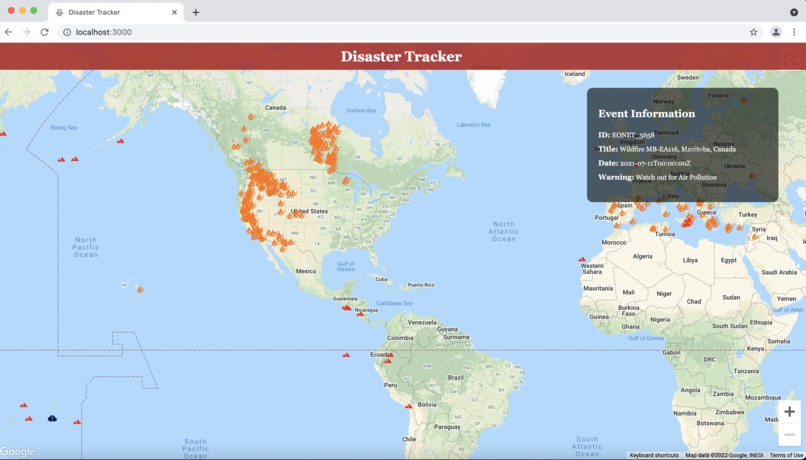
A view of the UI
-
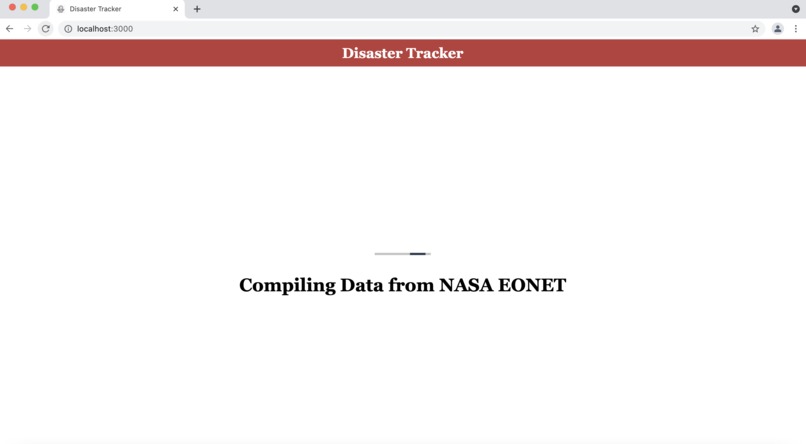
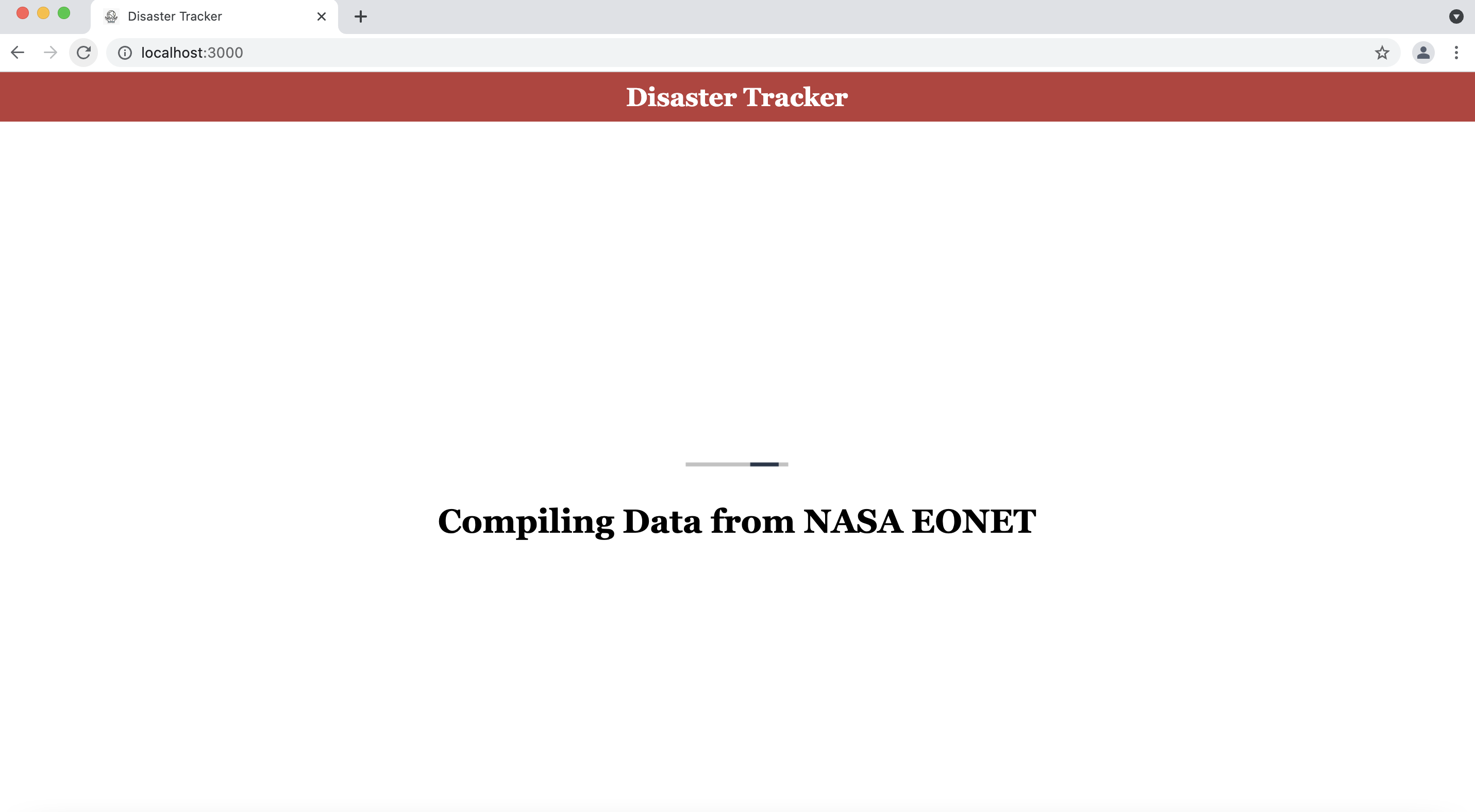
Loading Screen of Disaster Tracker
-

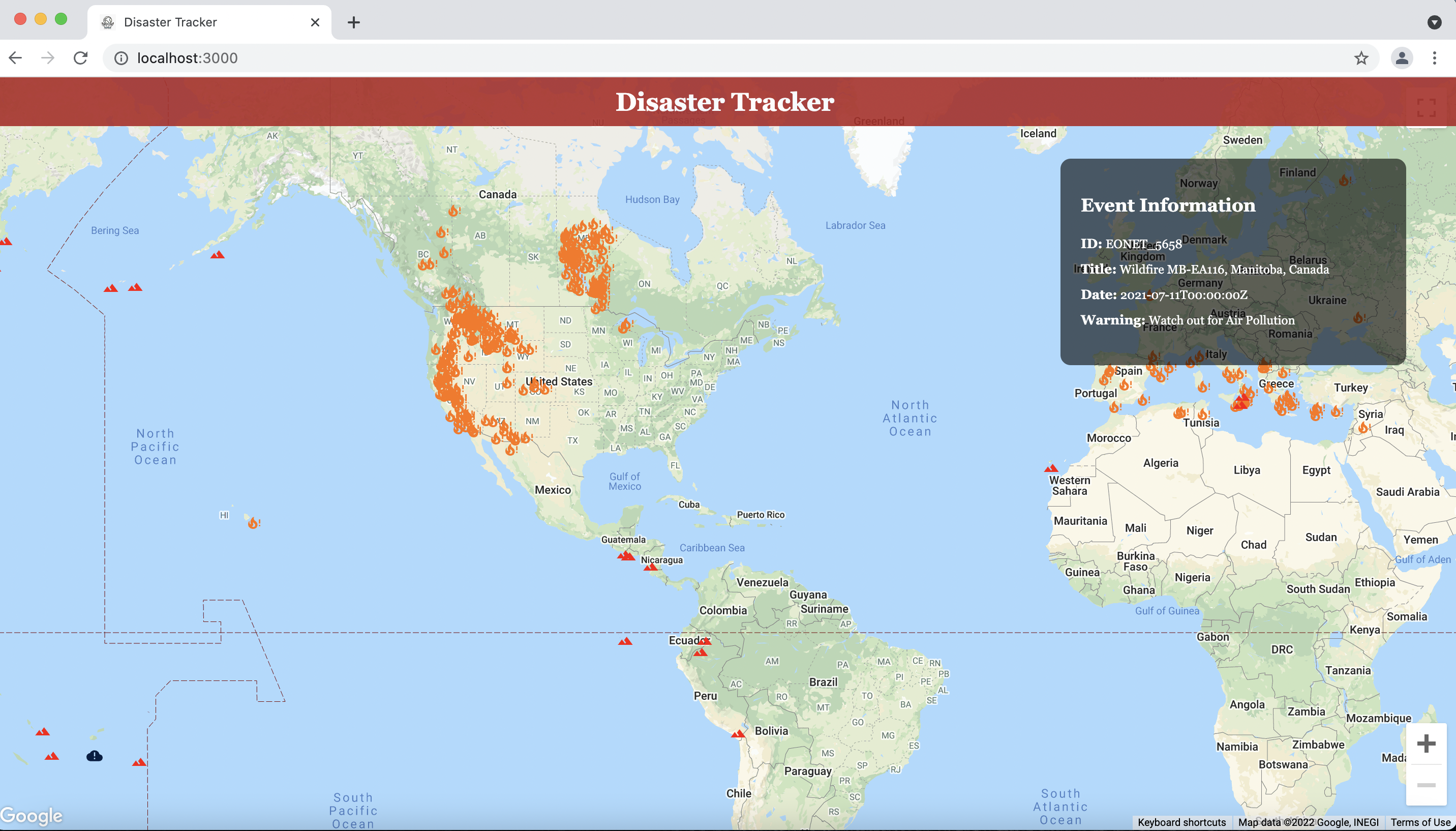
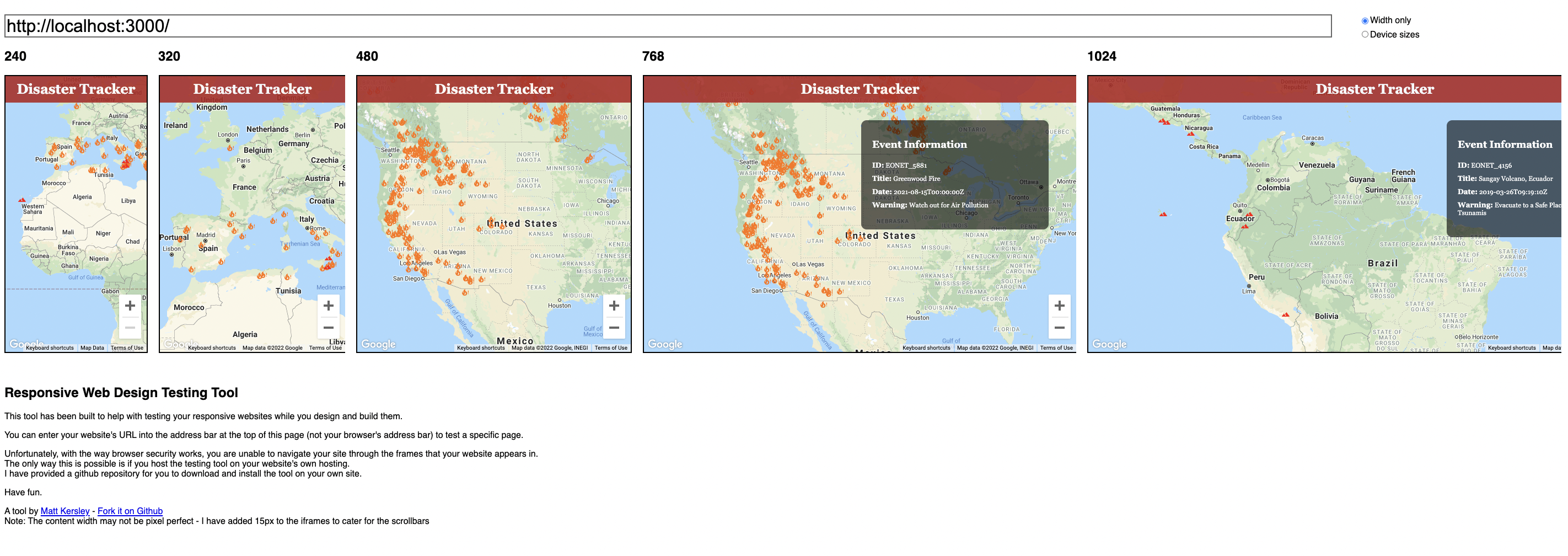
Testing if the project works well on different resolution screens. It works!
-
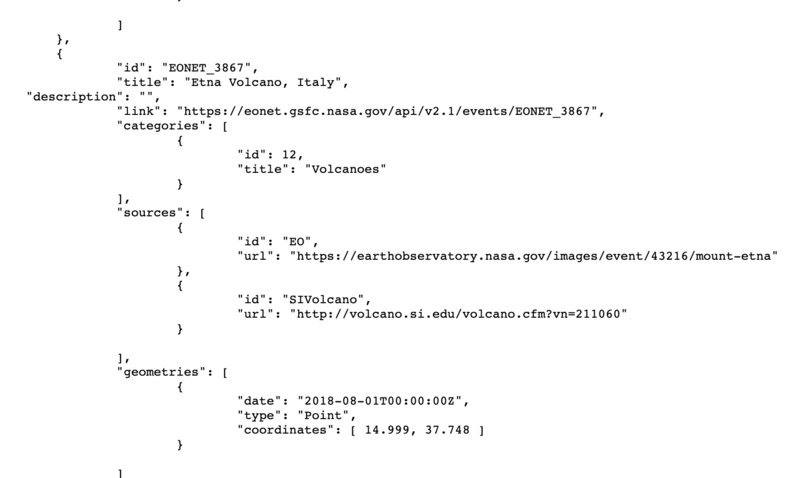
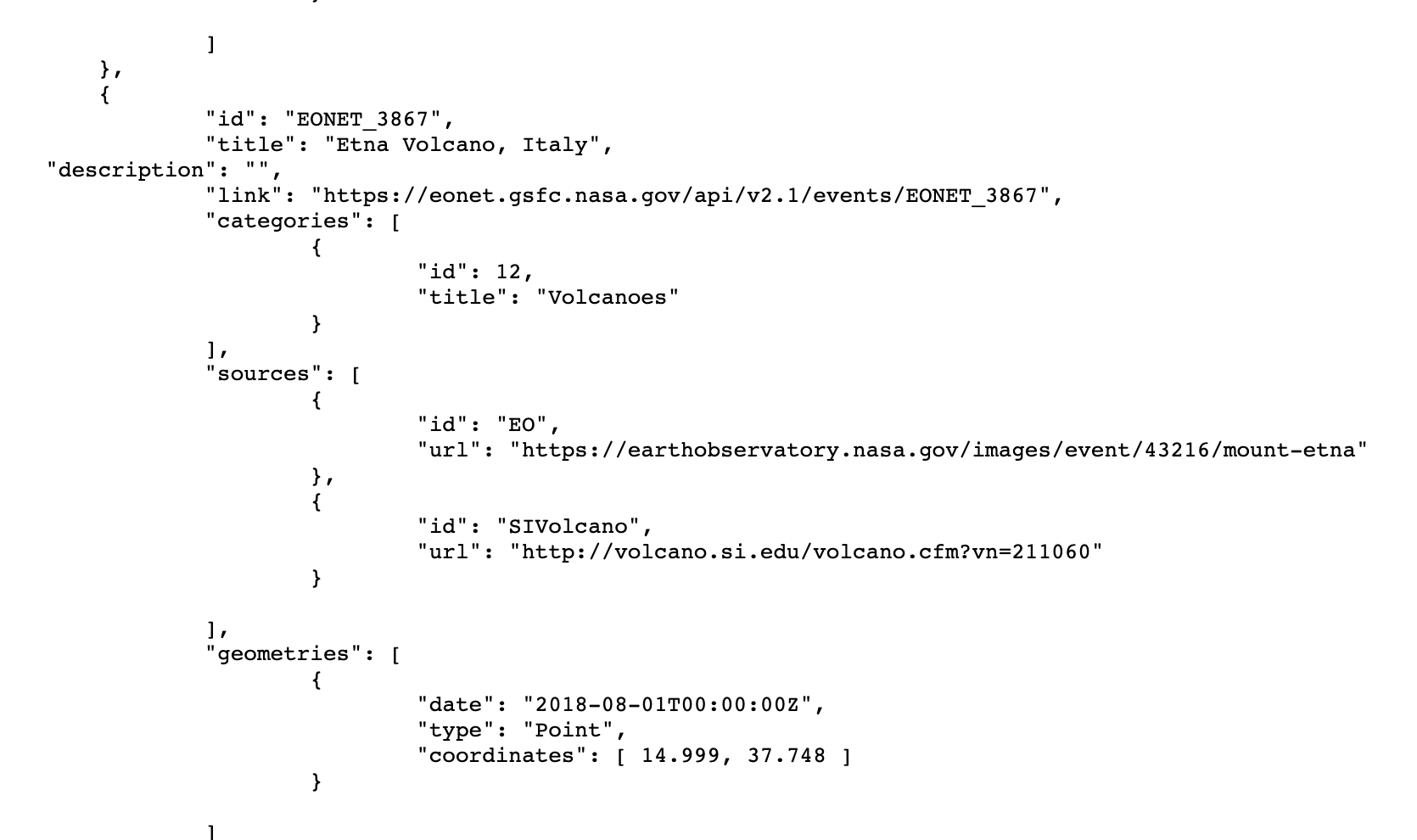
Sample database entry form NASA EONET
Inspiration
At UCSC, the environment is something that everyone on campus cares about deeply. We wanted to find a way to help protect it against wildfires and other natural disasters. Implementing a Google Maps API telling users where certain natural disasters are occurring sounded like a great way for us to warn people about these events, so they can then take the necessary steps to protect themselves and mitigate the forthcoming damage. That is why we created Disaster Tracker.
How we built our project?
Essentially, our website runs a Google Maps API implementing the NASA EONET database (https://eonet.gsfc.nasa.gov/docs/v2.1) which allows us to track natural disasters in real-time. We built this website on top of a previous idea but broadened the usage and impact. Using React as the base for this project we built a website that incorporated multiple components of the front end, back end, and the UI.
What we learned?/ The challenges we faced
Initially, we had to face many challenges with the API implementation and using React. An additional issue we had to overcome was while using git as we ran into a lot of merge errors. Since we were beginners in JavaScript and React, we were having trouble coding those components. Since this was our first hackathon, we feel very accomplished as we got comfortable with our git skills, learned quite a bit of Javascript, CSS, and HTML using VSCode, and how to implement APIs and Python libraries such as TensorFlow. We were also able to use the Google Cloud Platform effectively in this project. As part of the hackathon, we used Slack, Hopin, and Discord as our communication methods.
What's next for Disaster Tracker?
In the future, Disaster Tracker will be updated with more features and tools. We plan to implement more data points and events with a severity scale and additional graphics. Also, a more user-friendly interface is expected.
Built With
- css
- discord
- git
- google-cloud
- google-maps-platform
- hopin
- html
- javascript
- nasa-eonet-api
- pycharm
- react
- slack
- vscode


Log in or sign up for Devpost to join the conversation.