-
-
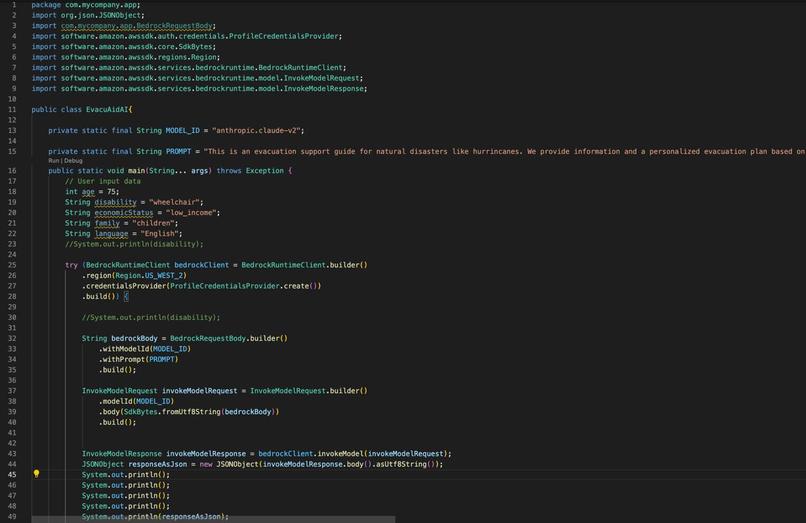
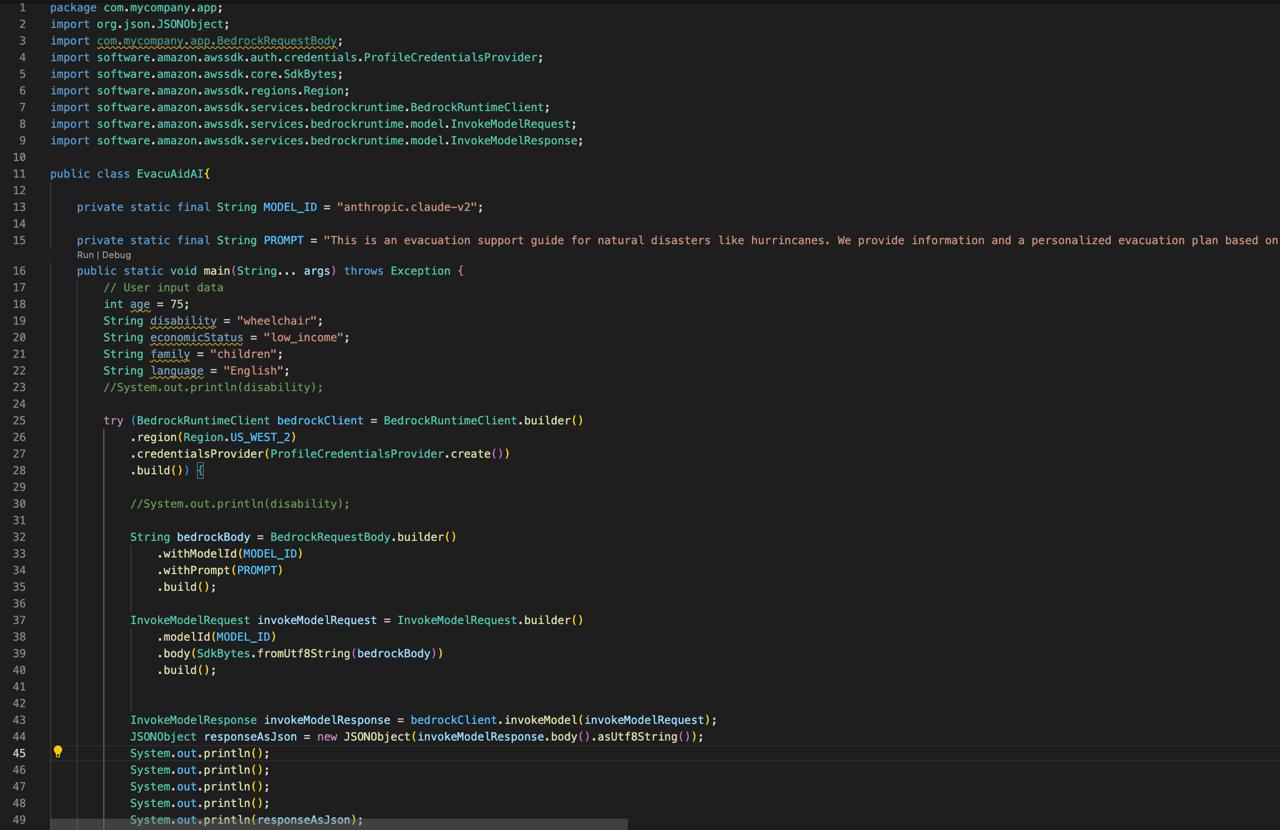
BedRock implementation for creating personalized plan
Inspiration
During emergencies like Hurricane Milton, vulnerable individuals—such as the elderly, disabled, and low-income families—are often left behind due to a lack of personalized evacuation plans. This inspired us to create a solution that tailors evacuations to the specific needs of those most at risk, ensuring they can evacuate safely and efficiently.
What it does
EvacuAid is an AI-powered tool that creates personalized evacuation plans. Using Amazon AWS tools like Bedrock and PartyRock, it matches users with shelters and transportation options that suit their unique circumstances—such as family-friendly shelters, accessible transport, and elderly care facilities. It also offers multi-language support, helping users overcome language barriers and receive real-time guidance.
How we built it
We built EvacuAid using Amazon’s AI tools, primarily Bedrock and PartyRock. Bedrock’s AI capabilities allow us to tailor evacuation plans based on user data, while PartyRock supports the overall AI framework. We used Figma to create a front-end interface for users to input their information and Java in vs code to create a back-end process to trigger AI models.
Challenges we ran into
We ran in to a problem with party rock because it did a great job of providing a general AI framework but didn't provide a UI that we desired. We also had some issues calling bedrock in to our program
Accomplishments that we're proud of
We’re proud of successfully integrating AWS AI tools to create personalized evacuation plans that address the needs of vulnerable individuals. The tool provides real-time solutions to save lives and support community-driven volunteer efforts. Additionally, we managed to overcome technical challenges and deliver a functional prototype within a short time frame
What we learned
We learned a lot about working with Amazon’s AI platforms, particularly Bedrock, party rock, and amazon q and how to effectively integrate them into a practical application. We also gained valuable insights into the complexities of disaster management and the importance of community-based solutions in evacuation efforts.
What's next for EvacuAid
Next, we aim to improve the AI model’s accuracy and expand its functionality to support more regions and user types. We also plan to simplify the user interface and add more robust real-time notifications. Additionally, we’ll explore partnerships with disaster relief organizations to scale the impact of EvacuAid, ensuring more lives are saved during future emergencies.
Built With
- amazonq
- bedrock
- canva
- figma
- java
- partyrock
- vscode

Log in or sign up for Devpost to join the conversation.