Inspiration
Evac-AI was inspired by the need for faster, clearer emergency support during disasters. In situations like floods, wildfires, storms, or extreme weather, people often receive scattered information from different sources. We wanted to build one simple app that brings together live alerts, weather, nearby help, risk prediction, and AI-generated safety steps in one place.
What it does
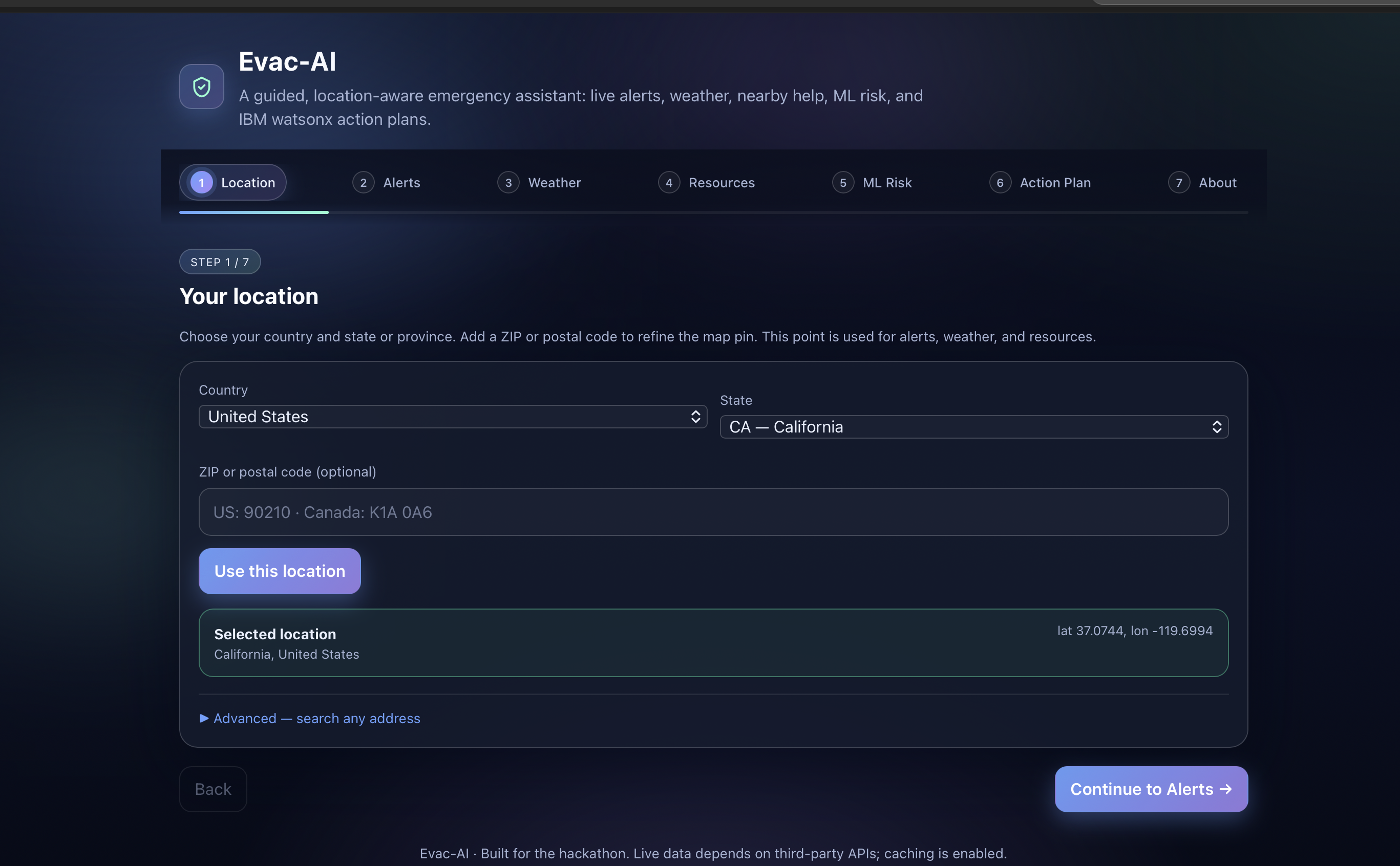
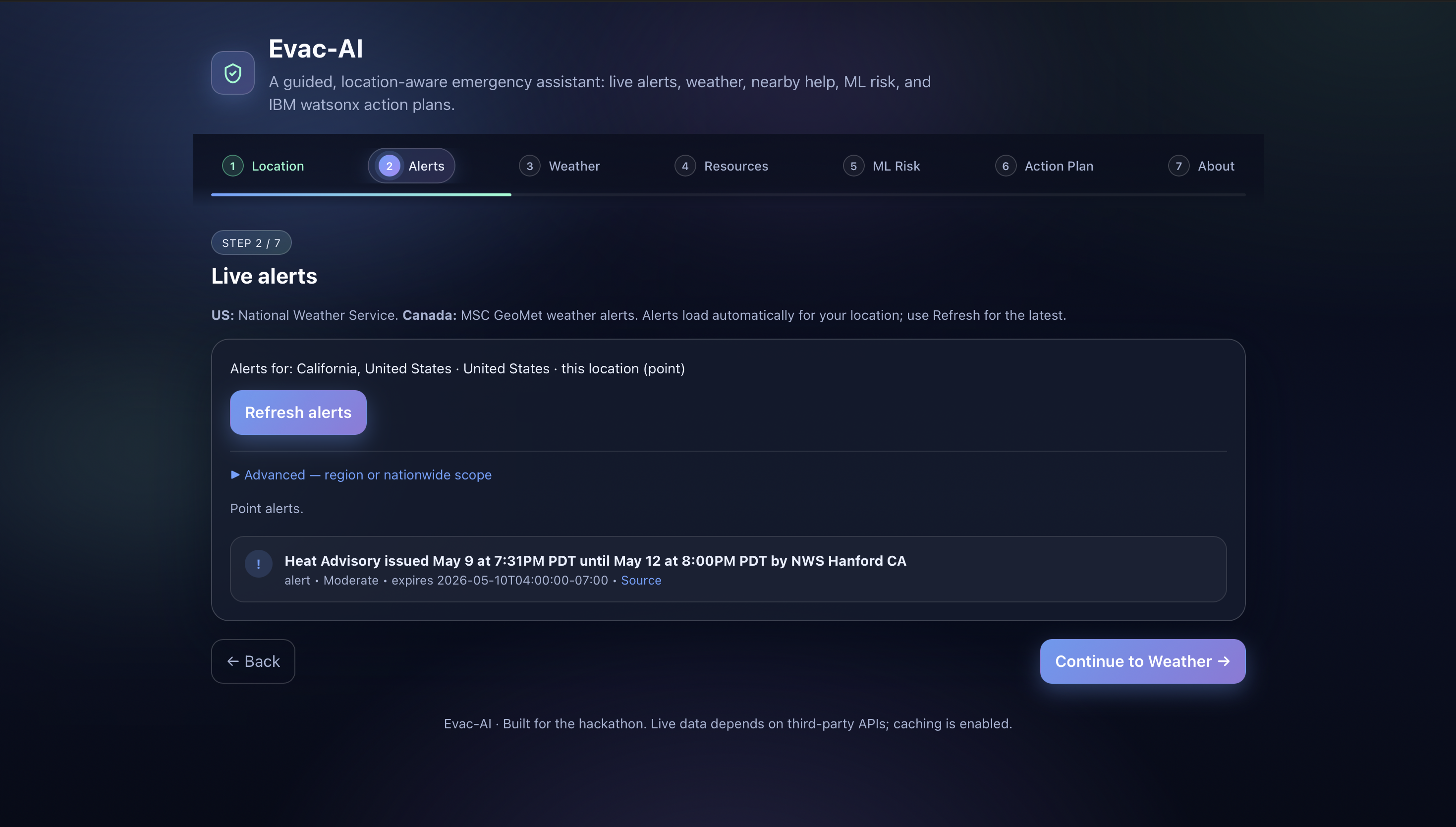
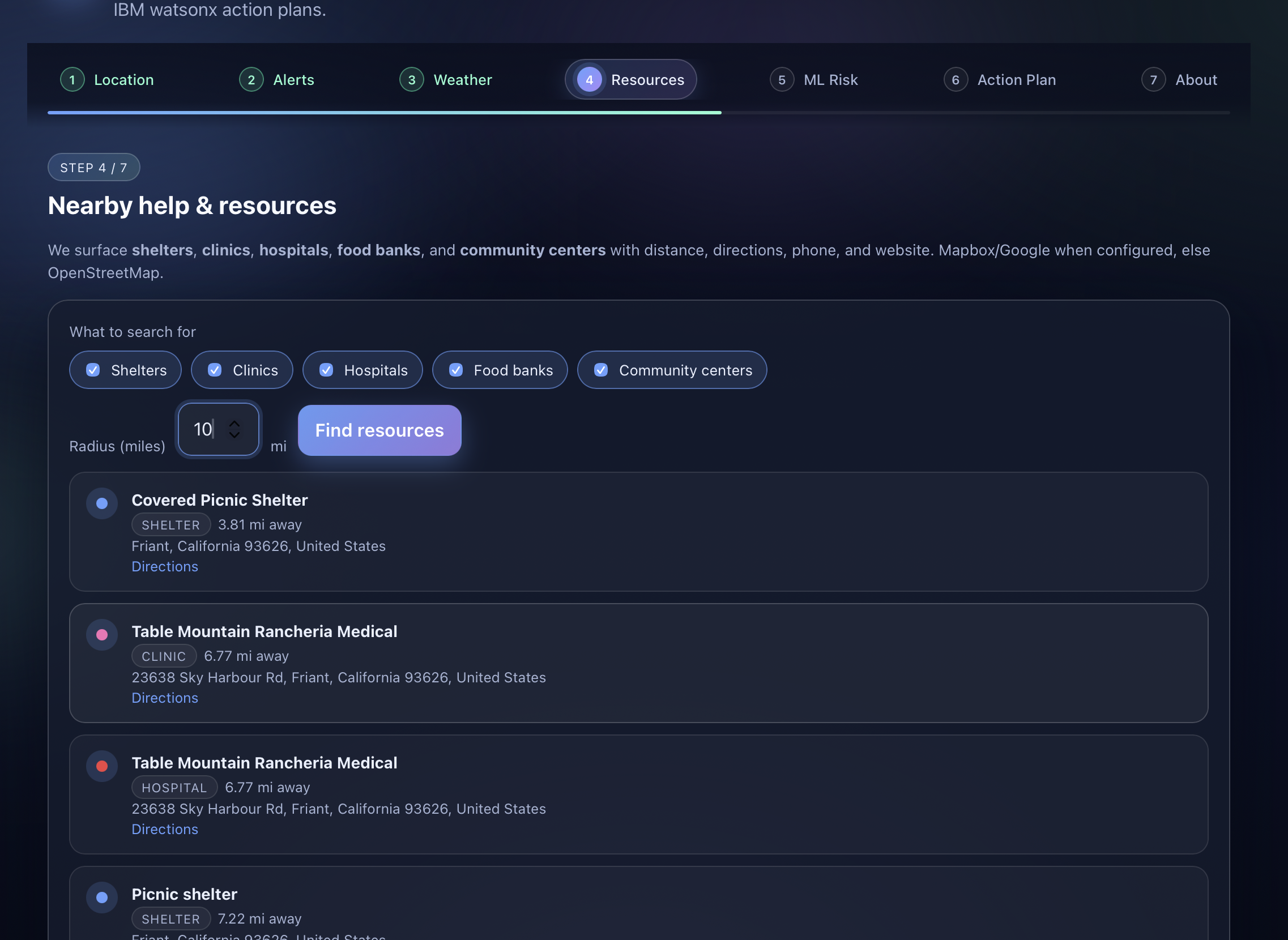
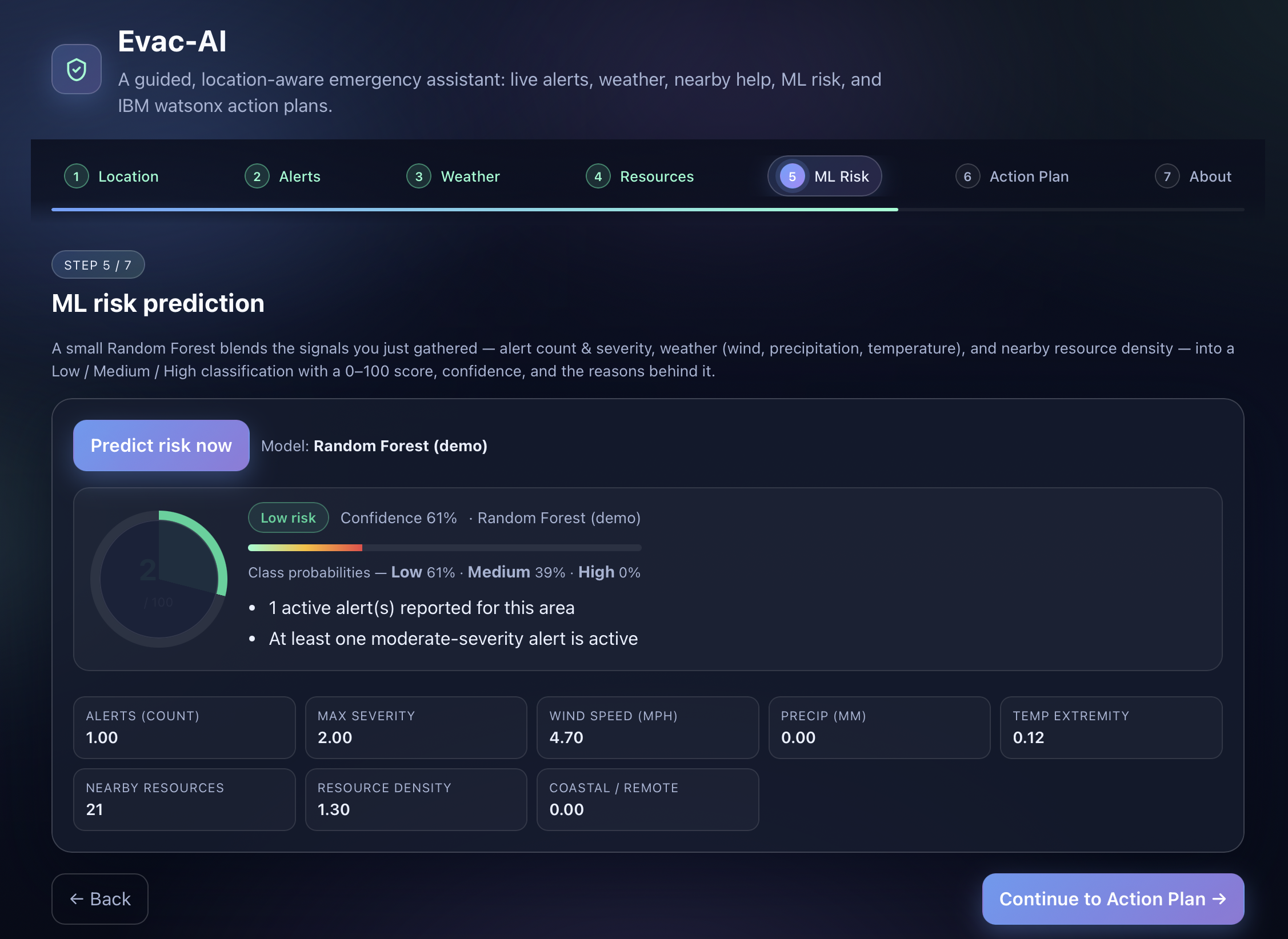
Evac-AI is an AI-powered emergency preparedness app. Users can search for a location, select a scenario, and fetch live situation data. The app shows current weather, official alerts, nearby emergency resources, and an ML-based risk prediction score.
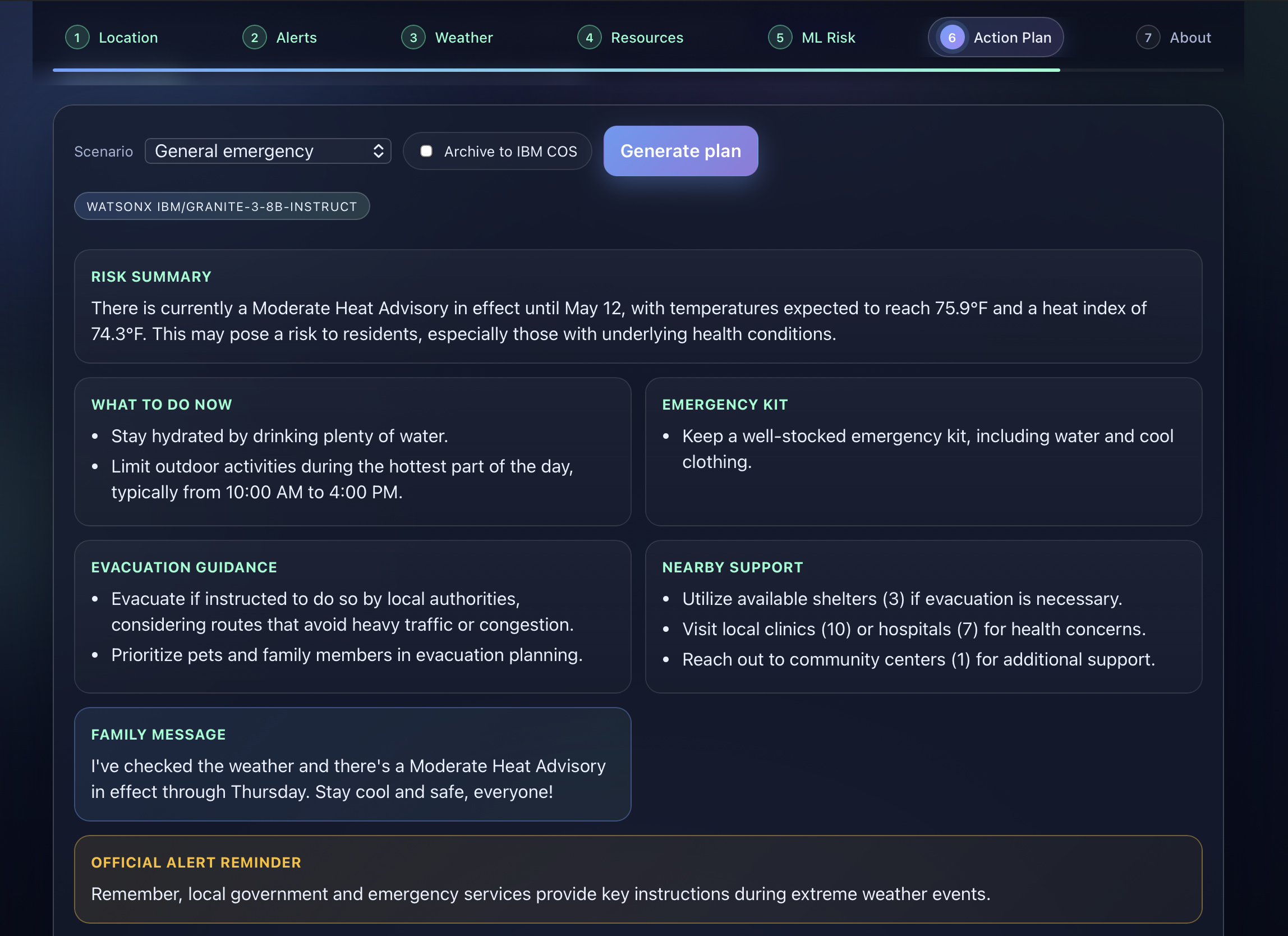
After that, the user can generate an AI action plan. The action plan gives clear guidance such as what to do now, what to keep in an emergency kit, evacuation advice, nearby support options, and a simple family message.
How we built it
We built the mobile app using SwiftUI for the iOS interface. The app connects to a FastAPI backend that handles live data and AI processing.
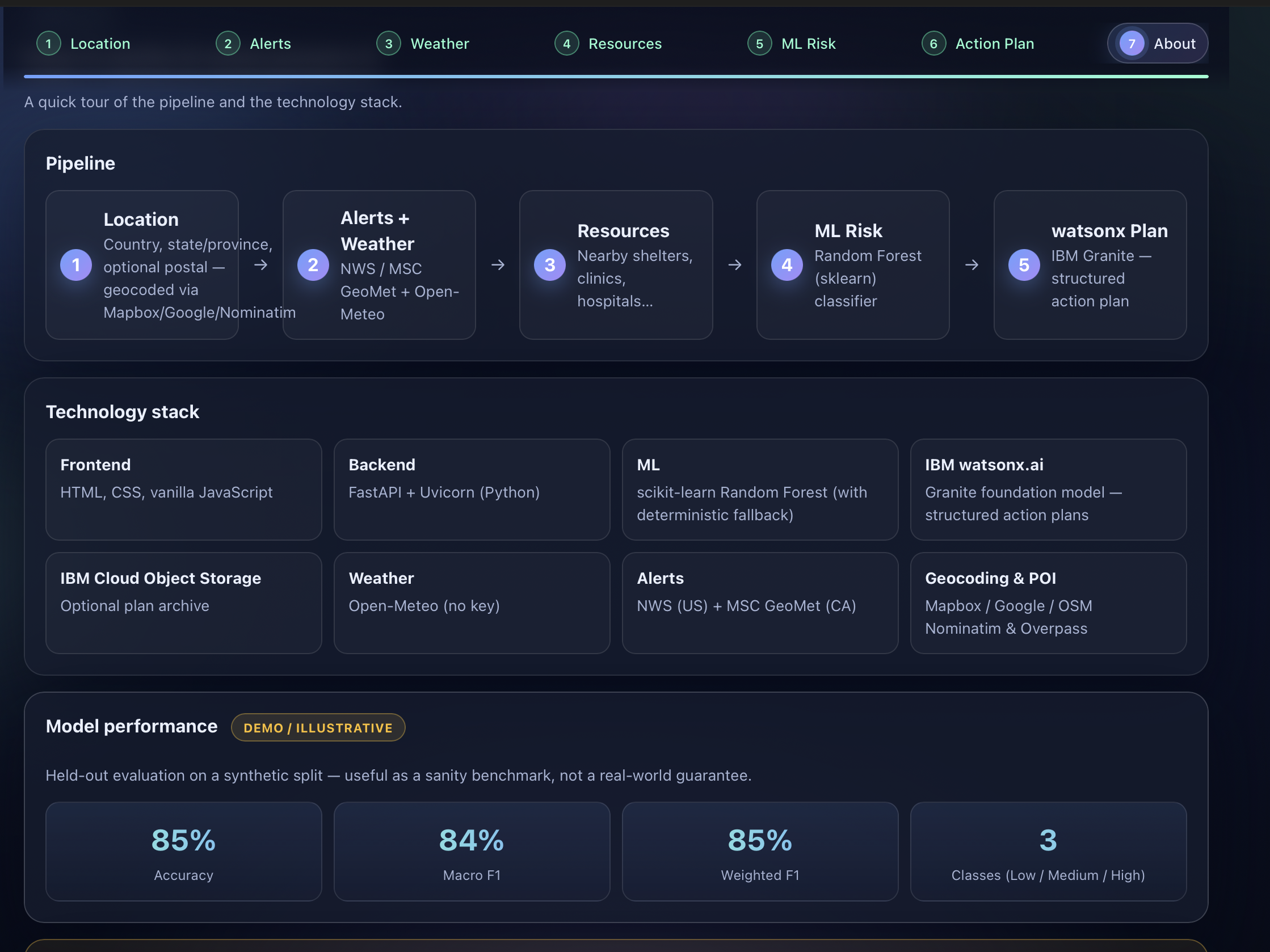
The backend combines multiple services, including weather data, official alert checks, geocoding, nearby resource search, ML risk prediction, and IBM watsonx / Granite for action plan generation.
The general risk score can be thought of as:
RiskScore = f(Weather, Alerts, Resources, Scenario)
This means the final risk depends on the live weather conditions, active alerts, nearby support availability, and the selected emergency scenario.
Challenges we faced
One challenge was connecting multiple live services into one smooth workflow. Each API returns data in a different format, so we had to organize the backend carefully.
Another challenge was making the app simple enough for emergency use. During a crisis, users need clear information quickly, so we focused on a clean design with step-by-step sections.
We also worked on making the AI action plan useful and relevant instead of generic. The plan needed to match the selected location, weather, alerts, and risk level.
What we learned
We learned how to connect a mobile app with a real backend system and how to use live APIs for emergency intelligence. We also learned how AI can be used not only to summarize information, but to turn it into practical next steps.
This project helped us understand the importance of reliable data, simple user experience, and responsible AI guidance during high-pressure situations.
What’s next
Next, we would like to improve Evac-AI by adding stronger map support, better nearby shelter routing, more disaster-specific scenarios, push notifications, and improved ML models trained on real emergency datasets.
Built With
- clinics
- geocoding
- git
- github
- hospitals
- ibm-cloud
- ibm-watson
- machine-learning
- python
- render
- scikit-learn
- swift
- weatherapi


Log in or sign up for Devpost to join the conversation.